
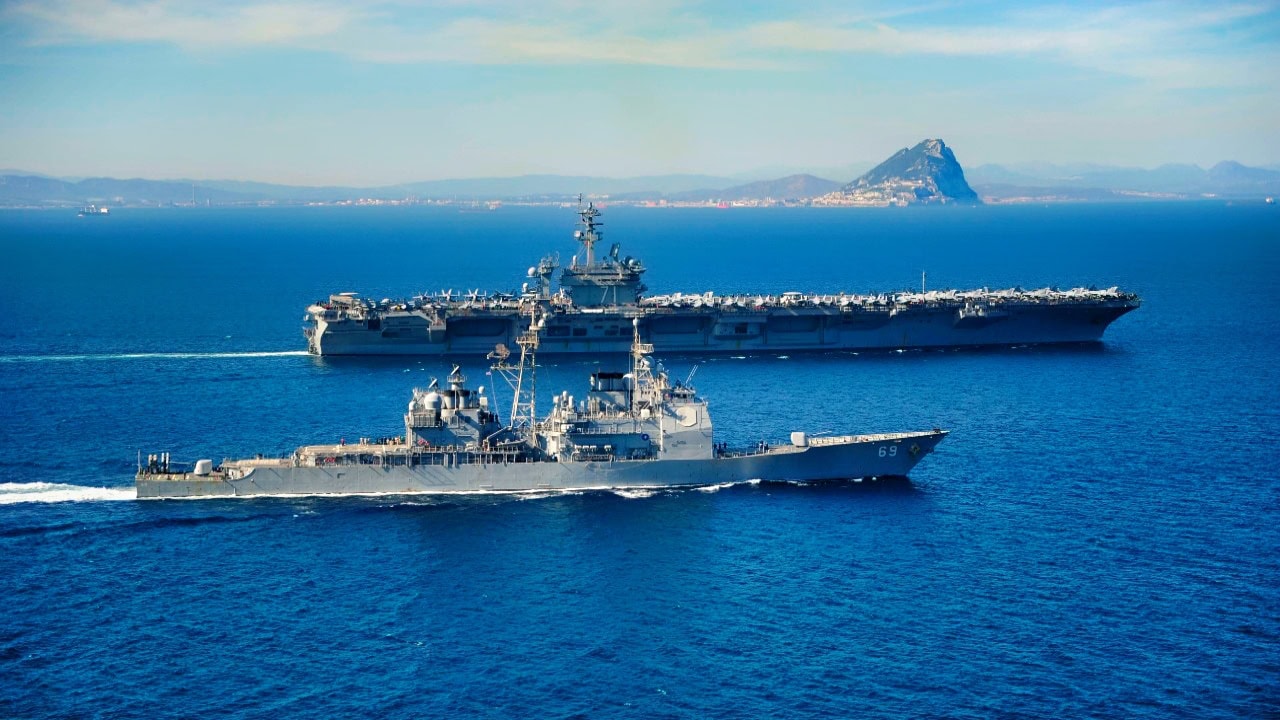
Summary and Key Points: Defense expert Dr. Brent M. Eastwood evaluates the alarming reduction in U.S. Navy strike capacity, with 2,080 VLS cells phased out by 2027.
-The retirement of four Ohio-class SSGNs (USS Ohio, Michigan, Florida, Georgia) and the Ticonderoga-class cruisers removes the backbone of the Navy’s “missile truck” architecture.
-This report analyzes the strategic impact on Operation Epic Fury and potential conflicts with China.
-Eastwood explores the Virginia Payload Module (VPM) as a replacement, concluding that the loss of concentrated firepower from the Mark 41 VLS system creates a precarious “magazine depth” crisis during a period of high global tension.
The 2,080-VLS Deficit: Why the U.S. Navy is Losing its Massive Tomahawk Cruise Missile Advantage
I have always been fascinated by the Tomahawk cruise missile.
This old standby never fails to get the job done and has punished the enemy like no other in Iran. It seems the Tomahawk has been in the news countless times for being a top-of-the-line option for many presidents over the last several decades.
This White House asset allows attacks during peacetime and wartime. Submarines can launch it after sneaking up on countries that have targets that need destruction. Cruisers that are sailing in aircraft carrier strike groups can send them on powerful and destructive missions to help a larger force of other guided missiles to hit paydirt.
Enviable Combat Record
The Tomahawk has been essential during the U.S. war in Iran. They also knifed through the skies during Operation Desert Storm and the campaigns in the Second Gulf War and in Afghanistan during the Global War on Terror.
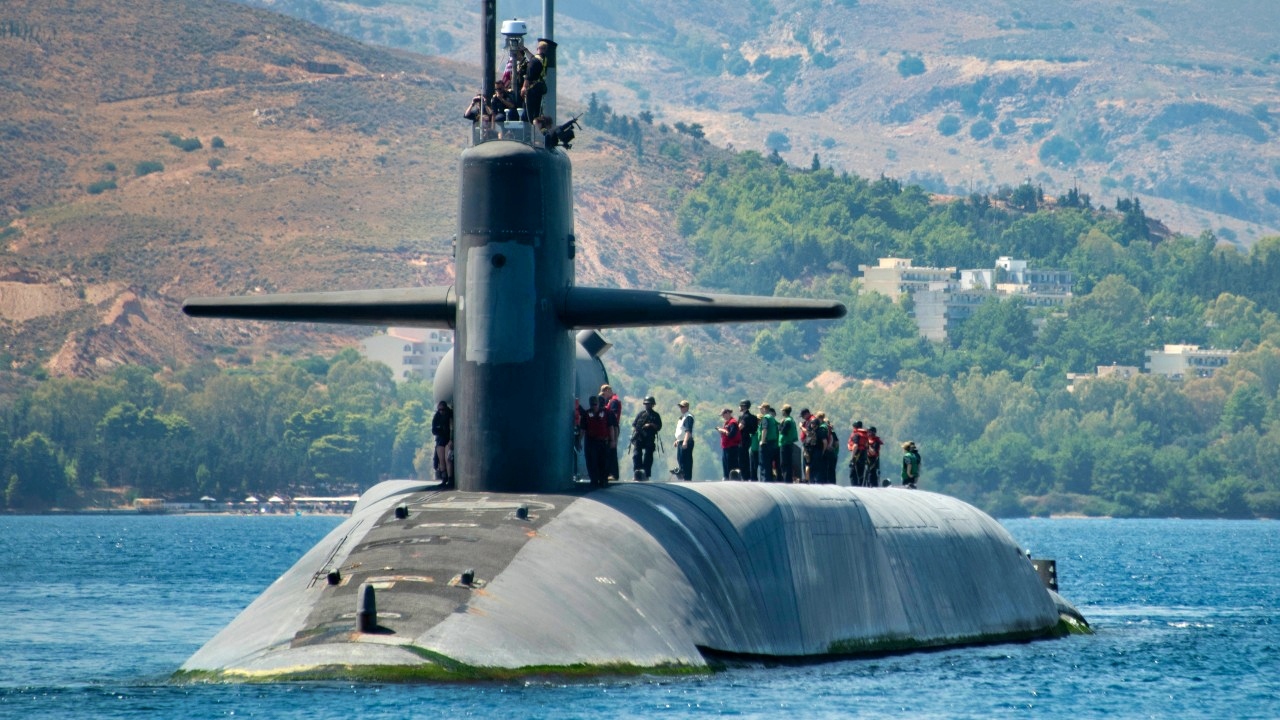
190907-N-UR565-0660NAVAL SUPPORT ACTIVITY SOUDA BAY, Greece (Sept. 7, 2019) The Ohio-class cruise missile submarine USS Florida (SSGN 728) arrives in Souda Bay, Greece, for a scheduled port visit, Sept. 7, 2019. NSA Souda Bay is an operational ashore base that enables U.S., allied, and partner nation forces to be where they are needed and when they are needed to ensure security and stability in Europe, Africa, and Southwest Asia. (Photo by Joel Diller/Released)
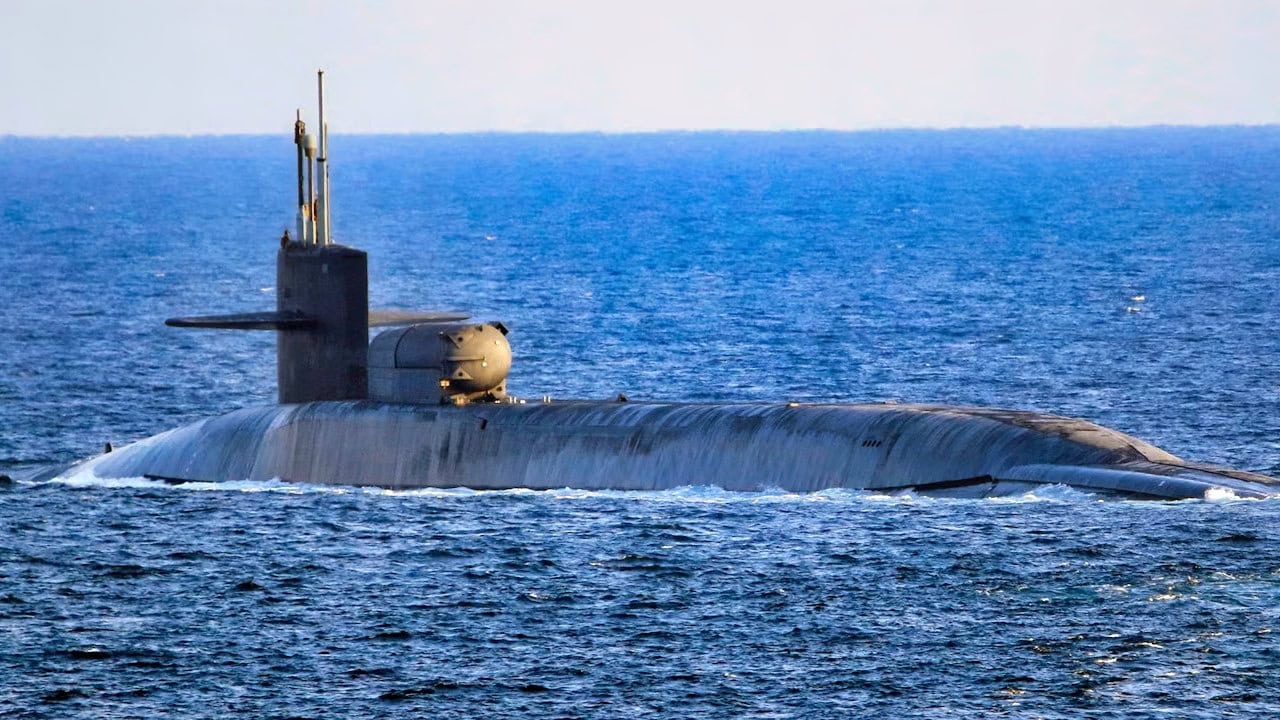
Ohio-Class SSGN Submarine U.S. Navy.
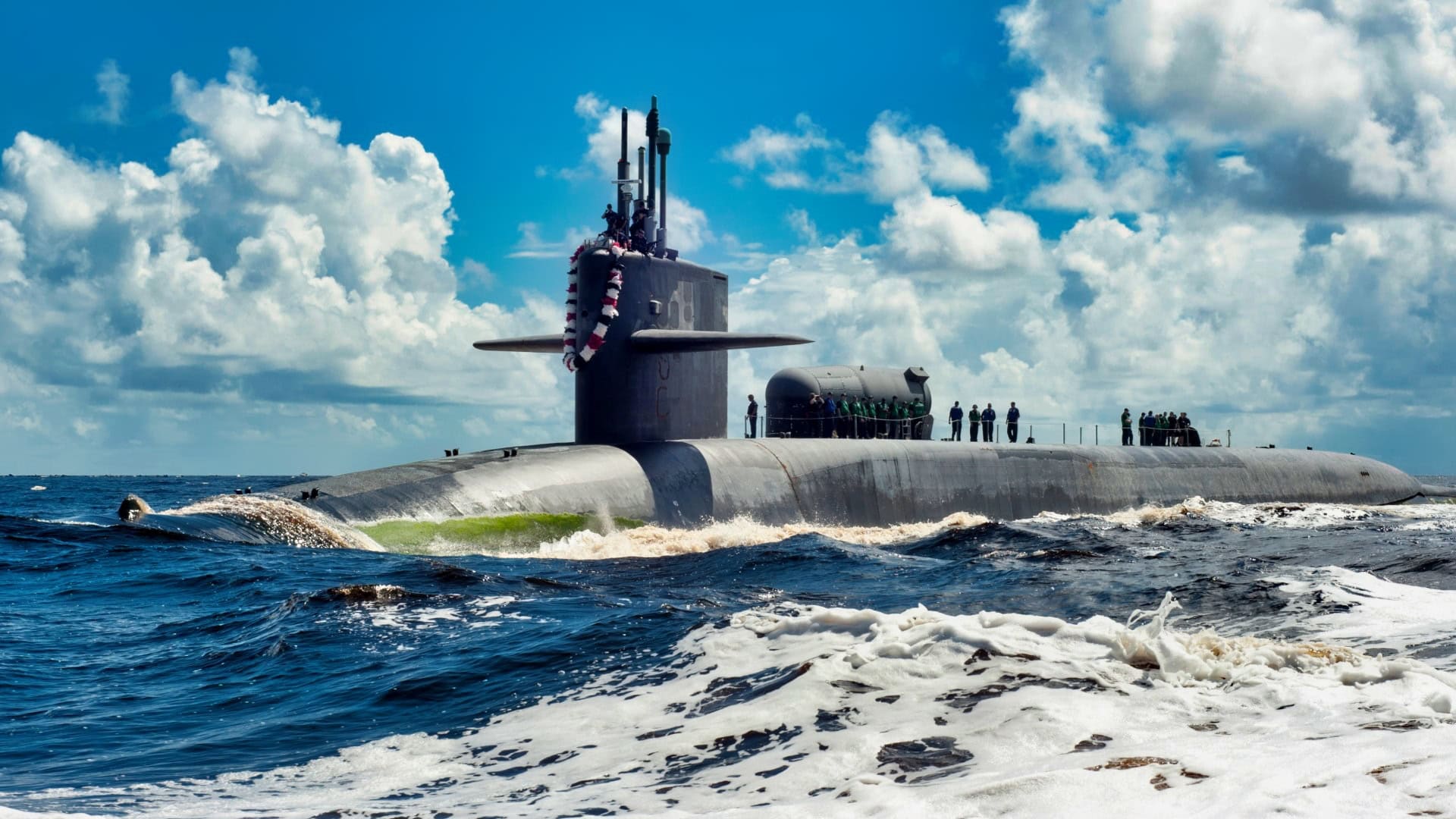
FERNANDINA BEACH, Fla. – The Ohio-class guided missile submarine USS Georgia (SSGN 729) transits the Saint Marys River July 15. Georgia returned to Kings Bay after spending more than a year forward deployed. (U.S. Navy photo by Mass Communication Specialist 1st Class(SW) James Kimber)
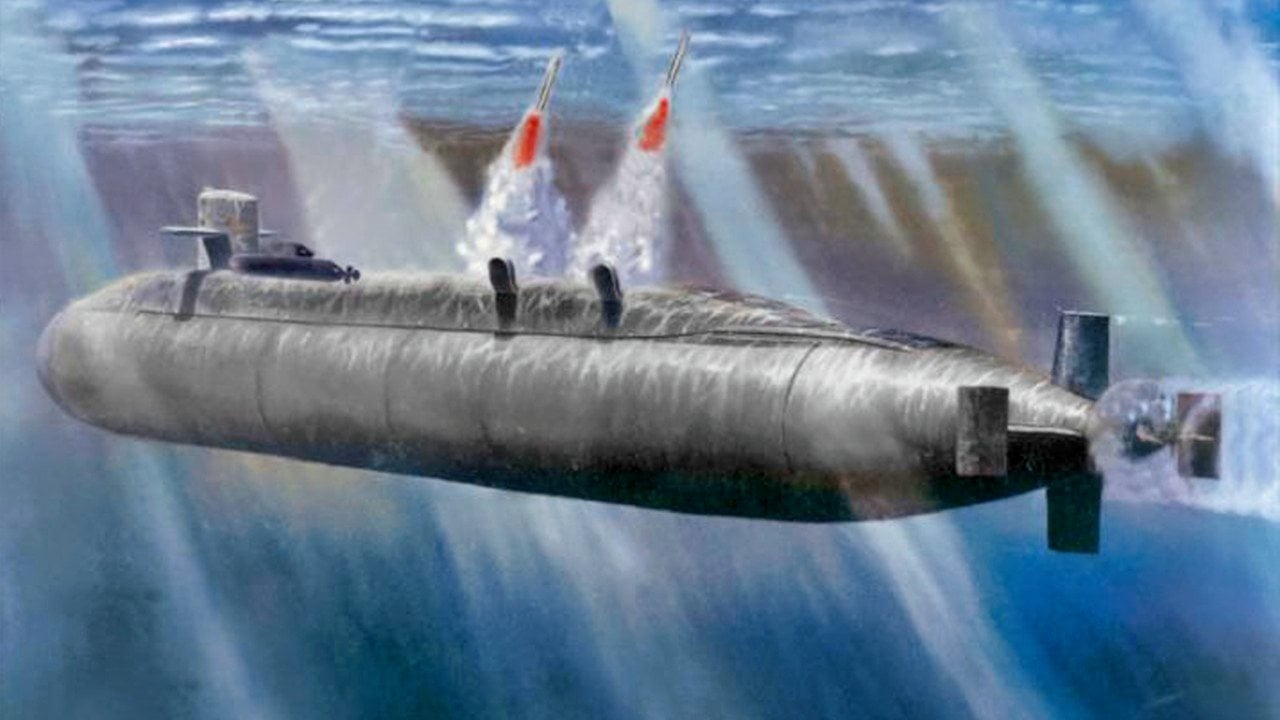
Puget Sound Naval Shipyard, Wash. (Aug. 14, 2003) — Illustration of USS Ohio (SSGN 726) which is undergoing a conversion from a Ballistic Missile Submarine (SSBN) to a Guided Missile Submarine (SSGN) designation. Ohio has been out of service since Oct. 29, 2002 for conversion to SSGN at Puget Sound Naval Shipyard. Four Ohio-class strategic missile submarines, USS Ohio (SSBN 726), USS Michigan (SSBN 727) USS Florida (SSBN 728), and USS Georgia (SSBN 729) have been selected for transformation into a new platform, designated SSGN. The SSGNs will have the capability to support and launch up to 154 Tomahawk missiles, a significant increase in capacity compared to other platforms. The 22 missile tubes also will provide the capability to carry other payloads, such as unmanned underwater vehicles (UUVs), unmanned aerial vehicles (UAVs) and Special Forces equipment. This new platform will also have the capability to carry and support more than 66 Navy SEALs (Sea, Air and Land) and insert them clandestinely into potential conflict areas. U.S. Navy illustration. (RELEASED)
You Mean the U.S. Navy Could Lose the Capacity of 2,000 Tomahawks?
Now that the overwhelming prowess of the Tomahawk may be in danger. Four Ohio-class guided-missile submarines are being retired, reducing the capacity for hundreds of Tomahawks. And the Ticonderoga-class cruisers are being decommissioned.
This removes the Vertical Launch System cells that could take a total of 2,000 Tomahawks out of the mix at a time when they are needed more than ever.
Four SSGNs—the USS Ohio, USS Michigan, USS Florida, and USS Georgia are leaving active duty after an impressive run with many combat deployments among them. This takes away 616 vertical launch cells from the U.S. Navy – not good development if you are an adherent of naval power. This will constrain the military during a time when more missile strength is desperately needed.
This Ability to Pack a Punch Is Curtailed
These are underwater missile platforms that put the “attack” in an attack submarine. The SSGN is a powerful naval stalwart, and it will be greatly missed.
The United States is quickly running out of missiles, and it makes sense that if there were any type of conflict with Russia or China, the Tomahawk cruise missiles’ capacity would need to be as high as ever.
Limiting the U.S. Ability to Conduct the ‘Kinetic Missile Fight’
These potential flare-ups in other theaters outside the Middle East would entail what I call the “Kinetic Missile Fight.”
There will be massive standoff attacks of ballistic projectiles and cruise missiles against multi-layered defenses. Each side will be conducting overwhelming strikes from its missile arsenal. These scenarios emphasize the need for robust, long-range, and rapid-response capabilities.
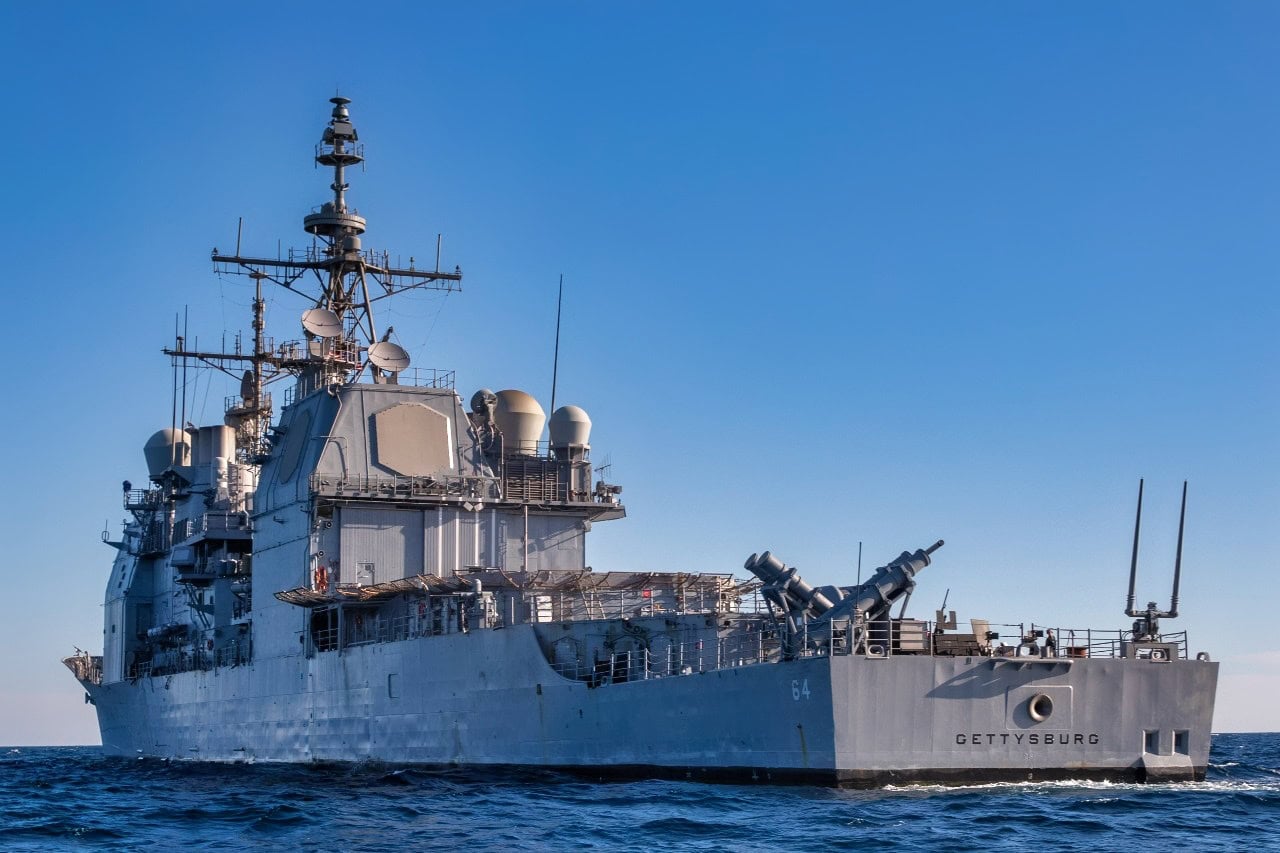
(Feb. 18, 2025) The Ticonderoga-class guided-missile cruiser USS Gettysburg (CG 64) sails in the U.S. Central Command area of responsibility. (Official U.S. Navy photo)
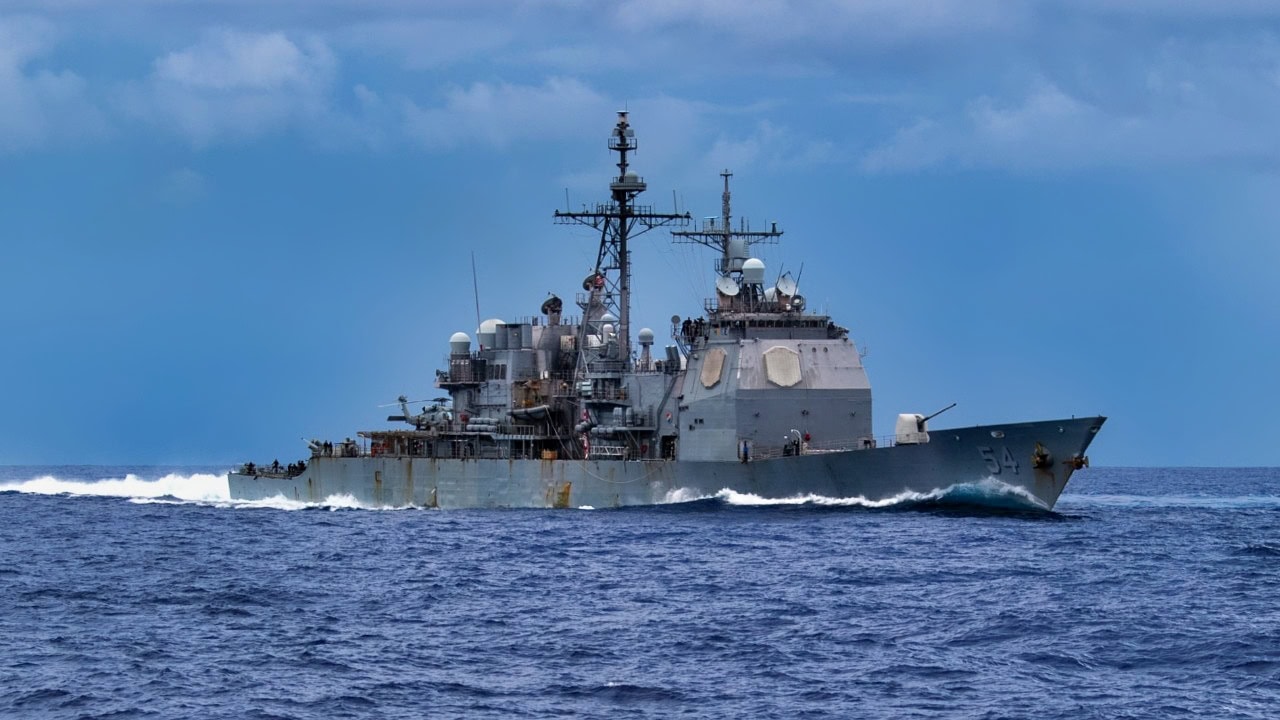
PACIFIC OCEAN (Sept. 14, 2020) The Ticonderoga-class guided-missile cruiser USS Antietam (CG 54) moves in formation during exercise Valiant Shield 2020. Valiant Shield is a U.S. only, biennial field training exercise (FTX) with a focus on integration of joint training in a blue-water environment among U.S. forces. This training enables real-world proficiency in sustaining joint forces through detecting, locating, tracking, and engaging units at sea, in the air, on land, and in cyberspace in response to a range of mission areas. (U.S. Navy photo by Mass Communication Specialist 2nd Class Nick Bauer)
Subs and frigates that can launch Tomahawk cruise missiles quickly and efficiently are part of this scenario. Tactics, techniques, and procedures that revitalize this doctrine will prepare the United States for war in Eastern Europe or in the Indo-Pacific.
The Navy Will Miss the Ohio-class SSGNs
The four Ohio-class SSGN submarines come standard with 154 Tomahawks each. That’s half of the submarine force’s vertical launch payload capacity. The Ohio-class guided missile boats can also deploy special operations forces and send torpedoes to destroy enemy shipping. These Navy SEAL delivery vehicles help prep landing zones for the Marines, board enemy ships, and destroy adversarial vessels at port. Some can also carry unmanned aerial vehicles and underwater sea drones.
More MARK 41 VLS Cells Are Needed
That MARK 41 Vertical Launch System is a force multiplier, too. The SSGNs depend on it heavily to send Tomahawks to paydirt. They can also fire anti-missile and anti-aircraft SM-3 interceptors and the Evolved Sea Sparrow missile.
Not only are we saying goodbye to the four Ohio-class SSGN workhorses, but the Ticonderoga-class is going the way of the dinosaur too. They will be completely retired in 2027. There are 122 VLS cells on board that fire a bevy of Tomahawks.
“That gives a total of 1,464 VLS cells for the cruisers and 616 VLS cells for the SSGNs for a combined total of 2,080 VLS cells,” Naval News explains.
Virginia Payload Module Will Need to Be Top-notch
These will be partially replaced by the Virginia Payload Module for the 24 Virginia-class submarines with cruise missile capability. This could restock some of the lost Tomahawk fleet from the retirement of the Ohio-class SSGN and the Ticonderoga-class, but that still isn’t the best news for the Navy, even though some of the brass is still optimistic.
“In the near term, I will tell you that we have plenty of VLS cells for the Tomahawk missiles that we have in inventory…both on the surface and under the sea. But I readily admit we are losing some significant capability when we decommission our SSGNs in the coming years. And we’re exploring options for what some follow-on capability may or may not be,” according to Vice Admiral James Pitts, Deputy Chief of Naval Operations for Warfighting Requirements and Capabilities, as noted by Naval News.
Operation Epic Fury Would be Less ‘Epic’
The launch of Tomahawks supplemented the strike capacity during Operation Epic Fury, that needs all of the firepower that the United States could deploy. These underwater and surface missile trucks bring the noise in any fight. They are a top-level attack mechanism that can destroy enemy ballistic missile production facilities and drone manufacturers. These are two weapons that the Iranians are using to spread chaos around the Middle East.
What About the Threat from China?
If there is conflict in East Asia against China, the Tomahawk will be greatly needed in the Kinetic Missile Fight in that region should the worst happen.
There will be a race to see how fast the Americans can destroy the Chinese missile capabilities before the United States runs out of its own missiles. Removing this many Tomahawks from the table is disappointing news.
Other missiles will have to step up and show their stuff in the future fight. This will affect the plans and doctrine of sea battle for years to come, and let’s hope the Navy has a solution to focus on other types of missiles that can be just as effective as the Tomahawk – namely, hypersonic missiles that could be launched from ships and submarines.
About the Author: Brent M. Eastwood
Author of now over 3,000 articles on defense issues, Brent M. Eastwood, PhD is the author of Don’t Turn Your Back On the World: a Conservative Foreign Policy and Humans, Machines, and Data: Future Trends in Warfare plus two other books. Brent was the founder and CEO of a tech firm that predicted world events using artificial intelligence. He served as a legislative fellow for US Senator Tim Scott and advised the senator on defense and foreign policy issues. He has taught at American University, George Washington University, and George Mason University. Brent is a former US Army Infantry officer. He can be followed on X @BMEastwood.