
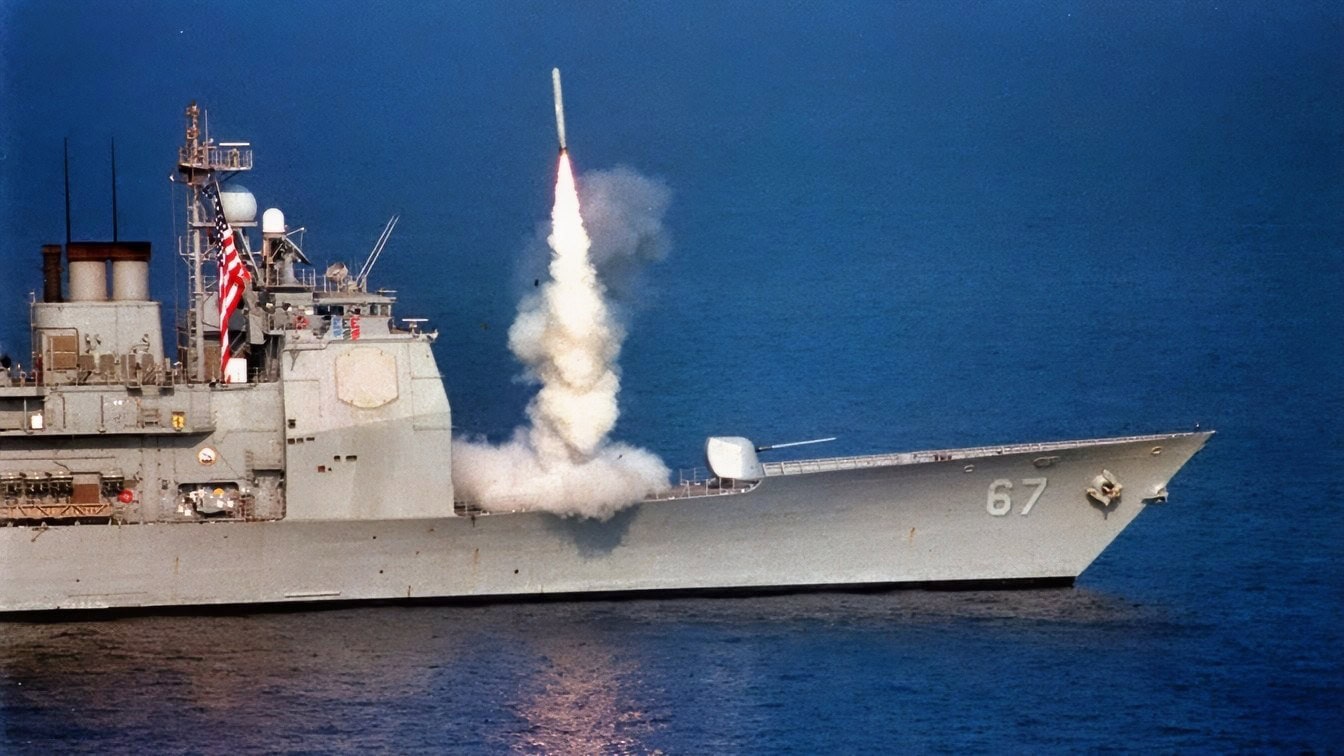
Summary and Key Points: Steve Balestrieri, a national security columnist and former U.S. Army Special Forces officer, evaluates the critical strain on the Tomahawk missile stockpile during Operation Epic Fury.
-With 400 missiles fired from Navy destroyers and submarines in three days, the U.S. has consumed a decade of production at current rates.
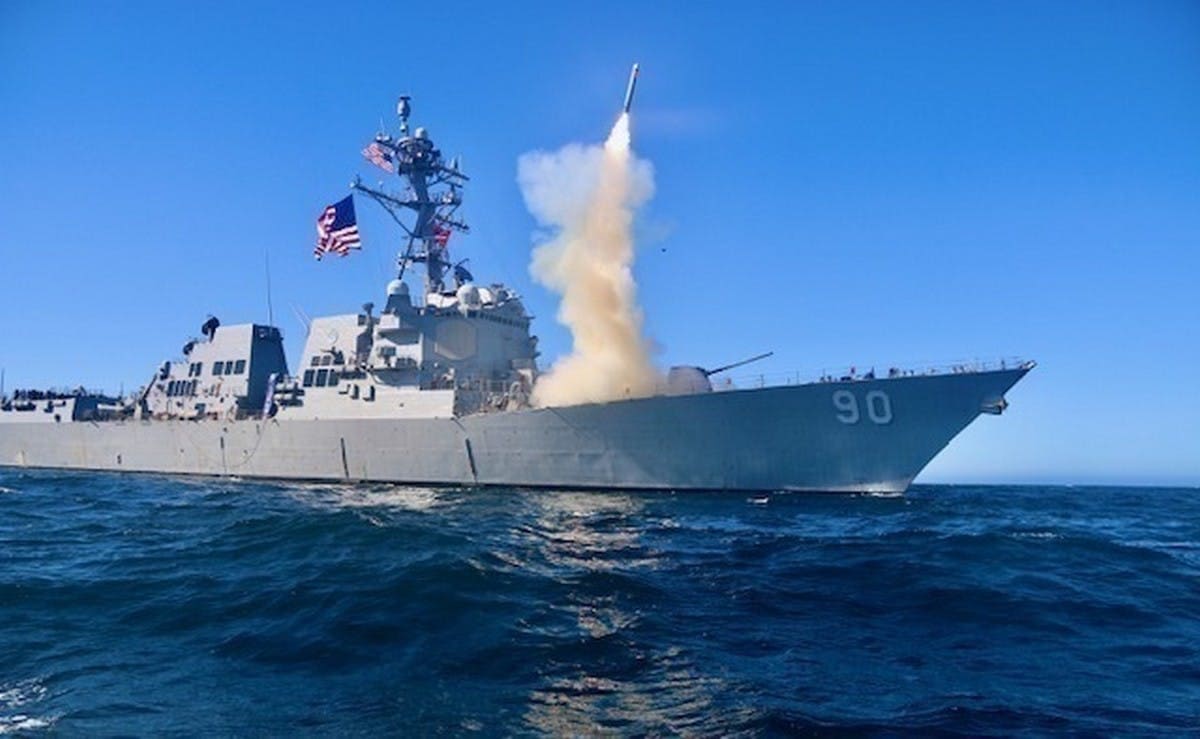
Tomahawk Missile. Image: Creative Commons.
-This 19FortyFive report analyzes the three primary bottlenecks—solid rocket motor shortages, single-source components, and a 24-month lead time—exploring how the shift to B-1B Lancer “bomb trucks” and AGM-158 JASSM strikes aims to preserve the remaining 3,600-unit inventory for potential conflict in the Indo-Pacific.
The 24-Month Bottleneck: Why Replacing Operation Epic Fury’s Tomahawks Will Take Years
The U.S. Operation Epic Fury has been militarily successful so far, severely degrading Iran’s ballistic missile stockpiles and missile launchers. Strikes have killed more than 40 senior military and political leaders and hit more than 1,000 targets.
However, after several days of unrelenting airstrikes, the United States is facing a significant strain on its Tomahawk missile stockpile.
While not completely exhausted, current replenishment rates are slow—often less than 100-200 units annually—and struggling to keep pace with operational consumption, creating a long-term supply vulnerability.
“Manufacturers just can’t make them fast enough,” said Vertical Research Partners analyst Rob Stallard. “There was already way more [missile] demand than supply, and [Iran] exacerbates the issue.” How acute the pressure gets depends on how long the conflict lasts.
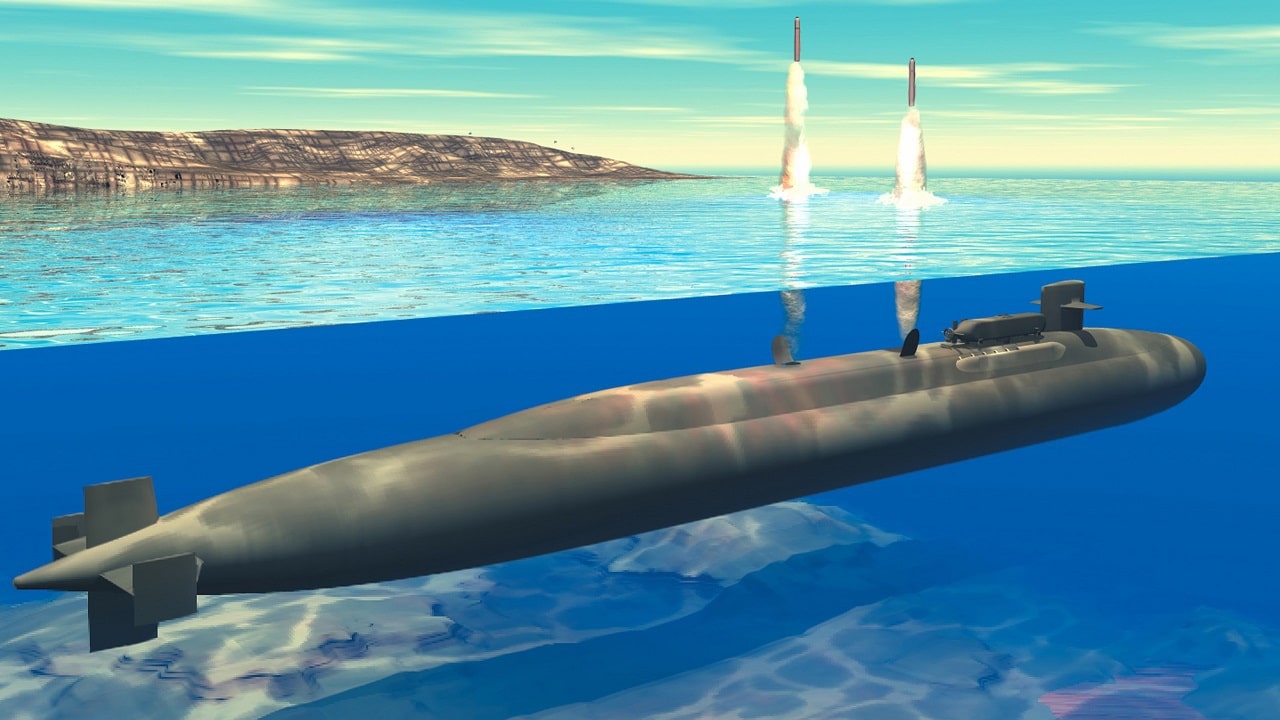
Artist’s concept of an Ohio-class SSGN launching Tomahawk Land Attack Missiles.
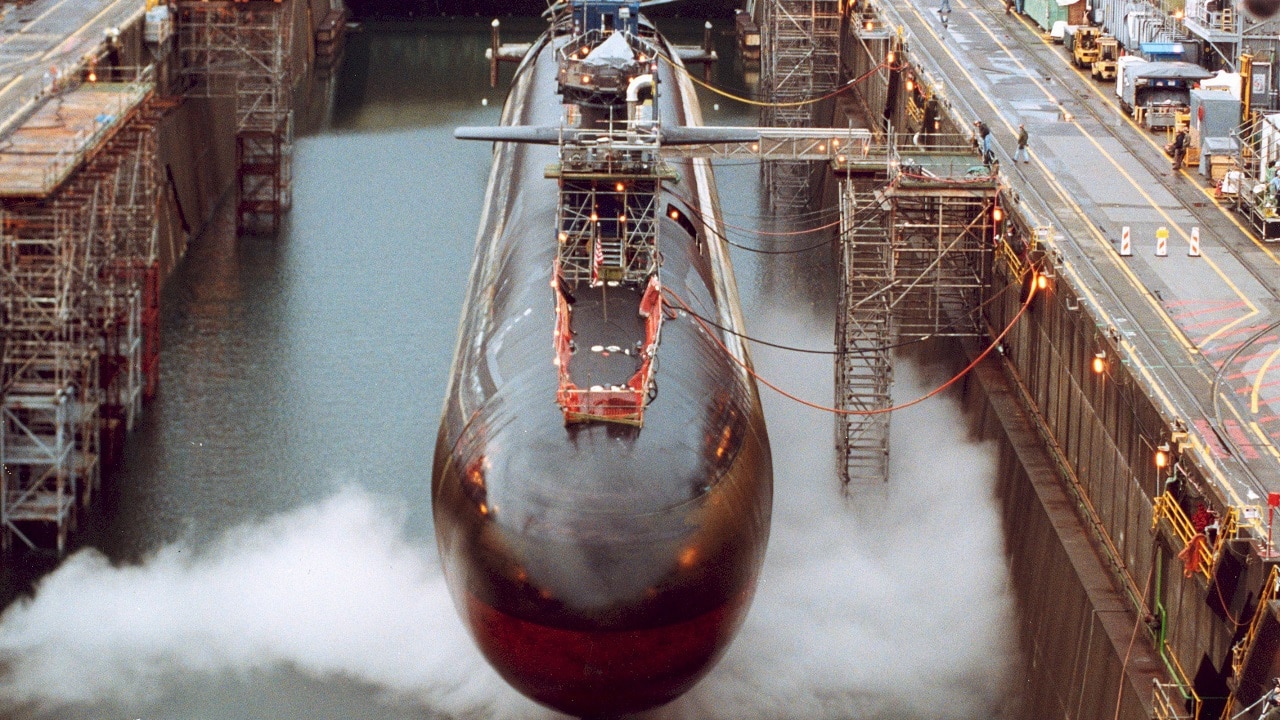
Puget Sound Naval Shipyard, Wash. (Aug. 14, 2003) — USS Ohio (SSGN 726) is in dry dock undergoing a conversion from a Ballistic Missile Submarine (SSBN) to a Guided Missile Submarine (SSGN) designation. Ohio has been out of service since Oct. 29, 2002 for conversion to SSGN at Puget Sound Naval Shipyard. Four Ohio-class strategic missile submarines, USS Ohio (SSBN 726), USS Michigan (SSBN 727) USS Florida (SSBN 728), and USS Georgia (SSBN 729) have been selected for transformation into a new platform, designated SSGN. The SSGNs will have the capability to support and launch up to 154 Tomahawk missiles, a significant increase in capacity compared to other platforms. The 22 missile tubes also will provide the capability to carry other payloads, such as unmanned underwater vehicles (UUVs), unmanned aerial vehicles (UAVs) and Special Forces equipment. This new platform will also have the capability to carry and support more than 66 Navy SEALs (Sea, Air and Land) and insert them clandestinely into potential conflict areas. U.S. Navy file photo. (RELEASED)
The Tomahawk Missile, America’s Workhorse:
The Tomahawk cruise missile is a precision weapon that is launched from ships, submarines, and ground launchers and can strike targets precisely from 1,500 miles away, even in heavily defended airspace.
The Tomahawk can be launched from vertical launch systems (VLSs) on cruisers, destroyers, and submarines.
Tomahawk missiles are launched by using a solid-fueled booster rocket and carried to their target by a turbofan jet engine. The Tomahawk is a standoff weapon, meaning that it is launched from far away. This means Navy ships or aircraft don’t have to face enemy defenses.
The Tomahawk then skims along the ocean’s surface at 550 miles per hour and uses satellite-assisted navigation and Terrain Contour Matching radar to guide it to a target. It can carry either a conventional or a nuclear warhead.
Key Technical Specifications:
Manufacturer: Raytheon
Length: 18.25–20.3 feet with booster
Diameter: 20.4–21 inches
Weight: 2,900–3,330 lbs
Wingspan: 8.6–8.9 ft
Speed: High subsonic (550 mph, or Mach 0.74)
Range: Up to 1,500 miles
Warhead: 1,000 lb conventional unitary warhead or submunitions dispenser
Variants: The current primary variant is the Block IV/V (Tactical Tomahawk)
The newest Block Va can now hit moving targets at sea.
U.S. officials and experts have raised concerns that Tomahawk stockpiles are running low after their use against targets in Iran, with U.S. Navy warships having fired more than 400 missiles so far during Operation Epic Fury.
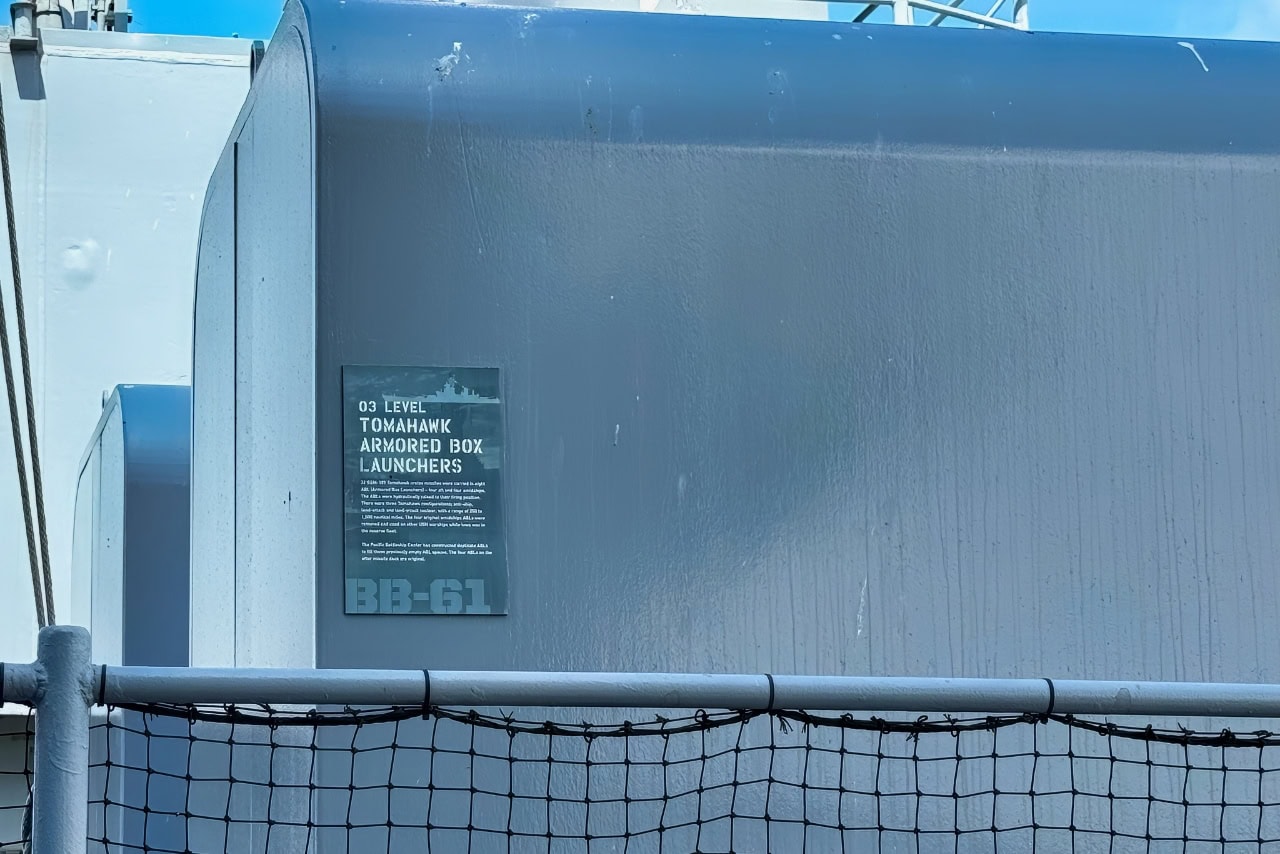
USS Iowa 19FortyFive image of Tomahawk Missiles on USS Iowa.
Current Stockpile Of Tomahawk Cruise Missiles:
The U.S. military has a stockpile of roughly 4,000 to 4,150 Tomahawk cruise missiles. While thousands have been procured over the past three decades, significant numbers have been expended in combat. Production remains low, with only 57 new missiles requested in the 2026 budget.
The estimated 400 missiles already fired constitute 10 percent of the current U.S. inventory. These were expended in just three days of combat operations. That rate of usage is unsustainable and is causing concerns of an “empty rack” scenario if a situation unfolds in the Indo-Pacific. China is certainly monitoring this situation with interest.
Currently, the U.S. produces approximately 90 to 100 Tomahawk cruise missiles per year. Raytheon is increasing production, with long-term plans to boost annual output to more than 1,000.
In 2024, Japan ordered 400 Tomahawks to equip its destroyers with land attack capabilities.
Annual production of SM-6—the Navy’s versatile missile that can counter ballistic threats, conduct maritime strikes, and is now being fitted as an air-to-air capability on F/A-18 Super Hornets—will be bolstered to more than 500 units.
Tomahawk Missile Slow Production Woes
Tomahawk missile production has been slowed in recent years by a fragile, specialized supply chain, long manufacturing lead times, and historically low-volume purchasing that left production lines cold.
While the Navy is working to increase production, significant bottlenecks remain. One significant obstacle is shortages of solid rocket motors. The supply chain for propulsion systems is also extremely thin, with only a few specialized subcontractors capable of manufacturing them.
Single-source components are a constant issue. Many of the thousands of precision parts in each missile, such as advanced seekers and terrain-matching sensors, rely on a single supplier, creating major bottlenecks if that vendor slows down.
Production also requires long lead times. It can take up to two years to build a single Tomahawk because of its complex, specialized components.
Procurement history is notoriously unstable. Past government decisions to slow, pause, or cancel orders led manufacturers to maintain minimum production rates (around 90 units per year) to keep lines from going completely cold; this makes rapid scaling difficult.
Expanding production requires hiring and training new workers, as well as upgrading manufacturing facilities.
Despite these issues, the Navy is attempting to increase production, with reports indicating a potential move toward boosting output to meet the high demand driven by conflicts in the Middle East, as well as potential needs in the Pacific.
Will Air Superiority Over Iran Lessen The Need For Tomahawks?
While the establishment of air superiority over Iran in the past few days allows U.S. and Israeli forces to shift toward using manned aircraft and cheaper short-range precision munitions, the usage of Tomahawk cruise missiles is unlikely to decrease immediately, primarily due to the high-intensity nature of the operation and the need for continued, deep-strike capability against fortified, underground, or mobile targets.
However, as the United States and Israel continue to degrade Iranian defenses, the usage of Tomahawks will decrease quickly.
The air superiority factor was clearly illustrated on March 2, when Central Command confirmed that three B-1B Lancer bombers flew from Ellsworth Air Force Base in South Dakota and conducted strikes against Iranian ballistic missile sites and command-and-control infrastructure.

A 28th Bomb Wing B-1 Lancer sits on a ramp waiting to taxi in the early morning at Ellsworth Air Force Base, South Dakota, August 30, 2006.The B-1 Lancer will be taking off to conduct its first Joint Air-to-Surface Standoff Missile (JASSM) operational fire from a B-1 Lancer. (US Air Force Photo By: Airman Angela Ruiz) (Released)
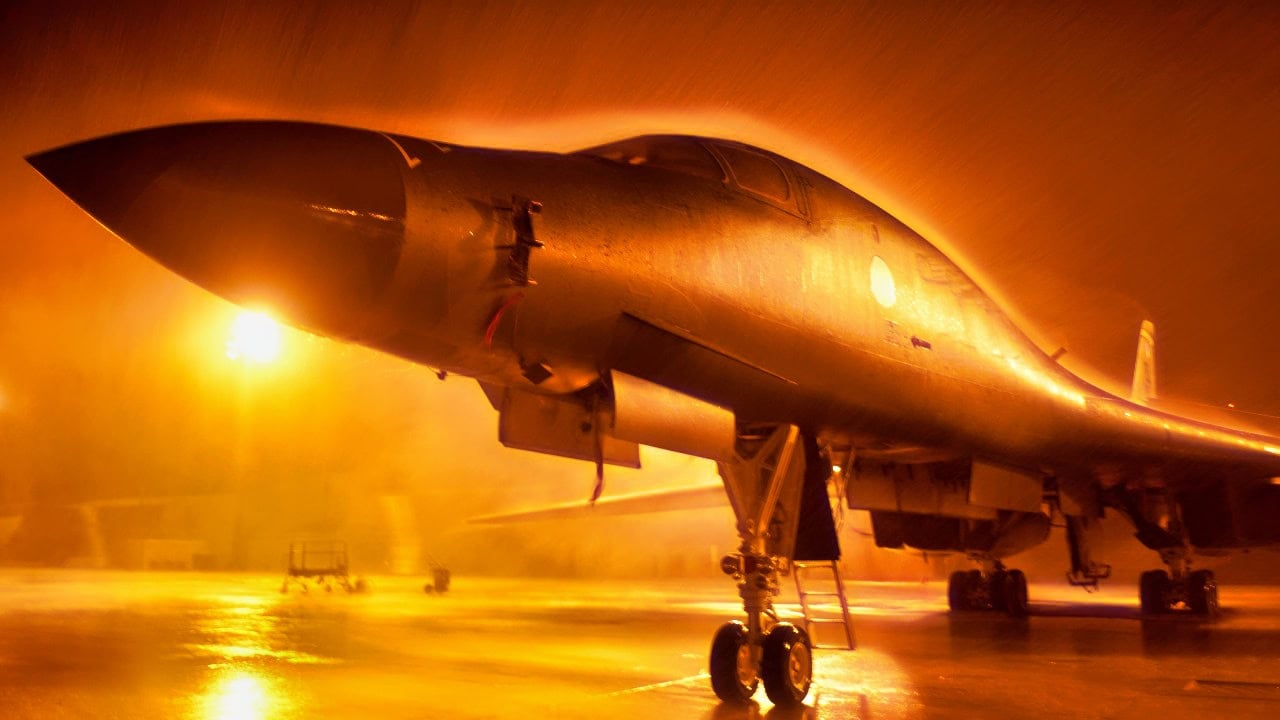
Lights in the aircraft parking area cast an eerie glow around a B-1 bomber standing at the ready during a summer rainstorm at Ellsworth Air Force Base, S.D., July 24, 2012. Ellsworth is home to 28 B-1 bombers and two of the Air Force’s three B-1 combat squadrons.
The B-1B can carry a large number of long-range cruise missiles, including variants of the AGM-158 Joint Air-to-Surface Standoff Missile, enabling it to strike from hundreds of kilometers away. That enables the bomber to contribute significant firepower without entering the highest-risk engagement areas.
The B-1B in a “bomb truck” mode can carry an incredible 75,000 lbs of ordnance internally, plus 50,000 lbs externally.
About the Author: Steve Balestrieri
Steve Balestrieri is a National Security Columnist. He served as a US Army Special Forces NCO and Warrant Officer. In addition to writing on defense, he covers the NFL for PatsFans.com and is a member of the Pro Football Writers of America (PFWA). His work was regularly featured in many military publications.