
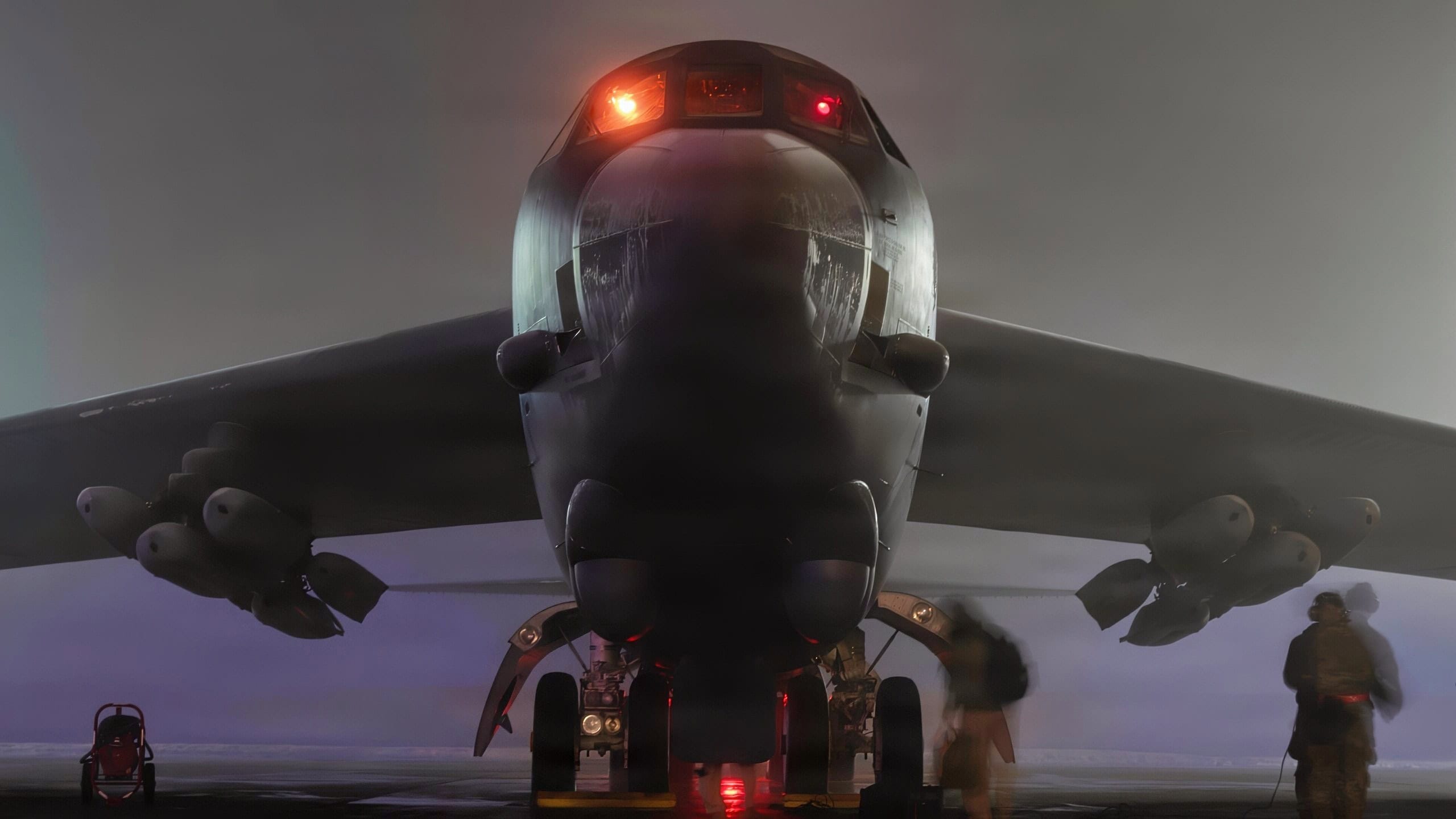
Summary and Key Points: Former Trump National Security Adviser John R. Bolton outlines a framework in which military force is only one component of a successful regime change transition in Iran, identifying four areas where the administration must accelerate its efforts.
John Bolton: Why U.S. Military Gains in Iran are at Risk Without Political Decisiveness
Donald Trump’s apparent interest in regime change in Iran is a welcome development.
The opening days of the US-Israeli military campaign against the ayatollahs and the Islamic Revolutionary Guard Corps (“IRGC”) have proceeded beyond expectations, although harder days undoubtedly lie ahead. The Pentagon’s planning and professionalism are on full display.
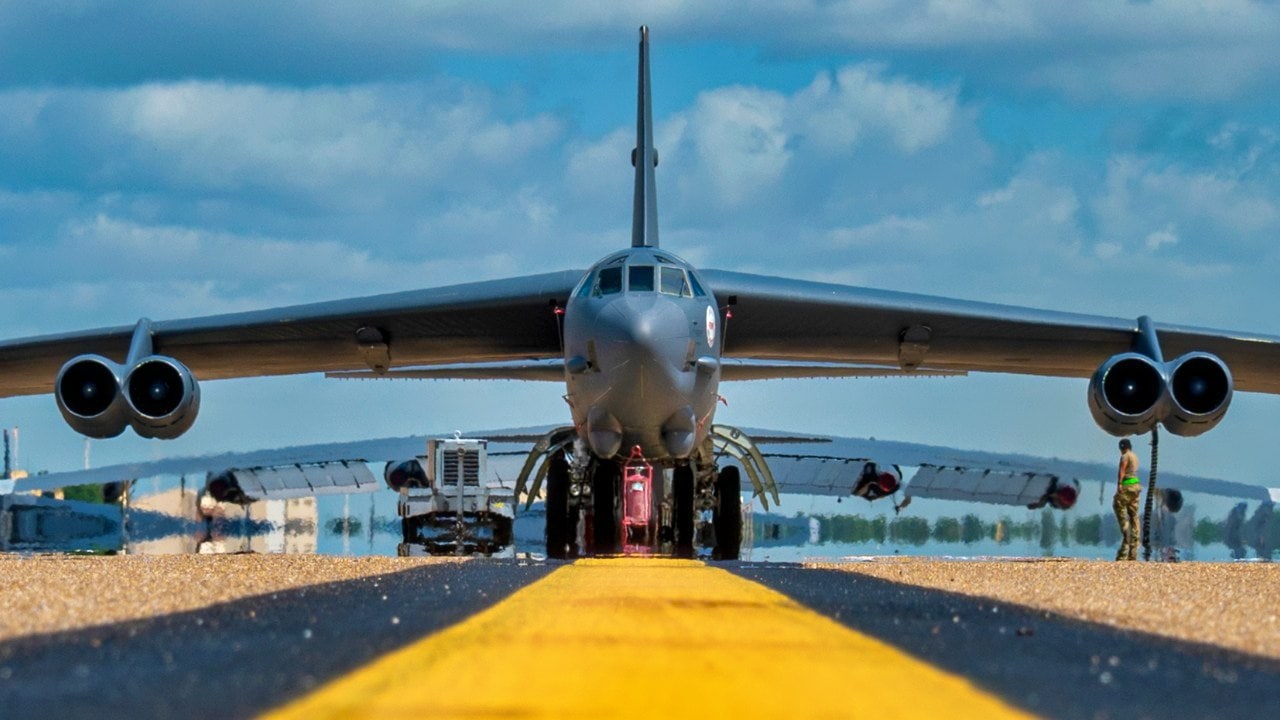
A U.S. Air Force B-52H Stratofortress bomber assigned to the 307th Bomb Wing goes through an engine check June 24, 2021, at Barksdale Air Force Base, Louisiana. Eight Pratt & Whitney TF33 engines power the B-52H to give it the capability of flying at high subsonic speeds. (U.S. Air Force photo by Senior Airman Kate Bragg)
By contrast, the political side of this politico-military assault on the Tehran regime is hurting. The enemy can obviously frustrate our plans, but we, entirely on our own, are also fully capable of defeating ourselves, whether through inadequate foresight, poor preparations, inadequate intra-administration coordination, or all three.
US military achievements to date, and those still to come, could be overshadowed, even reversed, if the White House does not move quickly and decisively on several political and diplomatic fronts.
The Public Opinion Debate on Iran Matters
First is domestic public opinion. The best way to prepare for a major military operation against Iran’s leadership was to have months of concerted effort to explain the compelling case for regime change in Tehran to the American people.
The need to eliminate Iran’s nuclear weapons and ballistic missile programs and its support for international terrorism is vital to US national security interests.
Iran’s rulers could never be trusted to terminate these activities. Making that case requires carefully prepared, campaign-like efforts. Importantly, this public-relations issue could be addressed without revealing anything about military plans.
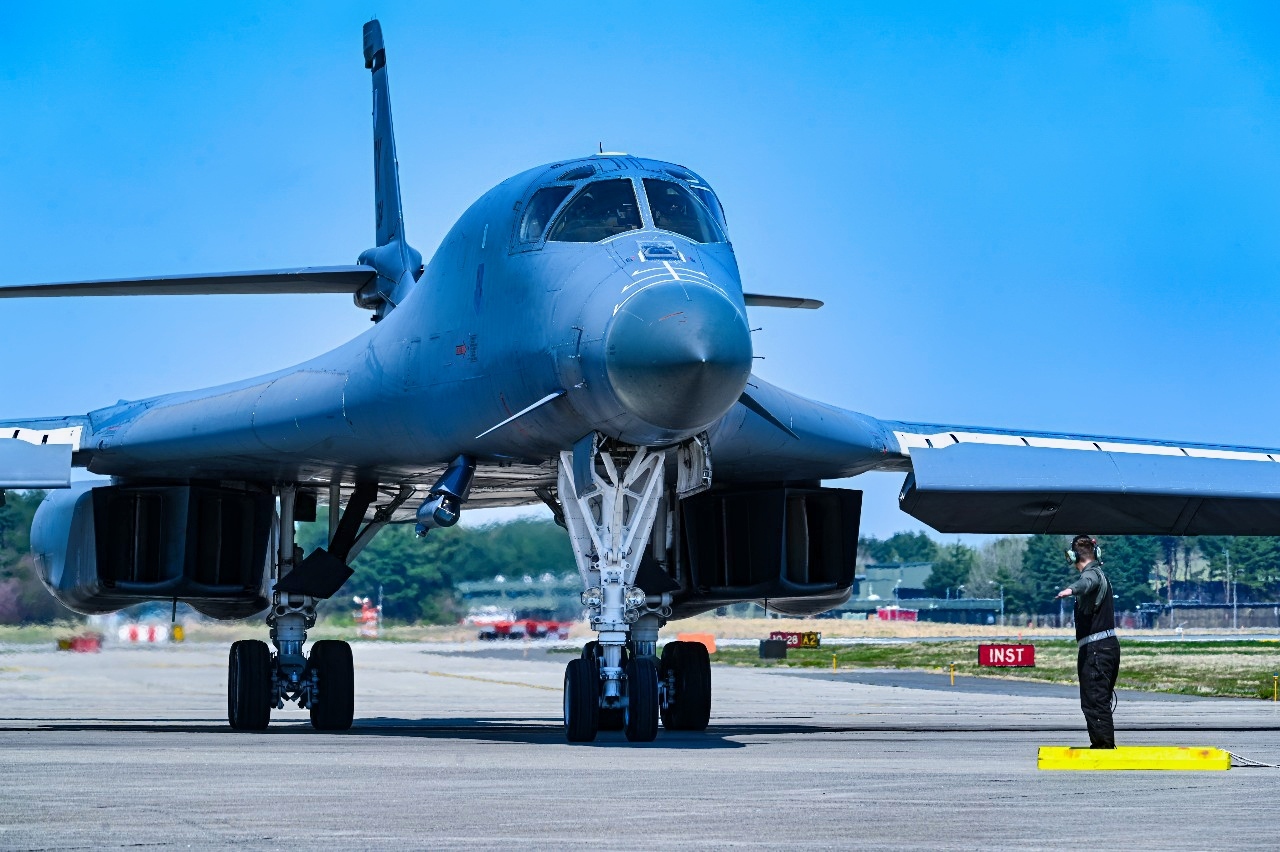
U.S. Air Force Senior Airman Colby Delia, 9th Expeditionary Bomb Squadron crew chief, marshals a B-1B Lancer on a flight line during Bomber Task Force 25-2 at Misawa Air Base, Japan, May 3, 2025. BTF 25-2 demonstrates Allied strength by forging strong alliances, showcasing our resolve, and deterring aggression, while also supporting global stability and security and strengthening military capabilities. (U.S. Air Force photo by Airman 1st Class Mattison Cole)
Trump and his administration could have marshalled significant, perhaps even noticeably bipartisan, public support. Having Vice President JD Vance persuading the isolationist wing of Trump’s MAGA base could have been especially important. Instead, his post-attack appearances have been few and far between.
Moreover, more effective pre-attack planning could have identified weaknesses that could adversely affect public opinion or even military operations. For example, stockpile levels of key weapons systems should have been assessed much earlier, and steps taken to ramp up production of key requirements. Current efforts to do so are welcome, but long overdue.
Don’t Forget Congress
Second, key Senate and House members, at least among Republicans, should have been brought in early to ensure their support and commitment to persuade their colleagues. Ironically, Trump’s move against Tehran has overwhelming support among Reagan Republicans.
Despite their quiescence over the past year, these legislators still constitute overwhelming majorities in Republican congressional caucuses.
Trump has fended off Democratic resolutions under the War Powers Act to restrain his regime-change program, but more can be expected.
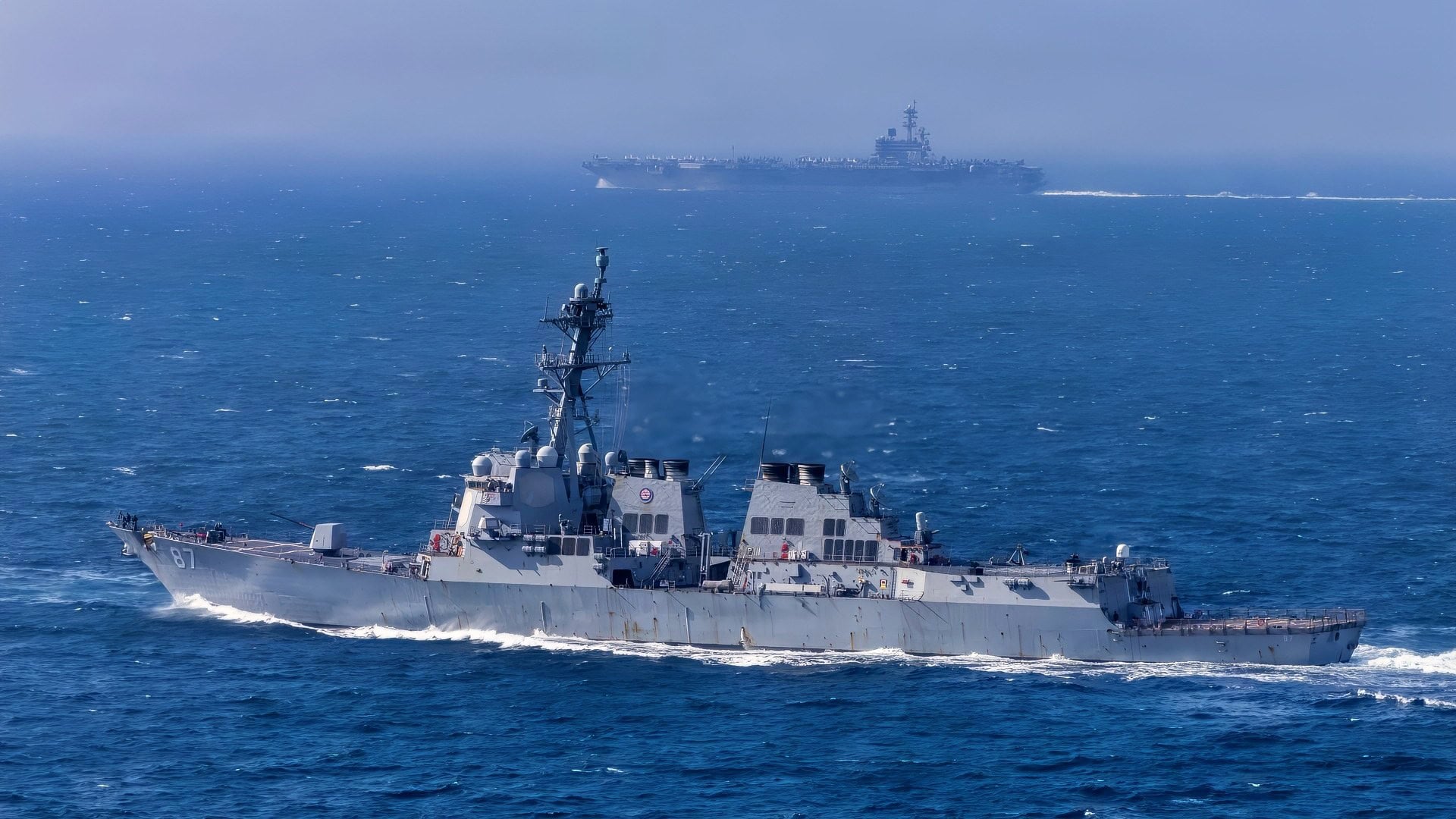
The Arleigh Burke-class guided-missile destroyer USS Mason (DDG 87) transits alongside the Nimitz-class aircraft carrier USS George H.W. Bush in the Atlantic Ocean, Feb. 21, 2026. The George H.W. Bush Carrier Strike Group is at sea training as an integrated warfighting team. Composite Training Unit Exercise (COMPTUEX) is the Joint Force’s most complex integrated training event and prepares naval task forces for sustained high-end Joint and combined combat. Integrated naval training provides combatant commanders and America’s civilian leaders highly capable forces that deter adversaries, underpin American security and economic prosperity, and reassure Allies and partners. (U.S. Navy photo by Mass Communication Specialist 2nd Class Jayden Brown)
Handled correctly, the Democrats’ knee-jerk resistance to overthrowing a government that directly threatens innocent Americans will backfire on them. Ronald Reagan would know how to make that happen, and it can still be done now.
Don’t Forget the Allies
Third, America’s key allies should have been forewarned, and some, Great Britain in particular, encouraged to join the US-Israeli coalition strikes on Iran. UK Prime Minister Keir Starmer’s government is near collapse, which may explain his initial stumbling refusal to allow the use of UK air bases, but we might have saved him from embarrassing himself.
Strongly supportive from the outset, NATO Secretary General Mark Rutte could have been enlisted earlier to help the diplomatic effort. German Chancellor Friedrich Merz has made surprisingly robust statements after meeting Trump, but would have been more effective coming earlier. France’s Emmanuel Macron and Spain’s socialist Prime Minister Pedro Sanchez were always going to be problems.
Don’t Forget Iran’s Opposition
Fourth, and most importantly, cooperating with and supporting Iran’s opposition should have been undertaken long ago. American failure to aid the opposition is a decades-long mistake, but it should have been a far higher priority for an administration considering regime change.
After all, the opposition and regime leaders who persuade others to defect to their side will have the laboring oar in actually effecting regime change. As with the other political efforts at persuasion, dealing with the opposition would not have required revealing anything specific about US military operations or timing.

A U.S. Air Force B-52H Stratofortress strategic bomber assigned to the 69th Expeditionary Bomb Squadron flies within the U.S. Central Command area of responsibility, Nov. 15, 2024. The B-52H provides strategic options and flexibility to U.S. and coalition senior leaders with the aircraft’s ability to employ a wide range of weapons with precision and deliver a decisive response to adversaries who threaten peace and security across the region. (U.S. Air Force photo)
Iran’s domestic opposition is at its highest level since the ayatollahs achieved power in 1979, but it is still largely disorganized. It will necessarily take time for the opposition to work for defections within the military and even the regime itself. Indeed, the most likely interim outcome in Iran is that a military government, led by officers of the conventional military rather than the IRGC, would replace the Islamic Revolution.
Such a military government could provide space for Iran’s people to decide the shape of their post-ayatollah government.
Trump has, belatedly, now spoken about assisting Iran’s opposition, including arming anti-regime militias and working with the Kurdish population in northwestern Iran against the regime.
This Can All Still Work, But Action Is Needed
All of this should have been done before the war started, and now needs to accelerate dramatically, but it is still doable.
Given inadequate advance planning, it is more important than ever not to set artificial deadlines for achieving regime change.
Tending to the pressing political imperatives posed by the US public, Congress, foreign allies, and Iran’s opposition would maximize the time available to achieve success.
About the Author: Ambassador John R. Bolton
Ambassador John R. Bolton served as national security adviser under President Donald J. Trump. He is the author of “The Room Where It Happened: A White House Memoir.” You can follow him on Twitter: @AmbJohnBolton.