Summary and Key Points: Kris Osborn, President of Warrior Maven and former Pentagon acquisition expert, evaluates the “enduring lethality” of the Tomahawk Land Attack Missile (TLAM) as it evolves into a multidomain threat.
-The Block IV “Tactical Tomahawk” and the emerging Block V variants have transitioned from static “bunker-busters” to dynamic, maritime-strike assets capable of loitering and retargeting in flight.
-This report analyzes the integration of the Joint Multiple Effects Warhead System (JMEWS), the transition to Synthetic Guidance Mode, and the missile’s role as a “Day One” penetrator for contested airspaces.
-Osborn concludes that the Tomahawk’s ability to “see” and “think” mid-flight ensures its status as the U.S. Navy’s primary long-range strike arrow.
The Tomahawk Evolution: Why the Block IV Tactical Variant is the Navy’s 2026 Choice for Moving Targets
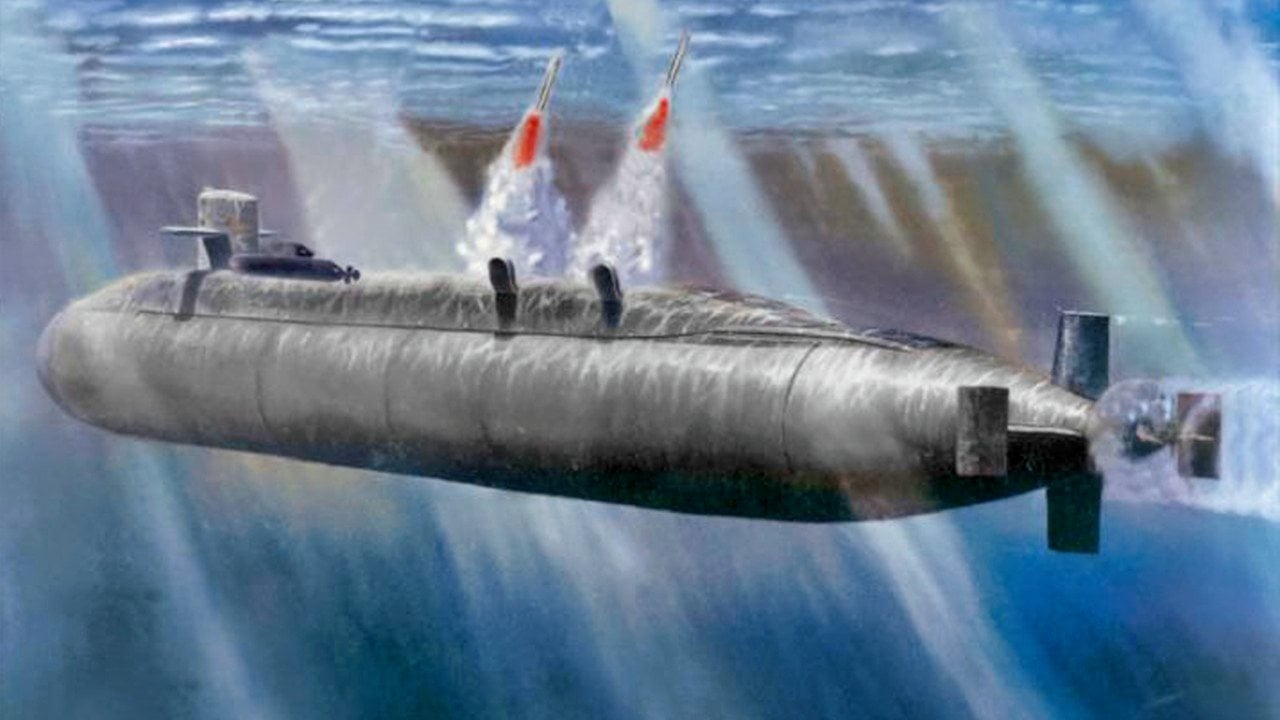
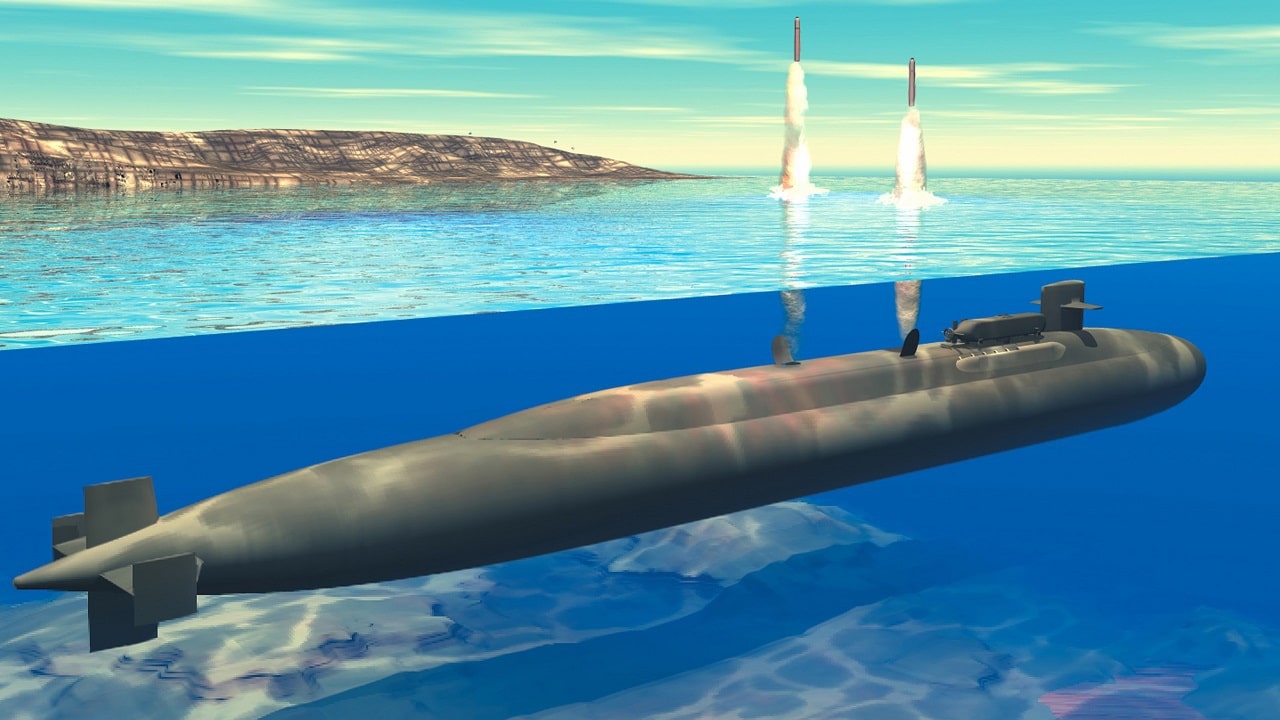
Puget Sound Naval Shipyard, Wash. (Aug. 14, 2003) — Illustration of USS Ohio (SSGN 726) which is undergoing a conversion from a Ballistic Missile Submarine (SSBN) to a Guided Missile Submarine (SSGN) designation. Ohio has been out of service since Oct. 29, 2002 for conversion to SSGN at Puget Sound Naval Shipyard. Four Ohio-class strategic missile submarines, USS Ohio (SSBN 726), USS Michigan (SSBN 727) USS Florida (SSBN 728), and USS Georgia (SSBN 729) have been selected for transformation into a new platform, designated SSGN. The SSGNs will have the capability to support and launch up to 154 Tomahawk missiles, a significant increase in capacity compared to other platforms. The 22 missile tubes also will provide the capability to carry other payloads, such as unmanned underwater vehicles (UUVs), unmanned aerial vehicles (UAVs) and Special Forces equipment. This new platform will also have the capability to carry and support more than 66 Navy SEALs (Sea, Air and Land) and insert them clandestinely into potential conflict areas. U.S. Navy illustration. (RELEASED)
Tomahawk missiles are used to destroy fixed targets such as enemy bunkers, airfields, command-and-control systems and buildings.
They are often the first weapon to attack and will likely continue in that role. The current state of the art Tomahawk, Block IV, is imbued with technical innovations that make it more effective than before.
The weapons have been used for decades now. Roughly 800 tomahawks were fired during Operation Iraqi Freedom in 2003, and about 200 were used in Desert Storm.
More than 200 Tomahawks were fired as part of NATO action in Libya in 2011.
Tomahawk missiles weigh 3,500 pounds with a booster and can travel up to 550 miles per hour for more than 900 nautical miles.
They are just over 18 feet long and have an 8-foot, 9-inch wingspan.
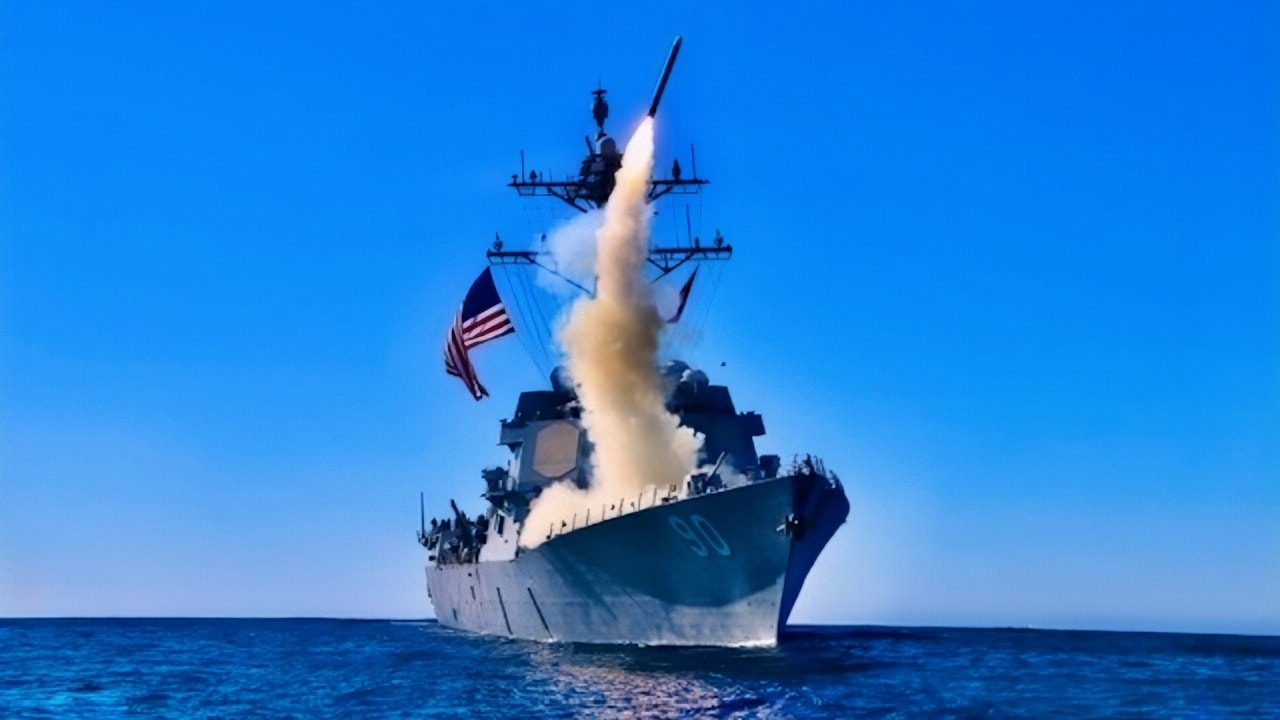
(Dec. 01, 2020) – The guided-missile destroyer USS Chafee (DDG 90) launches a Block V Tomahawk, the weapon’s newest variant, during a missile exercise. This event marked the first time a Block V Tomahawk missile was operationally tested, marking the Navy’s transition to a more advanced capability for the fleet. Block V includes an upgrade that will enhance navigation performance and provide robust and reliable communications. Chafee is currently assigned to Carrier Strike Group ONE and is homeported in Pearl Harbor. (U.S. Navy photo by Ens. Sean Ianno/Released)
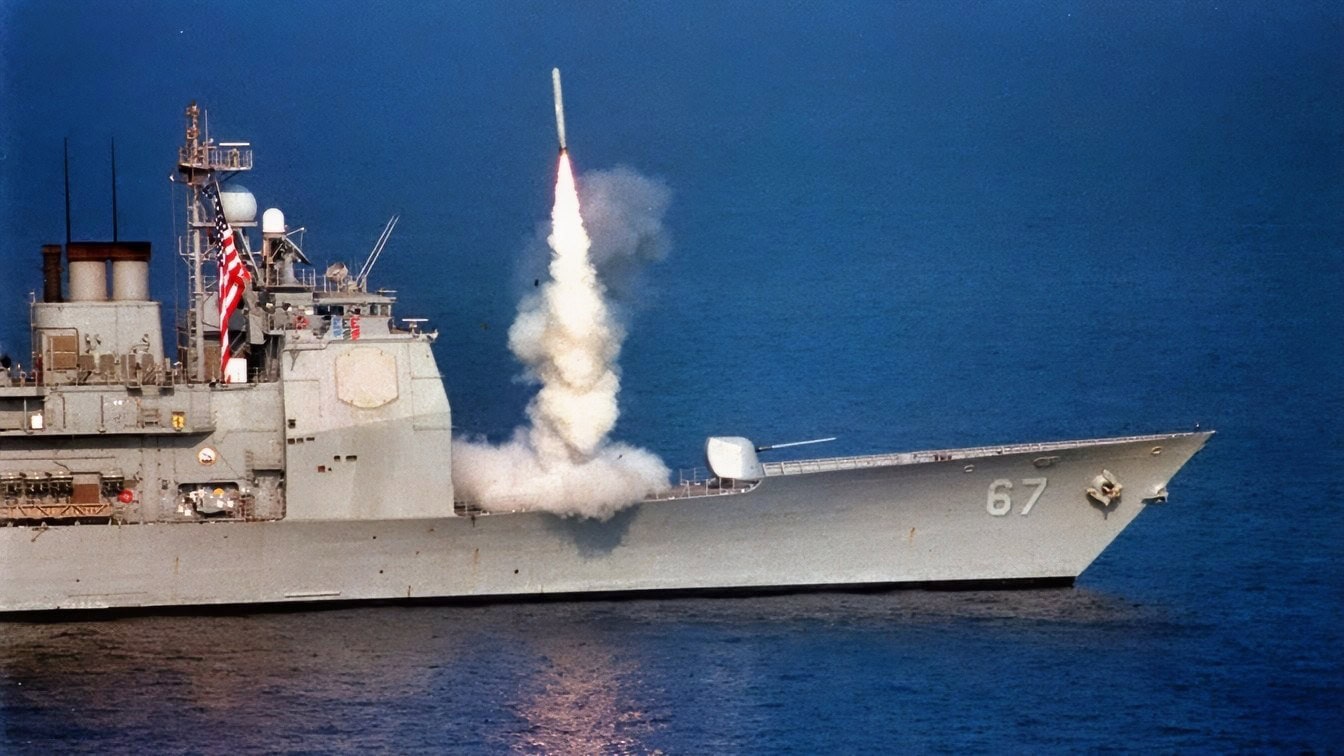
A Tomahawk cruise missile launches from the forward vertical launch system of the USS Shiloh (CG 67) to attack selected air defense targets south of the 33rd parallel in Iraq on Sept. 3, 1996, as part of Operation Desert Strike. The attacks are designed to reduce risks to the pilots who will enforce the expanded no-fly zone. President Clinton announced an expanded no-fly zone in response to an Iraqi attack against a Kurdish faction. The larger no-fly zone in Southern Iraq will make it easier for U.S. and coalition partners to contain Saddam Hussein’s aggression. The U.S. Navy Ticonderoga Class cruiser launched the missiles as it operated in the Persian Gulf.
By destroying enemy air defenses, communication infrastructure, and other defensive targets, Tomahawks allow strike aircraft and other attack assets to operate in a much lower-risk environment.
The weapon was used in this capacity against targets in Syria, at the beginning of Operation Inherent Resolve.
The Tomahawk flies with a two-way data link.
It has an ability to loiter and collect Intelligence, Surveillance, and Reconnaissance data, as well as an active seeker designed to complement a technology called Synthetic Guidance Mode.
This uses a higher-throughput radio signal to update the missile in flight, giving it new target information as a maritime or land target moves.
The Tomahawk thus can be retargeted in flight to destroy moving targets—or to react to unforeseen contingencies, such as satellite signals or GPS technology being compromised by an enemy attack.
In recent years, the guidance systems on the Tomahawk have been hardened to defend against spoofing and advanced seeker technology.
The variant using this technology, called the Tactical Tomahawk, introduced a breakthrough in the realm of long-range cruise missile attack, as it multiplies options for commanders.
Tomahawk Upgrades
Tomahawks have been upgraded numerous times over their years of service.
The Block IV Tomahawk, in service since 2004, includes a two-way data link for in-flight re-targeting; terrain navigation; digital scene-matching cameras; and a high-grade inertial navigation system. An active seeker would function alongside a number of existing Tomahawk targeting and navigation technologies such as infrared guidance, radio frequency targeting, and GPS systems.
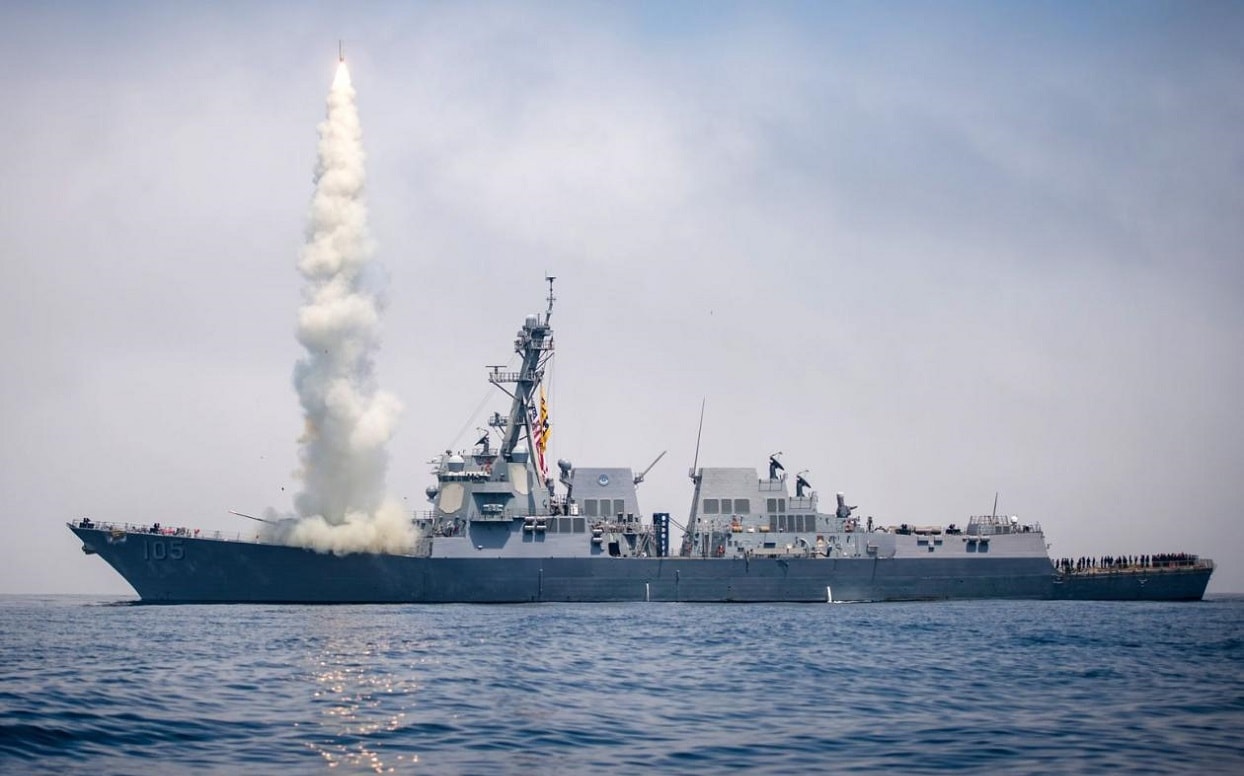
Tomahawk Cruise Missile. Image Credit: US Navy.
The current Tomahawk’s loitering ability allows it to hover near a target until there is an optimal time to strike. All the while, its data link can send back images of a given target before it strikes.
The weapon is also capable of performing battle damage assessment missions by relaying images through the data link.
The Tomahawk missile has also demonstrated an ability to use its on-board camera to take a picture of a potential target, send it to a command center and then loiter until instructed to destroy that target.
New Tomahawk Warhead
Raytheon and the Navy are now developing a new payload for the weapon—a more-penetrating warhead called the Joint Multiple Effects Warhead System, or JMEWS.
Previously sponsored by U.S. Central Command, the JMEWS would give the Tomahawk better bunker-busting effects — meaning the weapon could better penetrate hardened structures like concrete.
About the Author: Kris Osborn
Kris Osborn is the President of Warrior Maven – Center for Military Modernization. Osborn previously served at the Pentagon as a highly qualified expert in the Office of the Assistant Secretary of the Army—Acquisition, Logistics & Technology. Osborn has also worked as an anchor and on-air military specialist at national TV networks. He has appeared as a guest military expert on Fox News, MSNBC, The Military Channel, and The History Channel. He also has a Masters Degree in Comparative Literature from Columbia University