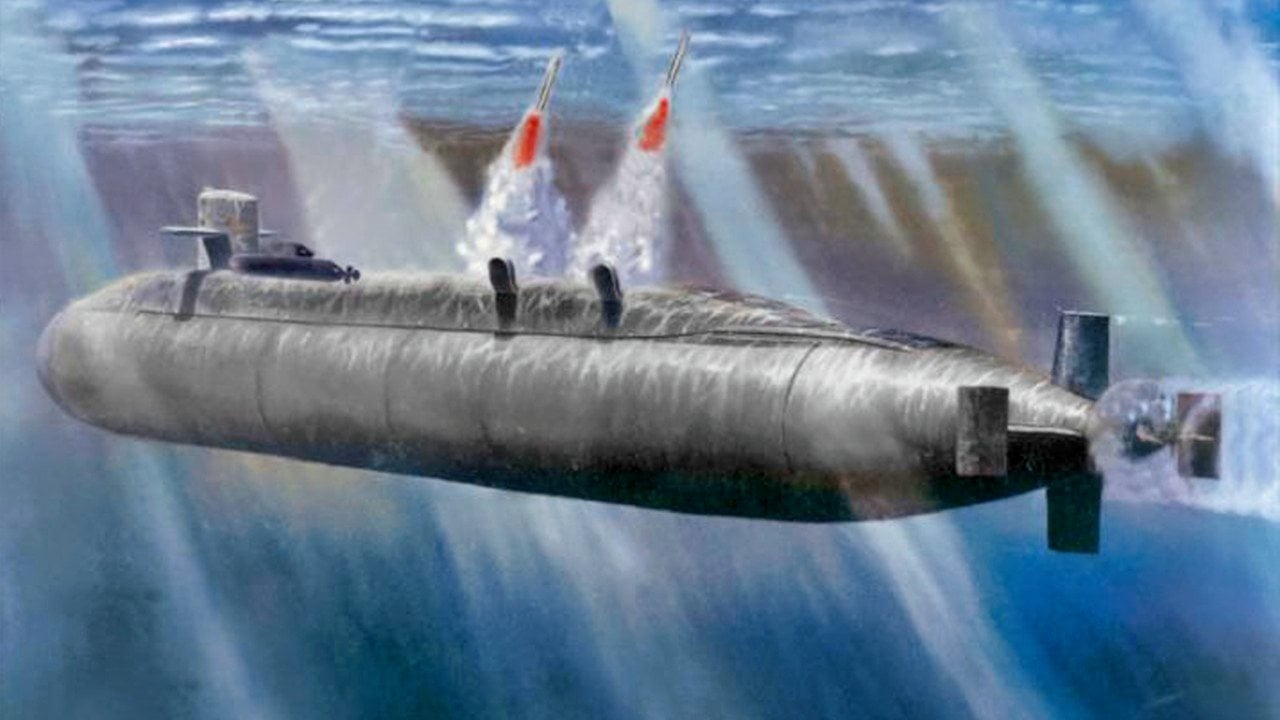
Summary and Key Points: Defense reporter Caleb Larson evaluates the critical “magazine depth” crisis during the 2026 Iran conflict. With over 400 Tomahawks expended in the opening 72 hours of Operation Epic Fury, the Pentagon has pivoted to low-cost JDAMs to preserve high-end munitions for the Indo-Pacific.
-This report analyzes the 2026 Executive Order “Prioritizing the Warfighter,” which bars defense contractors like RTX and Lockheed Martin from stock buybacks until production targets—such as quadrupling THAAD output to 400 units annually—are met.
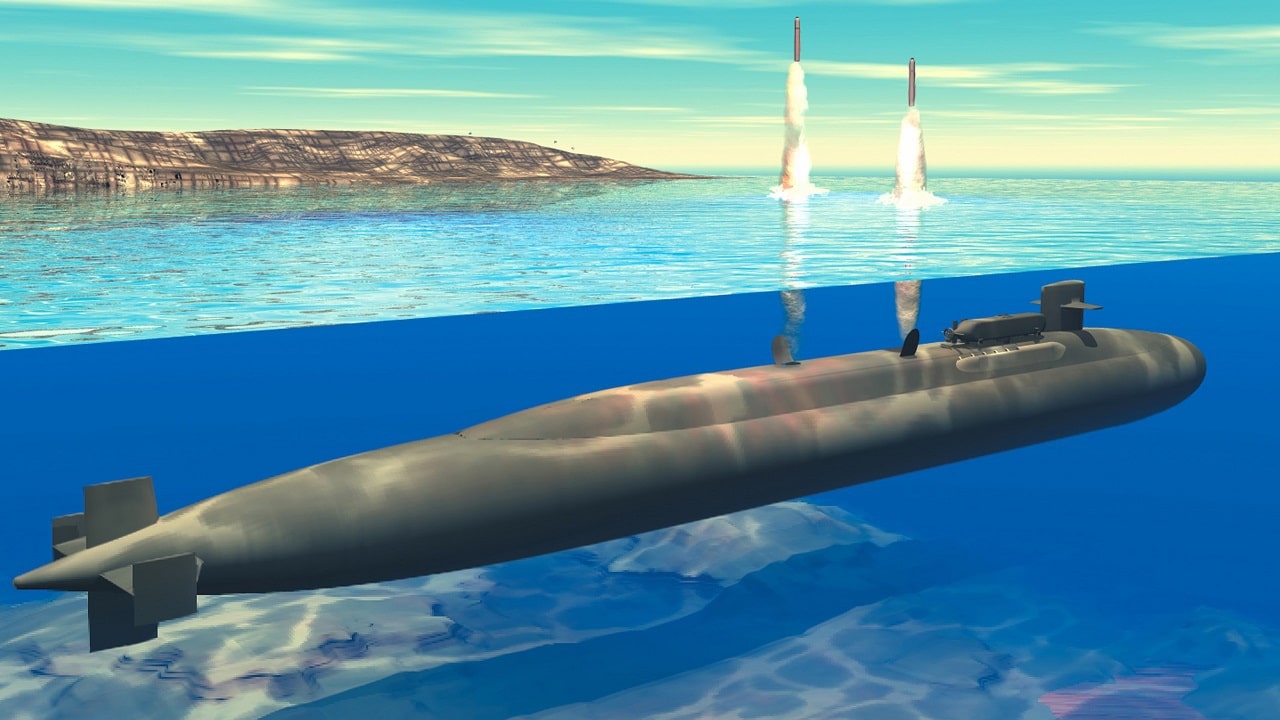
Artist’s concept of an Ohio-class SSGN launching Tomahawk Land Attack Missiles.
-Larson explores the risk of moving Patriot batteries from the Pacific to counter Iranian drones.
Beyond the Tomahawk: Analyzing the Pentagon’s High-Stakes Transition to JDAMs Over Iran
As the ongoing Israeli-American campaign against Iran enters its second week, one operational contingency is causing a certain degree of consternation in defense circles: how quickly the Pentagon is firing precision munitions like Tomahawk cruise missiles and air defense interceptors — and if Operation Epic Fury is jeopardizing the United States defense posture in the Indo-Pacific.
The number of Iranian missiles and drones that Gulf countries, plus the United States and Israel, have intercepted is in the thousands and climbing. And while the region has thus far managed to avoid absorbing truly crippling strikes, their stock of interceptors is finite, as is the United States stock of Tomahawks.
Tomahawk cruise missiles have been in service with the United States since their service debut in the early 1980s. The long-range cruise missiles have been produced in over a dozen major variants since their introduction, and can be launched from warships, submarines, and ground launchers.
But as Iranian air defenses continue to degrade, the Pentagon is shifting tactics and bringing in B-52 and B-1 bombers to bear against Iran, and increasingly leaning not on Tomahawk missiles, but instead Joint Direct Attack Munitions.

A U.S. Air Force B-52H Stratofortress assigned to the 23rd Bomb Squadron sits on the flightline during exercise Prairie Vigilance 25-1 at Minot Air Force Base, North Dakota, April 12, 2025. Vigilance series exercises are conducted with a focus on the safe and secure handling of equipment. (U.S. Air Force photo by Senior Airman Kyle Wilson)
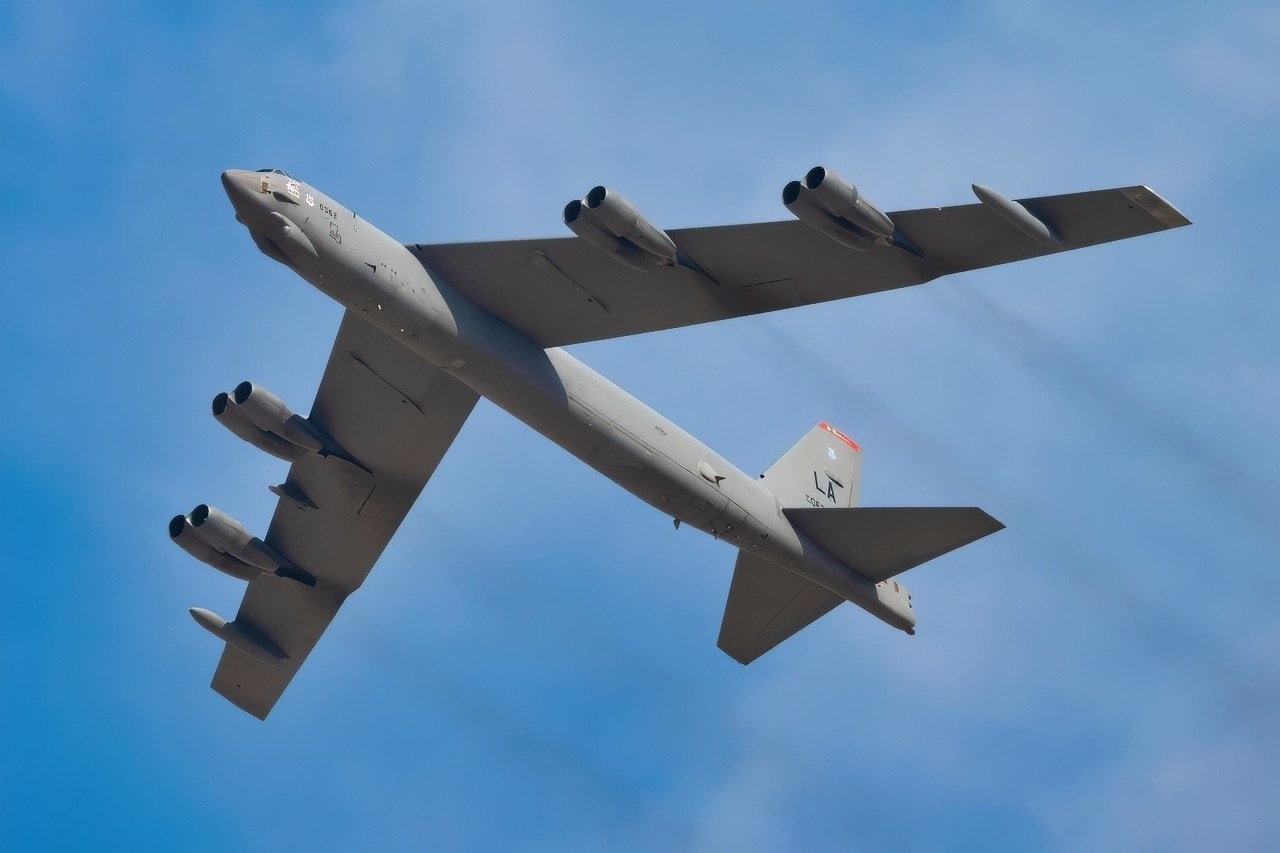
A U.S. Air Force B-52 Stratofortress aircraft, assigned to the 96th Bomb Squadron from Barksdale Air Force Base, Louisiana, flies over spectators at the Dubai Airshow 2025, Nov. 17, 2025, at the Al Maktoum International Airport in Dubai, United Arab Emirates. The B-52 flew from Rota, Spain, to participate in the event, showcasing U.S. airpower on a global stage. (U.S. Air Force photo by Staff Sgt. Tylin Rust)
The War in Iran: A Shift
As the war against Iran develops, American and Israeli forces are increasingly transitioning to the use of Joint Direct Attack Munitions, or JDAMs. These munitions are, in essence, unguided free-fall bombs equipped with a bolt-on guidance kit that converts the weapons into precision-guided munitions. From a cost perspective, JDAM munitions are very advantageous and cost significantly less than a Tomahawk cruise missile.
In tandem with their lower cost, they can be produced at a significantly faster rate than other precision munitions, such as Tomahawks, and are available in large numbers. Although exact stockpile numbers of both JDAM kits and free-fall bombs are unknown, they are thought to be substantial.
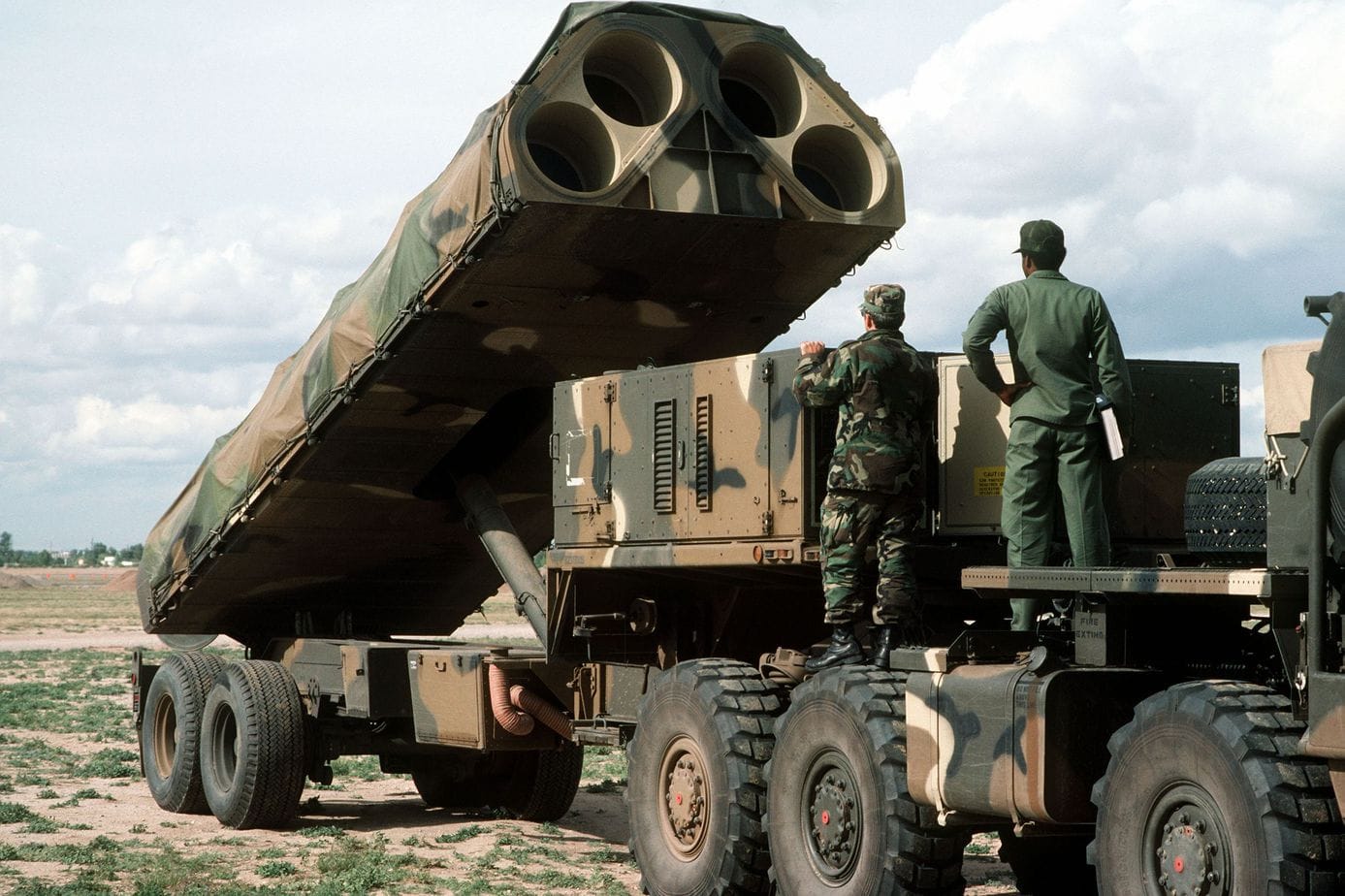
Image of land-based Tomahawk missile from the 1980s.
One analysis by the Center for Strategic and International Studies, a Washington-based think tank, estimates that the U.S. Navy destroyers arrayed around Iran as part of Operation Epic Fury are capable of firing 150 to 250 Tomahawk cruise missiles. However, that figure does not account for U.S. Navy submarine assets, which could provide a significant source of additional Tomahawk magazines.
Should the U.S. Navy have one of its converted Ohio-class guided-missile submarines in the region, the number of available Tomahawk missiles would increase by 154. An Ohio-class submarine is likely available to Central Command, though submarine operational deployments are not typically made public.
Ahead of strikes on Iran, General Dan Caine, the Chairman of the Joint Chiefs of Staff, sounded alarm bells, warning the president that an operation against Iran could jeopardize American commitments to allies in other parts of the world. General Caine argued, according to Axios reporting, that a significant expenditure of U.S. munitions could deplete the United States’ weapons stockpiles and crimp its options in other crises around the globe should conflict erupt elsewhere.
General Caine noted that the United States has expended Tomahawk missiles and air defense interceptors in defense of Israel, Ukraine, against repeated attacks on Iran, and elsewhere at historic levels.
The American strikes during Operation Midnight Hammer, the joint Israeli-American operation against Iranian nuclear enrichment infrastructure and air defenses, expended about 30 Tomahawk missiles. Strikes against the Iran-backed Houthis are thought to have used around 135 Tomahawks, and military operations against an affiliate of the Islamic State in Nigeria saw more than 12 Tomahawks fired.
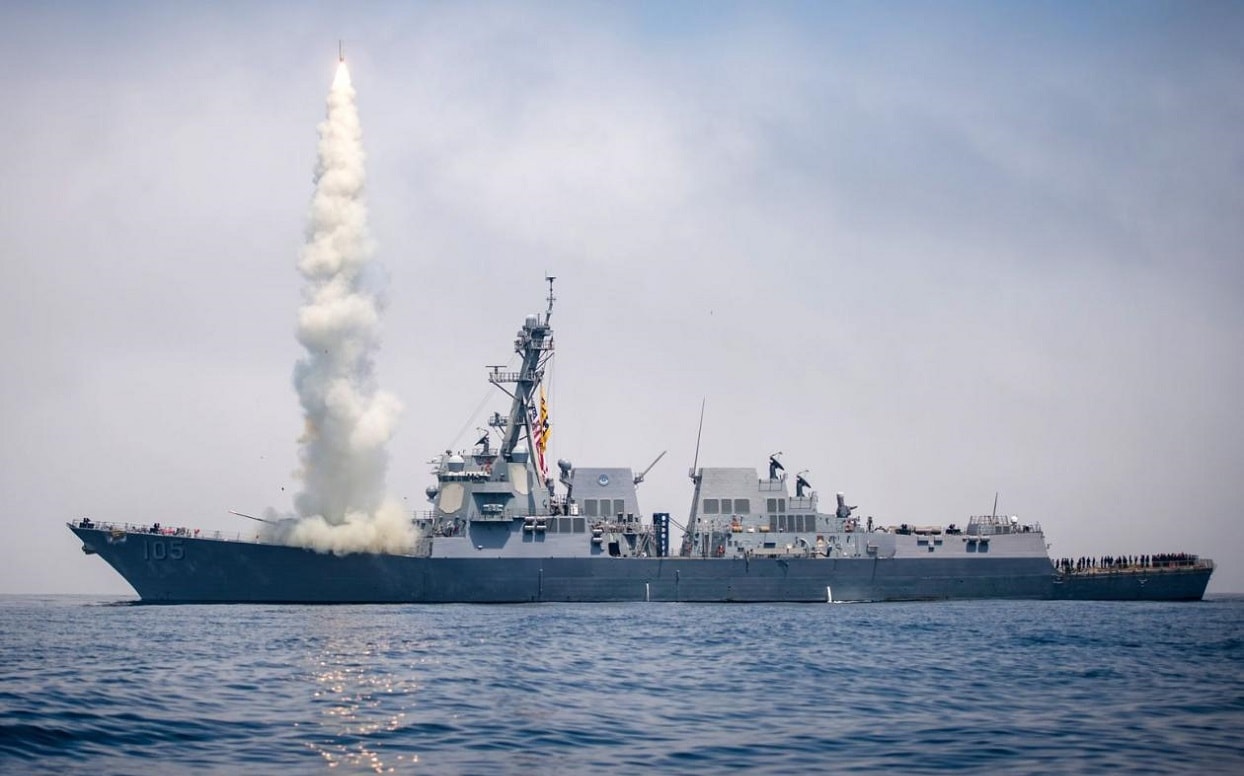
Tomahawk Cruise Missile. Image Credit: US Navy.
Operational Accident?
During one of Operation Epic Fury’s opening salvos, a cruise missile landed on a school within an Islamic Revolutionary Guard Corps compound. Though neither the Pentagon nor President Trump has taken American responsibility for the strike, with Iranian authorities asserting that they killed around 175 schoolchildren, analysis of the available video evidence of the strike indicates that a Tomahawk cruise missile caused the explosion. And of the parties currently involved in strikes on Iran, the United States is the only operator of Tomahawk missiles.
Air Defenses, Interceptions, and Munition Stockpiles
Although the transition from Tomahawk missiles to JDAMs is likely to alleviate the burden placed on the Tomahawk stockpile, continued reliance on air defense assets like THAAD and Patriot batteries risks depleting those platforms’ interceptor stocks.
The Pentagon also shifted a THAAD battery from South Korea, where it provided overwatch of missile launches from North Korea to the Middle East. Patriot components have also been moved from the Indo-Pacific to the Middle East. The moves boost air defense coverage of sites in the Middle East, but at the expense of the Indo-Pacific.
Production Boost
Boosting production of precision munitions is increasingly seen as a priority for the Pentagon. But increasing weapons production requires more shifts at weapons plants, hiring and training personnel, and securing the raw materials and precise components that go into complex munitions.
Earlier this year, Lockheed Martin, the defense firm, inked a deal with the Pentagon to quadruple THAAD interceptor production, from the current rate of 96 to 400. RTX’s Raytheon signed a similar agreement that would boost production of several crucial air defense and precision munitions, including Land Attack and Maritime Strike variants of Tomahawk, AMRAAM missiles, Standard Missile-3 Block IB interceptors, Standard Missile-3 Block IIA interceptors, and Standard Missile-6 interceptors.
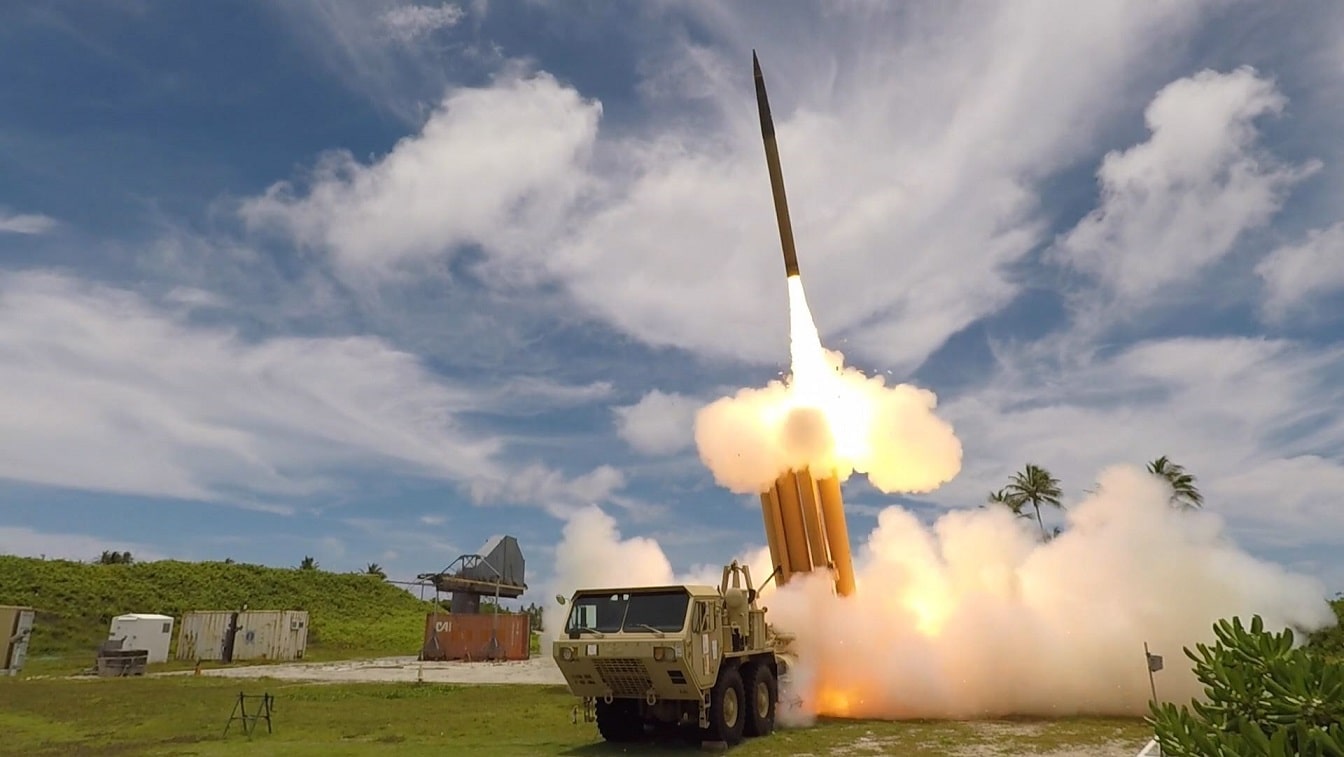
THAAD Missile Defense Battery Firing. Image Credit: Lockheed Martin.
“As global demand for these precision munitions continues to grow, these up-to-seven-year agreements establish frameworks to build on the company’s previous investments to expand production,” RTX explained in a company announcement. “Under the frameworks announced today, RTX will increase annual production of Tomahawks to more than 1,000, AMRAAMs to at least 1,900, and SM-6 to more than 500. RTX will also increase production of SM-3 IIA and accelerate SM-3 IB production. Many of these munitions will grow 2 to 4 times their existing production rates.”
Boost Production — or Else
There are signs that the White House is aware of a looming crunch of precision missiles and air interceptors, meeting with Lockheed Martin, RTX, and other defense primes to discuss expanded production strategies. Defense contractors’ stock buybacks have stoked the ire of President Trump, who has repeatedly asserted that payouts should be linked to meeting production figures and timetables.
On January 7, the president signed an executive order, called Prioritizing the Warfighter in Defense Contracting, and charged Secretary of Defense Pete Hegseth 30 days to name-and-shame “underperforming on their contracts, not investing their own capital into necessary production capacity, not sufficiently prioritizing United States Government contracts, or whose production speed is insufficient.”
The president has been highly critical of defense firms, leveling particularly acute critiques of what he views as painfully slow production schedules and high per-unit costs for missiles and interceptors. His executive order strictly bars defense contractors from issuing dividends or stock buybacks “until they can produce a superior product, on time and on budget.”
The Next War
Although Iran has launched many dozens of missile and drone salvoes at American assets in the Middle East, Israel, and some of Iran’s immediate neighbors, the rate at which the country can launch appears to be decreasing, indicating that the country’s ability to fight back is rapidly diminishing.
And while the United States, Israel, and several other Gulf allies have managed to shoot down the majority of Iranian missiles, Iranian drones have proven to be more difficult to shoot down. While air defenses like THAAD and Patriot excel when engaging fast-moving, high-altitude ballistic missiles, they are not optimal for engaging comparatively slow-moving drones at low altitude.
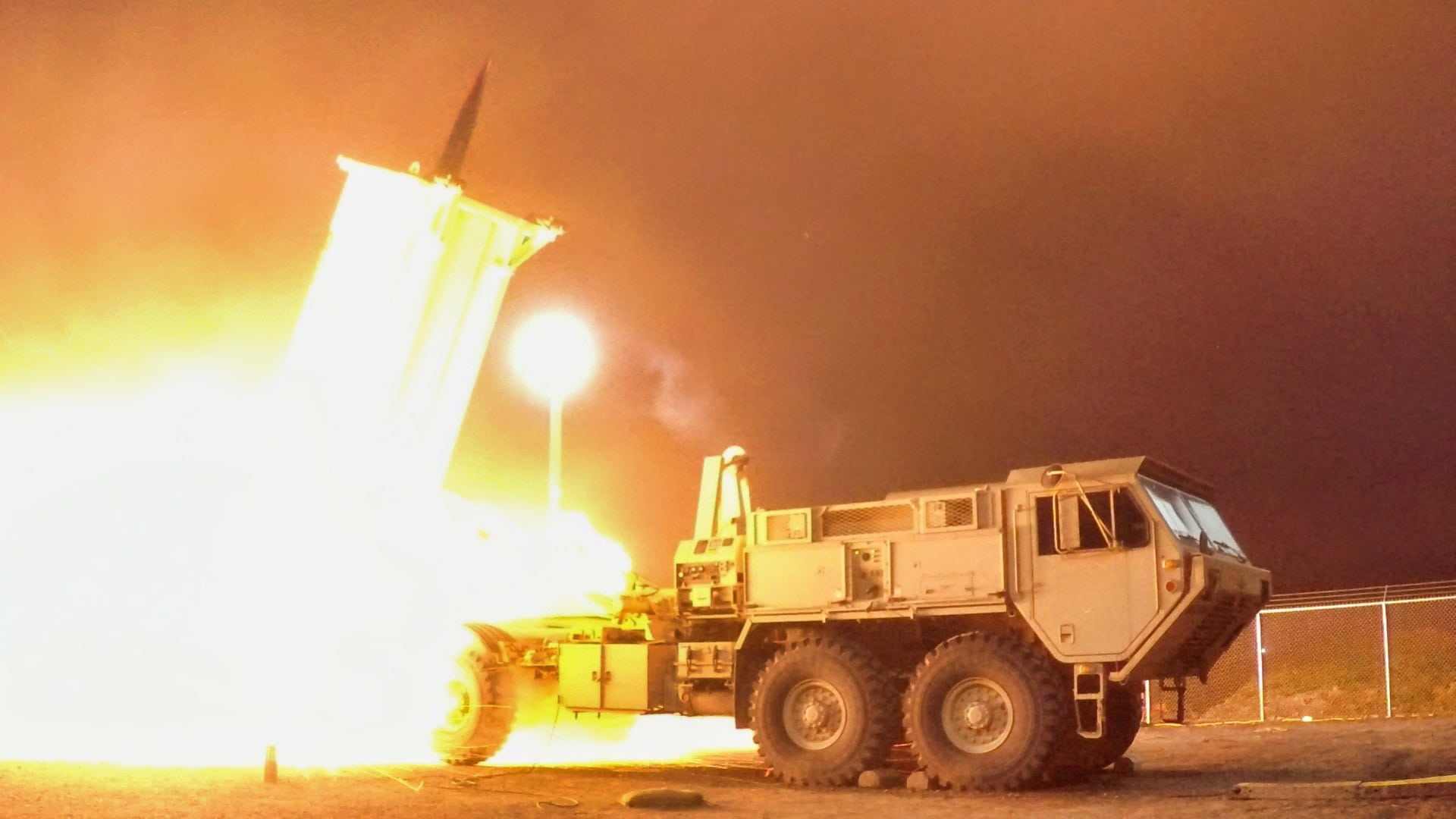
THAAD. Image Credit: Department of Defense.
The United States has scrambled to respond, bringing in Ukrainian air defense experts to help guide and advise allies on how to best counter Iranian drones.
It seems unlikely at this juncture that Iran would be able to land a truly devastating blow on American or allied assets, despite some successful strikes in the conflict’s opening stages. But the real risk is for the next war.
Writing in 2024, Mackenzie Eaglen, a Senior Fellow at the American Enterprise Institute, asked why the Pentagon had not moved more decisively to boost Tomahawk production, given the cruise missile’s importance to the United States. “Victory in the next war,” she wrote, “will require a robust arsenal and deeper magazine depth of our fighting forces.
During Operation Iraqi Freedom in 2003, US forces launched roughly 800 land-attack Tomahawks during the initial invasion.
By today’s production rate, that would take us a decade to replenish. Fighting China would certainly require far more—and Beijing knows it.”
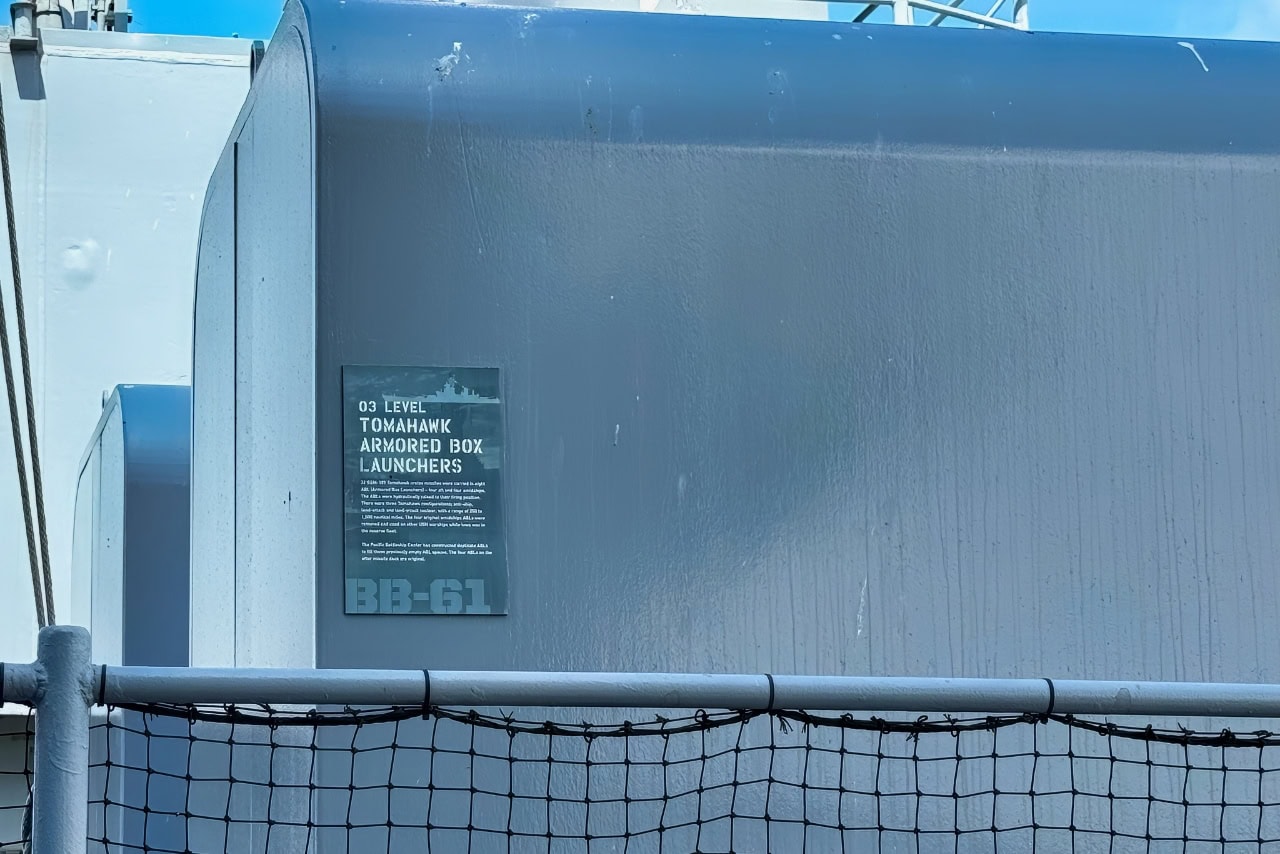
USS Iowa 19FortyFive image of Tomahawk Missiles on USS Iowa.
“With an inadequate supply of Tomahawks, the Navy’s land attack capability will overly rely on naval aviation, the presence of which will not be guaranteed within the ranges of China’s dense air defense network and sophisticated rocket force.”
Eaglen acknowledged that for operations in the Middle East, the Tomahawk is certainly the right arrow in the Pentagon’s quiver. But, she added, “the Pentagon cannot allow these strikes to undermine the Navy’s readiness and capabilities in other theaters. Insufficient procurement will only lead to empty launch cells across our fleet and guarantee that the next war will not end on our terms.”
There is a quote, often attributed to Soviet Premier Joseph Stalin, that says, “Quantity has a quality all its own.” Although that quotation may be apocryphal, it remains as true today as it was during the Second World War. But in prosecuting this war, the Pentagon might be tying its hands for the next one.
About the Author: Caleb Larson
Caleb Larson is an American multiformat journalist based in Berlin, Germany. His work covers the intersection of conflict and society, focusing on American foreign policy and European security. He has reported from Germany, Russia, and the United States. Most recently, he covered the war in Ukraine, reporting extensively on the war’s shifting battle lines from Donbas and writing on the war’s civilian and humanitarian toll. Previously, he worked as a Defense Reporter for POLITICO Europe. You can follow his latest work on X.