
Summary and Key Points: Defense expert Harry J. Kazianis details how Ukraine’s fleet of M1A1 Abrams main battle tanks — a powerful piece of American armored warfare donated by Washington and Canberra — is being attrited by Russian forces using first-person-view drones, Kornet anti-tank missiles, and coordinated combined-arms attacks that have exposed vulnerabilities nobody in the Pentagon wants to discuss publicly.
China’s People’s Liberation Army Ground Forces are watching every engagement, studying every destroyed tank, and quietly updating their own war plans for a Taiwan contingency where American armor could play a decisive role.
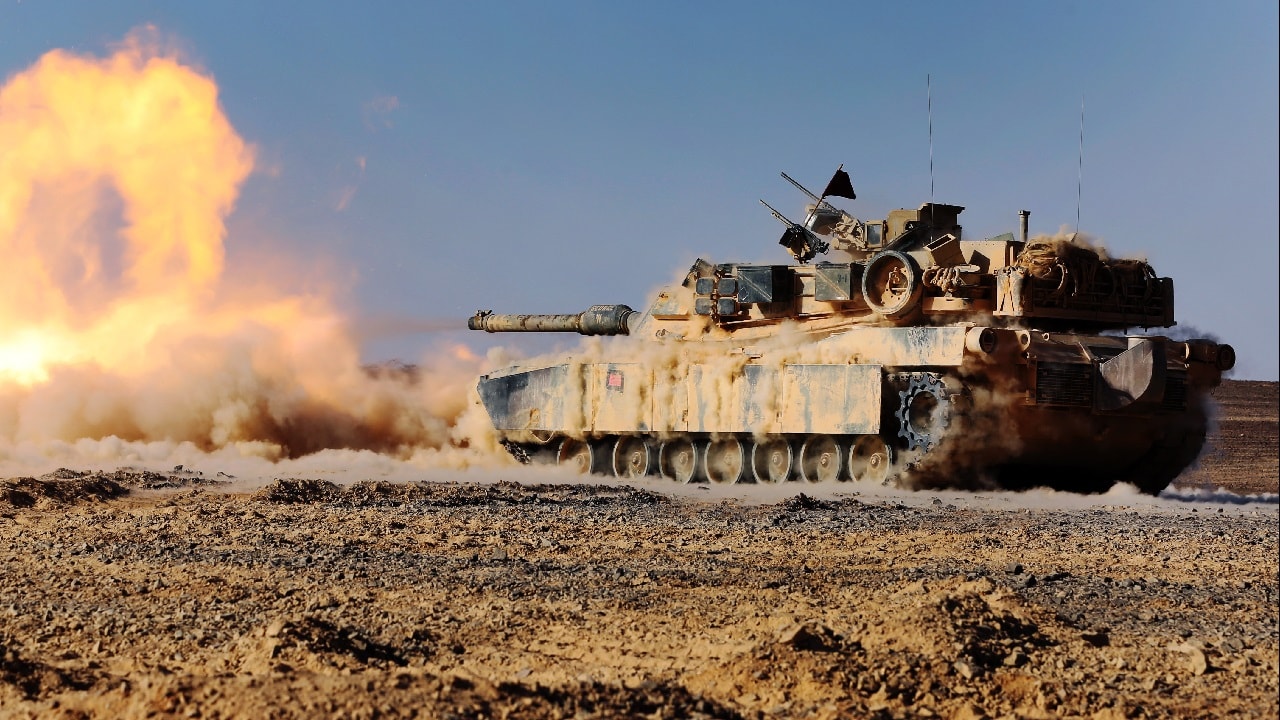
(U.S. Marine Corps photo by Sgt. Devin Nichols/Released)
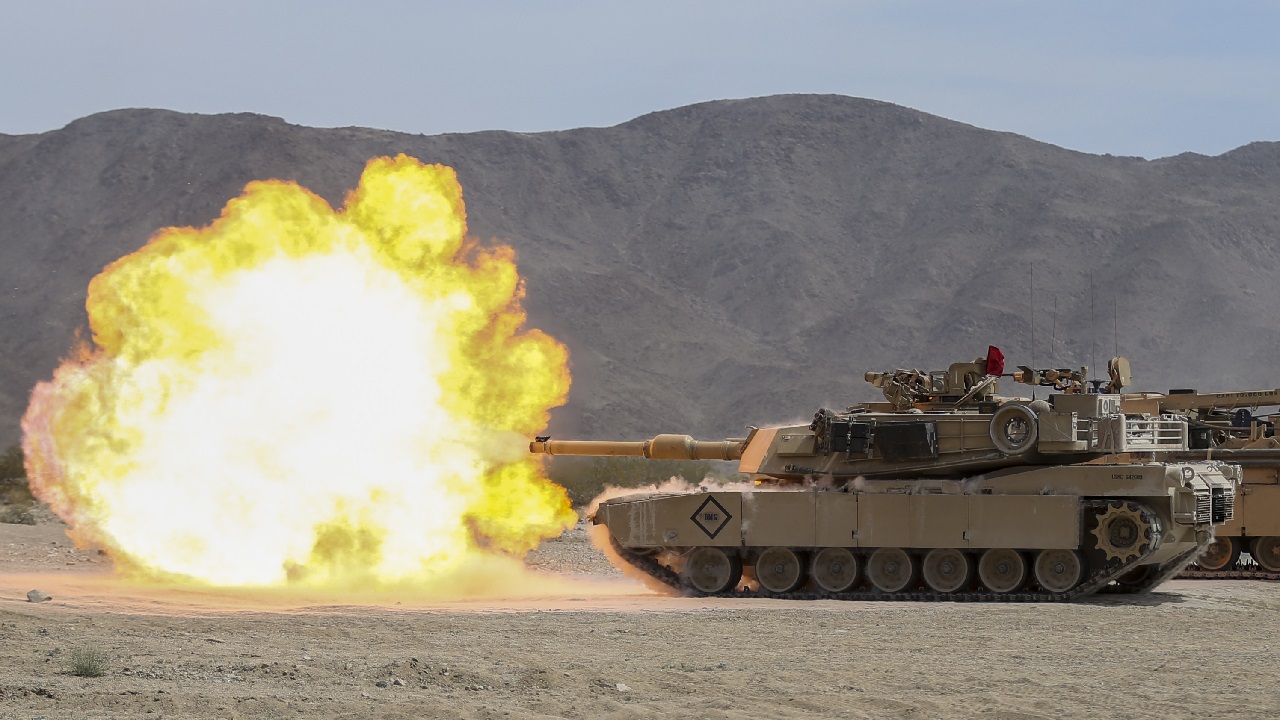
An M1A1 Abrams Tank fires off a round as a demonstration during 1st Tank Battalion’s Jane Wayne Spouse Appreciation Day aboard the Marine Corps Air Ground Combat Center, Twentynine Palms, Calif., April 3, 2018. The purpose of the event is to build resiliency in spiritual well being, the will to fight and a strong home life for the 1st Tanks Marines and their families. (U.S. Marine Corps photo by Lance Cpl. Rachel K. Porter)
Every M1A1 Abrams That Burns in Ukraine Is a Free Lesson for China’s Taiwan War Planners
There is a scene that has likely played out multiple times now on the battlefields of eastern Ukraine, and I want you to sit with it for a moment before we talk about what it means strategically, because I think the visceral reality of it gets lost in the policy abstraction.
A first-person-view drone — small, cheap, commercially derived, costing somewhere between a few hundred and a few thousand dollars — descends on an M1A1 Abrams main battle tank. The tank costs roughly $10 million. It represents decades of American engineering, some of the most sophisticated armor ever built, and the accumulated doctrine of the most powerful land army in the history of the world. The drone finds the engine deck, or the gap between the turret and the hull, or the exposed rear that no amount of reactive armor fully protects. And then the tank burns.
That scene is playing out on video, uploaded to Telegram channels, analyzed by military professionals on three continents. It is freely available intelligence of extraordinary value. And nobody in the world is studying it more carefully right now than the People’s Liberation Army Ground Forces in Beijing.
This is not a secondary concern. This is not an abstract analytical footnote. This is one of the most important pieces of military intelligence China has received in a generation, delivered free of charge, in likely high definition, with multiple camera angles.
What the M1A1 Abrams Was Built to Do — and Why Ukraine Changed the Equation
To understand why the Abrams losses matter so much beyond the immediate tactical situation in Ukraine, you have to understand what this tank was designed to accomplish and the doctrine built around it.
The M1A1 Abrams is not just a weapons system. It is the physical expression of a theory of land warfare developed by the U.S. Army over decades of hard thinking about how to fight and win against a numerically superior adversary on a modern battlefield. It might not be the newest M1 Abrams variant, but it is still one of the best tanks on the field today.
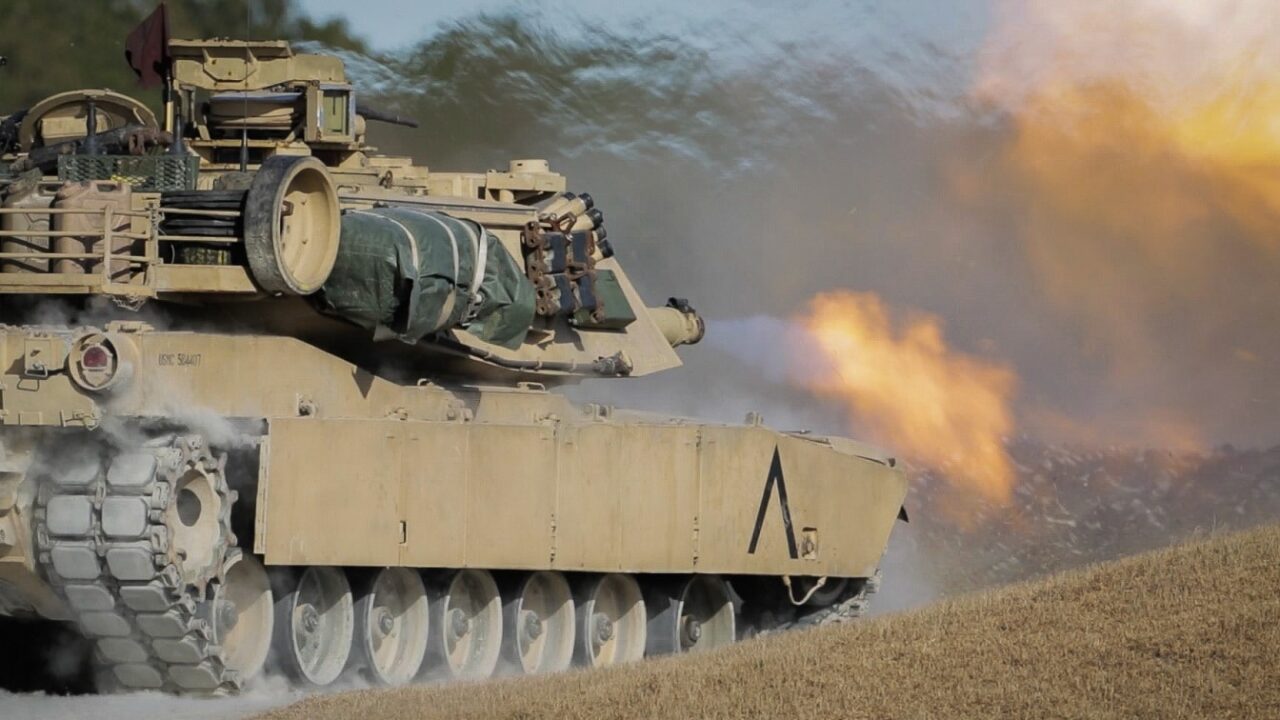
U.S. Marines assigned to 2nd Tank Battalion, 2nd Marine Division, fire a 120mm smoothbore main gun from an M1A1 Abrams main battle tank during a course of fire at Camp Lejeune, N.C., Jan. 30, 2019. The unit conducted marksmanship qualifications as a part of a biannual training exercise to certify tank crews on the M1A1 Abrams main battle tank. (U.S. Marine Corps photo by Cpl. Abrey Liggins)
The Abrams was built to dominate in combined-arms warfare — operating with infantry, artillery, close air support, and logistics in a coordinated system where each element multiplies the effectiveness of the others. Its composite armor is extraordinarily effective against the kinds of threats it was designed to face — opposing tanks, anti-tank guided missiles fired from range, and rocket-propelled grenades.
What it was not designed to face — what no tank in the history of armored warfare was designed to face — is the current reality of the Ukrainian battlefield, where first-person-view drones cost almost nothing to produce, can be operated by a single soldier with a consumer headset from several kilometers away, and can find the precise vulnerabilities in even the most sophisticated armored vehicle because those vulnerabilities are now documented in open-source video for anyone to study.
The Leopard 2 has suffered the same fate. So have the Bradley fighting vehicles, the Challenger 2s, and every other piece of Western armor sent to Ukraine. This is not a specifically American problem or a specifically Abrams problem. It is a battlefield reality that applies to all armor in the current threat environment. But because the Abrams is America’s tank — the one China will face if it moves on Taiwan and the United States commits ground forces — it is the Abrams losses that matter most to Beijing’s war planners.
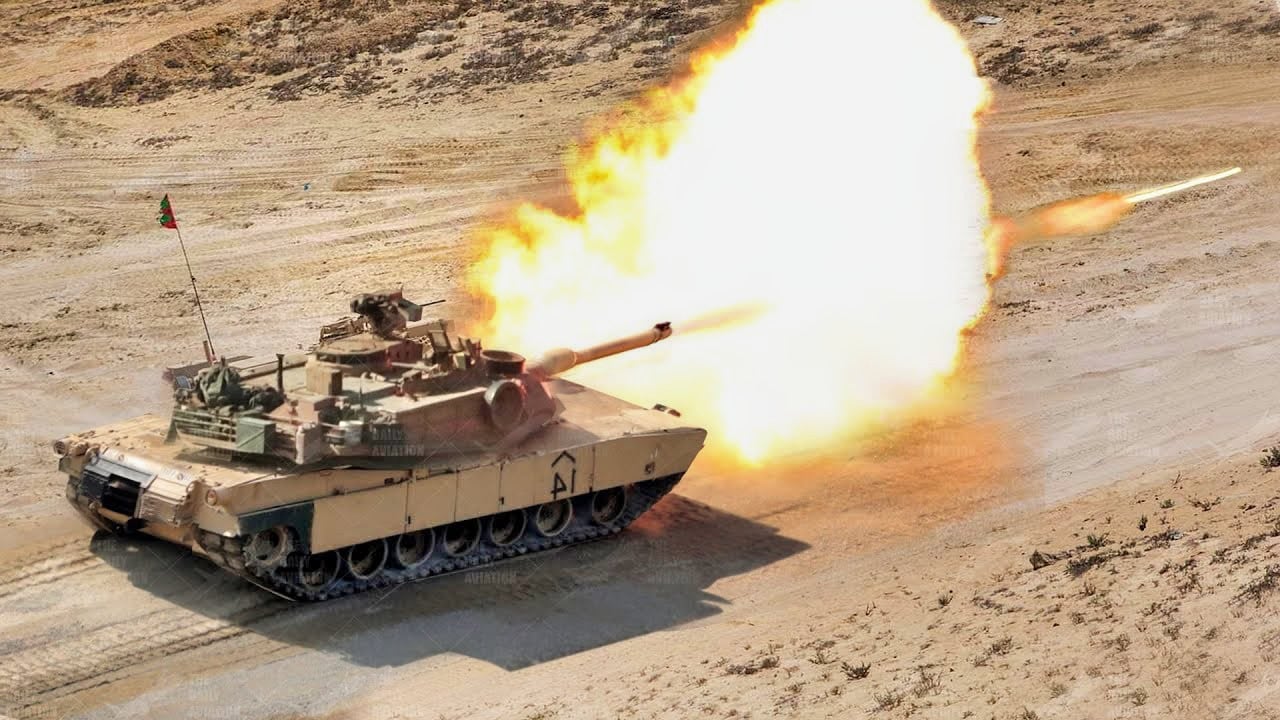
M1 Abrams Firing. Image Credit: Creative Commons.
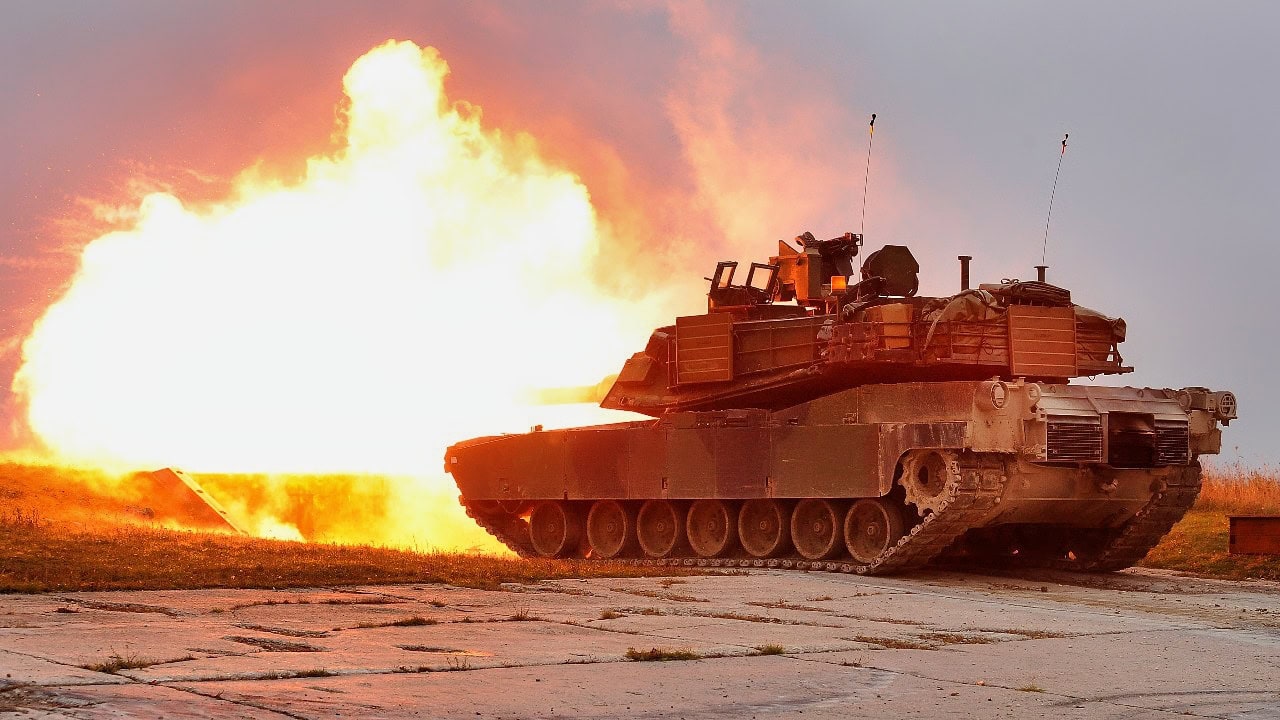
U.S. Soldiers, assigned to the 1st Battalion, 64th Armor Regiment, 1st Armored Brigade Combat Team, 3rd Infantry Division, conduct gunnery with M1A2 Abrams tanks during exercise Combined Resolve V at 7th Army Joint Multinational Training Command in Grafenwoehr, Germany, Oct. 8, 2015. Combined Resolve is designed to exercise the U.S. Army’s regionally aligned force to the U.S. European Command area of responsibility with multinational training at all echelons. Approximately 4,600 participants from 13 NATO and European partner nations will participate. The exercise involves around 2,000 U.S. troops and 2,600 NATO and Partner for Peace nations. Combined Resolve is a preplanned exercise that does not fall under Operation Atlantic Resolve. This exercise will train participants to function together in a joint, multinational and integrated environment and train U.S. rotational forces to be more flexible, agile and to better operate alongside our NATO Allies. (U.S. Army photo by Visual Information Specialist Gertrud Zach/released)
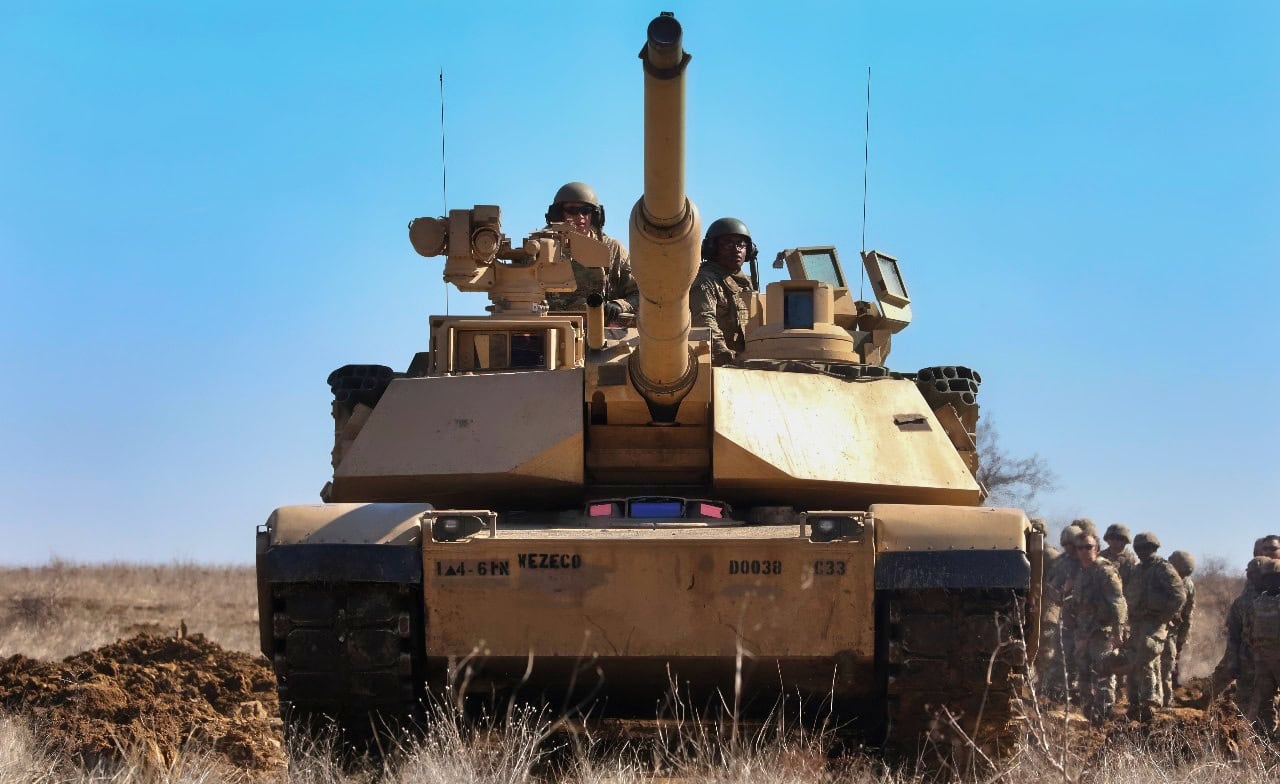
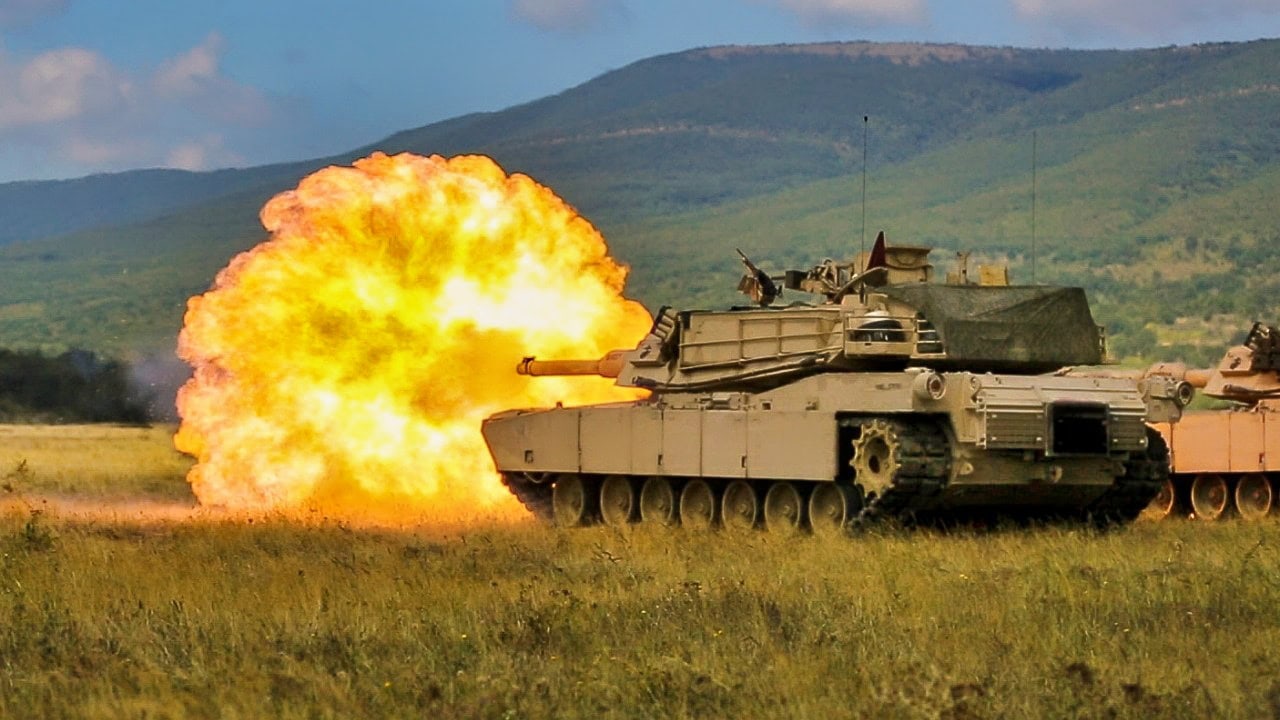
A U.S. Army M1 Abrams, assigned to 4th Battalion, 6th Infantry Regiment, 3rd Armored Brigade Combat Team, 1st Armored Division, fully emerges from the tank firing point to engage the simulated enemy at Novo Selo Training Area, Bulgaria, March 5, 2025. 1st Armored Division, a rotational force supporting V Corps, conducts training with engineers and tank operators in the European Theatre to maintain readiness and instill fundamental Soldier skills that are vital in maintaining lethality. (U.S. Army photo by Spc. Kyle Kimble)
How China’s PLA Is Studying Every M1A1 Abrams Killed in Ukraine
I want to be specific about what Chinese military analysts are actually learning from the Ukraine battlefield, because I think the general statement that “China is watching” can sound vague when the reality is quite precise.
Chinese military analysts are categorizing every confirmed Abrams loss by attack vector. They are noting which side of the vehicle was struck, at what angle, from what distance, and with what munition. They are building a detailed technical picture of where the Abrams’ armor protection is most degraded and where FPV drones, Kornet anti-tank missiles, and top-attack weapons are most effective. They are watching the tactical situations that precede each loss — the moments when the tank is separated from its infantry support, or operating in terrain that limits its maneuverability, or exposed to elevated drone operators who can look down into the engine deck.
They are, in short, writing the manual for how to kill an Abrams. And they are doing it with real-world data that no amount of wargaming or theoretical analysis could have produced.
China’s PLA has been investing heavily in its own drone capabilities for years. The Shahed-type loitering munitions that Iran has supplied to Russia — and whose effectiveness China has been watching with great interest — represent a template that Beijing is fully capable of replicating and improving. China’s own TB-001 and Wing Loong drone platforms are more sophisticated than anything Russia was fielding at the start of the Ukraine war. And the sheer industrial capacity that China can bring to bear on producing cheap, expendable FPV drones at scale makes Russia’s current production look modest by comparison.
What Ukraine has given China is not just the knowledge of how to attack an Abrams. It has given them the operational confidence that it can be done consistently, at scale, by forces that are not technologically superior to the tank they are destroying.
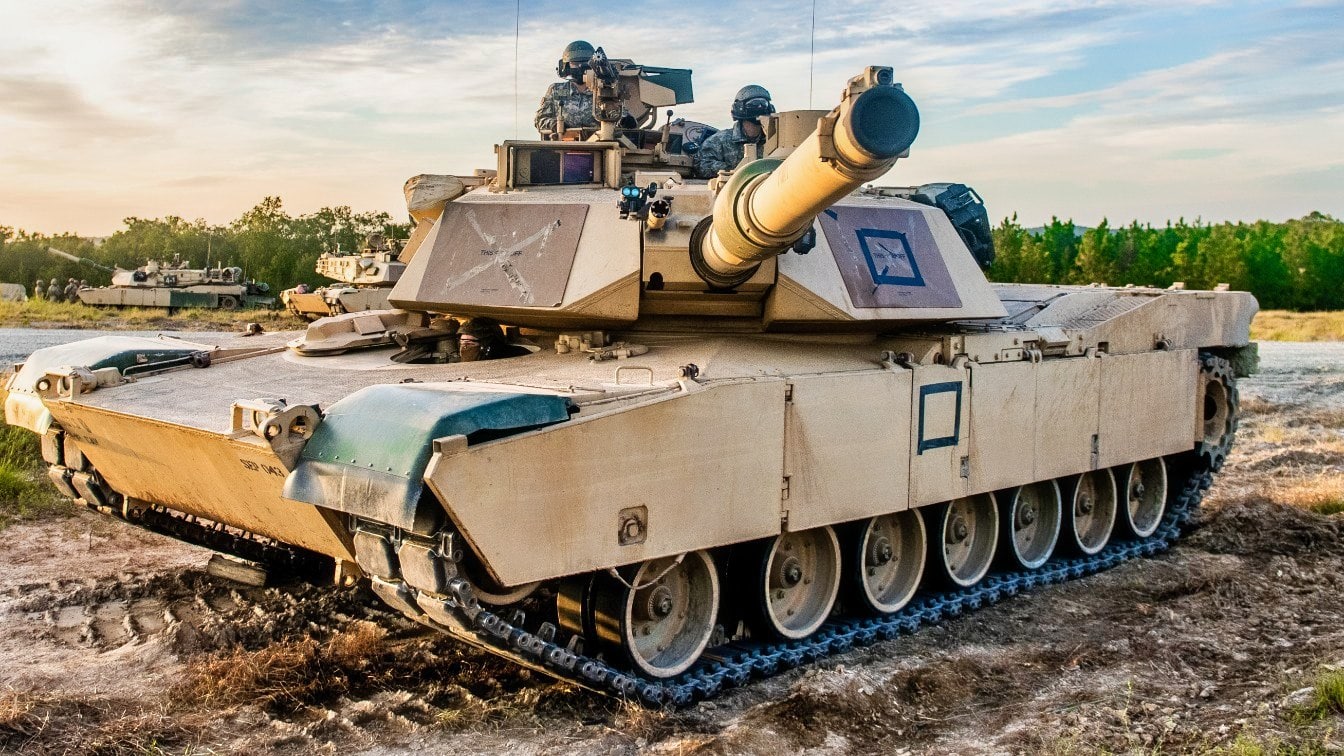
FORT BENNING, Ga. – Students in Armor Basic Officer Leader Course Class 20-005 conduct a platoon situational training exercise, Sept. 22, 2020, at Good Hope Maneuver Training Area on Harmony Church. Students train as both an attacking force and a defending force using the U.S. Army’s M1 Abrams Main Battle Tank. (U.S. Army photo by Patrick A. Albright, Maneuver Center of Excellence and Fort Benning Public Affairs)
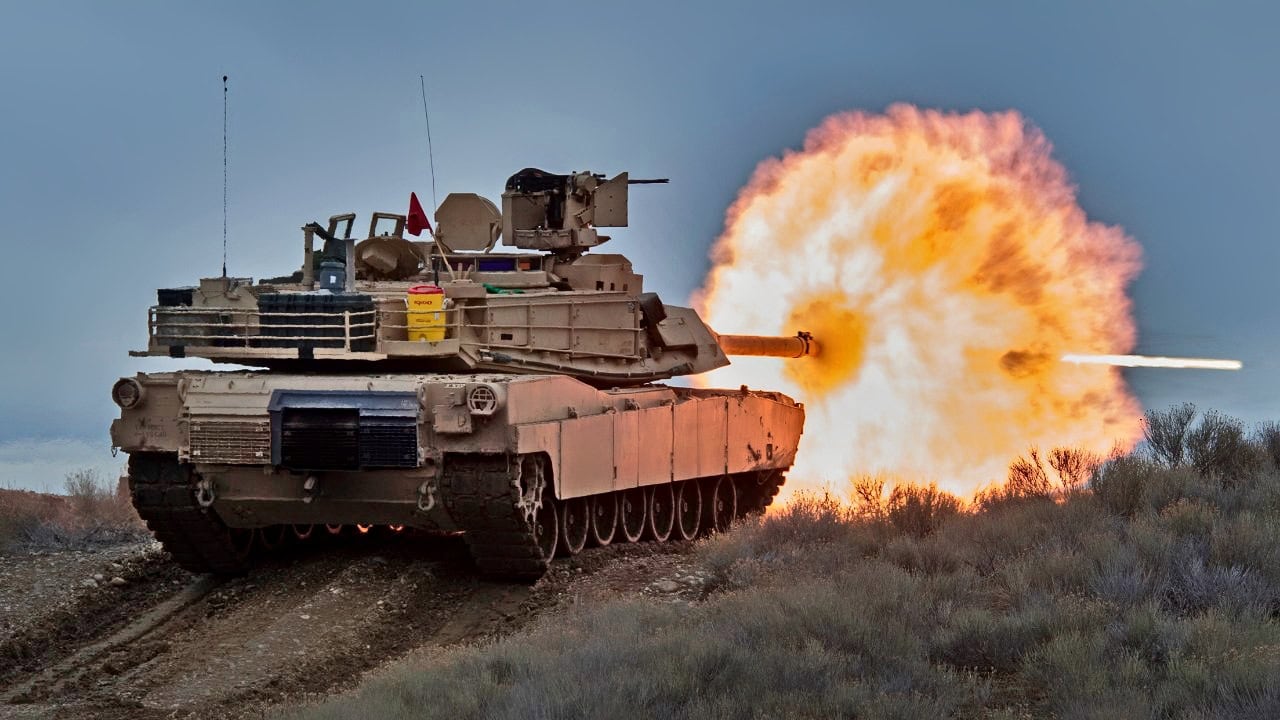
M1A2 Abrams Tanks from A Company, 2-116th Cavalry Brigade Combat Team (CBCT), Idaho Army National Guard run through field exercises on Orchard Combat Training Center (OCTC).
The Taiwan Scenario: What Happens When PLA Drones Meet U.S. Army Abrams Tanks
Let me now connect this directly to Taiwan, because that is where this analysis ultimately lands and where the stakes are highest.
A Taiwan contingency that involves U.S. ground forces — whether deployed to Taiwan itself, to the Philippines, to Japan, or to other regional positions — almost certainly involves Abrams tanks.
The more advanced M1A2 SEPv3 is the U.S. Army’s primary heavy armor, and they would be part of any serious ground component of a Pacific contingency. They would be operating in environments that share certain characteristics with eastern Ukraine — dense urban terrain in some cases, open agricultural land in others, and throughout all of it, the constant presence of drone threats that the Ukraine war has proven are catastrophically effective against heavy armor operating without adequate counter-drone protection.
The PLA Ground Forces have been reorganizing and re-equipping specifically for this kind of combined-arms fight. Their Type 99A main battle tanks are competitive with the Abrams in direct armor-on-armor engagements. But what Ukraine has taught them — and this is the lesson that should most concern U.S. Army planners — is that direct armor-on-armor engagements are increasingly secondary to the drone-enabled, top-attack, attrition-based warfare that has defined the conflict in eastern Ukraine.
China does not need to out-tank the Abrams if it can out-drone it.
What the U.S. Army Must Do Before the Next War — Not After It Starts
The U.S. Army has been watching Ukraine, too, and to its credit, the service has been drawing lessons from what it is seeing. In fact, the Pentagon seemed opposed to Australia sending M1A1 tanks for many of the reasons cited in this article.
Active protection systems like the Trophy system — originally developed by Israel and now being integrated on some American Abrams — can intercept anti-tank guided missiles and rocket-propelled grenades. There has been significant discussion about expanded counter-drone capabilities at the unit level, electronic warfare systems that can jam FPV drone signals, and tactics and formations that better integrate tanks with infantry who can spot and engage drone operators.
These are all genuinely important adaptations. But I want to be honest about something that does not get said clearly enough in the public defense debate: the pace of adaptation in the U.S. Army is not keeping up with the pace of the threat.
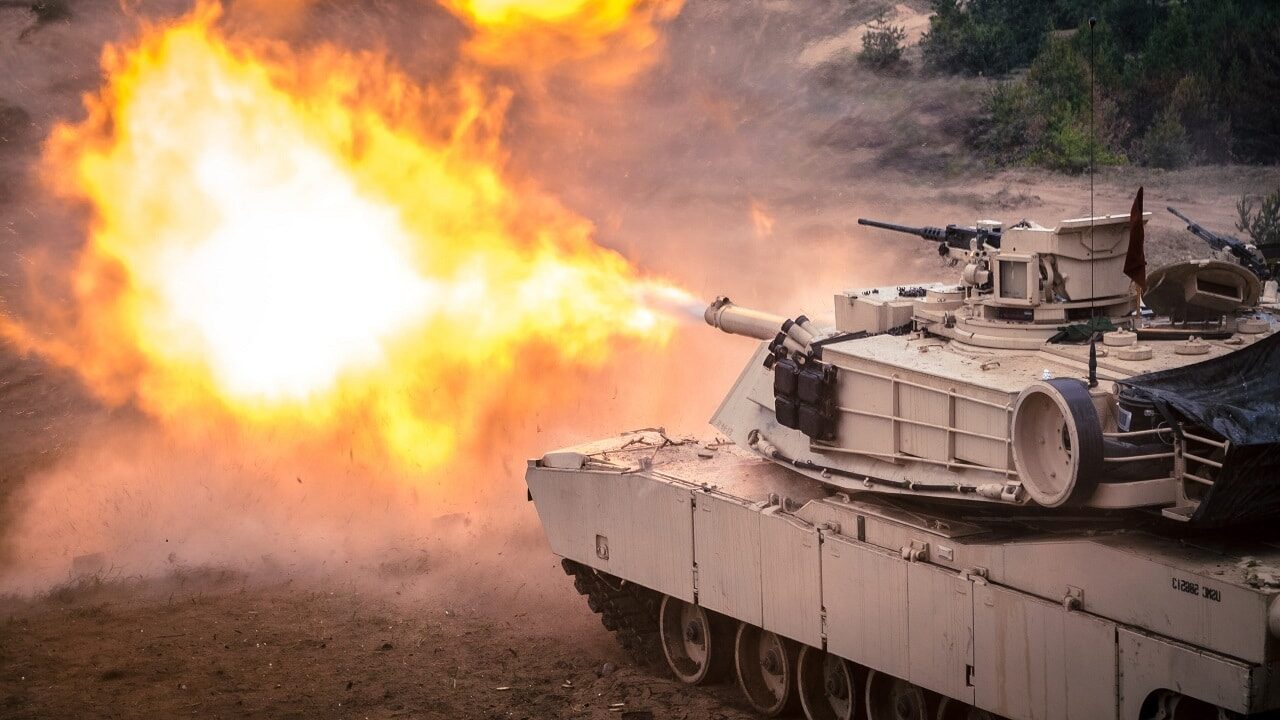
M1 Abrams Tank firing. Image Credit: Creative Commons.
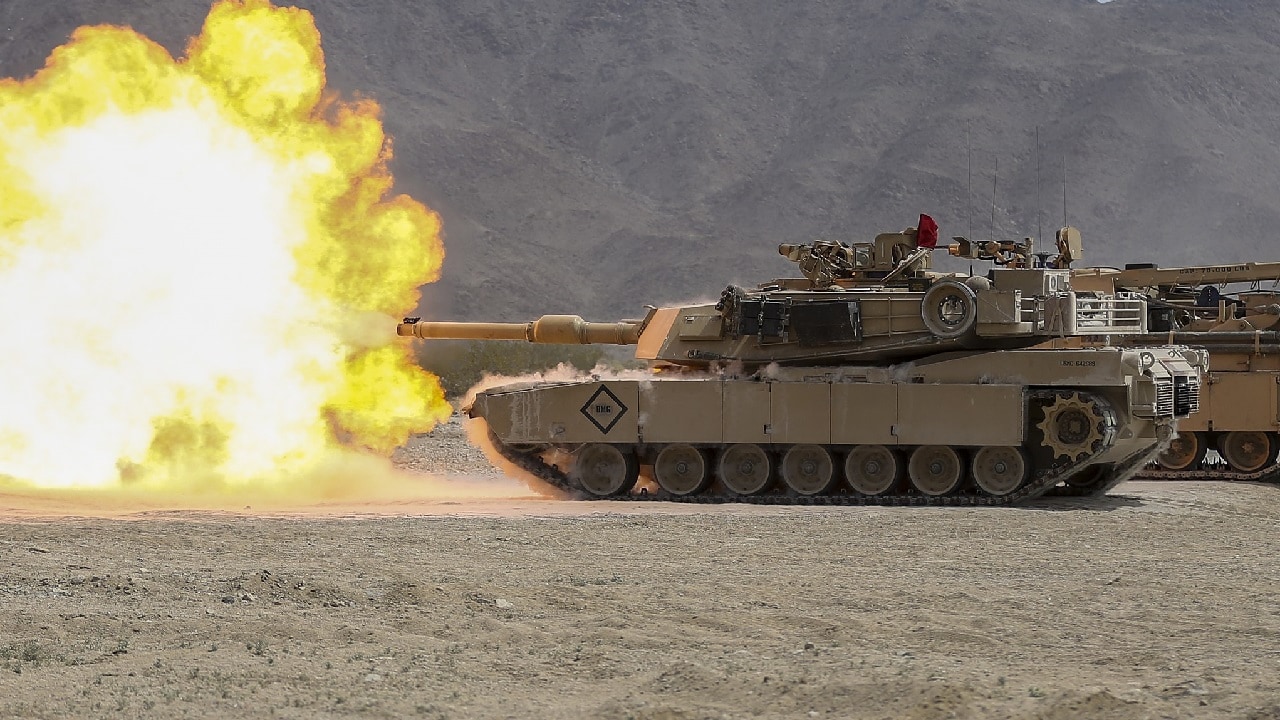
An M1A1 Abrams Tank fires off a round as a demonstration during 1st Tank Battalion’s Jane Wayne Spouse Appreciation Day aboard the Marine Corps Air Ground Combat Center, Twentynine Palms, Calif., April 3, 2018. The purpose of the event is to build resiliency in spiritual well being, the will to fight and a strong home life for the 1st Tanks Marines and their families. (U.S. Marine Corps photo by Lance Cpl. Rachel K. Porter)
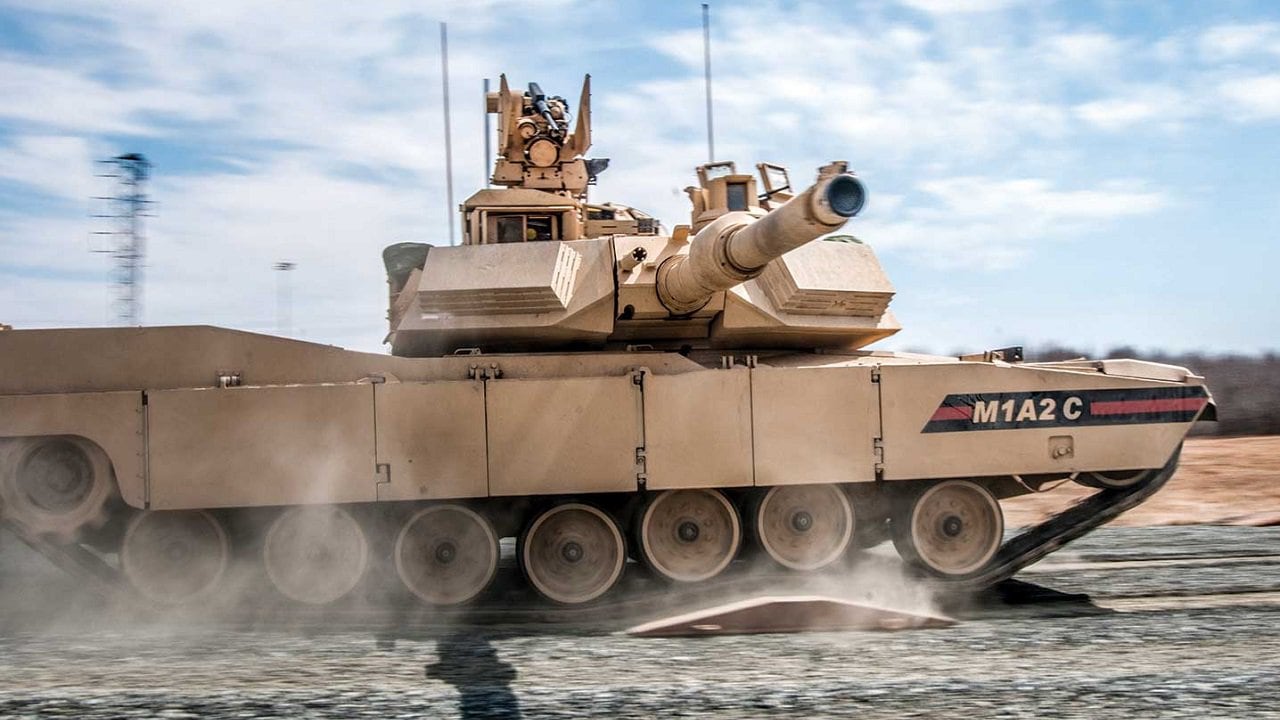
The Abrams Main Battle Tank closes with and destroys the enemy using mobility, firepower, and shock effect.
The Army’s counter-drone program has been chronically underfunded relative to the scale of the problem. The integration of active protection systems across the Abrams fleet is incomplete. And the doctrinal shift required to fight effectively in a drone-saturated environment — the fundamental rethinking of how armor operates, where it positions itself, and how it moves — is still underway.
Meanwhile, China is not waiting. Every month that passes without a comprehensive American answer to the drone-versus-armor problem is another month of Chinese analysis, preparation, and capability development. The Ukraine war has given Beijing a compressed, real-world research program that would have taken decades to replicate in exercises. They are using that gift methodically and without sentiment.
The M1A1 Abrams, China’s Taiwan Ambitions, and the Lesson Washington Keeps Almost Learning
There is a pattern in American defense policy that I have watched play out too many times over my career.
A conflict elsewhere in the world reveals a serious vulnerability in American military capabilities. There is a period of intense attention, a flurry of reports, some congressional hearings, and some initial funding. And then the urgency fades, because the conflict is far away and the immediate threat to American forces does not feel immediate enough to sustain the institutional momentum required for genuine transformation.
This cannot be allowed to happen with the lessons of Ukraine and the Abrams.
The M1A1 Abrams losses in Ukraine are not a Ukrainian problem or a Ukrainian failure. They are a preview — a detailed, high-definition, publicly available preview — of what American armor will face if it ever operates against a Chinese military that has spent years studying exactly this kind of footage. The drone threat that is killing Abrams tanks in eastern Ukraine is not going to be less sophisticated in a Taiwan contingency. It is going to be more sophisticated, produced at a greater scale, operated by forces with more resources and greater preparation, and integrated into a combined-arms system specifically designed around the lessons learned from watching those Ukrainian tank battles.
Every M1A1 that burns on a Ukrainian hillside is not just a tactical loss for Kyiv. It is a strategic briefing for Beijing. Washington needs to treat it that way — and start moving at the speed the threat demands, not the pace set by bureaucratic procurement timelines.
The clock is not ticking. It has already been ticking for two years. And China has been listening to every second of it.
About the Author: Harry J. Kazianis
Harry J. Kazianis (@Grecianformula) was the former Senior Director of National Security Affairs at the Center for the National Interest (CFTNI), a foreign policy think tank founded by Richard Nixon based in Washington, DC. Harry has over a decade of experience in think tanks and national security publishing. His ideas have been published in the NY Times, The Washington Post, The Wall Street Journal, CNN, and many other outlets worldwide. He has held positions at CSIS, the Heritage Foundation, the University of Nottingham, and several other institutions related to national security research and studies. He is the former Executive Editor of the National Interest and the Diplomat. He holds a Master’s degree focusing on international affairs from Harvard University. Kazianis is Editor-In-Chief of 19FortyFive.

