
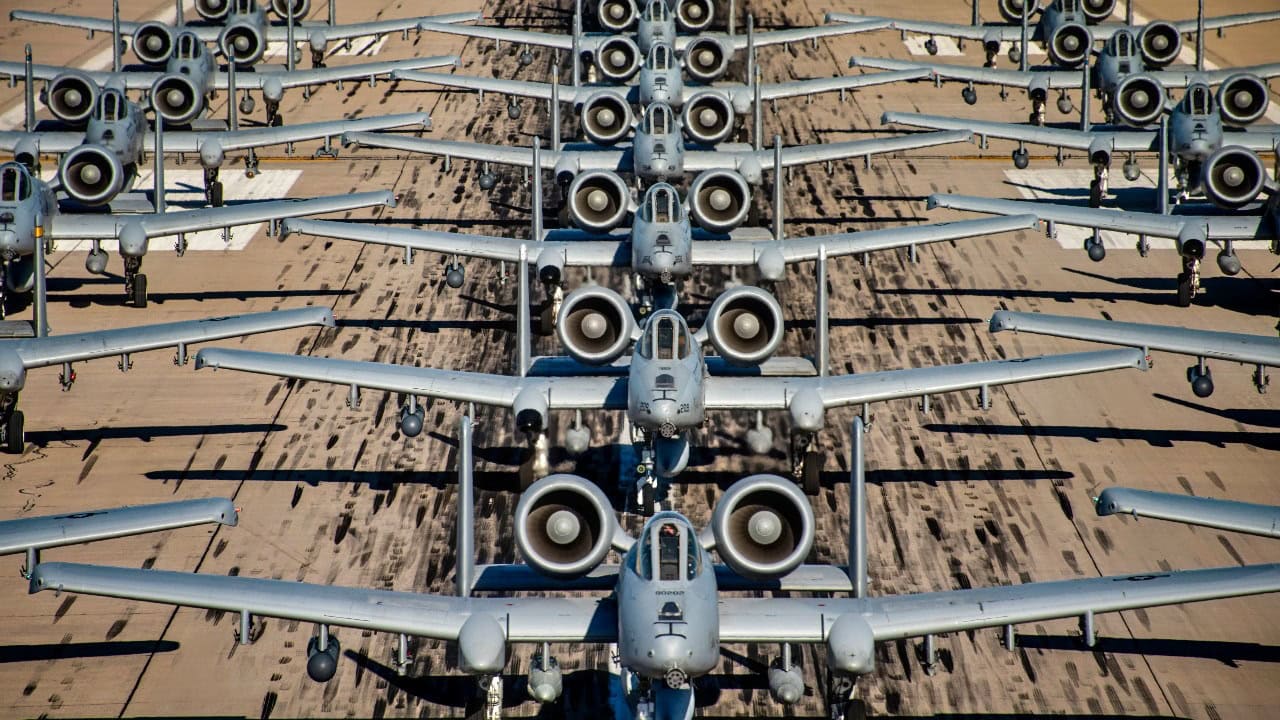
Summary and Key Points: Jack Buckby, a prominent defense and military writer, notes that the U.S. Air Force’s A-10 Thunderbolt II has re-entered combat during Operation Epic Fury, evolving from its Cold War tank-killing roots into a vital counter-UAS platform.
-Operating across Iraq and Syria, A-10Cs leverage APKWS laser-guided rockets and AIM-9M Sidewinders to neutralize low-cost Iranian-backed drones, such as the Shahed-136.

A-10 Warthog. Image Credit: Creative Commons.
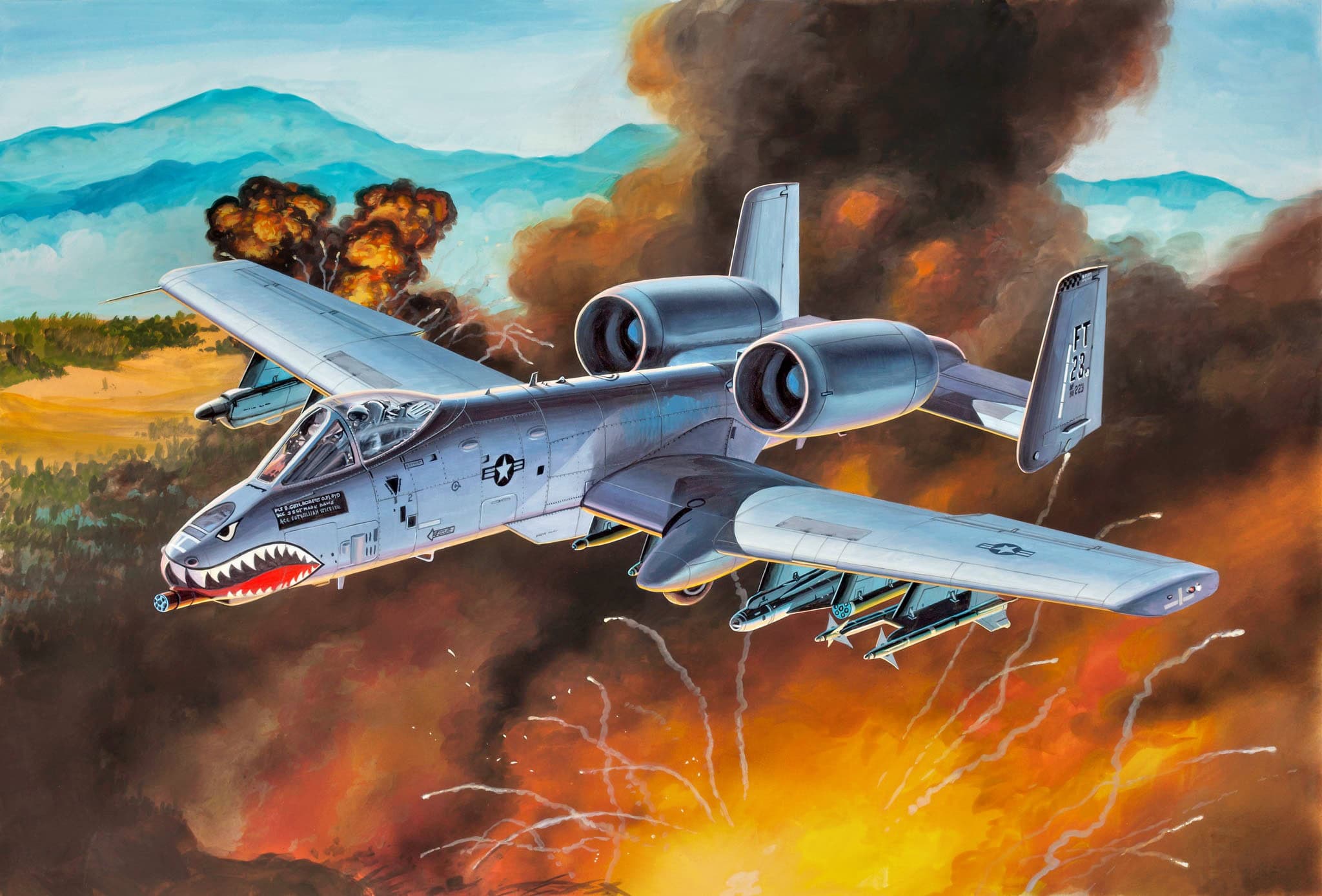
A-10 Warthog. Image Credit: Creative Commons.

A U.S. Air Force A-10 Warthog from the Air National Guard Air Force Reserve Test Center flies during exercise Sentry Aloha 24-2 June 6, 2024, above the island of Hawaii. This iteration of the exercise involves approximately 1,060 participants and more than 40 aircraft from nine states, which operated out of Joint Base Pearl Harbor-Hickam, Marine Corps Base Hawaii, and Onizuka Kona International Airport, Keāhole. The Hawaii Air National Guard’s 154th Wing has hosted the exercise for more than 20 years to provide tailored, cost-effective and realistic combat training for total-force Airmen and other Department of Defense services. (U.S. Air National Guard photo by Tech. Sgt. John Linzmeier)
-While its GAU-8 cannon and rugged airframe remain legendary, the Warthog’s vulnerability to modern IADS limits its use to permissive environments, leaving strikes within Iran to F-35s.
-This shift addresses air defense economics, utilizing the A-10’s loiter time to safeguard high-end assets.
From Tanks to UAVs: The Strategic Rebirth of the A-10 Thunderbolt II
The U.S. Air Force’s A-10 Thunderbolt II is flying combat missions again in the Middle East, but this time the mission set looks different.
New imagery released by U.S. Central Command (CENTCOM) confirms that A-10s are actively supporting Operation Epic Fury, not just as traditional close air support platforms but as part of a layered effort to counter Iranian-supporting militias and the growing drone threat across Iraq and Syria.
The news comes as the U.S. continues operations against Iran and its proxy networks, with aircraft ranging from F-35s to B-52s deployed across the region.
A Different Use for the A-10
The newly released images show A-10Cs carrying a mixed loadout (or combination of weapons). Alongside AGM-65 Maverick missiles and LITENING targeting pods, the aircraft are equipped with AIM-9M Sidewinder missiles and APKWS (Advanced Precision Kill Weapon System) laser-guided rockets.
That combination of weapons is significant. APKWS, originally developed to convert unguided Hydra 70 rockets into precision weapons, has increasingly been used as a low-cost counter-drone solution.
The U.S. military has been expanding its use across multiple platforms in recent years, including F-16s and Marine Corps aircraft, precisely because it offers a far cheaper intercept option than traditional, expensive air-to-air missiles.
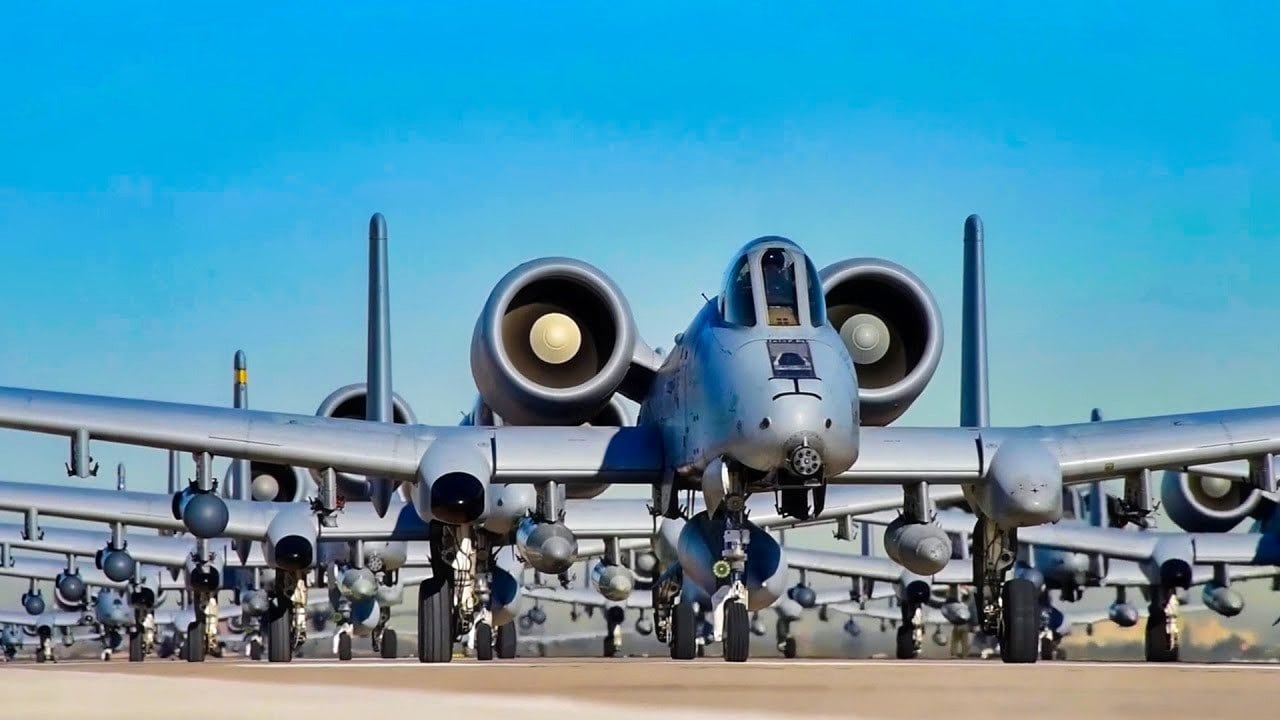
A-10 Warthog Elephant Walk.

A U.S. Air Force A-10 Thunderbolt II flies a routine mission over the U.S. Central Command area of responsibility Dec. 23, 2024. A-10 Thunderbolt II pilots train and operate under night vision, allowing them to conduct presence patrols critical to regional security at any time and under any conditions. (U.S. Air Force photo)
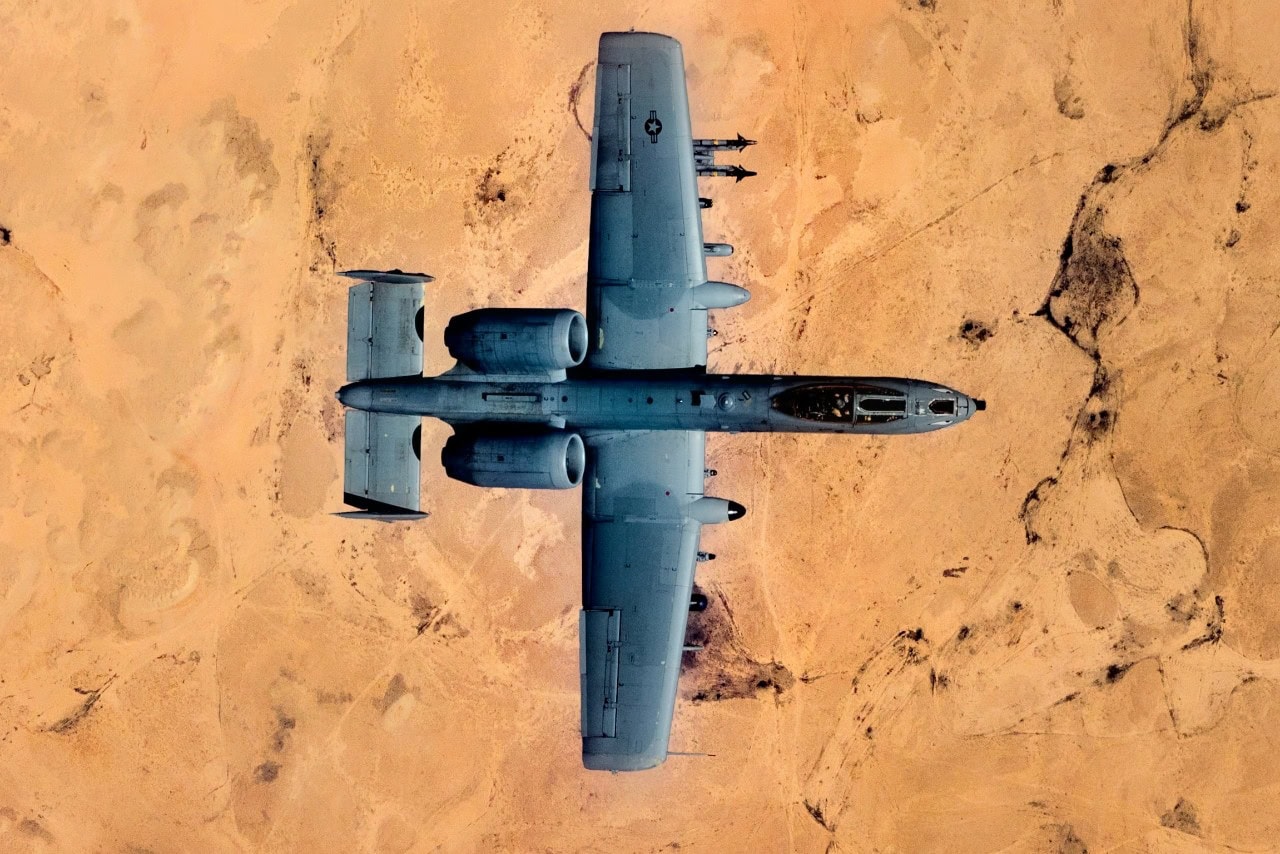
A U.S. Air Force A-10 Thunderbolt II flies a presence patrol over the U.S. Central Command area of responsibility, Feb. 26, 2025. The A-10 aircraft is employed throughout the region to bolster regional security and counter the growing threats of adversarial unmanned aircraft systems and other emerging threats. (U.S. Air Force photo by Staff Sgt. Jackson Manske)
With that kind of loadout, the A-10 can engage both ground targets and low-cost aerial threats like drones in the same sortie. This matters in Iraq and Syria, where Iranian-backed groups rely heavily on these one-way attack drones, including the Iranian Shahed-136.
The inclusion of Sidewinders is interesting: while historically carried for self-defense, they are now part of a bigger toolkit for countering UAVs, especially when paired with targeting data from ground-based sensors or other aircraft.
The A-10’s History
The A-10 Thunderbolt II is the product of a very specific Cold War-era demand: stopping a Soviet armored invasion of Europe. In the late 1960s, the U.S. Air Force launched the A-X program to build a dedicated close air support aircraft that could loiter over the battlefield, absorb damage, and destroy tanks at scale.
Fairchild Republic’s design won, entering service in 1976–1977 as a purpose-built “tank killer,” centered around the GAU-8/A 30mm cannon.
It proved its value almost immediately, when the A-10 was heavily used in Operation Desert Storm, where it destroyed large numbers of Iraqi armored vehicles, and it remained a mainstay in Iraq and Afghanistan, constantly flying close air support missions for ground troops.
Originally designed for a relatively short service life, the aircraft has been repeatedly upgraded and structurally reinforced, extending its lifespan well beyond initial expectations, in some cases toward 2028–2030 and even beyond with further modifications.
At its peak, the U.S. operated hundreds of A-10s, but that number has steadily declined. As of recent counts, roughly 160–200 aircraft remain in service, with ongoing retirements planned through the late 2020s. Despite multiple attempts to retire the platforms over the years, the A-10 has endured because of how useful it is in low-to-mid-intensity conflicts.
The Drone War Is Changing Everything
Drones are transforming war all over the world, and particularly operations in the Middle East. The Pentagon is now increasingly focusing on addressing the economics of air defense, where shooting down a relatively cheap drone with a $400,000 missile is simply not sustainable at scale.
The problem has been seen in recent conflicts, including Red Sea operations against Houthi drones and missiles, where U.S. Navy destroyers have expended significant numbers of standard missile interceptors. APKWS offers a partial solution in that it is tens of thousands of dollars per shot.
It is still expensive, but less expensive than other solutions. It can also be deployed in larger numbers – and the A-10, with its large payload capacity and long loiter time, is well suited to the role.
That loiter time remains one of the aircraft’s most defining features. Designed during the Cold War, the A-10 can remain on station for extended periods, making it useful for defending fixed sites such as U.S. bases in Iraq and Jordan.
It’s Not Going to Iran
Despite its utility, the A-10 is not being used over Iran itself – and there are good reasons why. The aircraft’s low and slow flight profile, which makes it effective in the right environments, also makes it vulnerable to even basic air defenses. While U.S. and Israeli strikes have degraded Iran’s integrated air defense network, mobile systems and MANPADS may still pose a risk to the platform.
That risk explains why higher-end aircraft like the F-35 and F-15E are leading the strike operations inside Iran.
The platforms are stealthy and quick, and feature advanced electronic warfare capabilities that mean they are better suited for operating in contested airspace.
And then there are the logistical constraints. The A-10 operates with a different aerial refueiling system than fast jets, typically refueling at lower altitudes and slower speeds. Integrating it into long-range strike packages – especially those involving multiple types of aircraft – adds a layer of complexity.
About the Author: Jack Buckby
Jack Buckby is a British researcher and analyst specialising in defence and national security, based in New York. His work focuses on military capability, procurement, and strategic competition, producing and editing analysis for policy and defence audiences. He brings extensive editorial experience, with a career output spanning over 1,000 articles at 19FortyFive and National Security Journal, and has previously authored books and papers on extremism and deradicalisation.