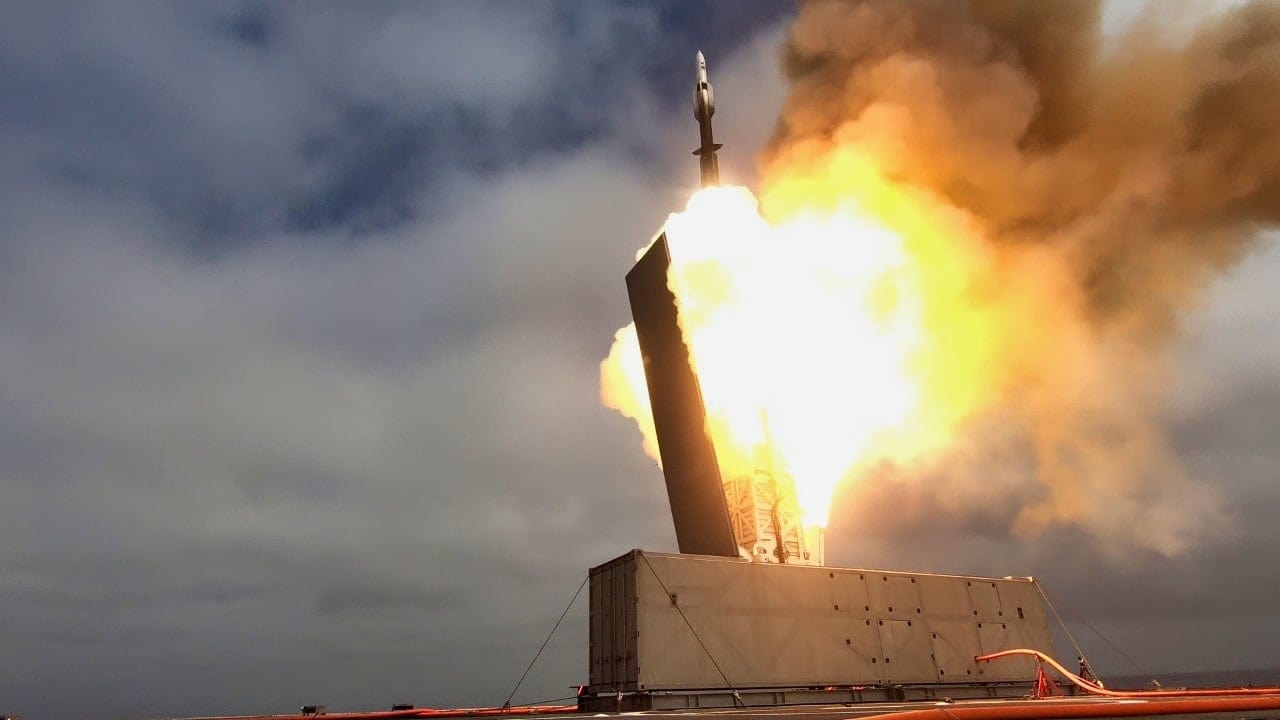
Summary and Key Points: Defense analyst Kris Osborn evaluates the Typhon Mid-Range Capability (MRC), a mobile land-fired weapon system deployed to the Philippines and Japan.
-Capable of launching Precision Strike Missiles (PrSM), SM-6s, and Block IV Tactical Tomahawks, the Typhon enables the U.S. Army to target moving ships and mainland infrastructure from 1,200 miles away.

A Falcon Heavy rocket launches into the sky, surrounded by smoke and fire during takeoff.
-This report analyzes the Army-Navy synergy created by offloading long-range strike duties from naval vessels to land-based mobile platforms.
-Osborn explores the system’s hypersonic integration, concluding that the Typhon is a critical deterrent against Chinese maritime expansion in the Indo-Pacific.
The Typhon Shield: How the Army’s Mobile Missile System is Redefining Pacific Deterrence
The U.S. Army and Navy are cooperating in the Pacific to develop new tactics and concepts of operation to support a fast-increasing number of mobile land-fired weapons systems, such as the Typhon Mid-Range-Capability (MRC) missile system. The Typhon has been sent to the Philippines and Japan.
In development for several years, the Army’s Typhon MRC is capable of firing the Army’s emerging Precision Strike Missile, as well as land-fired variants of the Standard Missile (SM)-6 and Tomahawk. Now, the battery is also said to be capable of integrating hypersonic weapons as well, adding to its tactical and operational potential.
A mobile, hypersonic-capable land-fired missile system such as the Typhon gives commanders new options to target moving ships at sea, aircraft, or land targets and integrate a new land-based, multi-domain attack system.
Moving the Typhon MRC to the Philippines brings the Army a medium-range, precision-guided land-fired cruise missile capable of hitting maritime targets from coastal positions.
More Tomahawks for Typhon in the Philippines
The Typhon is both long-range and precision-guided, and the Typhons stationed in the northern Philippines can hold ocean areas as far away as 1,200 miles at risk.
The Chinese coastline is roughly 1,800 miles from the Philippines, so the Typhon can cover two-thirds of the ocean area between the two countries with highly precise, ship-sinking ground fires.
In recent years, the Navy has introduced a Tactical Tomahawk variant able to track and destroy moving targets at sea by adjusting course in flight.
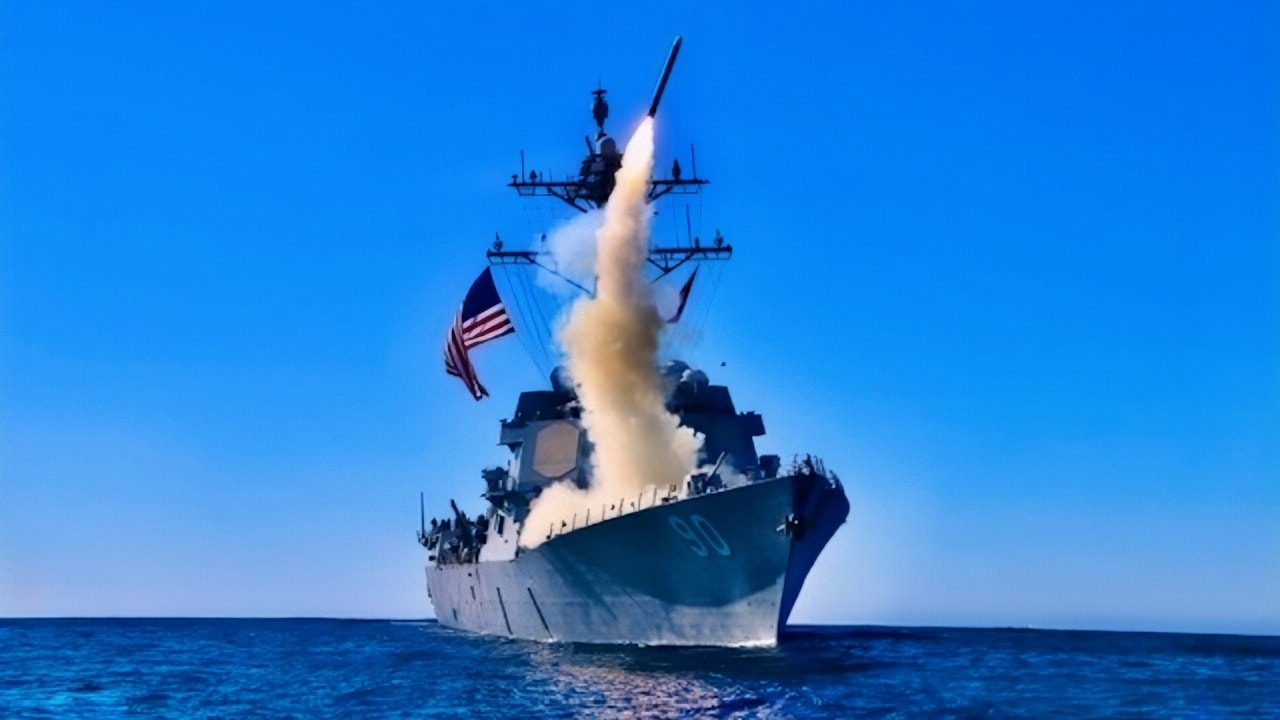
(Dec. 01, 2020) – The guided-missile destroyer USS Chafee (DDG 90) launches a Block V Tomahawk, the weapon’s newest variant, during a missile exercise. This event marked the first time a Block V Tomahawk missile was operationally tested, marking the Navy’s transition to a more advanced capability for the fleet. Block V includes an upgrade that will enhance navigation performance and provide robust and reliable communications. Chafee is currently assigned to Carrier Strike Group ONE and is homeported in Pearl Harbor. (U.S. Navy photo by Ens. Sean Ianno/Released)
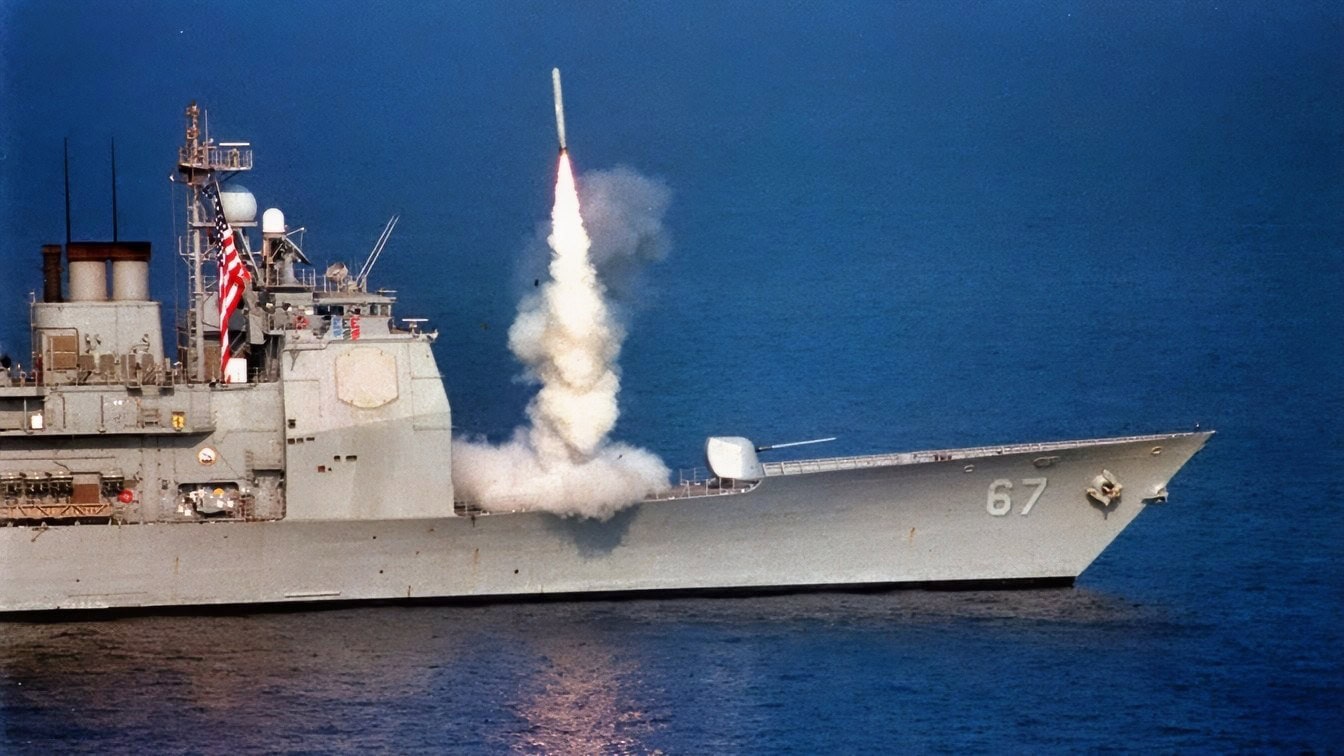
A Tomahawk cruise missile launches from the forward vertical launch system of the USS Shiloh (CG 67) to attack selected air defense targets south of the 33rd parallel in Iraq on Sept. 3, 1996, as part of Operation Desert Strike. The attacks are designed to reduce risks to the pilots who will enforce the expanded no-fly zone. President Clinton announced an expanded no-fly zone in response to an Iraqi attack against a Kurdish faction. The larger no-fly zone in Southern Iraq will make it easier for U.S. and coalition partners to contain Saddam Hussein’s aggression. The U.S. Navy Ticonderoga Class cruiser launched the missiles as it operated in the Persian Gulf.
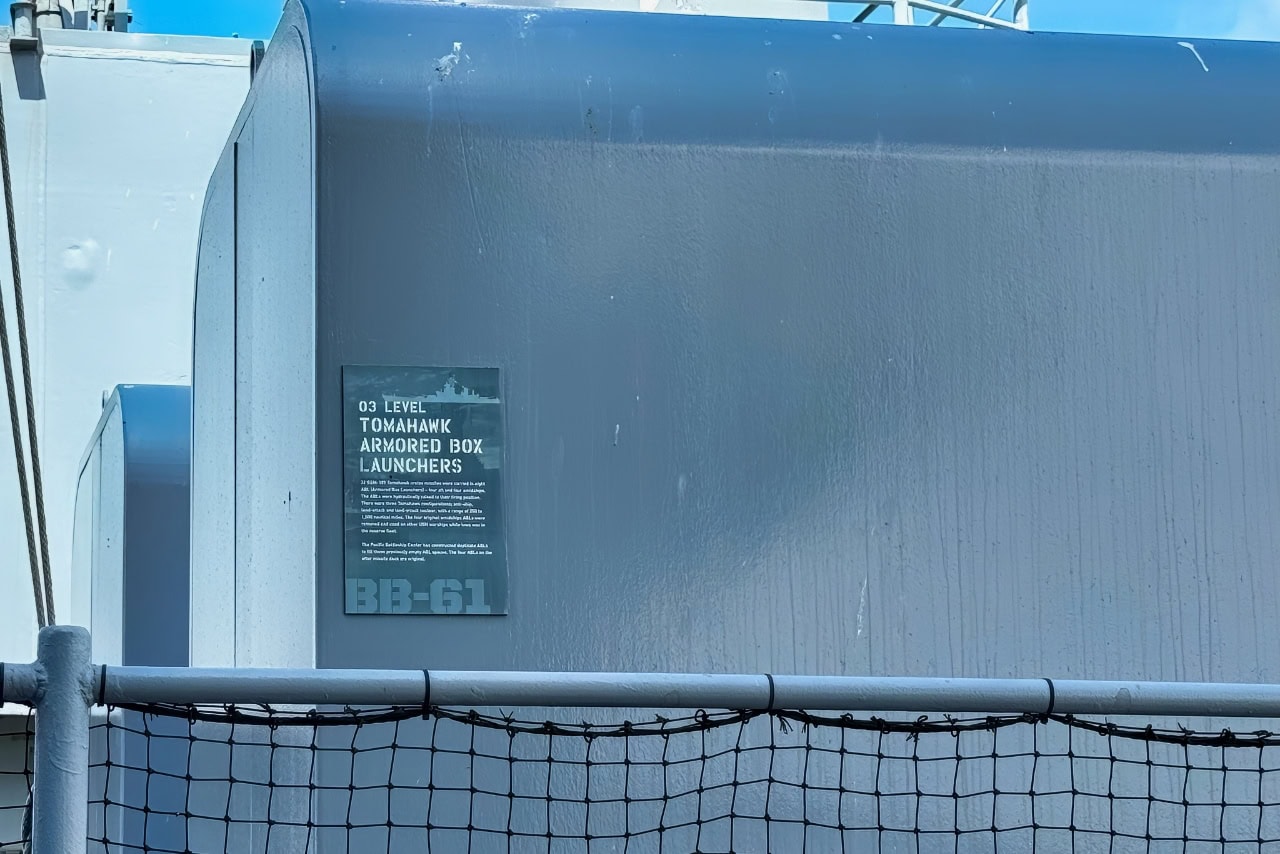
USS Iowa 19FortyFive image of Tomahawk Missiles on USS Iowa.
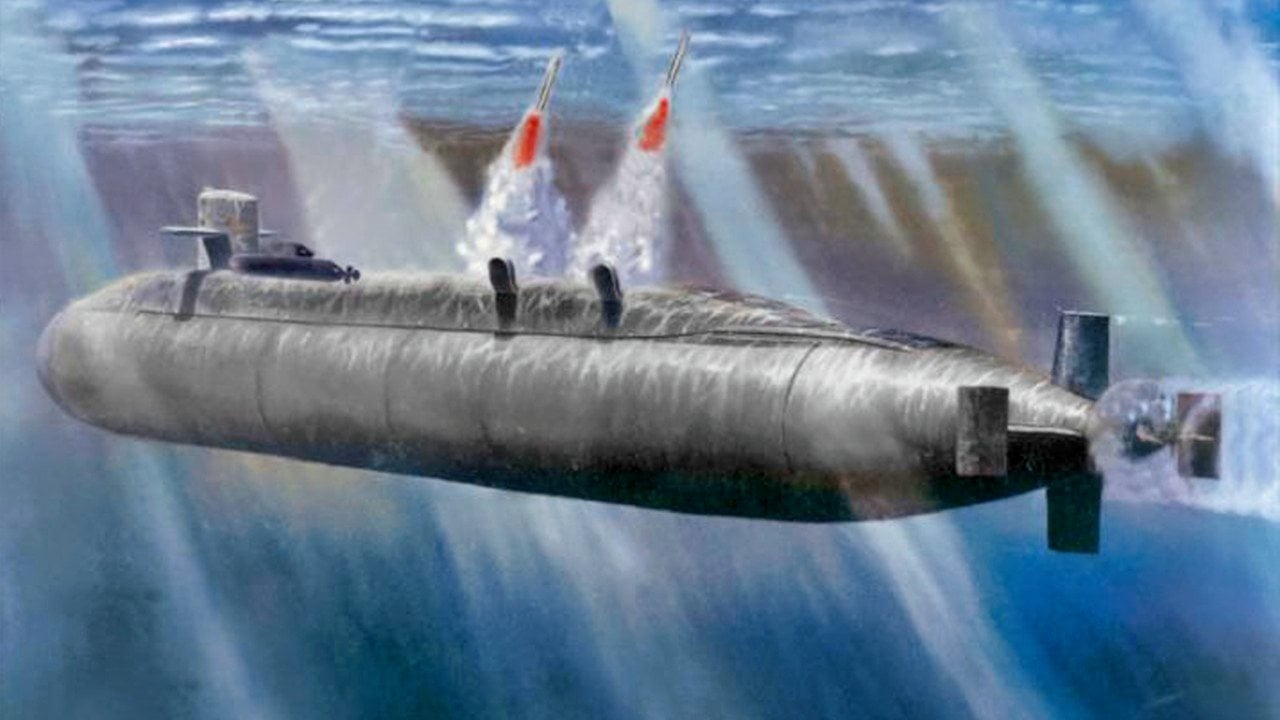
Puget Sound Naval Shipyard, Wash. (Aug. 14, 2003) — Illustration of USS Ohio (SSGN 726) which is undergoing a conversion from a Ballistic Missile Submarine (SSBN) to a Guided Missile Submarine (SSGN) designation. Ohio has been out of service since Oct. 29, 2002 for conversion to SSGN at Puget Sound Naval Shipyard. Four Ohio-class strategic missile submarines, USS Ohio (SSBN 726), USS Michigan (SSBN 727) USS Florida (SSBN 728), and USS Georgia (SSBN 729) have been selected for transformation into a new platform, designated SSGN. The SSGNs will have the capability to support and launch up to 154 Tomahawk missiles, a significant increase in capacity compared to other platforms. The 22 missile tubes also will provide the capability to carry other payloads, such as unmanned underwater vehicles (UUVs), unmanned aerial vehicles (UAVs) and Special Forces equipment. This new platform will also have the capability to carry and support more than 66 Navy SEALs (Sea, Air and Land) and insert them clandestinely into potential conflict areas. U.S. Navy illustration. (RELEASED)
The Block IV Tomahawk can travel at speeds up to 500 miles per hour for distances up to 900 miles. It operates with a two-way datalink and a loitering capacity that allows it to adjust to targets.
It’s likely the Army could ground fire a Tactical Tomahawk to attack moving targets, as long as software or fire-control adaptations allow.
One of the most important benefits would be improved long-range strike capability.
Modern warfare increasingly emphasizes the ability to hit critical enemy infrastructure—such as command centers, radar installations, logistics hubs, and air defense systems—from long distances. Land-fired Tomahawks would allow the Army to strike these targets without relying solely on aircraft or naval forces.
This would provide commanders with greater flexibility and ensure that precision-strike capability remains available even if air bases or naval assets are limited or occupied elsewhere.
Army-Navy Synergy
Another advantage is the ability to support joint operations. The U.S. military often conducts missions through coordination among its different services.
Land-based Tomahawk units could complement missiles launched from ships or aircraft, creating multiple attack vectors that would complicate an adversary’s defenses.
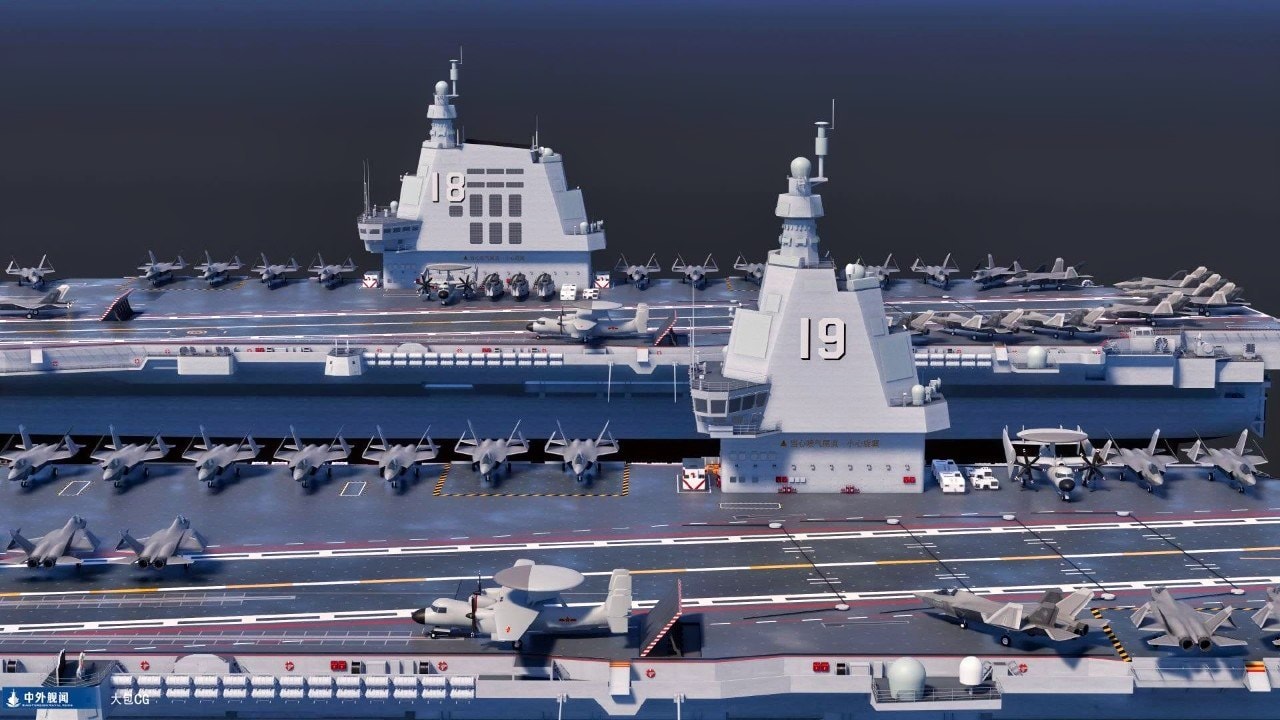
China Aircraft Carrier Models. Image Credit: Creative Commons.
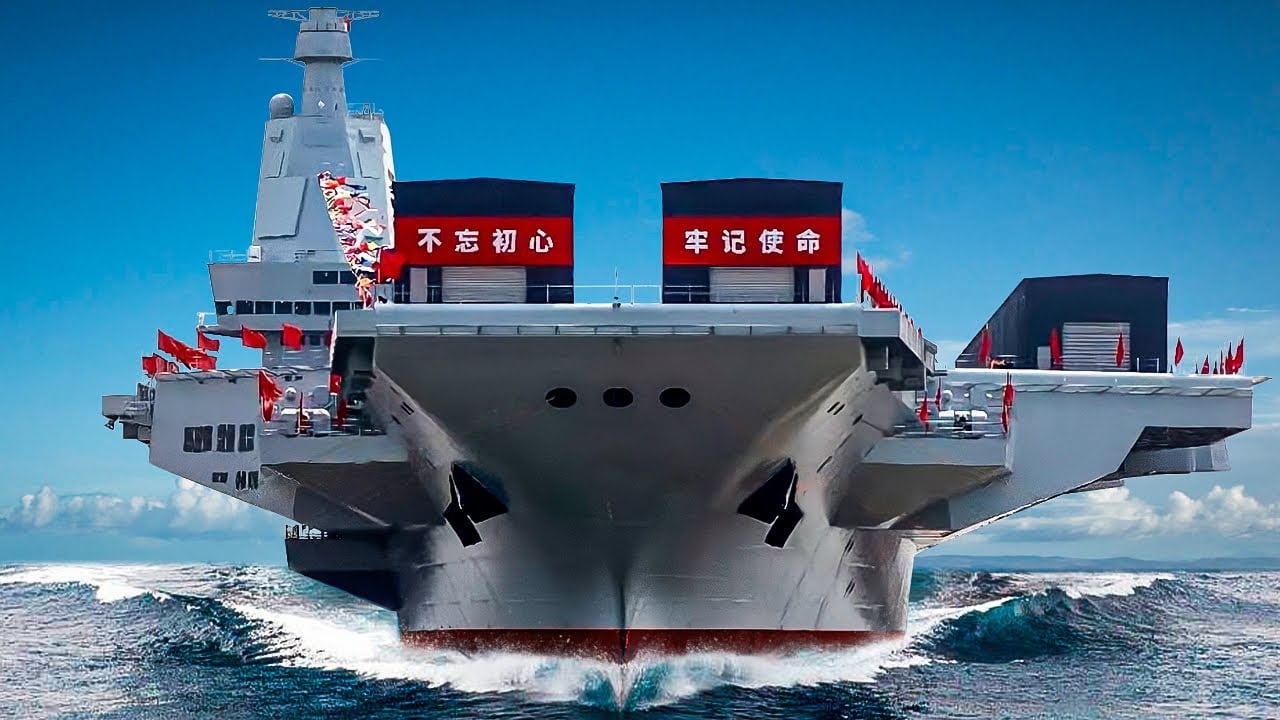
China Aircraft Carrier. Image Credit: YouTube Screenshot.
When combined with naval Tomahawk launches and air-delivered weapons, land-fired systems would make it harder for enemy forces to predict where attacks will come from, increasing the likelihood that key targets could be successfully neutralized early in a conflict.
Mobility and survivability are also important factors. Modern ground-based launch systems can be mounted on mobile platforms that can relocate frequently.
This mobility makes them harder for enemy forces to detect and destroy. If dispersed across a wide area, these units could provide persistent strike capability even in contested environments where fixed bases might be vulnerable to missile or air attack.
Tomahawks Deter China
Additionally, land-fired Tomahawks could strengthen the deterrence mission in key parts of the Pacific such as the Philippines, as they place mainland China within striking reach.
This would be especially true if more land-fired Tomahawks were integrated into the Typhon or made available in additional stockpiles. Forward-deployed missile units would signal that the United States has the capability to strike critical targets quickly if necessary.
This presence could discourage potential adversaries from escalating conflicts, since they would know that important military infrastructure could be targeted from long range.
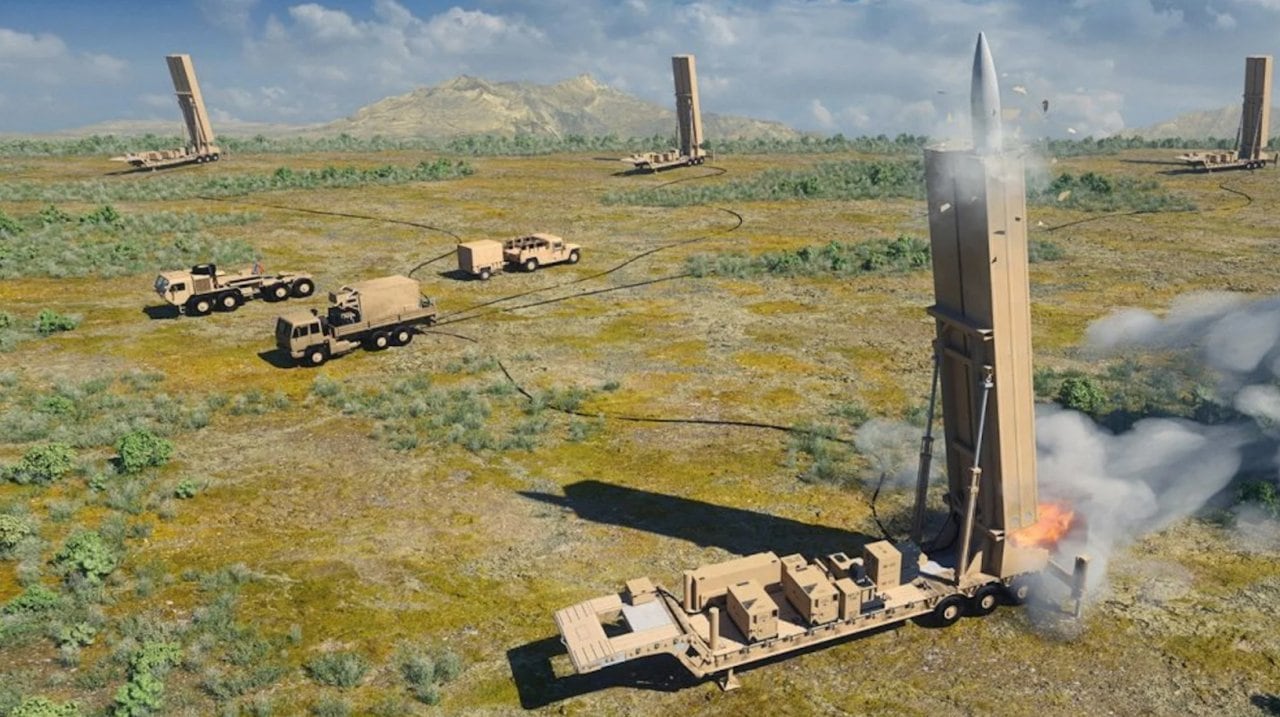
Dark Eagle. Image Credit: Lockheed Martin.
Perhaps of greatest significance, expanding land-based Tomahawk deployments could support the joint fight by reducing pressure on naval forces.
Ships carrying Tomahawk missiles are often tasked with multiple missions, including air defense, patrol operations, and escort duties.
If the Army can provide part of the long-range strike capability from land, naval forces could focus more on sea control and maritime security missions.
About the Author: Kris Osborn
Kris Osborn is the President of Warrior Maven – Center for Military Modernization. Osborn previously served at the Pentagon as a highly qualified expert in the Office of the Assistant Secretary of the Army—Acquisition, Logistics & Technology. Osborn has also worked as an anchor and on-air military specialist at national TV networks. He has appeared as a guest military expert on Fox News, MSNBC, The Military Channel, and The History Channel. He also has a Masters Degree in Comparative Literature from Columbia University.