
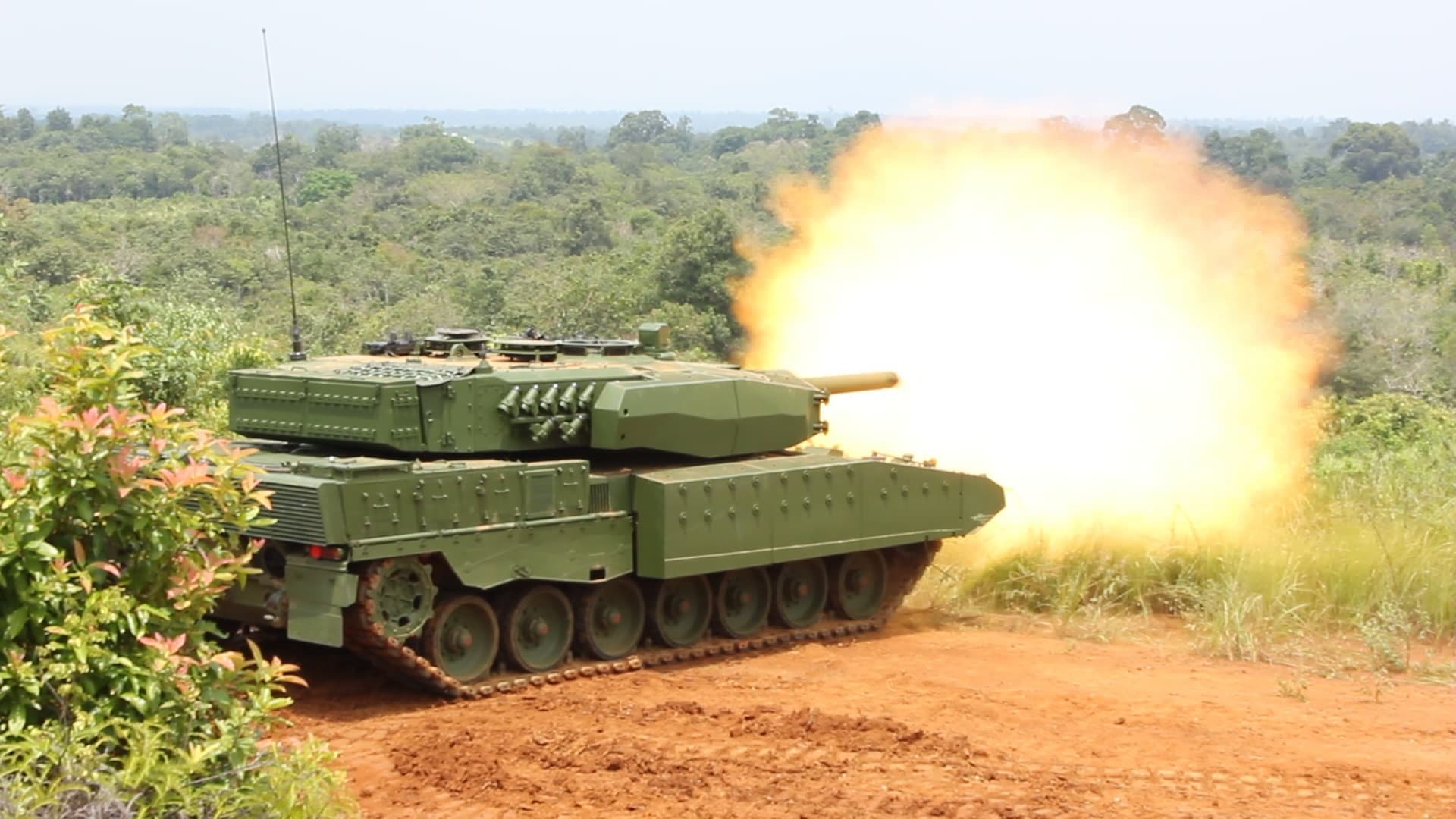
Summary and Key Points: Defense expert Christian D. Orr evaluates the Leopard 2, Germany’s premier MBT, following its deployment against Russian forces.
-The tank’s reputation is under scrutiny due to its vulnerability to top-down drone strikes and its complexity, which requires three years of training for peak proficiency.
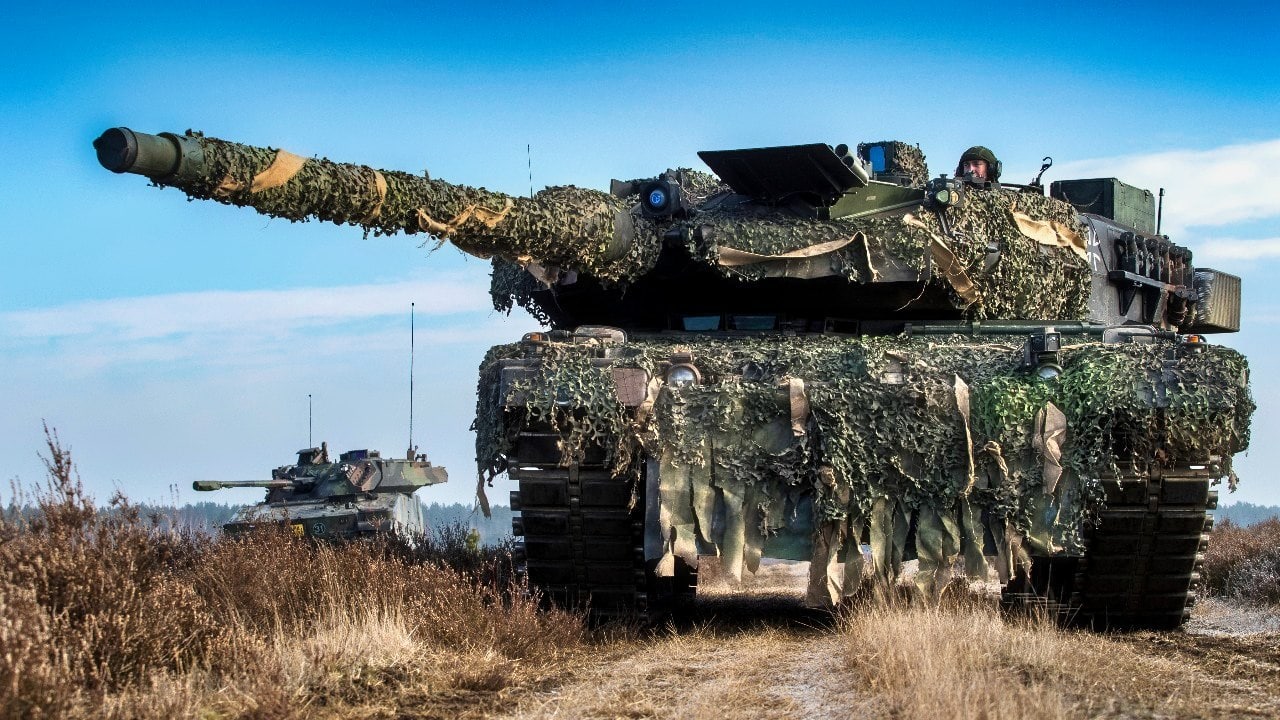
Germany Military Leopard 2 Tank.
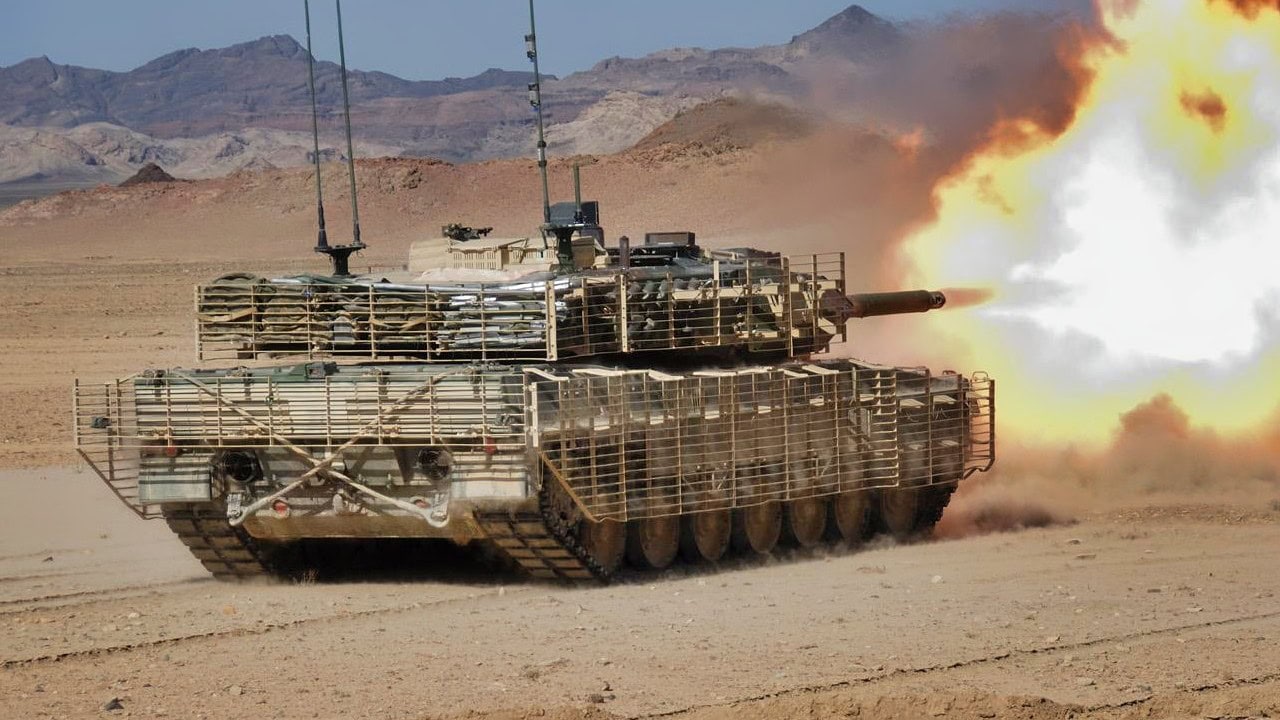
Canada Military Leopard C2 Tank.
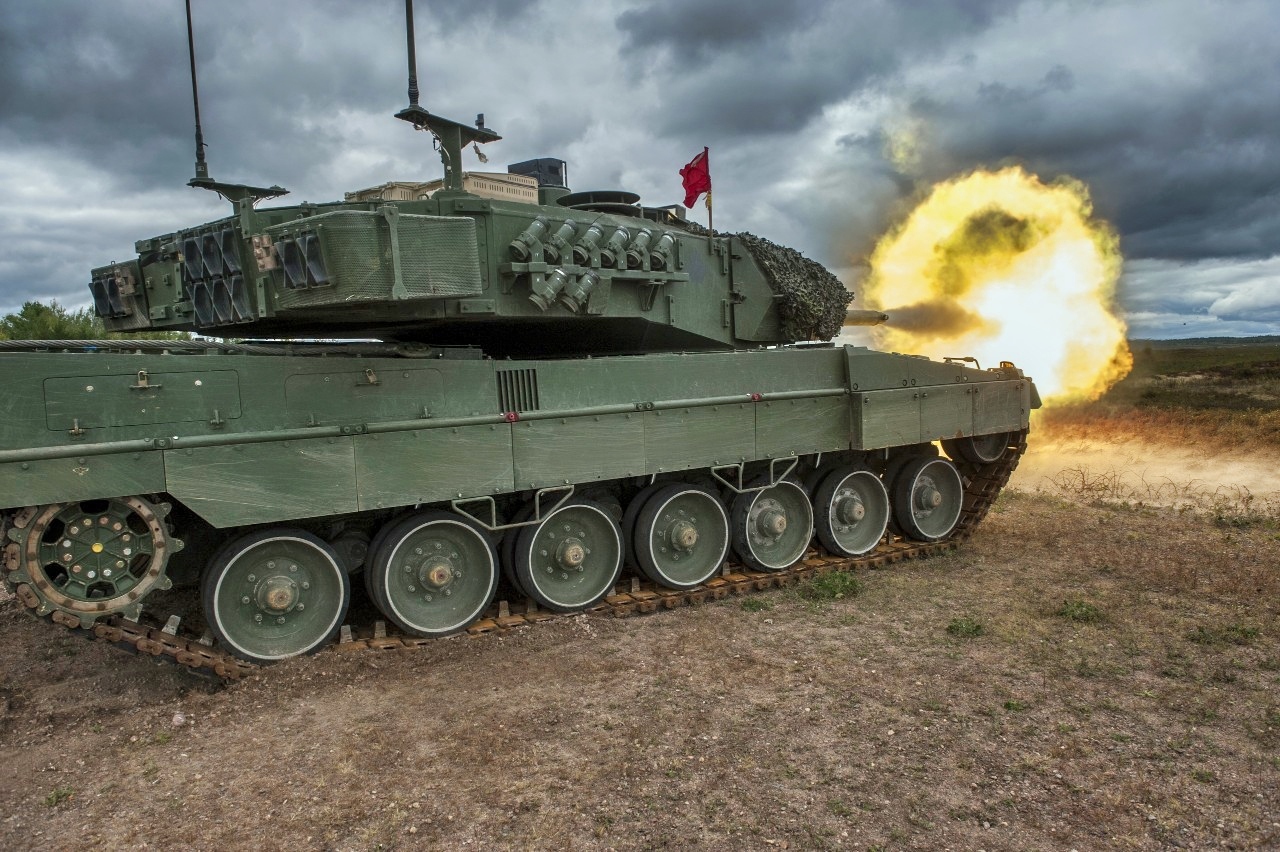
Leopard 2 Tank. Image Credit: Creative Commons.
-This report analyzes the contrast between the Leopard’s high-intensity design and the grinding attrition of the Ukraine conflict.
-Orr explores the 20% loss rate of supplied Leopards compared to the “turret-tossing” failure of Russian armor, concluding that the tank remains a deadly, albeit fragile, asset in a drone-saturated environment.
Attrition and Adaptation: Why the Leopard 2 Remains Ukraine’s Most Lethal (Yet Vulnerable) Tank
Before it was tested in real-life battle, the German-made Leopard 2 main battle tank was touted by fans of Teutonic engineering as being equal to the U.S.-made M1 Abrams and the Israeli-made Merkava as one of the best MBTs in the world.
And given Germany’s history of building fearsome tanks during World War II—especially the legendary Tiger tank series—this high degree of confidence in the Leopard 2 seemed justified.
However, after the Leopard 2 was sent to Ukraine to help fight against Vladimir Putin’s Russian invasion force—18 of them were sent in 2023 after prolonged national debates and foot-dragging by the outgoing government of Chancellor Olaf Scholz—its reputation took a fearsome hit.
So then, has the Leopard 2 truly flopped in Ukraine, or is the story a bit more complicated than that?
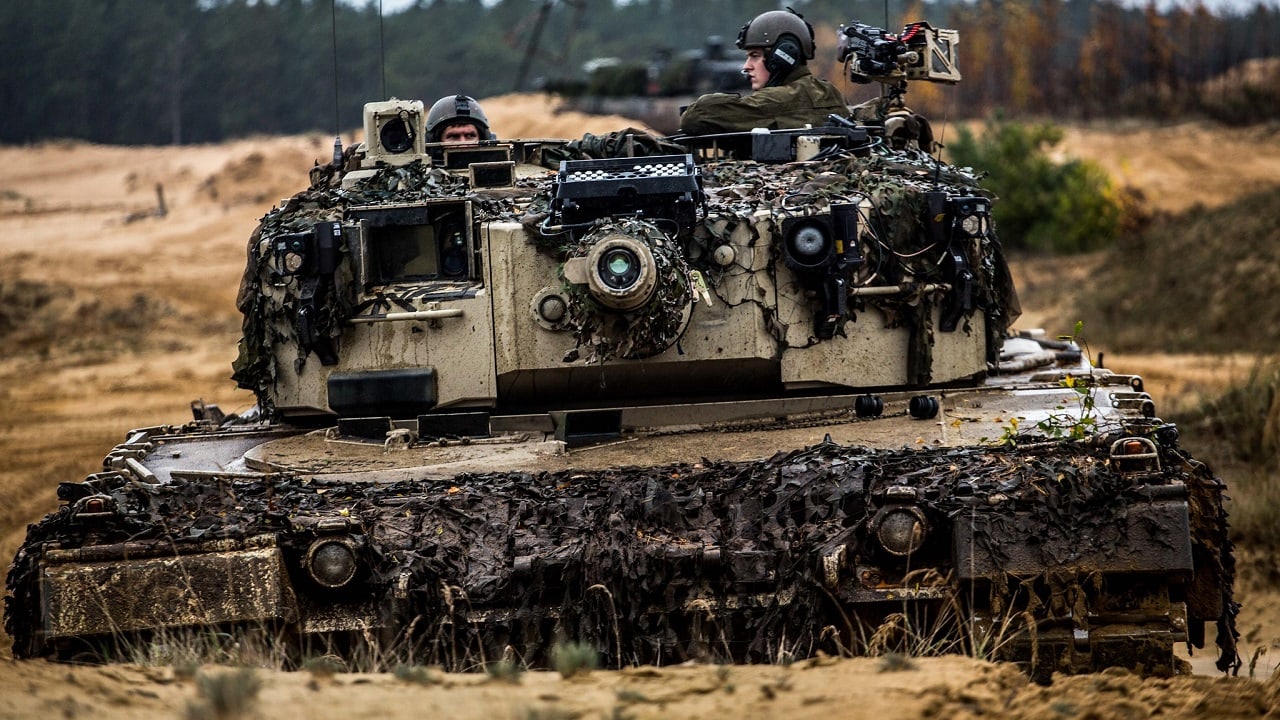
A Norwegian Leopard 2A4 main battle tank during Iron Wolf II in Lithuania. It involves 2,300 troops from 12 NATO Allies. The Lithuanian-led exercise is helping to train the NATO Battlegroup which consists of soldiers from Germany, Belgium, Luxembourg, the Netherlands and Norway. Shot in Rukla, Lithuania.
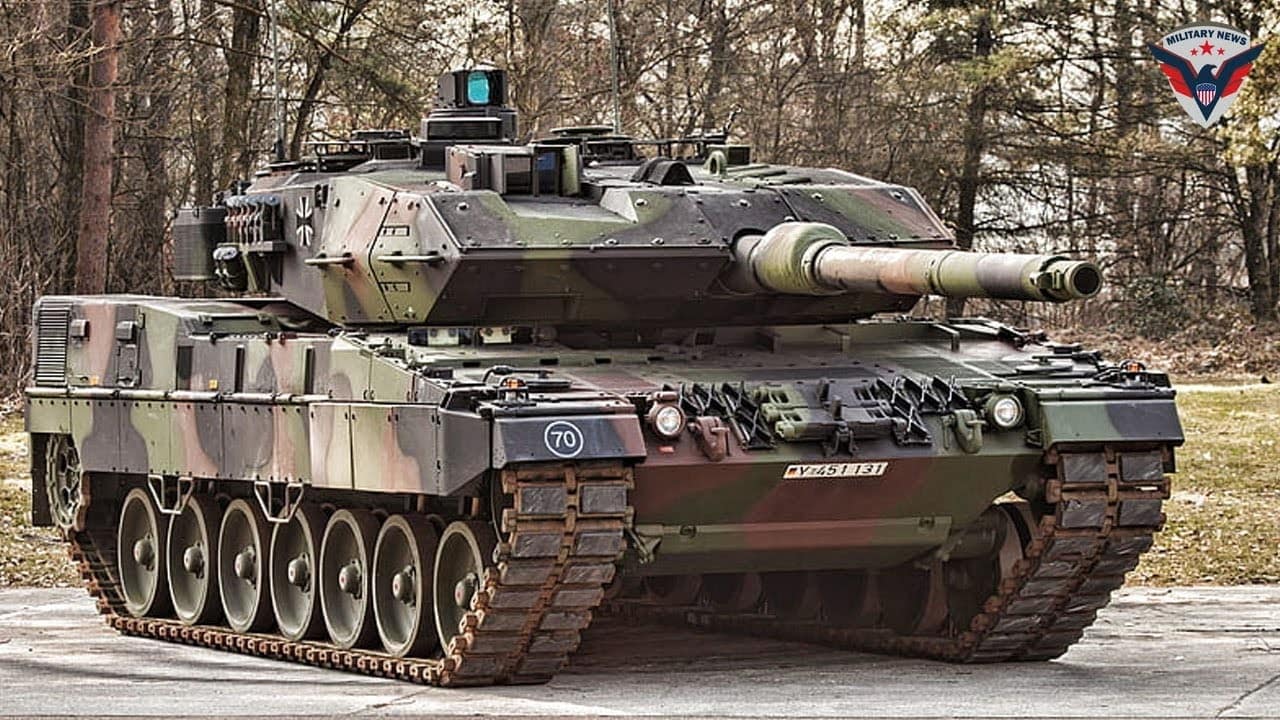
Leopard 2 Tank. Image Credit: Creative Commons.
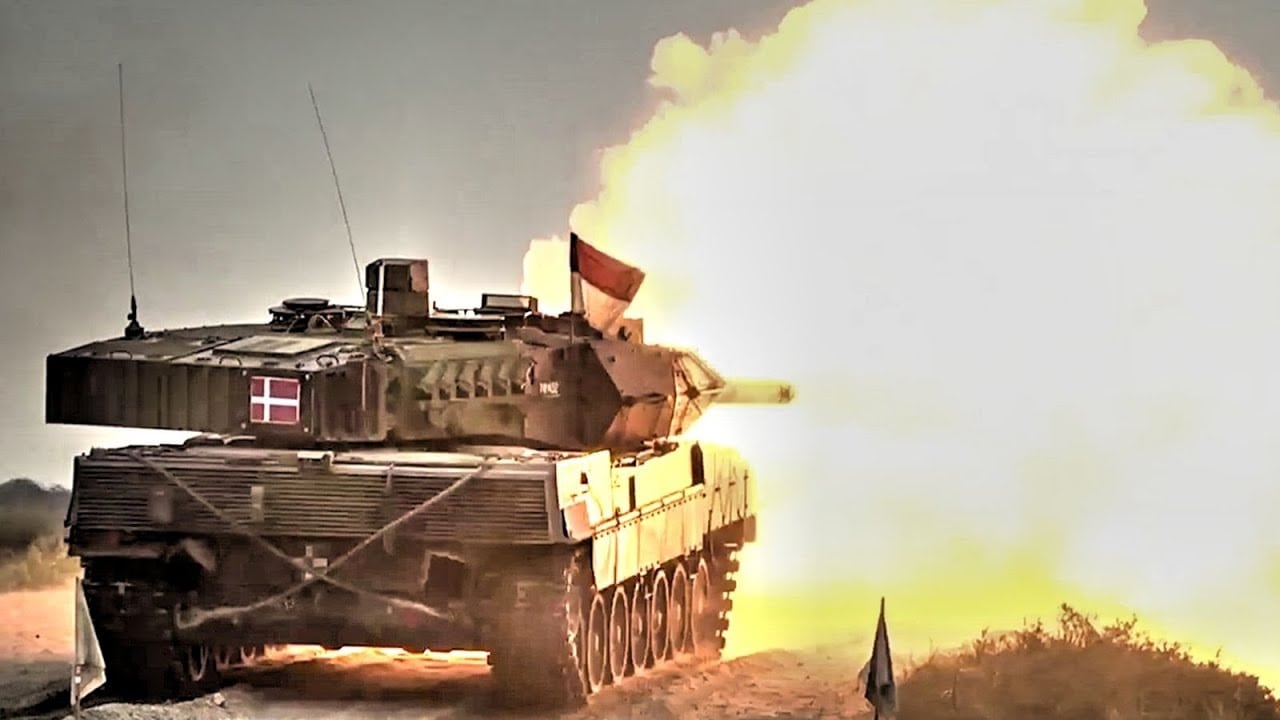
Leopard 2 Tank.
Point: The Case Against the Leopard 2
A major source for this perspective is provided by historian Nigel Jones in a 2025 piece for the Spectator:
“According to a confidential assessment by Germany’s own defence ministry, and published by the Daily Telegraph, the Leopards have disappointed their Ukrainian army crews, as they are said to be over-complex to operate and vulnerable to aerial attack by Russian drones. … So limited are the Leopards’ capabilities proving in real battle conditions that their range and mobility are restricted. According to the study, they are being used as little more than moderately mobile artillery pieces.”
Additional Point: It’s Not Just the Leopard
Speaking of artillery pieces—and to add insult to injury—the Panzerhaubitze 2000 (PzH 2000) self-propelled gun, suffers from frequent barrel overheating and electronic failures, so much so that its suitability for war is strongly questioned. It is hoped that the new A4 variant of the PzH 2000, unveiled in November 2025, will have greater success.
A double-dose of embarrassment for the once-vaunted German arms industry.
Counterpoint: The Case for the Leopard
The contrary perspective is provided by Simon Newton of Forces News:
“The Leopard 2, on the other hand, has proven to be a deadly weapon, possibly Ukraine’s most effective tank, despite being vulnerable to a top-down drone strike. … The problems seem to be less with the tank itself and more with how it is being deployed and operated. … German tank crews also take three years to learn how to operate a Leopard 2 properly. … So it’s not surprising that so many were lost during Ukraine’s unsuccessful counteroffensive in 2023. … They didn’t have enough of them, crews didn’t have enough training and they didn’t use them in the way they were designed.”
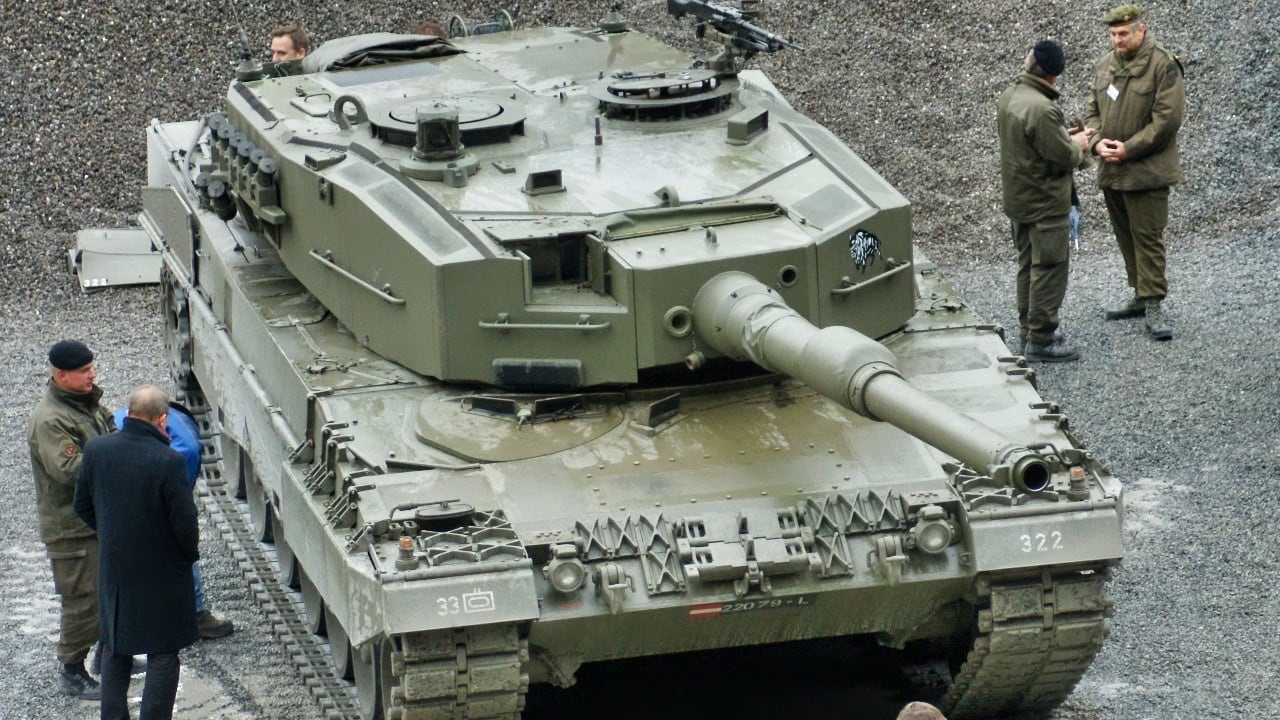
Germany Leopard 2 Tank. Image Credit: Creative Commons.
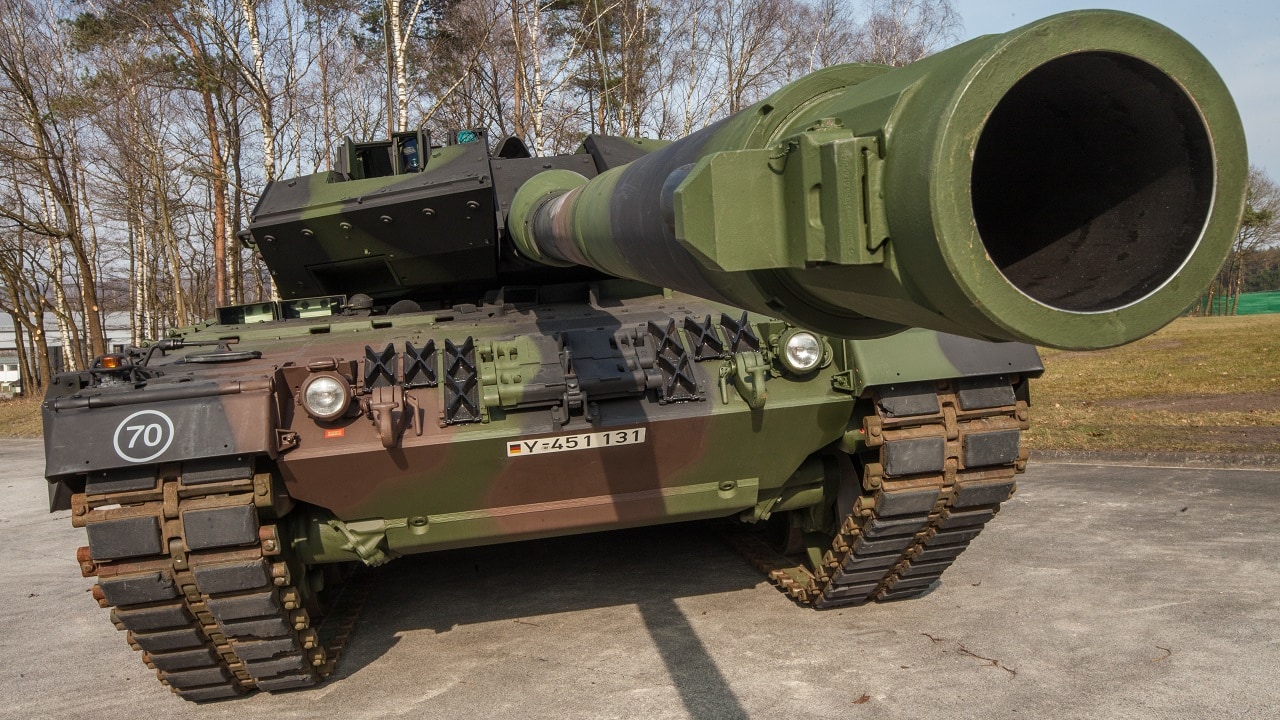
NATO Leopard 2 Tank. Image Credit: Creative Commons.
So then, how was the Leopard 2 designed, built, and intended?
—For starters, it was built for fast, high-intensity battles—not the grinding attrition of Ukraine, where the skies are saturated by drones and electronic warfare.
—Second of all, these mechanical “big cats” designed to operate with close air support, and Ukraine has very little of that, the valiant efforts of its Air Force’s F-16 pilots notwithstanding.
Parting Thoughts
One additional bit of perspective from Newton:
“German kit is far from being the worst-performing in Ukraine. That honour goes to Russia’s Soviet-era turret-tossing tanks with their exploding auto-loaders. … According to tracking website Oryx, of the 1,147 tanks Kyiv has lost, 17 Leopard 1s have been destroyed and 38 Leopard 2s. That’s out of a reported 250-odd Leopards supplied by Germany and other countries, so around a fifth of them. … Compare that to Russia, which has lost 3,903 tanks – around 100 a month – since the war began.”
Food for thought.
About the Author: Christian D. Orr, Defense Expert
Christian D. Orr is a Senior Defense Editor. He is a former Air Force Security Forces officer, Federal law enforcement officer, and private military contractor (with assignments worked in Iraq, the United Arab Emirates, Kosovo, Japan, Germany, and the Pentagon). Chris holds a B.A. in International Relations from the University of Southern California (USC) and an M.A. in Intelligence Studies (concentration in Terrorism Studies) from American Military University (AMU). He is also the author of the newly published book “Five Decades of a Fabulous Firearm: Celebrating the 50th Anniversary of the Beretta 92 Pistol Series.”