
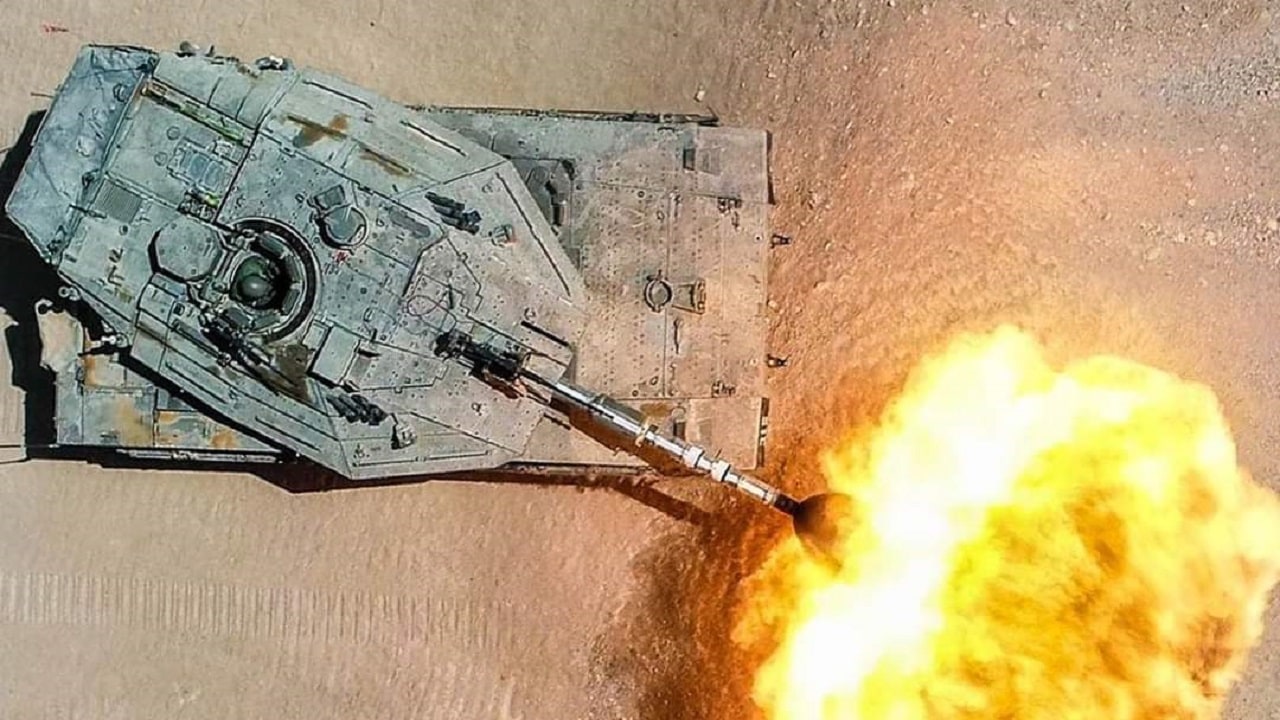
Summary and Key Points: Defense expert Christian D. Orr evaluates the Merkava Mark 5 Barak, Israel’s latest evolution of the “Chariot” main battle tank.
-Featuring the Trophy Active Protection System (APS) and AI-driven target processing, the Barak is designed for the high-intensity urban environments of 2026.
-This report analyzes the tank’s 1,500 HP MTU diesel engine, its 120 mm MG251-LR smoothbore gun, and the revolutionary Elbit Systems Iron Vision helmet.
-Orr explores the Merkava’s 1982 combat debut against Syrian T-72s, concluding that its 360-degree sensor fusion and focus on crew protection cement its status as a world-leading MBT.
Beyond the M1 Abrams: Analyzing the AI-Driven Features of the Newest Israeli Merkava Tank
What is the best main battle tank (MBT) in the world? Chances are, most “Yanks” would respond that it’s the American M1 Abrams (indeed, this writer has posited thusly multiple times), which is certainly understandable given its impressive track record in combat from the 1991 Persian Gulf War, AKA Operation Desert Storm, to the present day.
Some Anglophiles might go with the British Challenger tank due to its own impressive performance during the Gulf War, including the still-standing record for the longest distance tank-on-tank kill, pulled off by the Royal Scots Dragoon Guards (cue “Scotland the Brave” followed by Elton John’s “I’m Still Standing”).
(As for Russian-made MBTs like the T-72, T-90, and T-14 Armata, their once-fearsome reputations have taken a heavy hit—both literally and figuratively speaking—during Vladimir Putin’s seemingly interminable “special military operation” in Ukraine.)
Not to be outdone, Israel has its own serious contender for the title of World’s Best MBT.
Say “Shalom-shalom” to the legendary Merkava (“Chariot”) tank.
Merkava Tank: A Collection of Photos in Action
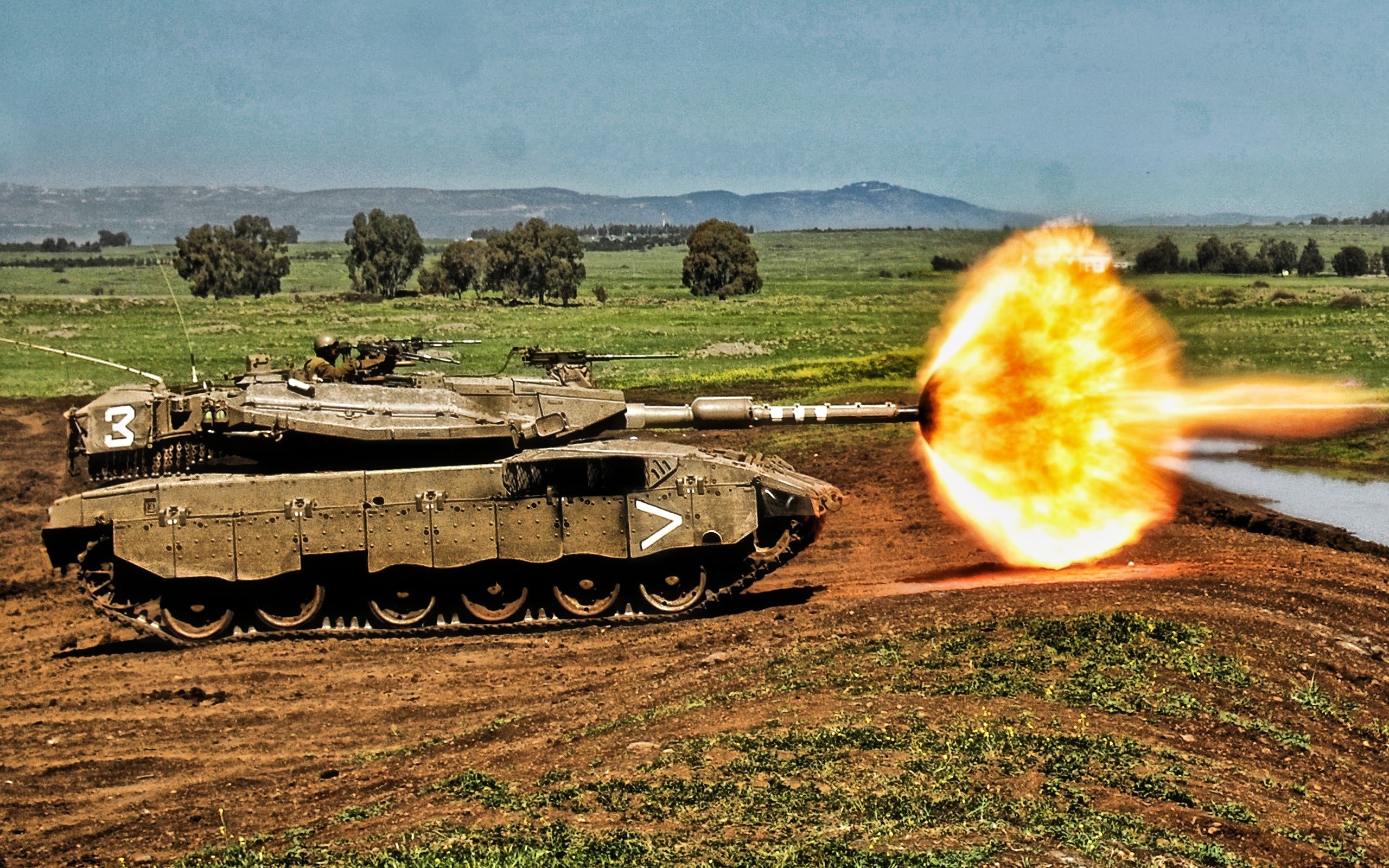
Merkava Tank. Image Credit: Creative Commons.
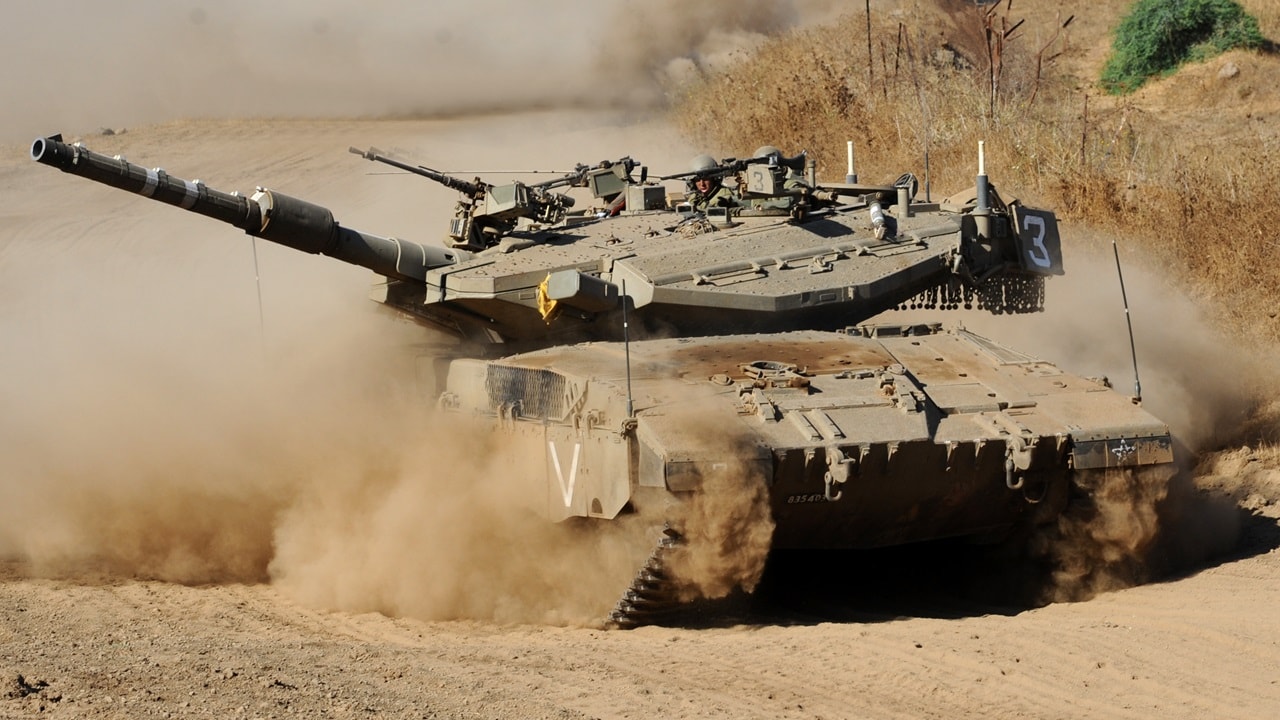
Merkava Tank from Israel
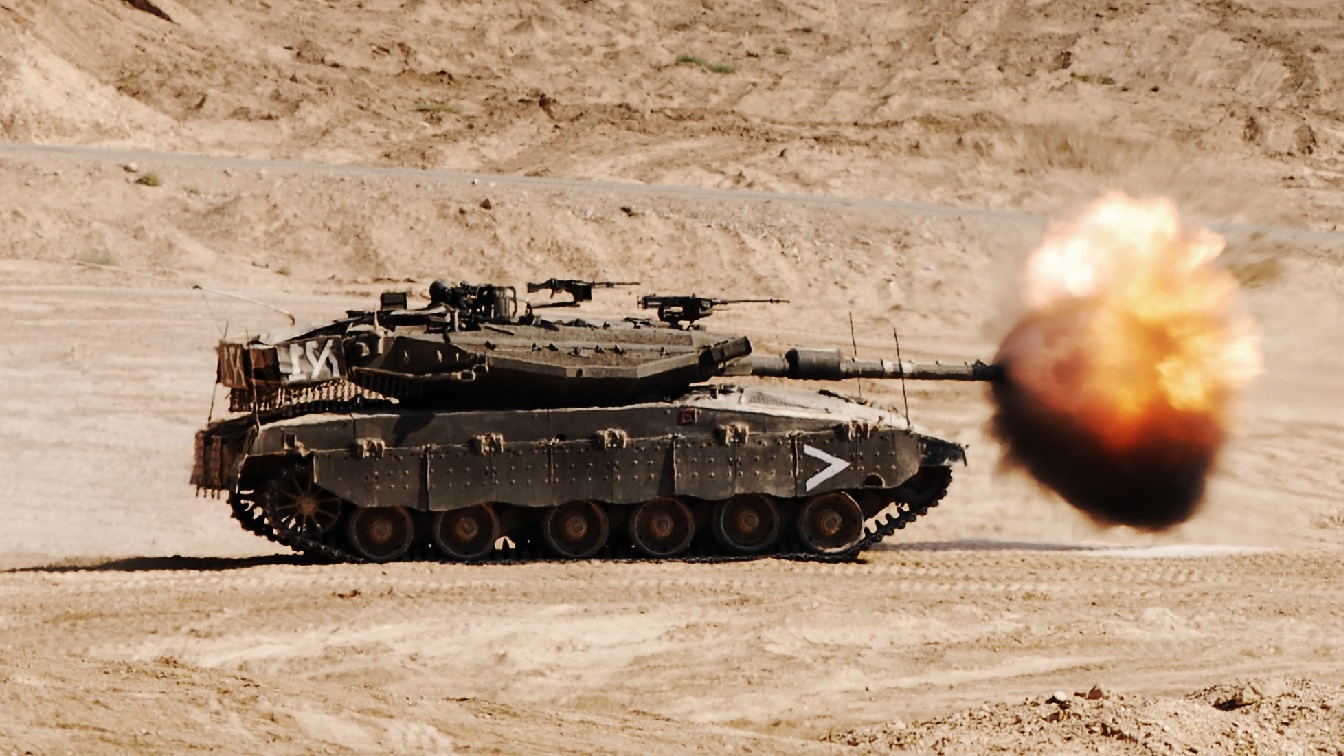
Merkava Tank Firing. Image Credit: Creative Commons.
Semantic Clarification: MBT Concept Explained
So then, what exactly do we mean by “MBT” (not to be confused with the MBT [Masai Barefoot Technology] brand of shoes)? They combine heavy armor with high mobility, showing that these two highly desirable traits are not mutually exclusive.
The Editorial Staff of Total Military Insight fleshes out the definition further, noting that “The primary purpose of main battle tanks is to provide a formidable presence in combat operations, dominating land warfare scenarios. By supporting infantry and other units, they penetrate enemy defenses, secure territory, and perform shock attacks, thereby shaping the outcome of engagements…In summary, the definition and purpose of main battle tanks revolve around their role as versatile combat platforms.”
Merkava Initial History and Specifications
The Ministry of Defense’s Merkava and armored vehicles directorate (“Mantak”) designed the Merkava MBT and began development in 1970.
The impetus for this was the British Government’s last-minute decision to withdraw from its previous commitment to sell Chieftain tanks to Israel (not entirely unlike the Israeli Air Force’s sense of urgency to build homegrown fighter jets such as the Nesher and Kfir in the aftermath of an arms embargo imposed by then-French President Charles de Gaulle).
The first operational variant, the Merkava Mark I, entered service with the Israel Defense Force (IDF) on February 20, 1979, with the 7th Armored Corps Brigade being the first unit to acquire it.
Since then, four more operational iterations of the Merkava have been generated, with the newest (relatively speaking), the Mk5 Barak (“Lightning”), being unveiled in September 2023 and assigned to assigned to the 52nd battalion of the 401st Ikwot HaBarzel Brigade of the Armored Corps of the Israeli Ground Forces (Zro’a ha-Jabasha) for acceptance test in January 2024.
Exact tech specs and vital stats on the Barak are not yet available, so we shall go with the available numbers for the Mk4 (which came out in 2004):
Weight: 65 tons
Length: 9.04 m (29 ft 8 in), rear to main gun muzzle
Height: 2.66 m (8.7 ft)
Width: 3.72 m (12 ft 2 in) sans armor skirts
Powerplant: MTU MT883 Ka-500/501 V12 diesel engine with a power of 1,500 HP coupled with the Renk HSWL 295TM hydromechanical automatic transmission with five forward and five reverse gears (EuroPowerPack system)
Maximum Speed: 64 km/h (40 mph) on paved roads; 55 km/h (34 mph) on unpaved roads
Maximum Range: 500 kilometers (310.686 miles)
Crew Complement: 4 (commander, driver, gunner, and loader)
Armament:
Primary: 120 mm (4.7-inch) MG251-LR smoothbore main with 48 rounds of ammo
Secondary:
2–3 × FN MAG58 (M240B) 7.62×51 mm General Purpose Machine Guns (GPMGs)
1 × internally-mounted 60 mm Soltam mortar
12 × smoke grenades launchers
By 2005, the Mk5 completely replaced the IDF’s aged leftover American-made M60 “Patton” and British-made Centurion tanks.
Operational History
The Merkava was first “blooded” in real combat during the 1982 Lebanon War, whereupon it significantly outperformed the Syrian Army’s T-62 and T-72 MBTs and proved itself practically impervious to the AT-3 Sagger/9M14 Malyutka and RPG-7 anti-tank weapons.
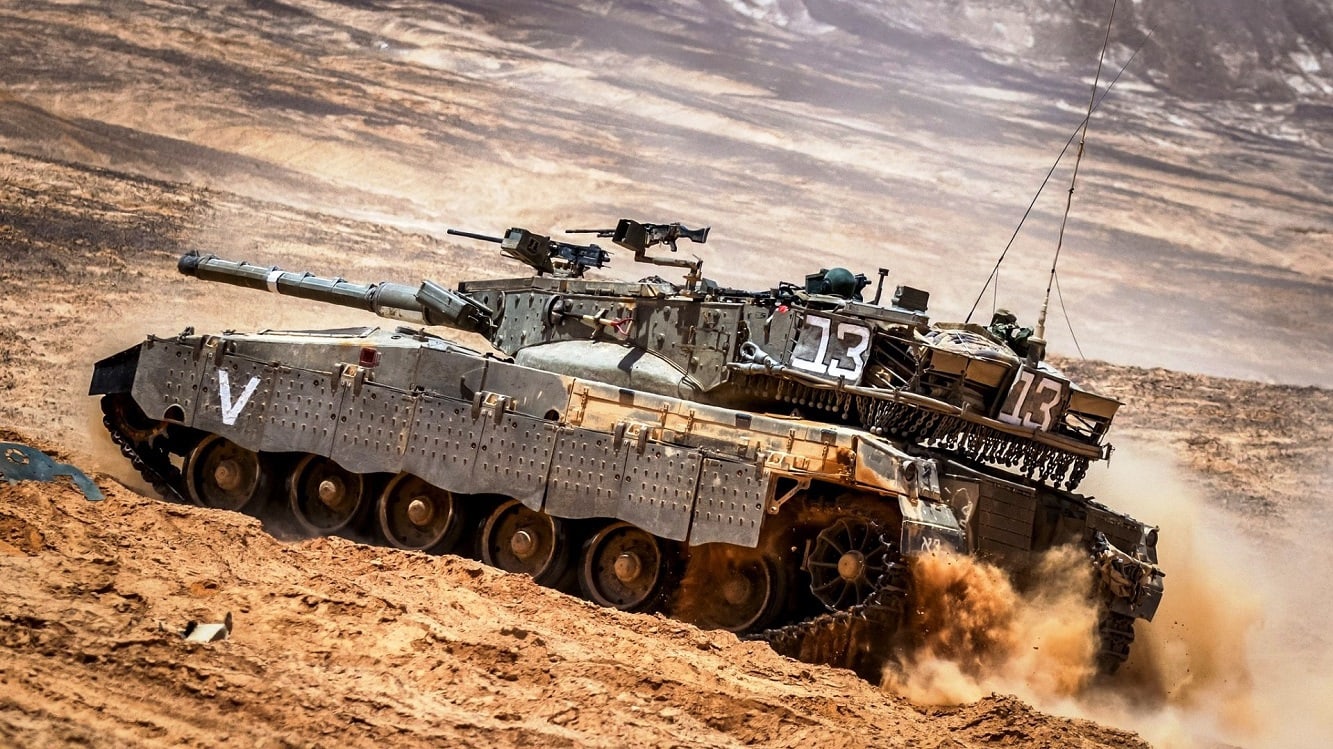
Merkava Tank. Image Credit: Creative Commons.
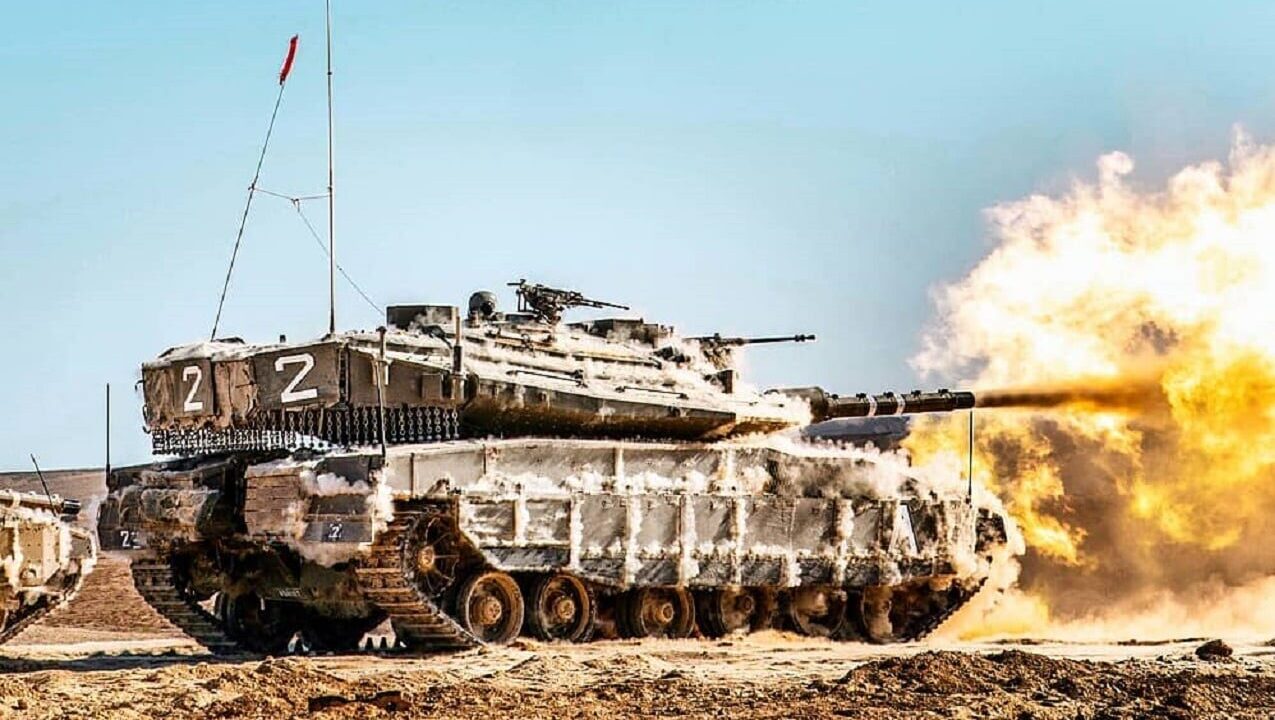
Israeli Merkava Tank. Image Credit: Creative Commons.
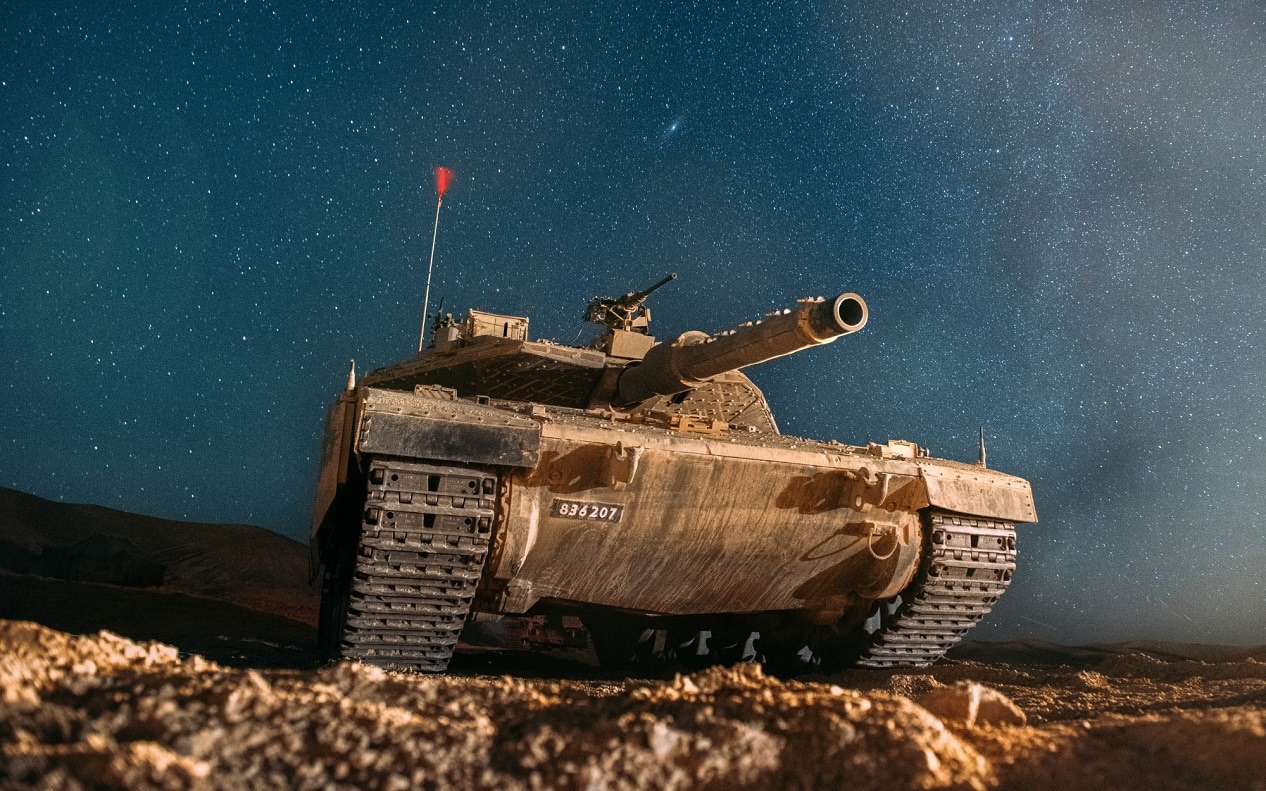
Merkava Tank
Since then, Merkavas have faithfully served the IDF in the following conflicts:
-Second Intifada (2002)
-Second Lebanon War (2006)
-Operation Cast Lead (2008-2009)
-Operation Protective Lead (2014)
-Current Israel-Hamas War (2023-Present)
-Current Israel-Hezbollah War (2024-Present)
The Future of the Merkava
Though (as already noted) the tech specs of the Mk5 Barak are yet to be revealed, we do know that it will have the following upgrades:
-Detecting and processing information based on AI
-Ability to detect the enemy and create a map of targets for subunits on the battlefield
-Ability to fight with closed hatches thanks to the peripheral observation covering the full range of 360 degrees linked to the commander’s helmet-mounted targeting system (the Elbit Systems Iron Vision helmet-mounted targeting system)
-Intelligent multi-touch monitors
-Advanced controllers
-Adaptability to the changing situation on the battlefield
-Increased crew survivability
Mazel tov, Merkava!
About the Author: Christian D. Orr, Defense Expert
Christian D. Orr is a Senior Defense Editor. He is a former Air Force Security Forces officer, Federal law enforcement officer, and private military contractor (with assignments worked in Iraq, the United Arab Emirates, Kosovo, Japan, Germany, and the Pentagon). Chris holds a B.A. in International Relations from the University of Southern California (USC) and an M.A. in Intelligence Studies (concentration in Terrorism Studies) from American Military University (AMU). He is also the author of the newly published book “Five Decades of a Fabulous Firearm: Celebrating the 50th Anniversary of the Beretta 92 Pistol Series.”