
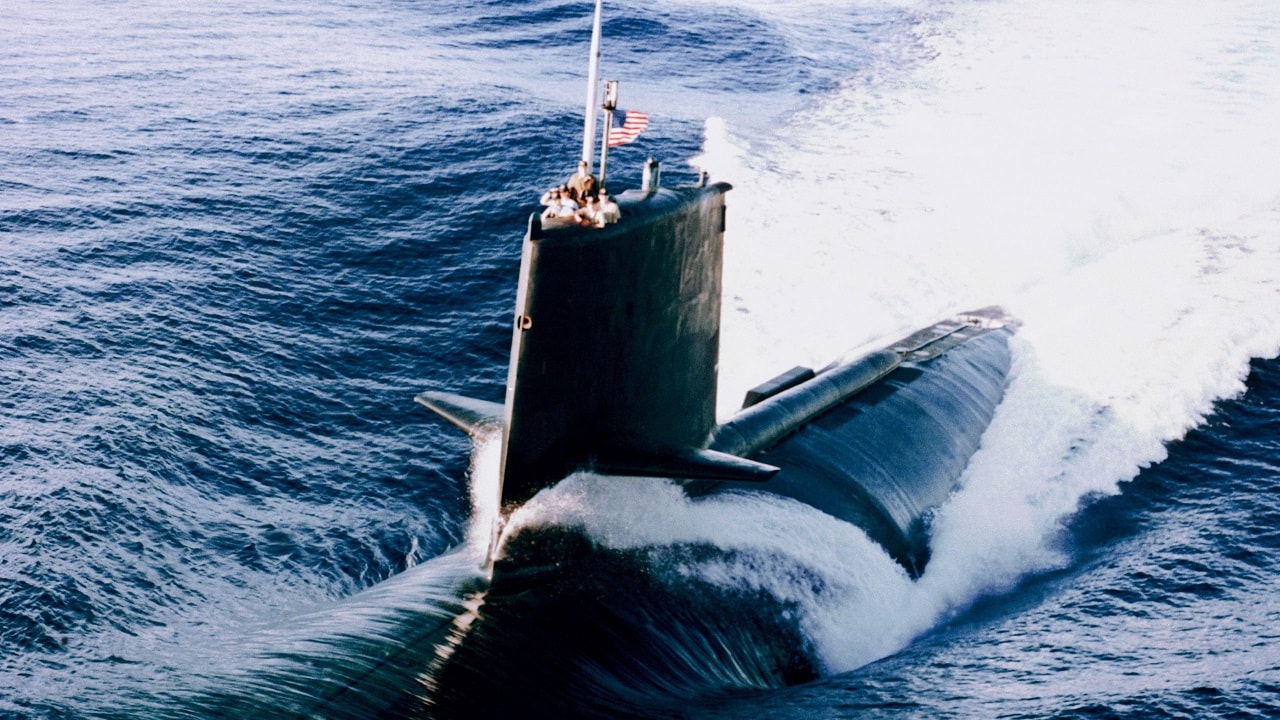
In addition to being the ocean’s most abundant and widely consumed tuna species, the Skipjack tuna (scientific name Katsuwonus pelamis) is also an efficient oceanic predator, which logically explains why it became the namesake for some deadly mechanical undersea “predators,” i.e., United States Navy submarines, aka “The Silent Service.” Indeed, the Skipjack fish lent its name to three different individual USN subs, the third of which also served as the name of an entire class of undersea boats. This article shall focus on that class.
What’s In a Name? The USS Skipjack Submarine Naming Precedent
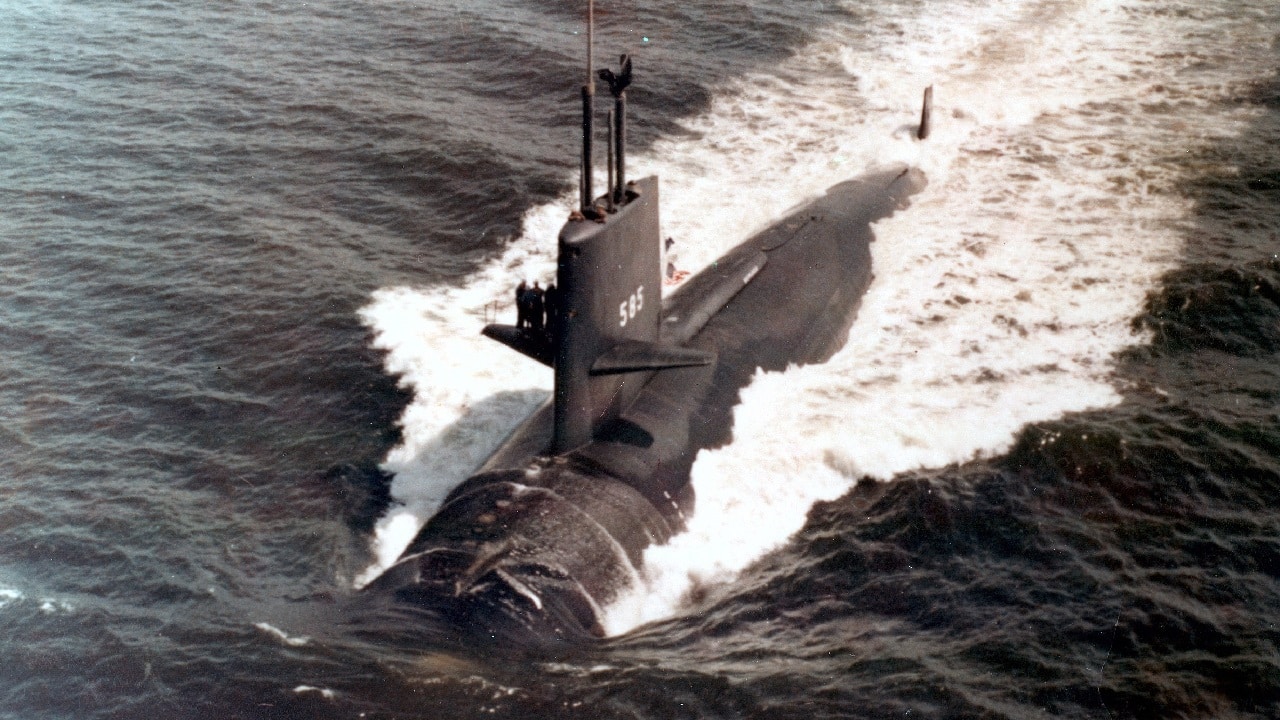
The U.S. Navy submarine USS Skipjack (SSN-585) underway, circa in the 1960s.
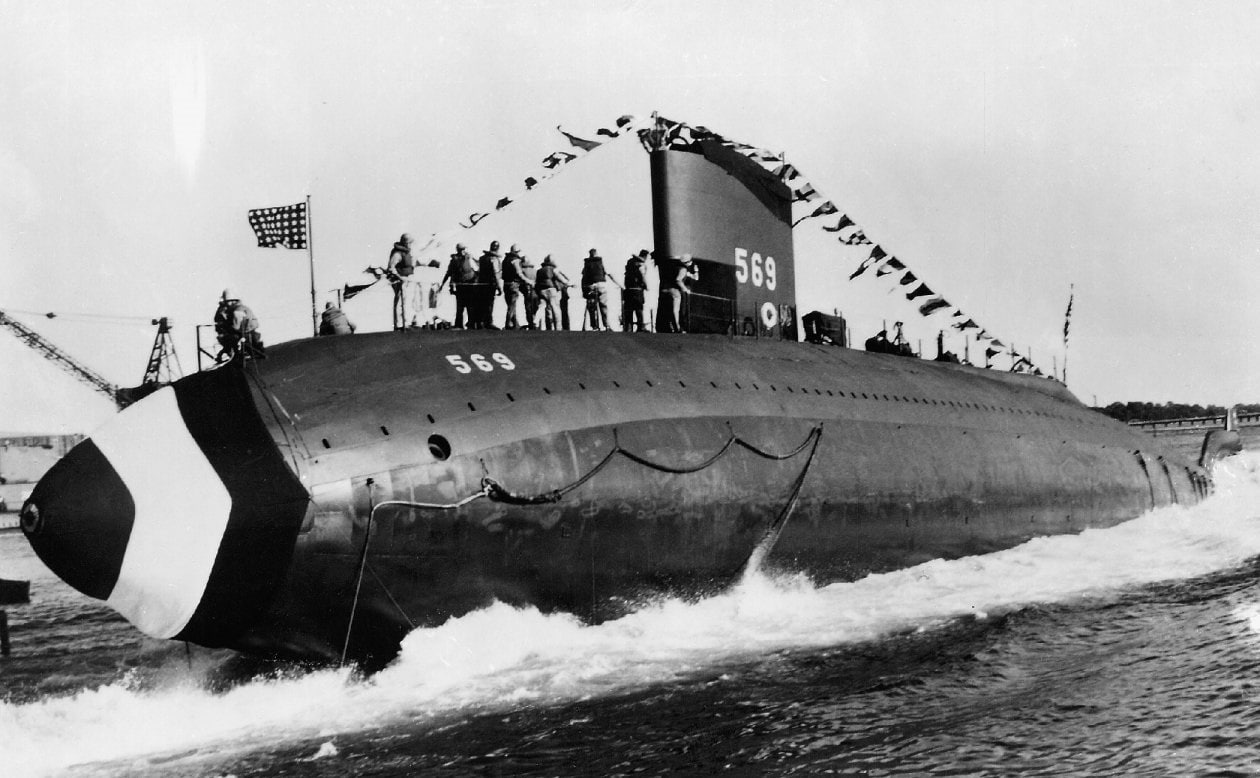
Skipjack-class Submarine. Image Credit: Creative Commons.
The first warship to bear the moniker didn’t do so for very long; this USS Skipjack (Submarine No. 24) was renamed USS E-1 (SS-24) whilst under construction in 1911.
E-1 was commissioned the following year and served until 1921. E-1 served in patrol duty in the waters around the Azores during World War I but saw no combat action.
Second, there was the Salmon-class submarine USS Skipjack (SS-184) of World War II, which had the most exciting career of all the Skipjacks in terms of kinetic wartime accomplishments (a euphemism for killing and destroying the enemy); according to Ken Wheeler in the 1981 book “War Under the Pacific” (part of the excellent Time-Life Books WWII series), SS-184 sank six Imperial Japanese vessels totaling 27,876 tons. Commissioned in June 1938, she ended her career with one heck of a bang, as she was sunk in an Operation Crossroads atomic bomb test on July 25, 1946.
That brings us to the third and final USS Skipjack and the entire class of ships bearing the name…
Rounding Out the Trio: The Skipjack Class Initial History and Vital Stats
These Skipjacks were nuclear-powered attack submarines (SSNs) of the Cold War era. They hosted some then-revolutionary features, such as:
-An S5W pressurized water reactor that provided 15,000 shaft horsepower
-Teardrop-shaped hulls, vastly different from, and much more efficient than, the long, tubular hulls of previous submarines
This tandem of features resulted in a very fast submarine class, with a top submerged capability of 33 knots, making the Skipjacks one of the fastest SSNs in the world until the first Los Angeles-class boat debuted in 1974.
They also had the agility to go with the speed, thus drawing comparisons with aircraft.
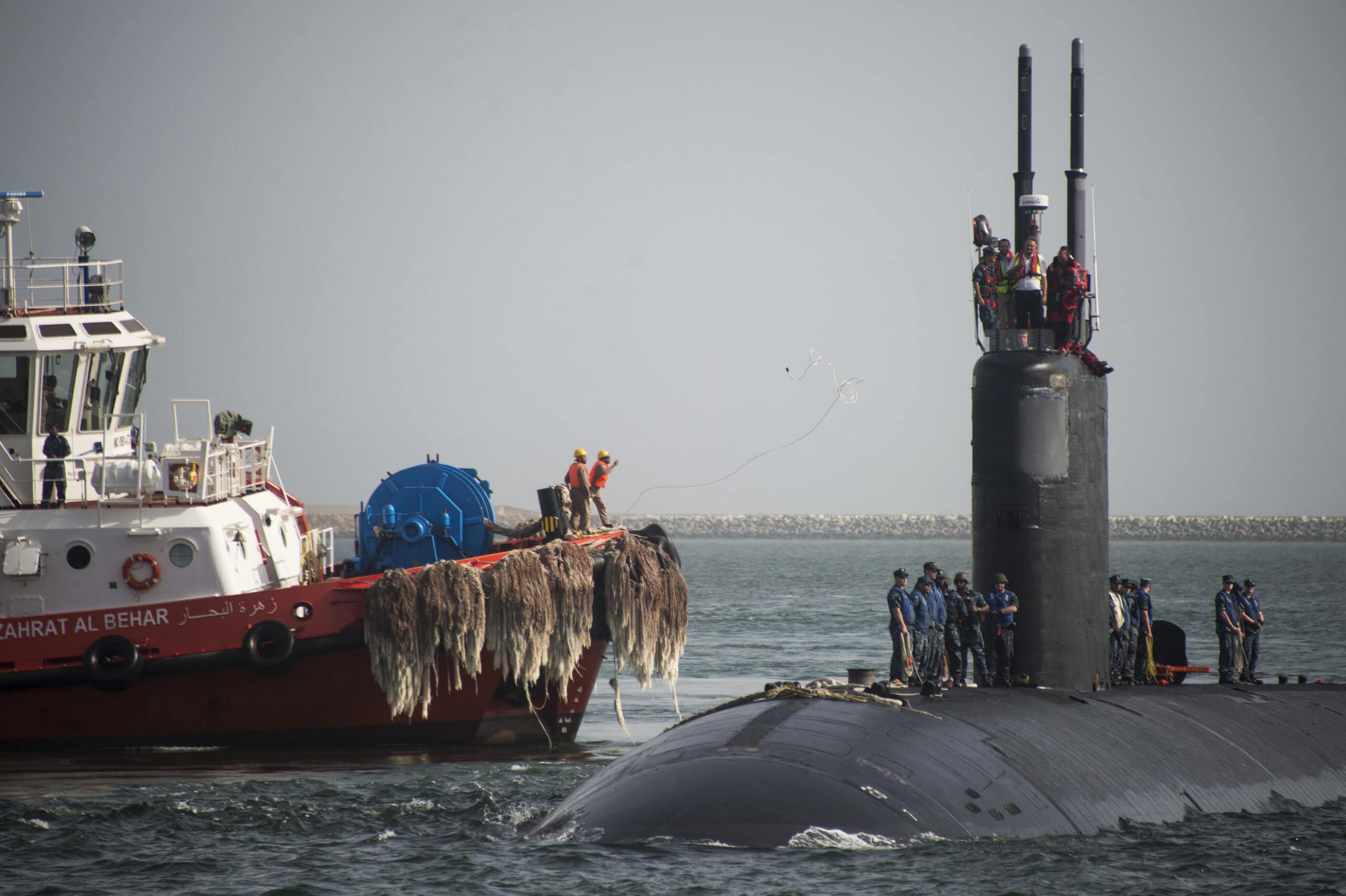
The Los Angeles-class attack submarine USS Boise (SSN 764) pulls into port in Duqm, Oman. Boise is the first nuclear vessel to conduct a port visit in Oman since 1996 and it will be the precursor to future nuclear powered vessels conducting port calls in Oman. (U.S. Navy photo by Mass Communication Specialist 2nd Class Daniel M. Young/Not Reviewed)
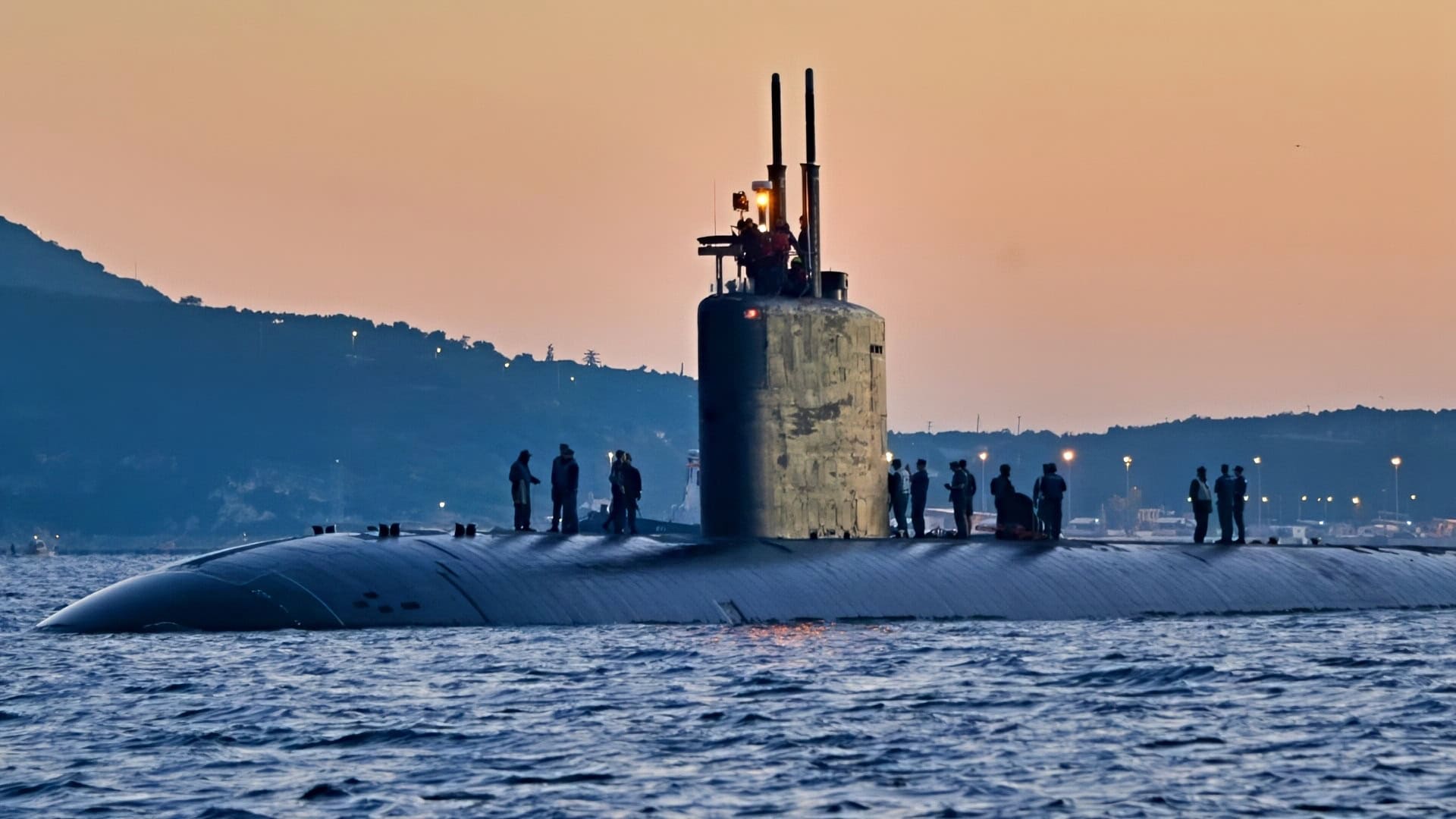
USS Boise (SSN 764) enters Souda Bay, Greece, during a scheduled port visit Dec. 23, 2014. Boise, a Los Angeles-class submarine, homeported in Norfolk, is conducting naval operations in the U.S. 6th Fleet area of operations in support of U.S. national security interests in Europe. (U.S. Navy photo by Mass Communication Specialist 2nd Class Jeffrey M. Richardson/Released)
Armament-wise, the Skipjacks packed six 533mm torpedo tubes in the bow, capable of firing the Mark 16, Mark 14, Mark 37, and Mark 48 conventional torpedoes, as well as the Mark 45 ASTOR nuclear torpedo.
Six Skipjacks in total were built. The lead ship of the class was, appropriately enough, the USS Skipjack (SSN-585), built by the Electric Boat Company (nowadays known as General Dynamics Electric Boat [GDEB]); she was laid down on May 29, 1956, launched on May 26, 1958, and commissioned on Tax Day 1959. The next five sister ships (all bearing “fishy” S-word names) were:
-USS Scamp (SSN-588), built by Mare Island Naval Shipyard, commissioned on June 5, 1961
-USS Scorpion (SSN-589), built by Electric Boat, commissioned on July 29, 1950
-USS Sculpin (SSN-590), built by Ingalls Shipbuilding, commissioned June 1, 1961
-USS Shark (SSN-591), built by Newport News Shipbuilding, commissioned February 9, 1961
-USS Snook (SSN-592), built by Ingalls, commissioned on October 24, 1961
Submarine Semantics Sidebar: Swan Song for Sea Creature Sub Names
As they say in baseball, “Three strikes, you’re out!” Shortly after the Skipjack-class subs were commissioned, Admiral Hyman George Rickover, the “Father of the Nuclear Navy,” put the kibosh on the naval tradition of naming submarines for sea creatures. His rationale? “Fish don’t vote.”
Ergo, the third USS Skipjack remains the last warship to bear that name, 36 years after her decommissioning.
With the brief exception of the Seawolf-class SSNs, USN submarines nowadays bear the names of either U.S. states of the Union (e.g., the USS Alabama (SSBN-741) made famous in the 1995 movie “Crimson Tide” starring Oscar winners Gene Hackman [R.I.P.] and Denzel Washington) or American cities (the Los Angeles-class boat USS Charlotte [SSN-766] that immortalized herself by sinking the Iranian frigate Dena).
Operational History…and Tragedy
Unlike their eponymous WWII predecessor, none of the Cold War-era Skipjacks sank any enemy warships, though they certainly stood ready to answer the call had World War III broken out.
That said, one of the Skipjack-class subs sank under tragic and mysterious circumstances, and to this day, many experts suspect foul play on the part of America’s primary Cold War adversary, the Soviet Union.
Sometime between May 21 and May 22, 1968, USS Scorpion blew up and sank with a loss of all 99 hands, with her wreckage coming to rest at a depth of more than 10,000 feet, roughly 400 miles to the southeast of the Azores. A subsequent Court of Inquiry was inconclusive, leading to much speculation about the cause of the sub’s loss.
Some theorized a “hot run,” i.e., a malfunctioning torpedo that exploded internally (similar to what happened with the Russian submarine Kursk in 2000). Others suggested that a faulty Trash Disposal Unit (TDU) allowed seawater ingress, which then contacted the battery cells, causing a catastrophic hydrogen explosion. Conspiracy-minded folks speculate that Soviet forces may have attacked Scorpion in retaliation for the earlier loss of K-129, and that both sides tacitly agreed to keep the incident hush-hush to prevent escalation into full-scale war.
Perhaps we’ll never know. Fortunately, the rest of the Skipjacks subs faithfully served the Navy without major incidents.
All good things must come to an end, and the retirement of the Skipjack class began with the Snook on November 14, 1986.
The end of an era took place on September 15, 1990, when the Shark was decommissioned.
Where Are They Now?
Sadly, none of the Skipjacks were preserved for posterity as floating museums (unlike, say, another Cold War-vintage nuke sub, the USS Nautilus [SSN-571]). Sculpin was the last survivor, dispensed with via the Navy’s Ship-Submarine Recycling Program (SRP) on October 30, 2001.
About the Author: Christian D. Orr
Christian D. Orr is a Senior Defense Editor. He is a former Air Force Security Forces officer, Federal law enforcement officer, and private military contractor (with assignments worked in Iraq, the United Arab Emirates, Kosovo, Japan, Germany, and the Pentagon). Chris holds a B.A. in International Relations from the University of Southern California (USC) and an M.A. in Intelligence Studies (with a concentration in Terrorism Studies) from American Military University (AMU). He is also the author of the book “Five Decades of a Fabulous Firearm: Celebrating the 50th Anniversary of the Beretta 92 Pistol Series,” the second edition of which was recently published.