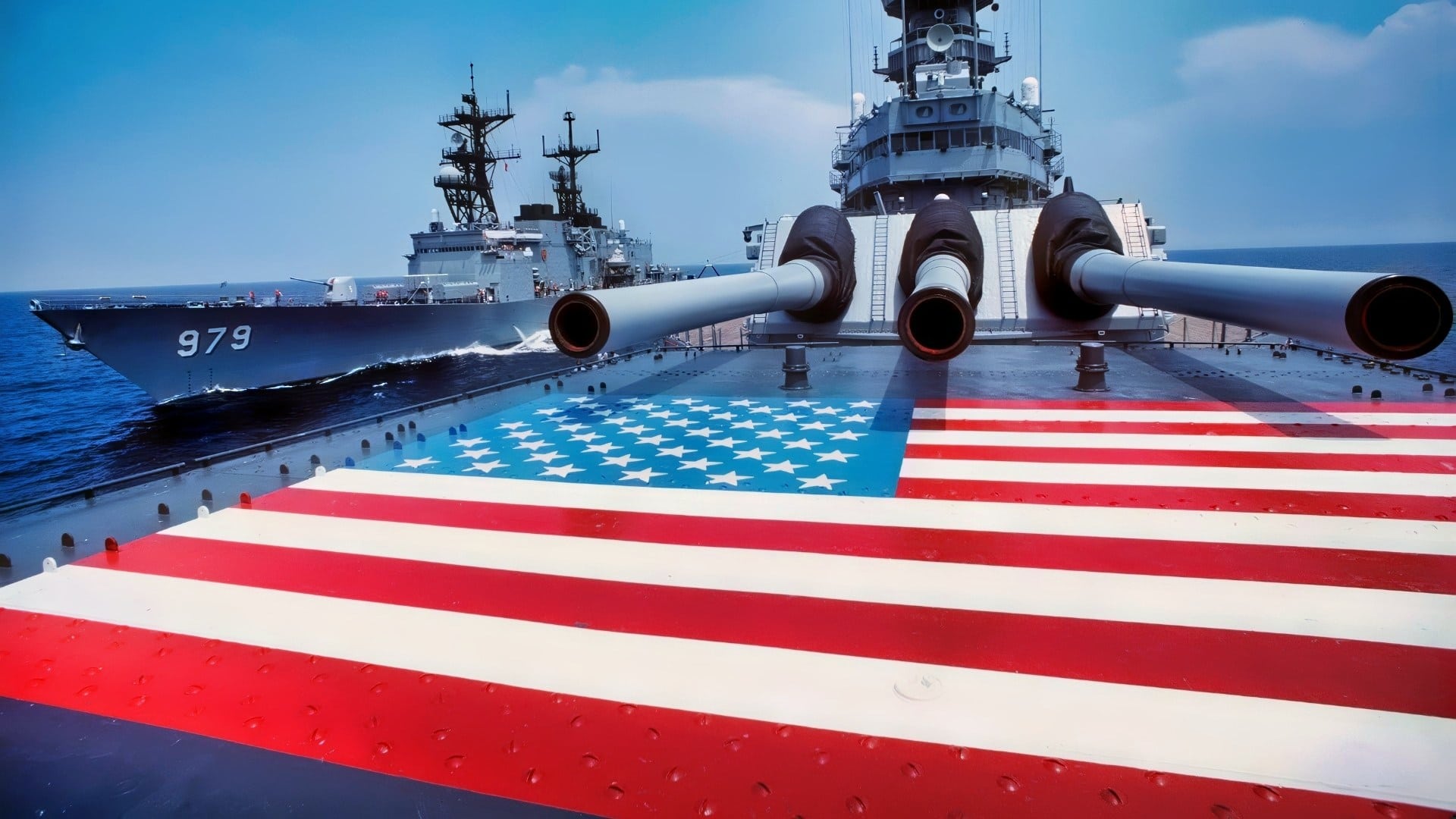
In the 1890s, when the world’s modern navies were still in the throes of battleship mania, the United States commissioned the USS Massachusetts (BB-2), a member of the Indiana-class battleship line. The Indiana-class was America’s first true attempt at modern battleships. Unlike most battleships of the day, though, the Indiana-class was designed for coastal defense–not blue-water warfare.
And that is one of the primary reasons Massachusetts is widely considered the worst battleship ever designed.
Too Weak for the High Seas
Not only was the decision by the Naval Department to make this battleship class prioritize coastal defense over deep sea warfare, but the ship’s low deck height meant waves washed over it easily. Massachusetts was not safe in rough seas. She couldn’t handle the High Seas.
That’s a pretty serious failure in terms of design.
On top of that, BB-2 had catastrophic stability problems. The battleship came with hulking 13-inch guns that were poorly balanced. If the main turrets rotated to one side, the ship would list dangerously. In extreme cases, firing or aiming its guns could destabilize the ship–about as bad as it gets for a warship!
BB-2’s legendary stability problems were exacerbated by the fact that the ship lacked bilge keels. These are long, narrow plates or fins that are designed to significantly reduce the ship’s motion by creating hydrodynamic drag. So, when the Navy designed the Massachusetts, they failed to consider making a ship that operated with as much stability (and therefore safety and crew comfort) as possible.
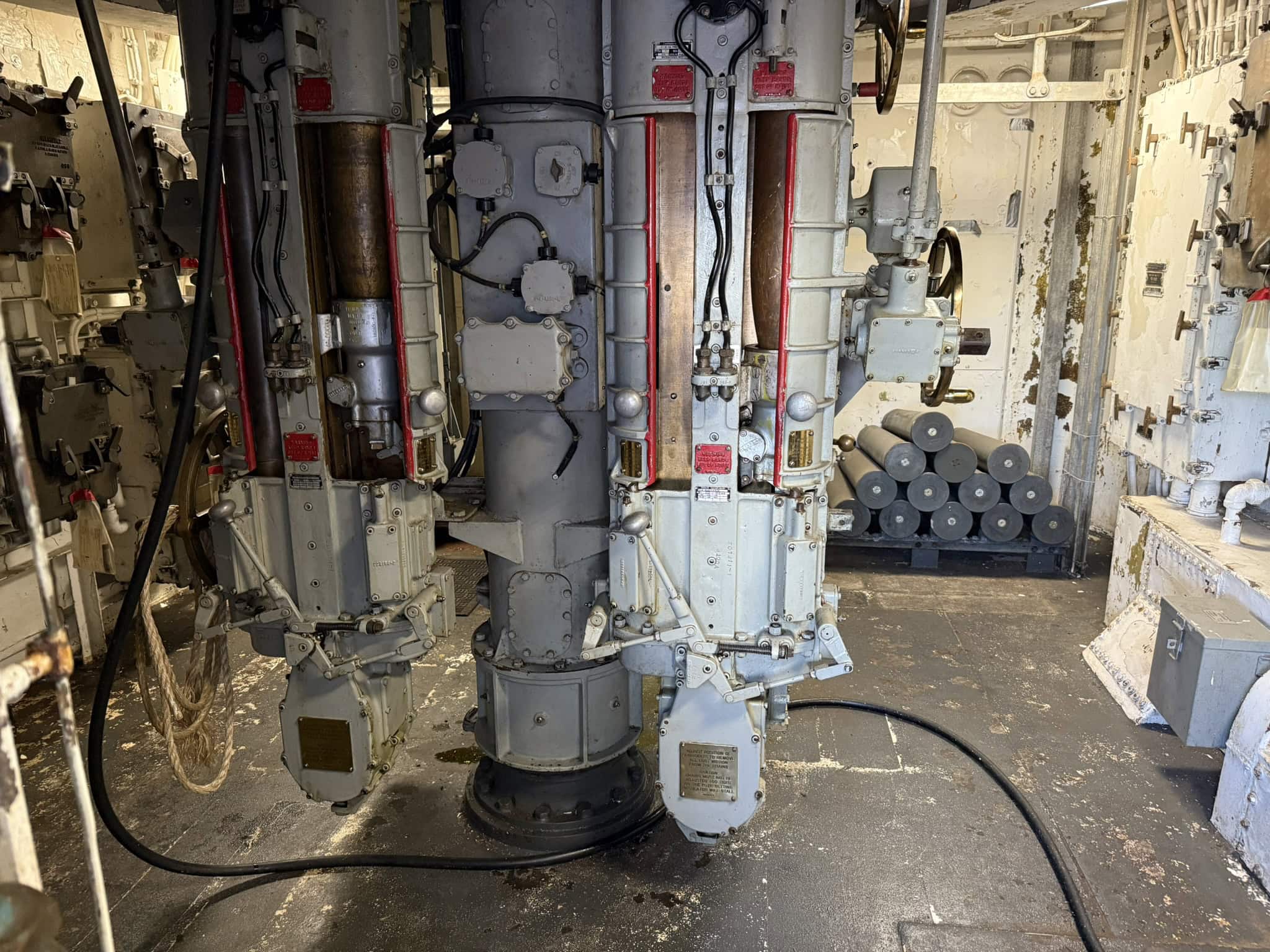
USS Iowa interior. 19FortyFive.com image.
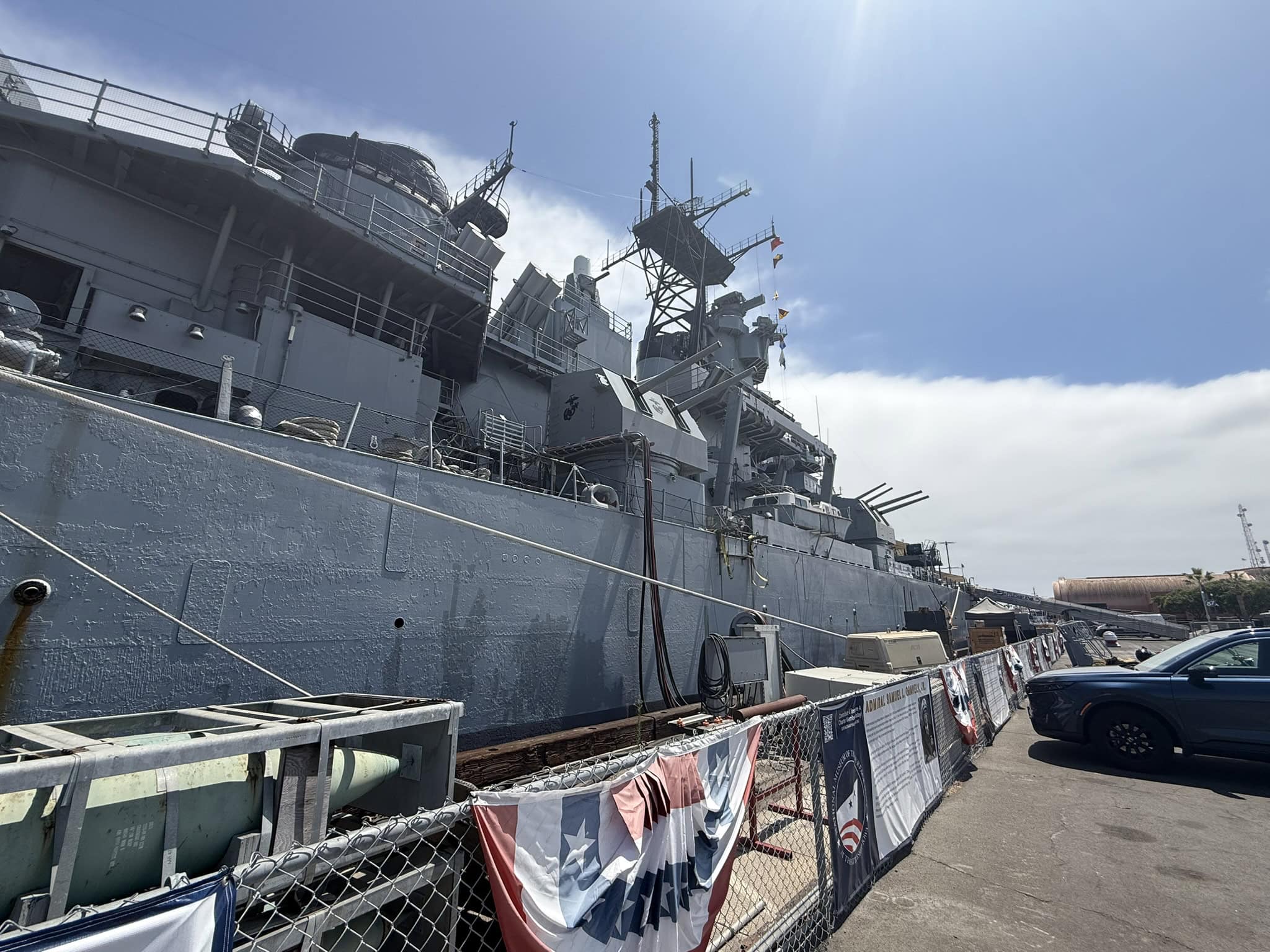
USS Iowa Visit by Harry Kazianis of 19FortyFive.com
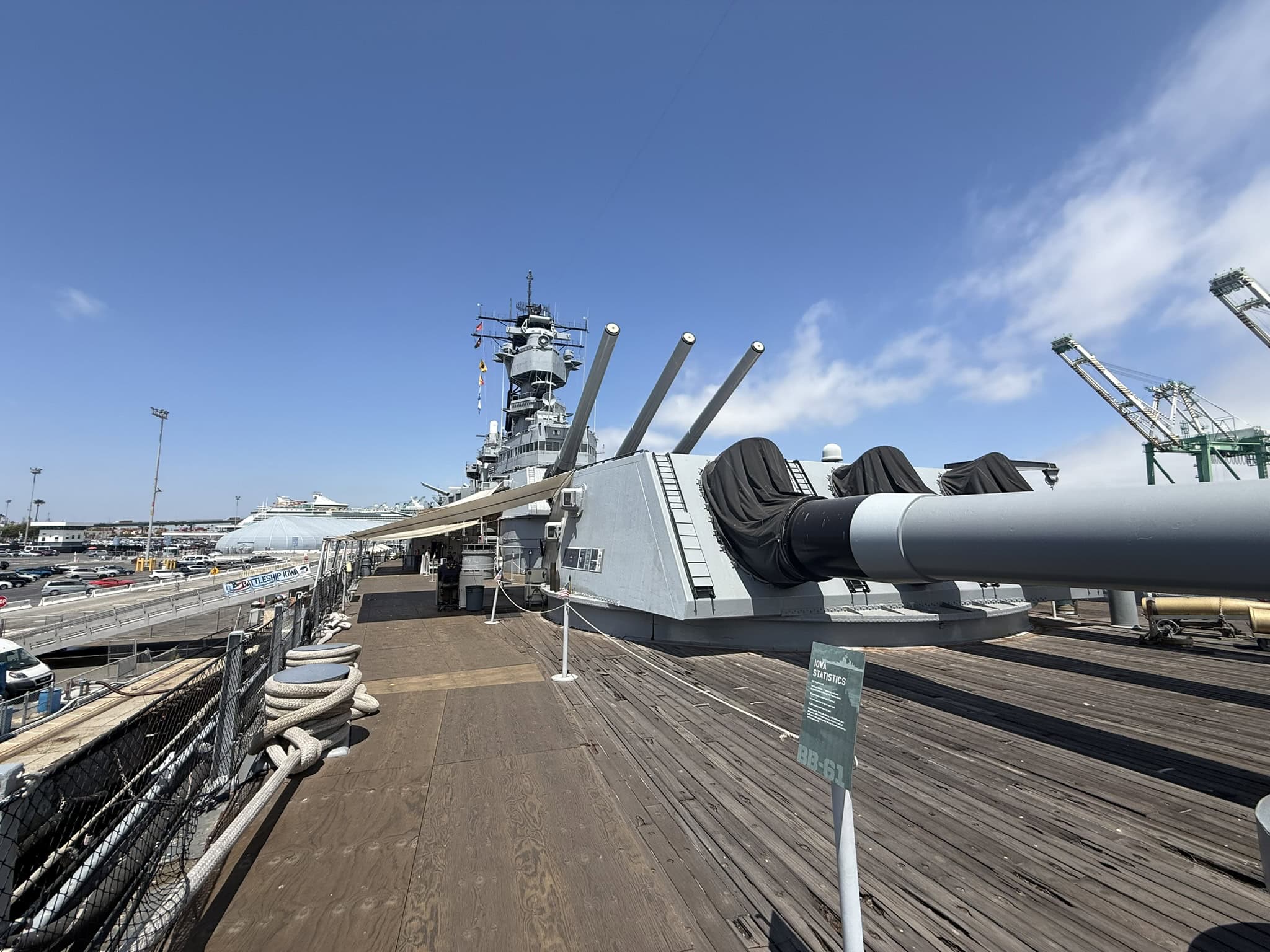
USS Iowa Visit by Harry Kazianis of 19FortyFive.com
Armor That Failed When It Mattered Most
Then there was the matter of the ship’s armor. This was always the most important feature of the battleships. These boats were meant to take a pounding at sea. But not the Massachusetts! Its main armor belt was placed too low in the hull. So, in combat, BB-2 was essentially vulnerable to enemy fire.
What’s more, the propulsion system was unreliable and maintenance-intensive. Breakdowns were common. In effect, the United States Navy possessed a battleship that was largely useless because it was rarely operationally ready.
An Unfortunate Series of Events
The coastal battleship was prone to accidents, too. In 1903, a turret explosion killed nine sailors. She ran aground multiple times, in New York, Maine, and Florida. Another boiler accident killed more crew.
As a result, Massachusetts required extensive repairs and downtime, further degrading its combat readiness. In fact, BB-2 spent more time broken, damaged, or idle than operational.
Due to the ship’s poor design and penchant for accidents, she missed the decisive Battle of Santiago during the Spanish-American War because of logistical issues. Sailors often derided this ship as either worthless or obsolete.
That was even before the First World War erupted. Because of these failures, the Navy relegated Massachusetts to training duty.
Final Indignity: Target Practice
Her final indignity was to be used as target practice in 1921. She was decommissioned early and then scuttled during a live-fire exercise involving US artillery. It was more useful in death than it was in life.
The artillery used to destroy her in 1921 allowed the military to learn how its new weapons would work against a target like Massachusetts.
Ultimately, BB-2 has outlasted all the other battleships America made over the previous century in terms of her service to the country.
No, she didn’t survive her death-by-live-fire exercise off the coast of Pensacola, Fla. Instead, the failed battleship has been preserved by the State of Florida as an underwater archaeological site. This has become popular with divers and fishers alike, according to the travel website Atlas Obscura.
The “worst battleship ever built,” in the formulation of Ariel Azoff of Atlas Obscura, “is enjoying a grand second act, submerged 30 feet in the Gulf of Mexico.”
Indeed, Massachusetts is now a full-blown artificial reef, where stingrays, massive Goliath groupers, and several shark species find refuge and sustenance. Schools of dolphins, too, enjoy the reef.
Alas, the Massachusetts failed in its primary mission: serving as a fearsome battleship for the US Navy.
She never lived up to her promise, got many of her crew killed or maimed over the course of her service, and proved far more useful to the United States as a sunken wreck than she ever did as a warship.
About the Author: Brandon J. Weichert
Brandon J. Weichert is the Senior National Security Editor at 19FortyFive.com. Recently, Weichert became the editor of the “NatSec Guy” section at Emerald. TV. He was previously the senior national security editor at The National Interest. Weichert hosts The National Security Hour on iHeartRadio, where he discusses national security policy every Wednesday at 8 pm Eastern. He hosts a companion show on Rumble entitled “National Security Talk.” Weichert consults regularly with various government institutions and private organizations on geopolitical issues. His writings have appeared in numerous publications, among them Popular Mechanics, National Review, MSN, and The American Spectator. And his books include Winning Space: How America Remains a Superpower, Biohacked: China’s Race to Control Life, and The Shadow War: Iran’s Quest for Supremacy. Weichert’s newest book, A Disaster of Our Own Making: How the West Lost Ukraine, is available for purchase at any bookstore. Follow him via Twitter/X @WeTheBrandon.