Oil crashed 13% on Friday after Iran announced the Strait of Hormuz was ‘open for business.’ But ships still need Iranian permission to transit, military vessels are barred, and Saudi Arabia’s finance minister says the physical price of oil is actually $160 per barrel — the futures market is trading a press release, not reality.
The Strait of Hormuz Isn’t Open Like It Was…
It’s another Friday, and the markets are getting a little skittish as President Donald Trump’s 96-hour war of choice against the Islamic Republic of Iran hits its seventh week. To counteract the ravages of the unstable markets, the president has repeatedly used his position as leader of the Free World to soothe those anxious markets, buying himself time and more maneuvering room in that war of choice.
A fragile ceasefire period has but one week left before anything can escalate.
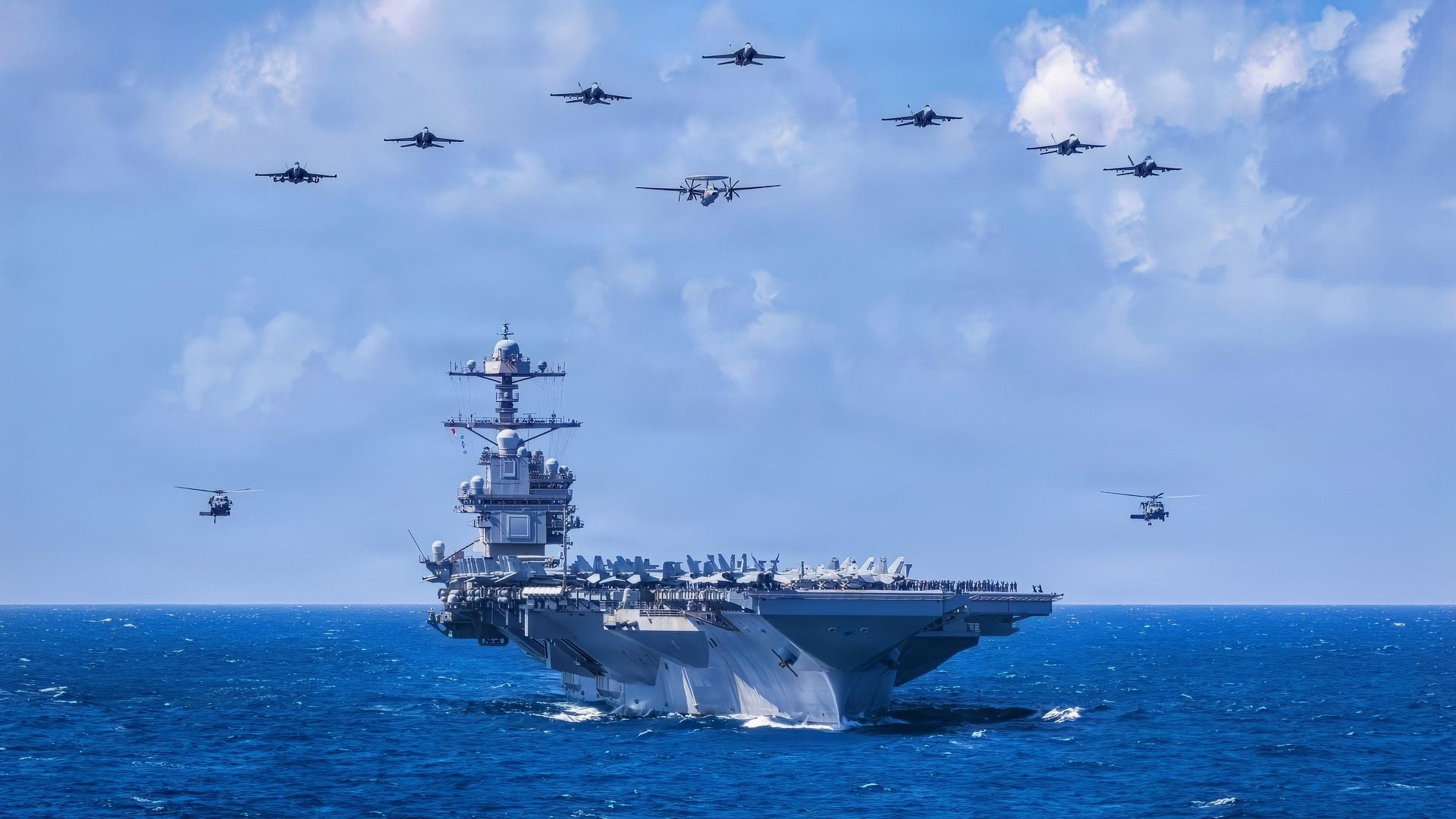
USS Ford Supercarrier U.S. Navy. Image Credit: U.S. Navy.
Hormuz “Reopens” at a Grave Cost
Iran announced that the Strait of Hormuz, which has become the center of gravity in the Iran War (making that conflict not only regional but truly global), is open for business. At the outset of the conflict, the Iranians had effectively blockaded this critical waterway, thereby destabilizing the entire global economy.
Multiple outlets on Friday morning reported that the Strait of Hormuz was open to commercial shipping, which comes on the heels of a ceasefire tied to the Israeli war against Iran-backed Hezbollah militants in Lebanon and the ongoing negotiations between the US and Iranians about how best to end Trump’s war of choice.
America’s Counter-Blockade Remains
Meanwhile, the counter-blockade of the Strait of Hormuz that the United States Navy instituted earlier this week remains fully in effect, despite the clear Iranian attempt at de-escalation.
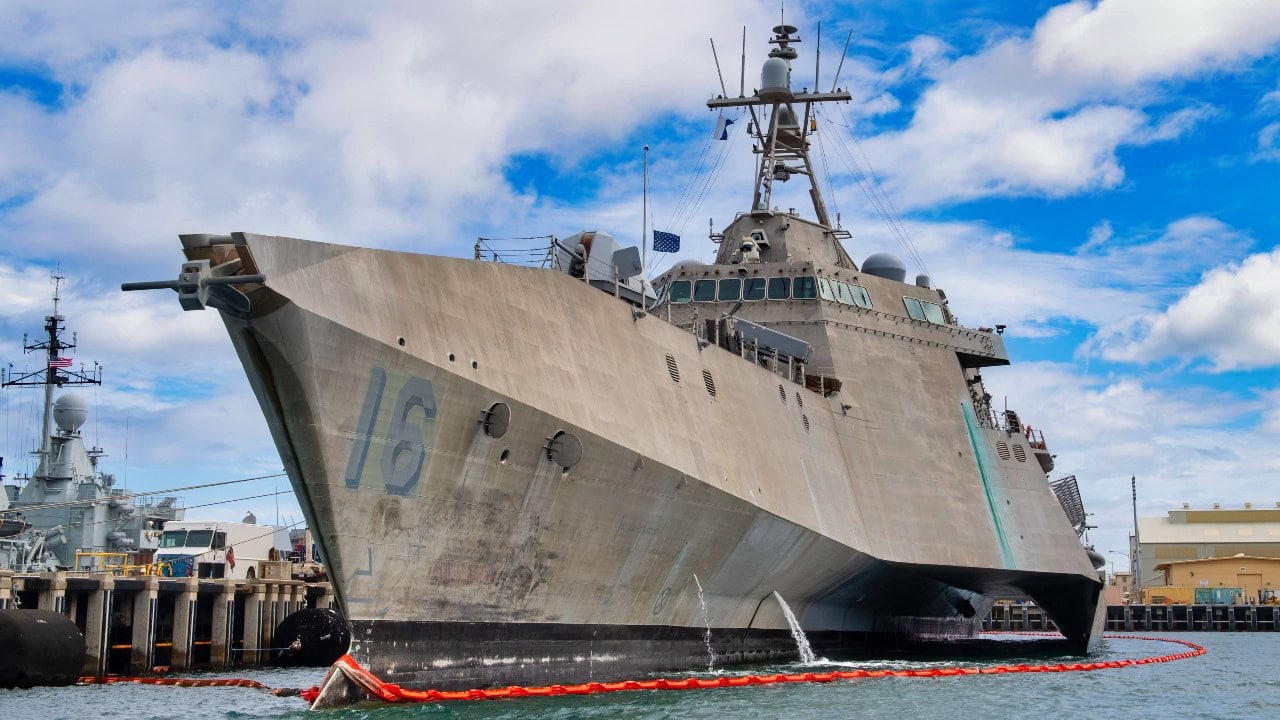
(July 7, 2022) – Independence-variant littoral combat ship USS Tulsa (LCS 16) moored at Joint Base Pearl Harbor-Hickam during Rim of the Pacific (RIMPAC) 2022. Twenty-six nations, 38 ships, four submarines, more than 170 aircraft and 25,000 personnel are participating in RIMPAC from June 29 to Aug. 4 in and around the Hawaiian Islands and Southern California. The world’s largest international maritime exercise, RIMPAC provides a unique training opportunity while fostering and sustaining cooperative relationships among participants critical to ensuring the safety of sea lanes and security on the world’s oceans. RIMPAC 2022 is the 28th exercise in the series that began in 1971. (U.S. Navy photo by Mass Communication Specialist 3rd Class Demitrius J. Williams)
Still, the Iranians are exerting greater control over the flow of goods through the Strait of Hormuz than ever before.
Under the current paradigm imposed by the Islamic Republic, ships traversing the Strait of Hormuz must coordinate with Iran for safe passage. Iran is barring any military vessels from entering its waters. All transit is limited to Iran-approved safe lanes that carry essential civilian traffic through waters perilously close to Iranian territory.
Markets, Media, and Managed Perception
Despite the announcement, it doesn’t sound like there have been any real changes to the situation stymying trade through the Strait of Hormuz. It seems to be a lot of media guff.
And that media speculation has been helped along by the forty-seventh American president, who is keenly aware that he must employ whatever tactics he can to prevent the price of oil from exploding to catastrophic highs (which it has threatened to do since the start of the president’s war of choice).
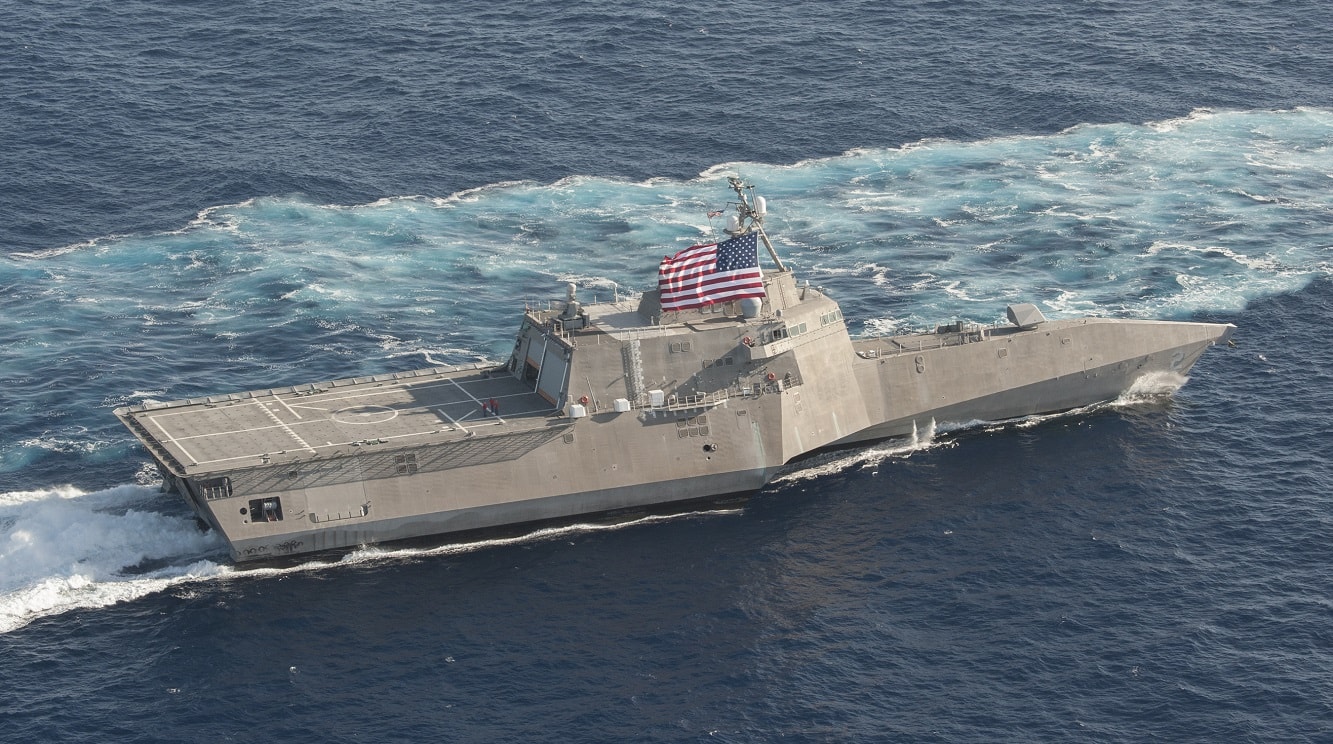
The littoral combat ship USS Independence (LCS 2) is underway in the Pacific Ocean. (U.S. Navy photo by Chief Mass Communication Specialist Keith DeVinney/Released)
If the price of oil went to the highs that many analysts have feared it would, the damage to the economy in the United States would be disastrous–and would leave open the probability that the president’s party would lose the upcoming midterm elections, making Trump vulnerable to Democrat Party attacks (and possible impeachment, depending on how great their victory is this November).
Since the start of this conflict, Trump has repeatedly exaggerated the progress of diplomatic talks to avoid losing the markets entirely.
Because of news stories about secret, tense talks between Trump and the Iranians and claims that the Iranians were reopening the Strait of Hormuz (at least until the ceasefire ended), oil prices collapsed by around 10-13 percent in a single move. Brent crude fell into the mid-$80s while global markets rallied sharply.
That’s because the Strait of Hormuz carries around 20 percent of global oil flows, and even a partial reopening would be a major relief for the strained global supply chain.
A recent statement by Saudi Finance Minister Mohammed Al-Jadaan highlighted the disparity between paper markets and physical/dated Brent prices, which he assesses are as high as $160 per barrel.
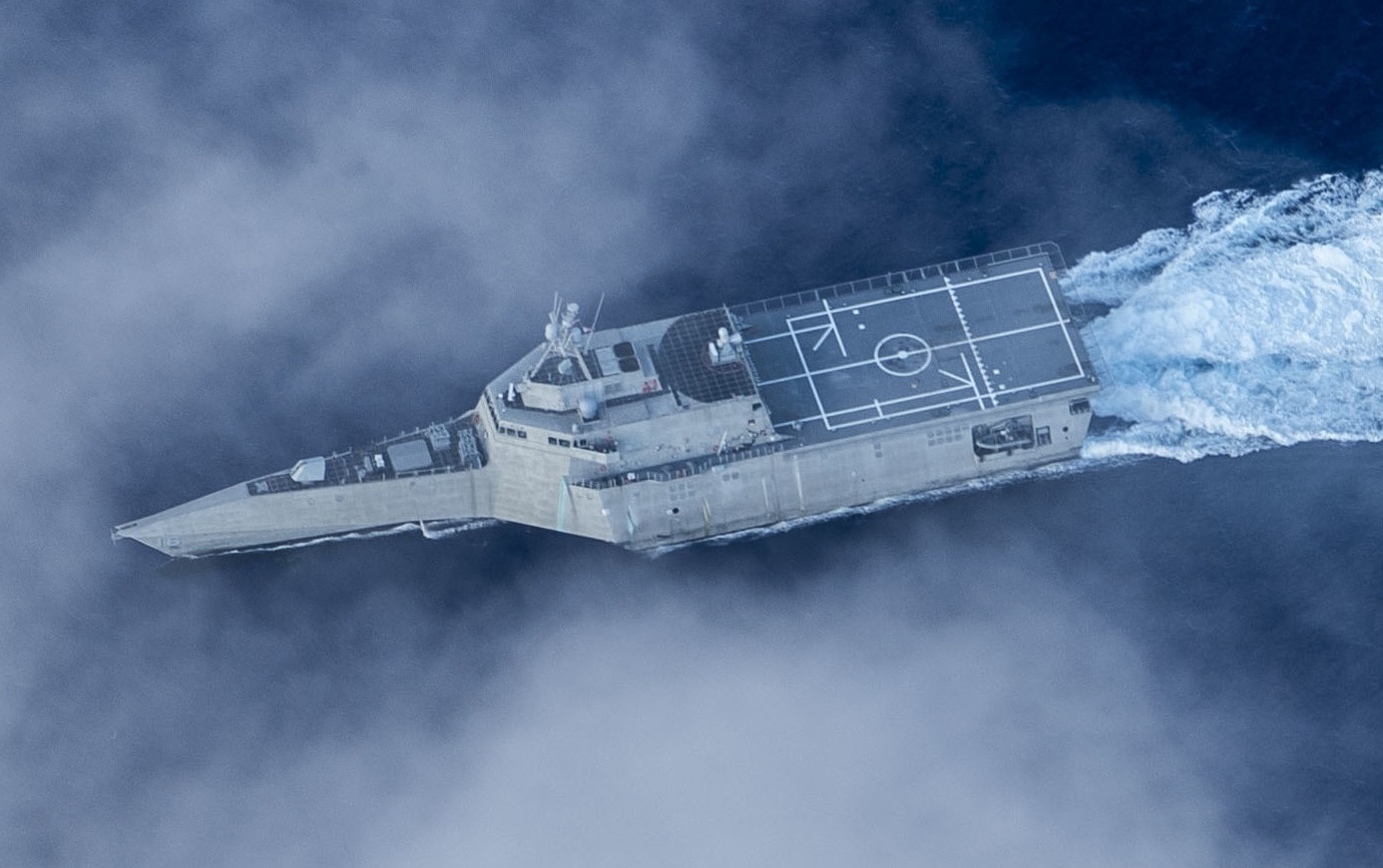
Littoral Combat Ship. Image: Creative Commons.
Saudi Finance Minister Al-Jadaan was demonstrating the disconnect between the constrained physical supply of oil in the market and futures trading, a disconnect that Trump is desperately trying to manipulate through his exaggerations and misinformation about the prospects for de-escalation.
A Global Supply Chain Breakdown
Further, the blockade of the Strait of Hormuz and the damage to key production facilities throughout the Middle East have been so severe that there will be extreme global shortages of important products, not just oil and natural gas, but also agricultural goods, precursors needed for semiconductor manufacturing, and other essential commodities.
These events will, in turn, create downstream economic pressures on these industries, inflicting more economic pain on people everywhere and leading to serious political dislocations.
Many in the Western media establishment are suggesting that the recent ceasefire between Israel and Hezbollah in Lebanon was somehow the cause of this sudden de-escalation. After all, the Iranians insisted that any peace proposal between themselves and the United States include the end of hostilities between Israel and Hezbollah in southern Lebanon as a prerequisite.
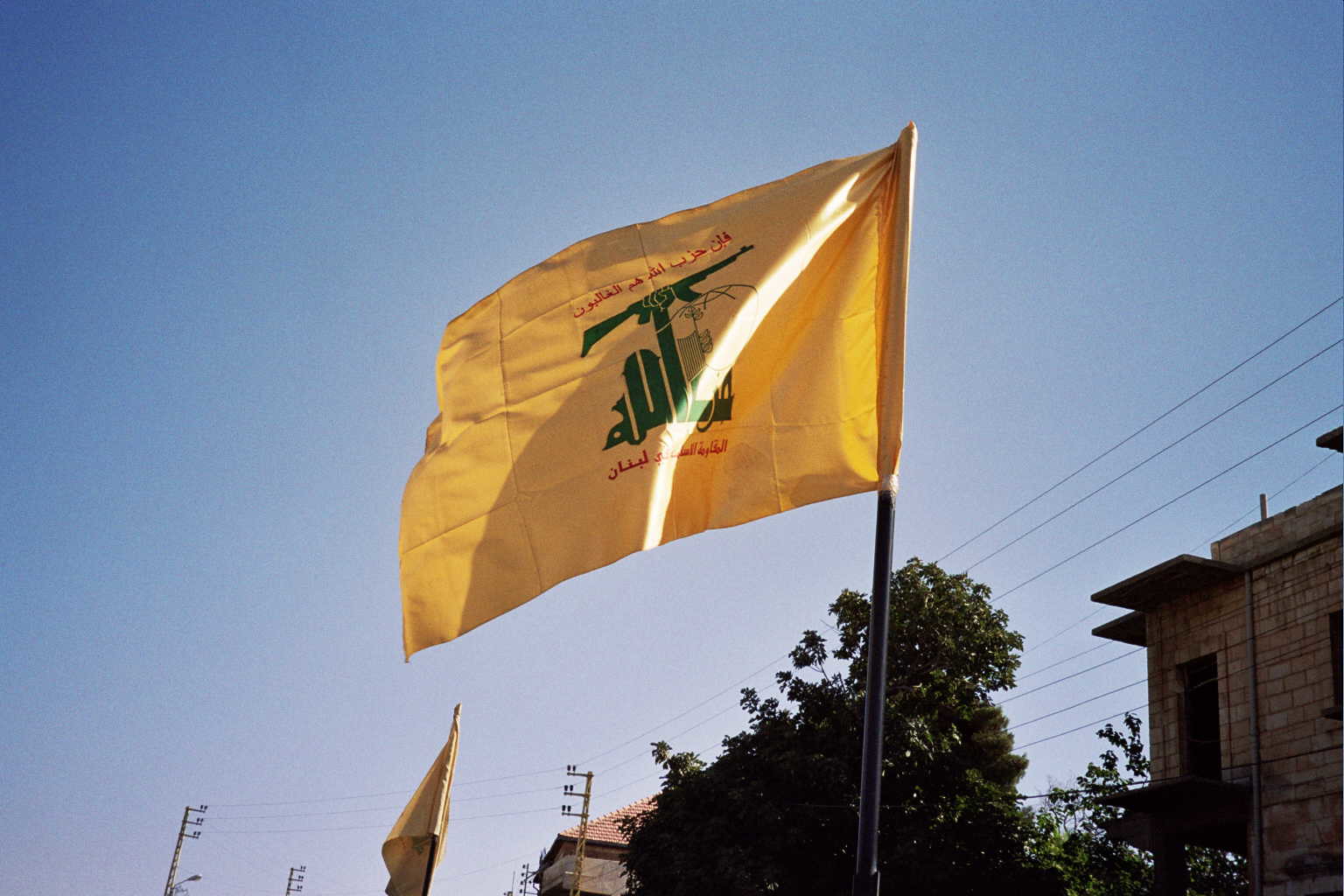
Hezbollah Flag.
Now that the Israelis have agreed to a nominal ceasefire, the Iranians are making statements about reopening the Strait of Hormuz. Tehran claims that if the ceasefire between Israel and their terrorist proxy, Hezbollah, is maintained, they will continue allowing for the flow of goods and services through the Strait of Hormuz (under their conditions, though).
All for Show: The Power Shift in Hormuz Has Already Happened
All this is for show, though. The change in power dynamics has already occurred. Iran effectively controls the Strait of Hormuz. Meanwhile, the Americans continue flooding the region with more troops, aircraft, and warships–all while maintaining their maximum pressure campaign against the Islamic Republic. The likelihood that this ceasefire, set to end in a week, leads to a lasting peace between the United States and the Islamic Republic is low.
Instead, you are witnessing the jockeying of presidential market manipulation meeting the reality of what Iranian military control over one of the most important global transit chokepoints looks like.
Contrary to Trump’s ambivalent attitude on the matter publicly, the fact remains that neither his government nor many other governments are willing to accept the kind of Iranian control over the Strait of Hormuz that Tehran is today exhibiting.
Trump’s de-escalatory rhetoric, paired with his constant claims of being close to a deal, is, in all likelihood, not sincere. They are measures meant to buy time for his forces to get into position for a larger attack on the Iranian coastline, and to prevent the markets from honestly reacting to what are genuinely awful developments in the Middle East.
The war is likely to continue soon–and even escalate–precisely because the Iranians have such firm control today over the Strait of Hormuz.
About the Author: Brandon J. Weichert
Brandon J. Weichert is the Senior National Security Editor at 19FortyFive.com. Recently, Weichert became the editor of the “NatSec Guy” section at Emerald.TV. He was previously the senior national security editor at The National Interest. Weichert is the host of The National Security Hour on iHeartRadio, where he discusses national security policy every Wednesday at 8pm Eastern. He hosts a companion show on Rumble entitled “National Security Talk.” Weichert consults regularly with various government institutions and private organizations on geopolitical issues. His writings have appeared in numerous publications, among them Popular Mechanics, National Review, MSN, and The American Spectator. And his books include Winning Space: How America Remains a Superpower, Biohacked: China’s Race to Control Life, and The Shadow War: Iran’s Quest for Supremacy. Weichert’s newest book, A Disaster of Our Own Making: How the West Lost Ukraine, is available for purchase wherever books are sold. He can be followed via Twitter/X @WeTheBrandon.