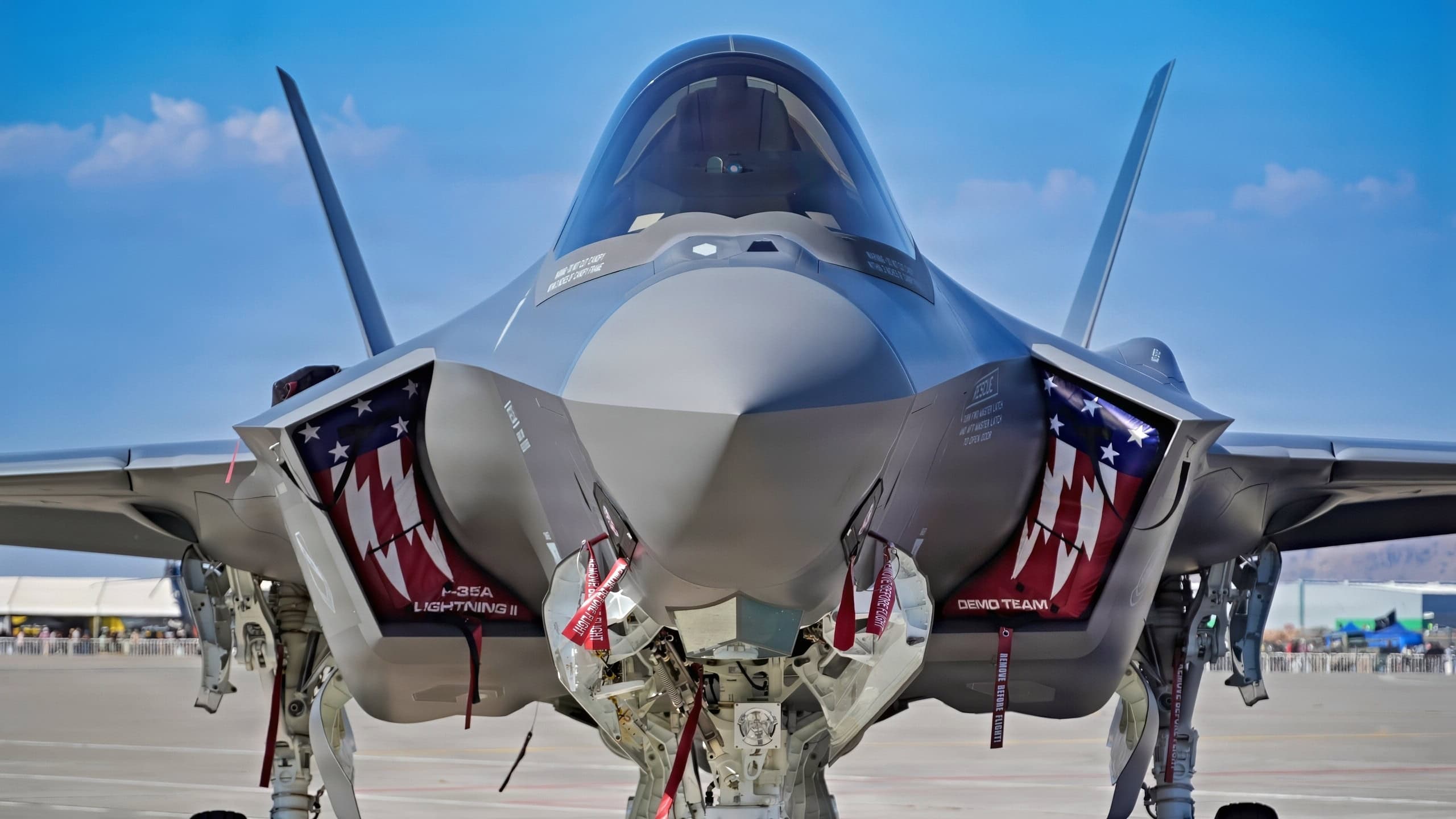
Iran has no Navy, no Air Force, and no realistic path to defeating the U.S. Navy in a conventional fight. Its weapons against the blockade are Shahed drone swarms, small boat attacks from underground facilities, up to 30 explosive mini-submarines — and time itself, used as a weapon against American political will.
Iran’s Plan to Beat America: Just Survive?
This week, U.S. President Donald Trump ordered a blockade of the Strait of Hormuz in response to Iran’s allowing ships through the blockade of the waterway.
The largest risk with the blockade begins and ends with three clear combat realities: meaning suicide drones, mini-submarines, and small boat attacks are the main weapons Iran would likely use to challenge the U.S. Navy blockade in the Strait of Hormuz.
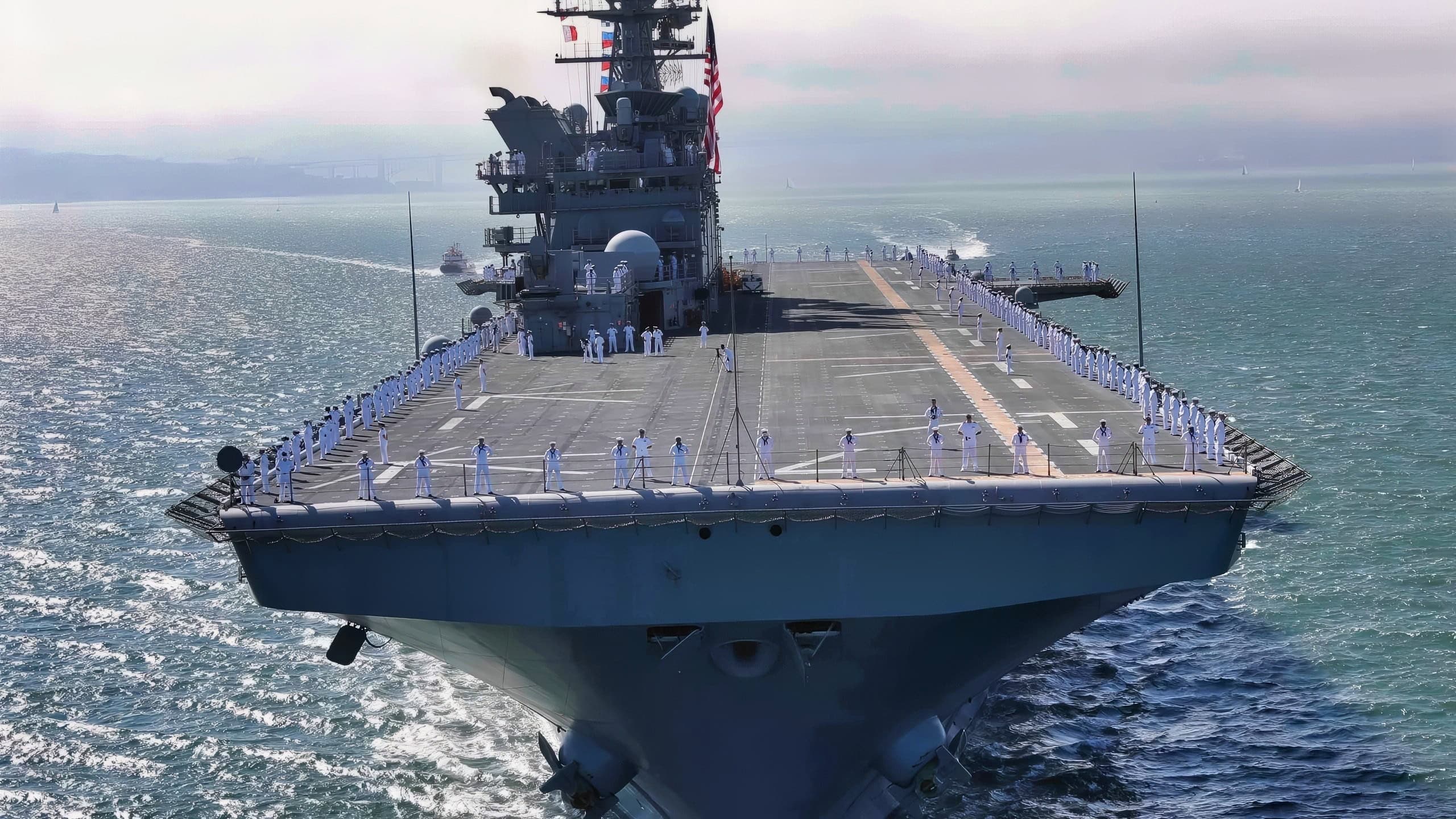
210911-N-OP825-1213 PACIFIC OCEAN (Sept. 11, 2021) Sailors aboard amphibious assault ship USS Tripoli (LHA 7) man the rails on the ship’s flight deck as the ship prepares to pull into San Francisco in support of San Francisco Fleet Week (SFFW), Sept. 11, 2021. SFFW is an opportunity for the American public to meet their Navy, Marine Corps and Coast Guard teams and experience America’s sea services. During fleet week, service members participate in various community service events, showcase capabilities and equipment to the community, and enjoy the hospitality of San Francisco and its surrounding areas. (U.S. Navy photo by Mass Communication Specialist 3rd Class Erica Higa /Released)
Ballistic missiles would be easily tracked and intercepted by warships, and Iran has no more Navy or Air Force with which to mount an attack on the U.S. Navy.
U.S. Navy warships are armed with an integrated system called the Aegis Combat System, which uses radar, command and control, and ship-launched interceptors to track and destroy incoming ballistic missile attacks at sea.
Aegis radar proved extremely successful in the Red Sea when Houthi drones and cruise missiles attacked U.S. Navy ships, as the Navy operated with a “perfect” defensive record.
Houthi forces hit some commercial ships, but no missiles landed on U.S. Navy ships, and the service has now rapidly integrated new drone-defense weapons for maritime combat.
Iranian Shahed Drone Swarms
The threat of Shahed drones resides mostly in the concept of swarm, meaning an overwhelming number of drones.
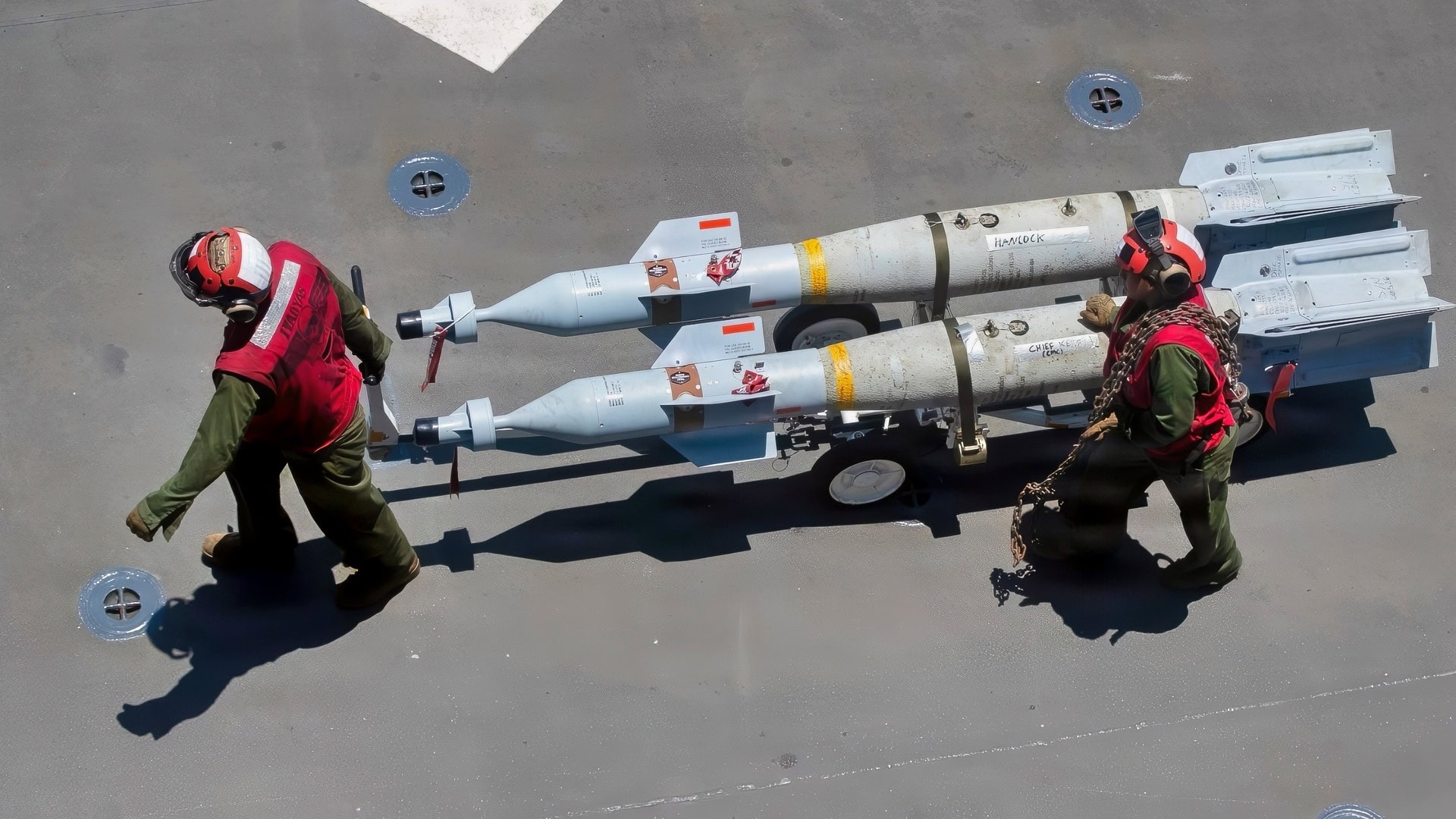
U.S. Marines, with the 31st Marine Expeditionary Unit (MEU), transport ordinance on the flight deck of America-class amphibious assault ship USS Tripoli (LHA 7), Mar. 20, 2026. Tripoli is currently underway conducting routine operations in the U.S. 7th Fleet area of operations. U.S. 7th Fleet, is the U.S. Navy’s largest forward-deployed numbered fleet, routinely interacts and operates with allies and partners in preserving a free and open Indo-Pacific. (U.S. Navy photo by Mass Communication Specialist Seaman Apprentice Reese Mitchell Taylor)
A single suicide drone is very likely to be spotted from air, ground, and surface ship sensors and be intercepted or destroyed.
A number of drones all traveling together toward a specific target, however, are intended to overwhelm U.S. Navy ship defenses and blanket an area with attacks.
The strategy is based on pure volume and vectors, meaning there could be so many simultaneous angles of attack that defenses simply cannot counter them all at once. Iran might use this strategy to destabilize or break the U.S. Navy blockade.
Iran would not likely seek to destroy or disable the U.S. Navy, as that is not realistic.
Yet, they may seek to cause enough damage to U.S. Navy ships and personnel to create casualties, chaos, and domestic political unrest within the U.S. The Iranian strategy is likely a mere question of time, meaning time itself is being used as a weapon of war.
Iran may simply wish to survive long enough to outlast U.S. political and military resolve.
Hitting warships with drones and causing casualties would be a strategic attempt to erode U.S. political support for the Iranian war effort enough to create a withdrawal and claim victory.
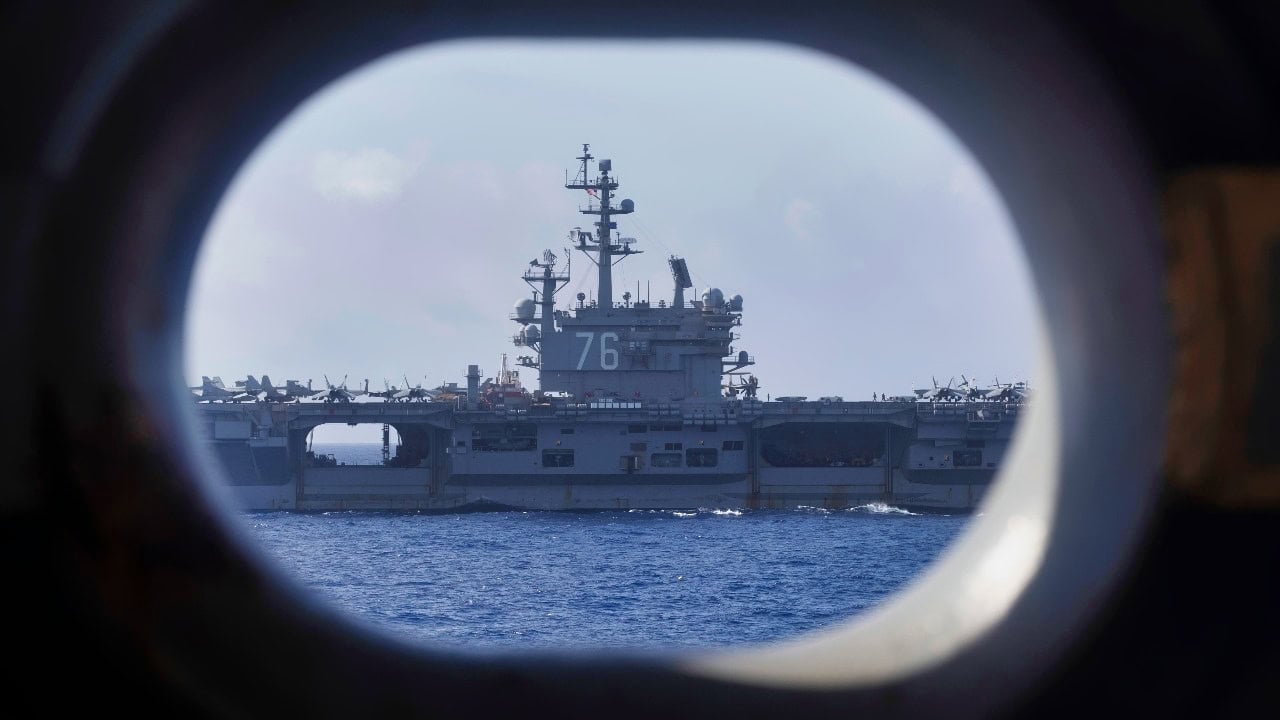
The aircraft carrier USS Ronald Reagan (CVN 76) sails alongside amphibious assault carrier USS Tripoli (LHA 7) during a photo exercise for Valiant Shield 2022, June 12, 2022. Exercises like VS22 allow forces across the Indo-Pacific the opportunity to integrate Navy, Marine Corps, Army, Air Force and Space Force to train in precise, lethal, and overwhelming multi-axis, multi-domain effects that demonstrate the strength and versatility of the Joint Force. Tripoli is operating in the U.S. 7th Fleet area of operations to enhance interoperability with allies and partners and serve as a ready response force to defend peace and maintain stability in the Indo-Pacific region. (U.S. Navy photo by Mass Communication Specialist 1st Class Peter Burghart)
Iranian Small Boat Attacks
This strategy would be similar in the case of small-boat swarm attacks.
While many such boats have been destroyed from the air during Operation Epic Fury, Iran is known to have underground cities filled with small, armed fast boats able to fire weapons or be filled with explosives.
In a manner similar to aerial drones, swarming small boats could seek to overwhelm defenses and perhaps ram a warship. U.S. Navy layered defenses, however, have been used in combat and extensively prepared for these kinds of maritime combat scenarios.
Sailors have for years been training with an integrated suite of sensors, interceptors, and deck-mounted weapons to detect and destroy groups of small boats from standoff distances where they cannot threaten warships.
Should Iran have the ability to launch a massive salvo of aerial and boat-swarm attacks simultaneously, it seems possible that U.S. Navy warships could be damaged, but that is very much only a possibility, as the service’s defenses have performed consistently well in combat.
Iranian Mini-Subs
Iran does have a few diesel-electric submarines and possibly as many as 30 small “mini-subs” capable of being filled with explosives and attacking U.S. Navy ships.
It may not be clear how guided these mini-subs are, or what kinds of weapons they may carry, yet they could pose a credible threat to surface ships.
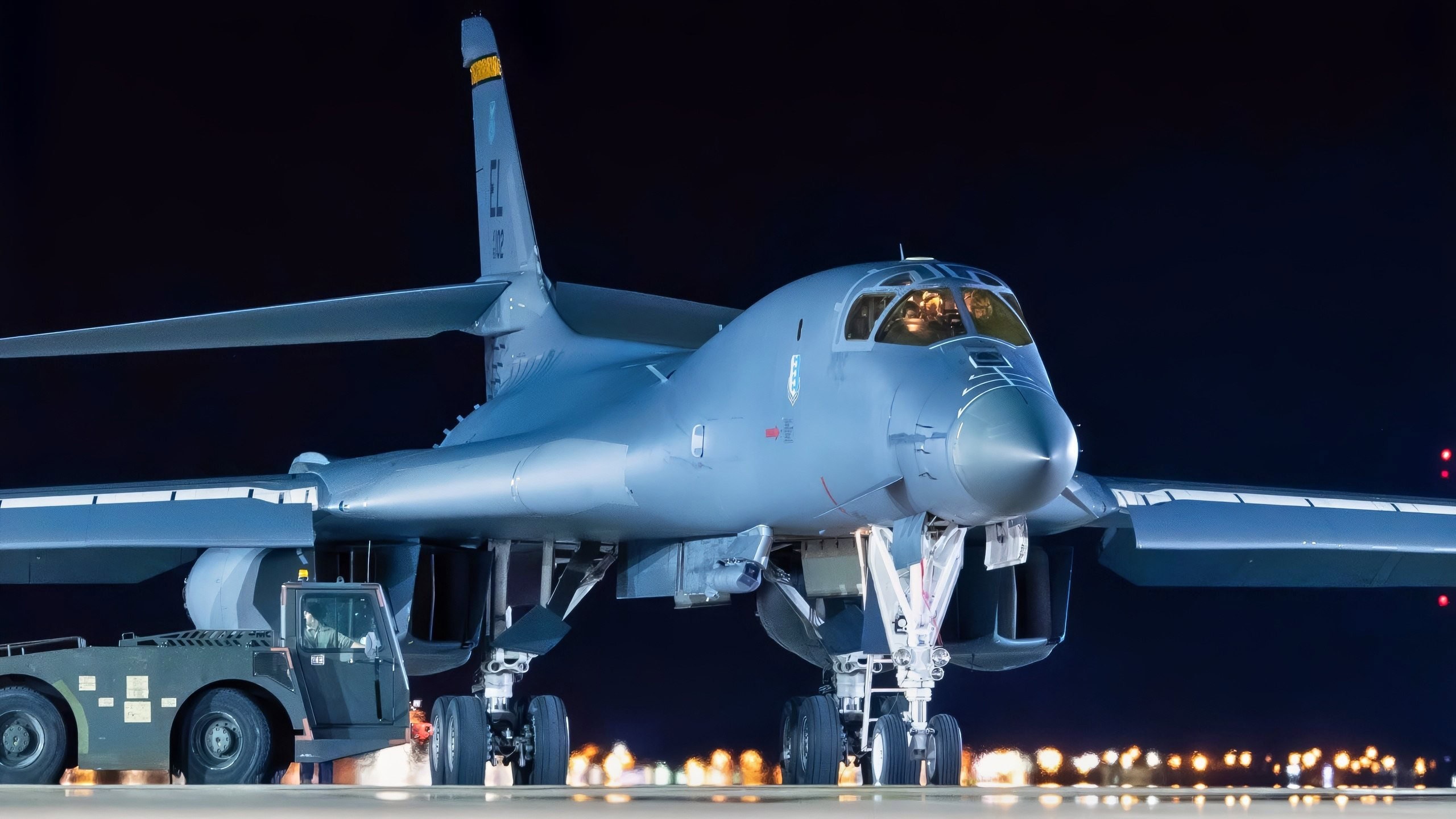
Aircrew piloting a B-1B Lancer prepare to park at Ellsworth Air Force Base, S.D., April 30, 2020. A pair of B-1s flew from the continental United States and conducted operations over the South China Sea as part of a joint U.S. Indo-Pacific Command and U.S. Strategic Command Bomber Task Force mission. (U.S. Air Force photo by Tech. Sgt. Jette Carr)
However, not only do U.S. Navy warships operate with towed-array sonar and helicopter-dropped sonobuoys, but the U.S. Navy’s carrier strike groups are almost certain to be supported by submarines and U.S. Navy undersea drones capable of mapping and tracking coastal areas in the Strait of Hormuz.
Much like drones and small boats, the highest risk with these kinds of weapons would relate to a question of mass or volume, meaning how many of them might be able to attack at one time.
Since only roughly 25 to 30 of these mini-subs have been reported, they are unlikely to pose a lasting threat in the Strait.
MORE – The U.S. Navy’s Ford-Class Is Just a Big Experiment
MORE – The SR-71 Hit Mach 3.56 And It Can’t Happen Ever Again
About the Author: Kris Osborn
Kris Osborn is the Military Technology Editor of 19FortyFive. Osborn is also President of Warrior Maven – Center for Military Modernization. Osborn previously served at the Pentagon as a highly qualified expert in the Office of the Assistant Secretary of the Army—Acquisition, Logistics & Technology. Osborn has also worked as an anchor and on-air military specialist at national TV networks. He has appeared as a guest military expert on Fox News, MSNBC, The Military Channel, and The History Channel. He also has a Masters Degree in Comparative Literature from Columbia University.