
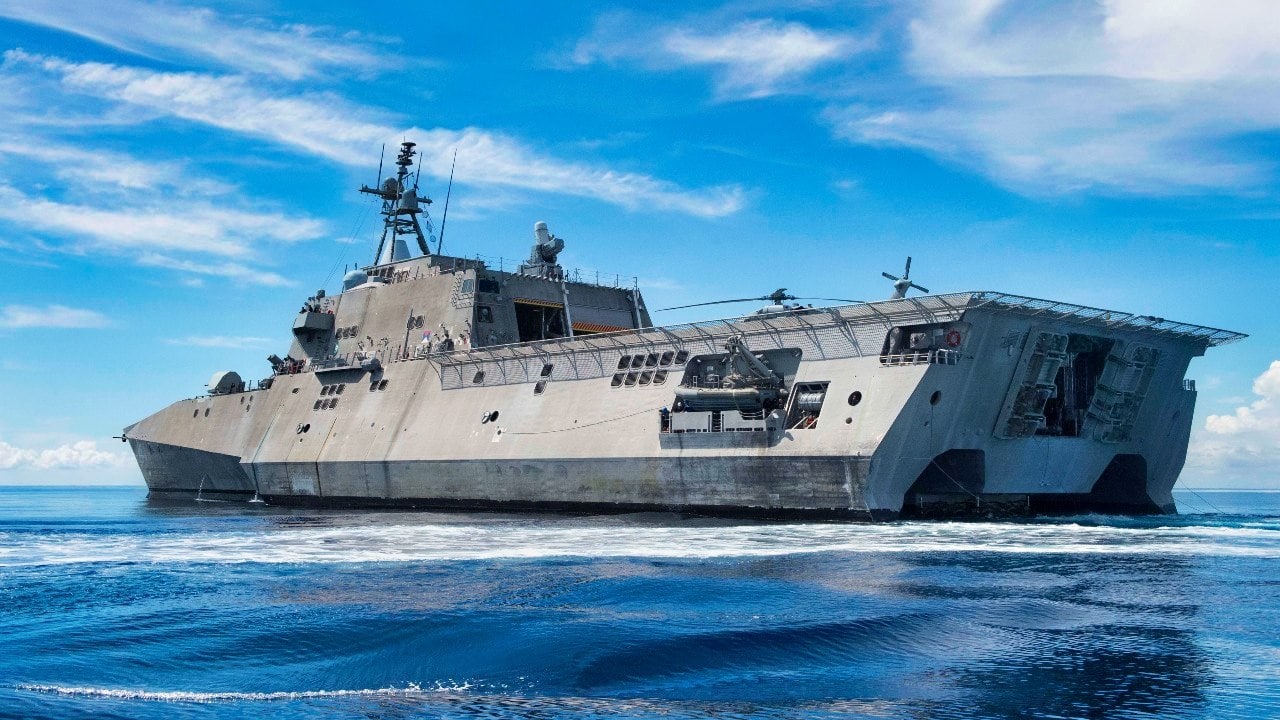
Summary and Key Points: The Littoral Combat Ship was pitched as a low-cost, high-speed, modular alternative to sending billion-dollar destroyers into coastal waters, but reliability problems, contractor-heavy maintenance, and difficulty swapping mission packages helped turn it into a symbol of procurement failure.
-Some experts even call it a ‘zombie’ warship, just waiting to be pulled out of the sea.
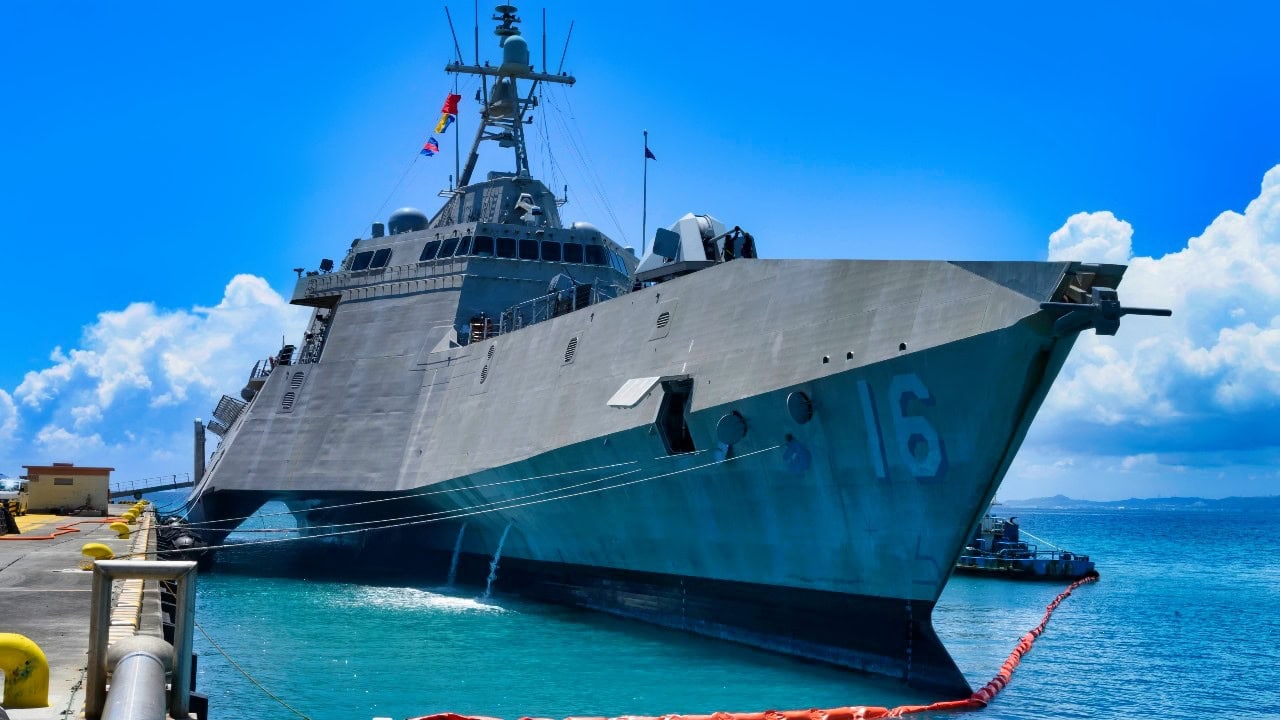
(Sept. 2, 2021) Independence-variant littoral combat ship USS Tulsa (LCS 16) sits pierside at Commander, Fleet Activities Okinawa White Beach Naval Facility, Okinawa, Japan, Sept. 2, 2021. Tulsa conducted a brief stop for resupply at CFAO White Beach Naval Facility. Tulsa, part of Destroyer Squadron Seven, is on a rotational deployment in the U.S. 7th Fleet area of operation to enhance interoperability with partners and serve as a ready-response force in support of a free and open Indo-Pacific region. (U.S. Navy photo by Mass Communication Specialist 1st Class David Krigbaum)
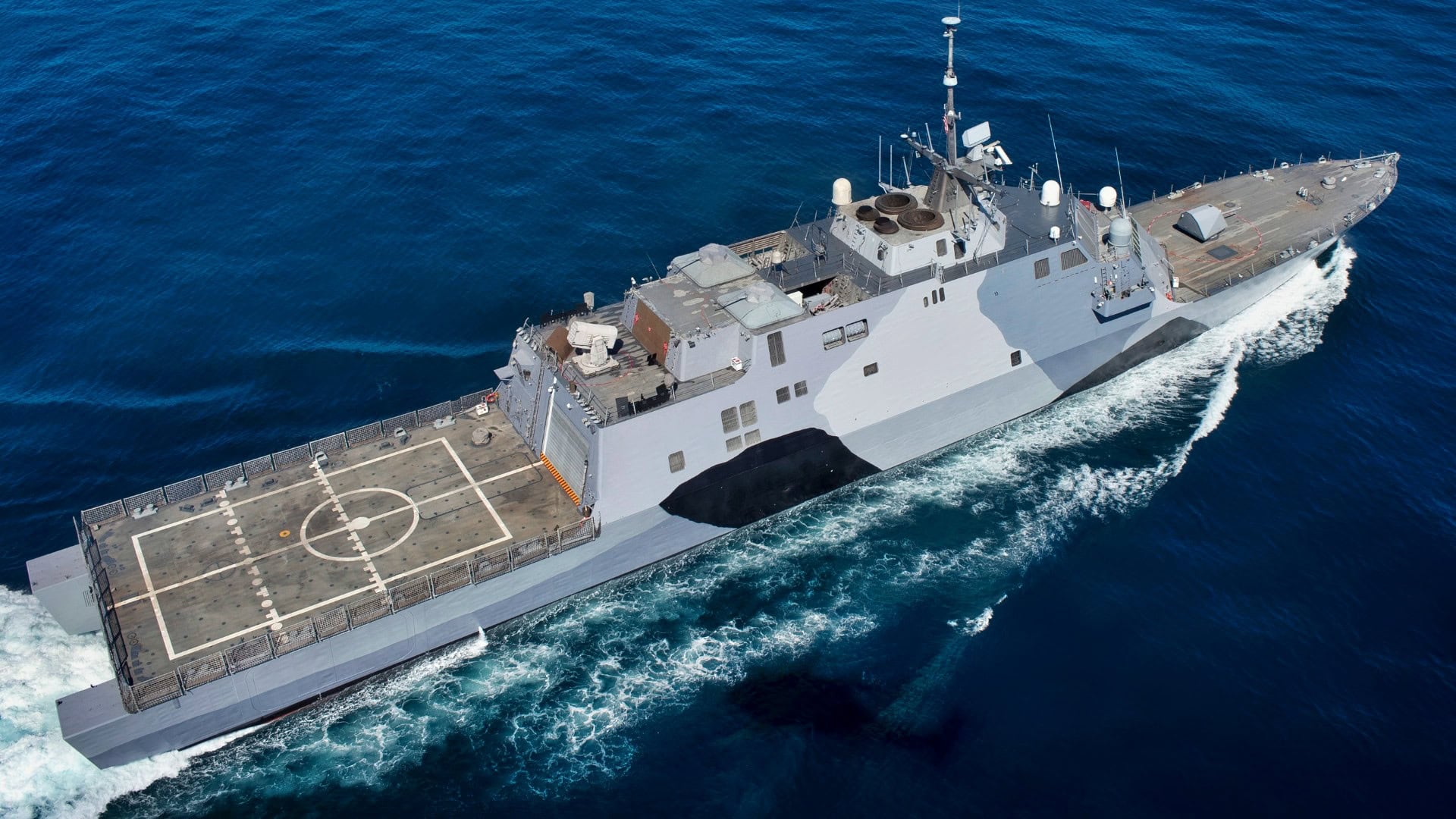
(Feb. 22, 2013) The littoral combat ship USS Freedom (LCS 1) is underway conducting sea trials off the coast of Southern California. Freedom, the lead ship of the Freedom variant of LCS, is expected to deploy to Southeast Asia this spring. (U.S. Navy photo by Mass Communication Specialist 1st Class James R. Evans/Released)
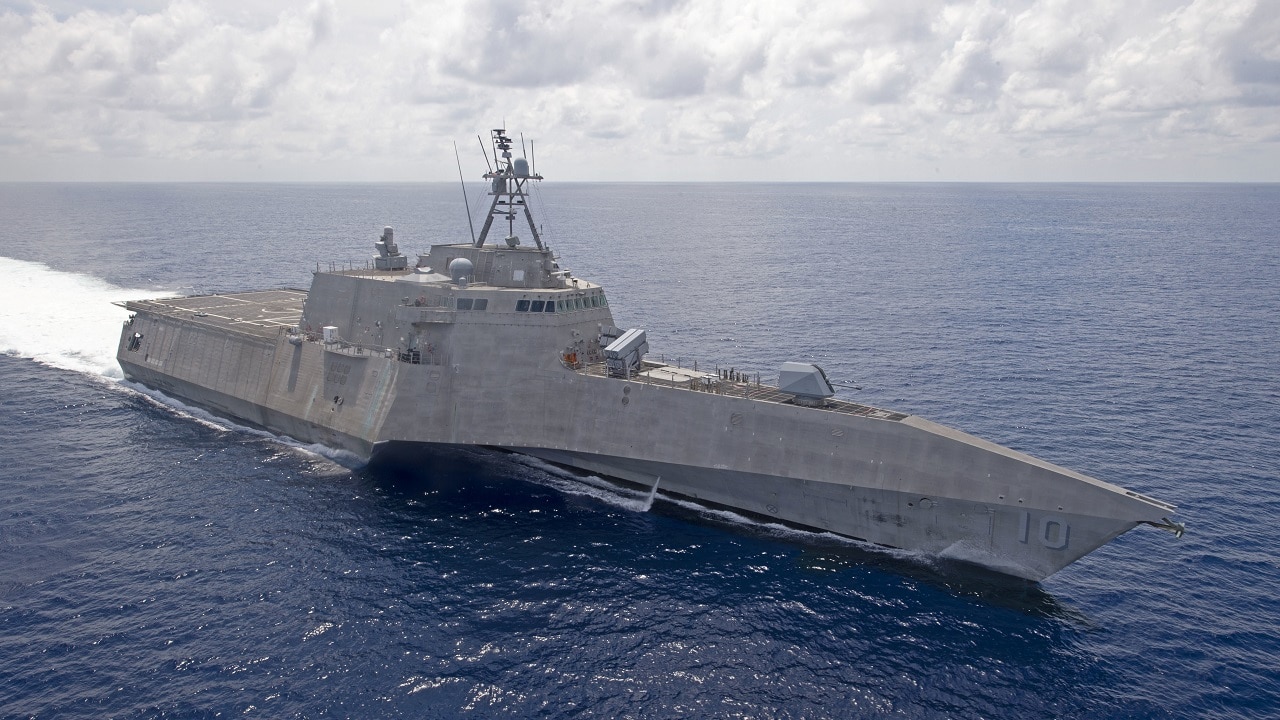
SOUTH CHINA SEA (March 20, 2020) The Independence-variant littoral combat ship USS Gabrielle Giffords (LCS 10) patrols the South China Sea, March 20, 2020. Gabrielle Giffords, part of Destroyer Squadron (DESRON) 7, is on a rotational deployment, operating in the U.S. 7th Fleet area of operations to enhance interoperability with partners and serve as a ready-response force.(U.S. Navy photo by Mass Communication Specialist 2nd Class Brenton Poyser/Released)
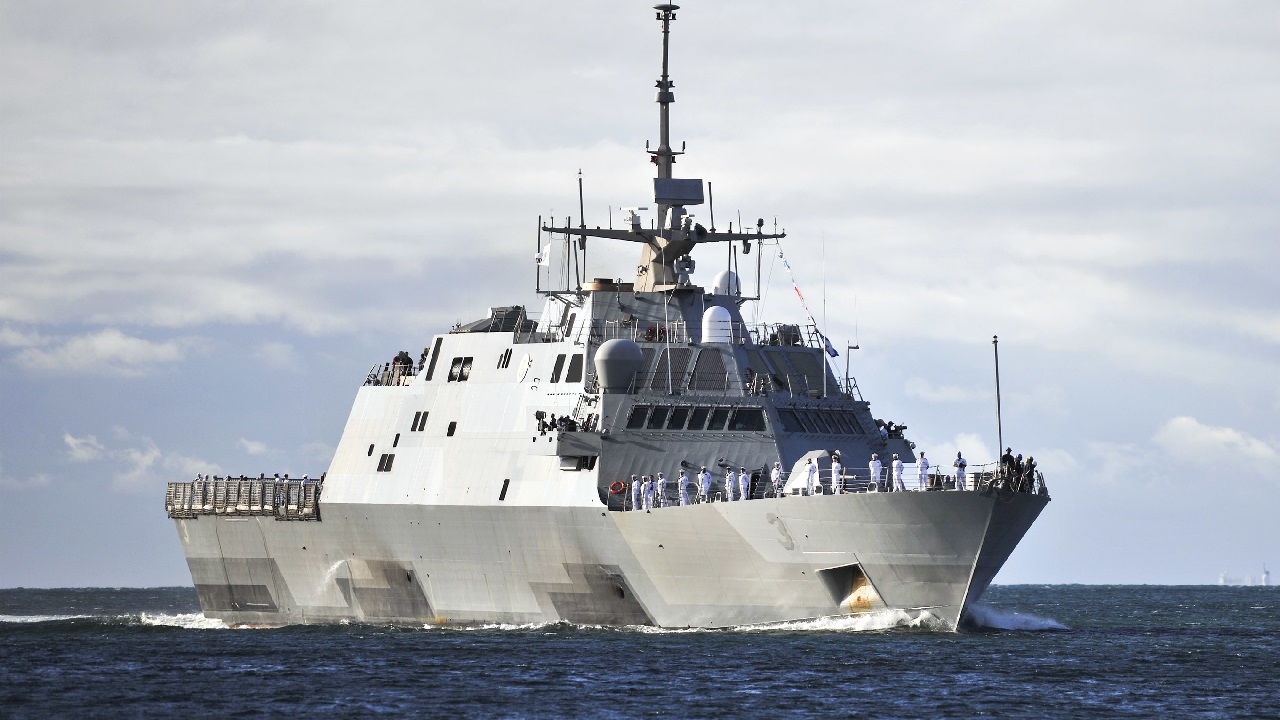
The littoral combat ship USS Fort Worth (LCS 3) arrives to Joint Base Pearl Harbor-Hickam for a scheduled port visit. Fort Worth deployed for a scheduled 16-month rotational deployment to Singapore in support of the Navy’s strategic rebalance to the Pacific. Fort Worth is the first littoral combat ship to deploy under the 3-2-1 manning concept, swapping fully trained crews roughly every four months and extending the littoral combat ship forward presence. (U.S. Navy photo by Mass Communication Specialist 2nd Class Diana Quinlan/Released)
-Early retirements and ballooning costs compounded the backlash, and the planned fleet shrank significantly.
-Still, the surviving ships are demonstrating operational progress: crews have assumed a greater share of the maintenance burden, deployment lengths have increased, and several hulls are finding niches in the Pacific and Caribbean for patrol, counter-drug operations, experimentation with drone defense, and mine-related missions.
The Navy’s Littoral Combat Ship Was Called “Worthless.” Here’s What Changed
The prestigious history of the U.S. Navy is replete with amazing warships. These vessels range from Iowa-class battleships and Nimitz-class supercarriers to the Fletcher-class destroyers and Gato-class submarines.
However, as is true of any manmade institution, the Navy has had its fair share of boondoggles, such as the Zumwalt-class destroyers—though these may be getting a new lease on life—and today’s subject, the Littoral Combat Ship (LCS). Some consider the LCS to be the worst Navy warship ever built. But is the LCS truly a complete failure, or is there more to the story than meets the eye?
Littoral Combat Ship Initial History, Premise, and Promise
Back in 2019, when this writer was a strategy & policy analyst with Navy Warfare Group/OPNAV N5I6 under the Office of the Chief of Naval Operations at the Pentagon, the LCS was being trumpeted as the next big thing in naval technology. It was envisioned as a “low-cost, high-speed” project that would be flexible, modular, and cheaper than larger warships. It was an option for taking on coastal threats without putting billion-dollar destroyers at risk.
The LCS fleet is divided into two classes—the Freedom-class and the Independence-class, with 16 of the former and 19 of the latter completed. The USS Freedom (LCS-1) was the lead ship of the first class. It was built by Fincantieri Marine Group, laid down on June 2, 2005, launched on September 23, 2006, and commissioned on November 8, 2008.
LCS Tech Specifics and Vital Stats
Displacement: 3.450 tons fully laden
Hull length: 387.6 ft
Beam Width: 57.7 ft
Draft: 14.1 ft
Propulsion: 4 × Rolls-Royce waterjets
Max speed: 47 knots
Crew Complement: Core crew of 50 enlisted seamen and officers; 98 or more with mission package and air detachment crew
Armament:
1 × BAE Systems Mk 110 57 mm gun.
4 × .50 caliber machine guns
2 × Mk44 Bushmaster II 30-mm guns
21 × RIM-116 Rolling Airframe Missile surface-to-air Missiles (SAMs)
The Independence-class kicked off with the USS Independence (LCS-2), built by Austal USA. It was laid down on January 19, 2006, launched on April 26, 2008, and commissioned on January 16, 2010.
Displacement: 3.422 tons fully laden
Hull length: 418 ft
Beam Width: 104 ft
Draft: 14 ft
Propulsion:
2 × American Vulkan light weight multiple-section carbon fiber propulsion shaftlines
Max speed: 44 knots
Crew Complement: 40 core crew (8 commissioned officers, 32 enlisted sailors) plus up to 35 mission crew
Armament:
1 × BAE Systems Mk 110 57 mm gun
1 × Raytheon SeaRAM close-in weapon system
4 × .50-cal guns (2 aft, 2 forward)
2 × 30 mm Mk44 Bushmaster II guns
8 × RGM-184A Naval Strike Missiles
24 × AGM-114L Hellfire missiles
So, What Went Wrong?
Fast-forward to 2024, and the LCSs were almost universally derided as an expensive military boondoggle. As one professional acquaintance of mine, a recently retired U.S. Coast Guard officer, told me: “They’re worthless.”
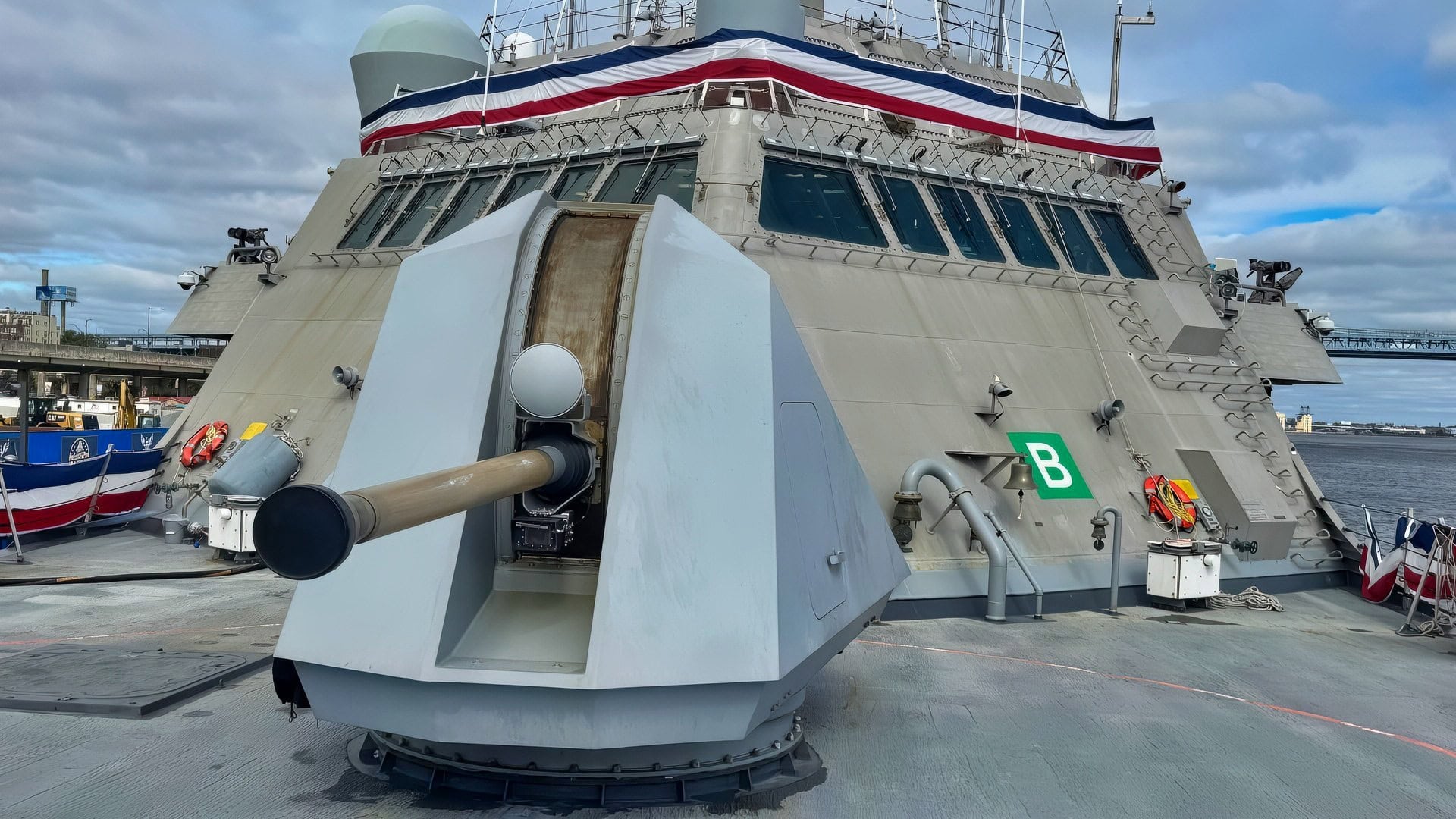
Littoral Combat Ship USS Cooperstown. Image Credit: 19FortyFive.com
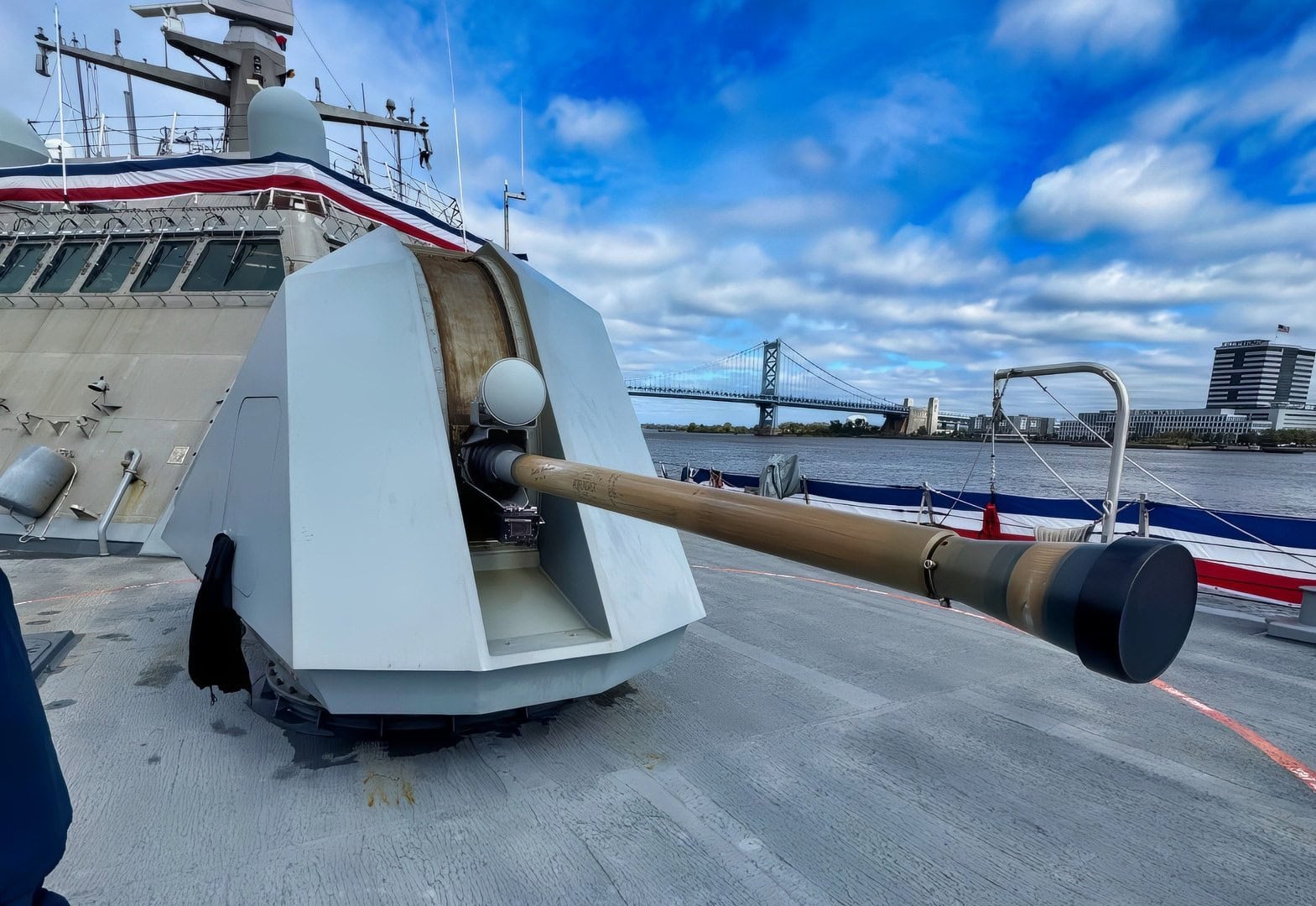
Littoral Combat Ship Deck Gun U.S. Navy. Image Credit: 19FortyFive.com
The LCS maladies a nutshell:
-Propulsion system failures
-Contractor-dependent maintenance
-Difficulties in swapping mission configurations
-(Supposedly) under-armed and unable to survive in hostile combat environments
Indeed, several of the LCS warships, including LCS-1 and LCS-2, have already been decommissioned. That is a major letdown, considering they were originally slated to have a service life of 25 years. Compounding the embarrassment is the fact that the Independence alone has a total projected cost of $704 million—nearly triple the projected cost of $220 million.
Moreover, the originally planned fleet size of 55 hulls was whittled down to 35.
Not All Gloom & Doom
However, it is still too early to totally write off the LCS.
For example, as noted by Laura Heckmann in an article for National Defense, the surviving LCS ships have made remarkable strides in reliability.
She cites Captain Marc Crawford, commodore of Littoral Combat Ship Squadron One, who said that as recently as 2020, 95 percent of maintenance checks were being handled by contractors, with maintenance execution teams handling 5 to 10 percent.
But by 2024, Crawford explained, maintenance teams had taken over about 70 percent: “That in and of itself is a tremendous feat.” Crawford proudly added that the latest triumph was an “’unprecedented’’’ 26-month deployment of the Independence-class USS Charleston (LCS-18) to the western Pacific.
Heckmann also pointed out that four other Independence-class ships deployed to Seventh Fleet at the time—the Gabrielle Giffords (LCS-10), Manchester (LCS-14), Oakland (LCS-24), and Mobile (LCS-26) — were operating at a .73 materiel availability, “’which means they’re operating at a 96 percent efficiency rate, which is fantastic,”[Commander James] Hoey said.”
On November 11 of the following year, Chloe Anderson offered these tidbits of good news in an article for DefenseFeeds:
“Even with all the complaints, the Littoral Combat Ship isn’t completely out of action. The Navy is settling into what these ships are good for, and the focus now is on using them in ways that make the most of their capabilities…A few patrol the Caribbean on counter-drug missions, hunting down fast smuggling boats, while the open deck gives room for helicopters or boarding teams. Others are testing out new tech, like drone-defense setups or mine-clearing gear, which the Navy hopes to improve for future ships.”
One should not sign the death certificate of the Littoral Combat Ship just yet.
About the Author: Christian D. Orr, Defense Expert
Christian D. Orr is a Senior Defense Editor. He is a former Air Force Security Forces officer, Federal law enforcement officer, and private military contractor (with assignments worked in Iraq, the United Arab Emirates, Kosovo, Japan, Germany, and the Pentagon). Chris holds a B.A. in International Relations from the University of Southern California (USC) and an M.A. in Intelligence Studies (concentration in Terrorism Studies) from American Military University (AMU). He is also the author of the newly published book “Five Decades of a Fabulous Firearm: Celebrating the 50th Anniversary of the Beretta 92 Pistol Series.”