
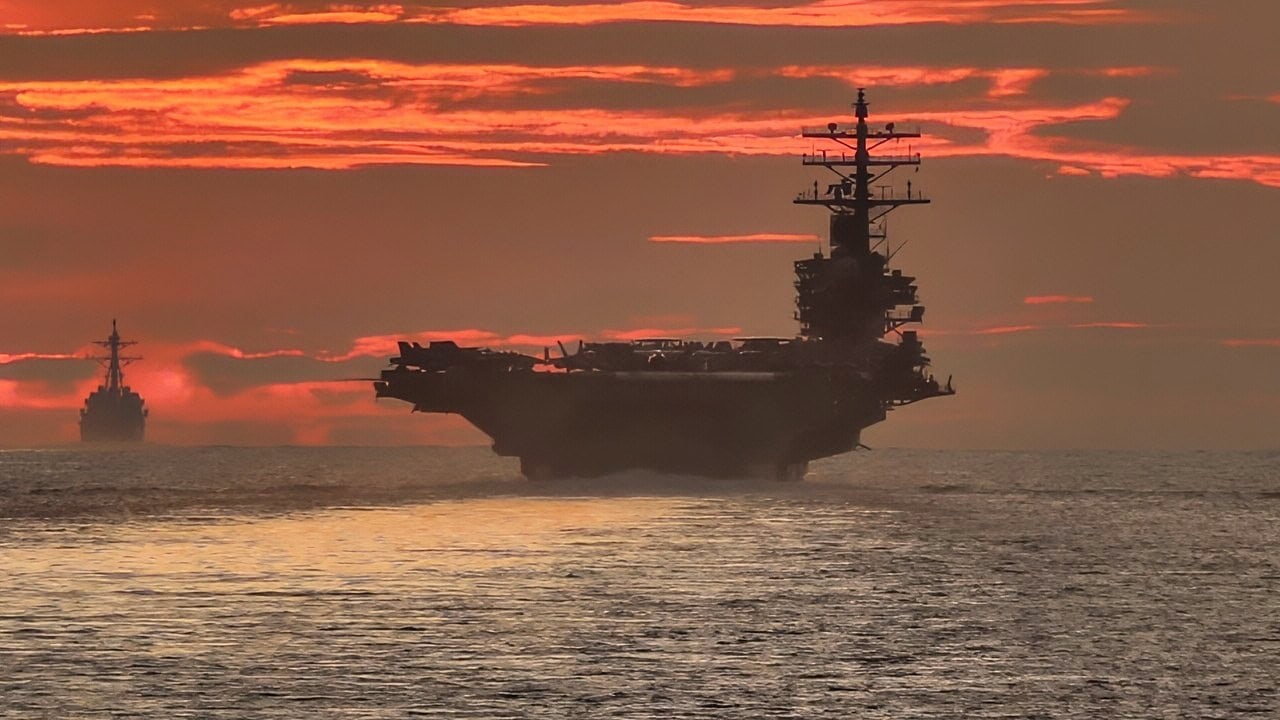
Key Points and Summary – USS Abraham Lincoln (CVN-72) is operating in the Philippine Sea with its strike group after a Guam port call, a “routine” deployment that carries unmistakable strategic weight.
-The piece argues that Lincoln’s presence is both reassurance for regional partners and a deterrent signal to China—especially as other U.S. naval assets also move through the wider Indo-Pacific.
-It then places the carrier in context: a Nimitz-class workhorse with a long combat record, major firsts (including early F-35C integration and female leadership milestones), and a future shaped by slow Ford-class replacement timelines.
Why Navy Aircraft Carrier USS Abraham Lincoln’s Pacific Deployment Matters More Than “Routine”
Interservice rivalries notwithstanding, in the spirit of “One Team, One Fight,” the United States Navy has named its fair share of aircraft after American Presidents who had been US Army officers, including George Washington, Teddy Roosevelt, Harry S. Truman, Dwight David Eisenhower, and our current subject at hand.
“Honest Abe” had a relatively brief and lackluster military career as a militia captain in the Black Hawk War of 1832, but that didn’t prevent him from being an effective commander-in-chief during the American Civil War. And now the Nimitz-class nuclear-powered supercarrier named in his honor, USS Abraham Lincoln (CVN-72), continues to do his name proud, as can be seen from the warship’s current tour of duty in the Pacific.
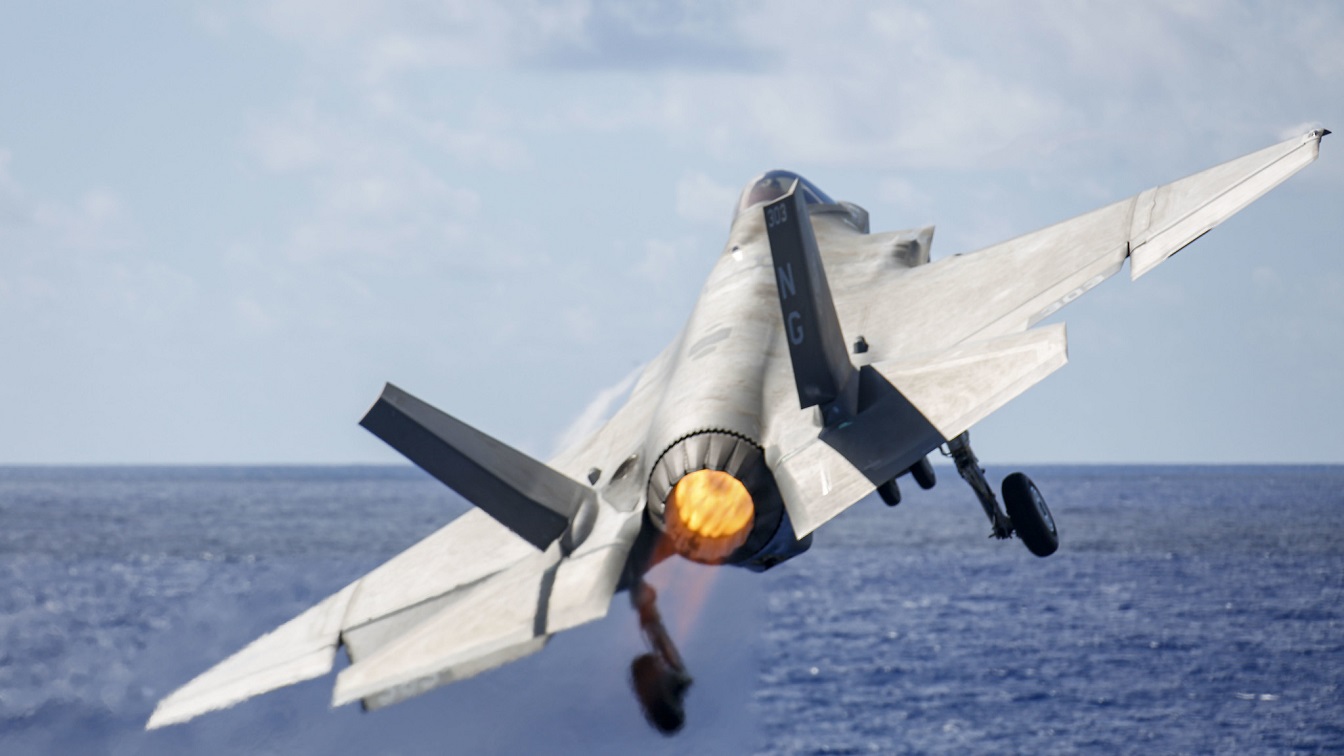
PHILIPPINE SEA (May. 13, 2022) An F-35C Lightning II assigned to the “Black Knights” of Marine Fighter Attack Squadron (VMFA) 314 launches from the Nimitz-class aircraft carrier USS Abraham Lincoln (CVN 72). The Abraham Lincoln Carrier Strike Group is on a scheduled deployment in the U.S. 7th Fleet area of operations to enhance interoperability through alliances and partnerships while serving as a ready-response force in support of a free and open Indo-Pacific region. (U.S. Navy photo by Mass Communication Specialist 3rd Class Michael Singley) 220513-N-MM912-1002
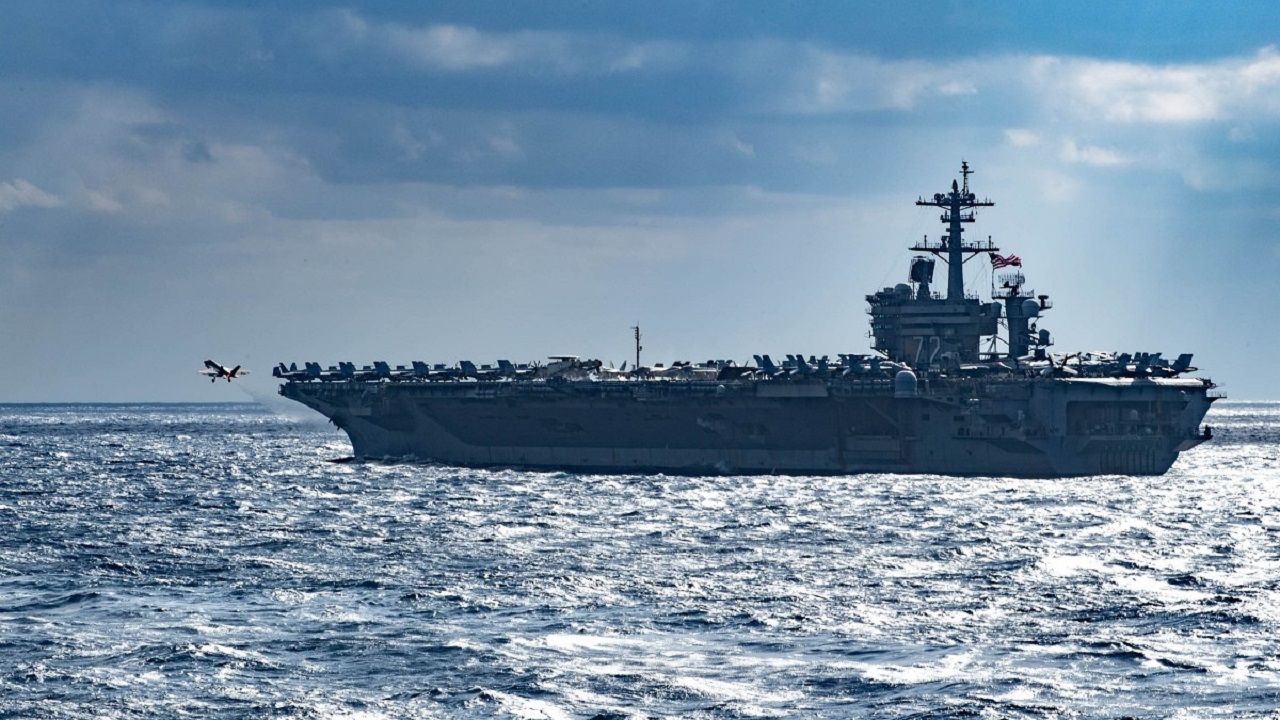
USS Abraham Lincoln. Image Credit: Creative Commons.
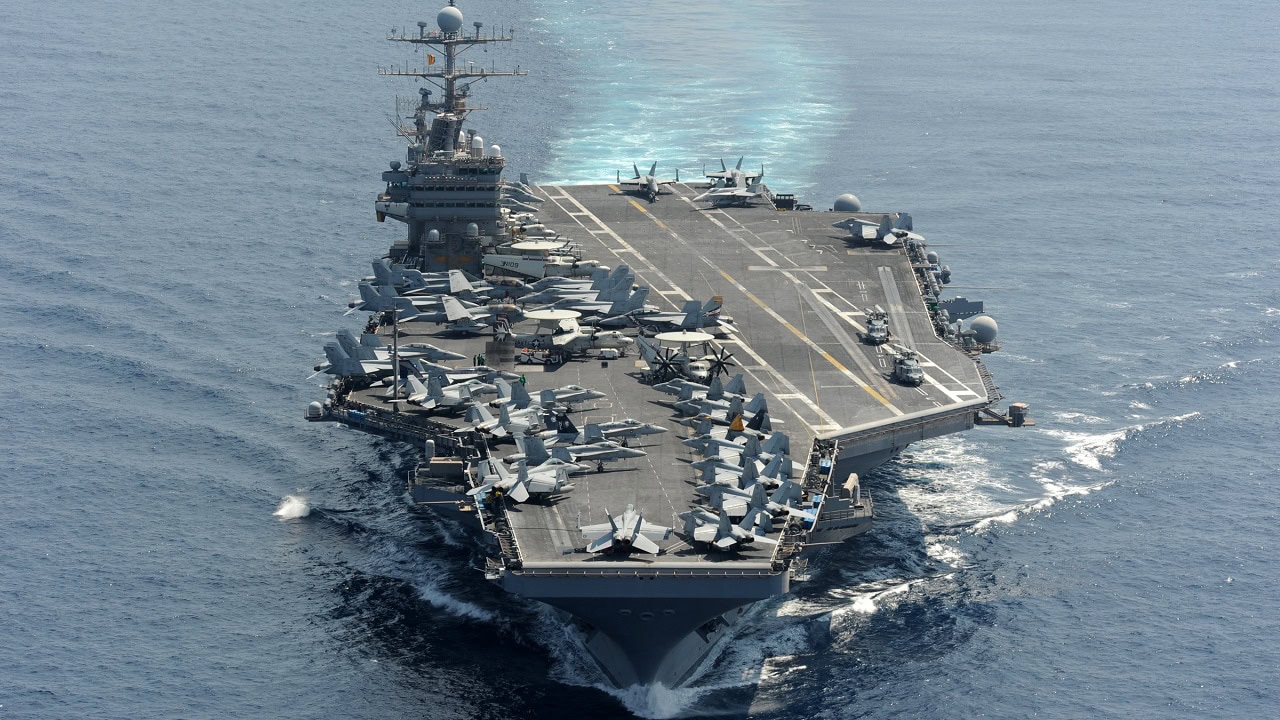
120118-N-QH883-003
INDIAN OCEAN, (Jan 18, 2012) The Nimitz-class aircraft carrier USS Abraham Lincoln (CVN 72) transits the Indian Ocean. Abraham Lincoln is in the U.S. 7th Fleet area of responsibility as part of a deployment to the western Pacific and Indian Oceans to support coalition efforts. (U.S. Navy photo by Chief Mass Communication Specialist Eric S. Powell/ Released)
Bottom Line Up Front (BLUF)
The latest & greatest comes to us from the Latin American media outlet Zona Militar in a December 29, 2025 article titled “The nuclear-powered aircraft carrier USS Abraham Lincoln is now operating in the Pacific after completing its deployment from the US”.
The unnamed authors elaborate that the carrier and her carrier strike group (CSG)—comprised of her embarked air wing along with the destroyers USS Frank E. Petersen Jr. (DDG-121), USS Spruance (DDG-111), and USS Michael Murphy (DDG-112)—are operating in the Philippine Sea (site of an epic World War II air-sea battle), which US 7th Fleet’s area of responsibility (AOR) within the Indo-Pacific (USINDOPACOM) region.
CVN-72’s CSG-3 arrived within the waters of the Philippine Sea after a December 12, 2025, departure from a 1-day scheduled port of call in Guam. During that Guam port o’ call, CSG-3 commander Rear Admiral Todd E. Whalen, stated: “Our deployment to 7th Fleet waters demonstrates our commitment to a free and open Indo-Pacific. Visits to strategic ports like Guam strengthen our operational readiness and allow us to remain prepared to execute maritime operations in the theater.”
Meanwhile, Lincoln’s skipper, Captain Daniel J. Keeler, added this regarding the current deployment: “My crew is excited to return to this region of the world, and we look forward to demonstrating what an aircraft carrier and its strike group can deliver. Our sailors are eager to learn about new cultures and strengthen ties throughout the region during this deployment.”
Big Picture Significance
According to official USN statements, this deployment is a “routine” operation, part of the Navy’s ongoing commitment to maritime security in the INDOPACOM region.
However, CSG-3’s mere presence serves as a major show of force that (1) sends a message of warning to China and (2) sends a message of reassurance to America’s regional allies, such as Taiwan and the Philippines. Besides the Lincoln’s Strike Group, USN warship presence in the AOR either currently includes or has recently included:
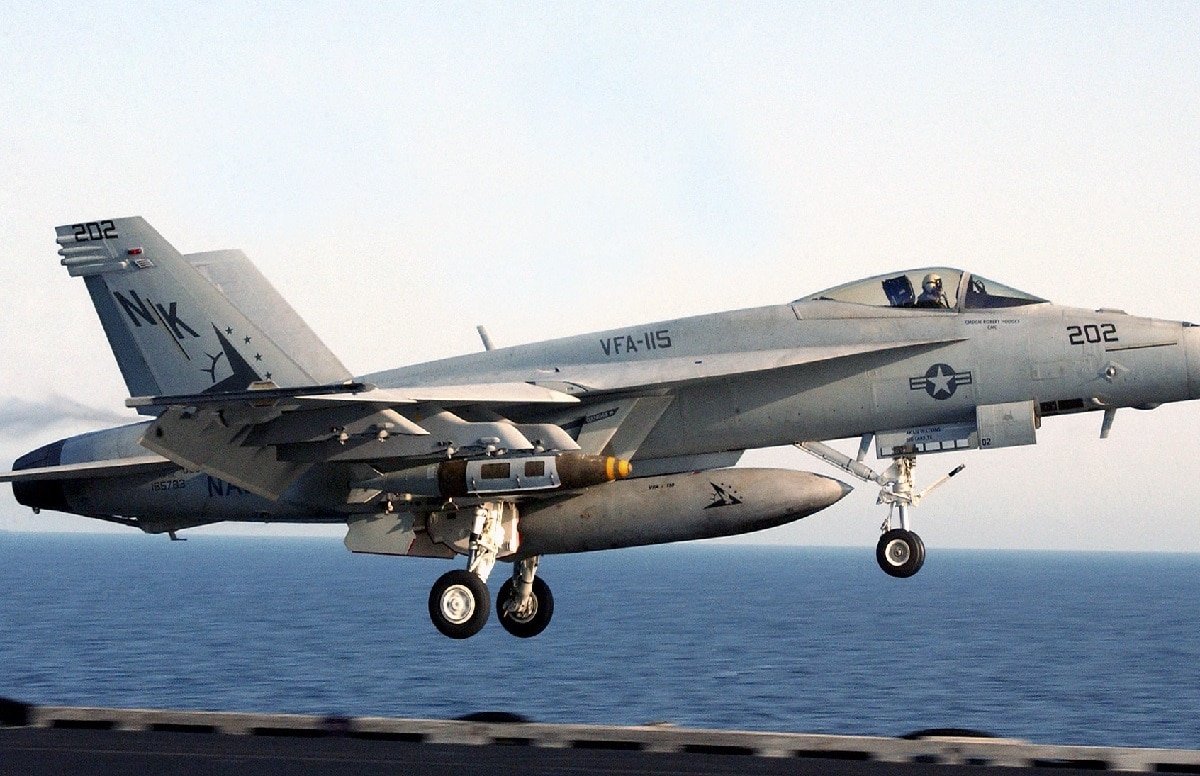
A US Navy (USN) F/A-18E Super Hornet aircraft, Strike Fighter Squadron 115 (VFA-115), Naval Air Station (NAS) Lemoore, California (CA), launches from catapult three during flight operations on board the USN Nimitz Class Aircraft Carrier USS Abraham Lincoln. Note the file name does not match description above. However the separation above the deck suggests landing or a touch and go. Also catapult 3 is the shoulder position. Deck forward of this position will be visible.
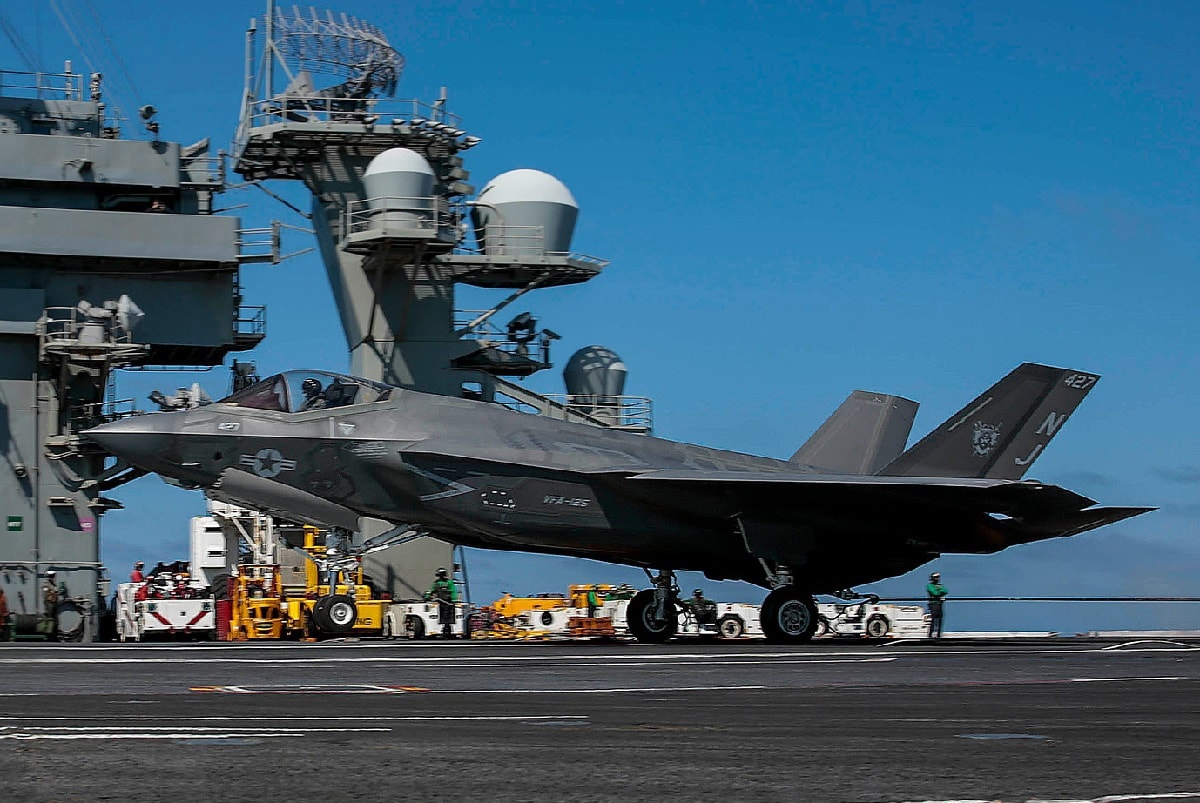
200511-N-MM912-1117rrPACIFIC OCEAN (May 11, 2020) An F-35C Lightning II attached to the “Rough Raiders” of Strike Fighter Squadron (VFA) 125 makes an arrested landing on the flight deck of the aircraft carrier USS Abraham Lincoln (CVN 72). Abraham Lincoln is underway conducting routine operations in the U.S. 3rd Fleet area of operations. (U.S. Navy photo by Mass Communication Specialist 3rd Class Michael Singley/Released)
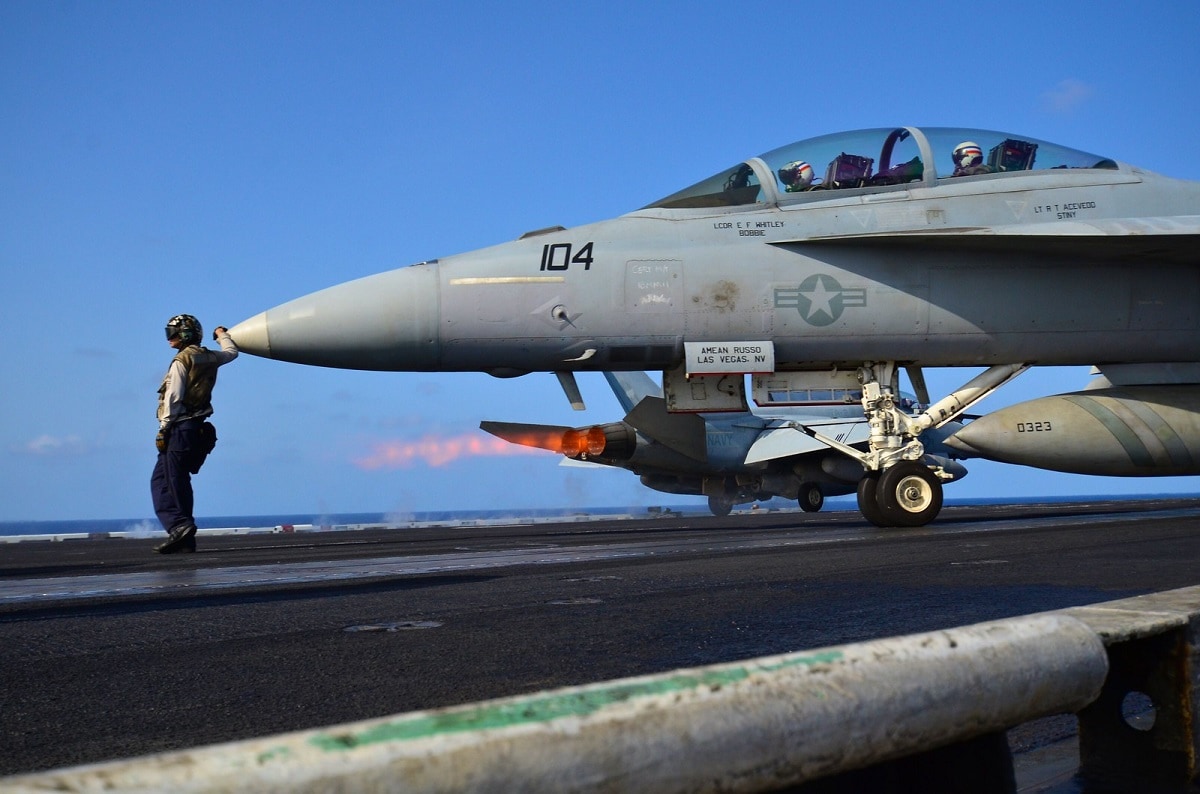
PACIFIC OCEAN (March 18, 2011) An F/A-18F Super Hornet assigned to the Bounty Hunters of Strike Fighter Squadron (VFA) 2 prepares to move as another jet launches from the aircraft carrier USS Abraham Lincoln (CVN 72) during a fly off of Carrier Air Wing (CVW) 2. Abraham Lincoln is returning home from a routine deployment to the Arabian Sea and is in the U.S. 3rd Fleet area of responsibility in support of maritime security operations and theater security cooperation efforts in the region. (U.S. Navy photo by Capt. Jaime Quejada/Released).
-The amphibious assault ship USS Tripoli (LHA-7), operating in the East China Sea, which is hosting the 31st Marine Expeditionary Unit (MEU); the MEU’s warbirds include the F-35B Lightning II, MV-22B Osprey, AH-1Z Viper, and UH-1Y Venom
-Fast-attack submarines such as the USS Seawolf (SSN-21), USS Greeneville (SSN-772) and USS Annapolis (SSN-760)
For her own part, the “Abe” has a carrying capacity of 90 fixed-wing and rotary-wing assets.
USS Abraham Lincoln (CVN-72) History In Brief
CVN-72 is the fifth ship of the illustrious Nimitz class of nuclear-powered supercarriers (a total of 10 warships in the Nimitz class have been built). Built by Newport News Shipbuilding (NNS), she was ordered and awarded on December 27, 1982, laid down on November 3, 1984, launched on February 13, 1988 (sponsored and christened on that same date by Jo Ann K. Webb, former Army nurse during Vietnam War and former Director of the National Cemetery System), and commissioned on Veteran’s Day, November 11, 1989. The warship’s motto is “Shall Not Perish,” and her nickname is just plain “Abe” (as opposed to “Honest Abe”).
“Abe” has proven her worth in battle multiple times during her 36 years of faithful service, including Operation Desert Storm (the 1991 Persian Gulf War), Operation Iraqi Freedom (the 2003 Iraq War; one of my former middle school and high school classmates, a now-retired Navy Machinist’s Mate, served upon “Abe” during this timeframe), and airstrikes against the Houthi terrorist group in Yemen in 2024. In addition, Abraham Lincoln made history in the following ways:
-First Pacific Fleet carrier to integrate female aviators into the crew, in 1994
-First USN carrier to deploy a Marine Corps F-35C squadron, Marine Fighter Attack Squadron 314 (VMFA-314), in January 2022
-First USN “flattop” to be commanded by a female skipper, then-Capt. Amy Bauernschmidt (now a rear admiral and commander of CSG-1), serving in that capacity from 2021 to 2023.
The Way Forward for “Abe”
Besides the aforementioned Capt. Keeler, the ship’s current leadership consists of Captain Kerry P. Hicks as the executive officer (XO) and Command Master Chief Ryan Resurreccion as the senior enlisted sailor.
Eventually, the Abraham Lincoln, just like her sister ships, will be replaced by one of the supercarriers of the Gerald R. Ford class. However, the building and commissioning of the Fords is coming along rather slowly, which means “Abe” will continue to serve her nation for at least a few more years to come.
About the Author: Christian D. Orr, Defense Expert
Christian D. Orr is a Senior Defense Editor. He is a former Air Force Security Forces officer, Federal law enforcement officer, and private military contractor (with assignments worked in Iraq, the United Arab Emirates, Kosovo, Japan, Germany, and the Pentagon). Chris holds a B.A. in International Relations from the University of Southern California (USC) and an M.A. in Intelligence Studies (concentration in Terrorism Studies) from American Military University (AMU). He is also the author of the newly published book “Five Decades of a Fabulous Firearm: Celebrating the 50th Anniversary of the Beretta 92 Pistol Series.”