

Summary and Key Points: Jack Buckby, a New York-based defense researcher and national security analyst, evaluates the “Nimitz Gap” as the USS Nimitz (CVN-68) prepares for a May 2026 retirement.
-Despite the high-intensity air patrols of Operation Epic Fury, this report analyzes the U.S. Navy’s potential drop to 10 operational carriers.
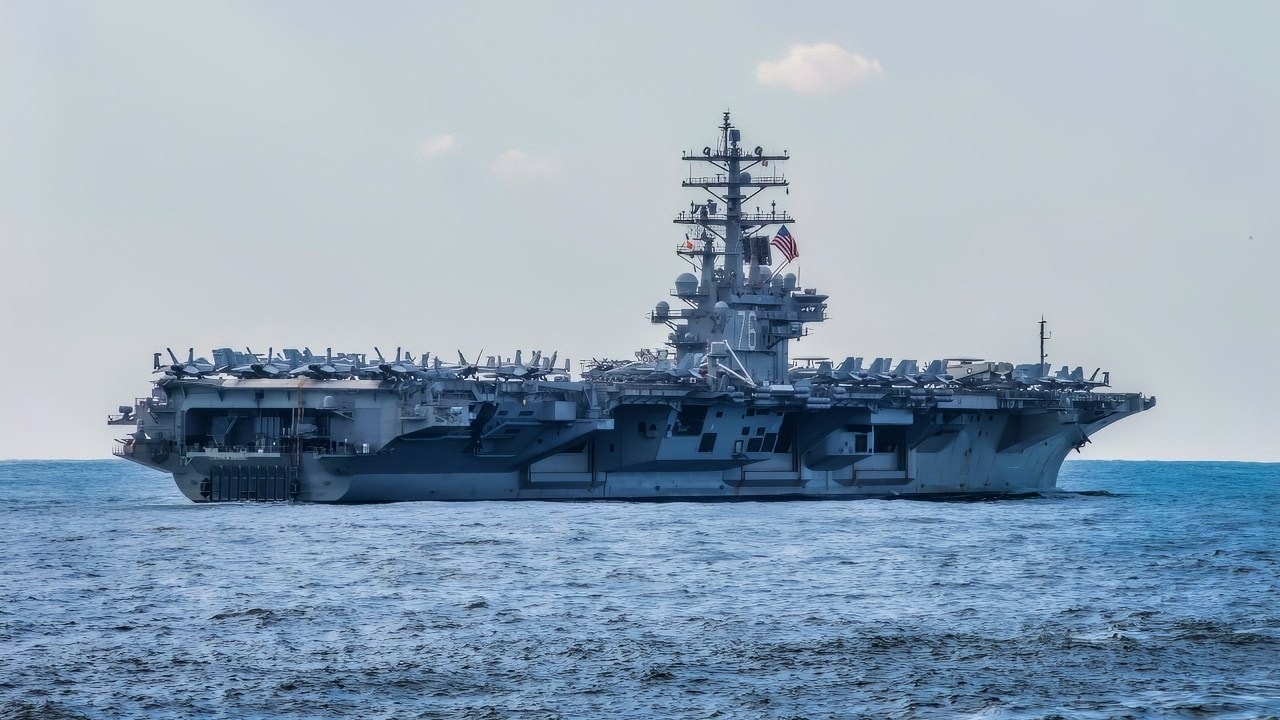
WESTERN PACIFIC (Nov. 12, 2017) The aircraft carrier USS Theodore Roosevelt (CVN 71) transits the Western Pacific during a three-carrier strike force photo exercise. The USS Ronald Reagan (CVN 76), USS Theodore Roosevelt (CVN 71) and USS Nimitz (CVN 68) Strike Groups are underway and conducting operations in international waters as part of a three-carrier strike force exercise. The U.S. Navy has patrolled the Indo-Asia Pacific region routinely for more than 70 years promoting regional security, stability and prosperity. (U.S. Navy photo by Mass Communication Specialist 3rd Class Kelsey J. Hockenberger/Released)
-Buckby explores the unique flexibility of the Abraham Lincoln and Gerald R. Ford strike groups, which provide deep-inland strike capabilities without relying on foreign airbases.
-He concludes that while the Nimitz-class is iconic, the current conflict proves that carrier capacity remains the indispensable anchor of American power projection.
Should the USS Nimitz Retire? The Iran War Raises Questions
The USS Nimitz (CVN-68), the oldest aircraft carrier in the U.S. Navy, is expected to retire in 2026 after roughly five decades of service.
Commissioned in 1975, the ship became the lead vessel of the Nimitz-class supercarriers, which have formed the backbone of American naval power for decades.
But its planned retirement comes at a moment when aircraft carriers are once again central to U.S. military operations in the Middle East.
In late February 2026, the United States and Israel launched coordinated strikes on Iranian military targets, beginning a rapidly escalating conflict that has drawn in major American naval forces.
In response, Washington surged significant military assets to the region, including two carrier strike groups capable of launching sustained air operations against Iranian infrastructure and defending allied positions across the Gulf.
The USS Nimitz itself is not participating in the current conflict. However, the war highlights exactly the type of crisis the carrier was built to handle.
As the Navy prepares to retire its oldest supercarrier, the Iran conflict raises an important question: is the United States reducing its carrier capacity at the very moment global demand for naval airpower is increasing?
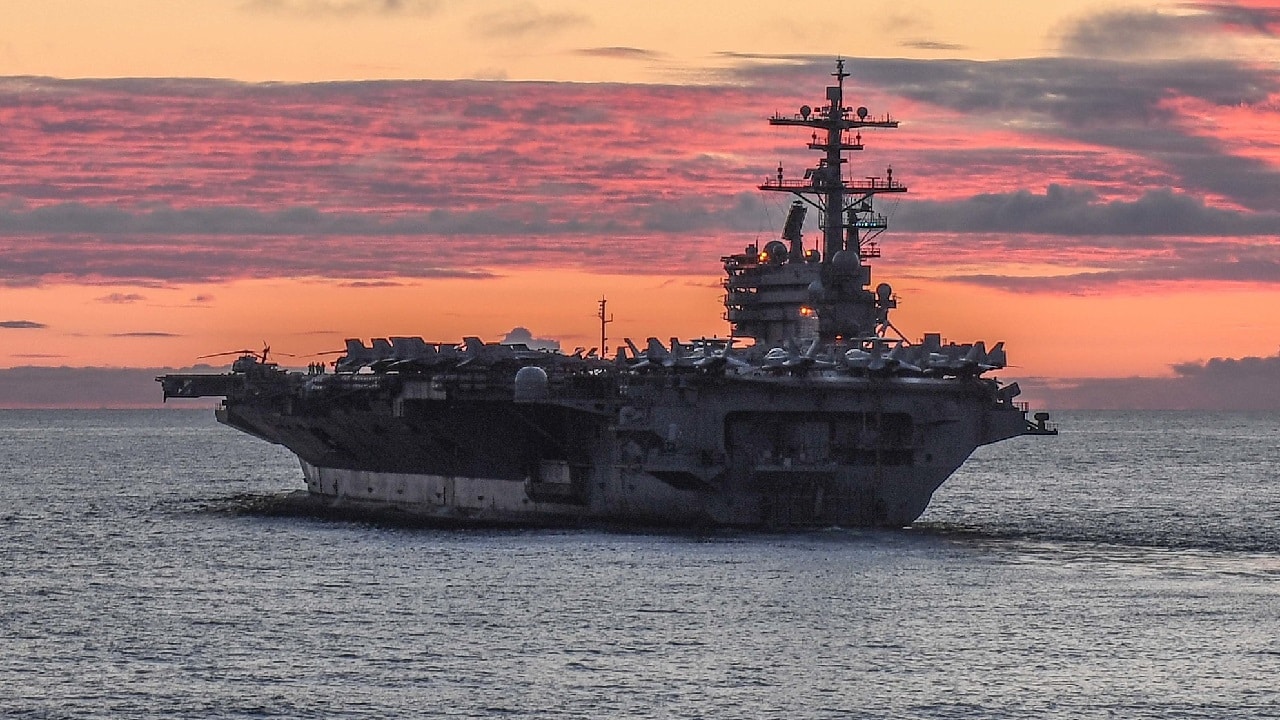
170808-N-FP878-008.ATLANTIC OCEAN (Aug. 8, 2017) The Arleigh Burke-class guided-missile destroyer USS Donald Cook (DDG 75) maneuvers between the Ticonderoga-class guided-missile cruiser USS Philippine Sea (CG 58), left, and the Nimitz-class aircraft carrier USS George H. W. Bush (CVN 77), right, for a photo exercise during exercise Saxon Warrior 2017, Aug. 8. Saxon Warrior is a United States and United Kingdom co-hosted carrier strike group exercise that demonstrates allied interoperability and capability to respond to crises and deter potential threats. (U.S. Navy photo by Mass Communication Specialist 1st Class Theron J. Godbold /Released).
The Final Carrier of a Historic Class
Few warships in modern history have had the operational impact of the USS Nimitz.
Commissioned during the Cold War, the nuclear-powered carrier became the first ship in a class that eventually grew to ten vessels and defined U.S. naval aviation for nearly half a century.
Over the years, carriers in the class supported operations in the Persian Gulf, Afghanistan, Iraq, and numerous other deployments across the Indo-Pacific.
Their ability to launch dozens of strike aircraft without relying on foreign bases made them one of the most flexible instruments of American military power.
And even in its final years of service, Nimitz continued operating in regions directly tied to the years-long tensions with Iran. In 2025, the carrier was redirected from the Indo-Pacific toward the Middle East as regional tensions escalated between Iran and Israel. The Navy still relies on these carriers during crises and will for some time.
The ship later completed what is expected to be its final deployment after nearly nine months at sea, returning to its homeport in Washington state in December 2025.
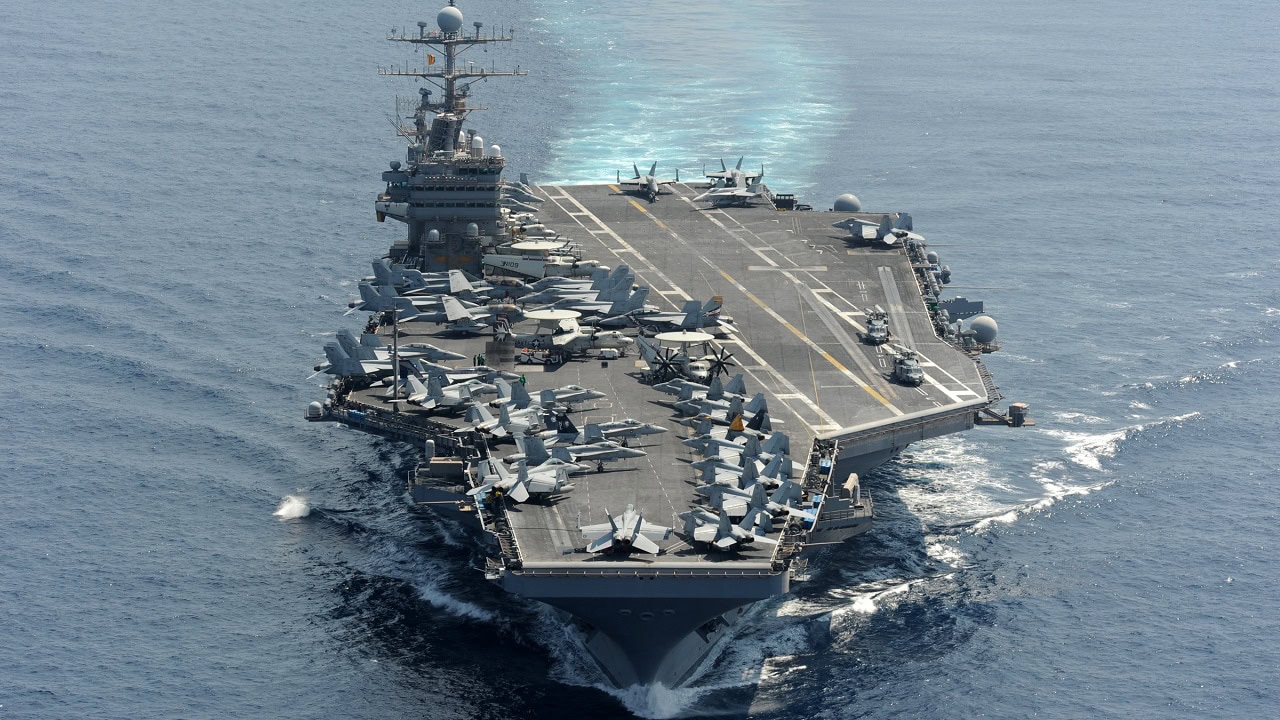
INDIAN OCEAN, (Jan 18, 2012) The Nimitz-class aircraft carrier USS Abraham Lincoln (CVN 72) transits the Indian Ocean. Abraham Lincoln is in the U.S. 7th Fleet area of responsibility as part of a deployment to the western Pacific and Indian Oceans to support coalition efforts. (U.S. Navy photo by Chief Mass Communication Specialist Eric S. Powell/ Released)
The retirement of the Nimitz comes with some complications – notably that once the ship leaves service, the U.S. Navy could temporarily fall below its long-standing goal of maintaining 11 operational aircraft carriers as it awaits new Ford-class ships entering service. That problem has come to be known as the “Nimitz gap.”
Iran Proves Why Carriers Still Matter
The ongoing conflict with Iran proves why aircraft carriers remain central to U.S. military strategy. In early 2026, the USS Abraham Lincoln carrier strike group was operating in the Arabian Sea after being redirected from the Pacific, positioning American naval airpower within range of Iranian targets.
At the same time, additional naval forces, including the USS Gerald R. Ford carrier strike group, were moved toward the region as Washington assembled the largest concentration of U.S. military power in the Middle East in years.
Carrier aircraft have played a direct role in the conflict. Fighters launched from U.S. carriers have conducted air patrols and combat missions, including intercepting Iranian drones approaching American naval forces.
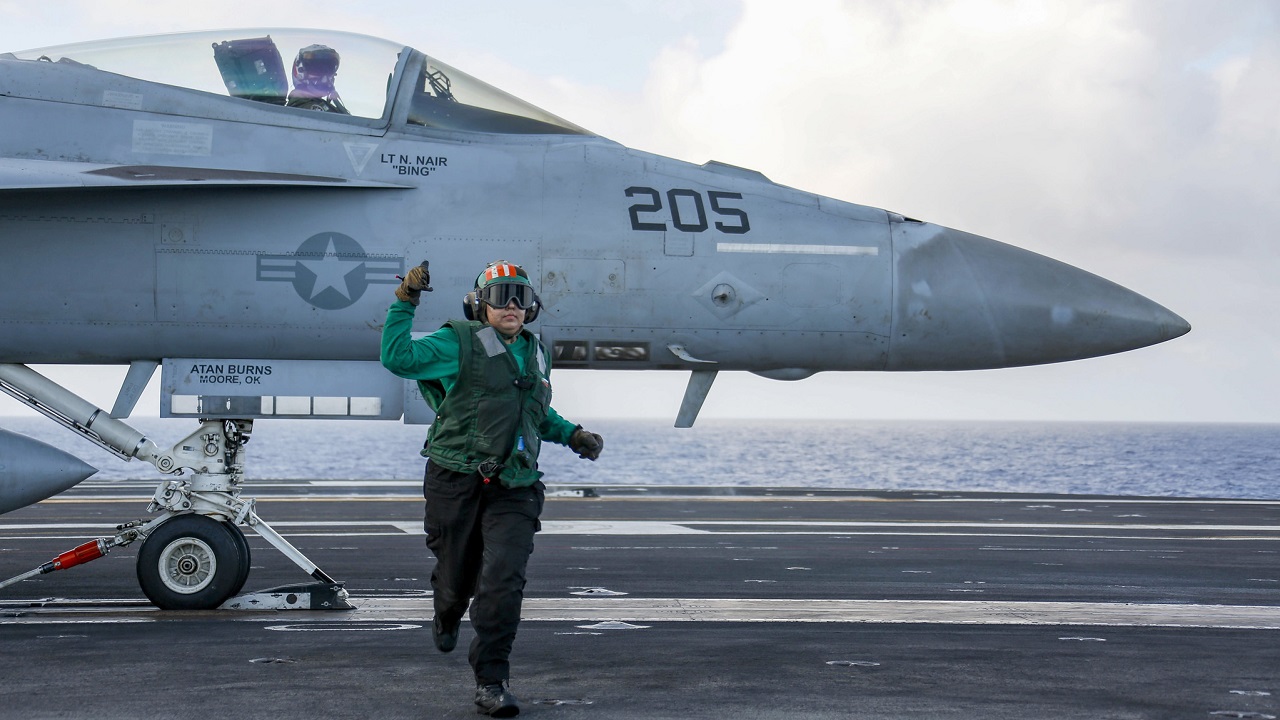
Aviation Boatswain’s Mate (Equipment) 3rd Class Anatalia Zamora, from Midland, Texas, runs to a safe distance before an F/A-18E Super Hornet assigned to the “Tophatters” of Strike Fighter Squadron (VFA) 14 launches from the flight deck of the Nimitz-class aircraft carrier USS Abraham Lincoln (CVN 72). The Abraham Lincoln Carrier Strike Group is on a scheduled deployment in the U.S. 7th Fleet area of operations to enhance interoperability through alliances and partnerships while serving as a ready-response force in support of a free and open Indo-Pacific region. (U.S. Navy photo by Mass Communication Specialist 3rd Class Michael Singley) 220228-N-MM912-1137
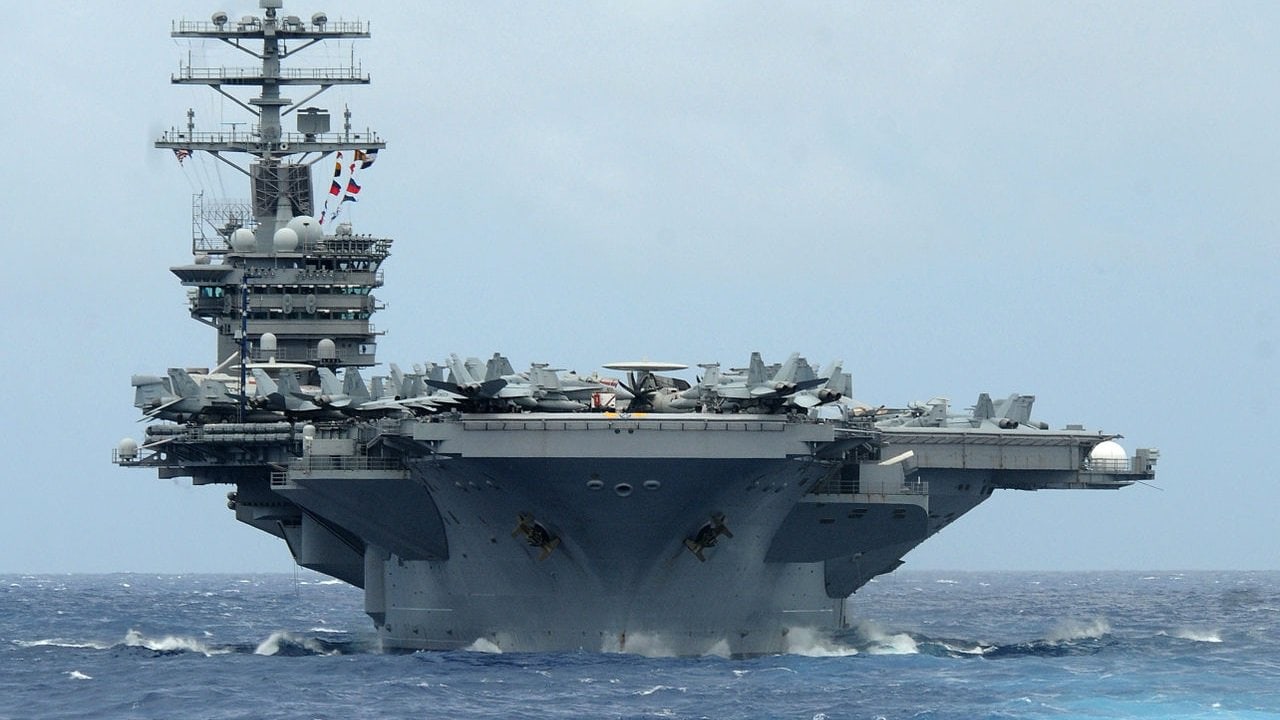
The aircraft carrier USS Nimitz (CVN 68) is underway during the Great Green Fleet demonstration portion of the Rim of the Pacific (RIMPAC) 2012 exercise. Nimitz took on 200,000 gallons of biofuel in preparation for the Great Green Fleet demonstration during Rim of the Pacific (RIMPAC) 2012. Twenty-two nations, more than 40 ships and submarines, more than 200 aircraft and 25,000 personnel are participating in RIMPAC exercise from June 29 to Aug. 3, in and around the Hawaiian Islands. The world’s largest international maritime exercise, RIMPAC provides a unique training opportunity that helps participants foster and sustain the cooperative relationships that are critical to ensuring the safety of sea lanes and security on the world’s oceans. RIMPAC 2012 is the 23rd exercise in the series that began in 1971. (U.S. Navy photo by Mass Communication Specialist 2nd Class Eva-Marie Ramsaran/Released)
Those deployments prove that carrier strike groups come with unique advantages that are hard or impossible to replicate with other approaches to war.
Unlike land-based aircraft, carrier air wings can operate from international waters, allowing the United States to launch and sustain operations without relying on regional air bases – for the most part, at least. And that flexibility is what has long made carriers a central tool for responding to crises in the Persian Gulf.
Perhaps, then, Iran tells us this: USSNimitz should live for a few more years at least.
About the Author: Jack Buckby
Jack Buckby is a British researcher and analyst specialising in defence and national security, based in New York. His work focuses on military capability, procurement, and strategic competition, producing and editing analysis for policy and defence audiences. He brings extensive editorial experience, with a career output spanning over 1,000 articles at 19FortyFive and National Security Journal, and has previously authored books and papers on extremism and deradicalisation.

