Iran Is No Superpower, But It Could Sink a U.S. Navy Aircraft Carrier: Here’s How One Expert Explains It
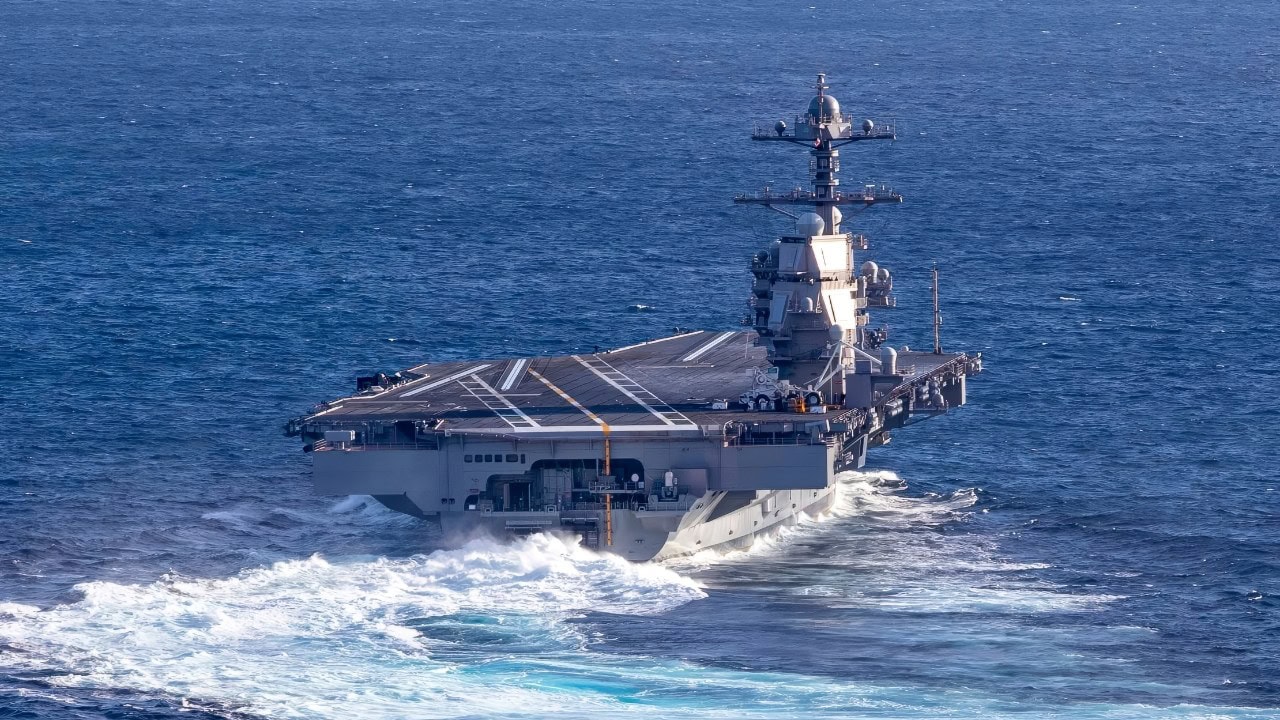
-As the United States surges USS Abraham Lincoln and USS Gerald R. Ford toward the Middle East, most attention is on aircraft carrier airpower and a possible strike campaign against Iran.
-A more overlooked danger sits below the surface. Iran’s Fateh-class submarine, combined with drone swarms and anti-ship ballistic missiles, could create a layered threat designed to overwhelm defenses.
-The warning is not theoretical: past wargames repeatedly showed quiet diesel-electric and AIP-style submarines slipping into the attack range of U.S. carriers.
U.S. Navy Aircraft Carriers Shouldn’t Take Iran’s Missiles and Submarines Lightly
In tight littoral waters, geography can narrow America’s advantages and give even a small submarine force a chance to change everything.
As the United States masses nearly one-third of its entire naval power in the Middle East, primed to strike the Islamic Republic of Iran, the great focus in the media has understandably been on the two aircraft carriers that have been brought into the region.
The Carrier Buildup Everyone is Watching
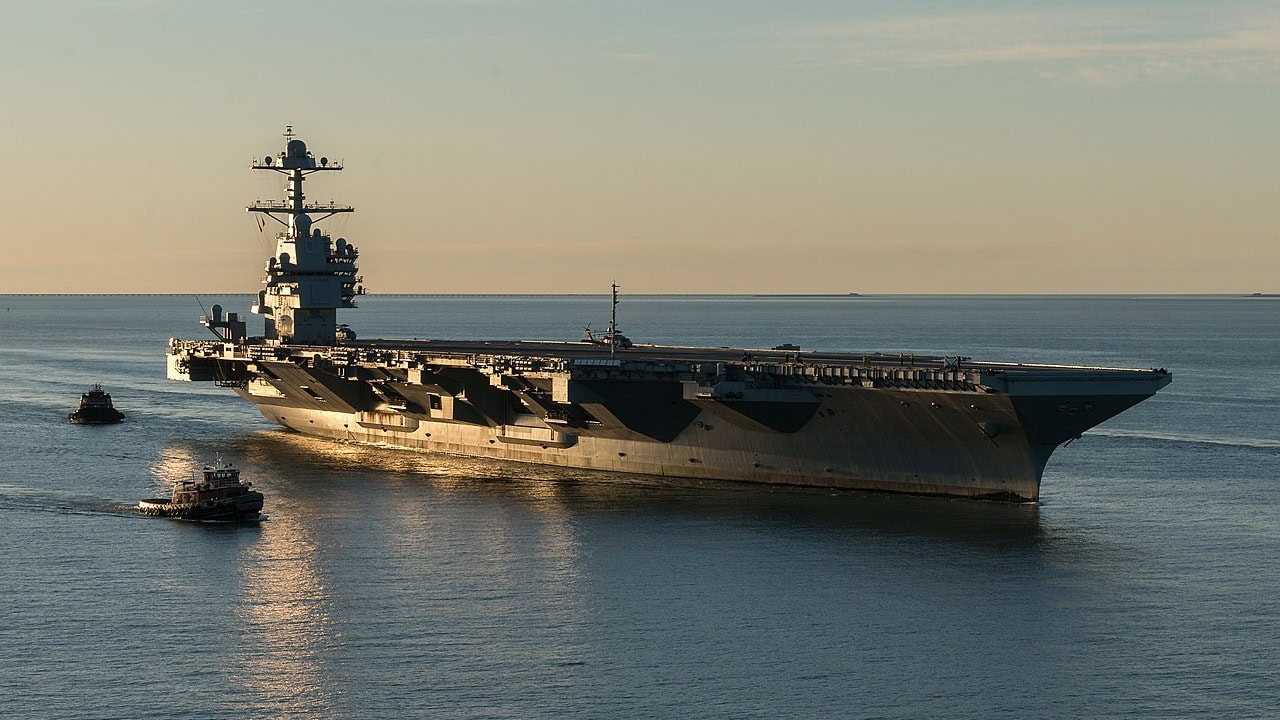
From 2017 – The aircraft carrier Pre-Commissioning Unit (PCU) Gerald R. Ford (CVN 78) pulls into Naval Station Norfolk for the first time. The first-of-class ship – the first new U.S. aircraft carrier design in 40 years – spent several days conducting builder’s sea trails, a comprehensive test of many of the ship’s key systems and technologies. (U.S. Navy photo by Matt Hildreth courtesy of Huntington Ingalls Industries/Released)
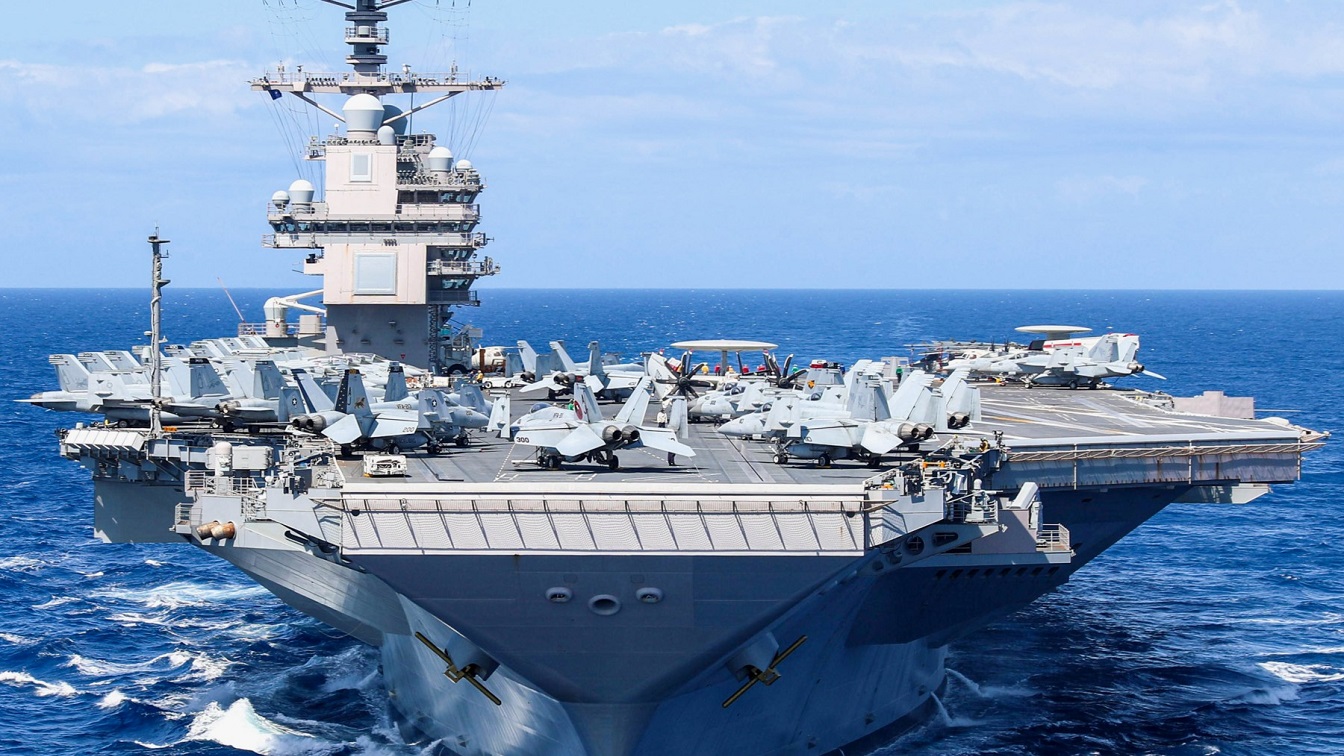
Ford-Class. Ford-Class Aircraft Carrier USS Ford.
The first carrier, a Nimitz-class nuclear-powered ship, the USS Abraham Lincoln, has been on station for almost a month, floating between Oman and the open spaces of the Arabian Sea. Meanwhile, the second carrier, the brand-new USS Gerald R. Ford, the namesake of its class, is set to be on station off the coast of Israel in the Mediterranean Sea.
Together, these two carriers bring immense airpower and firepower. Many believe that the carriers will unleash a level of sustained violence upon the Islamic regime in Iran, unlike anything that regime has experienced or endured before. But the Iranians, at least in appearance, do not seem fazed by the presence of these leviathans in their region.
On the contrary, the Iranian military appears poised—even excited—at the prospect of successfully attacking one (or both) of these massive ships.
Tehran isn’t intimidated.
The Iranians have spent years developing a comprehensive anti-ship ballistic missile (ASBM) capability that is augmented by what I would argue is likely advanced Chinese satellite targeting help.
Now, the Iranians are saying that if the Americans do follow through on their threats, one or both of America’s expensive aircraft carriers will either be disabled by Iranian ASBMs or sunk.
Setting aside the ASBM threat to the US carriers is another, less thought of (in the media at least) threat: Iran’s limited submarine force.
Undoubtedly, Iran’s Navy is no real challenger to the US Navy in the open seas. But Iran is not plotting to fight in the open seas. The Iranians are looking to use the geography of their coastal regions and the surrounding waters to their advantage.
The Overlooked Danger Beneath the Surface
What’s more, Tehran intends to replicate in real life that which has been demonstrated in various US Navy wargames—repeatedly—in which a relatively cheap, Air Independent Propulsion (AIP)-powered submarine essentially sinks an otherwise fully defended American carrier.
Iran possesses at least one fully operational AIP-driven submarine, the Fateh-class, which has been in service since 2019. This submarine could conceivably sink an aircraft carrier, like the USS Abraham Lincoln, which is floating in the Arabian Sea, moving near Oman.
Many reading this are likely in dismay at the claim that an Iranian submarine, that is nowhere near as advanced as either the US carrier or a US submarine, could dare threaten the carrier, let alone get within strike range.
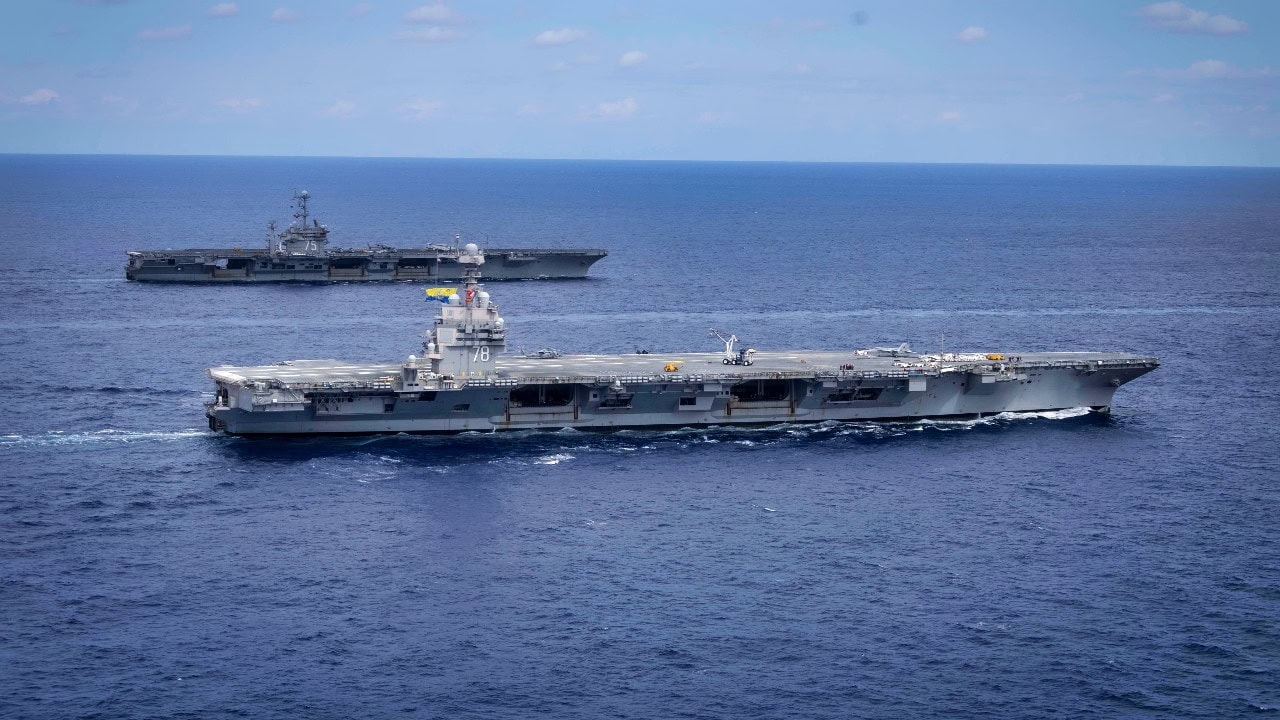
ATLANTIC OCEAN. (Aug. 24, 2024) The Nimitz-class aircraft carriers USS Harry S. Truman (CVN 75), back, and the world’s largest aircraft carrier, USS Gerald R. Ford (CVN 78), sail in formation in the Atlantic Ocean, Aug. 24, 2024. USS Gerald R. Ford is the flagship of the Gerald R. Ford Carrier Strike Group. The aircraft carrier is underway in the Atlantic Ocean to further develop core unit capabilities and skills such as fuels certification and ammunition on-load during its basic phase of the optimized fleet response plan. (U.S. Navy photo by Mass Communication Specialist 2nd Class Maxwell Orlosky).
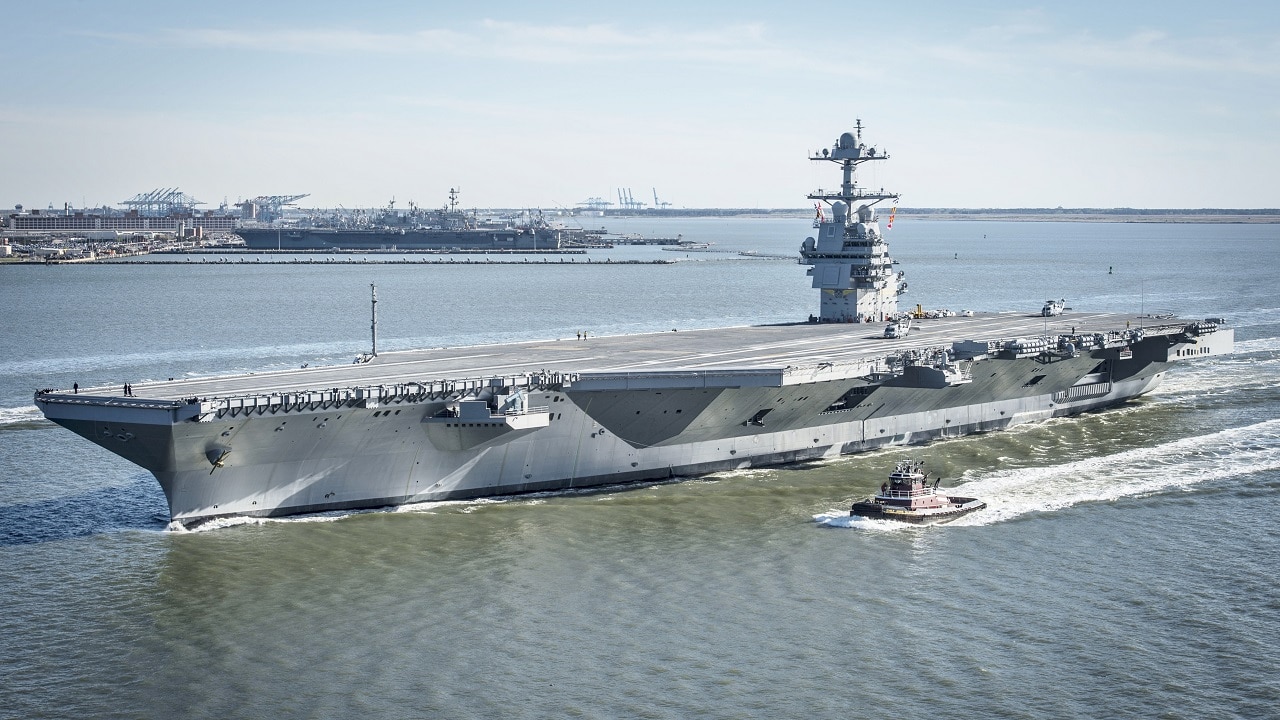
The U.S. Navy aircraft carrier USS Gerald R. Ford (CVN-78) underway under her own power for the first time while leaving Newport News Shipbuilding, Newport News, Virginia (USA), on 8 April 2017. The first-of-class ship – the first new U.S. aircraft carrier design in 40 years – spent several days conducting builder’s sea trials, a comprehensive test of many of the ship’s key systems and technologies. USS George Washington (CVN-73) and the amphibious assault ship USS Kearsarge (LHD-3) are visible in the background.
But such tactics have repeatedly proven effective both during wargames and in the real world (remember in 2006, a Chinese diesel-powered submarine got within torpedo range of the USS Kitty Hawk, and no one on board was any wiser until after the fact).
Or go back to the 2005 incident involving a Swiss diesel-electric, AIP-equipped submarine, the Gotland, which sank the USS Ronald Reagan during a wargame. The AIP system on board allows a diesel-electric submarine to remain underwater for a week without snorkeling. This makes it nearly impossible for carrier-based sensors to detect with traditional sonar due to its ultra-quiet nature.
Then there’s the added complication of geography.
Iran’s Fateh-class Submarine is a Wild Card

Fateh-Class Submarine. Image: Iranian State Media.
As noted above, the Iranians do not intend to engage the US Navy in open waters (that would be suicide and, contrary to their Islamist tendencies, Iranian submarine captains have no desire to die needlessly).
Instead, Iran trains to use the cramped spaces of the littoral zones to its advantage.
Further, with the carrier and its attendant battle group fixated on defending against ASBM threats from the air, and the fact that the carrier must move closer to Iranian littoral waters to conduct carrier flight operations, this means that the Iranian Fateh-class submarine has a far greater chance at scoring hits on a carrier, like the Abraham Lincoln.
Back in 2005, the Swedish Navy gambled that its AIP-driven submarine, when operating in shallower littoral waters, would have advantages over the US carrier, which would not be able to detect the submarine or adequately defend against that submarine because most carrier anti-submarine warfare (ASW) capabilities were primed to counteract threats in the deep blue, open ocean.
The Swedish crew of the Gotland used these facts to their advantage and scored lethal hits on the Reagan during the wargame—so much so that the US Navy leased the Gotland for two years after the 2005 wargames so that US Navy engineers could more closely study and understand how the Gotland posed such a serious threat to an American carrier.
History Shows Carriers are Vulnerable
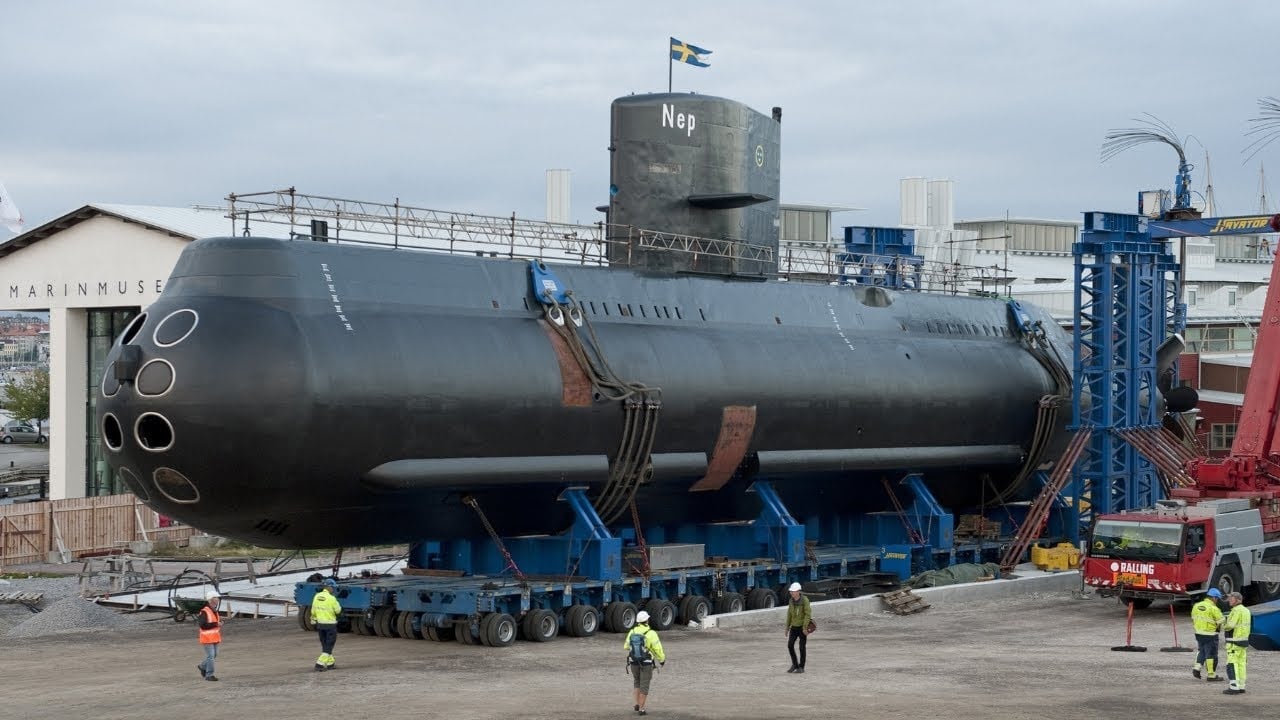
Gotland-class submarine. Image Credit: Creative Commons.
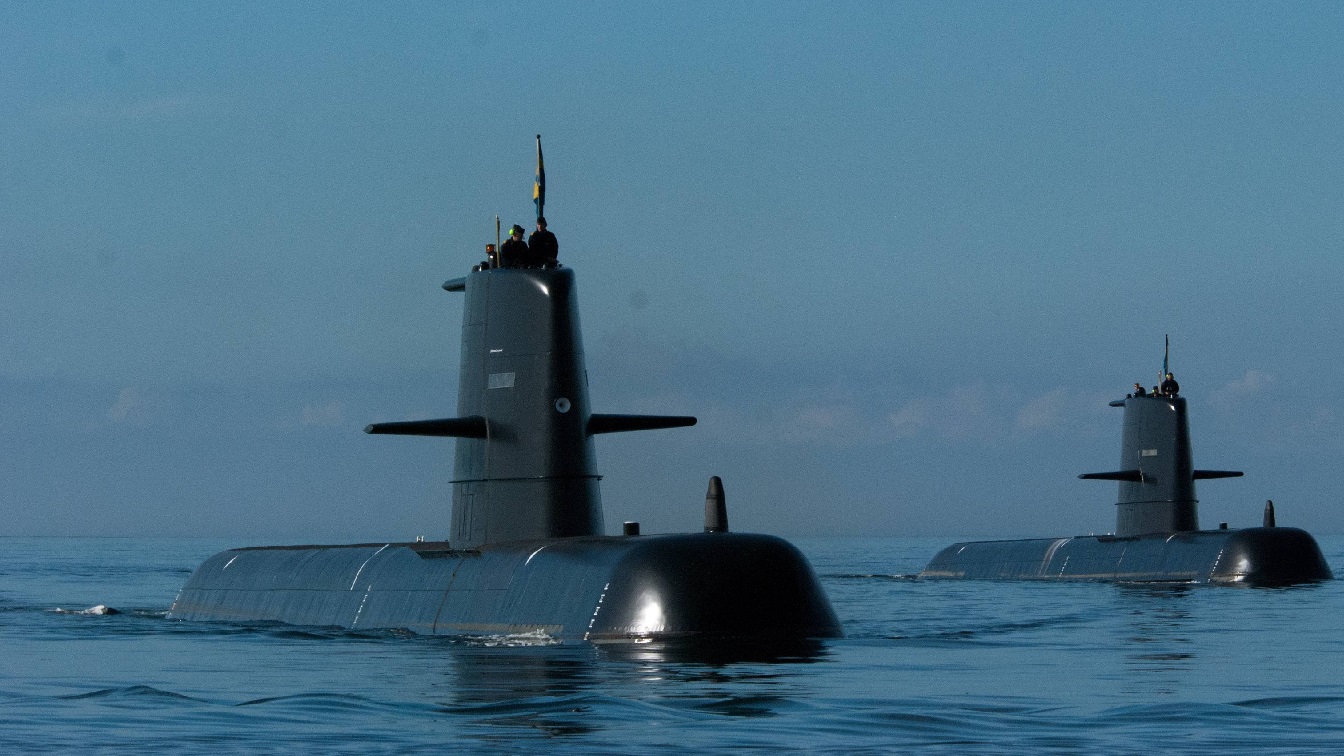
Gotland-class Submarine.
Since then, we have been told that the US Navy enhanced its defensive capabilities. Since the 2005 incident, the Navy has shifted its sailors’ mindset, moving them away from focusing on countering deep-sea submarine threats to their carriers by using open-ocean tracking techniques.
Smaller, AIP-driven, coastal submarines were not part of their repertoire. Now, conditioning to defend against these threats is part of the Navy’s training for carrier crews.
Supposedly, the Navy has further developed its ASW capabilities, such as increasing helicopter ASW capabilities, adding defensive drones, and (recently) including artificial-intelligence-enabled sensors into its overall ASW defenses. While important, the greater problem is the carrier itself.
These were not designed to wage war in geographically tight, heavily contested environments. They are massive machines meant for open water—and, although weapons of war, they were really meant for far more permissive environments than what currently exist.
One Coordinated Strike Could Change Everything
As the Gotland exercises in 2005 proved, all it takes is one AIP-powered submarine to get through, operate in torpedo range long enough to pop some torpedoes off, and score some lucky hits. By the way, the 2005 Gotland training exercise and the encounter between the Chinese diesel-electric Song-class submarine and the USS Kitty Hawk were not the only two incidents wherein cheap, diesel-electric subs got within striking distance of a US flattop.
This has happened in numerous other NATO exercises, including exercises involving the French Navy. It’s a repeating pattern. And no matter how much better the Navy’s training and ASW capabilities have gotten, it is impossible to make these boats better defended against the threat of coastal, AIP-driven submarines precisely because of the nature of the carrier versus that of the AIP submarine.
As American sailors on the carrier group are worried about Iranian drone swarms and ASBM threats, they must not neglect—indeed, they must be extra vigilant given previous failures—the threat that Iran’s Fateh-class submarine poses.
The Decision Washington Must Face
Sure, Iran lacks the number of Fateh-class submarines to be conventionally threatening.
But combine an Iranian drone swarm and ASBM attack along with a covert strike from Iran’s Fateh-class submarine, and President Trump might be waking up the night after he orders airstrikes against Iran to a US nuclear carrier ablaze.
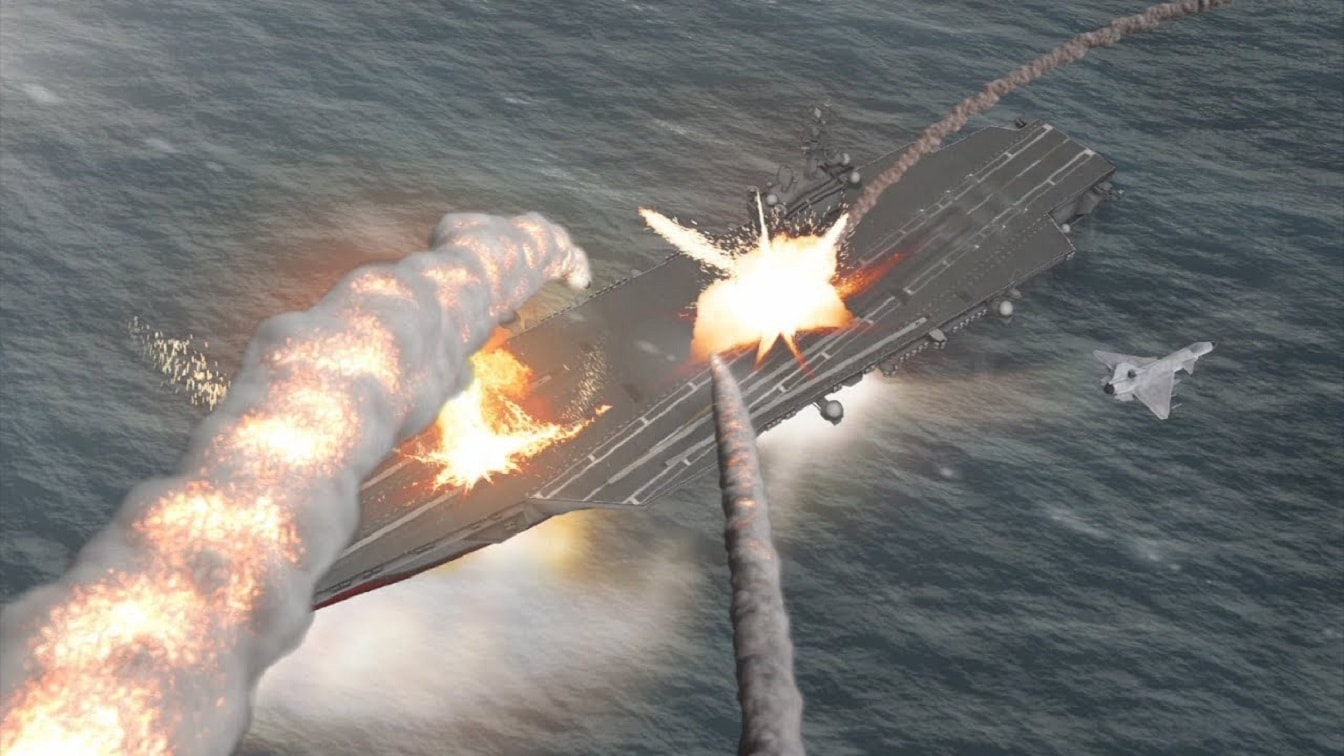
YouTube Screenshot of a Simulation of China Firing a DF-21 ASBM.
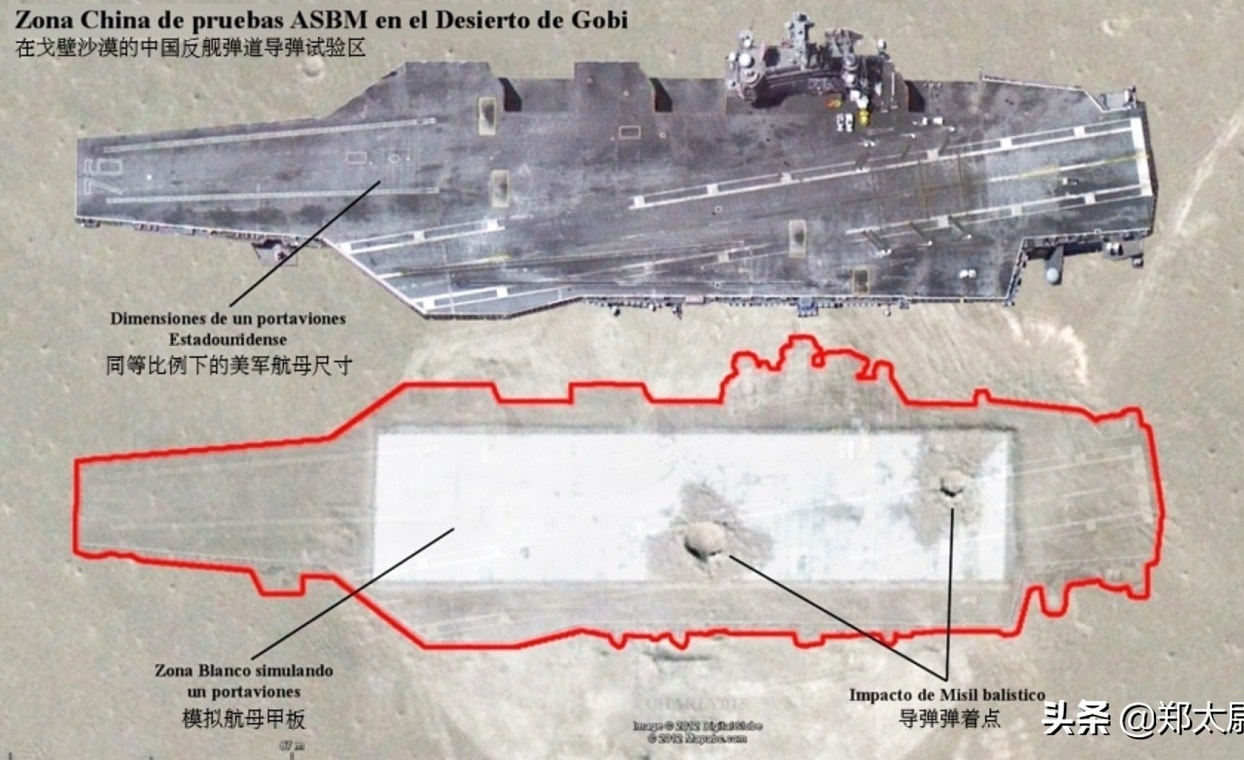
Image from the now closed WantChinaTimes. This shows a mock attack on a U.S. Navy aircraft carrier.
These are the things the administration must (and isn’t) consider more seriously before committing major military actions in Iran.
About the Author: Brandon J. Weichert
Brandon J. Weichert is the Senior National Security Editor at 19FortyFive.com. He was previously the senior national security editor at The National Interest. Weichert is the host of The National Security Hour on iHeartRadio, where he discusses national security policy every Wednesday at 8 pm Eastern. He hosts a companion show on Rumble entitled “National Security Talk.” Weichert consults regularly with various government institutions and private organizations on geopolitical issues. His writings have appeared in numerous publications, among them Popular Mechanics, National Review, MSN, and The American Spectator. And his books include Winning Space: How America Remains a Superpower, Biohacked: China’s Race to Control Life, and The Shadow War: Iran’s Quest for Supremacy. Weichert’s newest book, A Disaster of Our Own Making: How the West Lost Ukraine, is available for purchase wherever books are sold. He can be followed via Twitter/X @WeTheBrandon.