
11 U.S. Navy Aircraft Carriers on Paper, 8 ‘Available’ in Reality
In March 2026, the USS Gerald R. Ford arrived in Split, Croatia, for repairs following a March 12 fire that broke out in its laundry spaces during deployment. The incident injured sailors and forced the Navy to pull its newest aircraft carrier out of active operations during an ongoing campaign against Iran.
At the same time, the USS Harry S. Truman is scheduled to enter its Refueling and Complex Overhaul (RCOH) in June 2026, a multi-year maintenance period expected to last until at least 2029.
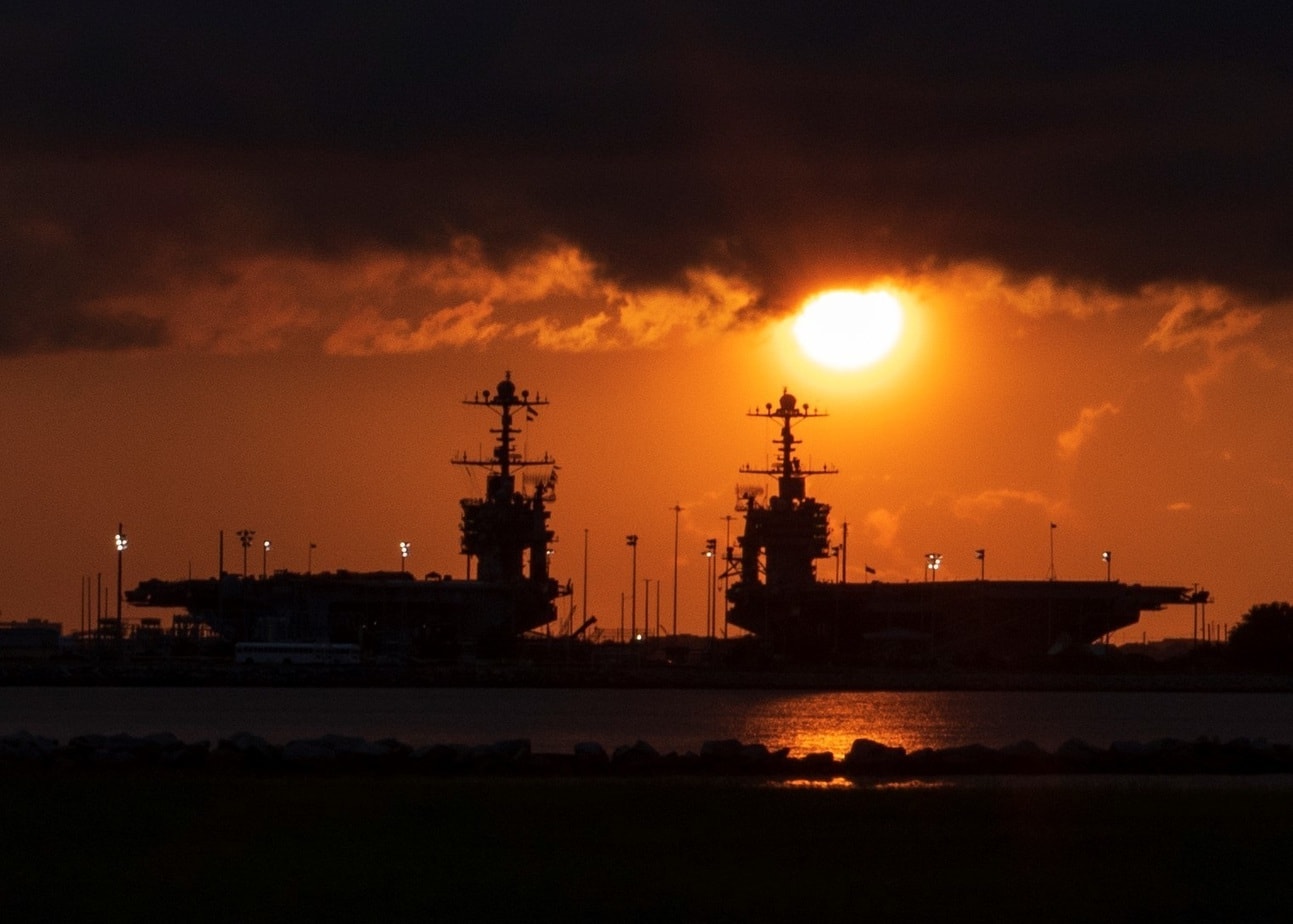
NORFOLK (Aug. 16, 2019) The Nimitz-class aircraft carriers USS Dwight D. Eisenhower (CVN 69), left, and USS John C. Stennis (CVN 74) moored at Naval station Norfolk. Making port at Naval station Norfolk is a routine activity for aircraft carriers.
Meanwhile, the USS John C. Stennis has already been unavailable for years after entering its own RCOH in 2021.
That means that three aircraft carriers – one of them the Navy’s newest and most advanced – are either out of action or about to go offline.
At a time when the United States is sustaining carrier operations linked to the Iran conflict while maintaining global deterrence, that level of simultaneous unavailability is far from ideal. It directly affects how many carriers the Navy can actually deploy and how quickly it can respond to crises with the right assets. It also affects the strain placed on the rest of the fleet.
The Three Carriers at the Center of the Problem
The USS Gerald R. Ford is the lead ship of the Ford class, the most advanced aircraft carrier design ever built by the United States. It was commissioned in 2017 and is designed to generate higher sortie rates than the older Nimitz-class carriers while requiring several hundred fewer crew members.
It carries an air wing of roughly 75 aircraft, including F/A-18E/F Super Hornets, EA-18G Growlers, E-2D Hawkeyes, and MH-60 helicopters, and supports more than 5,000 personnel when deployed.
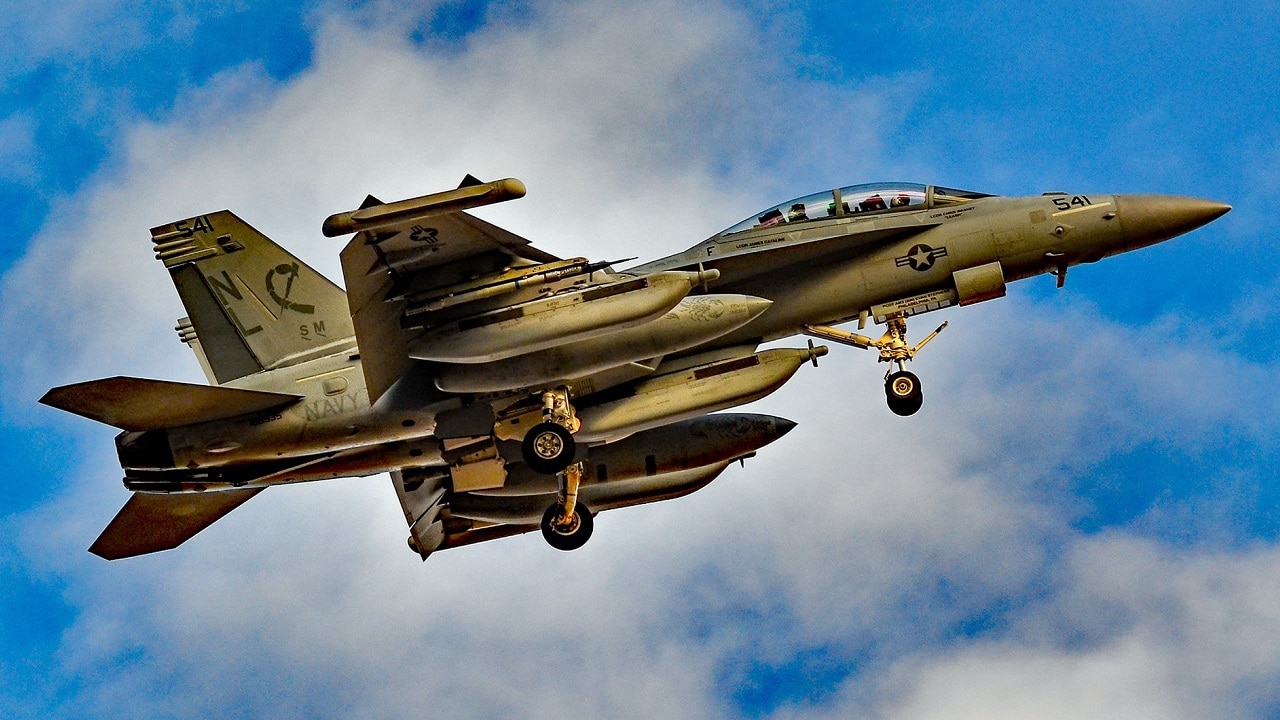
EA-18G Growler. Image Credit: Creative Commons.
The USS Harry S. Truman is a Nimitz-class carrier commissioned in 1998, and the RCOH process it is about to enter is a once-in-a-lifetime overhaul that will refuel the ship’s nuclear reactors and modernize its major combat and support systems. The overhaul is necessary because Nimitz-class carriers are designed for approximately 50 years of service, with a mid-life refueling required around the 25-year mark to keep them operational.
The USS John C. Stennis is deep into that process, entering RCOH in May 2021 at Newport News Shipbuilding, the only U.S. shipyard capable of performing nuclear carrier refueling and overhaul work.
Every single one of these ships is a crucial asset, with Ford representing the future of the fleet, and Truman and Stennis being core components of the existing carrier force.
Why Carrier Maintenance Matters
The USS Gerald R. Ford was not scheduled to enter a long-term overhaul like the multi-year RCOH required for older carriers, but it was already operating beyond its planned deployment cycle and approaching a delayed maintenance period.
The ship deployed in June 2025 and, by March 2026, had been at sea for roughly 9 months, with Vice Chief of Naval Operations Admiral Jim Kilby warning that the deployment could have stretched to 11 months – far beyond the typical 6- to 7-month carrier deployment.
That extended deployment was a problem because the carrier and its strike group were already overdue for maintenance, and the delay had pushed back planned repair periods not just for the Ford but also for other ships waiting in the queue.
During the deployment, the ship experienced persistent systems issues. Those problems ranged from plumbing failures to cumulative wear from conducting continuous operations for an extended period in the Caribbean and the Middle East. Because the damage occurred during an already extended combat deployment, the Navy was forced to pull the carrier offline immediately rather than on a planned timeline.
The situation for the USS Harry S. Truman and USS John C. Stennis is more predictable but far longer in duration.
RCOH is one of the most complex industrial processes in the entire U.S. defense system, spanning nuclear reactor refueling, the replacement and modernization of major ship systems, structural repairs, upgrades, and extensive testing and certification before returning to service. The process typically takes four to five years per carrier.
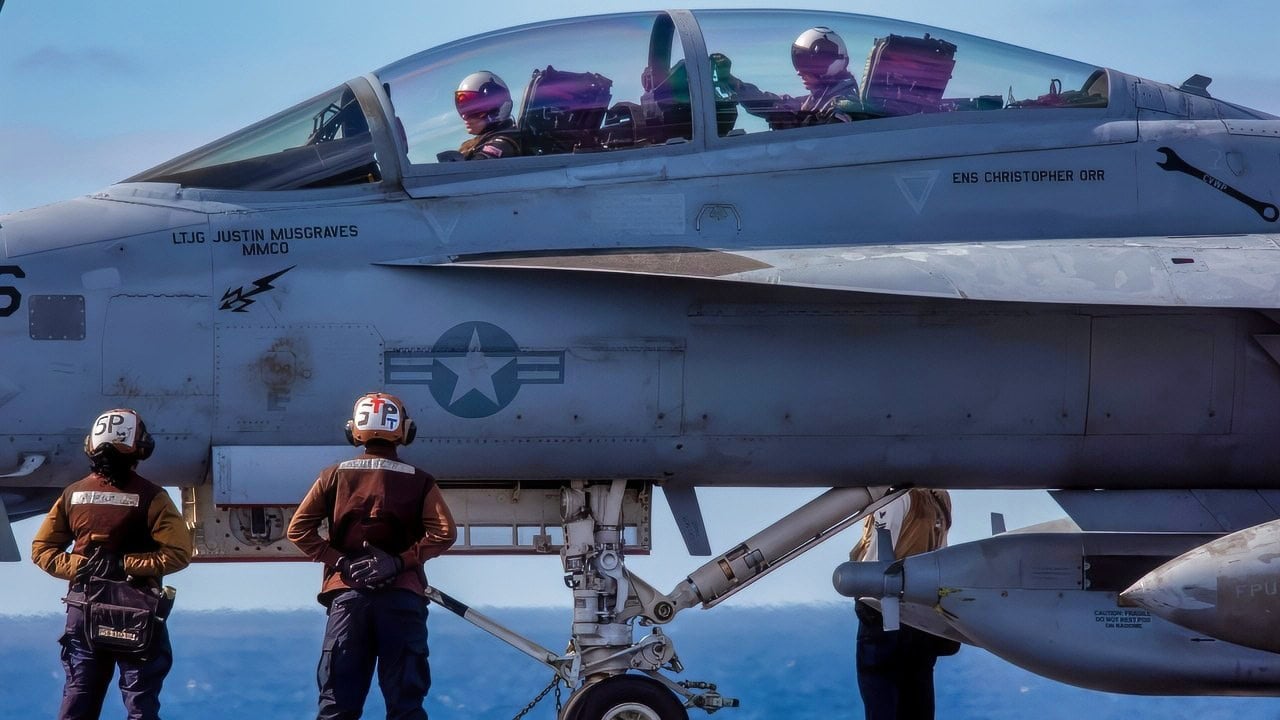
U.S. Navy Sailors prepare to taxi an EA-18G Growler, attached to Electronic Attack Squadron (VAQ) 133, on the flight deck of Nimitz-class aircraft carrier USS Abraham Lincoln (CVN 72) on Nov. 24, 2025. USS Abraham Lincoln (CVN 72), flagship of the Abraham Lincoln Carrier Strike Group, is underway conducting routine operations in the U.S. 3rd Fleet area of operations, demonstrating the U.S. Navy’s long-term commitment to a free and open Indo-Pacific. (U.S. Navy photo by Mass Communication Specialist Seaman Daniel Kimmelman)
The U.S. Navy accounts for these scheduled maintenance timelines, but sometimes the schedules slip. The most recent example would be the USS George Washington, whose RCOH began in 2017 and was not completed until May 2023 – roughly six years.
The delay was driven by a combination of workforce shortages and industrial constraints, and the Navy lost access to a nuclear aircraft carrier during that period.
Say Truman’s overhaul slips in the same way, or if Stennis encounters further delays, the number of available carriers would remain suppressed well into the 2030s. That would cause cascading problems across the deployment timeline and impact training schedules, and ultimately affect global force posture.
And, when maintenance schedules slip, delays can last even longer than six years. The Los Angeles-class submarine USS Boise (SSN-764), which sat idle from 2015 to 2023 waiting for an available shipyard slot to begin its overhaul, is a good example of that. Boise is not a carrier, but that debacle proves that maintenance delays remove capability, which is a problem when only a small number of similar vessels exist, or major work is taking place on several at once.
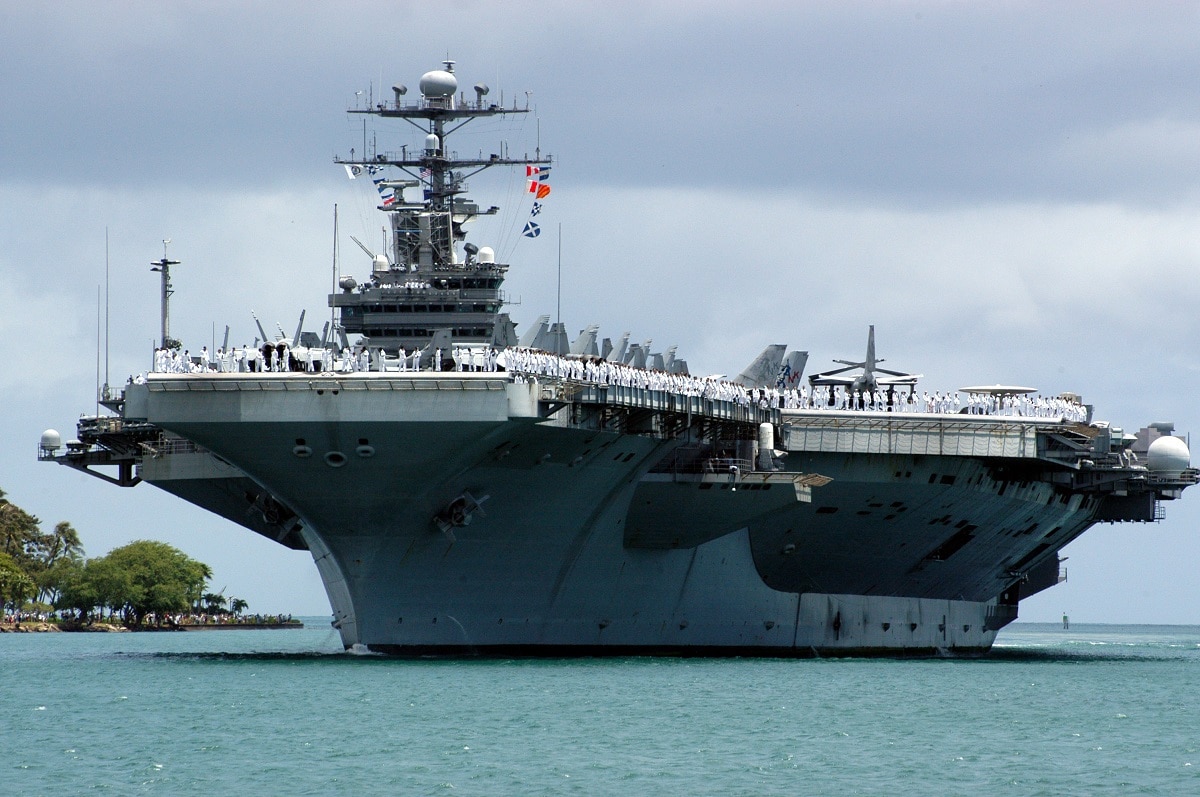
PEARL HARBOR, Hawaii (June 29, 2004) Sailors aboard the Nimitz-class aircraft carrier USS John C. Stennis (CVN 74) Òman the railsÓ as she pulls through the mouth of Pearl Harbor. Stennis arrived as part of RIMPAC (Rim of the Pacific Maritime Exercises), which includes the participation of seven countries. The objectives of the exercises are enhancing combat readiness and exploiting opportunities for cooperation with multinational units. U.S. Navy photo by Journalist Seaman Ryan C. McGinley. (RELEASED)
A Fleet at the Legal Minimum
By law, the U.S. Navy is required to maintain a force of no fewer than 11 operational aircraft carriers. The figure is set to ensure that the U.S. Navy can maintain a global presence and sufficient surge capacity while accommodating necessary maintenance for all vessels.
On paper, the Navy is likely to meet that requirement through the late 2020s and early 2030s. “Air Boss” Vice Adm. Daniel Cheever said in 2025 that the Navy is committed to maintaining a fleet of at least 11. The issue, though, is not the number of carriers on the books, but how many of them are actually available at any given time.
Maintenance cycles and industrial delays mean only a portion of the fleet is ready for immediate operations, forcing deployment schedules to adapt. When multiple carriers enter overlapping maintenance periods or are unexpectedly pulled offline, that margin narrows.
But even with Stennis delays, Truman preparing for its RCOH, and Ford temporarily out of action, the fleet will likely continue to meet its statutory requirement, and the Navy could well manage the gap. It has already demonstrated, in recent months, the ability to surge carriers into key regions when required. But surging to offset gaps always means accepting risk elsewhere, and that is the trade-off that is now taking shape.
With overlapping maintenance cycles and well-documented shipyard capacity limits, the Navy can continue to meet its commitments but has less room to absorb disruption or sustain prolonged surges across multiple theaters simultaneously.
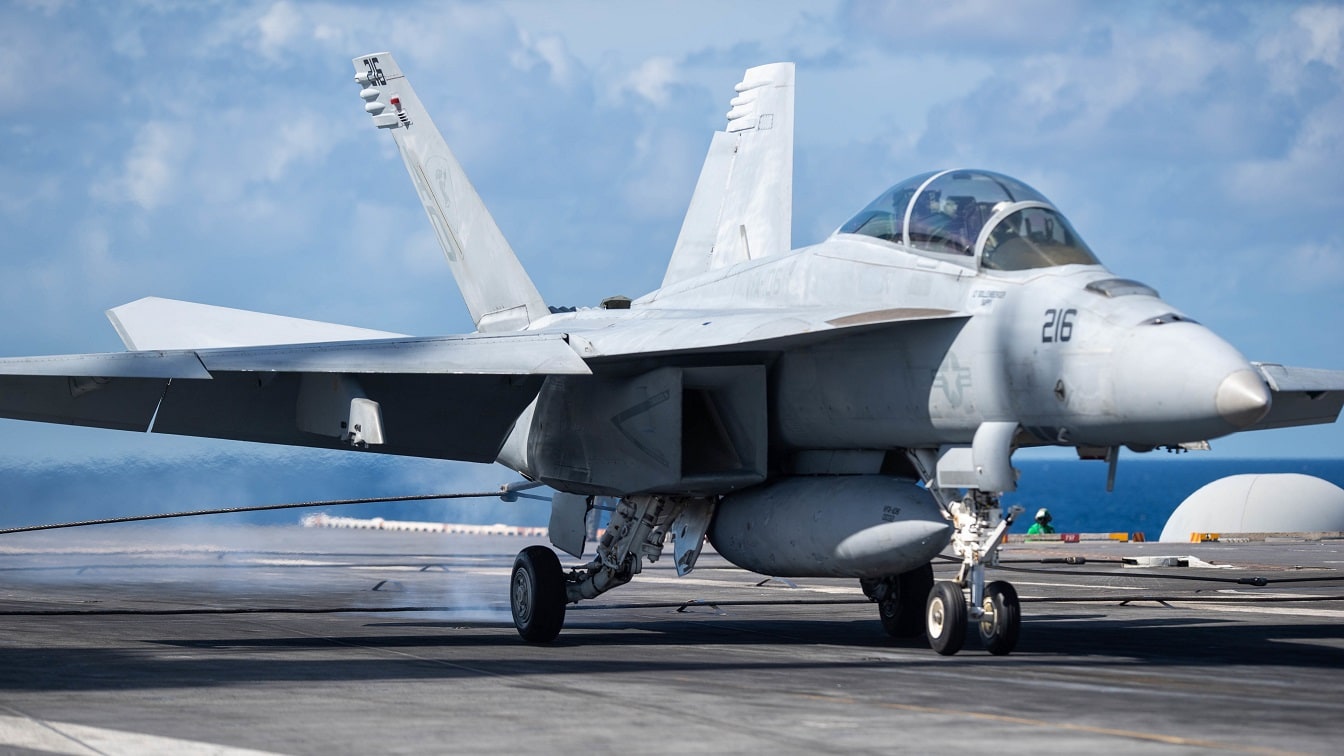
An F/A-18F Super Hornet, assigned to Strike Fighter Squadron (VFA) 106, catches an arresting gear wire while landing on the flight deck of the aircraft carrier USS John C. Stennis (CVN 74) in the Atlantic Ocean, Nov. 4, 2019. The John C. Stennis is underway conducting routine operations in support of Commander, Naval Air Force Atlantic. (U.S. Navy photo by Mass Communication Specialist 2nd Class Grant G. Grady)
The U.S. is not by any means losing its ability to project power, but it is operating close to its limits and with narrow margins.
Reuters reported the USS Gerald R. Ford’s repairs in Croatia are expected to take several weeks, with the carrier likely returning to operations later in 2026. That is, assuming the cumulative wear and unforeseen first-of-class issues do not keep it in dock for longer.
MORE – The Iran War Isn’t a Rehearsal for a Taiwan War with China — It’s a Stress Test
About the Author: Jack Buckby
Jack Buckby is a British researcher and analyst specializing in defense and national security, based in New York. His work focuses on military capability, procurement, and strategic competition, producing and editing analysis for policy and defense audiences. He brings extensive editorial experience, with a career output spanning over 1,000 articles at 19FortyFive and National Security Journal, and has previously authored books and papers on extremism and deradicalization.