
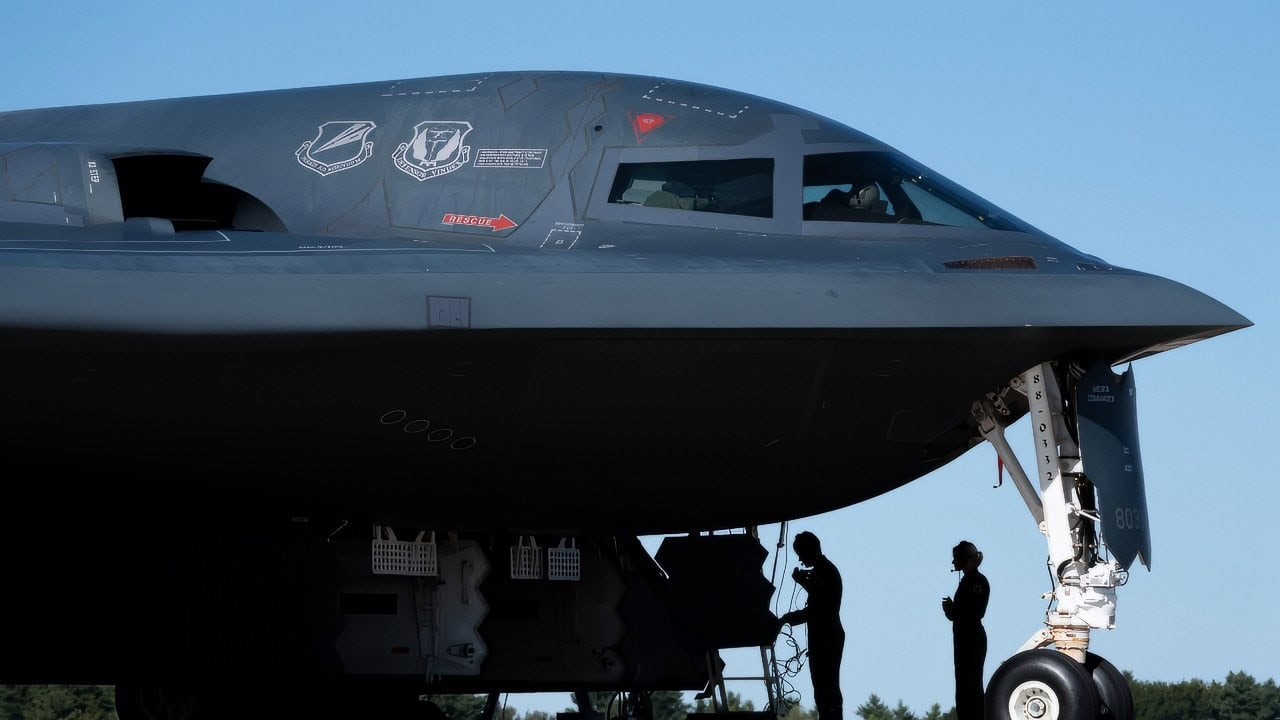
Key Points and Summary – The B-2 Spirit may be a Cold War design, but it remains the backbone of America’s stealth bomber force as the B-21 Raider slowly comes online.
-Originally engineered to slip through dense Soviet air defenses and deliver nuclear gravity bombs, its flying-wing shape, low observable features, and huge range proved just as useful for precision conventional strikes in Serbia, Afghanistan, and Libya.
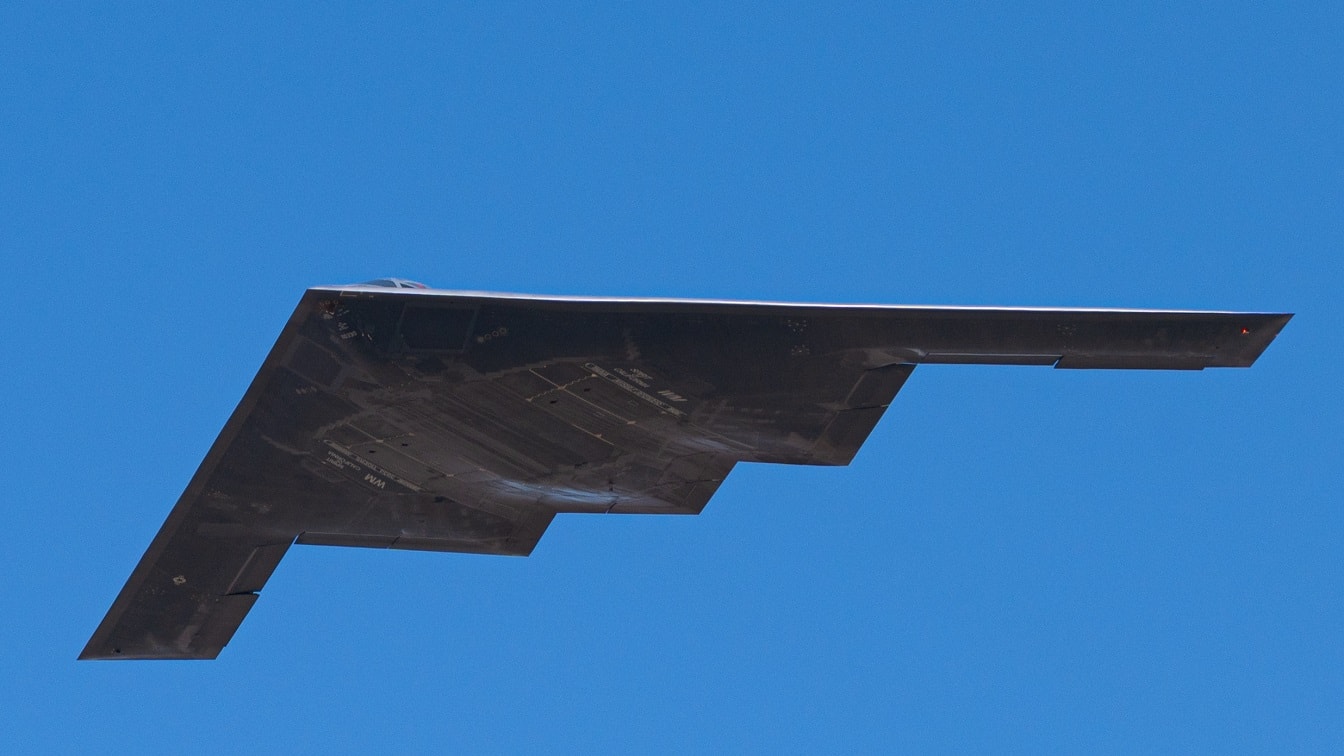
A B-2 Spirit stealth bomber from Whiteman Air Force Base completes a fly-over during the Sound of Speed Airshow at Rosecrans Air National Guard Base, in St. Joseph, Missouri, May 1, 2021. The air show was hosted by the city of St. Joseph and 139th Airlift Wing, Missouri Air National Guard to thank the community for their support. (U.S. Air National Guard photo by Airman Janae Masoner)
-Today, with only a small fleet in service, the Air Force pours money into upgrades and life-extension work because Russia and China now field the same kind of layered air defenses the B-2 was built to defeat.
B-2 Spirit: A Cold War Design In A Post-Cold War World
Even as the U.S. Air Force prepares to receive its first operational B-21 Raider, it is simultaneously extending the life of a much older stealth bomber whose origins are rooted in a bygone era with very different strategic needs.
The B-2 Spirit remains in frontline service more than three decades after its first flight, even as it is slated for eventual replacement by the B-21 – because without it, the U.S. would endure a substantial capability gap.
And while the B-2 Spirit remains a competent piece of hardware – and still very much the best in the world of its class – its Cold War design priorities reveal much about its original purpose.
While the B-2 has been used to meet modern wartime requirements and mission demands, it was in fact designed to penetrate Soviet air defenses and to ensure the former Soviet Union constantly existed under the threat of nuclear attack from the United States.
Built to Survive the Soviet Air Defense System
The B-2’s origins trace back much further than the era from which it is known to have flown, with designers and planners working on the program long before the public ever had any idea what it might look like.
In the 1970s and early 1980s, defense planners grew increasingly concerned that America’s bomber leg of the nuclear triad was becoming vulnerable.
Soviet investments in layered air defense systems, which combined long-range radar, surface-to-air missiles, and interceptor aircraft, threatened the ability of legacy bombers like the B-52 to reach their targets during wartime.
The problem was not the range or payload, but survivability.
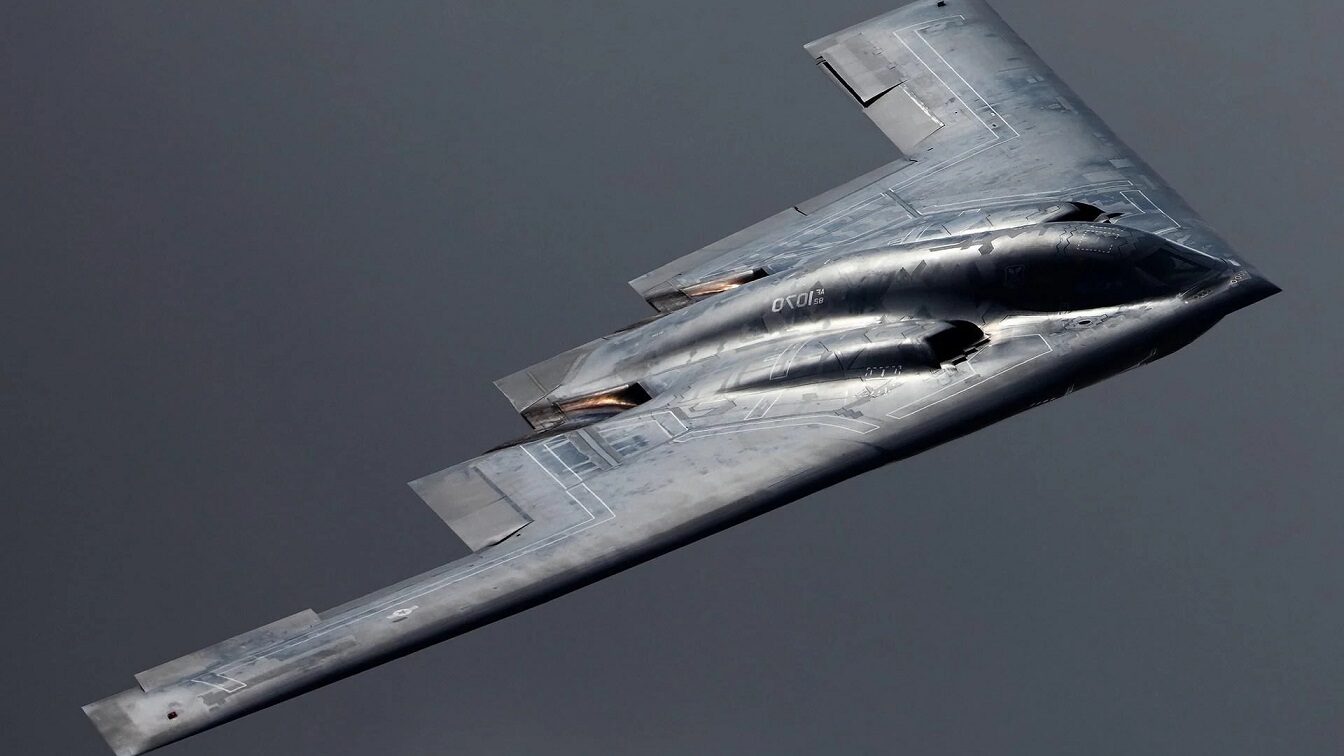
Artist image of B-2 Spirit. The B-21 Raider will look similar.
In response, the Air Force pursued a radical new solution: rather than relying on speed or electronic countermeasures alone, the new bomber would be designed from the outset to evade detection entirely.
Advances had been made in low observable shaping, radar-absorbent materials, and infrared signature reduction that could be combined into a flying-wing design that minimized radar signature across multiple frequency bands.
The result of years of development was a brand-new aircraft optimized to penetrate the densest air-defense environment on the planet at the time.
Crucially, the B-2 was conceived as a nuclear bomber first. It was initially designed to carry gravity bombs deep into enemy territory as a complement to intercontinental ballistic missiles and submarine-launched ballistic missiles, thereby creating a flexible, recallable option within America’s nuclear triad.
That flexibility mattered during an era of arms control negotiations when signaling ability and resolve without actually triggering an escalation was a significant part of U.S. strategy.
The collapse of the Soviet Union changed the situation, but it didn’t completely erase that logic. The strategic environment in which the aircraft entered service had changed, and by the time the B-2 achieved initial operational capability in the late 1990s, the adversary it was designed to confront no longer existed.
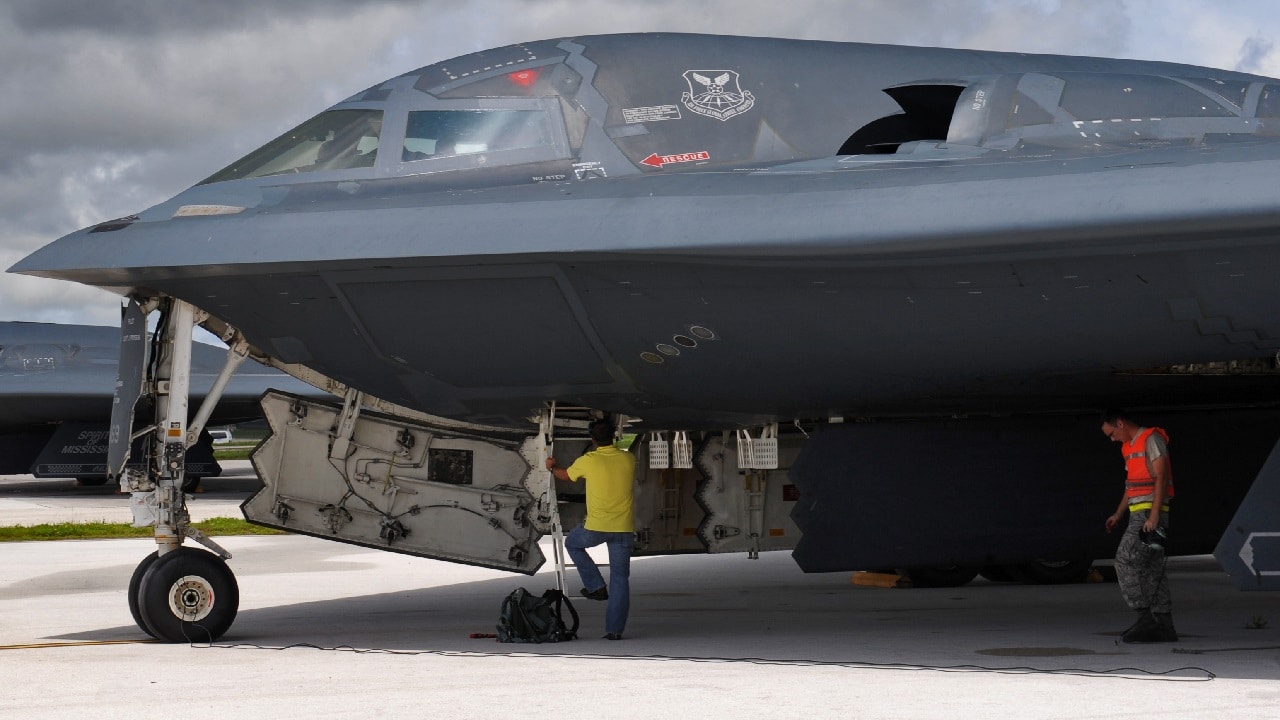
U.S. Air Force B-2 Spirit aircraft undergo pre-flight inspections prior to take off at Andersen Air Force Base, Guam, Aug. 11, 2016. More than 200 Airmen and three B-2s deployed from Whiteman Air Force Base, Mo., to conduct local sorties and regional training and integrate with regional allies in support of Bomber Assurance and Deterrence missions. (U.S. Air Force photo by Tech. Sgt. Miguel Lara III)
As the world has seen in recent years and decades, however, the aircraft has still proved itself.
A Cold War Bomber in a Post-Cold War World
Despite the dramatic geopolitical shift that accompanied the B-2’s final rollout, the aircraft did not become obsolete.
Instead, its Cold War design proved perfectly adaptable to new missions. The same stealth characteristics intended to defeat Soviet radar made the bomber uniquely suited for precision conventional strikes against other heavily defended targets that used technology similar to Soviet systems.
The B-2’s combat debut came years after it first entered service during Operation Allied Force in 1999, proving its ability to strike from the continental United States, penetrate modern air defenses, and deliver precision-guided munitions with minimal warning.
B-2s were then used with great success in Afghanistan and Libya, and were used against high-value targets requiring deep penetration. In each case, the aircraft’s value was in its excellent range, stealth, payload, and survivability.
And today, the Air Force continues to invest heavily in sustaining that fleet precisely because of the features implemented initially to counter the Soviets.
More than just keeping the aircraft flying, the Air Force invests heavily in extensive maintenance, software upgrades, and structural work – a necessary measure because the fleet of B-2s remains small, despite being a critical component of U.S. deterrence until a sufficient number of B-21s are operational, which could be another decade or more.
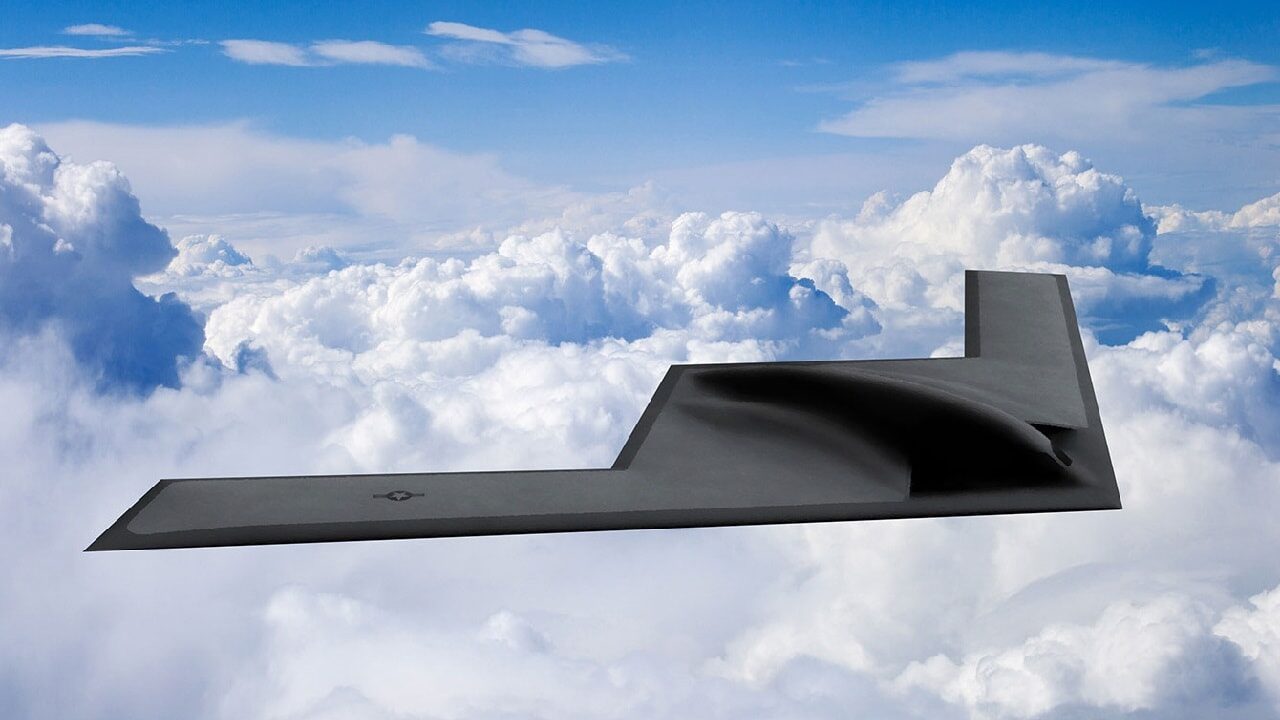
Shown is a B-21 Raider artist rendering graphic. The rendering highlights the future stealth bomber with Edwards Air Force Base, Calif., as the backdrop. Designed to perform long range conventional and nuclear missions and to operate in tomorrow’s high end threat environment, the B-21 will be a visible and flexible component of the nuclear triad. (U.S. Air Force graphic). This is the third USAF rendering of the B-21 Raider. Note changes in the windshield from previous official renderings.
It was unlikely the B-2 would ever become irrelevant simply because the Soviet Union collapsed; new threats emerged later using similar integrated air defenses protecting strategic targets, including in modern-day Russia and China.
Modern Russian and Chinese air defense networks increasingly resemble the layered systems the B-2 was originally designed to defeat – and the upcoming B-21 Raider offers advancements over all the technologies that made the B-2 so formidable to begin with.
About the Author:
Jack Buckby is a British author, counter-extremism researcher, and journalist based in New York who writes frequently for National Security Journal. Reporting on the U.K., Europe, and the U.S., he works to analyze and understand left-wing and right-wing radicalization, and reports on Western governments’ approaches to the pressing issues of today. His books and research papers explore these themes and propose pragmatic solutions to our increasingly polarized society. His latest book is The Truth Teller: RFK Jr. and the Case for a Post-Partisan Presidency.

