
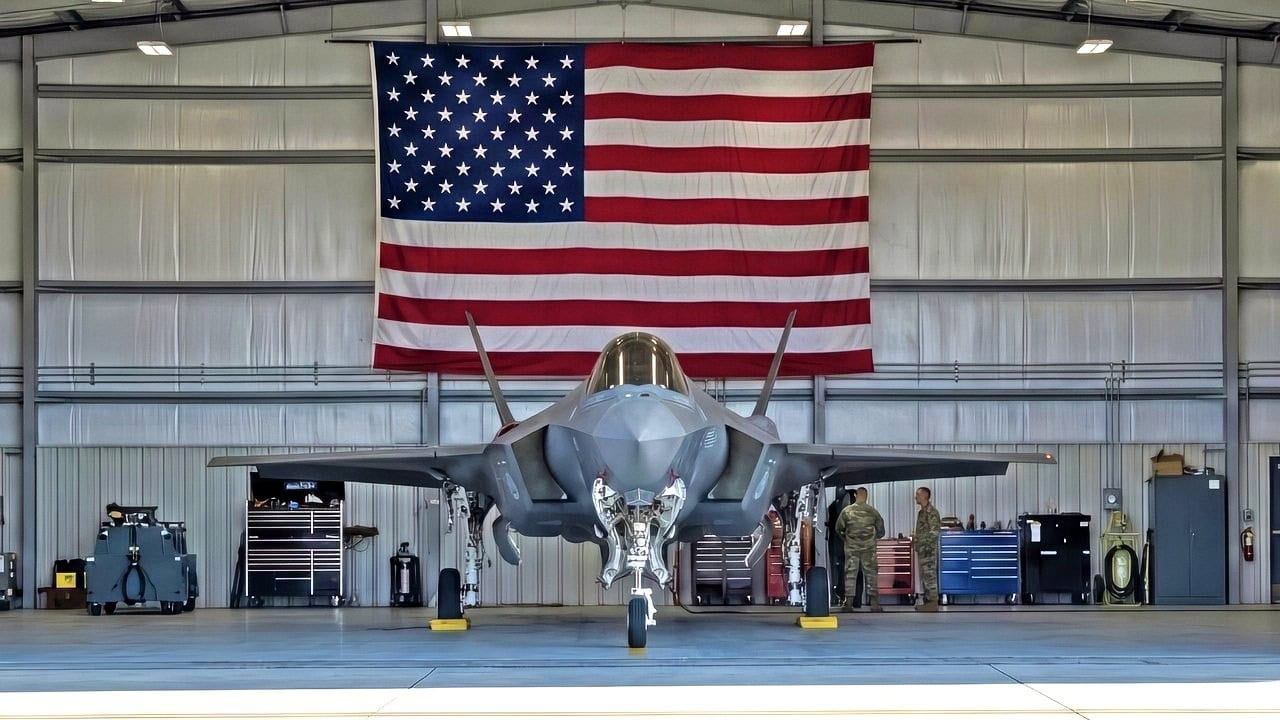
Summary and Key Points: Iran is adopting a “Hezbollah blueprint” of asymmetric survival as Operation Epic Fury dismantles its conventional navy and air force.
-Since the February 28 surprise strikes, the IRGC has utilized its 49-year “deep state” architecture to go to ground, with officers swapping uniforms for civilian khaki to blend into the populace.
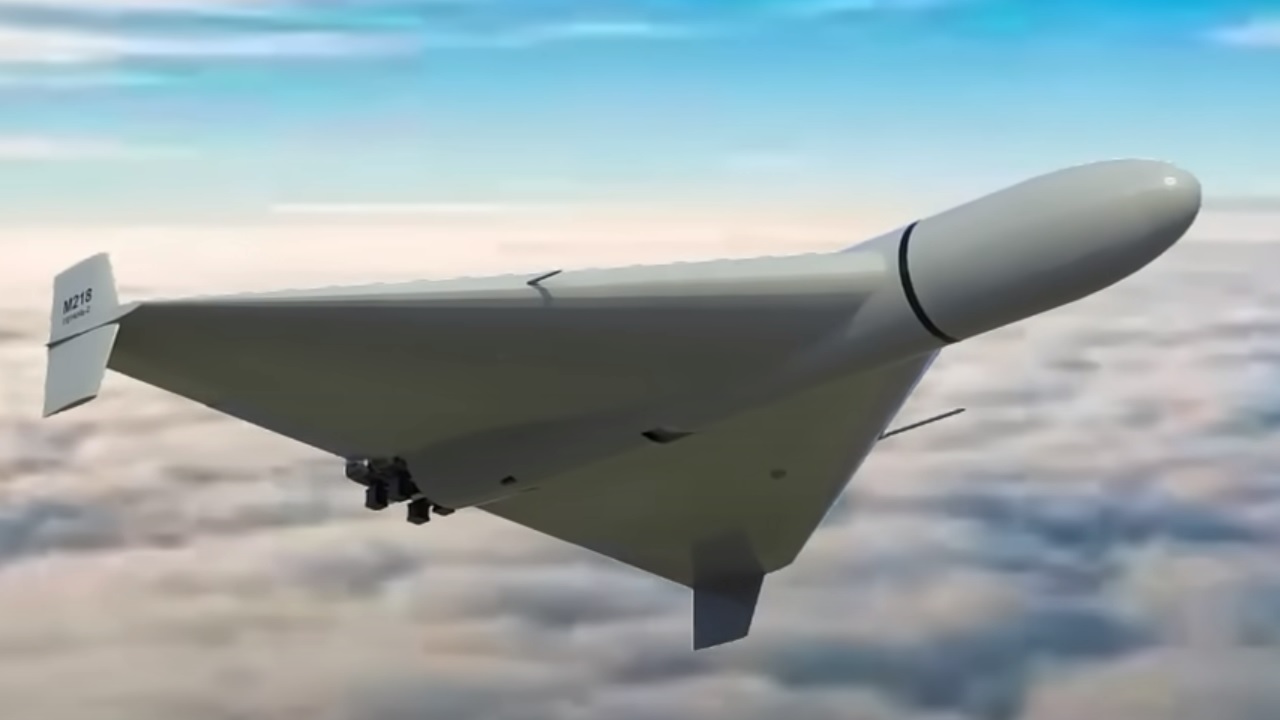
Shahed-136 Drone. Image Credit: YouTube Screenshot.
-This report analyzes Tehran’s desperate strikes against 12 countries, including Oman and Azerbaijan, to widen the conflict.
-Despite the naval mauling, Foreign Minister Abbas Araghchi maintains that Iran will not “bend the knee” to the Trump administration or the IDF.
The 12-Country Offensive: Why Iran is Attacking Oman and Azerbaijan to Sabotage Operation Epic Fury
Iran has faced an onslaught of U.S. and Israeli airpower since conflict began on February 28 with surprise airstrikes on Tehran. While Iran has few remaining air defenses and appears to be able to respond only with ballistic missiles and drones, it may still think it can find victory. Iran’s Foreign Minister, Abbas Araghchi, appeared to suggest as much during an interview March 5 with NBC.
Aragchi was asked if he was concerned about a ground invasion of Iran. “No, we are waiting for them … because we are confident that we can confront them, and that would be a big disaster for them.” He says Iran didn’t ask for a ceasefire during the brief war in June 2025 with Israel, and Iran won’t bend the knee this time.
Observers of the war might look at Iran and see a regime that is sleep-walking into further isolation and defeat. There are precedents for this. The government of Slobodan Milosevic led Serbia down the same path in the 1990s. Saddam Hussein made a crucial mistake with the invasion of Kuwait. In the 19th century, Paraguay engaged in a war with Brazil, Argentina and Uruguay—it was a disaster for Paraguay.
However, Iran may believe it has a model for victory. The Islamic Revolutionary Guard Corps (IRGC) is the power behind the regime in Tehran. Iran has a relatively weak conventional army, navy and air force. The war has already destroyed a portion of Iran’s navy, and its air force appears not to be functioning. But Iran believes it has a durable deep state constructed by the IRGC. It also backs a number of groups throughout the Middle East, including Hamas in Gaza, the Houthis in Yemen, and Hezbollah in Lebanon.
Iran develops proxies in other countries based on religious allegiance or other binding factors. Hezbollah is a Shiite group in Lebanon that has grown since the 1980s to play a key role in the country’s politics. It also has a large armed force. Hezbollah has dictated Lebanon’s foreign and security policy over the years. It dragged Lebanon into war with Israel in 2006 and 2023. It also intervened in the Syrian Civil War. Hezbollah is deeply entwined with the IRGC, which has sent advisors to Lebanon, while Hezbollah members have gone to Iran. They share military technology such as drones and missiles, and they work together.
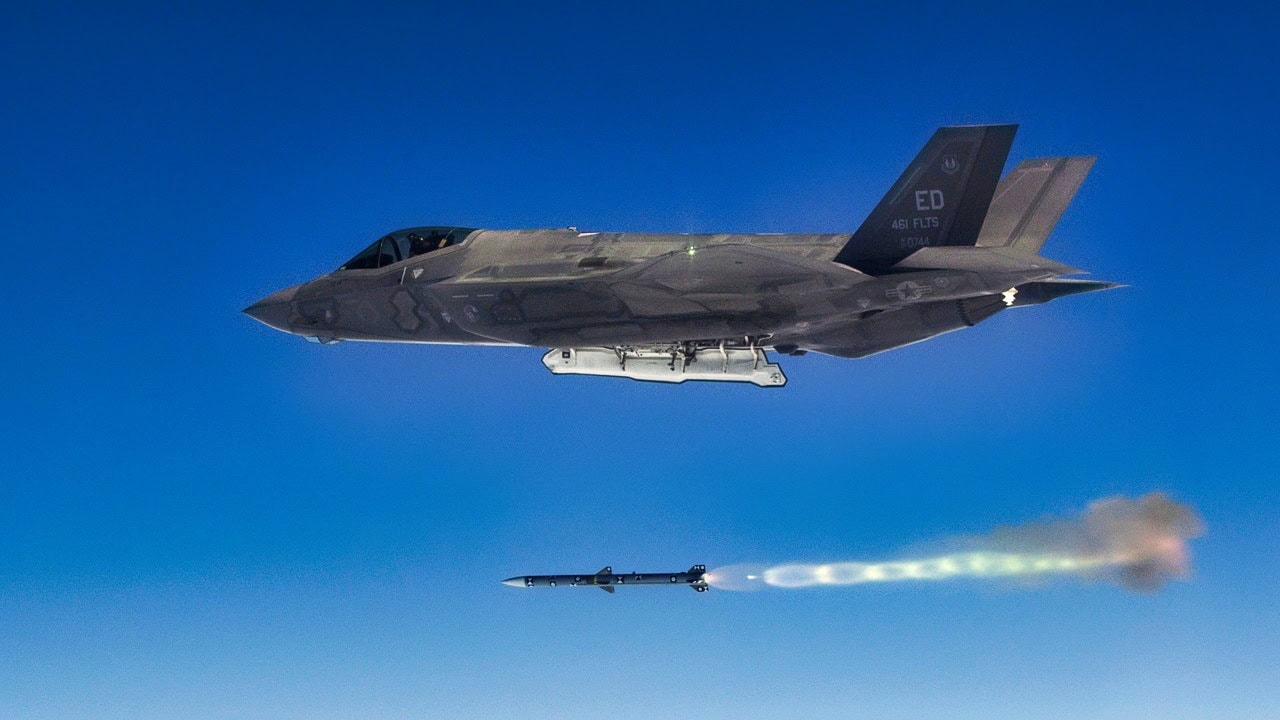
An Edwards AFB F-35A Lightning II fires an AIM-120 Advanced Medium-Range Air-to-Air Missile as part of Weapons Delivery Accuracy testing. The 461st Flight Test Squadron and F-35 Integrated Test Force completed WDA testing in early December, which concludes a large and important part of F-35 developmental test and evaluation. (Courtesy photo by Chad Bellay/Lockheed Martin)

U.S Air Force Captain Kristin “BEO” Wolfe, F-35A Lightning II Demonstration Team Commander, flies during a demonstration at the Oregon International Airshow in McMinnville, Ore., Aug. 20, 2022. The F-35 Demo team travels around the United States and around the world, showcasing the world’s most technologically advanced fifth-generation fighter jet. (U.S. Air National Guard photo by Master Sgt. John Winn)
Iran may be looking to Hezbollah to carry out the long war that may lie ahead. Hezbollah took a beating from Israel in 2024, and ended hostilities with a ceasefire. Iran may calculate that while Hezbollah appears to have lost—it no longer has an arsenal or its leadership—it continues to hold out. Lebanon is a small country compared to Iran, and if Hezbollah can hold out against Israel for many years, Tehran perhaps can do the same.
Further, Hamas continues to control half of Gaza, despite years of war with Israel. The Houthis launched numerous missile attacks on Israel and on global shipping and were able to sustain waves of U.S. and Israeli airstrikes.
Most countries would see the beating that Iran is taking as a reason to accept some sort of deal. For instance, Venezuela apparently took a deal from the Trump administration. Iran is not Venezuela. Its regime appears to think that it can absorb a lot of material losses and continue to fight.
There are differences between Iran on one hand, and Hezbollah or the Houthis on the other. Many Iranians oppose Iran’s clerical regime, and the IRGC may not be able to sustain its control over society forever. For instance, some Iranians in western Iran recently provided details to a trusted source about how the IRGC has changed its posture since the war began. They say that many IRGC members appeared to leave their posts. As airstrikes pounded installations, the pro-regime officers and those linked to them quietly left. It’s not clear to locals if this appearance of change is merely the regime pretending to reposition its personnel, or if the regime is setting up a trap for locals.
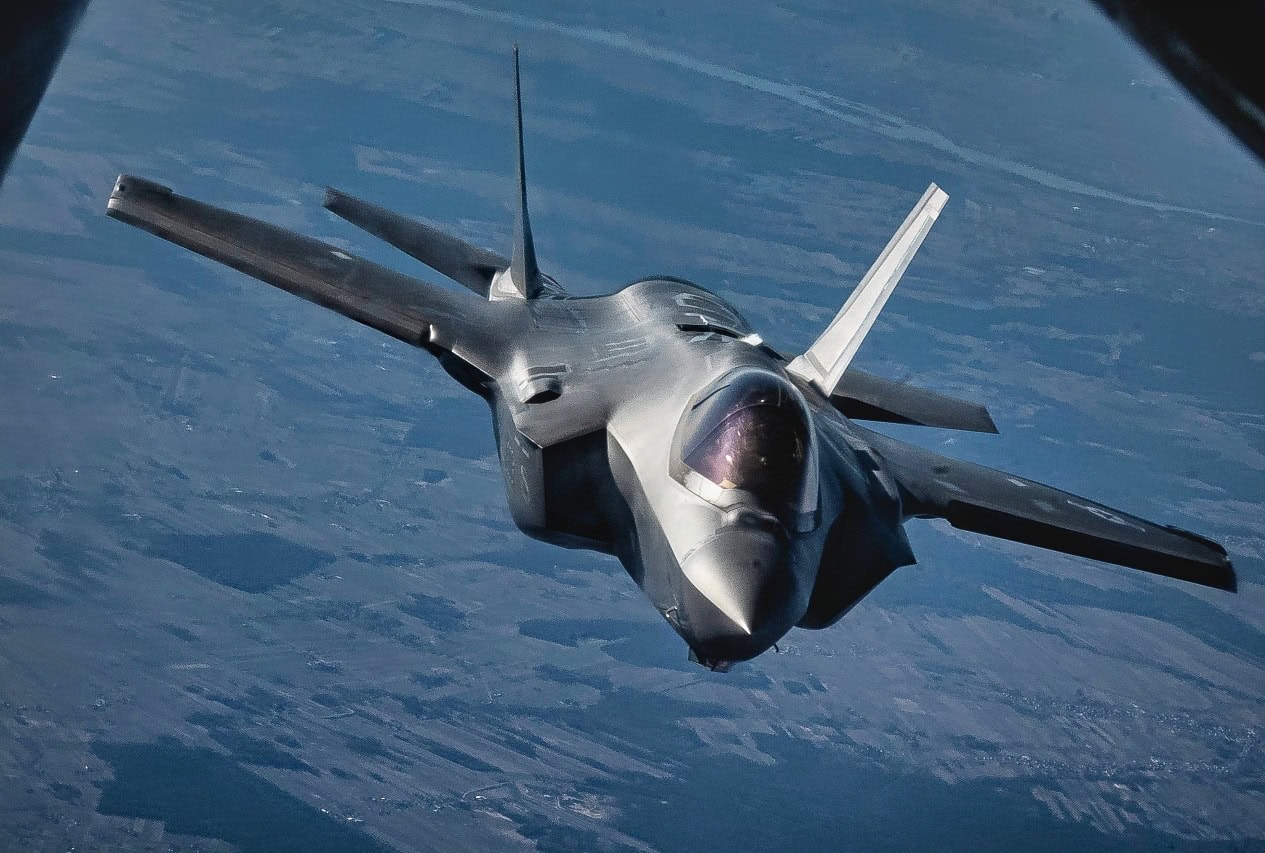
The 388th Fighter Wing’s F-35 Lightning II fifth-generation fighter cruises in Eastern European airspace, Feb. 28, 2022, in support of NATO’s collective defense. U.S. Air Forces in Europe – Air Forces Africa’s ability to support and integrate with NATO’s air policing missions continually hardens the alliance’s solidarity, collective resolve, and ability to adapt to a dynamic warfighting environment. (U.S. Air Force photo by Airman 1st Class Edgar Grimaldo)
In early January, the Iranian regime massacred thousands of protesters—the IRGC is willing to be extremely brutal when it feels threatened. It is also willing to walk back into the shadows at times. Iranian-backed militias and proxies have done the same. Hamas, for instance, changes into civilian clothes during wartime and then puts on uniforms when there is a ceasefire. Iranian IRGC members, and the leaders of their proxies, often dress in subdued uniforms that sometimes look like civilian outfits. For instance, IRGC Quds force leader Qasem Soleimani and Iraq’s Kataib Hezbollah leader Abu Mahdi al-Muhandis would often wear plain clothes—usually khaki, tan, or light green pants and shirts. This dressed-down look for IRGC members and their forces helps them blend into the populace.
The silence in Iranian cities during the war illustrates how the regime has gone to ground. Messaging from Washington indicates the United States is ready to continue the war. Yet Iran probably thinks it can outlast the Trump administration. It also assumes Israel is now tangled up in Lebanon and will be forced to divide its forces.
Tehran has embarked on a novel strategy. It has attacked at least 12 countries in the region. Targets include countries where the United States has bases, but also countries that are far removed from the war, such as Oman or Azerbaijan. Iran has also focused attacks on the Kurdistan Regional Government in Iraq, attacking Kurdish Iranian opposition groups who have bases there. With reports in the West that the United States might arm Kurds to fight against the Iranian regime, Tehran appears to want to try to knock these groups out of the conflict.
Iran may believe it can outlast the Americans and Israelis. The IRGC might think that it can run a war the way Hezbollah has in Lebanon—as a state within a state, waiting things out in hiding.
About the Author: Seth J. Frantzman
Seth J. Frantzman is the author of The October 7 War: Israel’s Battle for Security in Gaza (2024) and an adjunct fellow at The Foundation for Defense of Democracies. He is a Senior Middle East Analyst for The Jerusalem Post. Seth is now a 19FortyFive Contributing Editor.