
Summary and Key Points: Harry J. Kazianis, a former Senior Director at the Center for the National Interest, evaluates the strategic crossroads of Operation Epic Fury.
-As of March 2026, U.S. and Israeli airpower have successfully “degraded” Iran’s nuclear and missile programs, a feat Kazianis argues has “retired the risk” of a nuclear-armed Tehran for at least a decade.
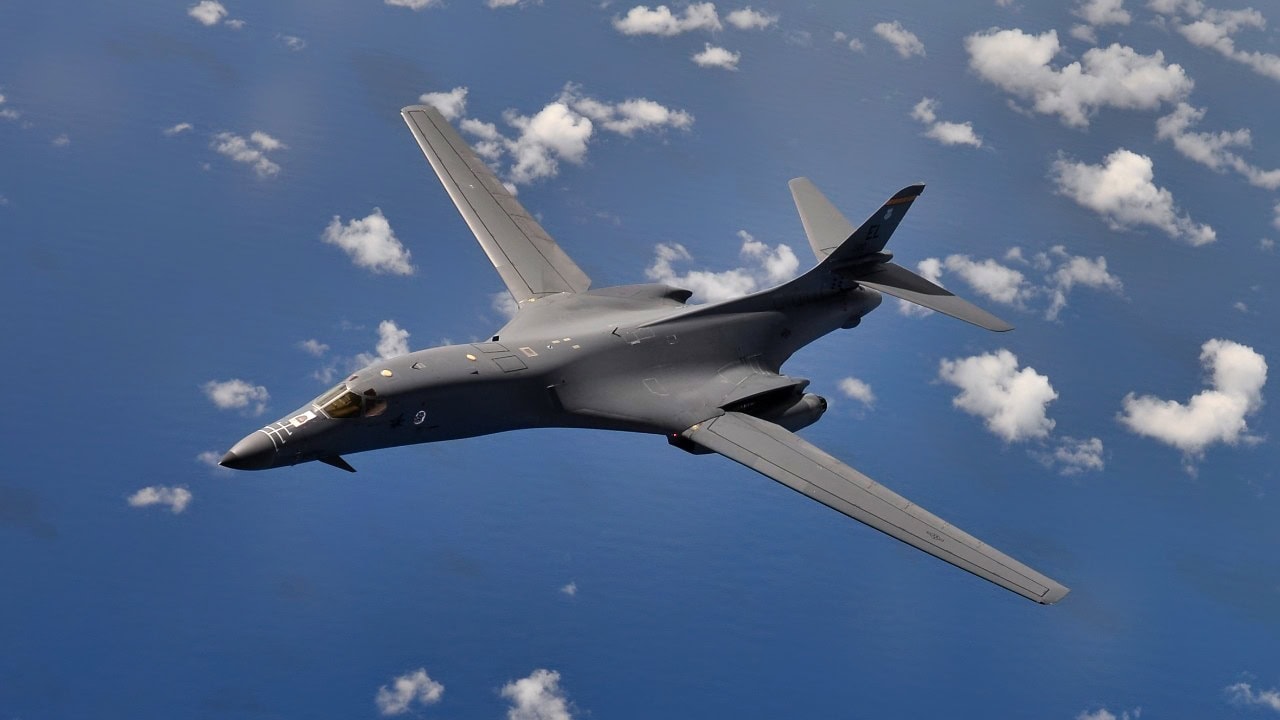
A U.S. Air Force B-1B Lancer assigned to the 37th Expeditionary Bomb Squadron, deployed from Ellsworth Air Force Base, South Dakota, flies over the Pacific Ocean during a training sortie that included practicing low-level bomb runs, low-level maneuvering and high-altitude standoff weapons employment August 9, 2017. The strategic global strike capability of these aerial platforms deters potential adversaries and provides reassurance to our allies and partners that the United States is capable of defending its national security interests in the Indo-Asia-Pacific region. (U.S. Air Force photo by Senior Airman Alexa Ann Henderson)
-This report analyzes the “sustainment math” of nation-building, warning that “mission creep” toward regime change would create a “budgetary black hole.”
-Kazianis concludes that Trump must reject “national security hawks” and declare victory before a surgical military success becomes a permanent strategic entanglement.
The “Win” and the Walk: Why Harry J. Kazianis Argues Trump Must Avoid the Iranian Regime-Change Trap
The reports coming out of Central Command are, for the first time in a generation, unequivocally positive. After days of high-intensity joint U.S.-Israeli air strikes, Iran is effectively blind and close to being militarily broken.
That can all only mean two things: The hardened centrifuge halls at Fordow are surely rubble; the missile assembly lines that once churned out the “reach” to hit Europe are smoldering ruins.
I would argue that military commanders at the Pentagon are quietly telling the West Wing the job is nearly done.
Iran’s nuclear and missile programs—the twin pillars of their regional extortion—have been degraded to the point that it would take them maybe a decade, and tens of billions of dollars Tehran no longer has, to rebuild them.

A B-1B Lancer assigned to Ellsworth Air Force Base, S.D, takes off in support of a Bomber Task Force mission at Naval Support Facility Diego Garcia, Nov. 2, 2021. Bomber missions provide opportunities to train and work with our allies and partners in joint and coalition operations and exercises. (U.S. Air Force photo by Staff Sgt. Hannah Malone)
And yet, the “Washington-speak” of the 2000s is starting to echo through the halls of the White House, at least that’s what it feels like. There is a growing chorus of voices within the administration—the same brand of “national security hawks” who gave us the “forever wars” in Iraq and Afghanistan—arguing that we shouldn’t stop until the Ayatollah is gone and a pro-Western democracy is installed in its place.
Donald Trump must ignore them. He has achieved the impossible: he has largely “retired the risk” of a nuclear Iran without a full-scale ground invasion.
Now, he must have the strategic discipline to take the “win” and walk away before a surgical victory becomes a strategic quagmire.
The Mirage of the “Democratic Pivot” in Iran
The argument for pushing onward toward “regime change” rests on a fundamental misunderstanding.
The hawks argue that as long as the current Islamic Republic exists, the threat remains. They envision a post-Ayatollah Iran that suddenly looks like a U.S. partner out of the blue—aligned with U.S. interests, friendly to Israel, and ready to join the global community.
But as anyone who has studied the “sustainment math” of nation-building knows, you cannot bomb a country into a democracy. Many authors on these pages have made that point, I think clear by now.
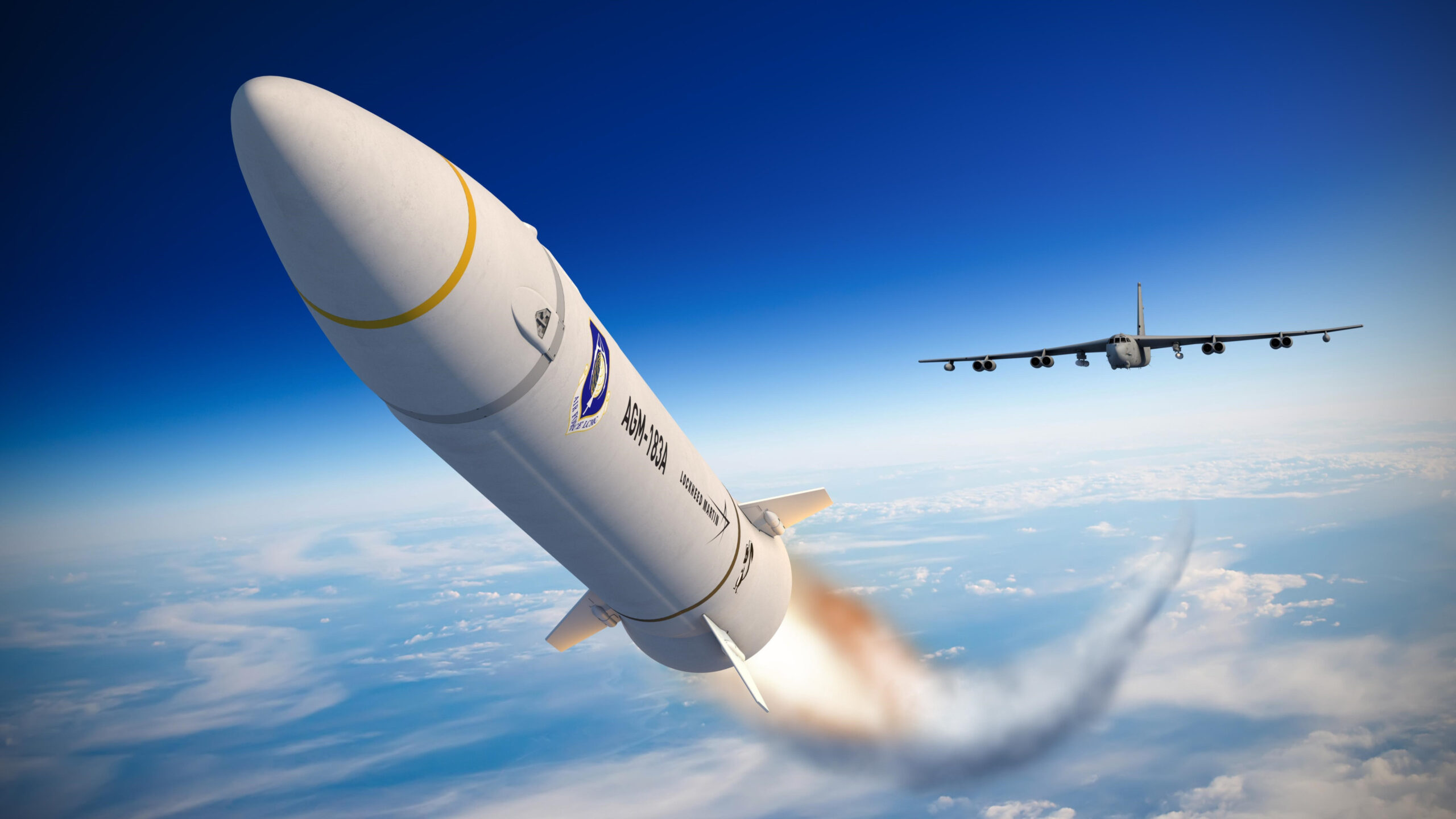
Hypersonic Missiles fired from B-52. Image Credit: Creative Commons.
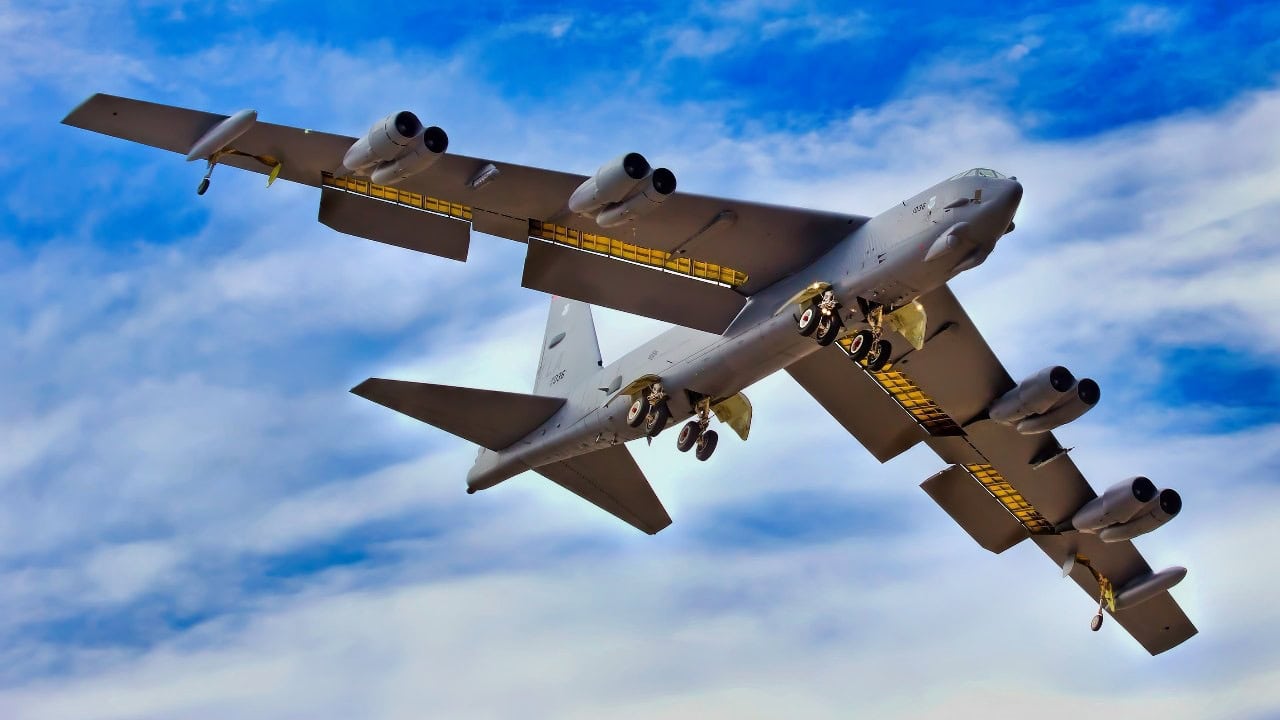
B-52 Bomber. Image Credit: Creative Commons.
If Trump allows the mission to creep from “degrading WMDs” to “installing a new government,” he is signing the American taxpayer up for a bill they cannot afford and a commitment the U.S. military is not designed for.
Toppling a regime is the easy part—we proved that in Baghdad in 2003. The hard part is the “morning after,” when you realize you are now responsible for the security, electricity, and food of 85 million people who, regardless of their feelings toward their leaders, do not want an American “occupier” in their streets.
The Decade-Long Reset: Why “Degraded” is “Done”
I have spoken to several top retired Senior Pentagon officials, and all agree: if the current bombing campaign goes for a few more days, it could very well mean that Iran will need close to a decade to rebuild their nuclear and missile programs to anything close to what they have now.
An assessment that it will take a decade to rebuild these programs is the “gold standard” of success. In the world of high-stakes geopolitics, a ten-year delay is a lifetime.
A decade-long reset provides, at least from my own perspective:
Strategic Breathing Room: It allows the U.S. to refocus its resources on more pressing peer-competitors in the Indo-Pacific.
Economic Leverage: Without the “nuclear shield,” the regime is forced to deal with its internal economic rot, unable to hold the global oil market hostage.
A “Cold-Eyed” Deterrent: The strikes have already sent the ultimate message to every other “portly pariah” or rogue state: if you cross the red line, your most prized assets will be systematically dismantled from the air.
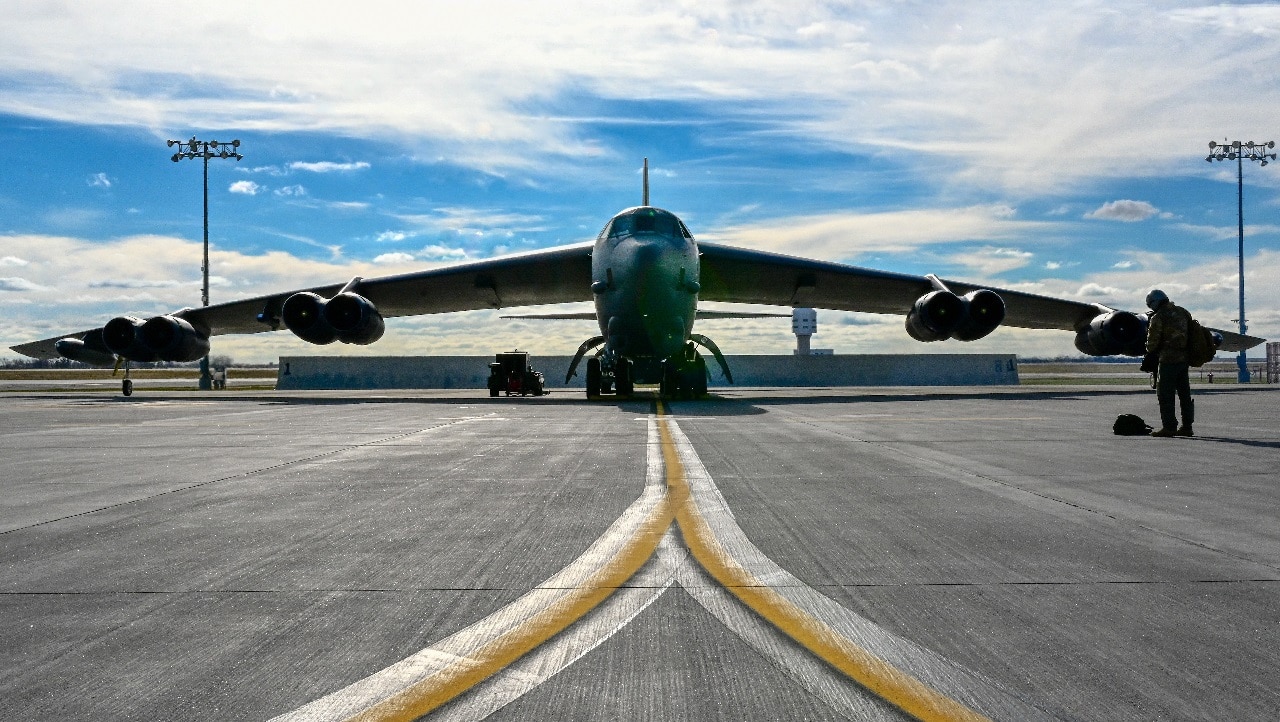
A B-52H Stratofortress is prepared for fight at Minot Air Force Base, N.D., Oct. 25, 2021. The last B-52H built was delivered in Oct. 1962. (U.S. Air Force photo by Airman 1st Class Zachary Wright)
Pushing further doesn’t add to this deterrent; it actually weakens it by trapping the U.S. in a conflict where the enemy can use asymmetric “swarm” tactics against an occupying force. The “salty decks” of our carriers are far more effective as a threat of “return-to-sender” strikes than as a logistics hub for a ground war.
Declaring Victory and Leaving
Donald Trump’s greatest strength has always been his willingness to challenge the “Washington-speak” that demands permanent entanglement. And in various roles during my decade in Washington, I was able to see him in action upclose, and work with many of his top foreign policy strategists.
In this moment, he has the chance to pull a truly daring move: execute a high-impact, objective-based campaign and then leave the fallout to the local actors.
By ending the war now, Trump avoids the “Pottery Barn Rule“—you break it, you bought it. If the Iranian people, sensing the regime’s weakness, choose to rise up and demand change, that is their prerogative. But it should not be an objective of the American military.
We have shattered the “money spigot” of their military-industrial complex. We have “neutralized” the threat to the U.S. homeland. To stay longer is to trade a clear military triumph for a murky political failure.
The “Hardware” of Occupation: A Budgetary Black Hole
Let’s be blunt about the “sustainment math” of an occupation, which is what America would need to do if we are serious about regime change. To “ensure” a democratic government in Iran, the U.S. would need to commit hundreds of thousands of troops to a landmass larger than Alaska, characterized by rugged mountains and a hostile urban environment.
The “A2/AD” (Anti-Access/Area-Denial) threat wouldn’t disappear with the regime; it would simply migrate to the shadows. We would see our soldiers targeted by the same “cheap lethality” we’ve been trying to destroy—IEDs, suicide drones, and sniper fire—only this time, we would be the stationary targets in their backyard.
The U.S. Air Force and Navy have proven they can dominate the “high ground.” They have shown that our stealth technology and precision munitions can bypass any defense Tehran can buy. Why would we trade that “elegant extreme” for the “gritty reality” of street-to-street fighting?
The Honest Verdict: Take the “Win”
Iran’s military has been broken. The missiles that were meant to “haunt” cities in Israel are now twisted metal. The nuclear dream that was meant to “shield” their proxies is dead for maybe a generation.
Military commanders have delivered exactly what the President asked for: a world where Iran cannot threaten America with weapons of mass destruction.
Donald Trump must now lead his own “national security hawks” back to reality. He must realize that the “best war” is the one that ends when the objective is met. Pushing for regime change isn’t a strategy—it’s a “pie-in-the-sky” gamble that risks everything we’ve just gained.
It’s time to bring the pilots home, reset the “salty decks,” and let the world know that the U.S. is out of the nation-building business. The threat is gone. The mission is over.
Take the win, Mr. President. You deserve it.
About the Author: Harry J. Kazianis
Harry J. Kazianis (@Grecianformula) was the former Senior Director of National Security Affairs at the Center for the National Interest (CFTNI), a foreign policy think tank founded by Richard Nixon based in Washington, DC. Harry has over a decade of experience in think tanks and national security publishing. His ideas have been published in the NY Times, The Washington Post, The Wall Street Journal, CNN, and many other outlets worldwide. He has held positions at CSIS, the Heritage Foundation, the University of Nottingham, and several other institutions related to national security research and studies. He is the former Executive Editor of the National Interest and the Diplomat. He holds a Master’s degree focusing on international affairs from Harvard University. Kazianis is Editor-In-Chief of 19FortyFive.

