
Summary and Key Points: Harrison Kass, a national security analyst and former Air Force pilot selectee, evaluates the deployment of the B-52 Stratofortress during Operation Epic Fury.
-As of March 2026, the presence of this non-stealth bomber suggests that U.S. and Israeli forces have achieved air superiority, if not total supremacy, over the Iranian battlespace.
-This report analyzes the transition from surgical, stealth-driven strikes using B-2 Spirits and F-35Cs to a sustained, cost-efficient bombardment phase.
-Kass concludes that while the B-52 signals U.S. dominance, persistent asymmetric threats like mobile SAMs and ballistic missiles ensure the strategic outcome remains uncertain.
The B-52 Arrival: Why Strategic Bombers Over Tehran Signal Total U.S. Air Superiority
The B-52 Stratofortress is now openly operating over and near the Iranian battlespace. The non-stealth, eight-engine aircraft has a large radar signature, and its presence raises the question: Does the US have total air dominance? The B-52’s presence suggests air superiority, possibly even air supremacy, has been achieved.
Regardless, the bomber presence underscores that, to date, Epic Fury has been a tactical success for US-Israeli forces.
How We Got Here
The opening wave of Epic Fury began at 1:15 a.m. EST, February 28. Over 1,000 strikes would follow in the first 24 hours as US and Israeli forces kicked in the door of Iranian air defense systems. Cyber operations were the first movers, jamming and spoofing Iranian radar networks, disrupting Iranian communications.
Space-enabled ISR and electronic manipulation were deployed, too, all with the objective of blinding, confusing, and fragmenting the Iranian response.
Decapitation strikes followed, with Israeli precision targeting of senior regime figures, many of whom, including the Supreme Leader, were killed. Simultaneous strikes were conducted on the IRGC HQ and Ministry nodes. The intent here was to paralyze decision-making during the retaliation phase.
The US fired Tomahawk cruise missiles from surface ships and submarines at naval targets, radar sites, and fixed command posts. The Tomahawk salvos offered low-risk stand-off suppression.
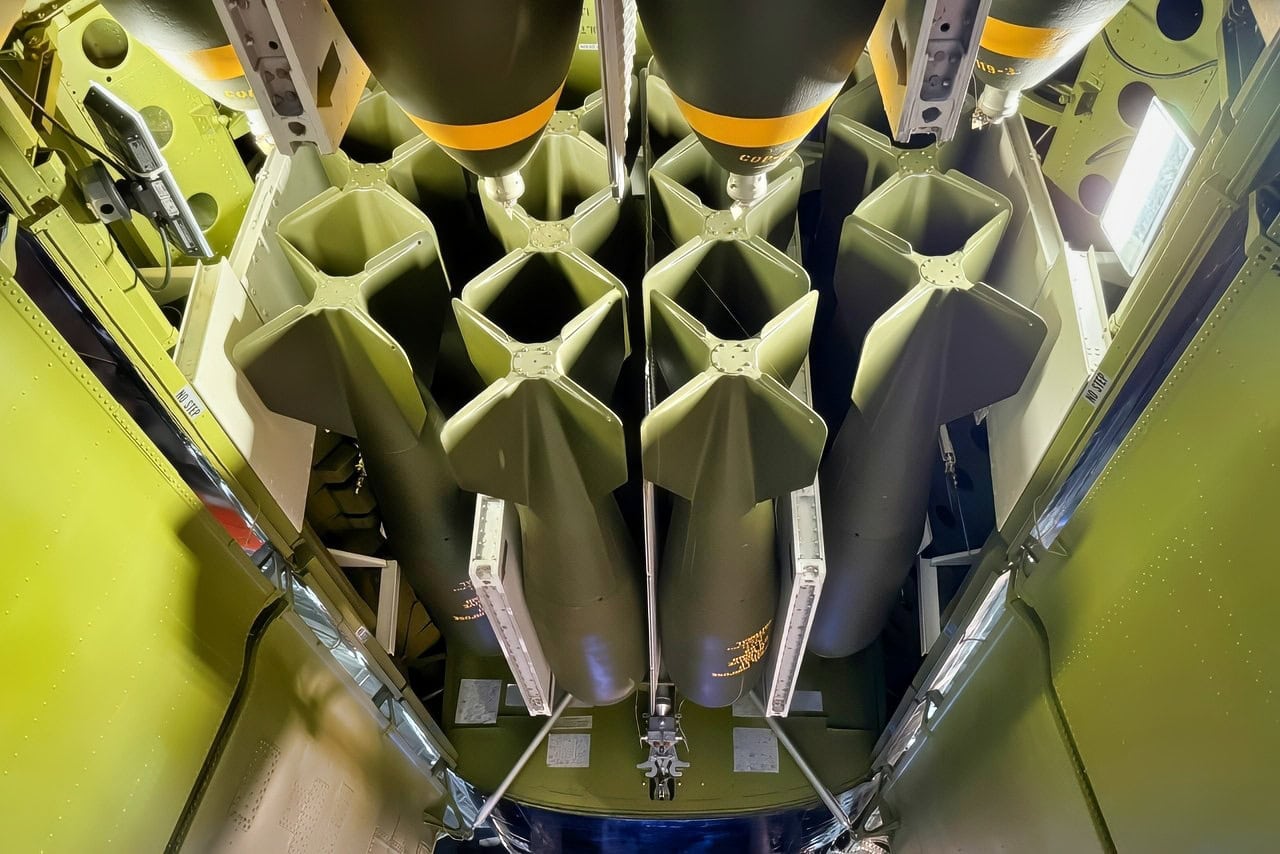
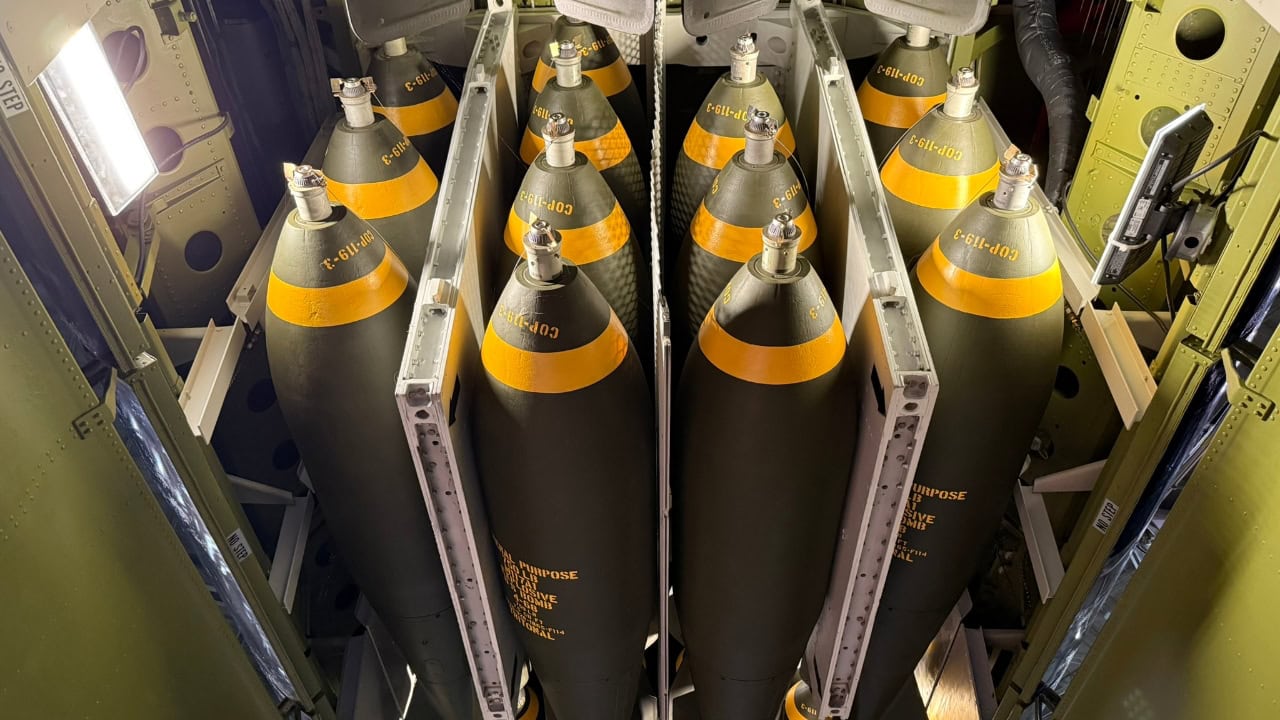
B-52 bombs. Image Credit: 19FortyFive.com Taken at the National Museum of the Air Force.
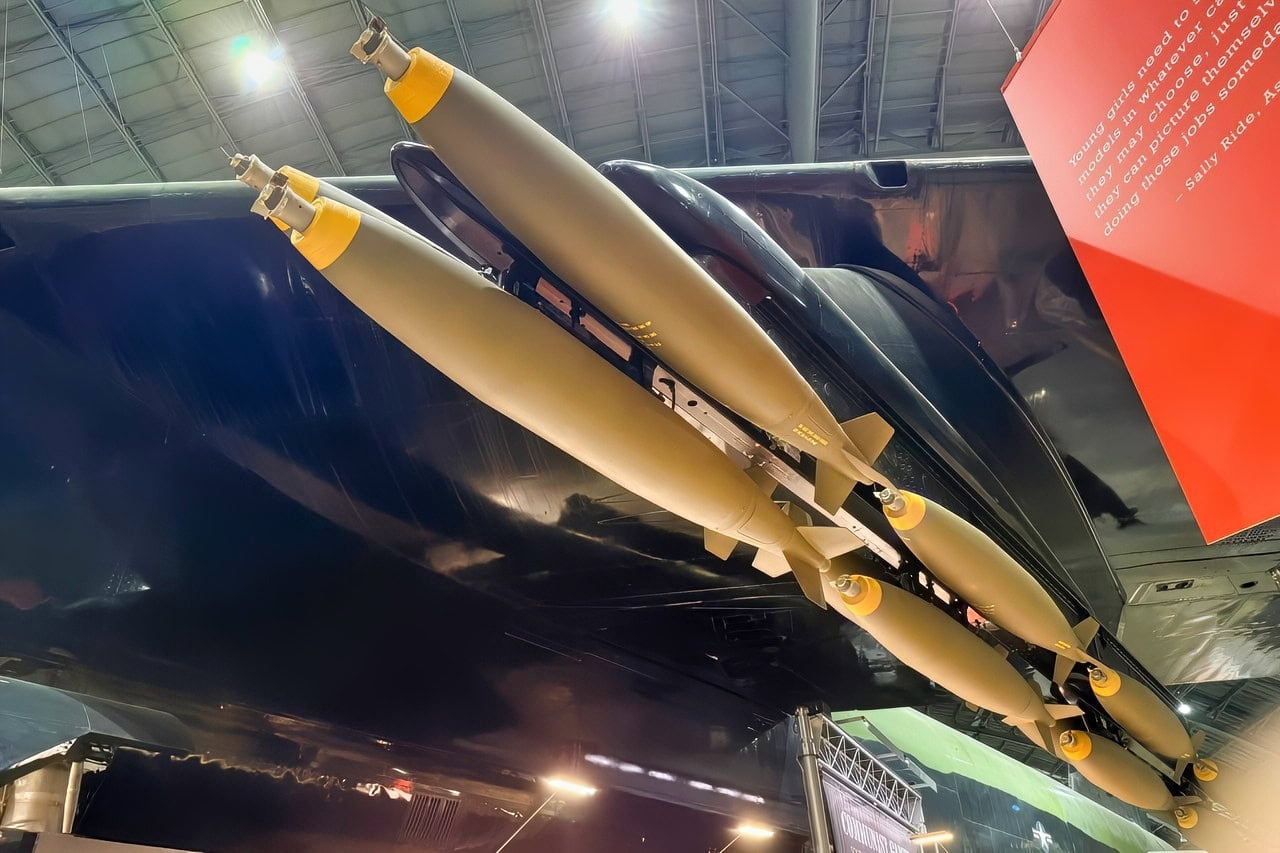
B-52 bombs. Image Credit: 19FortyFive.com Taken at the National Museum of the Air Force.

A modified B-52H Stratofortress departs Edwards Air Force Base for an evening training mission on June 25, 2025. The aircraft is assigned to the 419th Flight Test Squadron, Global Power Bombers Combined Test Force, tasked with supporting developmental testing across the B-52, B-1, and B-2 bomber portfolio. Along with most 412th Test Wing aircraft, B-52H bombers at Edwards include special instrumentation to conduct a variety of testing activities. (Air Force photo by Chase Kohler)
B-2 Spirit stealth bombers conducted deep strikes from CONUS, running 37-hour missions that targeted hardened missile caves and nuclear infrastructure. The B-2 was used because stealth was required to survive what was then an intact IADS. Similarly, stealth F-35Cs were launched from US Navy carriers to establish local control corridors. Once partial suppression was achieved, non-stealth B-1B Lancers entered the airspace, conducting strike missions with their massive 75,000-pound payload capacity.
The opening wave was textbook: SEAD, decapitation, stealth penetration, and corridor expansion. The B-52 was intentionally absent from this first wave.
Bringing in the B-52
The B-52 is a non-stealth strategic bomber with a payload capacity of 70,000 pounds. Capable of carrying large volumes of precision-guided munitions, the B-52 has a long loiter time and costs less per hour to operate than the B-2. Basically, the B-52 is ideal for sustained bombardment once the skies are permissive.
But the B-52 does not operate in contested IADS environments without prior suppression, so the aircraft’s arrival suggests the suppression phase succeeded.
Whether the US has achieved air superiority or supremacy is not clear. Air superiority is the freedom of action without prohibitive interference. Air supremacy, meanwhile, is complete and uncontested control.
Early reports indicate that over 200 Iranian air defense systems have already been destroyed, that roughly half of Iran’s missile launchers were eliminated early, allowing for local air superiority over Tehran, which in turn allows for the US to transition from stand-off cruise missile deployment to gravity bombs dropped from penetrating aircraft.
The implication here is that the environment is permissive enough for non-stealth bombers, meaning air superiority has likely been achieved. Air supremacy has likely been achieved in pockets, if not nationwide.
From Surgical to Sustained
The early phases of Epic Fury relied on expensive and hard-to-replace stand-off munitions, like the Tomahawk.
The transition to the B-52 signals a pivot towards more cost-efficient tools; gravity bombs and conventional PGMs are replacing cruise missile saturation. Higher sortie density is also possible, as a more industrial tempo sets in. This suggests the campaign is entering a grinding phase, where the objectives shift from the initial shock to sustained attrition.
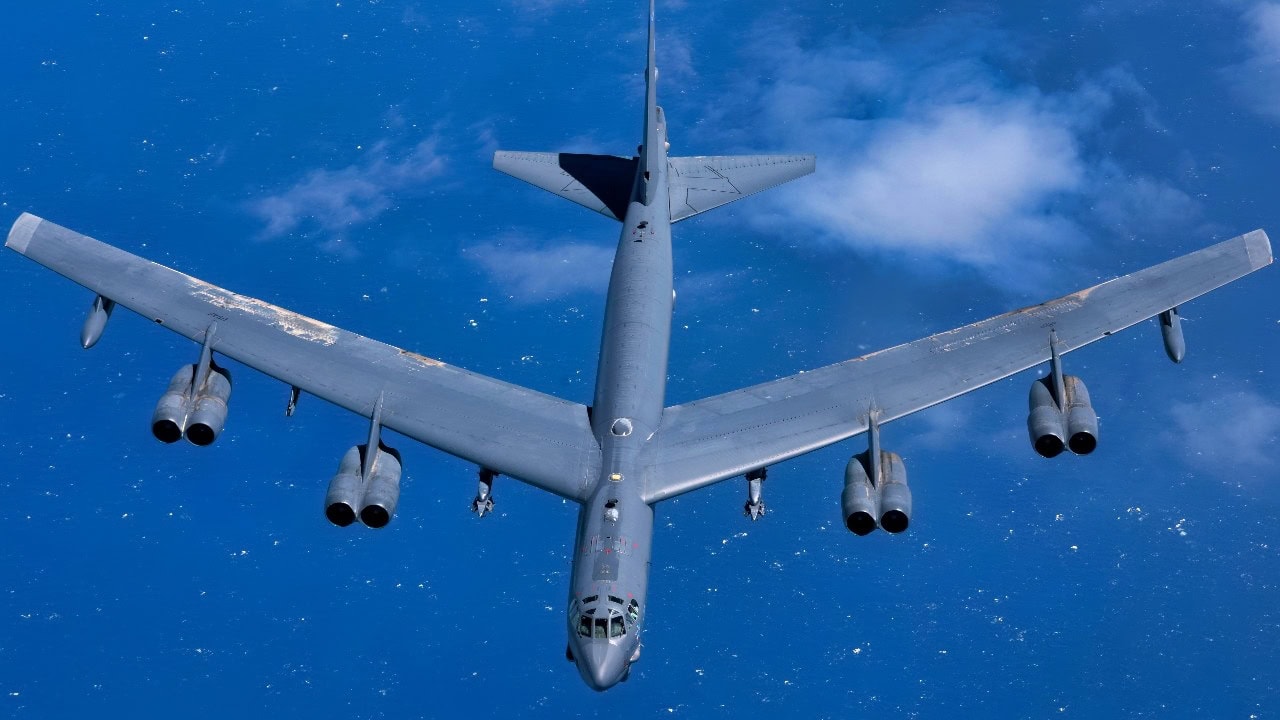
A U.S. Air Force B-52 Stratofortress, from the 5th Bomb Wing at Minot Air Force Base, N.D., breaks away after receiving fuel from a U.S. Air Force KC-135 Stratotanker from RAF Mildenhall, England, over the Mediterranean Sea April, 9, 2018. A formation of four KC-135s refueled two B-52s. Each KC-135 offloaded more than 80,000 pounds of fuel. (U.S. Air Force photo by Airman 1st Class Benjamin Cooper)
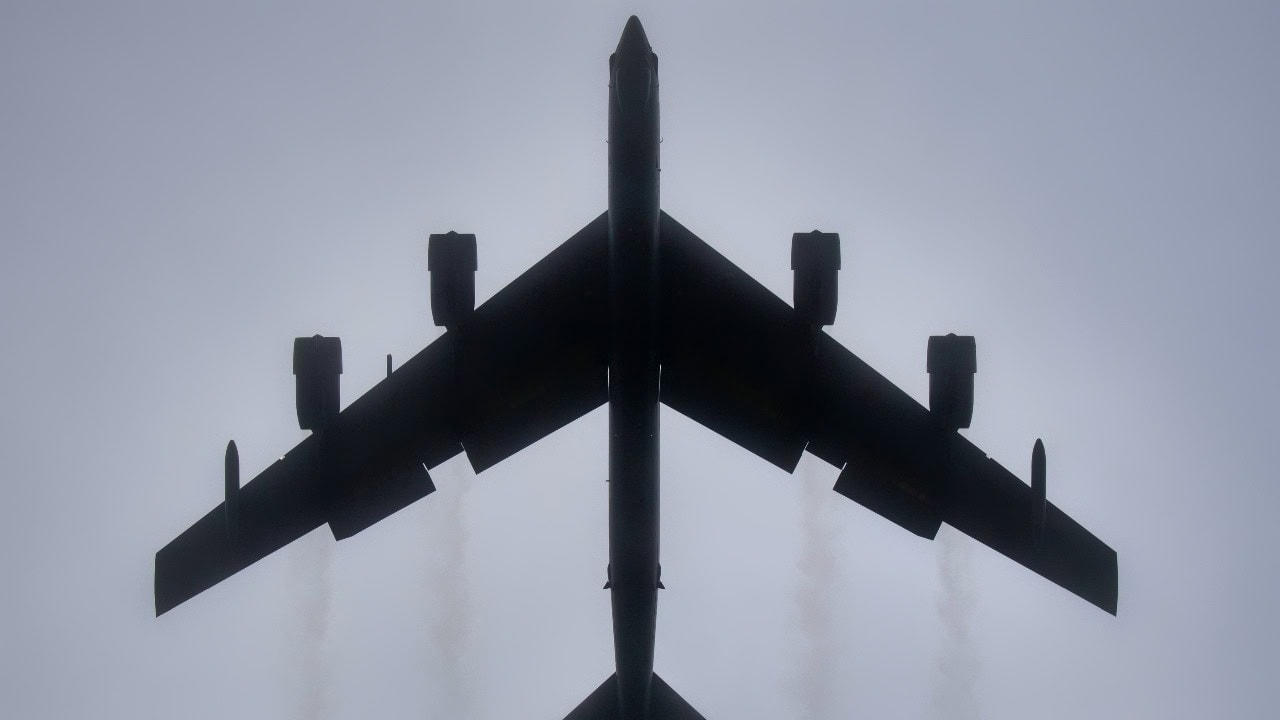
A B-52 Stratofortress takes off during Global Thunder 2019 at Barksdale Air Force Base, La., Nov. 5, 2018. Global Thunder is an annual U.S. Strategic Command (USSTRATCOM) exercise designed to provide training opportunities to test and validate command, control and operational procedures. The training is based on a notional scenario developed to drive execution of USSTRATCOM and component forces’ ability to support the geographic combatant commands, deter adversaries and, if necessary, employ forces as directed by the President of the United States. (U.S. Air Force photo by Airman 1st Class Lillian Miller)
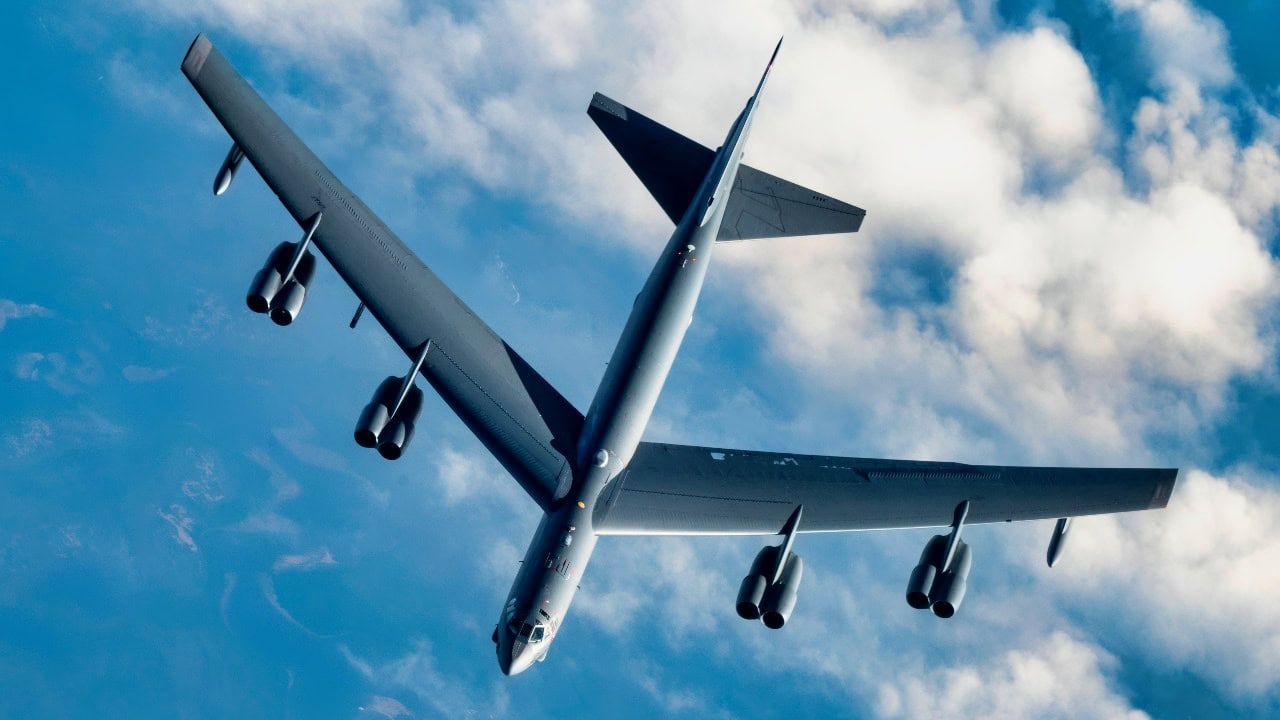
A U.S. Air Force B-52 Stratofortress departs after being refueled by KC-135 Stratotanker over the Pacific Northwest July 18, 2024. The 92nd Air Refueling Wing and 141st ARW’s ability to rapidly generate airpower at a moment’s notice was put to the test when Air Mobility Command’s Inspector General team conducted a no-notice Nuclear Operational Readiness Inspection, July 16–18, 2024. During the NORI, Airmen demonstrated how various capabilities at Fairchild AFB enable units to generate and provide, when directed, specially trained and equipped KC-135 Stratotanker aircrews to conduct critical air refueling of U.S. Strategic Command-assigned strategic bomber and command and control aircraft. (U.S. Air Force photo by Staff Sgt. Lawrence Sena)
Currently, there are over 200 fighters in theater, two carrier strike groups, and over 50,000 personnel deployed. The entire bomber triad—B-1B, B-2, and B-52—has been activated. The scale of US and Israeli activation has overwhelmed Iran across multiple domains, contributing to the establishment of air superiority if not supremacy.
Tempered Expectations
But the B-52’s presence does not mean that all Iranian threats have been eliminated. Mobile SAM units may have survived. The MANPAD risk persists. Iran still has one-way attack drones, and a ballistic missile retaliation is still ongoing.
Further, air superiority is dynamic, not guaranteed in perpetuity once gained; air superiority requires ISR to monitor launcher relocation, continuous SEAD patrols, and tanker and AWACS protection. Nothing is set in stone; constant vigilance is required to maintain the advantage.
Iran has been preparing for this contingency for years and likely retains respectable capabilities. Since the campaign began, Iran has launched 270-plus ballistic missiles; drones have targeted regional bases; sleeper cells are active in the Gulf; the Strait of Hormuz has been threatened; and asymmetric maritime harassment is ongoing. The point being, US assets in the region and in the airspace are not invulnerable.
Sending a Signal
Sending the B-52 into Iran sends an unmistakable message to the region: the US has control. This impacts Iranian domestic morale—and also sends a signal to China and Russia about US strike capacity. But it’s important to recognize that Iran is not China; Iran’s IADS system was less advanced than China’s integrated network; one should not extrapolate Iran’s success to any Indo-Pacific scenario, where access would be more difficult.
In any conflict, getting to the point where the B-52 can survive requires that much go well. Even in the case of Iran, stealth assets like the B-2 and F-35C were required during the early, uncertain phases. The B-52 was only useful once the airspace had been sanitized.
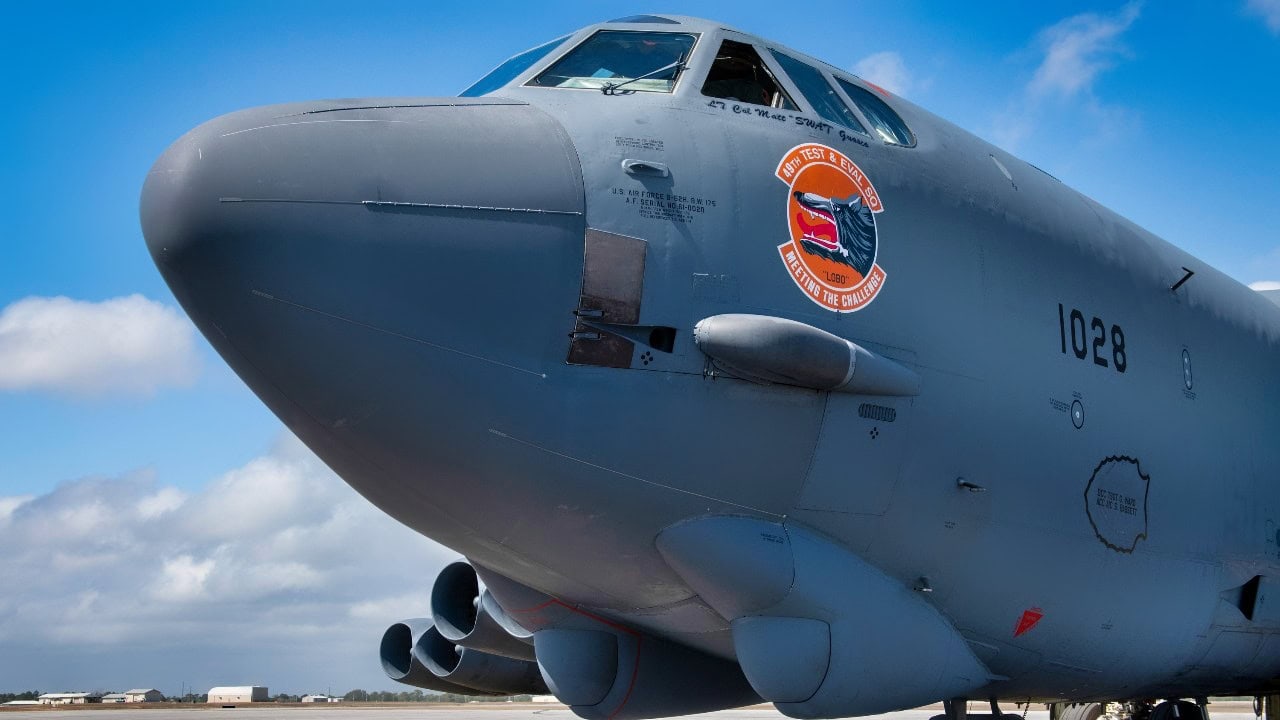
A 53rd Wing B-52 Stratofortress sits on the flightline Feb 22, 2022 at Eglin Air Force Base, Florida. The 49th Test and Evaluation Squadron aircrew brought the bomber from Barksdale AFB, Louisiana, to allow wing personnel an opportunity to see one of their geographically separated aircraft up close. (U.S. Air Force photo/Ilka Cole)
And the quick pivot, from stealth assets to the B-52, reveals that the US is cost-conscious. Stealth assets were only used sparingly before a quick pivot to mass bombers for the sustained campaign. Cruise missiles are being saved, too. The B-52 enables a lower cost per strike after the initial suppression, because even for the resource-rich US, with the world’s largest defense budget, sustainable attrition requires thriftiness.
Avoiding Overconfidence
Maintaining a visible bomber presence may breed an assumption of invulnerability. But air dominance must be actively maintained. Iran may still have surviving SAM pockets, which won’t be able to turn the tide of the conflict, but can inflict painful losses whose symbolism extends beyond the loss of a single platform.
And while the earlier phases of the operation have gone well, from the initial disabling of IADS to the destruction of missile and naval infrastructure, the next potential phase, which includes deeper inland targeting, could be more difficult and time-intensive.
Air dominance allows for 24/7 operations, expanded freedom of movement, and expanded target options, but it does not guarantee a seamless path to victory (the conditions of which haven’t been properly articulated). Indeed, the political end-state is far murkier and likely more difficult than establishing control over the airspace, which the US excels at.
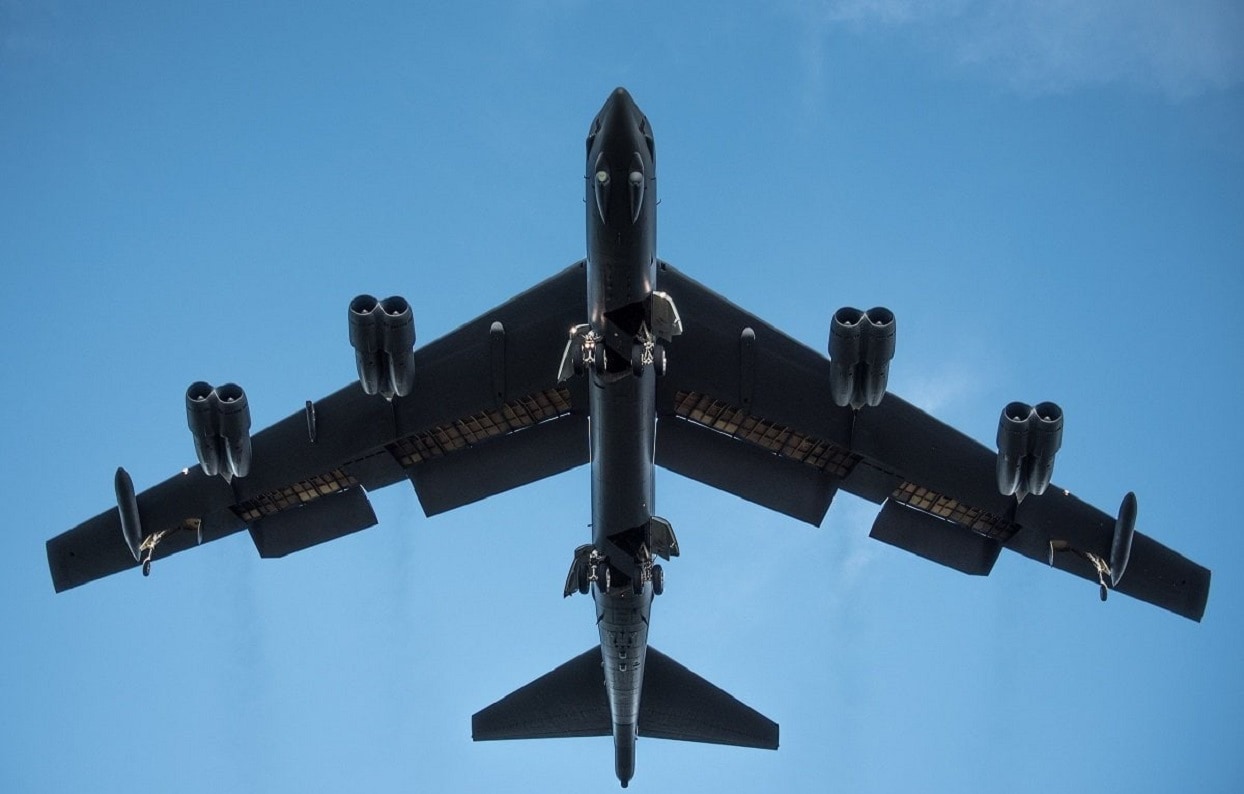
B-52 Bomber. Image: Creative Commons.
The B-52 Over Iran Sends a Bad Signal to Tehran
The B-52’s presence over Iranian airspace strongly suggests that the US has achieved air superiority and potentially air supremacy in certain zones. The US is likely transitioning from the initial SEAD and decapitation objectives into a sustained bombardment phase, for which the B-52 is well suited.
But it does not mean Iran has been defeated, nor does it mean the US has eliminated all asymmetric threats. The strategic outcome of the conflict is still very much in question.
About the Author: Harrison Kass
Harrison Kass is an attorney and journalist covering national security, technology, and politics. Previously, he was a political staffer and candidate, as well as a US Air Force pilot selectee. He holds a JD from the University of Oregon and a master’s in global journalism and international relations from NYU.