

Summary and Key Points: Christian D. Orr, Senior Defense Editor and former Air Force officer, evaluates the F-14 Tomcat’s Iranian history during a March 2026 visit to the Aviation Museum of Kentucky.
-Originally acquired by Shah Mohammad Reza Pahlavi in 1974, the IRIAF fleet remains the world’s only operational Tomcat unit.
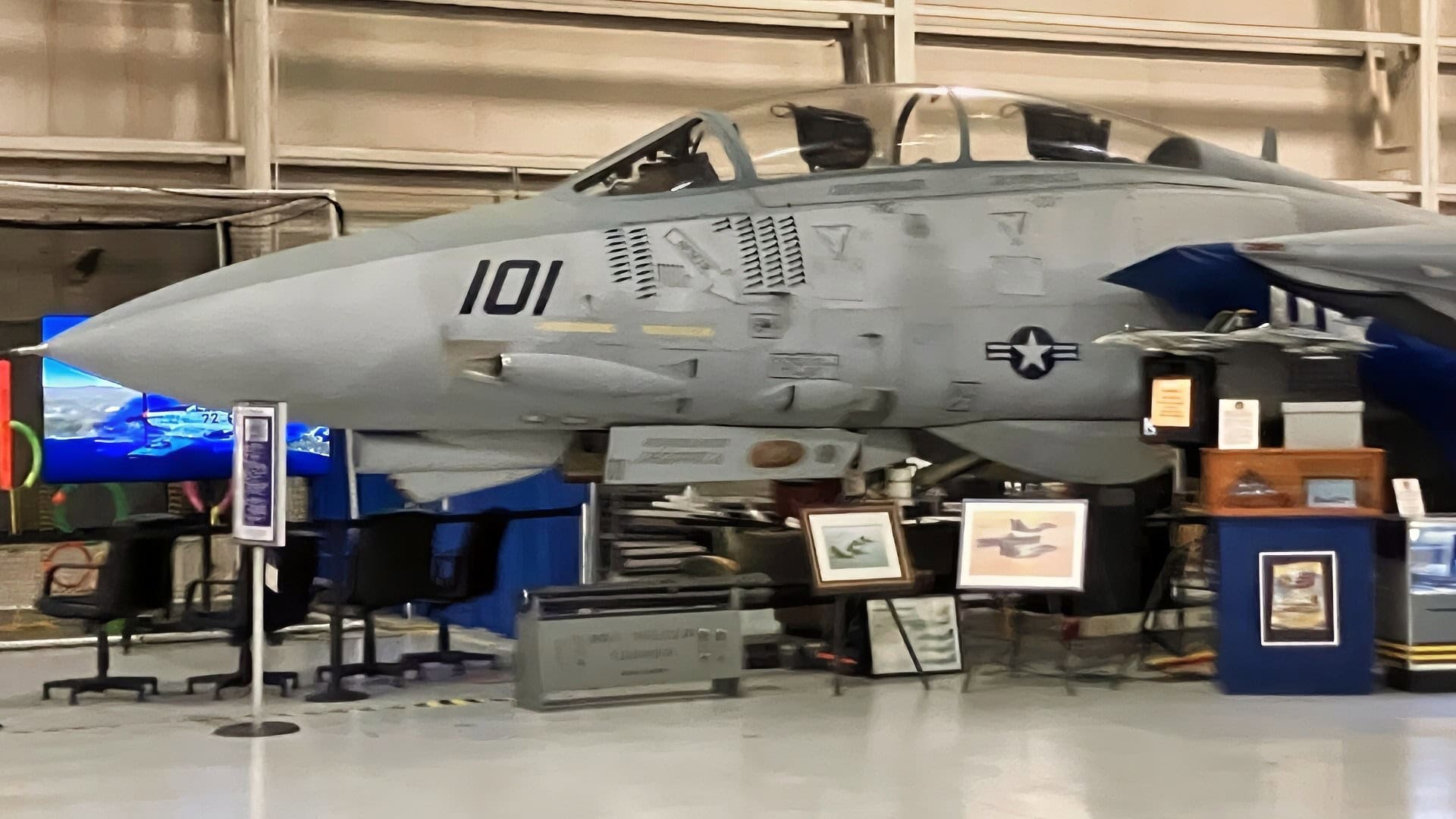
Aviation Museum of Kentucky F-14 Tomcat. Image Credit: 19FortyFive author Christian D. Orr. Taken on March 1, 2026.
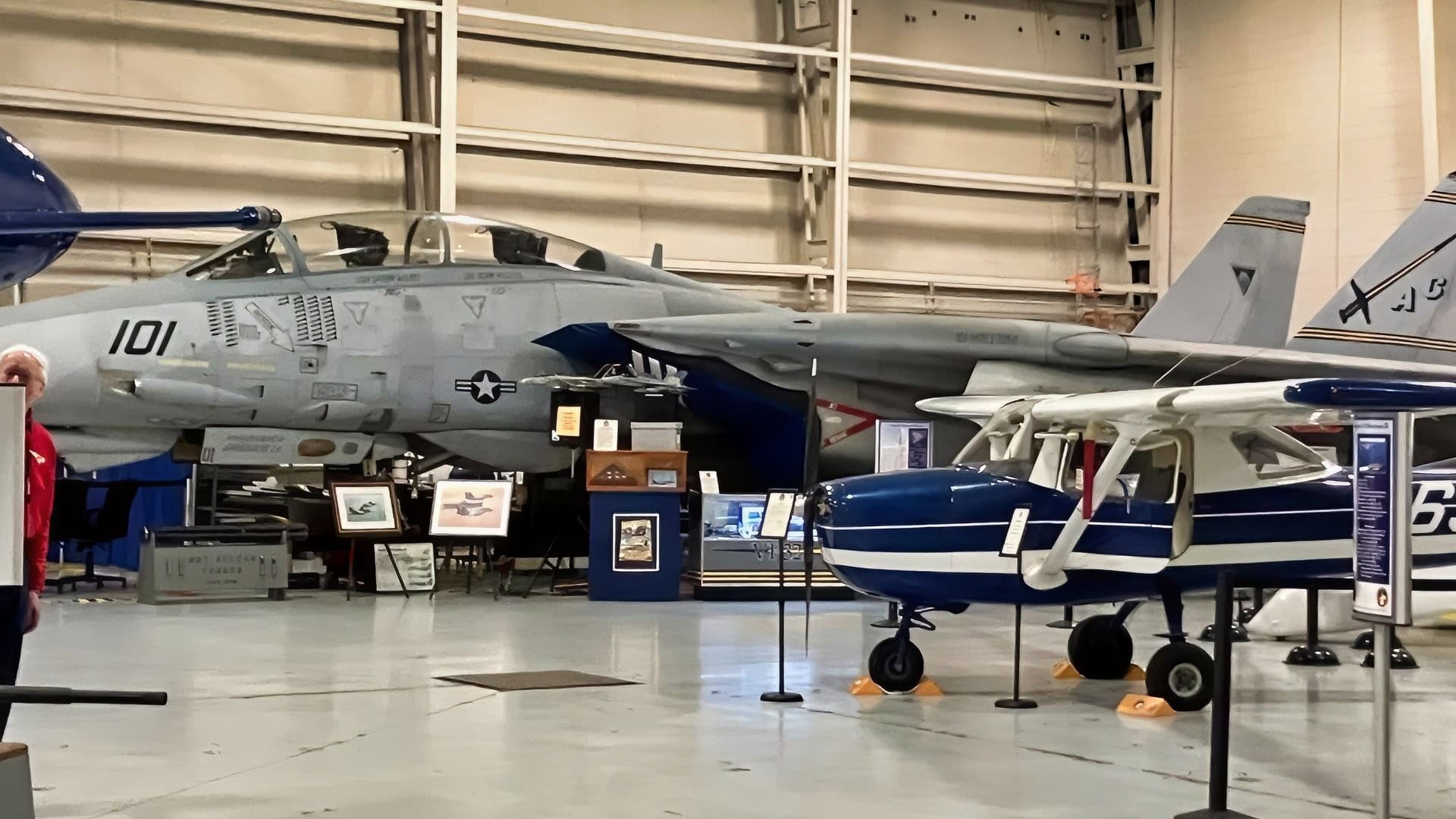
F-14 Tomcat at Aviation Museum of Kentucky. Taken by 19FortyFive.com by Christian D. Orr.

F-14 Tomcat at Aviation Museum of Kentucky. Taken on March 1, 2026. By Christian D. Orr.
-This report analyzes the F-14’s 130–4 kill ratio during the Iran-Iraq War and the unique combat success of the AIM-54 Phoenix missile in Iranian hands.
-Orr explores the fleet’s current status under the pressure of Operation Epic Fury, where aging airframes face total air superiority from U.S.-Israeli forces.
-Bonus: 19FortyFive has visited many F-14 Tomcat fighters over the years, and we have included our best photos from those visits in this article.
The Last Tomcats: Why Iran is the Only Country Still Flying America’s Iconic F-14 in 2026
It is the fifth day of Operation Roaring Lion/Operation Epic Fury, the joint Israeli-U.S. military mission against the Islamic Republic of Iran. By coincidence, on the first day of the strikes, I toured the fantastic Aviation Museum of Kentucky on the ground of Blue Grass Airport in Lexington, Kentucky.
I say “coincidence” because the two centerpiece exhibits at the museum are the F-14 Tomcat and the F-4 Phantom II. Although these are both U.S.-made fighter jets, the Islamic Republic of Iran Air Force (IRIAF) is the only current operational user of the former warbird and among the few remaining users of the latter.
Accordingly, this writer is doing a two-part series on the history of the Iran-flown warbirds, with the current focus on the F-14.

F-14 Tomcat Fighter In a Museum Hanger
In Happier Times: The Iranian Shah Acquires American Tomcats
Shah Mohammad Reza Pahlavi was the officially designated foreign military sales beneficiary of the F-14 deal. In sharp contrast to Ayatollah Khomeini and his successor, recently slain Supreme Leader Ali Khamenei, the Shah was unashamedly pro-U.S. and pro-Israel.
In January 1974, Iran placed an order for 30 F-14s (the quantity was bumped up to 80 just a few months later). The first Tomcats arrived two years later, modified only by the removal of classified avionics components, but fitted with the TF30-414 engines, with a dozen more delivered in 1977.
In that procurement process, the Shah-led Iranian government also tried to purchase the Rockwell International AGM-53 Condor, a TV-guided missile with a range of about 60 kilometers under development for the U.S. Navy since the late 1960s.
However, the Condor was cancelled, before the Iranians could get their hands on any, because of its exorbitant cost, which exceeded that of the F-14’s vaunted AIM-54 Phoenix missile.
Operational Performance of the Iranian Phantoms
Khomeini’s Tomcats saw heavy action in the 1980s Iran–Iraq War, and, despite the Western arms embargo on spare parts, overhaul and servicing from Iran’s aerospace industry kept them active.
In one of military history’s great ironies, the popularity of the Top Gun film franchise notwithstanding, the majority of the F-14’s air-to-air combat victories were achieved not by American pilots, but rather Iranian ones. No American Tomcat drivers attained ace status (5 or more aerial victories), but at least one IRIAF Force pilot did: Colonel) Mostafa Roustaie, who scored five kills against Iraqi Air Force opponents and described his beloved plane as “the last word in the fighter business.”

F-14 Tomcat Fighter in USS Intrepid Deck. Image taken late on 2025 by Jack Buckby for 19FortyFive. All Rights Reserved.
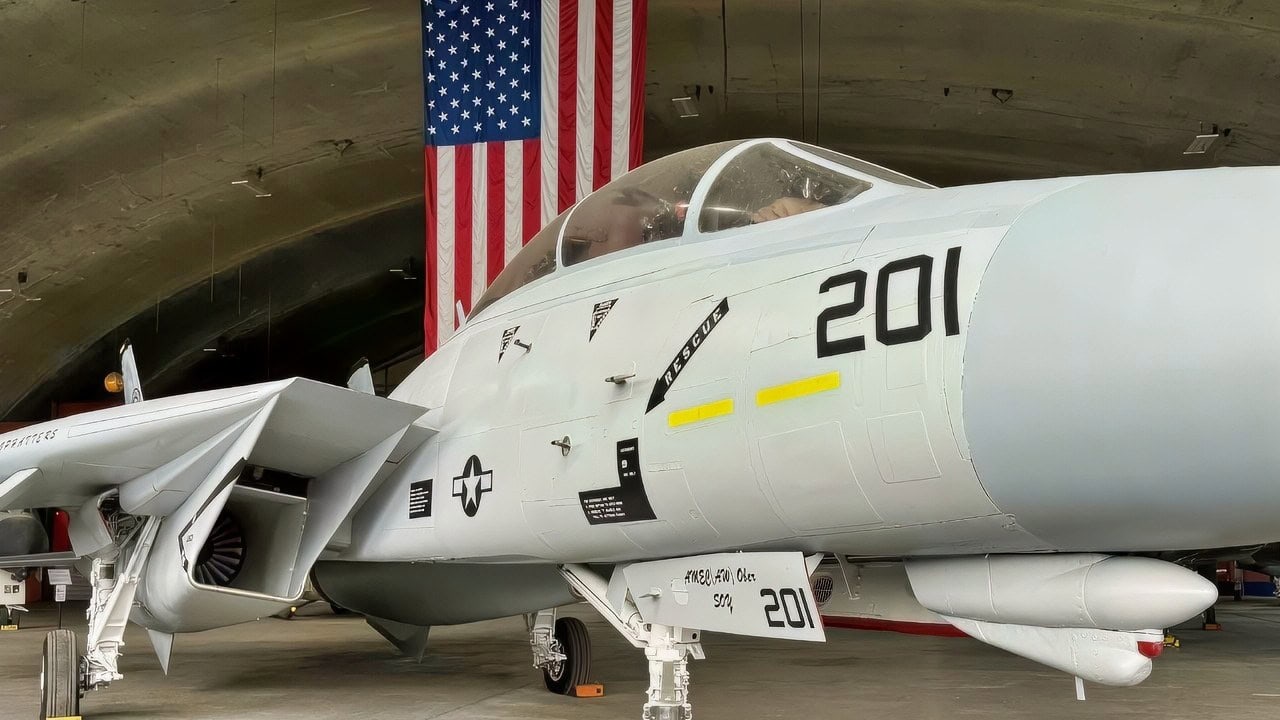
F-14 Tomcat Fighter U.S. Navy. 19FortyFive Field Research Image.

F-14 Tomcat in Museum. Image was taken by Jack Buckby for 19FortyFive.com. All rights reserved.
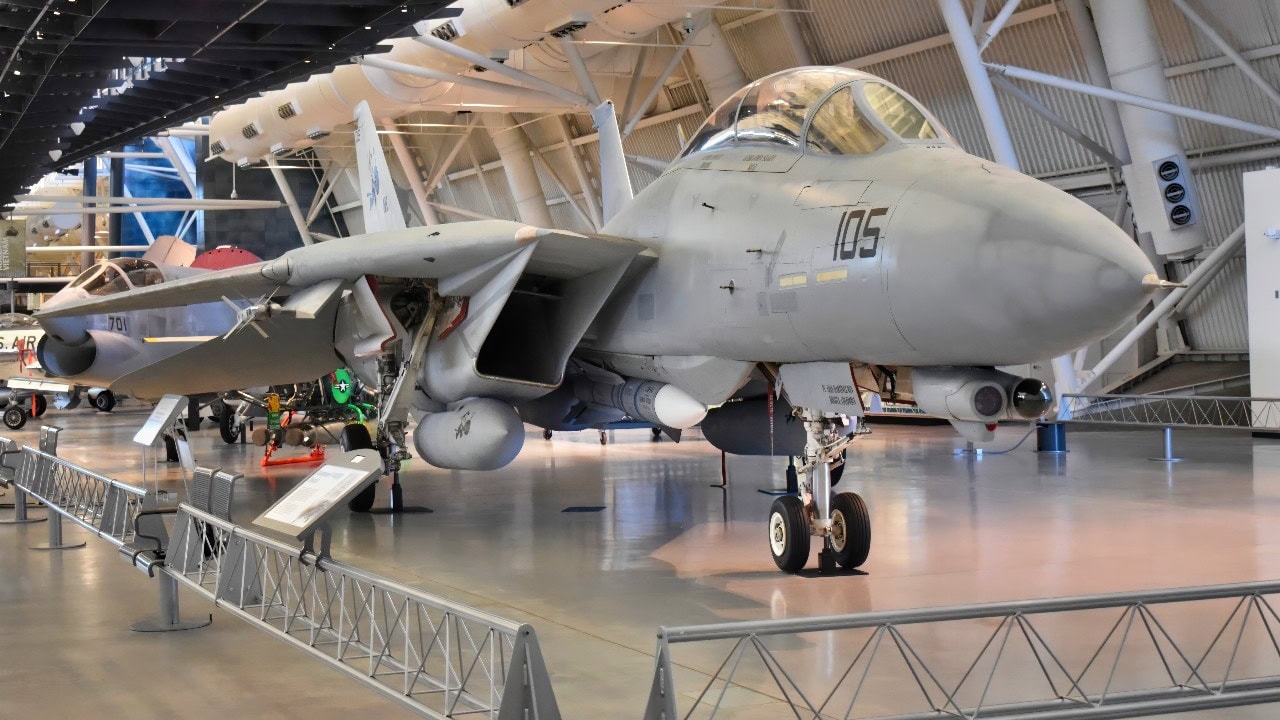
F-14 Tomcat. Image by 19FortyFive.com
All told, IRIAF F-14 pilots claimed 130 kills versus only 4 losses against the Iraqis. However, as noted by aviation expert Tom Cooper in Smithsonian Magazine, “It is impossible to tabulate, for example, how many air-to-air victories were scored by Iranian F-14s because air force records were repeatedly tampered with during and after the war for political, religious, or even personal reasons.”
As for those lucky few Iraqi fighter jocks who managed to kill a Tomcat, the admittedly scanty evidence indicates that two of them did so in a MiG-23 “Flogger,” while one kill apiece is credited to a Dassault Mirage F1 and a MiG-21 “Fishbed.”
In a further irony, only Iranian Tomcat drivers ever scored air-to-air kills with the Phoenix missile; all Phoenixes fired by American F-14 crews in combat missed their marks.
And even though the U.S. Navy used the F-14 as a carrier-launched plane, the Iranian Air Force’s F-14s all took off from airfields on terra firma, since the Islamic Republic of Iran Navy never had a fixed-wing aircraft carrier.
Where Are They Now?
Prior to the onset of Epic Fury/Roaring Lion, the World Directory of Modern Military Aircraft reported that the IRIAF had a total of 41 F-14D/E/RF airframes, constituting 17.74 percent of their total 231-strong fighter fleet, which in turn comprised 58 percent of the IRIAF’s total active inventory of 400 aircraft. (The Iranian air force ranks 42nd out of 129 individual air services from ranked by the website.)
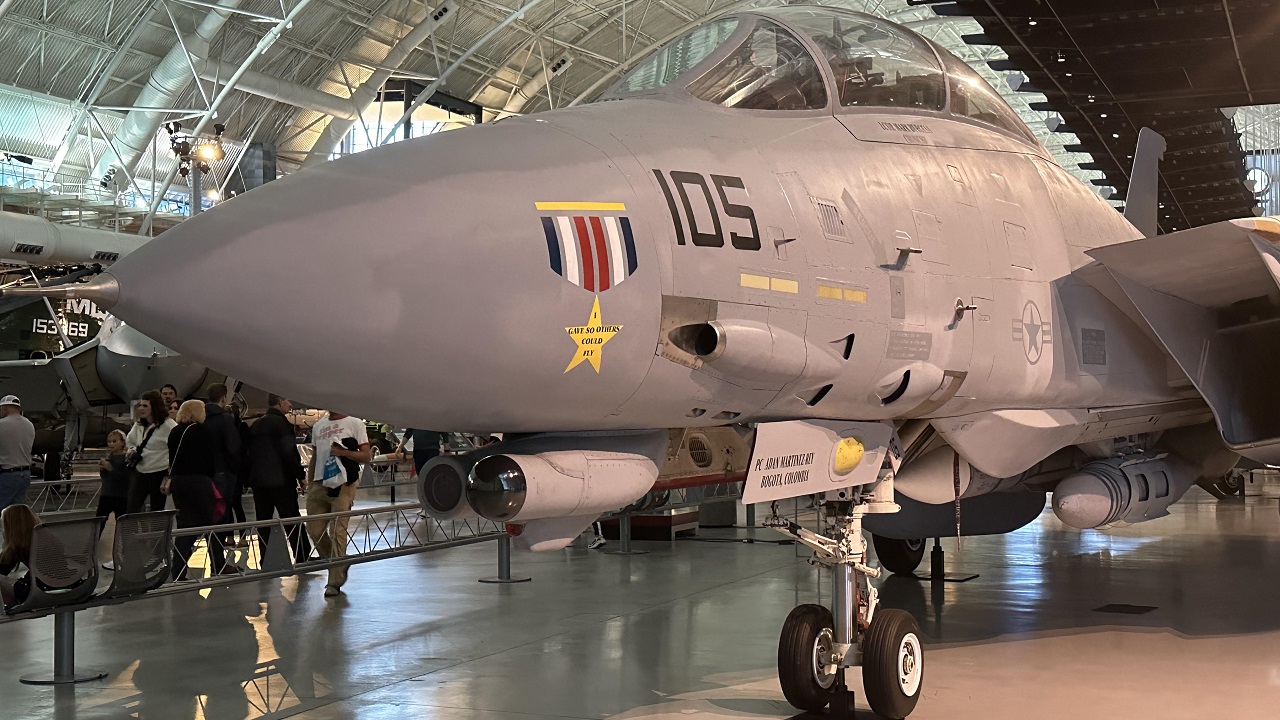
F-14 Tomcat. Image taken at National Air and Space Museum on October 1, 2022. Image by 19FortyFive.
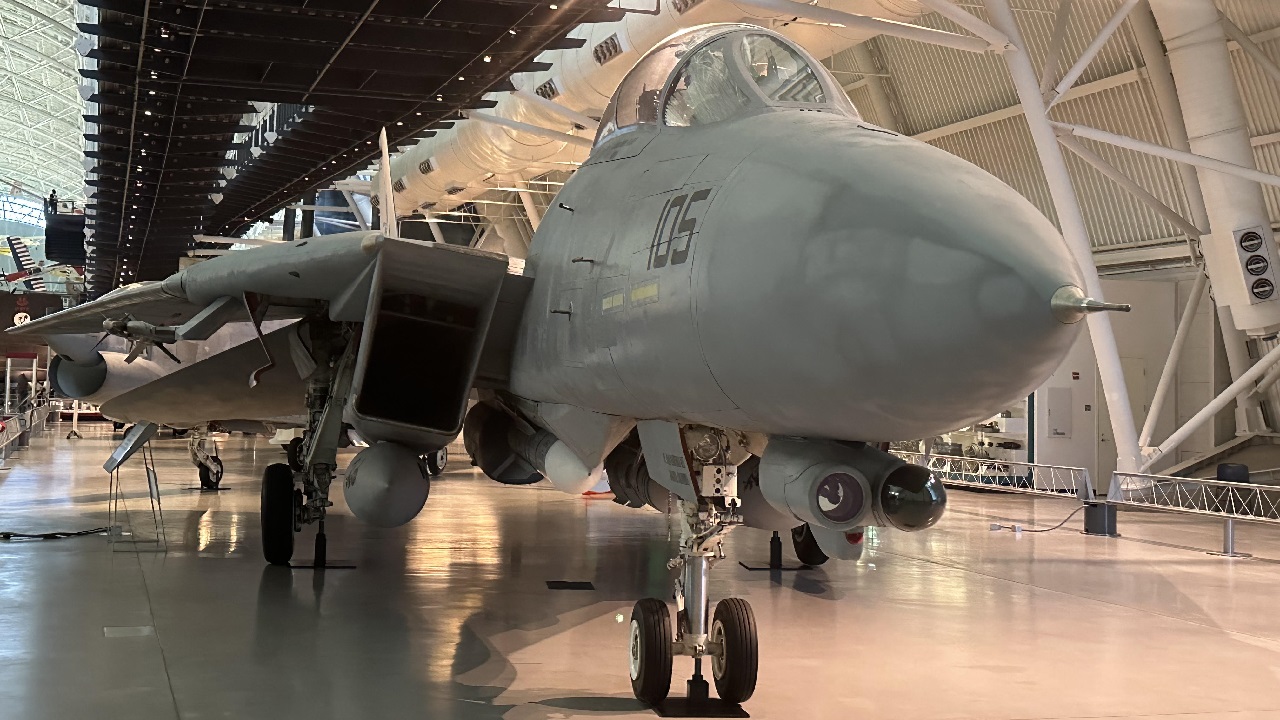
F-14 Tomcat. Image taken at National Air and Space Museum on October 1, 2022. Image by 19FortyFive.
So then, are any still Iranian Tomcats still left, or have they been completely wiped out by now?
At least five of them were already destroyed in two separate Israeli airstrikes last year. However, this writer has not been able to uncover any reports of any more IRIAF F-14s having been destroyed in the current conflict.
Next in the series: the F-4 Phantom II’s Iranian history.
About the Author: Christian D. Orr, Defense Expert
Christian D. Orr is a Senior Defense Editor. He is a former Air Force Security Forces officer, Federal law enforcement officer, and private military contractor (with assignments worked in Iraq, the United Arab Emirates, Kosovo, Japan, Germany, and the Pentagon). Chris holds a B.A. in International Relations from the University of Southern California (USC) and an M.A. in Intelligence Studies (concentration in Terrorism Studies) from American Military University (AMU). He is also the author of the newly published book “Five Decades of a Fabulous Firearm: Celebrating the 50th Anniversary of the Beretta 92 Pistol Series.”