
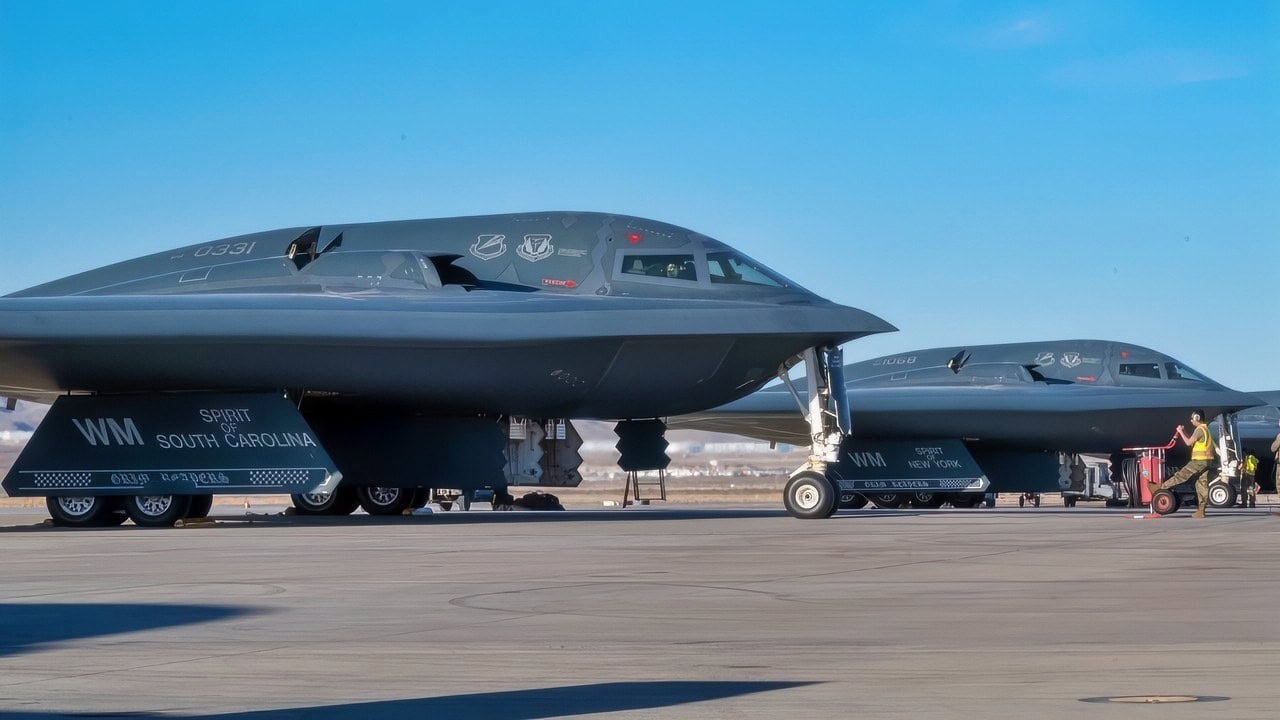
Summary and Key Points: Dr. Michael Rubin, a former Pentagon official, analyzes historical precedents for using airpower to facilitate regime change and their relevance to Iran.
-Contrasting the 2026 Iran War with Japan in 1945 and Serbia in 1999, Rubin argues that without an occupation force, a surviving Islamic Republic may simply claim victory through endurance.
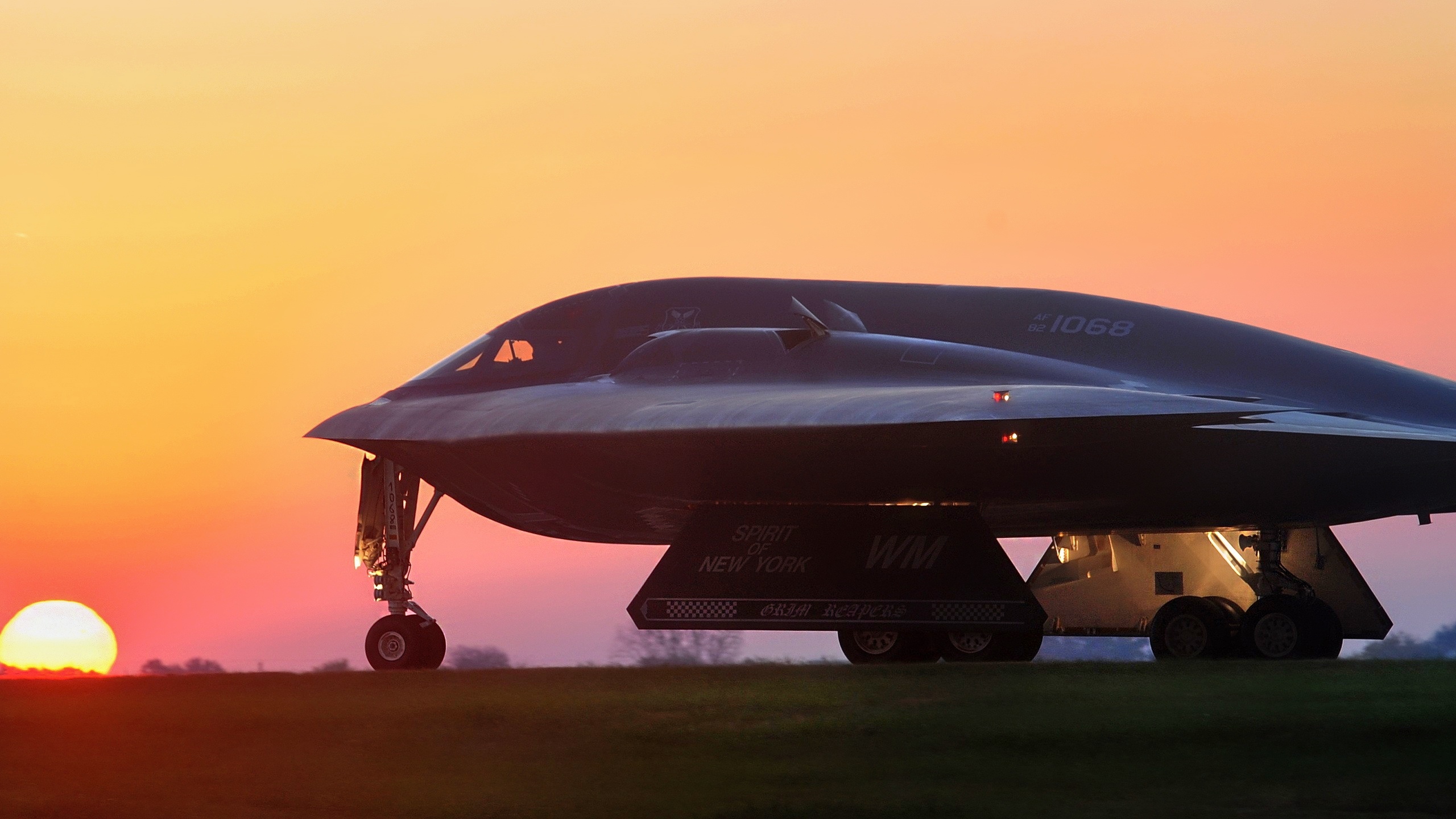
B-2 Bomber. Image Credit: Creative Commons.
-This 19FortyFive report evaluates the logistical impossibility of occupying a nation of 90 million people and 1.6 million square kilometers, exploring whether decapitation strikes against Supreme Leader Ali Khamenei can trigger a sustainable internal revolution.
Why Bombing Iran for Regime Change Faces Historical Hurdles
As U.S. forces began striking Iran, President Donald Trump declared, “Our objective is to defend the American people by eliminating imminent threats from the Iranian regime, a vicious group of very hard, terrible people.”
While the United States and/or Israel target top regime officials up to and including the Supreme Leader, neither country seeks to put boots on the ground. Iran is nearly four times the size of Iraq; it would take far more than 100,000 troops to occupy it, especially if there were two or three needed for logistics and support for every soldier in front of the wire.
While Iraq had slightly more than 20 million people when the United States invaded in 2003, Iran has upwards of 90 million people. The greater Tehran area is over 14 million people alone, far larger than Baghdad is or was. Simply put, even if Trump changed his mind about “boots on the ground,” the way Clinton had in Kosovo, occupation simply is not an option.
The question then becomes whether airpower alone is sufficient to achieve the U.S. goal of regime change.
There are two possible corollaries: Japan in 1945 and Serbia in 1999. The emperor’s surrender in Japan, of course, ended World War II. Much of the Pacific theater was a battle of attrition; more than 100,000 American troops died fighting the Japanese before closing in on the main islands. President Harry S. Truman fire-bombed Tokyo and dropped nuclear weapons on Hiroshima and Nagasaki to avoid the need for an invasion.
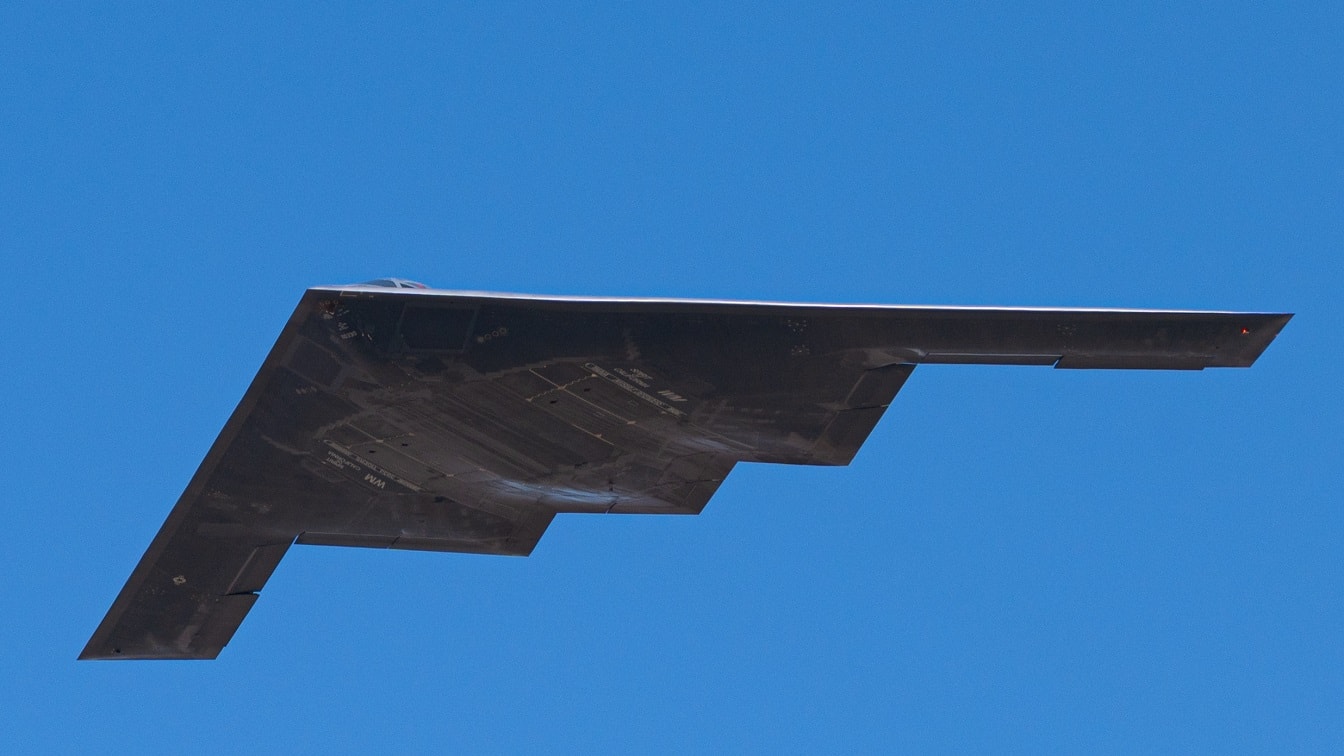
A B-2 Spirit stealth bomber from Whiteman Air Force Base completes a fly-over during the Sound of Speed Airshow at Rosecrans Air National Guard Base, in St. Joseph, Missouri, May 1, 2021. The air show was hosted by the city of St. Joseph and 139th Airlift Wing, Missouri Air National Guard to thank the community for their support. (U.S. Air National Guard photo by Airman Janae Masoner)
If Emperor Hirohito had not resigned, Truman was prepared to invade Japan, a fight that could have caused a million casualties. It is fair to say that Supreme Leader Ali Khamenei—or any successor—knows that the United States does not have the ability or desire to suffer such casualties and so, like Hamas, he will not surrender and will simply seek regime survival.
The bombing campaign against Serbia may be a better analogy, but it also presents much about which Trump should worry. First, it did not directly change the regime in Belgrade; that happened after an uprising following subsequent elections, when Slobodan Milošević refused to stand down. The Islamic Republic already had a parallel with Mahmoud Ahmadinejad a decade later, but the regime survived.
Nor is Kosovo—the protection of which motivated the bombing—a better example. President Bill Clinton initially rejected any notion of boots on the ground, only to realize he needed helicopters and then some forces to protect the Kosovars from Serbian slaughter.
If Trump decapitates the regime—as of writing, Khamenei’s whereabouts are unknown—and the former Crown Prince Reza Pahlavi seeks to return and fill the vacuum, the question then becomes how to keep him alive. Many Revolutionary Guardsmen join the Corps for the privileges, but some are true ideologues.
The question then becomes how to secure Pahlavi or any other successor, and that might mean boots on the ground. The same is true with the need to secure the regime’s arms depots.
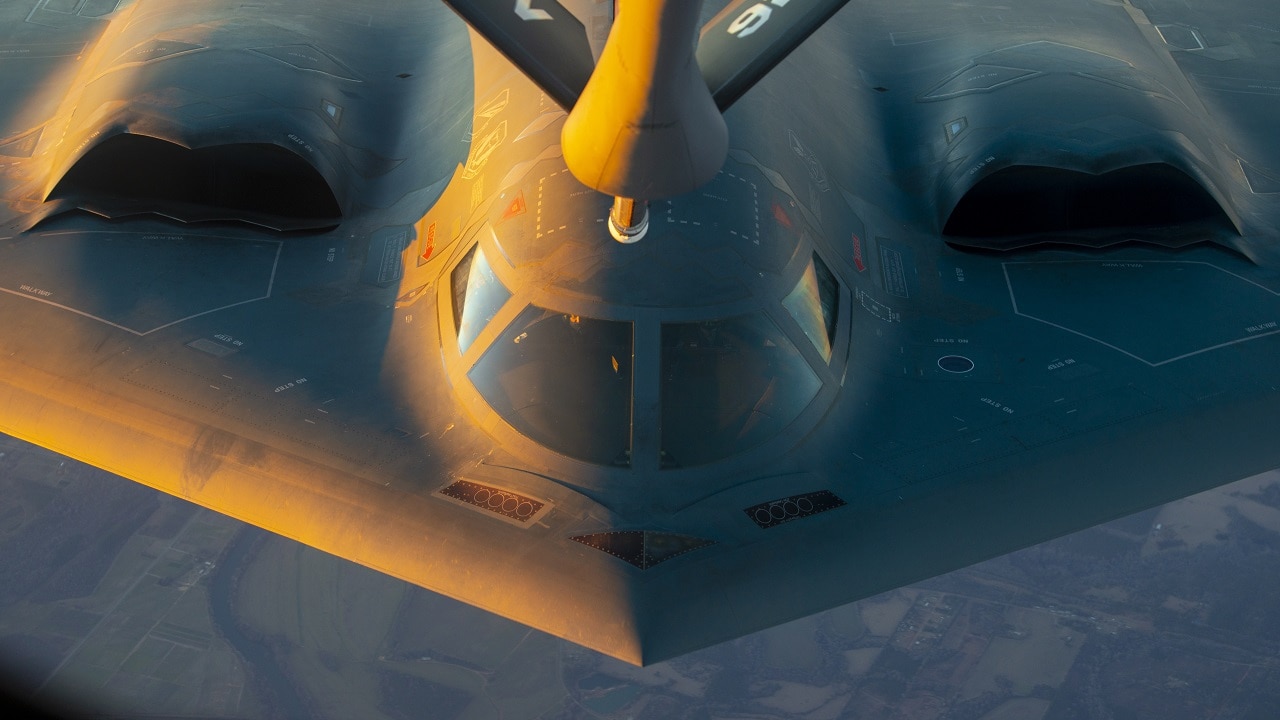
A B-2 Spirit assigned to Whiteman Air Force Base, Mo., prepares to receive fuel from a KC-135 Stratotanker, Feb 7, 2021. A B-2 Spirit performed alongside a B-1B Lancer and a B-52 Stratofortress for the Super Bowl LV flyover on Feb. 7, 2021. (U.S. Air Force photo by Airman 1st Class David D. McLoney)
What is clear, however, is that the Islamic Republic’s strategy will simply be to survive. That was the case with the Houthis after Trump’s multi-week bombing campaign; they claimed victory when Trump cut a separate deal. The same has been true with Hamas. After the October 7, 2023, massacre, the Israel Defense Forces decimated Hamas and much of the infrastructure in Gaza.
Yet, because Hamas survived and did not disarm, many Palestinians now celebrate Hamas as the victor. Iranians do not support their regime the way Palestinians support Hamas, but a surviving regime will be able to, nonetheless, rebuild.
About the Author: Dr. Michael Rubin, AEI and Middle East Forum
Michael Rubin is a senior fellow at the American Enterprise Institute and director of policy analysis at the Middle East Forum. The opinions and views expressed are his own. A former Pentagon official, Dr. Rubin has lived in post-revolution Iran, Yemen, and both pre- and postwar Iraq. He also spent time with the Taliban before 9/11. For more than a decade, he taught classes at sea on the Horn of Africa and the Middle East, covering conflicts, culture, and terrorism to deployed US Navy and Marine units. The views expressed are the author’s own.