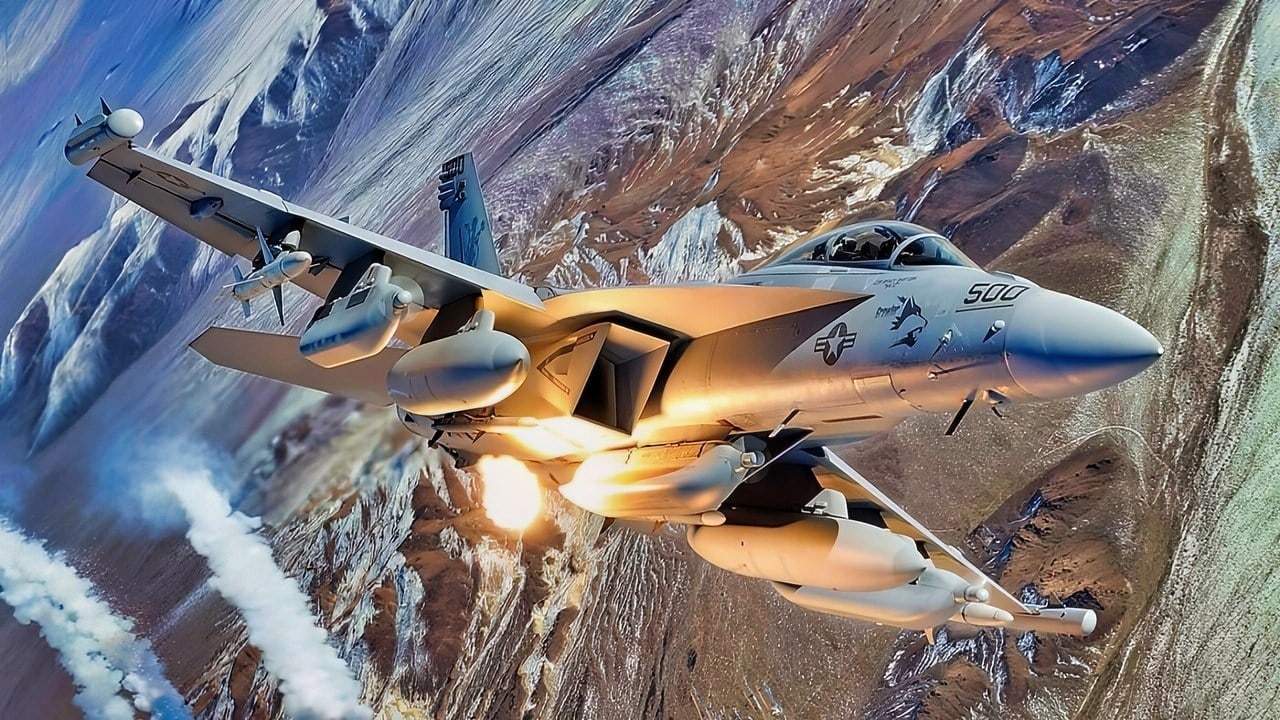
AWACS, Tankers, and 2 Carriers: The U.S. Air Campaign Shape Against Iran
Summary and Key Points: A major U.S. naval and air buildup in the Middle East is creating the framework for a possible strike campaign against Iran if nuclear talks fail.
-Two carrier strike groups, large numbers of fighters, bombers, refueling aircraft, AWACS platforms, and cargo flights now form a force package that retired air officers say looks built for sustained operations, not symbolic pressure.
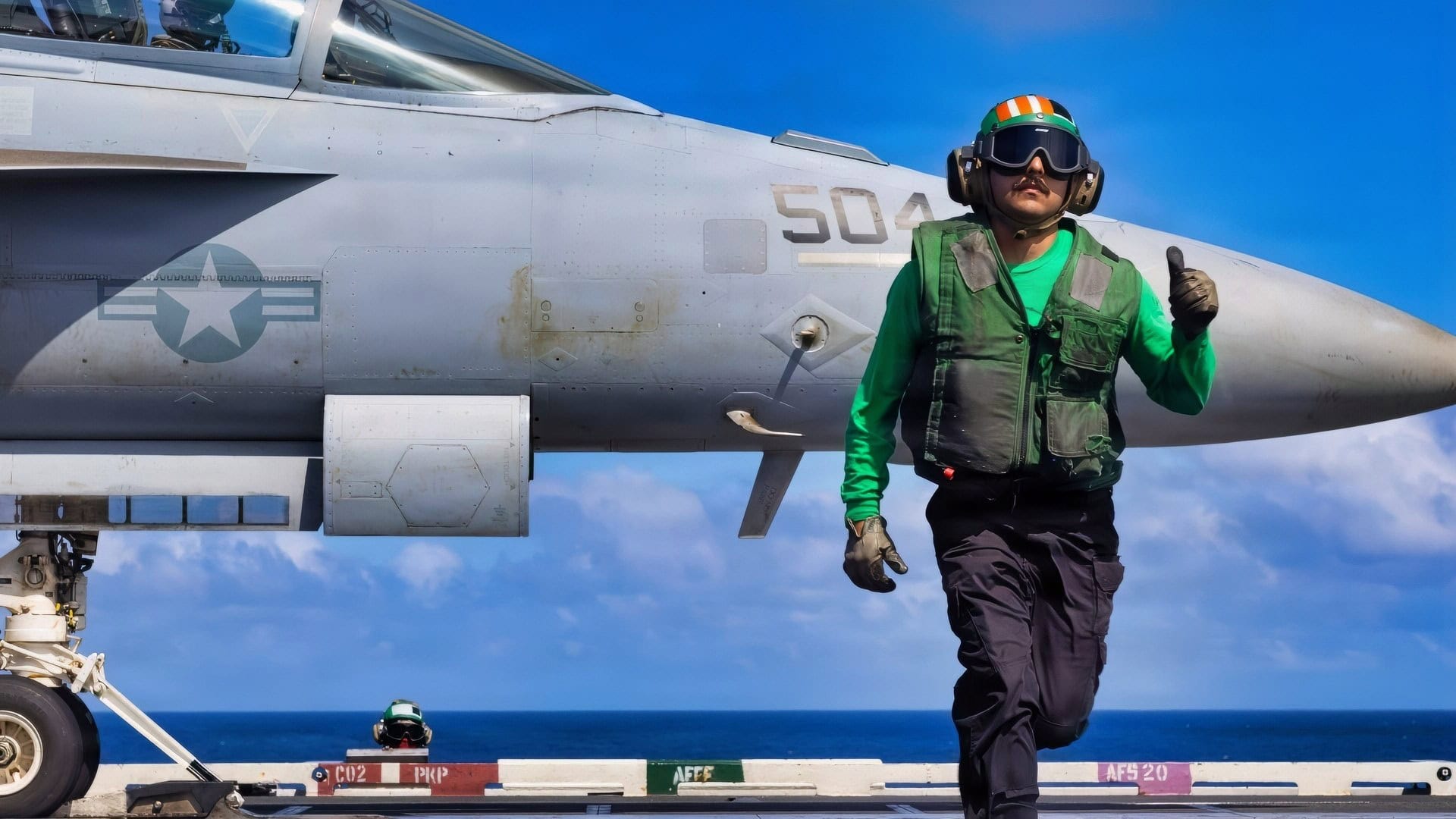
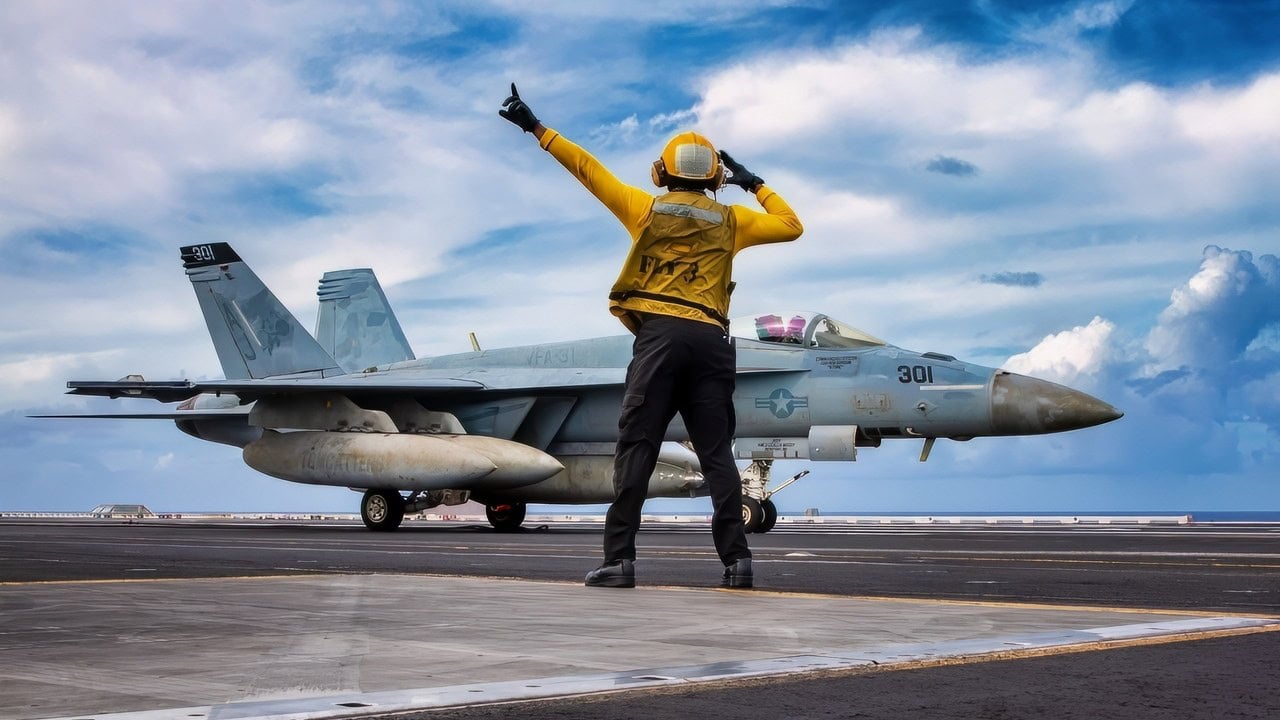
A U.S. Sailor signals the launch of an E/A-18G Growler aircraft, attached to Electronic Attack Squadron 142, from the flight deck of the world’s largest aircraft carrier, Ford-class aircraft carrier USS Gerald R. Ford (CVN 78), while underway in the Caribbean Sea, Jan. 31, 2026. U.S. military forces are deployed to the Caribbean in support of the U.S. Southern Command mission, Department of War-directed operations, and the president’s priorities to disrupt illicit drug trafficking and protect the homeland. (U.S. Navy photo)
-Tankers and battle management aircraft are the key indicators.
-The immediate objective appears to be coercive leverage for a tougher nuclear agreement, but internal debate continues over what follows any strike, especially if limited action fails to change Tehran’s position.
Why the U.S. Military Buildup Near Iran Looks Bigger Than a Warning
As a formidable array of U.S. naval and air power assets join up in the Middle East, outlines of what may turn out to be a significant air campaign against Iran are beginning to show. A series of deployments and re-positioning movements have now assembled the largest force of U.S. warships and aircraft to be sent to the Middle East in decades.
That group of forces includes two aircraft carrier strike groups. President Donald Trump is warning of potential large-scale military action against Iran as negotiations continue over Tehran’s nuclear program. If negotiations collapse with no resolution, military action seems to be a forgone conclusion.
This buildup has been underway for almost a month. The aircraft carrier USS Abraham Lincoln (CVN-72) and three guided-missile destroyers have been on station in the Arabian Sea since the end of January, after being redirected from the South China Sea.
Two weeks later, the U.S. president ordered the world’s largest aircraft carrier, the USS Gerald R. Ford (CVN-79), along with three destroyers and more than 5,000 service members, to head to the region. This will bring U.S. presence in the region to 14 vessels—a force larger than the 11-ship fleet that was previously stationed in the Caribbean Sea and raided Venezuelan President Nicolás Maduro. Some 40,000 U.S. military servicemembers are now in the region, either on board ships or at air bases on dry land.
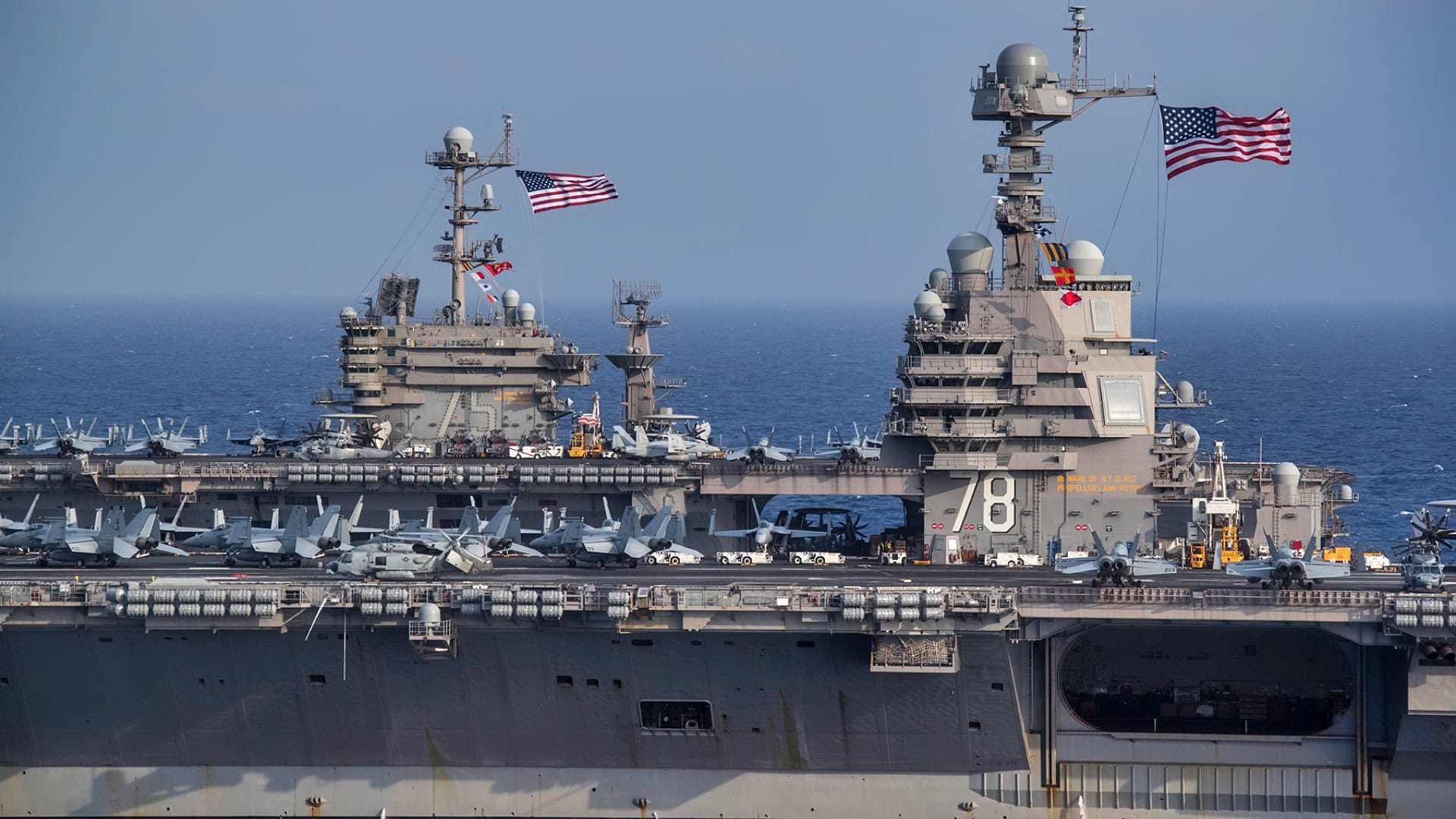
The Ford-class aircraft carrier USS Gerald R. Ford (CVN 78) and the Nimitz-class aircraft carrier USS Harry S. Truman (CVN 75) transit the Atlantic Ocean June 4, 2020, marking the first time a Ford-class and a Nimitz-class aircraft carrier have operated together underway. Ford is underway conducting integrated air wing operations, and the Harry S. Truman Carrier Strike Group remains at sea in the Atlantic as a certified carrier strike group force ready for tasking in order to protect the crew from the risks posed by COVID-19, following their successful deployment to the U.S. 5th and 6th Fleet areas of operation. (U.S. Navy photo by Mass Communication Specialist 2nd Class Ruben Reed)
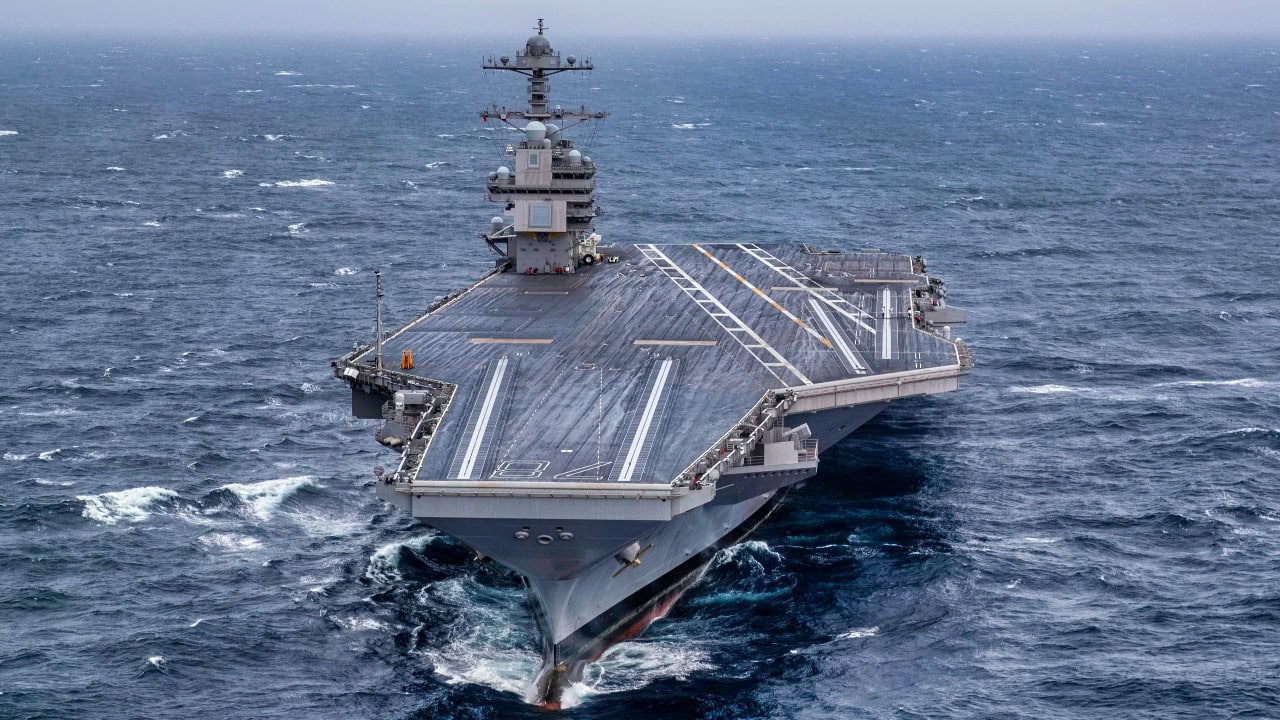
ATLANTIC OCEAN (Oct. 27, 2019) USS Gerald R. Ford (CVN 78) steams in the Atlantic Ocean for the first time since July 2018. Ford is conducting sea trials following its 15 month post-shakedown availability. (U.S. Navy photo by Mass Communication Specialist 3rd Class Connor Loessin)
A Battle Management Challenge for Iran War
This armada includes dozens of fighter jets—both land-based and operated from the carriers—including F-35As, F-22s, F-15Es and F-16s. Many of these were re-deployed from bases in the United States and Europe and are backed up by a force of B-52 and B-2 bombers.
These aircraft have almost all been seen heading for the Middle East by the Military Air Tracking Alliance (MATA), a group of 30 or more open-source intelligence analysts that routinely monitor military and government flight activity.
The MATA team says it has thus far tracked more than 85 KC-36 and KC-135 air-to-air refueling tankers and 170 cargo planes headed to the region this month. Steffan Watkins, a researcher based in Canada and a member of MATA, said he also has tracked support aircraft, most notably six of the military’s early-warning E-3 Sentry Airborne Early Warning and Control System (AWACS) aircraft, on course to a base in Saudi Arabia. At the time, analysts of flight-tracking data also noticed dozens of U.S. military cargo planes heading to the region.
Two aspects of this increasing force level in the Middle East telegraph a potentially extensive and sustained air campaign in the offing. This is according to retired senior U.S. Air Force officers familiar with how these major air operations are organized.
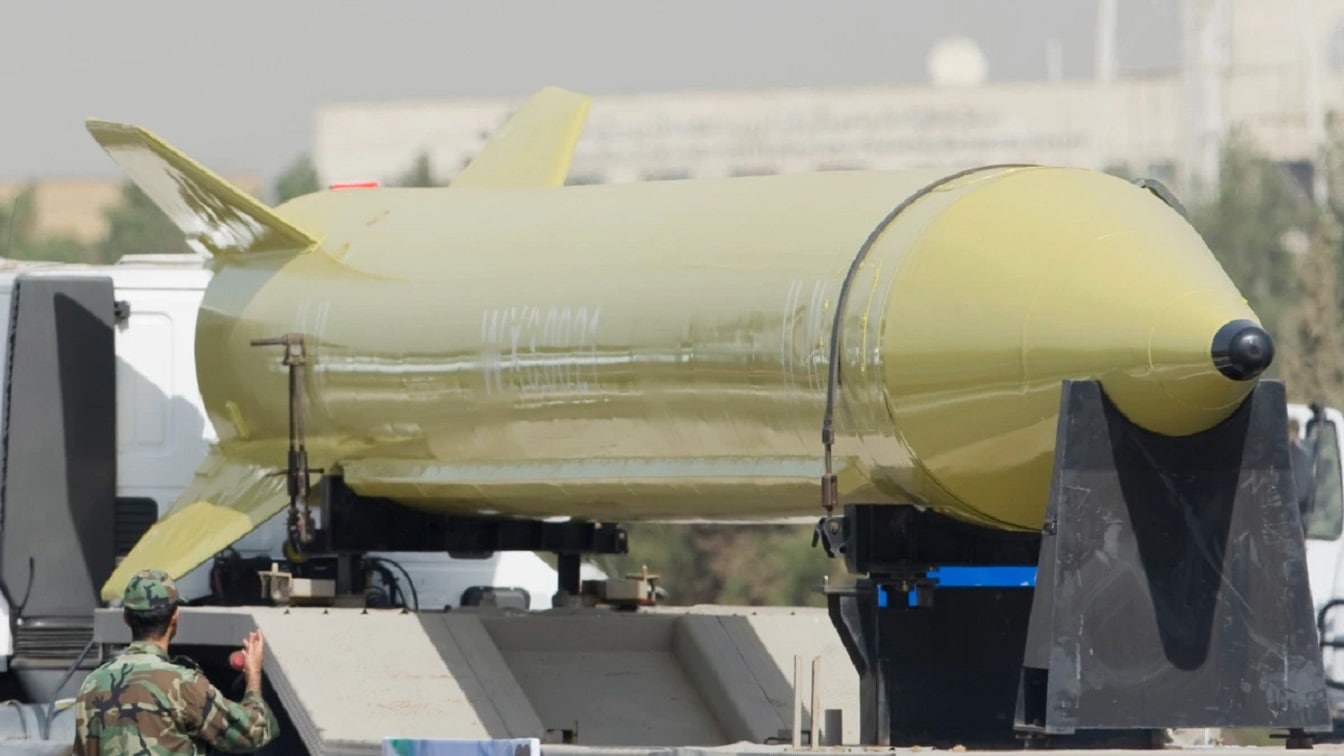
Iranian Ballistic Missile. Image Credit: Creative Commons.
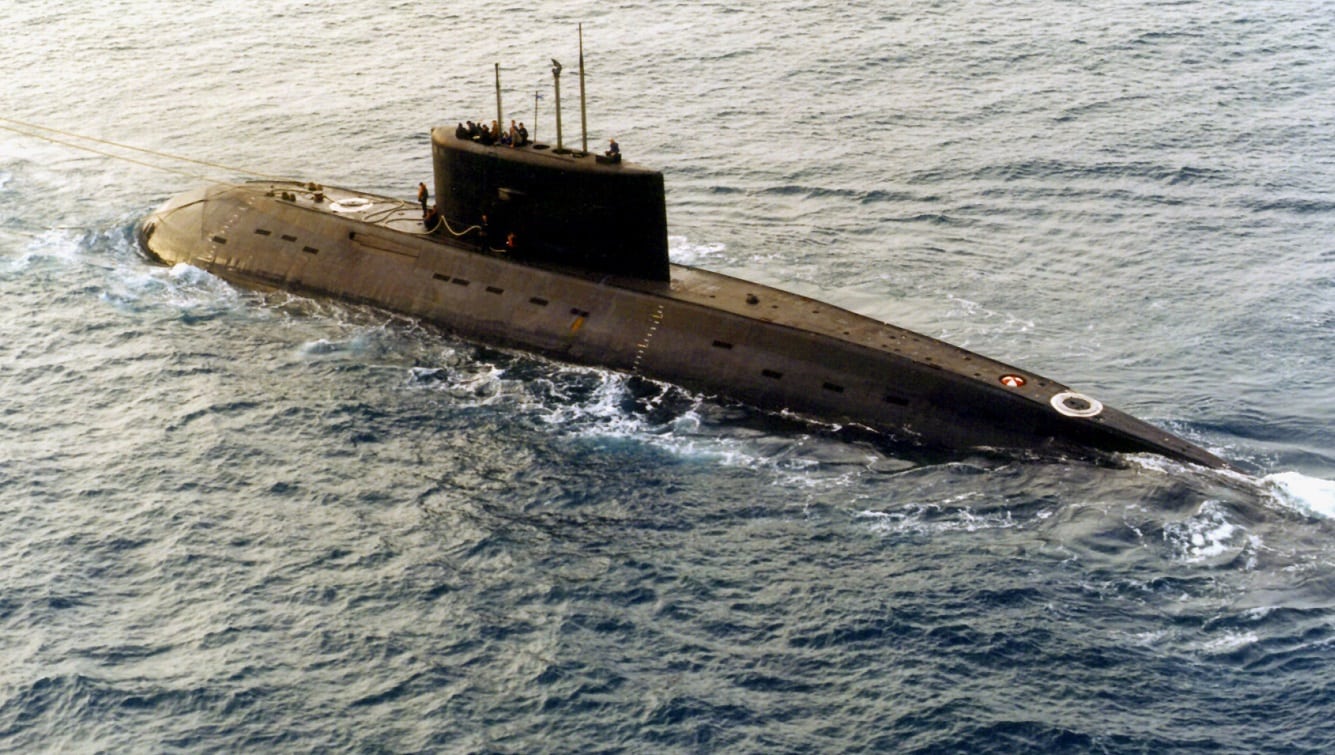
A Russian-built, Kilo-class diesel submarine purchased by Iran, is towed by a support vessel in this photograph taken in the central Mediterranean Sea during the week of December 23. The submarine and the support ship arrived at Port Said, Egypt, on Tuesday and were expected to begin transiting the Suez Canal today, Jan. 2, 1996. Ships and aircraft from the U.S. NavyÕs Sixth Fleet are tracking the submarine, which has been making the transit on the surface. This is the third Kilo-class submarine the Iranians have purchased from Moscow. DoD photo
One of them pointed to the number of air-to-air refuelling aircraft that are now in place in-theater. “The tankers are the ‘tell,’” he said—the indicator that this is not just a show of force with no real assets or logistics and ability to conduct a meaningful campaign.
A second indicator is the presence of the AWACS aircraft. These battle management platforms are vital to coordinate operations involving a large number of aircraft.
Furthermore, weeks before all of these assets arrived, a group of 12–24 F-15E aircraft from RAF Lakenheath, UK, arrived in the U.S. Central Command (CENTCOM) area of operations beginning January 18. These aircraft are specifically equipped with laser-guided rockets (APKWS II) for engaging drones and provide deep-strike capabilities. CENTCOM said on social media that initially deploying these fighter jets “enhances combat readiness and promotes regional security and stability.”
Trump’s Objectives for Iran
The White House has both primary and secondary objectives. Alex Vatanka, an analyst at the Middle East Institute, was quoted today as predicting that the U.S. administration is most likely looking for a limited confrontation rather than a prolonged conflict.
“The Trump administration most likely aims for a limited conflict that reshapes the balance of power without trapping it in a quagmire,” he said. He elaborated on the actions the Iranians are anticipating, saying Tehran is bracing for “a short, high-impact military campaign.” In his view the clerical leaders are not expecting the United States to commit to a sustained, all-out air bombardment that carries on for weeks.
Ford-Class Aircraft Carrier. Image Credit: Creative Commons.
Iranian leaders believe an attack by the United States would aim to cripple their missile infrastructure and thereby weaken Tehran’s deterrence and ability to threaten its neighbors. But Trump’s statements to date indicate that he is more interested in pressuring the regime into a settlement that requires the mullahs to give up their programs of mass destruction in perpetuity.
The inability to reach an agreement with the Iranians clearly frustrates Trump, which is why being able to get the nuclear program off the table for good is his first-order objective. It would give Trump the satisfaction of seeming to achieve what his predecessor, Barack Obama, tried for eight years to do.
What If No Deal Is Forthcoming
One scenario is that Trump could launch a limited attack to convince the Iranians to sign up to a binding agreement on U.S. terms. Trump has reportedly told advisers that if diplomacy or any initial targeted U.S. attack does not lead Iran to give in to his demands—that if they will not willingly give up their nuclear program—he would then consider a much larger and widespread set of air strikes in coming months.
Such a campaign would be intended to meet the administration’s potential secondary goal, which is to depose that country’s clerical leaders from power. That part of Trump’s plan was verified by sources privy to internal administration deliberations who spoke to the New York Times and other outlets.
Should a limited strike not convince Tehran to meet Trump’s demands, then the U.S. president would leave open the option of military action intended to remove Ayatollah Ali Khamenei, the supreme leader.
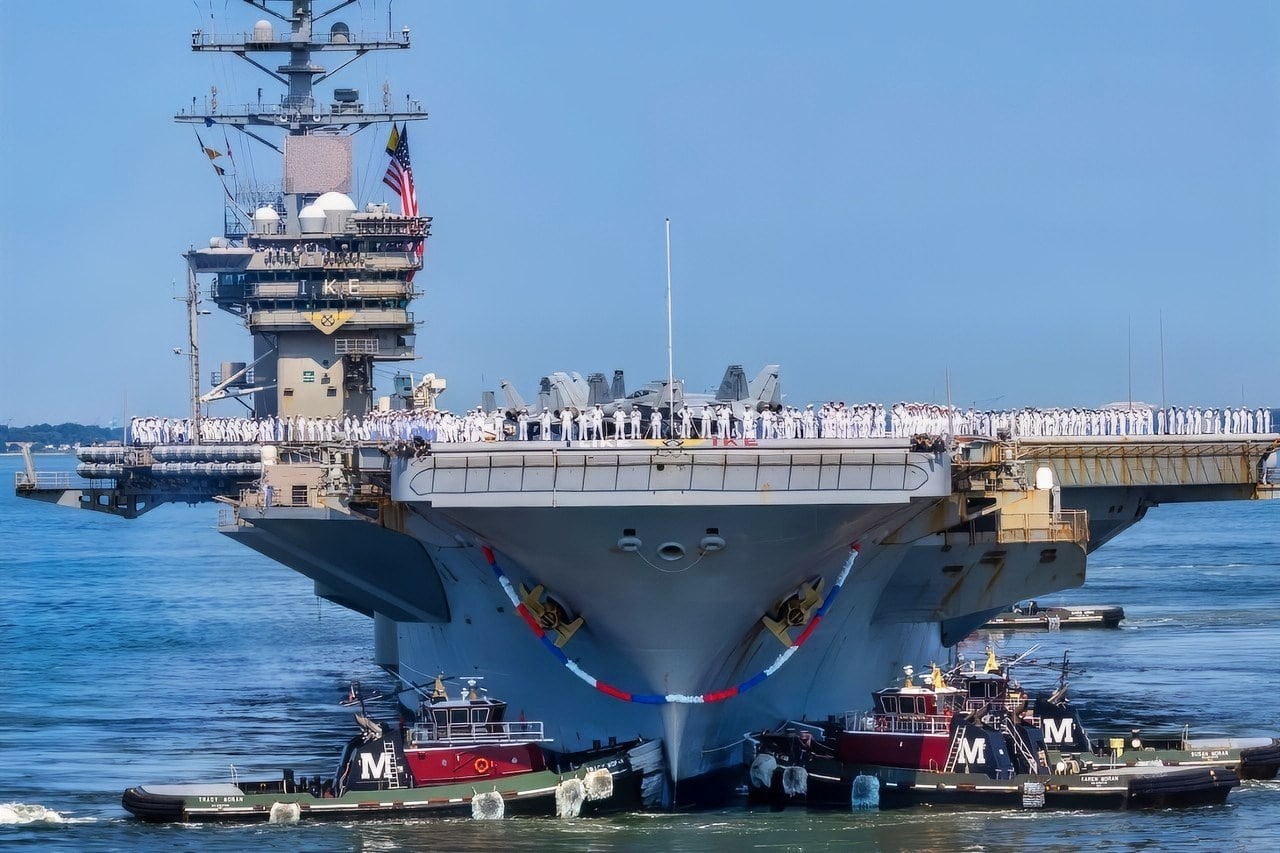
Aircraft Carrier U.S. Navy Photo. Image Credit: Creative Commons.
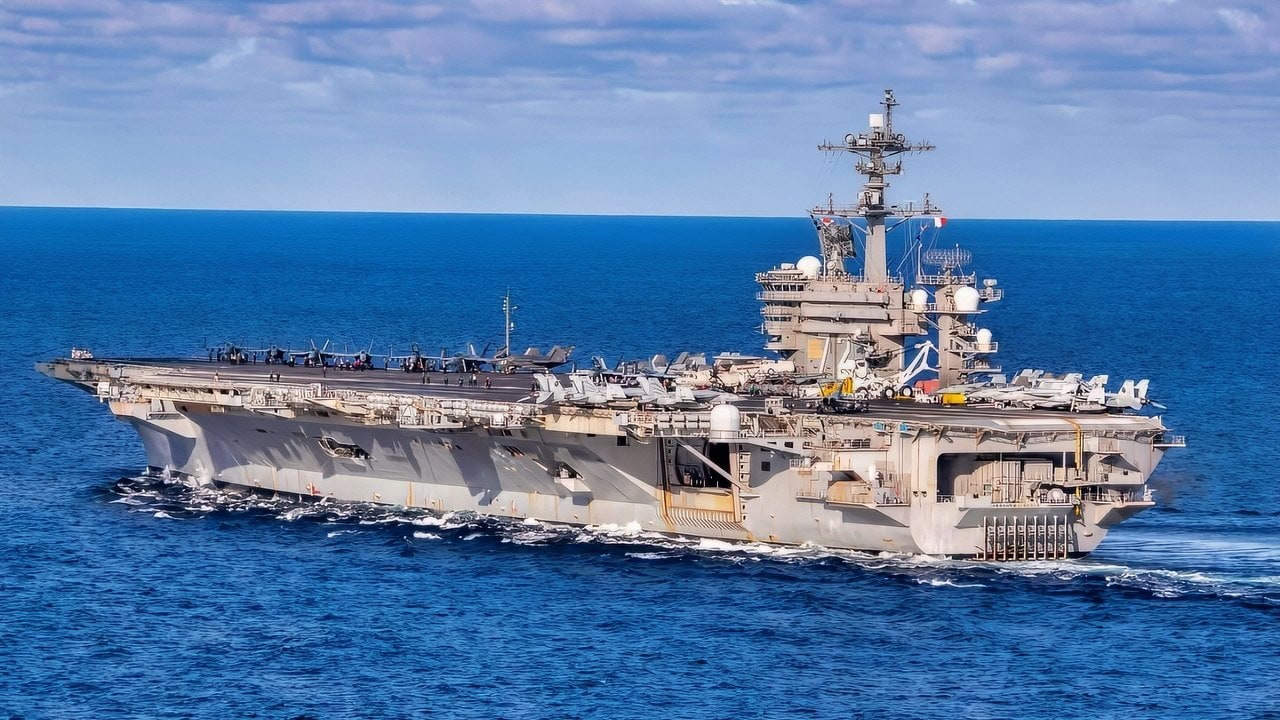
Nimitz-Class Aircraft Carrier At Sea. Image Credit: Creative Commons.
But more than one constituency has called into the question the wisdom of toppling the regime. If regime change or leadership decapitation is the ultimate goal, then the dilemma is what would replace the clerical regime, or its top leader.
U.S. Secretary of State Marco Rubio’s testimony to Congress on January 28 expressed the concern that whoever would take over would likely come from within the current leadership. But, as he and others have pointed out, there is no figure who is to Iran what Delcy Rodríguez was to Venezuela. There is also no guarantee that whoever takes Khamenei’s place would necessarily be an improvement.
Then there is the possibility that a collapse of the regime could precipitate significant collateral damage. Mona Yacoubian of CSIS warned that Iran’s complicated power structure makes the risks particularly high.
A so-called “decapitation strike”, she said, could end up “really unleashing a mess inside of Iran.”
An Initial Demonstration
The latest news from various sources is that no final decisions have been made, but that Trump has been leaning toward a surgical strike in the next few days. That action would be intended to demonstrate to Iran that if they do not agree to give up their nuclear weapons program, they face wide-scale destruction.
Targets reportedly under consideration include the headquarters of Iran’s Islamic Revolutionary Guard Corps (IRGC) and facilities linked to Iran’s ballistic missile program.
Should those steps fail to convince Tehran to meet his demands, Trump has told his advisers, he would leave open the possibility of a military assault later this year. That attack would reportedly be intended to help topple the supreme leader.
But there are doubts even inside the administration about whether removing the mullahs can be accomplished with just airstrikes. According to some sources, a deal is being discussed by both sides to give everyone a face-saving exit from the crisis.
In this version, the military strikes would be averted by permitting Iran a very limited nuclear enrichment program that would be suitable only for purposes of medical research and treatments. It would also mean junking about 90 percent of the uranium enrichment and other portions of the program established so far.
Where Does This Leave Us on Iran?
It is uncertain that either side would agree to such a deal.
Trump reportedly discussed plans for strikes on Iran in the White House Situation Room on Wednesday. The meeting reportedly included Vice President JD Vance; Secretary of State Marco Rubio; Gen. Dan Caine, the chairman of the Joint Chiefs of Staff; CIA director John Ratcliffe; and Susie Wiles, the White House chief of staff.
During the meeting, Trump reportedly pressed Caine and Ratcliffe to present a comprehensive strategy on how to resolve the Iranian situation. But neither of the two officials favored a specific policy position for what comes next after any military action.
Caine discussed what the military could do from an operational standpoint. However, Ratcliffe stated his preference was to discuss the current situation on the ground and possible outcomes of any military operations.
U.S. Army, Navy and Air Force officials have also raised their own concerns about what the consequences of a protracted deployment regarding Iran might be. If no immediate military action is taken, there is
This represents 40-50% of the deployable US air power in the world. Think air power on the order of the 1991 and 2003 Iraq war. And growing. Never has the US deployed this much force against a potential enemy and not launched strikes. pic.twitter.com/NLPIOEyeUs
— Robert A. Pape (@ProfessorPape) February 21, 2026
an issue of how much longer naval assets can remain on station and keep extending their deployments.
The longer these kinds of assets are kept at sea, the more strain on the force. There are also limited numbers of Patriot antimissile defenses to fight off Iranian attacks. The transport, refueling, and surveillance planes also cannot be forward-deployed indefinitely.
The most probable outcome is that sooner or later, the United States will take some military action. It is highly unlikely that Iranians will agree to dismantle the sprawling industrial facilities that make up their nuclear program. They have spent billions of dollars on this effort, all of which would be wasted if the program were dialed back to a small fraction of its current size.
The options seem to be narrowing to a choice between a new, highly restrictive nuclear deal and a military campaign—the latter is the more likely outcome.
About the Author: Reuben F. Johnson
Reuben F. Johnson has thirty-six years of experience analyzing and reporting on foreign weapons systems, defense technologies, and international arms export policy. Johnson is the Director of Research at the Casimir Pulaski Foundation. He is also a survivor of the Russian invasion of Ukraine in February 2022. He worked for years in the American defense industry as a foreign technology analyst and later as a consultant for the U.S. Department of Defense, the Departments of the Navy and Air Force, and the governments of the United Kingdom and Australia. In 2022-2023, he won two awards in a row for his defense reporting. He holds a bachelor’s degree from DePauw University and a master’s degree from Miami University in Ohio, specializing in Soviet and Russian studies. He lives in Warsaw.