
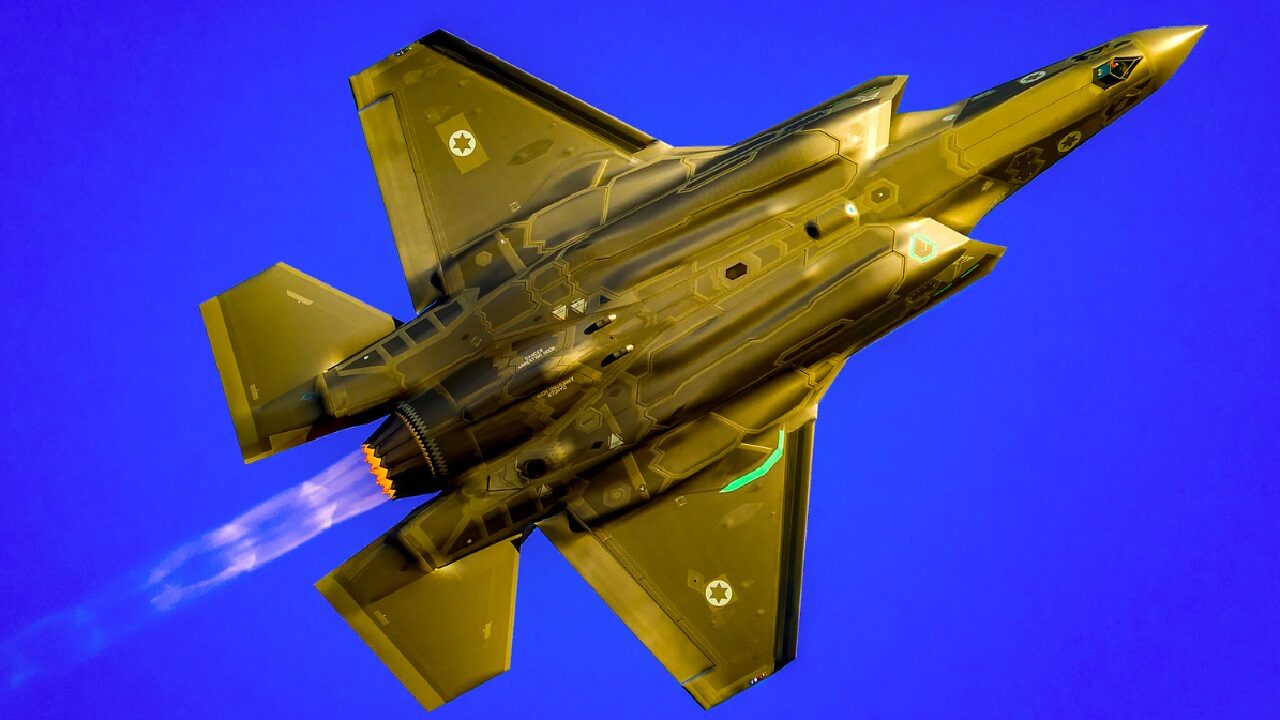
Summary and Key Points: Israel’s F-35I Adir is a rare exception to the standard export model: rather than procuring a standard F-35A with limited customization, Israel negotiated deep integration of domestic systems to preserve operational independence.
-Some experts consider it the best stealth fighter to ever fly.
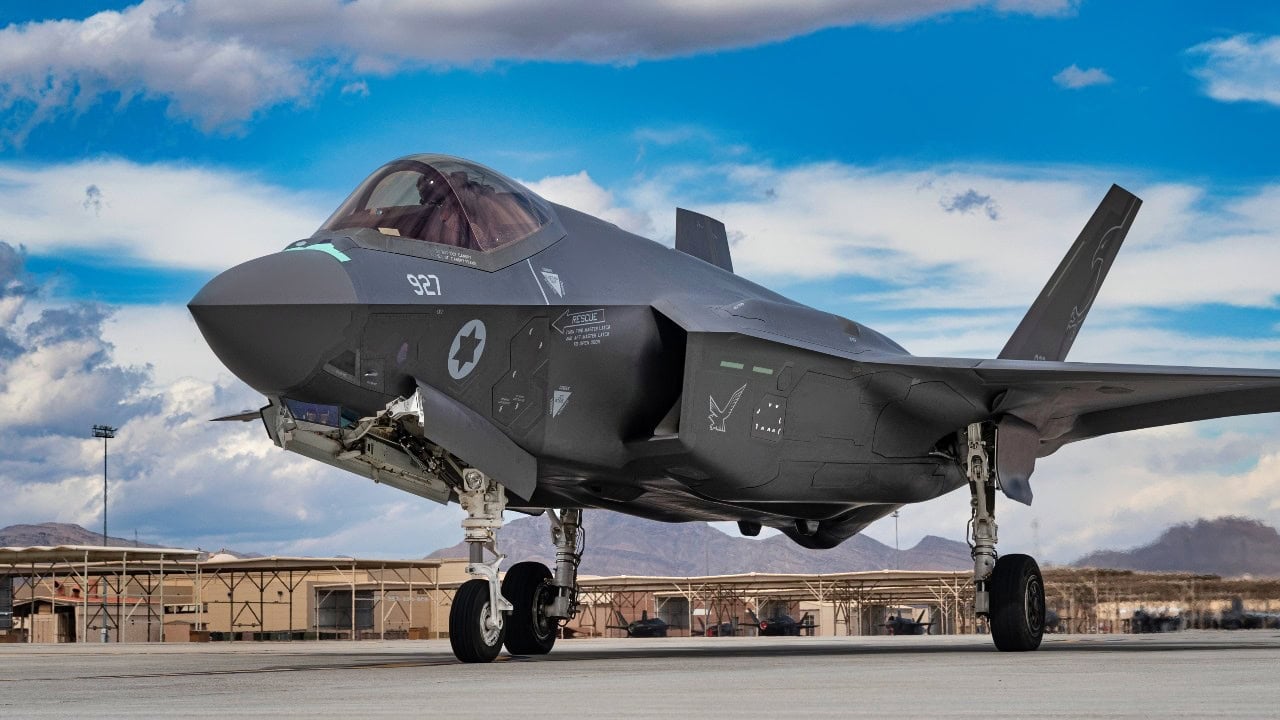
F-35I Adir Fighter from Israel
-The Adir is built to plug into Israeli command-and-control networks, incorporate Israeli electronic warfare tools, and integrate a wide suite of Israeli weapons for high-end missions in contested airspace.
-It’s designed around rapid updates to threat libraries, flexible hardware and software insertion, and long-range strike priorities tied to the Iran problem set. Combat use over the region has further cemented the aircraft’s reputation as Israel’s premier stealth spear.
F-35I Adir: How Israel Got a Custom F-35 the World Can’t Buy
The F-35 Lightning II is currently the most widely exported fifth-generation stealth fighter ever produced. Typical practice when exporting the aircraft is to sell a slightly downgraded version of the fighter (depending on how close a partner the customer is) and make a few small tweaks based on the customer’s needs.
Israel is perhaps the most notable exception to this rule. Instead of procuring a standard F-35A, the Israeli Air Force negotiated for a modified version of the aircraft compatible with Israeli-made systems. The result of these negotiations was the F-35I Adir, a custom version of the F-35 tailored to Israel’s strategic needs.
How Israel Got Its Own F-35
Israel did not initially intend to purchase the F-35. For years, it had wanted the F-22 Raptor, believing it to be the ideal solution for the first night of any major air campaign against a peer adversary. However, the United States refused to export the Raptor, thereby forcing Israel to seek an alternative stealth aircraft. Jerusalem agreed to procure the F-35 only after receiving U.S. approval to introduce domestic hardware, software, and mission-system modifications.
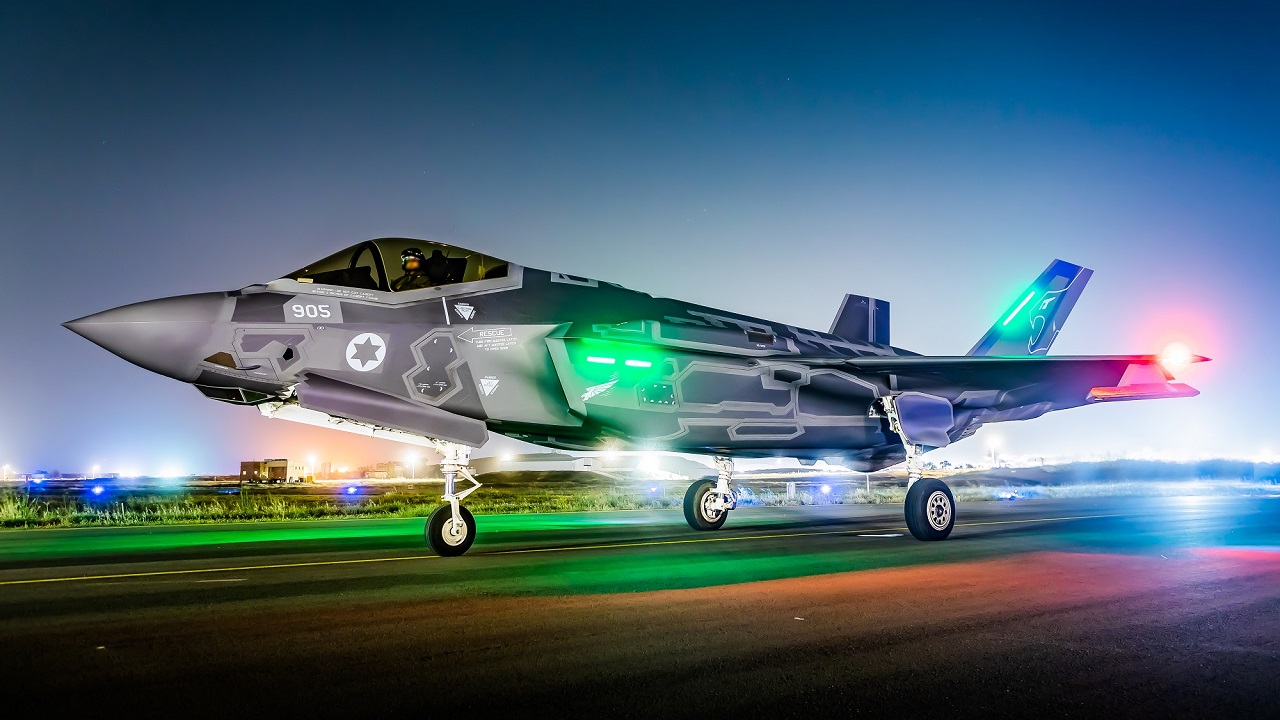
F-35I Adir serving in Israel’s Air Force. Image Credit: Creative Commons.
So, how did Israel manage to get its own F-35 when other partners like the UK did not?
Unlike other European nations, such as Poland, Belgium, and Denmark, Israel has an active and advanced aerospace industry that enables it to conduct its own tests and remain independent. Meanwhile, closer partners like the UK and Japan were content to let Lockheed Martin work its magic. Israel also had the funds to cover the steep costs of the aircraft and paid in advance in exchange for Israeli-specific modifications. According to some reports, Israel paid as much as $144.7 million per aircraft, including research, development, and testing, a steep price for sure, but Israel deemed it worth the cost in the long run.
As a result, the F-35I became a uniquely Israeli weapons system, incorporating sensors, processors, and interfaces.
What Separates the F-35I from an F-35A?
Whereas all other F-35 operators rely on variants of the BAE Systems AN/ASQ-239 electronic warfare suite, Israel was granted permission to replace major EW components with its own systems, primarily produced by Elbit Systems.
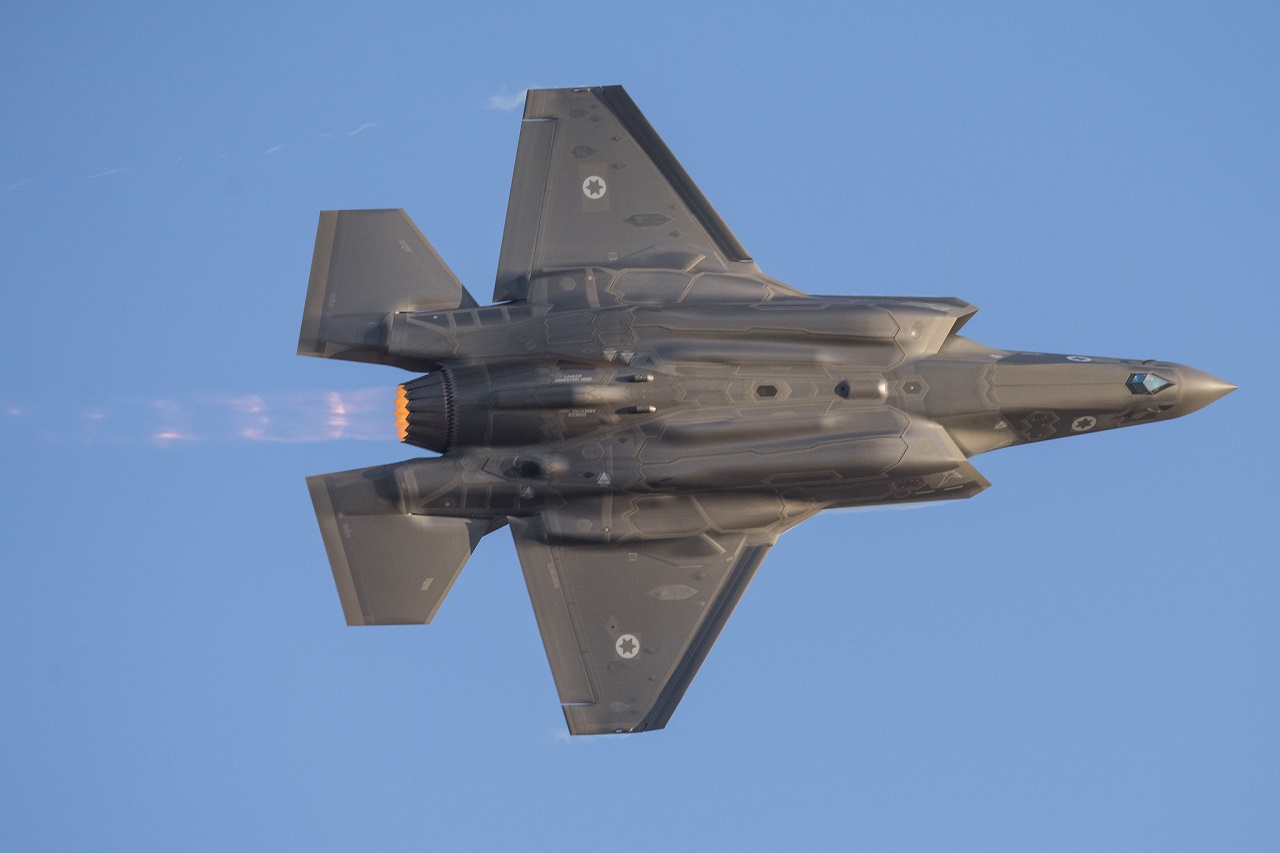
F-35I Adir. Image Credit: IDF Flickr Page.
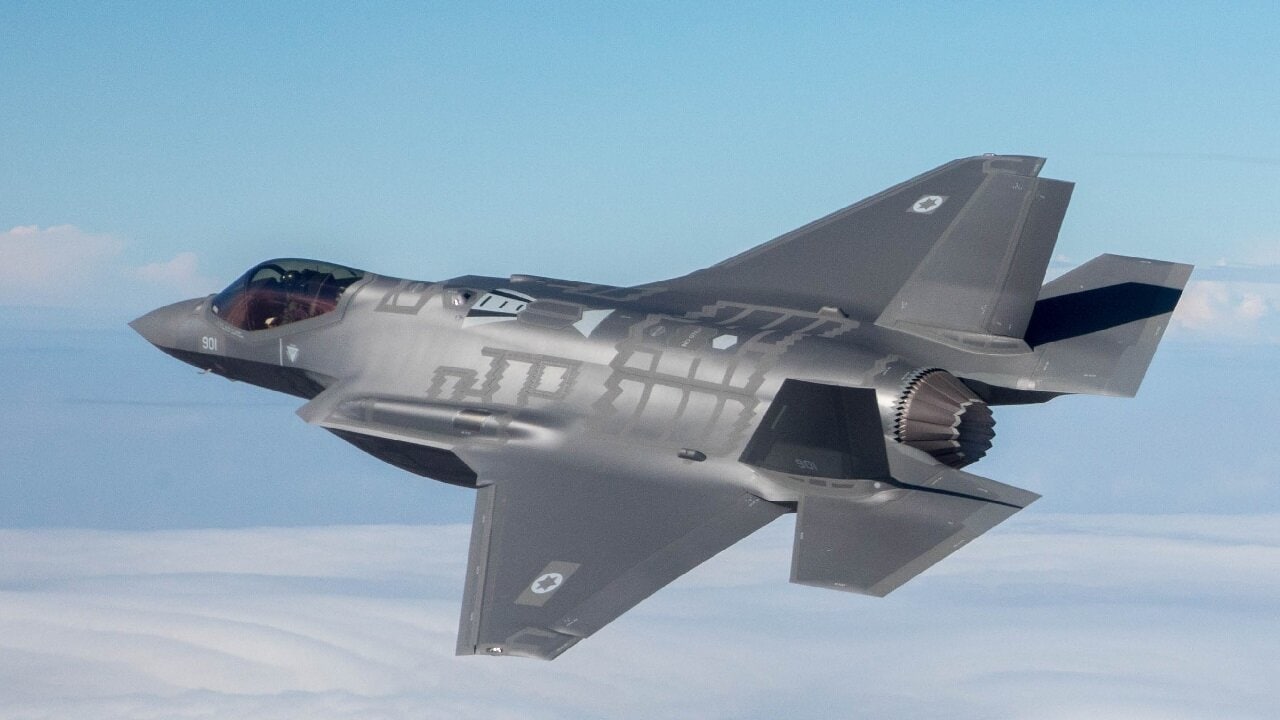
Israeli Air Force F-35I Adir stealth multi-role fighter.
These Israeli-built EW tools provide threat detection, countermeasures, and jamming functions optimized specifically for Middle Eastern combat environments.
They are designed to confront advanced Russian-supplied systems such as the S-300 and S-400.
The ability to update threat libraries independently, without U.S. intervention, enables Israel to rapidly revise and refine its EW databases in response to shifting adversary tactics, techniques, and technologies.
The mission computer and avionics architecture also differ significantly from other F-35 variants. Israel’s plug-and-play digital backbone enables rapid integration of new hardware, data links, and weapons, thereby maintaining the IAF’s technical sovereignty over the aircraft.
This architecture is central to Israel’s ability to integrate the F-35I into national intelligence networks and to direct real-time targeting information across the Israeli military’s command-and-control ecosystem. The result is a level of operational flexibility unmatched by other F-35 users, whose mission systems must remain strictly within the boundaries of U.S. cybersecurity and configuration-control regimes.
Tailor Made for Israel’s Defense Needs
Another unique feature of the F-35I is its compatibility with a broad portfolio of Israeli weapons. The jet can employ the Python-5 air-to-air missile, a highly agile infrared-guided weapon with a dual-waveband seeker.
It can also carry SPICE series precision-guided munitions, which offer long standoff ranges and electro-optical guidance, thereby reducing dependence on GPS. In addition, the aircraft is capable of carrying internally stored Israeli penetration bombs developed specifically for heavily protected underground targets. The ability to carry these weapons in the internal bays allows the F-35I to maintain its stealth profile even during long-range strike missions.
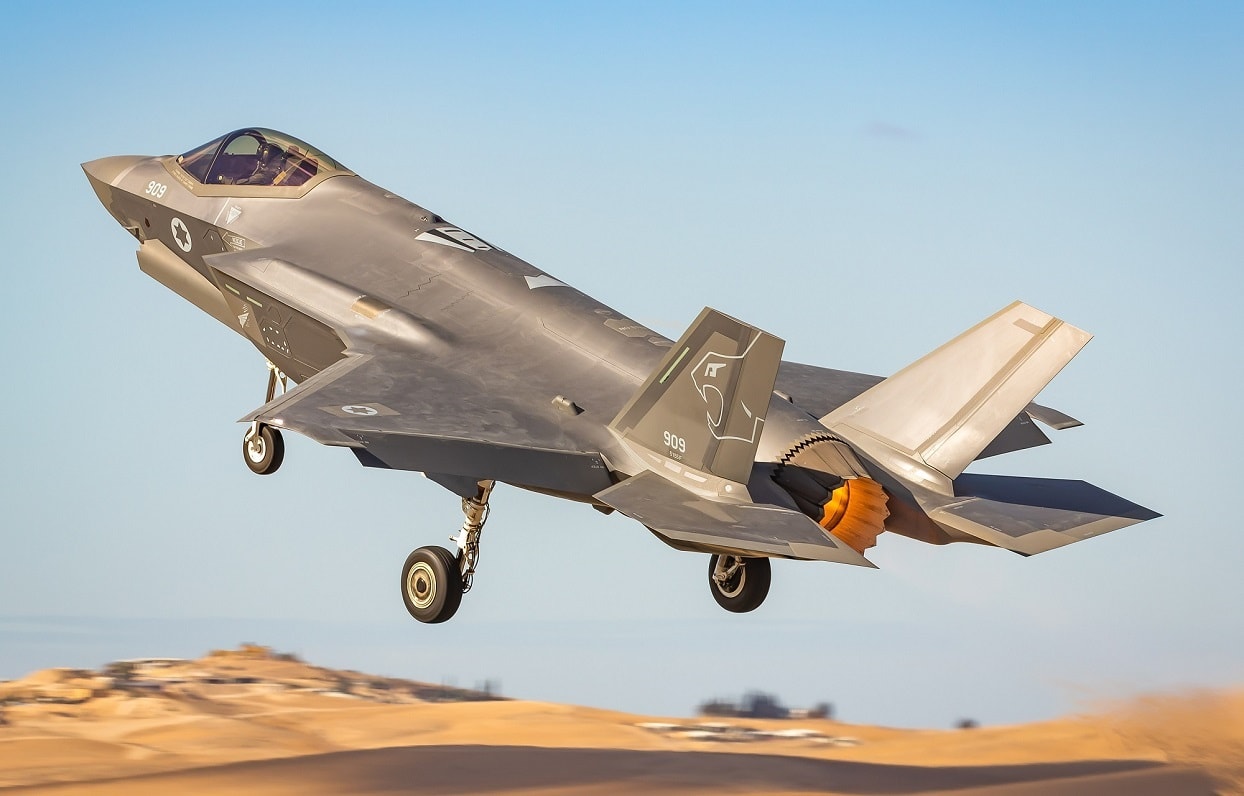
F-35I Adir. Image: Creative Commons.
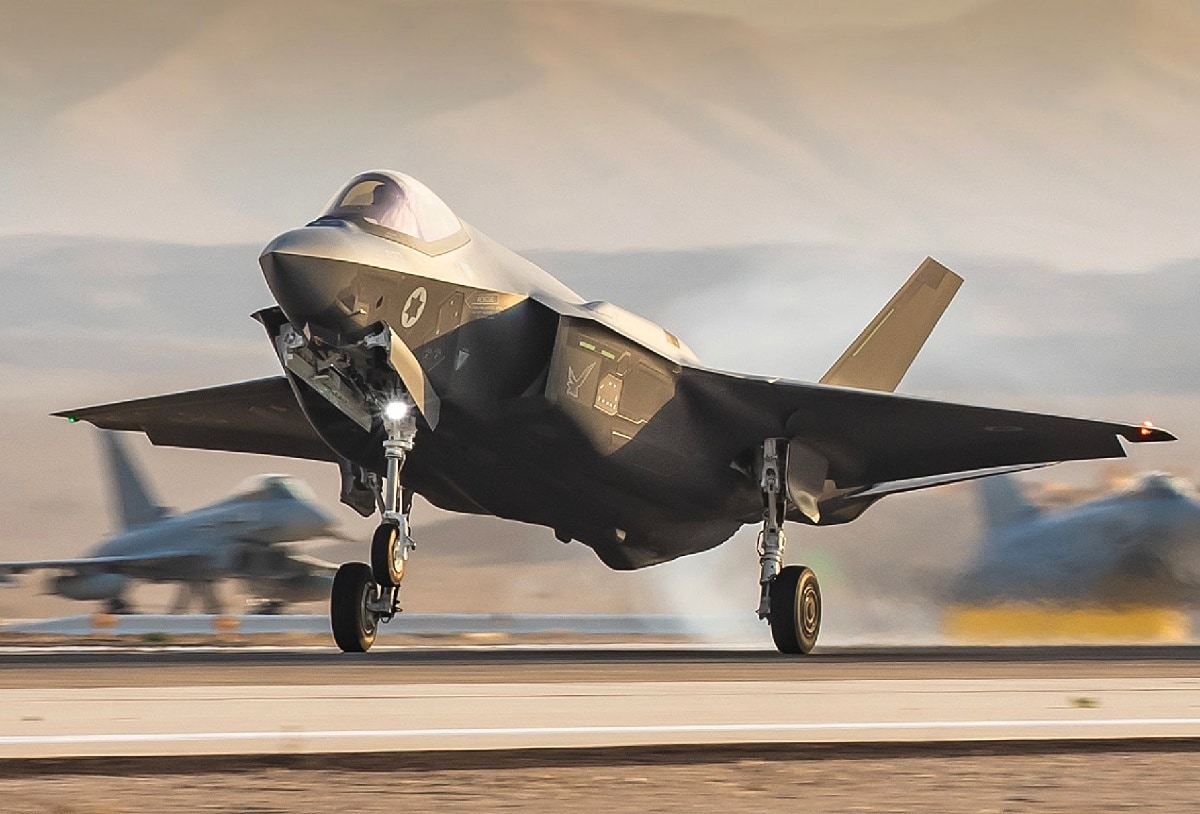
F-35I Adir. Image Credit: Creative Commons.
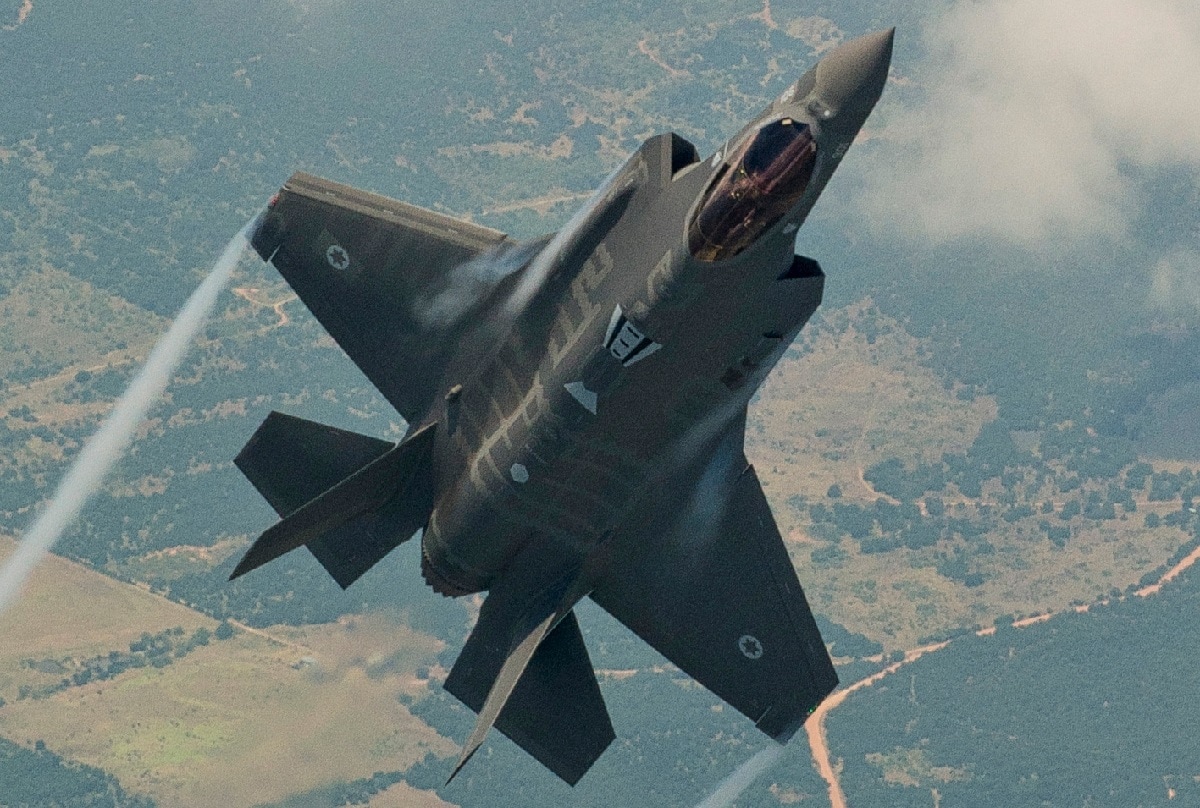
Israeli Air Force F-35I. Image Credit: Creative Commons.
To further expand reach, Israel has developed conformal fuel tanks designed to blend aerodynamically with the fuselage while preserving low observability.
These tanks push the jet’s unrefueled range beyond 1,700 kilometers, a critical requirement for operations deep inside Iranian territory. Long-distance missions are further supported by Israel’s customized navigation and communication systems, which link the aircraft directly to national ISR assets, including satellites, ground-based intelligence centers, and airborne early warning aircraft.
Combat Experience of F-35I Adir Stealth Fighter
The F-35I has amassed considerable combat experience in a relatively short period. Shortly after becoming operational, it conducted strikes in Syria, exploiting its stealth to navigate areas protected by Russian-built air defenses.
The aircraft’s role expanded further during operations against Iranian assets. In 2021, it reportedly entered Iranian airspace for the first time, an achievement thathighlighted both its stealth performance and Israel’s confidence in the aircraft’s survivability.
Throughout 2024 and 2025, the F-35I was used to strike targets in Iran, most notably during the Twelve Day War when Israel used the aircraft to strike nuclear facilities and air defense positions practically uncontested.
As of 2025, Israel operated 46 F-35Is across three squadrons at Nevatim Airbase, with plans to expand to a total of 75 aircraft by 2030. The aircraft’s impact on the regional balance of power has been profound.
It offers unmatched stealth, regional reach, and electronic survivability, giving Israel a decisive advantage in any high-end conflict scenario. At the same time, despite its extensive customization, the Adir maintains full interoperability with NATO-standard data links, enabling seamless coordination with the United States and other allies during joint operations.
About the Author: Isaac Seitz
Isaac Seitz, a Defense Columnist, graduated from Patrick Henry College’s Strategic Intelligence and National Security program. He has also studied Russian at Middlebury Language Schools and has worked as an intelligence Analyst in the private sector.