
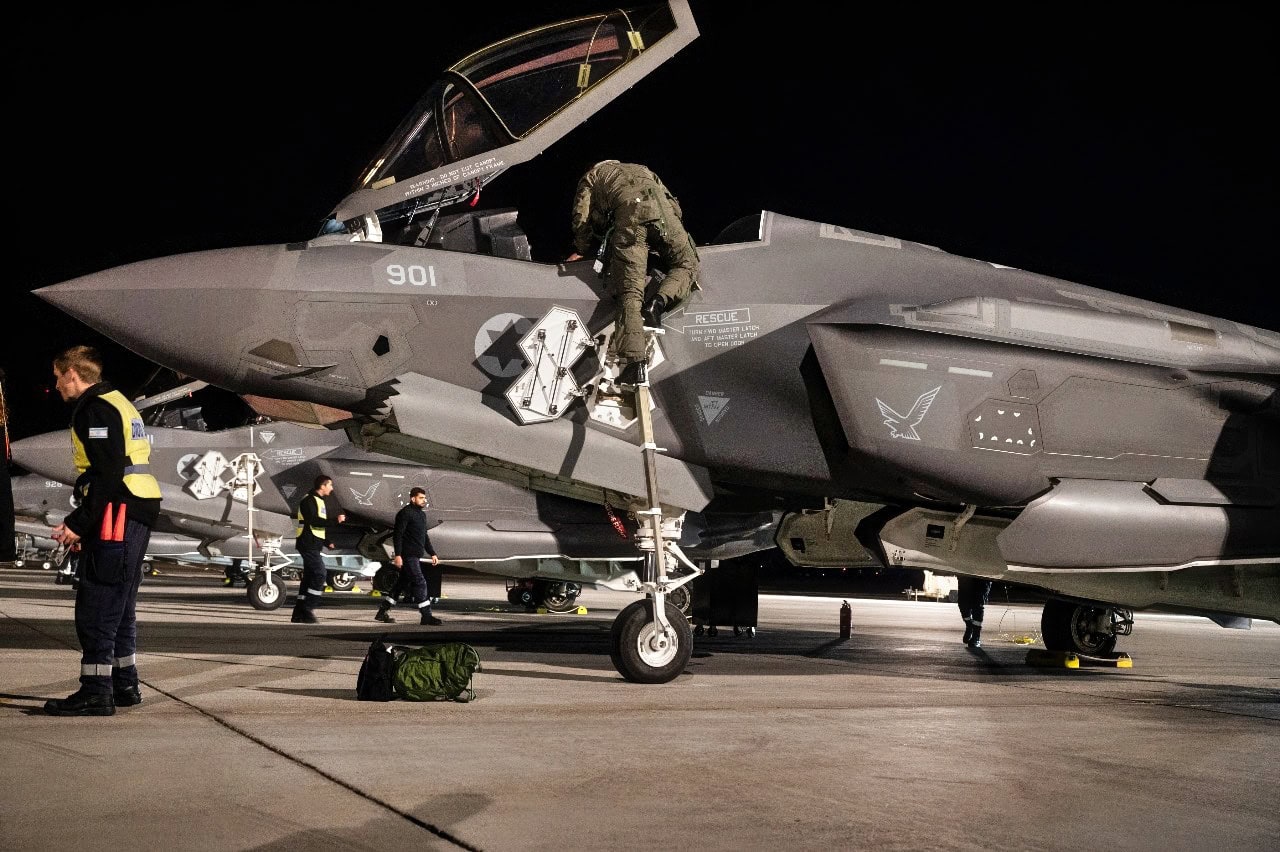
Key Points and Summary – In 2017, Russian and pro-Assad outlets claimed a Syrian S-200 had hit an Israeli F-35I Adir over Syria.
-In reality, the IDF said all jets returned safely and later admitted a separate F-35 had been damaged by a bird strike, a coincidence Moscow spun into “proof” that obsolete Soviet SAMs could down America’s premier stealth fighter.
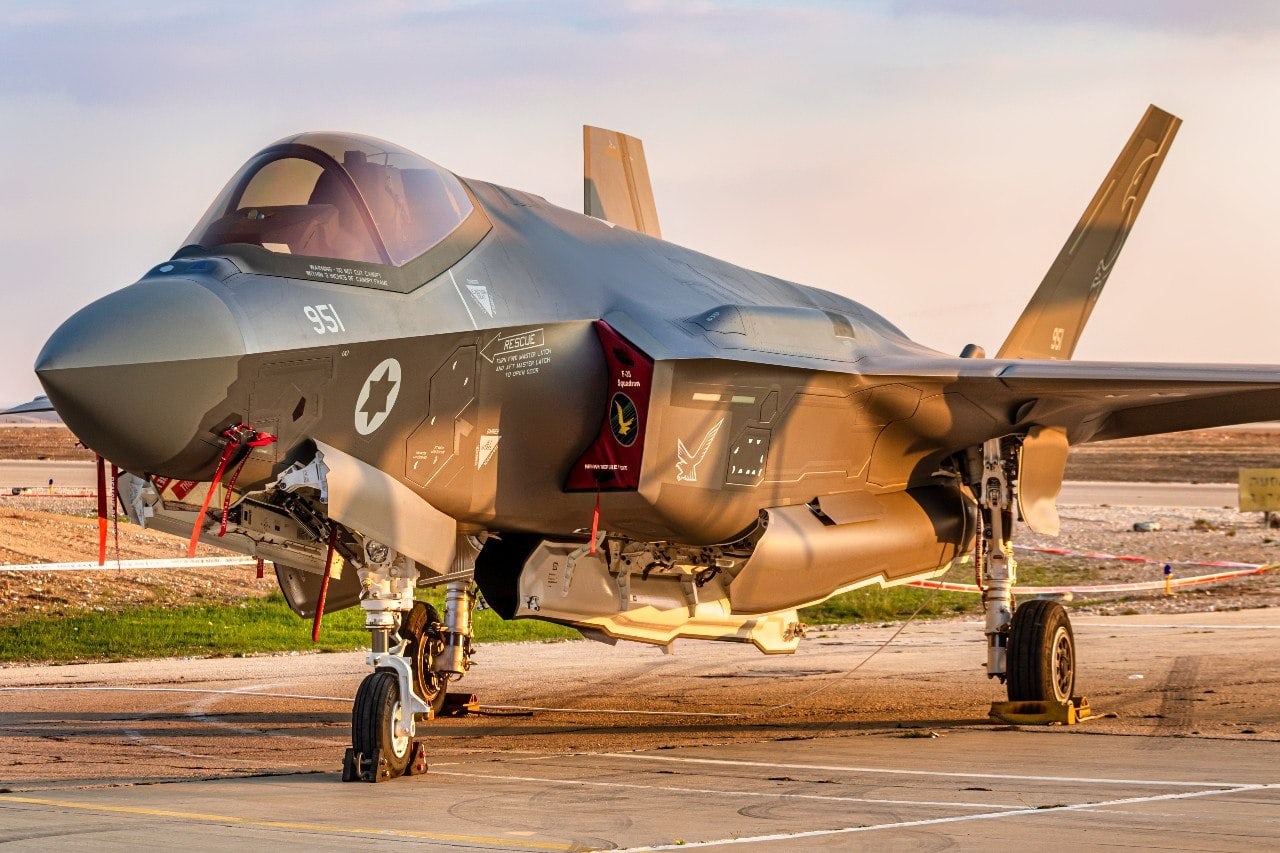
F-35I Adir from Israel. Image Credit: Creative Commons.
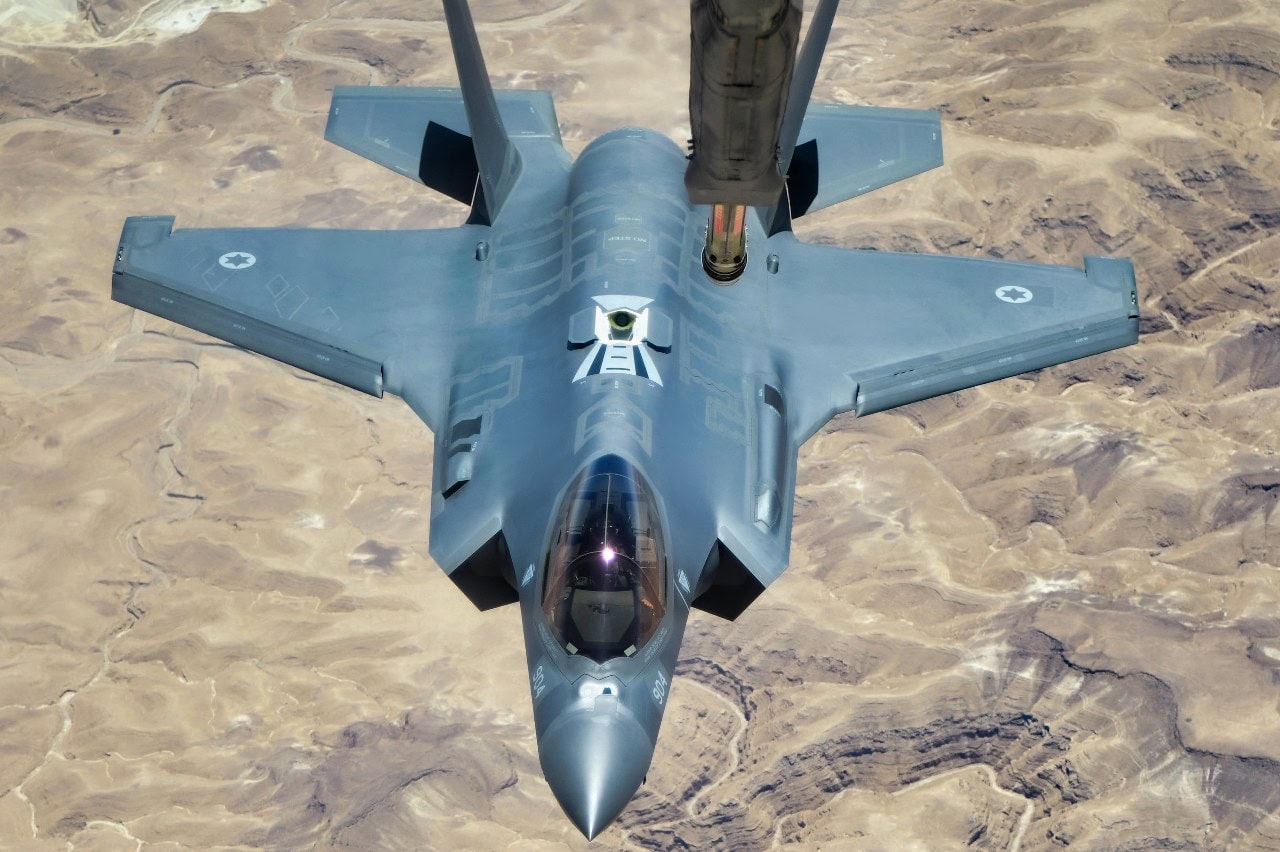
An Israeli Air Force F-35I Lightning II “Adir” approaches a U.S. Air Force 908th Expeditionary Refueling Squadron KC-10 Extender to refuel during “Enduring Lightning II” exercise over southern Israel Aug. 2, 2020. While forging a resolute partnership, the allies train to maintain a ready posture to deter against regional aggressors. (U.S. Air Force photo by Tech. Sgt. Charles Taylor)
-Since then, Israel’s customized F-35I Adir has quietly built a formidable combat record, from strikes on Iranian assets and air defenses to intercepting drones and cruise missiles.
-The scoreboard is clear: Russian-made missiles haven’t killed an F-35. The myth lives online; it died in the air.
Contrary To Many Claims, Russian-made missiles Never Hit An F-35I Adir
Reports in 2017 claimed a Russian-made Syrian S-200 missile hit an Israeli F-35 stealth fighter over Syria, but Israel’s IDF stated the missile missed.
However, an F-35 was later damaged by a bird strike, leading to conflicting narratives, with Russia and pro-Russian sources highlighting the incident as proof that the F-35 isn’t invincible. At the same time, Israel downplayed the missile threat, maintaining its F-35s are effective despite the embarrassing bird strike.
The F-35I Lightning II is an Israeli fifth-generation variant known as Adir, or “the Mighty One.” The F-35 is an American-manufactured single-seat, single-engine, supersonic stealth strike fighter built by Lockheed Martin.
It is a multi-role combat aircraft designed for air superiority and strike missions with electronic warfare, intelligence, surveillance, and reconnaissance capabilities.
Background On The Supposed Missile Strike
On October 16, 2017, the Israeli Air Force (IAF) said it fired on a Syrian air defense missile battery that had fired on Israeli reconnaissance planes flying over Lebanon. The attack damaged the missile battery, and no Israeli aircraft were hit.
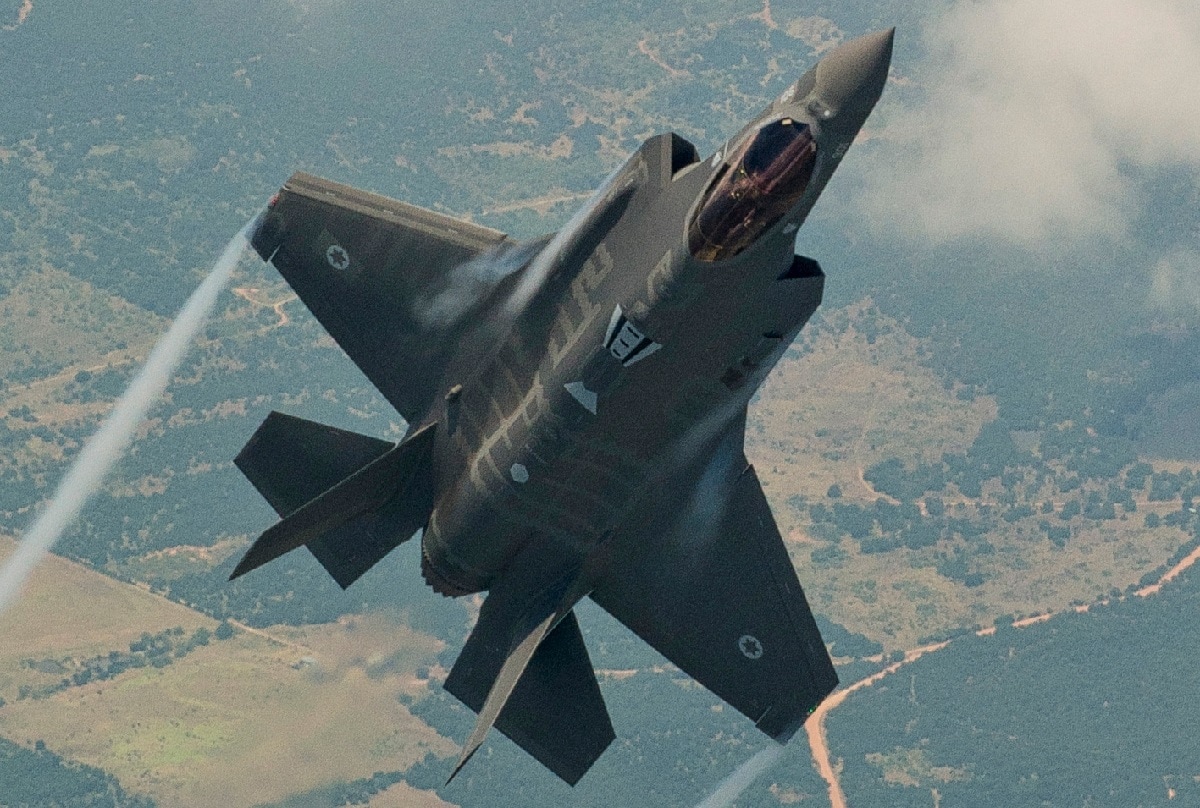
Israeli Air Force F-35I. Image Credit: Creative Commons.
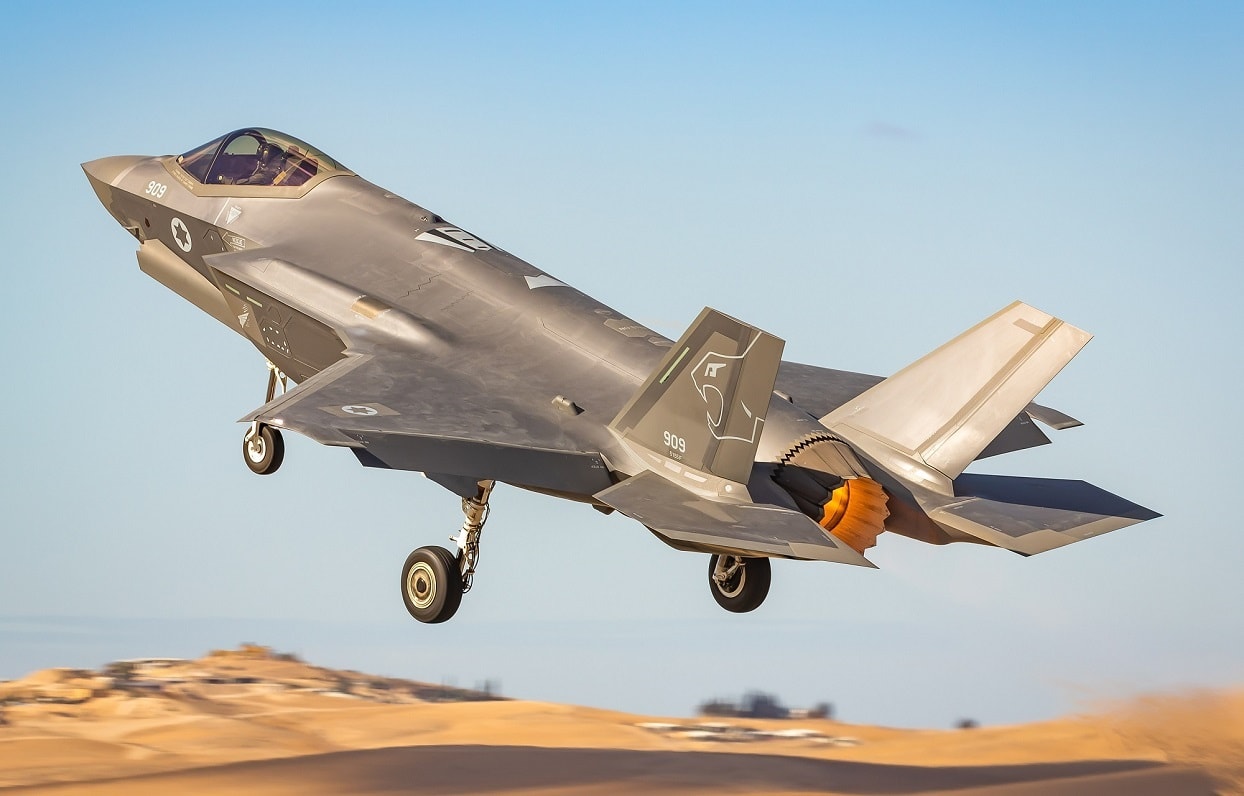
F-35I Adir. Image: Creative Commons.
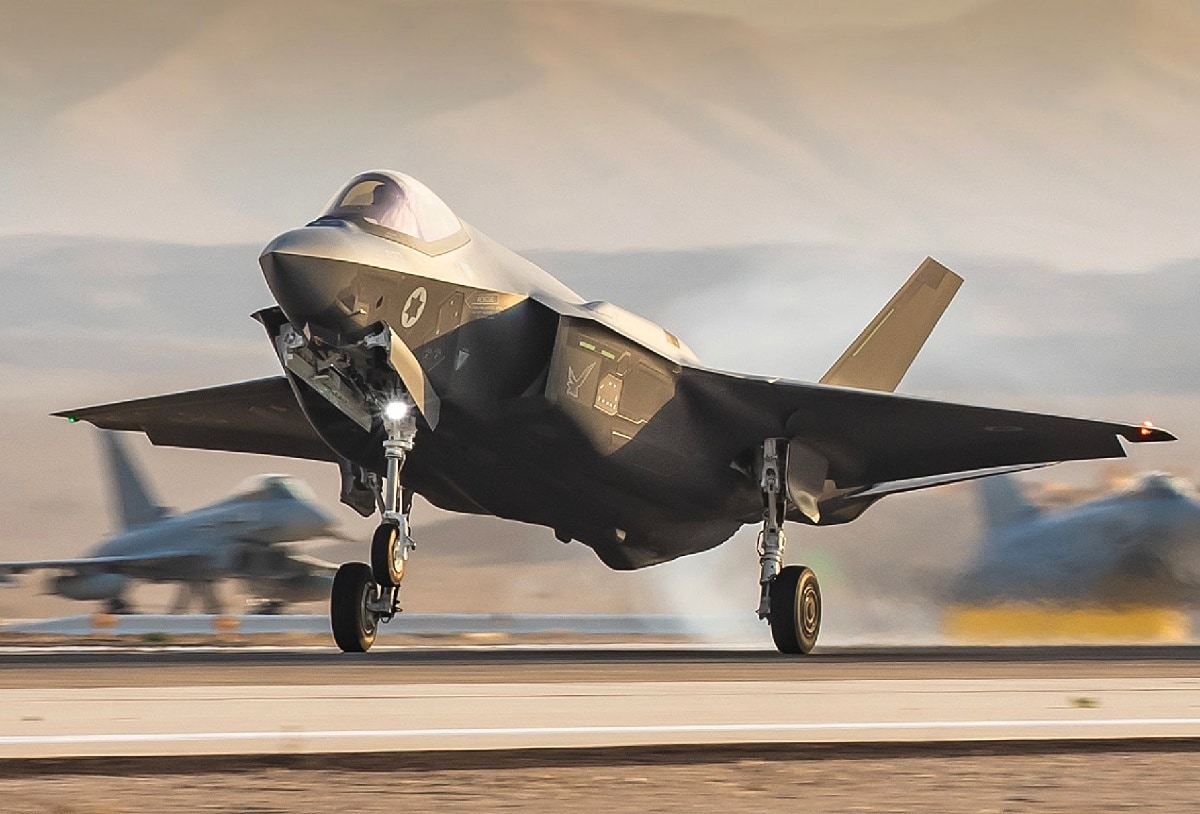
F-35I Adir. Image Credit: Creative Commons.
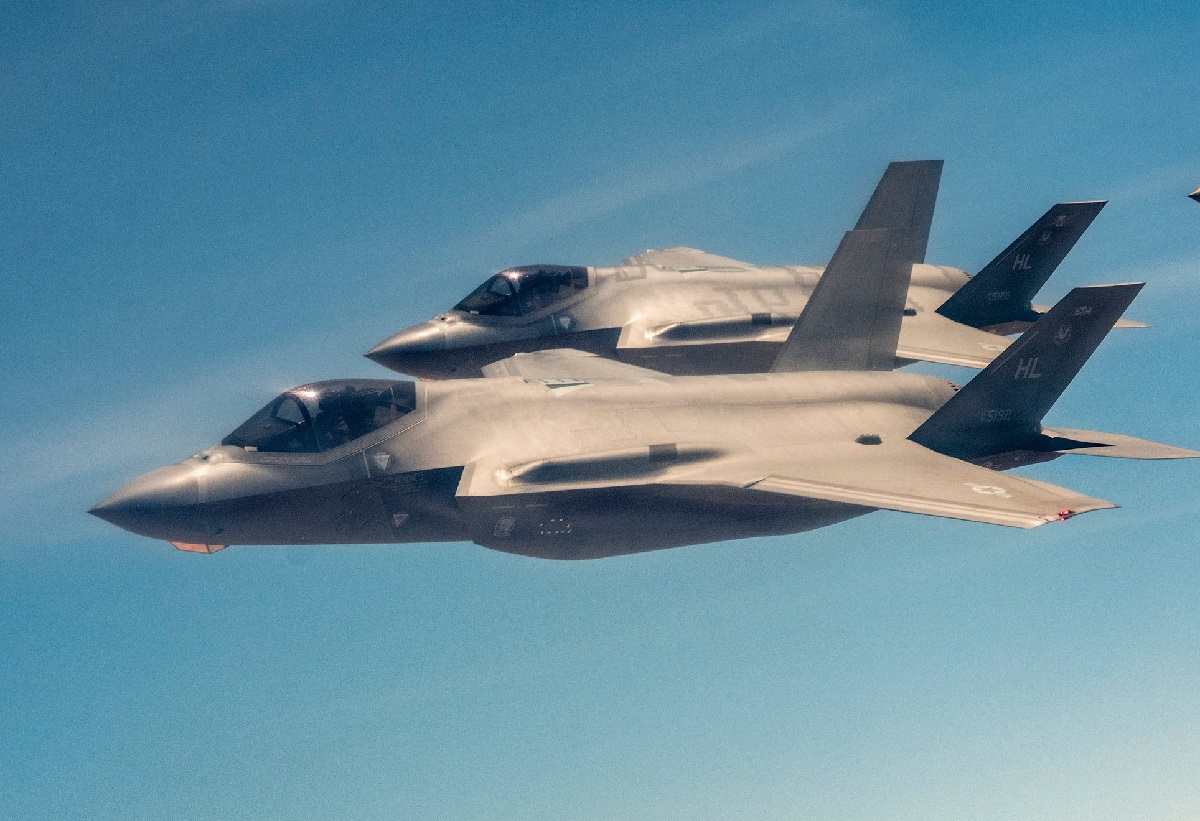
AL DHAFRA AIR BASE, United Arab Emirates – Israeli Air Force F-35I Lightning II “Aldir” and U.S. Air Force 421st Fighter Squadron F-35A Lightning II fly together after refueling from a 908th Expeditionary Refueling Squadron KC-10 Extender during exercise “Enduring Lightning II” over Israel Aug. 2, 2020. While forging a resolute partnership, the allies train to maintain a ready posture to deter against regional aggressors. (U.S. Air Force photo by Master Sgt. Patrick OReilly)
That is when Southfront.org falsely reported that a missile had hit an F-35. This website espoused Russian military intervention during the Syrian Civil War, before Assad was deposed.
“According to the available information, the Syrian Defense Forces used an S-200 missile against the Israeli warplane,” Southfront wrote.
“This Soviet-made missile is the most advanced long-range anti-aircraft system operated by the Syrian military. Even in this case, it’s old-fashioned in terms of modern warfare,” Southfront added, trying to paint the picture that 1960s technology had hit the much-vaunted F-35.
Just a few hours after Tel Aviv reported the missile strike in Syria, Israeli media reported that an Israeli F-35 had been damaged by a bird strike two weeks before. The plane reportedly landed safely, but was heavily damaged.
For Southfront, 2+2 equalled 7, and they tried to paint the picture that the F-35 was not what it was cracked up to be.
Were F-35s Flying Missions In 2017?
It should also be noted that although Israel had F-35s in their possession well before the mission and was training with them, the first F-35I Adir squadrons were not deemed operational until 2018.
Russia tried promoting the Su-57 as a better aircraft than the F-35. And the narrative of the missile strike was self-serving propaganda by Moscow to downplay the effectiveness of the F-35 while drumming up sales for its Su-57, which has been built in only about 75 units.
However, recent events in the Middle East, where the F-35 routed top-tier Russian anti-aircraft defenses, have put that argument to bed.
The aircraft has three main variants: the conventional takeoff and landing (CTOL) F-35A, the short takeoff and vertical landing (STOVL) F-35B, and the carrier variant (CV) catapult-assisted takeoff but arrested recovery (CATOBAR) F-35C.
Meet The F-35I Adir, The Israeli Variant
The Israelis purchased the F-35 from the United States in 2010 and wanted to install their own electronic warfare systems into the Lightning’s built-in electronic suite. The Israelis, however, wanted a plug-and-play feature added to the main computer to allow the use of Israeli electronics as add-ons and to accommodate their own external jamming pod.
At first, the US objected to any modifications, but in 2011, it relented, and Lockheed Martin constructed the aircraft, which was headed to Israel, where Israeli electronic systems were installed. In addition, the US allowed Israel to mount their own missiles.
And the Israeli variant may be even better than the original design.
Some of these changes involved specific countermeasures and sensors tailored to Israel’s needs, such as helmet-mounted displays and other data-gathering and processing capabilities. Pilots can use the platform’s electronics suite to jam enemy anti-aircraft weapons’ guidance systems and electronics.
Israel insisted on being involved in the manufacturing process, and now it produces the outer wing and the electronic sensors.
F-35I Aidir In Combat
In 2018, IAF commander Maj. Gen. Amikam Norkin reported that the IAF became the first service to use the F-35I in combat. The IDF reported that, when Iran launched 32 rockets into Israel, the IAF counterattacked with its F-35I fleet, which destroyed anti-aircraft systems and other targets.
In 2021, Israel shot down two Iranian-launched drones, which was the first time the Aidir shot down an airborne threat.
In 2023, the IAF used F-35I Adir fighter jets to shoot down a cruise missile launched by Houthi terrorists in Yemen, the first known cruise missile intercepted by the stealth fighter. “In recent days, a cruise missile launched from the southeast toward Israeli airspace was detected by the IAF’s control and detection systems.
After tracking the cruise missile’s trajectory, Adir fighter jets were scrambled and successfully intercepted the missile,” the IDF reported while posting a video of the incident on social media.
Late last year, the IAF made a massive airstrike inside Iran, and the F-35s showed their true capabilities. Iran and Syria had S-400 and S-500 air defenses created by the Russians, and those were destroyed easily without any losses on the Israeli side. The F-35I went undetected.
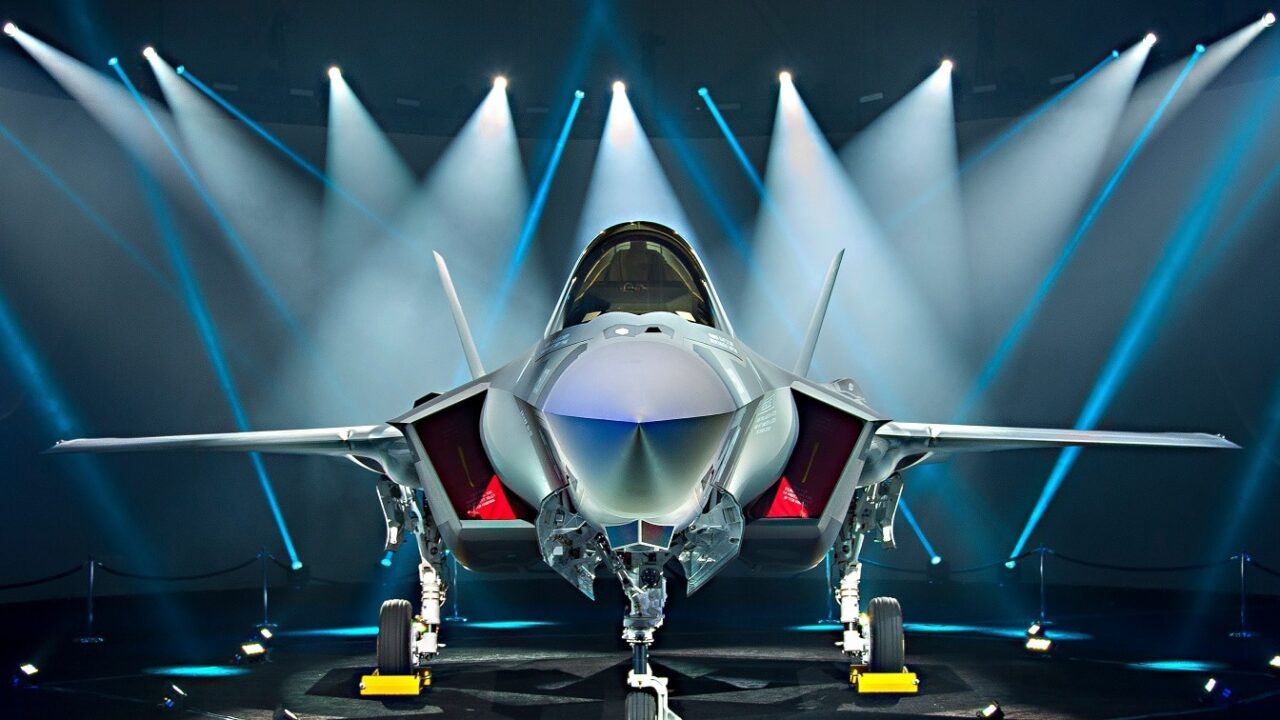
F-35I Adir Variant. Image Credit: Lockheed Martin.
Admiral Tony Radakin, the UK’s chief of defense staff, chief of defense staff, said, “Israel used more than 100 aircraft, carrying fewer than 100 munitions, and with no aircraft getting within 100 miles of the target in the first wave, and that took down nearly the entirety of Iran’s air-defense system.”
“It has destroyed Iran’s ability to produce ballistic missiles for a year and left Tehran with a strategic dilemma in how it responds. That is the power of fifth-generation aircraft, combined with exquisite targeting and extraordinary intelligence,” Radakin added. “And that was all delivered from a single sortie.”
Operation Rising Lion Shows F-35’s Worth
If the air operations of last October weren’t enough proof of the F-35’s capability, the follow-on operations this past summer drove home the point.
During Operation Rising Lion, the F-35I’s stealth capabilities were put to the test against Iran’s rebuilt layered air defense network, which includes Russian-made S-300 systems and Iran’s domestically produced Bavar-373.
Iran claimed that it shot down several F-35s, but its “proof” consisted of poorly Photoshopped images. Israeli Adirs wiped out the Iranian air defenses again and were openly flying over Tehran during daylight, which shows just how complete Israel’s air dominance of Iran was.
The Israelis have shown that the F-35I, the American-built F-35, is more than up to its design task. And it put to bed the rumor that a Russian-built 1960s missile hit one of their aircraft.
About the Author: Steve Balestrieri
Steve Balestrieri is a National Security Columnist. He served as a US Army Special Forces NCO and Warrant Officer. In addition to writing on defense, he covers the NFL for PatsFans.com and is a member of the Pro Football Writers of America (PFWA). His work was regularly featured in many military publications.