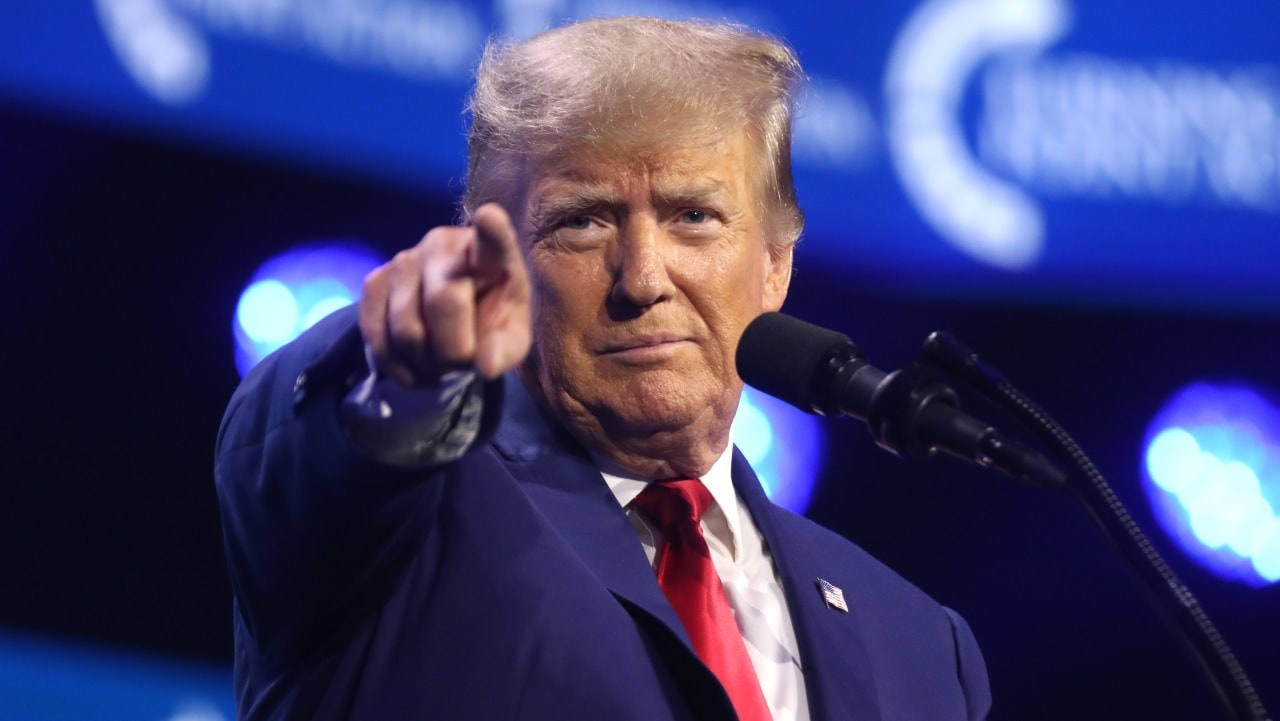
In 2016, Donald Trump Asked His Foreign Policy Team 3 Times in One Hour Why He Couldn’t Use Nuclear Weapons
In 2016, Joe Scarborough made a noteworthy statement that most people dismissed as unsubstantiated gossip at the time.
While hosting his Morning Show, the frequent Trump critic claimed that the then-forty-fifth president of the United States had asked his foreign policy team no fewer than three times in an hourlong meeting why he could not use nuclear weapons against the perceived enemies of the United States.
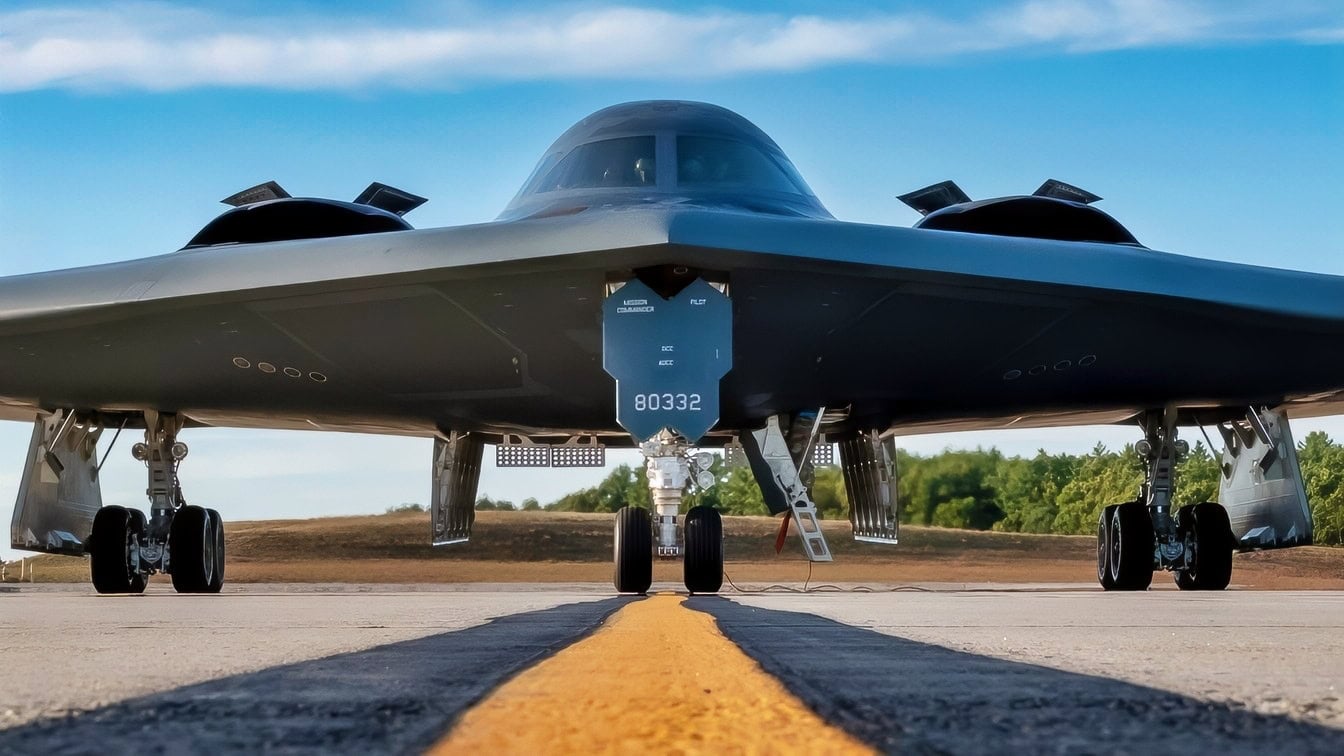
A U.S Air Force B-2 Spirit aircraft is shown on the flight line at Pease Air National Guard Base, New Hampshire, Sept. 20, 2025. The aircraft is the first operated by the 509th Bomb Wing to land at Pease ANGB, formerly Pease Air Force Base, since the 509 BW, formerly 509th Bombardment Wing, was stationed at Pease AFB and the active-duty base closed nearly 35 years ago. The lineage of the 509th BW traces back to the World War II Era when the 509th Composite Group dropped the atomic bombs on Japan. (U.S. Air Force photo by Staff Sgt. Joshua Hastings)
Understanding the Nuclear War Context on Iran War
In 2016, everyone dismissed Scarborough’s claims as exaggerated. It was just political backbiting. However, given President Donald Trump’s statement earlier today, in which he threatened to destroy the Persian civilization if they didn’t meet his demands, Scarborough’s claims from a decade ago deserve a second look.
After all, the past often serves as a prelude.
And if you combine those claims with what Trump has said and done so far, it doesn’t seem as unlikely that the president might be the first since Harry S. Truman to consider using nukes. Sure, the president has, at times, talked about ending nuclear weapons.
But that is the exception to the rule.
Considering how the American nuclear weapons launch process works, it really comes down to the president whether he will launch nuclear weapons or not. Congress has no real role in that decision.
That is why so many Americans are currently worried about what the president might do, especially given his recent Truth Social post vowing to destroy Persian civilization if they did not obey his orders.
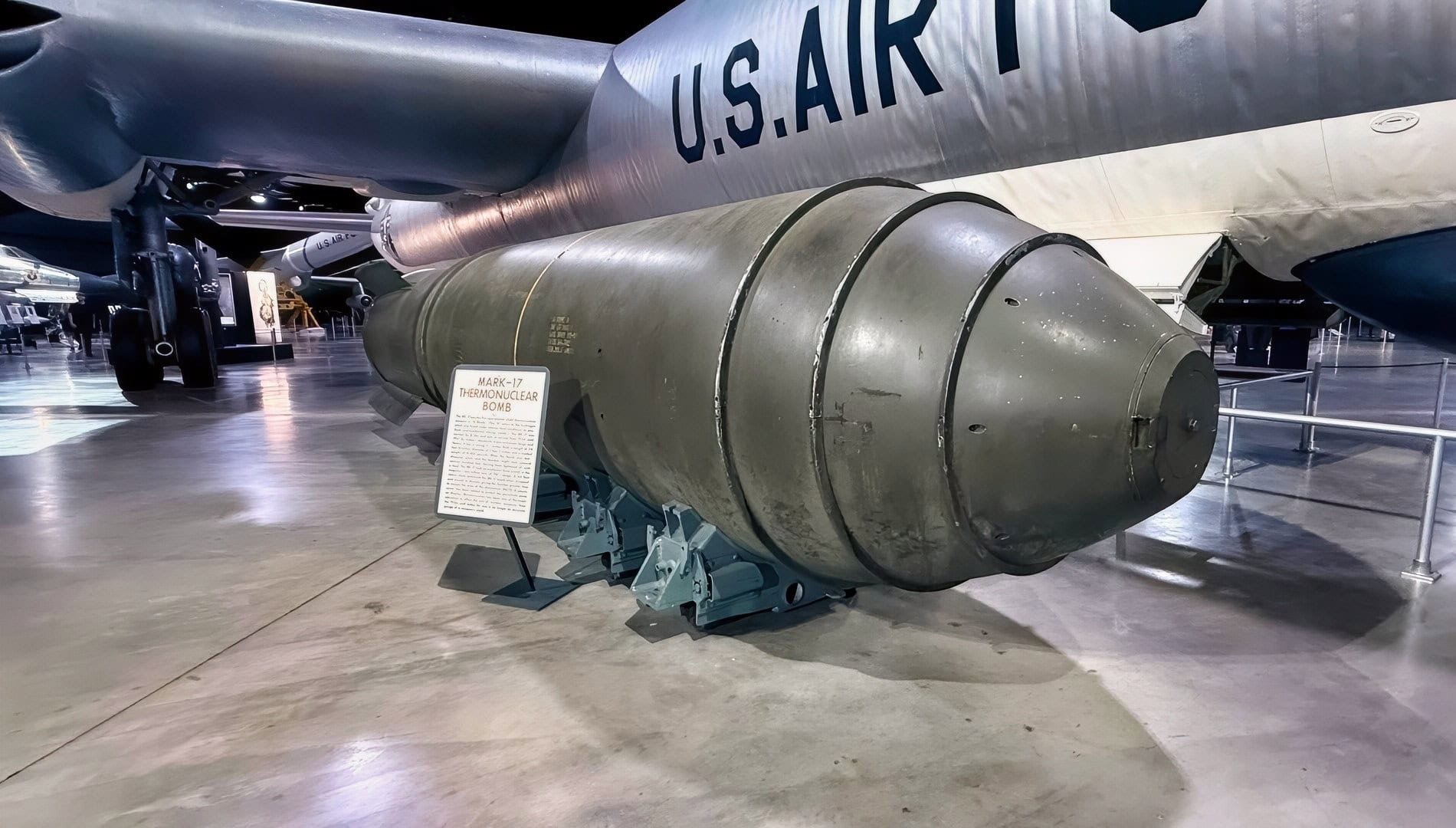
Mark-17 Nuclear Bomb 19FortyFive.com Image
Uncontrolled Escalation
Given the prospects of escalation and the likelihood that the United States will not succeed with what many believe will be an attempted landing at Kharg Island, what happens if that landing fails? Will Trump abandon the mission altogether? Or will he escalate further to nuclear weapons? What about the Israelis?
We are, unfortunately, now at a point where these questions are no longer just for the fringes of the internet. These are serious discussions. Already, the Trump administration has shown a notable ability to ignore the best advice from its top military leaders.
Leading up to the war, the chairman of the Joint Chiefs of Staff (JCS), US Air Force General Dan “Razin’” Cain, warned against the attacks on Iran on February 25.
Sadly, the US president went ahead anyway. Again, before this weekend’s purported rescue operation near the Iranian nuclear weapons site in Isfahan, a group of US generals suddenly—and unexpectedly—retired.
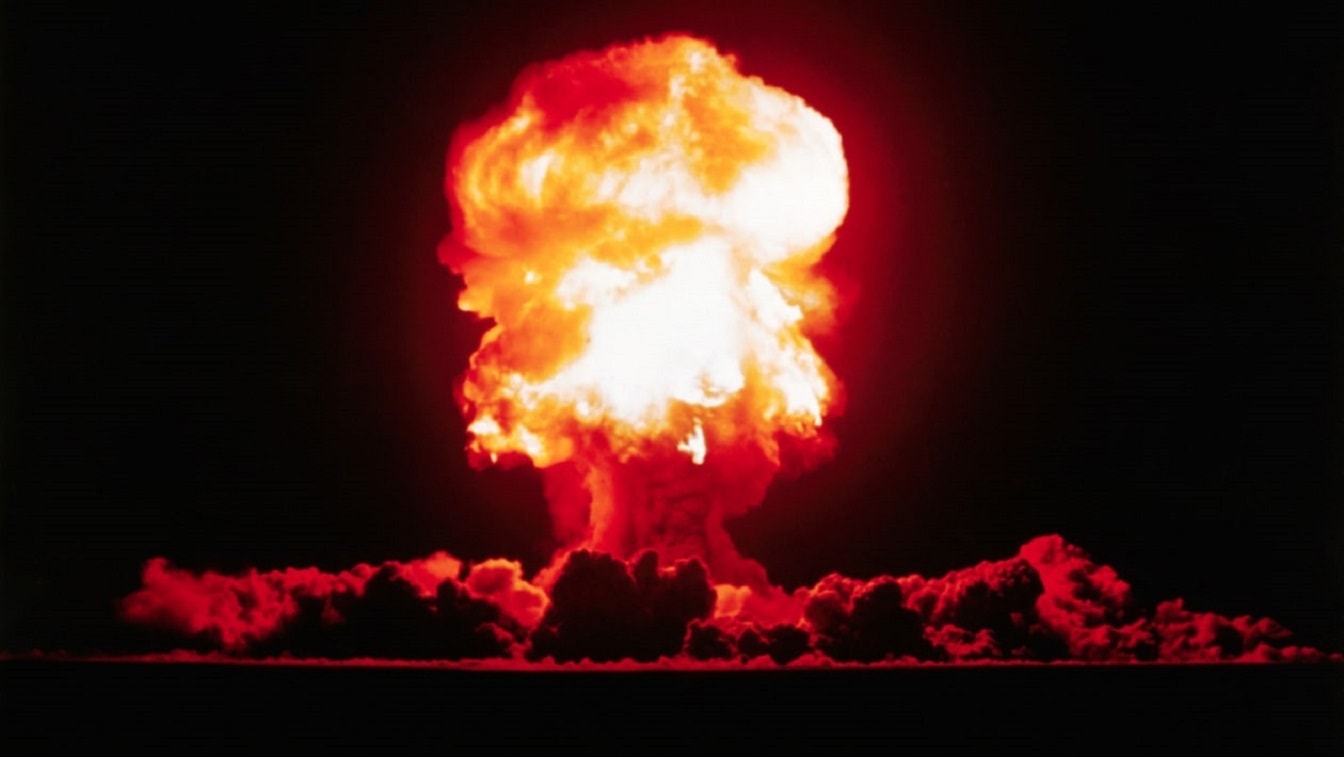
Nuclear Weapons Test. Image Credit: Creative Commons.
Although unconfirmed, the rumor is that it was due to the Trump administration’s decision to attempt the operation near Isfahan, which resulted in nearly $400 million worth of warplanes being lost to Iran’s strong air defenses.
No More Guardrails
All this indicates that any safeguards against escalation have been removed either by this president or for him. We are already talking about deploying thousands of US ground troops in what most experts believe will be a replay of the Battle of Gallipoli, but on Kharg Island. So, it is very likely we will be discussing deploying nuclear weapons if the ground forces fail to reach their goal.
Moreover, President Trump has expressed his opposition to the Iranian nuclear weapons program, a stance he has maintained for about a decade. Trump has consistently been a hardliner on that specific issue in the US-Iranian relationship.
Last year, he intervened in the 12-Day War to ensure the Iranian nuclear weapons development facilities were targeted with B-2 Spirit bomber strikes and Tomahawk Land Attack Cruise Missiles (TLAMs).
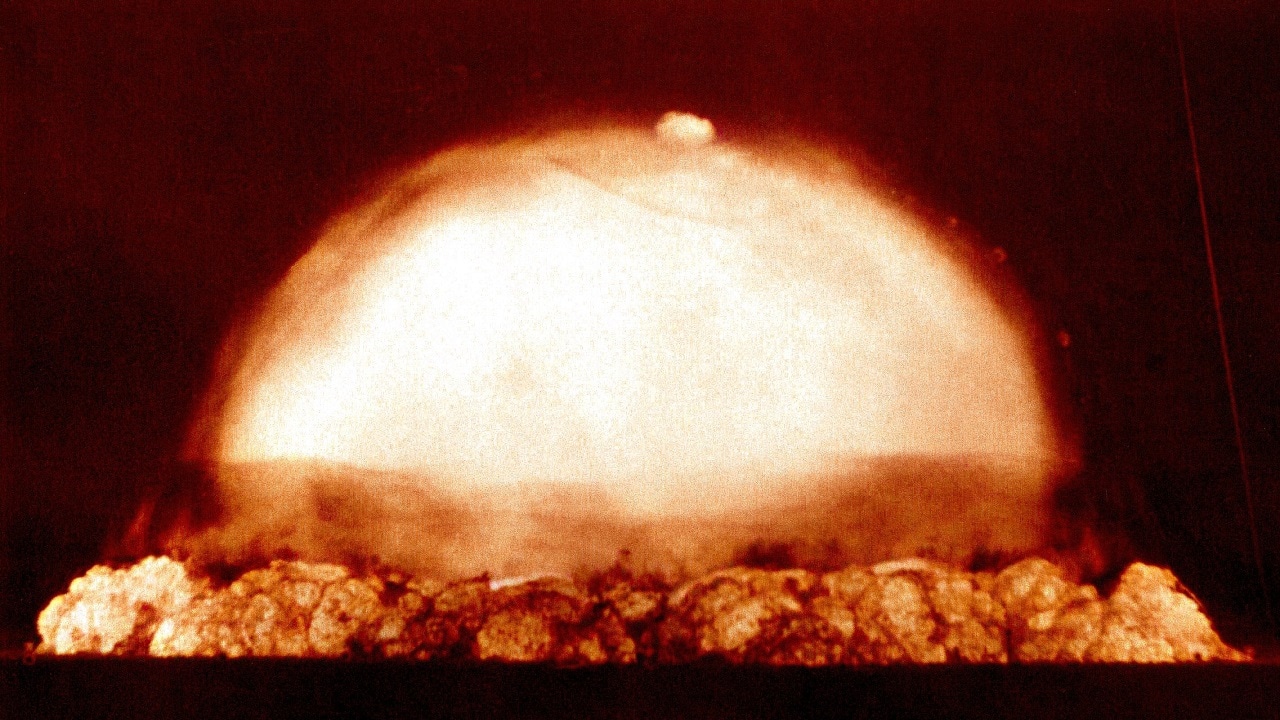
Trinity nuclear weapons test. Image Credit: Creative Commons.
Again, during the current war, Trump justified starting the conflict by claiming the Iranians were two weeks away from achieving a nuclear weapons breakout.
It has been suggested that the president wants to carry out another raid against suspected nuclear weapons facilities in Iran.
Considering how deeply buried these suspected nuclear sites are—and the fact that last year’s strikes clearly did not“obliterate” the Iranian WMD sites—it might be that the only guaranteed way to access those hardened nuclear bunkers is to use our own or Israeli nuclear weapons against them.
What is clear is that the United States is stuck in a real escalation trap.
The president cannot afford to de-escalate without essentially conceding the game to the Iranians. Moreover, the American leader cannot maintain the current situation, since the Iranians have matched the Americans at this level of escalation.
Up She Rises
So, up the president climbs.
And if the military experts are correct and ground troops at Kharg or elsewhere along the Iranian coastline fail, as Iran continues to develop some early-stage nuclear weapons capability, it is clear that the safeguards against reckless use of nuclear weapons in the United States are being eroded.
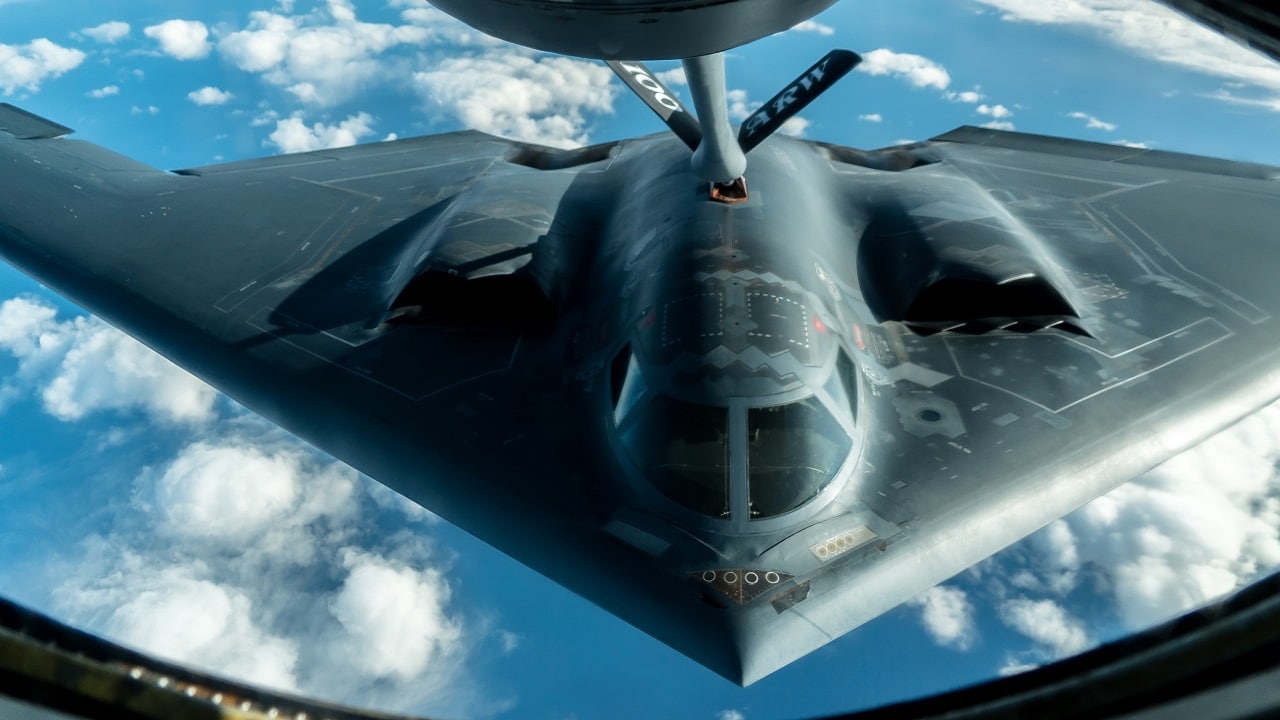
A U.S. Air Force B-2 Spirit assigned to the 509th Bomb Wing from Whiteman Air Force Base, Missouri, receives fuel from a 100th Air Refueling Wing KC-135 Stratotanker during Global Thunder 20, Oct. 28, 2019. Global Thunder is an annual command and control exercise that provides training opportunities for all of U.S. Strategic Command’s mission areas, tests joint and field training operations, and has a specific focus on nuclear readiness. (U.S. Air Force photo by Staff Sgt. Trevor T. McBride)
While I doubt that the US president will deploy nuclear weapons tonight, I am convinced we are closer to launching nuclear strikes at the Iranians than at any other time since the nuclear attacks by the United States on Japan that ended the Pacific Theater of the Second World War.
Once that occurs, it will be a completely new world where other major powers with nuclear weapons will try to use their systems to intimidate their enemies and neighbors—and smaller nations will seek their own nuclear protection to defend against the larger, more aggressive powers.
About the Author: Brandon J. Weichert
Brandon J. Weichert is the Senior National Security Editor at 19FortyFive.com. Recently, Weichert became the editor of the “NatSec Guy” section at Emerald.TV. He was previously the senior national security editor at The National Interest. Weichert is the host of The National Security Hour on iHeartRadio, where he discusses national security policy every Wednesday at 8pm Eastern. He hosts a companion show on Rumble entitled “National Security Talk.” Weichert consults regularly with various government institutions and private organizations on geopolitical issues. His writings have appeared in numerous publications, among them Popular Mechanics, National Review, MSN, and The American Spectator. And his books include Winning Space: How America Remains a Superpower, Biohacked: China’s Race to Control Life, and The Shadow War: Iran’s Quest for Supremacy. Weichert’s newest book, A Disaster of Our Own Making: How the West Lost Ukraine, is available for purchase wherever books are sold.