
Summary and Key Points: Kris Osborn, President of Warrior Maven and former Pentagon expert, evaluates the B-21 Raider’s role as the “paradigm-changing” backbone of U.S. air power.
-As Operation Epic Fury highlights the necessity of massed force, the B-21’s broadband stealth—featuring more horizontal, seamless inlets—aims to neutralize advanced Russian S-400 and S-500 air defenses.
-This report analyzes the bomber’s role as a “multifunctional” command node for loyal wingman unmanned systems.
-Osborn concludes that while the B-21 offers unprecedented sensing and computing, its strategic success depends on the Air Force’s ability to scale production for high-intensity conflict.
Beyond the B-2: Analyzing the B-21 Raider Bomber’s New “Flatter” Fuselage and Invisible Inlets
Militaries around the globe are doubtless aware that new generations of technology change maneuver formations, tactics, and concepts of operation, yet these paradigm-changing systems also need to exist at scale.
There is still a need to mass force and generate sustained, large-scale firepower. New platforms such as the U.S. Air Force’s B-21 can change the balance of power between countries and help ensure air superiority, yet accomplishing this task depends on scale as well, as B-21s must exist in large enough numbers to sustain a large-scale war effort.
Operation Epic Fury further highlights the need to “scale” and “mass” power from the air. This current reality may influence ongoing decisions to flex production and increase the planned size of the B-21 fleet.
While Iran’s Russian-built air defenses may not be destroyed, the country has a history of holding aircraft at risk to some degree.
Of course, Russia and China also operate advanced air defenses, and any large-scale operation would likely require a large fleet of B-21s.
Why More B-21s?
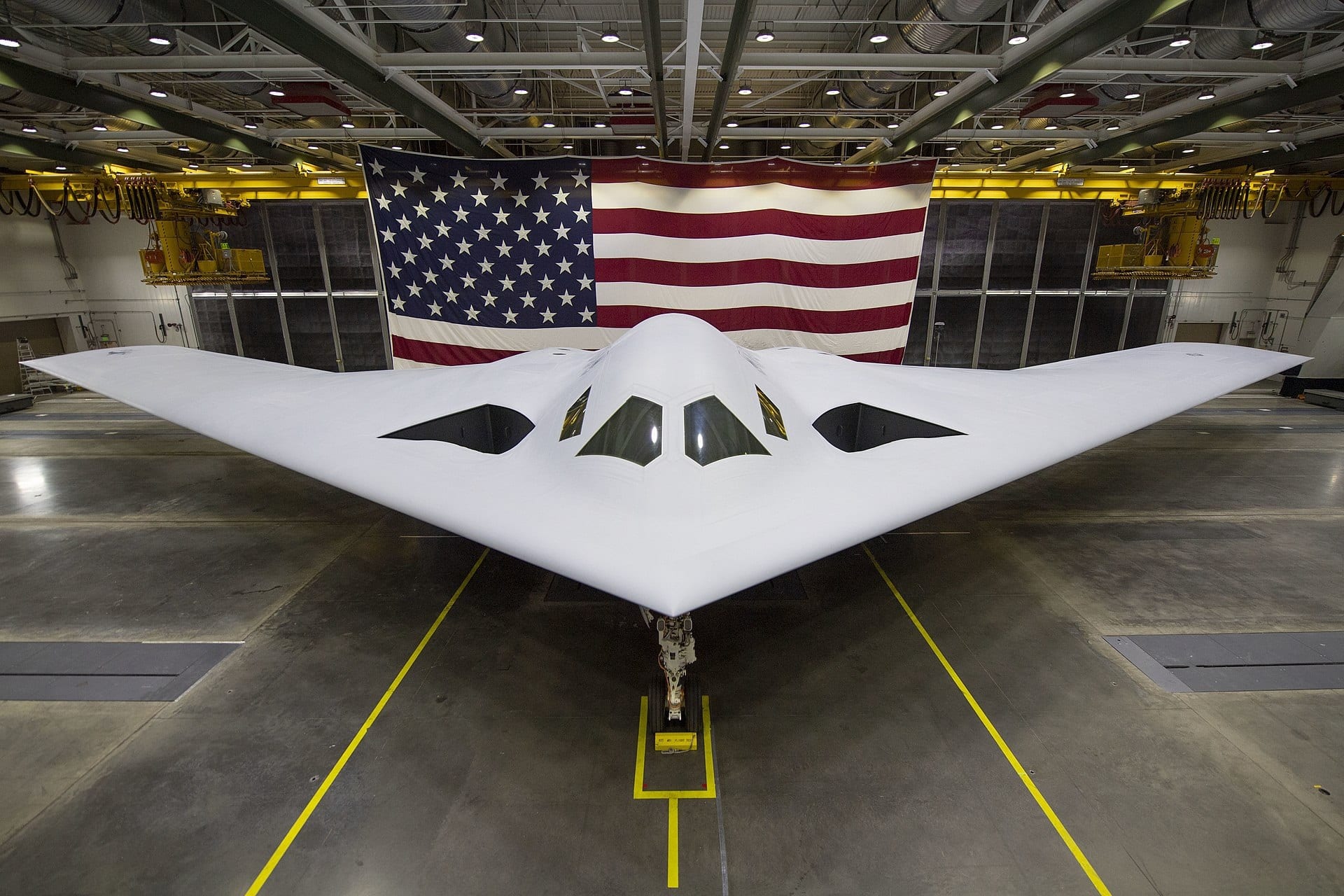
The B-21 Raider was unveiled to the public at a ceremony December 2, 2022 in..Palmdale, Calif. Designed to operate in tomorrow’s high-end threat environment, the B-21 will play a critical role in ensuring America’s enduring airpower capability. (U.S. Air Force photo)
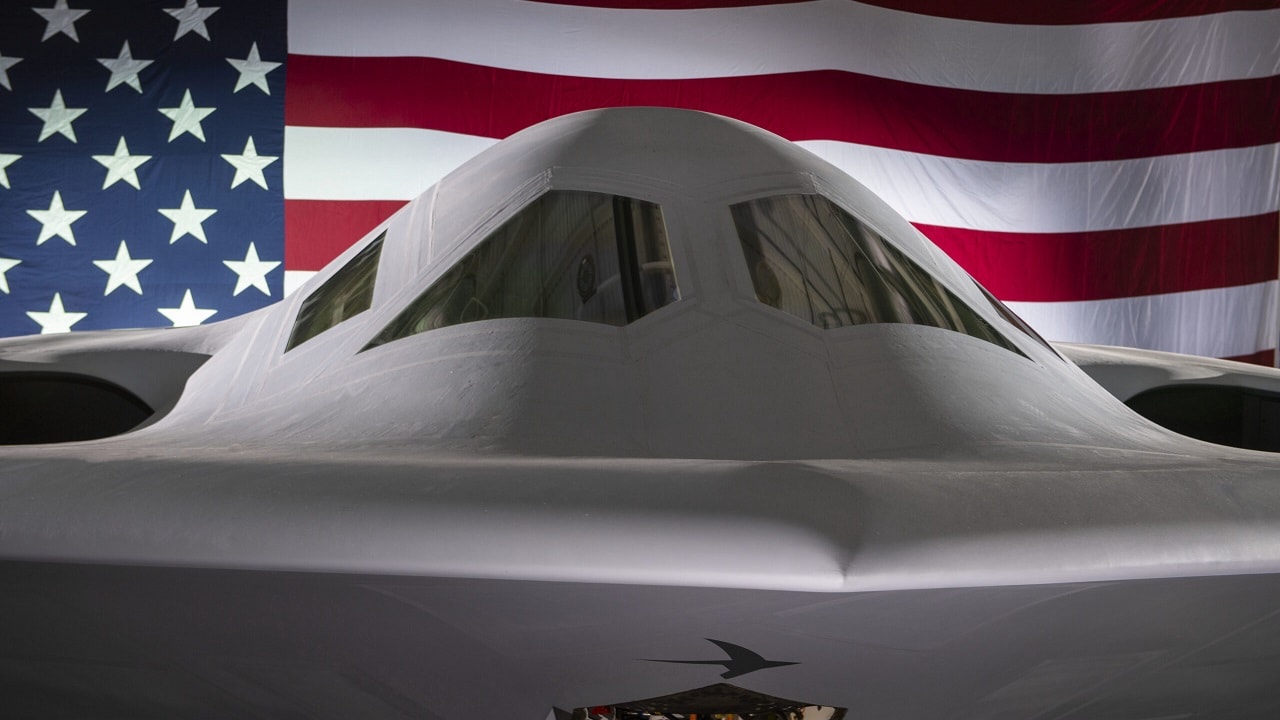
The B-21 Raider was unveiled to the public at a ceremony December 2, 2022 in Palmdale, Calif. Designed to operate in tomorrow’s high-end threat environment, the B-21 will play a critical role in ensuring America’s enduring airpower capability. (U.S. Air Force photo)
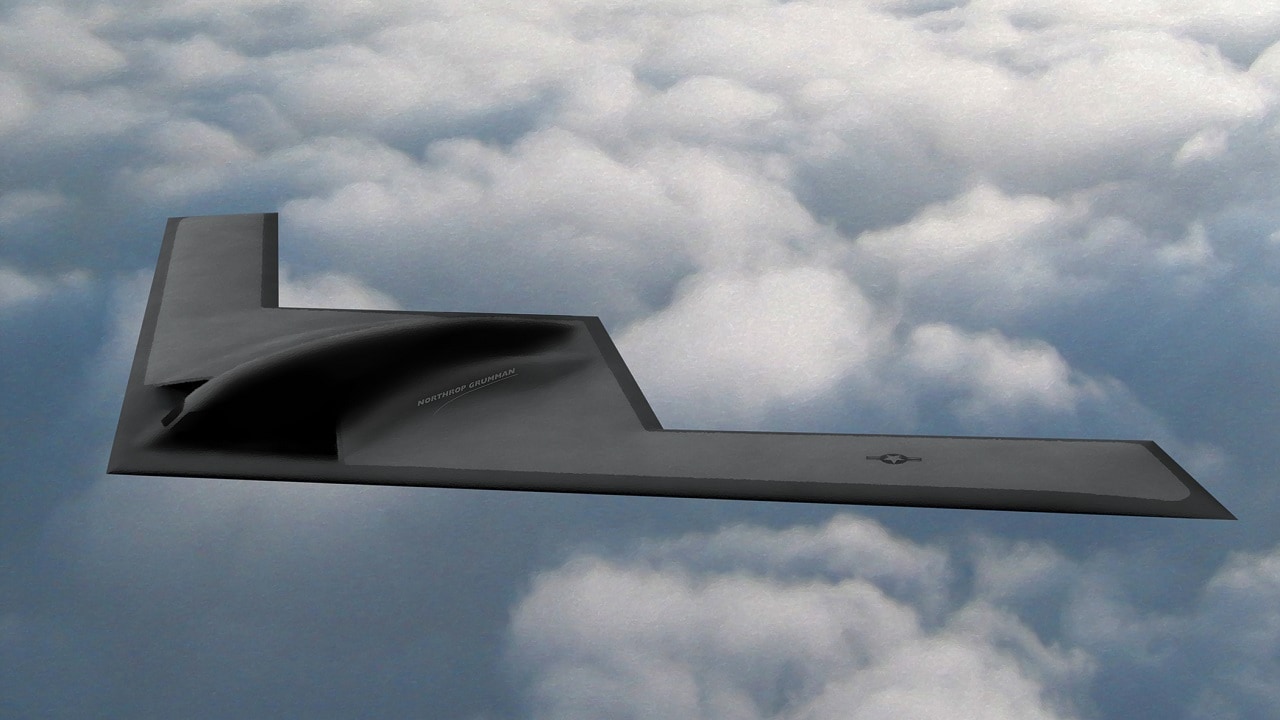
B-21 Raider bomber. Image Credit: Creative Commons.
The B-21 Raider is designed with an open systems architecture, enabling rapid insertion of mature technologies and allowing the aircraft to be effective as threats evolve. The bomber was designed up front for supportability and maintainability-based upon decades of lessons learned and best practices from prior aircraft programs-to improve long-term affordability and outcomes in operations and sustainment. The B-21 first flight is anticipated to take place in calendar year 2023. (U.S. Air Force photo)
Alongside whatever stealth technologies the aircraft has, attributes likely include radar-absorbent materials, embedded antennae, and acoustic signature management. The B-21 is reported to offer unprecedented advantages in weaponry, sensing, and computing.
Senior Air Force weapons developers have also been clear that the B-21 will operate with, and likely control, unmanned systems as “loyal wingmen” in positions to advance sensing, reconnaissance, and targeting.
When it comes to threat information, Austin also made it clear that the bomber will be “multifunctional,” meaning it will perform a wide range of missions beyond simply “attacking” or dropping bombs.
Ground-based air defense radar technologies have become increasingly sensitive and precise, longer-range, better networked through digital processing, and capable of operating on a wider range of frequencies.
These technologies, as demonstrated by Russian S-400 and Chinese HQ-9 air defenses, have vastly increased the risk to stealth platforms in recent years and underscored the need for a new generation of low-observable technology.
Need for Stealth
Russian media claims its new S-400 and S-500 Surface-to-Air Missiles can track and shoot down even stealth platforms. This ambitious claim does not seem to have been verified or corroborated in any substantial way. What is known, however, is that new Russian-built air defenses are networked to one another with much faster computer processing, able to see or detect targets at much greater ranges and capable of operating on a wider range of frequencies.
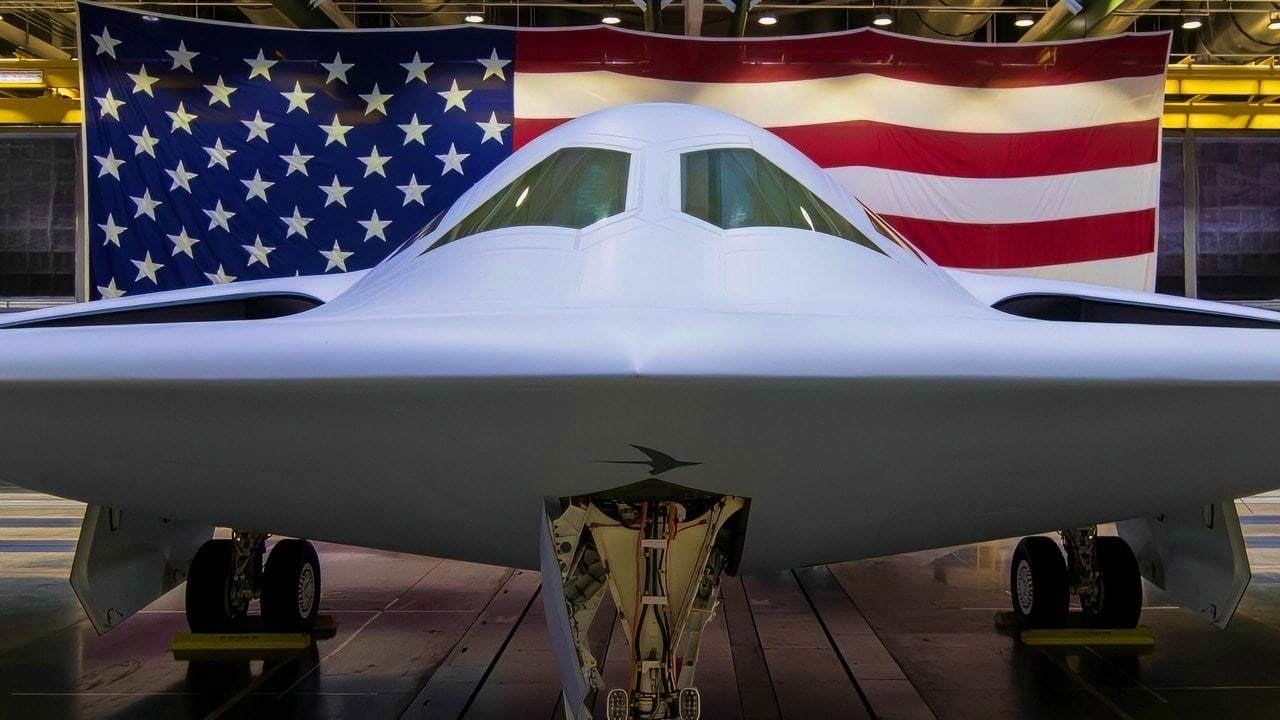
The B-21 Raider was unveiled to the public at a ceremony December 2, 2022 in Palmdale, Calif. Designed to operate in tomorrow’s high-end threat environment, the B-21 will play a critical role in ensuring America’s enduring airpower capability. (U.S. Air Force photo)
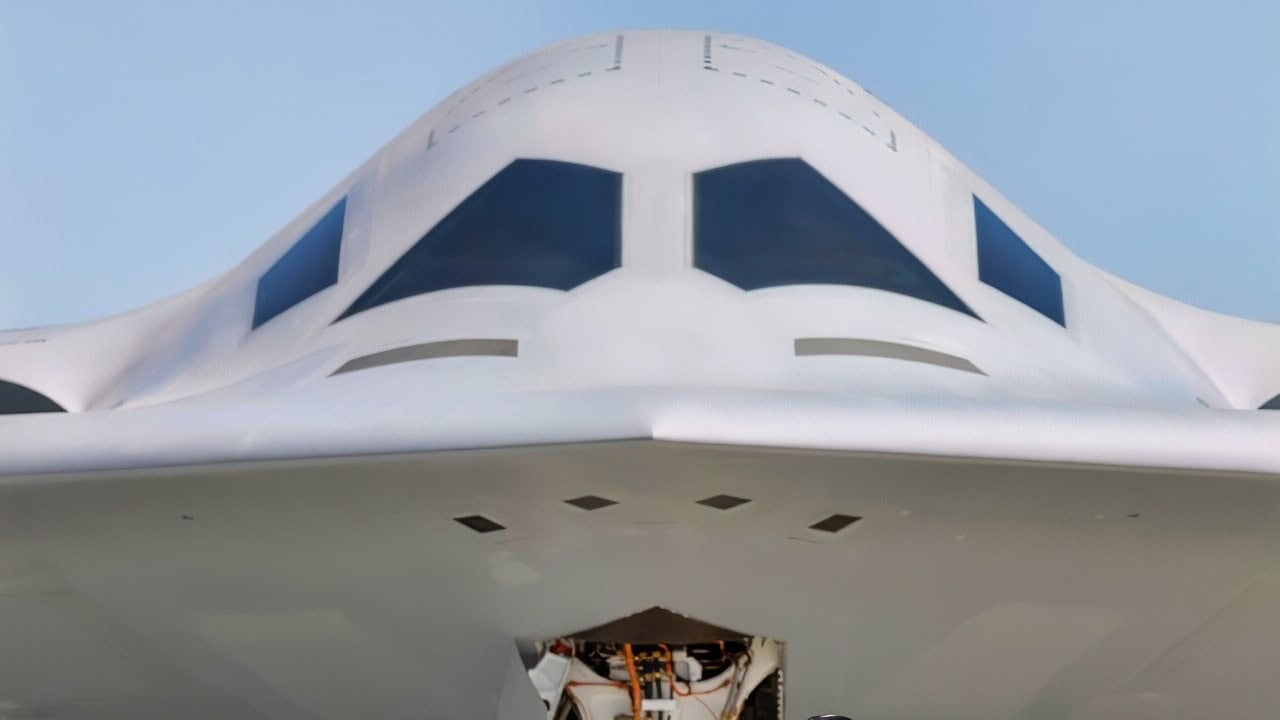
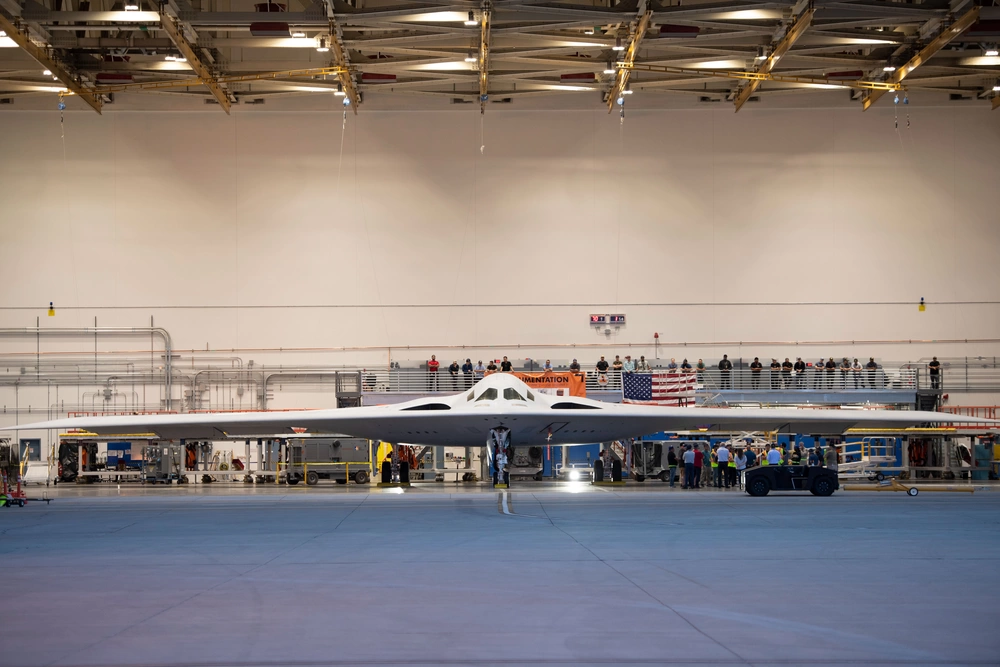
U.S. Air Force Airmen with the 912th Aircraft Maintenance Squadron prepare to recover the second B-21 Raider to arrive for test and evaluation at Edwards AFB, Calif., Sept. 11, 2025. The arrival of a second test aircraft provides maintainers valuable hands-on experience with tools, data and processes that will support future operational squadrons. (U.S Air Force photo by Kyle Brasier)
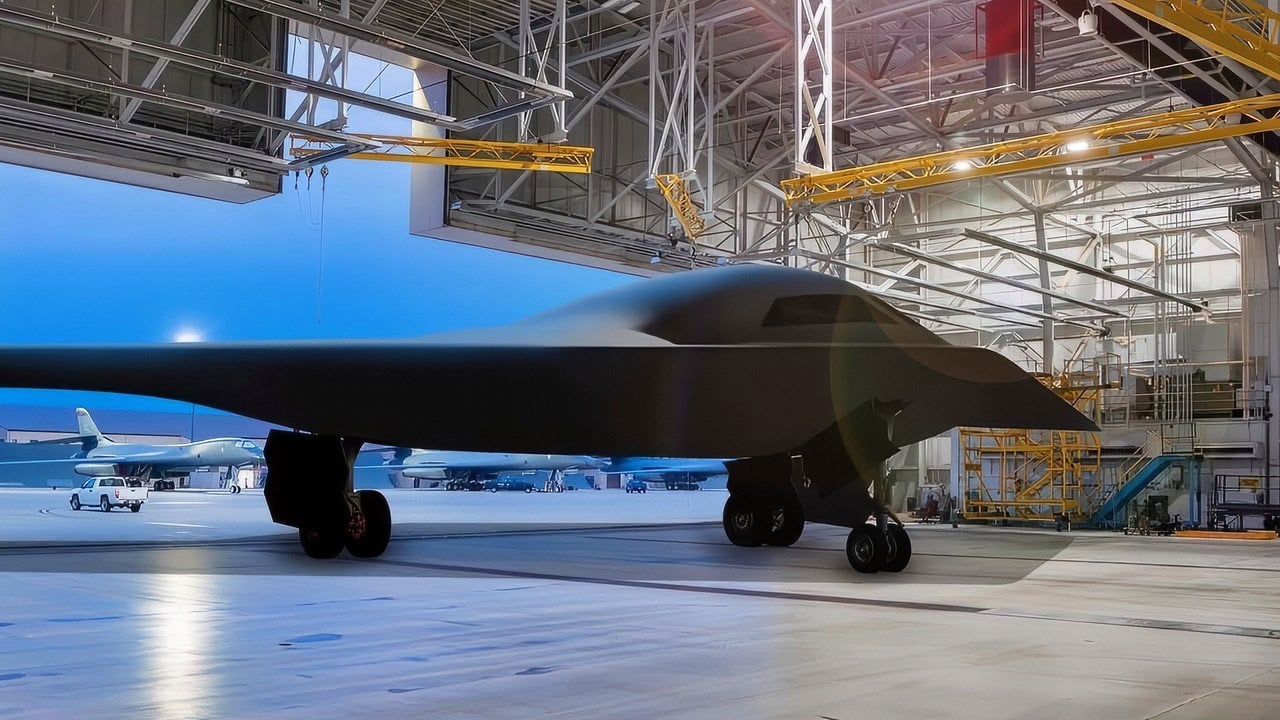
Artist rendering of a B-21 Raider in a hangar at Ellsworth Air Force Base, South Dakota, one of the future bases to host the new airframe. AFCEC is leading a $1 billion construction effort at Ellsworth to deliver sustainable infrastructure to meet warfighter demands for bomber airpower. (U.S. Air Force graphic)
However, this does not mean these systems can actually hit or engage a stealth bomber, especially an advanced one like the B-21 reportedly is. A given radar or air defense system may succeed in determining that something is “there” or in a general area of operations using low-frequency surveillance radar; however, that does not mean the system can actually establish a target track on a moving stealth bomber and “destroy” a stealthy platform.
This requires a much greater level of precision, track-loop fire control, and image fidelity to accomplish, and it appears there are likely many “undisclosed” stealth properties built into the B-21.
New Generation of Stealth
Clearly, many of its stealth properties and advanced technologies will not be available for public discussion due to the program’s secret nature. Yet the recent photo does offer an unprecedented side view of the new aircraft. A quick look at the external configuration suggests the aircraft may indeed represent a massive leap forward in stealth technology.
A key element of the aircraft might jump out at observers, as its inlets are smoothly integrated into the rounded fuselage-wing-body structure, flatter, more horizontal, less angular, and more seamless than its B-2 predecessor.
Simply put, it is less vertical and flatter in its integration with the aircraft’s body, which is of great significance because any protrusion or vertical structure, however rounded or “blended” into the aircraft’s fuselage, increases the radar signature. Vertical structures and sharp angles, in pure aerodynamic terms, create shapes, angles, and contours that electromagnetic radar “pings” can bounce off and generate a return rendering.
A completely flat aircraft, by contrast, offers few if any protruding structures or angles off of which radar pings traveling at the speed of light can bounce off. Radar and air defense systems, of course, generate a picture or rendering of a threat object by bouncing electromagnetic signals off a structure and analyzing the return, thus creating a rendering or image of the object’s size, shape, or even speed.
This is why the F-35 and F-22, while quite stealthy and believed to be effective against many air defense systems, are ultimately less stealthy than a fully horizontal, blended-wing-body aircraft such as the B-2 or B-21.
This makes sense, as a B-21 is not designed to “dogfight” or vector in the air per se, but instead actualize “broadband” stealth and “penetrate” defended enemy airspace without an enemy even knowing it is “there” at all. B-2 and B-21 bombers, therefore, are said to present as a “bird” or small airborne animal to enemy radar, given the absence of detectable “shapes,” “structures,” and angles contained on the fuselage. Vertical structures, such as tails and fins, decrease stealth to some extent while simultaneously enabling maneuvering, speed, and air-to-air combat. At the same time, the ability to maneuver at high speeds and “vector” in the air is, in and of itself, a stealth-enhancing, radar-signature-reducing attribute, capable of presenting challenges to ground-based radar seeking to establish a “target lock” or “track” on a threat object.
Broadband stealth intends to be entirely “stealth,” meaning the aircraft can elude both lower-frequency “surveillance” radar able to detect something is “there,” and higher frequency engagement radar able to establish a track and lock on the target and actually “engage” and destroy the aircraft.
About the Author: Kris Osborn
Kris Osborn is the President of Warrior Maven – Center for Military Modernization. Osborn previously served at the Pentagon as a highly qualified expert in the Office of the Assistant Secretary of the Army—Acquisition, Logistics & Technology. Osborn has also worked as an anchor and on-air military specialist at national TV networks. He has appeared as a guest military expert on Fox News, MSNBC, The Military Channel, and The History Channel. He also has a Masters Degree in Comparative Literature from Columbia University.