

Summary and Key Points: Defense analyst Jack Buckby evaluates the Pentagon’s potential move to open a second production line for the Northrop Grumman B-21 Raider.
-Following a $4.5 billion investment via the One Big Beautiful Bill Act, STRATCOM Commander Adm. Richard Correll is pushing for a fleet of 145 aircraft, citing the need for sixth-generation “stand-in” precision strike capabilities.
-While Gen. Dale White and the Air Force currently hold the line at 100 bombers, the second line would duplicate manufacturing beyond California’s Plant 42.
-This expansion aims to mitigate supply chain bottlenecks and ensure the Raider forms a credible long-range backbone for 2030s deterrence.
The 145-Bomber Mandate: STRATCOM’s Push to Grow the B-21 Raider Fleet
The Pentagon appears to be inching closer to a decision on expanding production of the upcoming B-21 Raider, a next-generation stealth bomber designed to succeed the iconic B-2 Spirit.
Reports suggest that the Pentagon is now actively considering opening a second production line for the aircraft.
The discussion follows a $4.5 billion agreement reached in February 2026 to increase the stealth bomber’s production capacity by 25 percent, made possible by funding allocated by the One Big Beautiful Bill Act.
But even that expansion may not be enough, with U.S. Strategic Command (STRATCOM) now pushing for a larger fleet of up to 145 aircraft and signaling that industrial scaling will ultimately determine how quickly that force can be fielded.
At a March 17 hearing before the House Armed Services Committee’s subcommittee on strategic forces, STRATCOM Commander Adm. Richard Correll confirmed that a second production line is now on the cards.
STRATCOM Pushes for 145 Bombers
Speaking to lawmakers on March 17, Adm. Correll reiterated the command’s support for expanding the fleet to 145 aircraft, amid a broader push from analysts and military observers to grow it to as many as 200. Correll also outlined how production capacity factors directly into achieving the goal.
“There are, of course, investments that have been made to increase the production rate and to potentially open a second production line,” Correll said. “That decision has yet to be made, but clearly the B-21 represents a really significant capability both from a conventional and a nuclear perspective.”
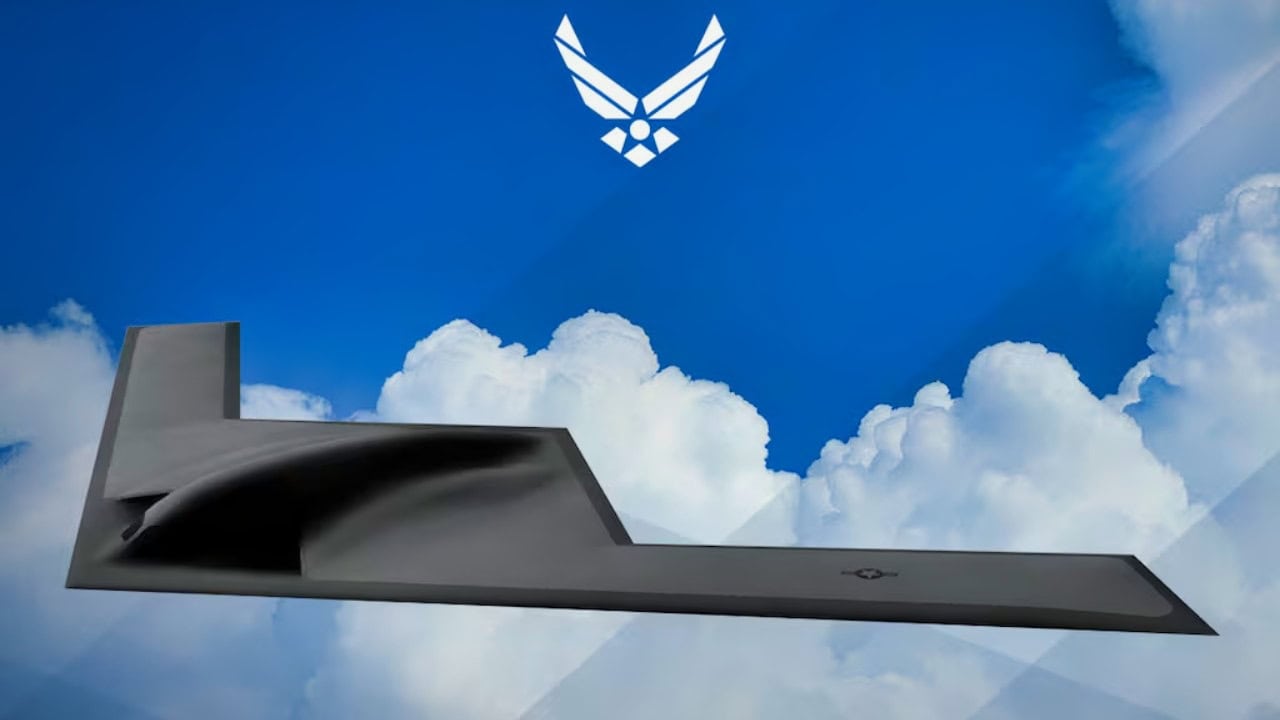
B-21 Raider Bomber.
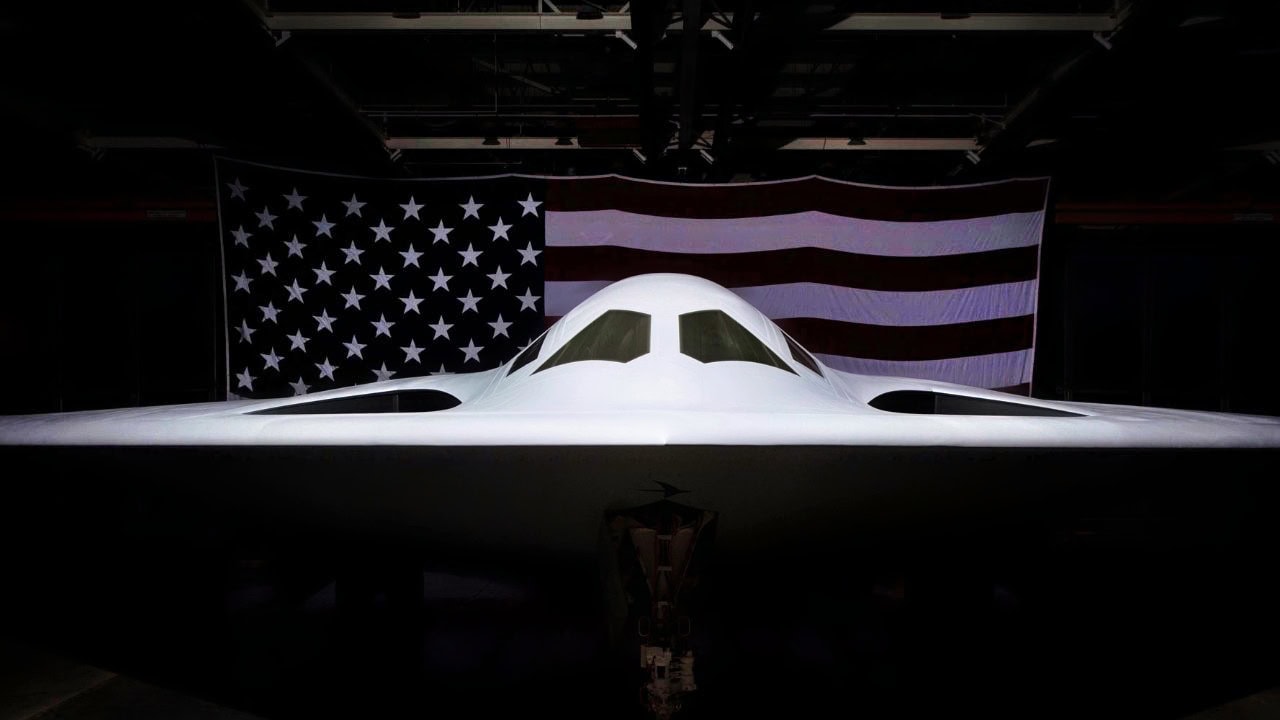
B-21 Raider Bomber. Image Credit: Creative Commons.
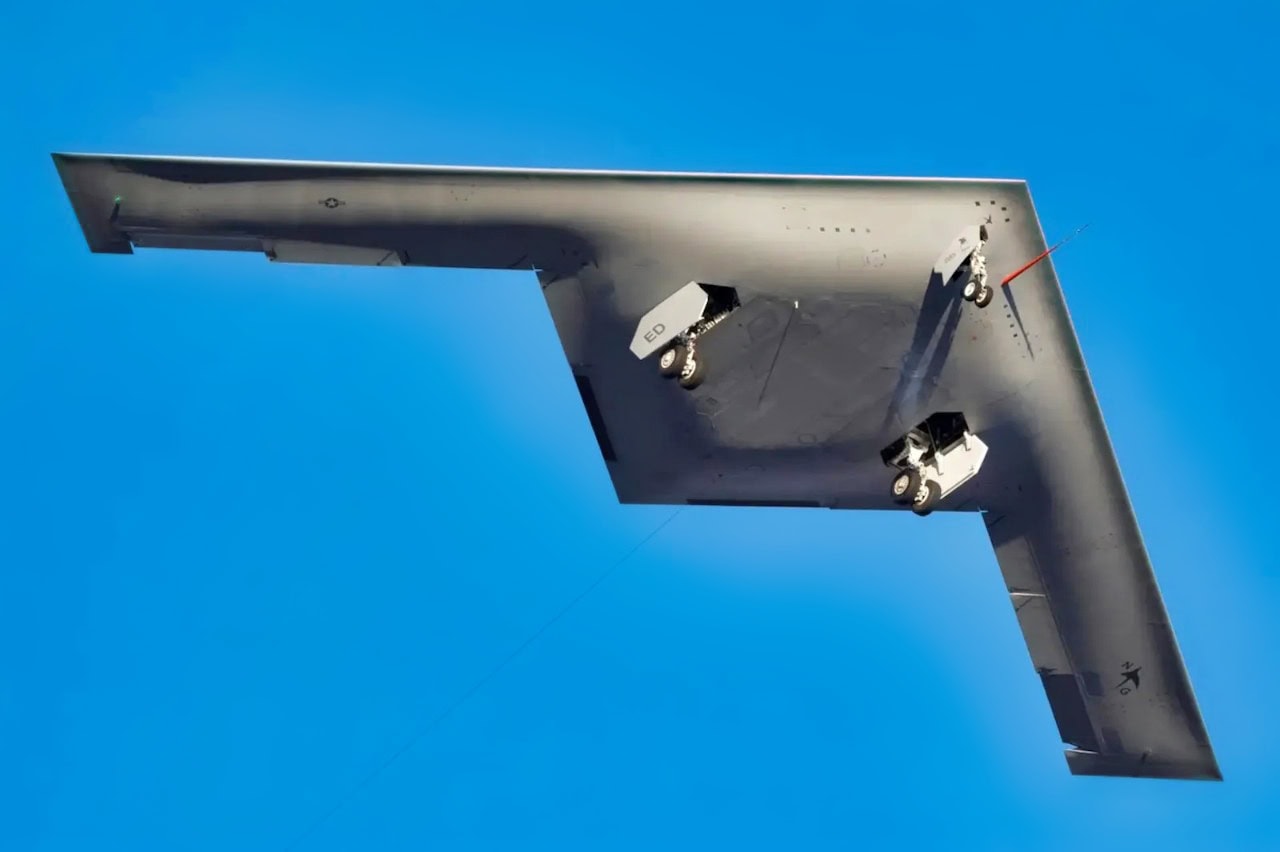
B-21 Raider. Image Credit: Creative Commons.
He also expanded on the rationale for accelerating procurement, stressing that the platform offers flexibility across mission sets.
“For the joint force, it’s a sixth-generation stealth capability with … stand-off precision distance strike, or stand-in precision strike, and the ability to maneuver within a contested electromagnetic spectrum,” Correll said. “The sooner we field that capability and the sooner we ramp up in delivery of that capability, the stronger position that puts the joint force in, to address the strategic environment, from deterrence to any spectrum of conflict that we would contemplate.”
The point was this: capacity matters just as much as capability does, and delays in scaling production will translate directly into gaps in deterrence.
Air Force Holds the Line – For Now
Despite STRATCOM’s push, the Air Force is not yet committing to a larger fleet.
The current program of record remains set at a minimum of 100 aircraft, with production based at Northrop Grumman’s Plant 42 in Palmdale, California. The B-21 is intended to replace both the B-1 Lancer and B-2 Spirit in the 2030s, forming the backbone of the future bomber force.
Gen. Dale White, the Air Force’s Direct Reporting Portfolio Manager for Critical Major Weapons Systems, reiterated that point on March 17 at the McAleese Defense Programs Conference in Arlington, Virginia.
During the event, White made it clear that while production capacity is increasing, the service is looking to maintain flexibility rather than committing to a higher number today.
White said that the increased production capacity will “allow us that decision space that we didn’t have before” to increase production in the future if it is deemed necessary. He also described the $4.5 billion investment as a “very sound investment” that keeps the program moving in the right direction.
Notably, though, White did not mention a second production line – an omission that suggests the idea remains more of a demand from command rather than a part of existing service-level planning.
Can the Industrial Base Keep Up?
The most recent comments are good news, but the question now is whether the industrial base can keep up.
The limiting factor may no longer be funding, but industrial throughput and capability.
The Air Force’s February 23 announcement of a confirmed 25% increase in production capacity was not accompanied by a confirmation of when that capacity would translate into higher output rates – and that ambiguity matters, because expanding capacity is not the same as immediately producing aircraft faster.
Doing so requires workforce expansion and supply chain scaling, and potentially the construction of new facilities.
Opening a second production line would represent a major step beyond incremental increases and effectively duplicate key elements of the manufacturing process, enabling parallel production lines and significantly higher output over time.
Given the trends across U.S. defense procurement, this is an important point. Programs like F-47 NGAD and the B-52 modernization effort are already facing timeline pressures, while collaborative combat aircraft (CCA) concepts are still years from reaching operational scale.
Across major programs, production is consistently slipping by years rather than months, due to skilled labor shortages and bottlenecks in engines and electronics, limiting how quickly new platforms can be manufactured and fielded at scale.
So, in that context, the B-21 is one of the few advanced platforms with a relatively clear path to near-term fielding – if production can keep pace.
About the Author: Jack Buckby
Jack Buckby is a British researcher and analyst specialising in defence and national security, based in New York. His work focuses on military capability, procurement, and strategic competition, producing and editing analysis for policy and defence audiences. He brings extensive editorial experience, with a career output spanning over 1,000 articles at 19FortyFive and National Security Journal, and has previously authored books and papers on extremism and deradicalisation.

