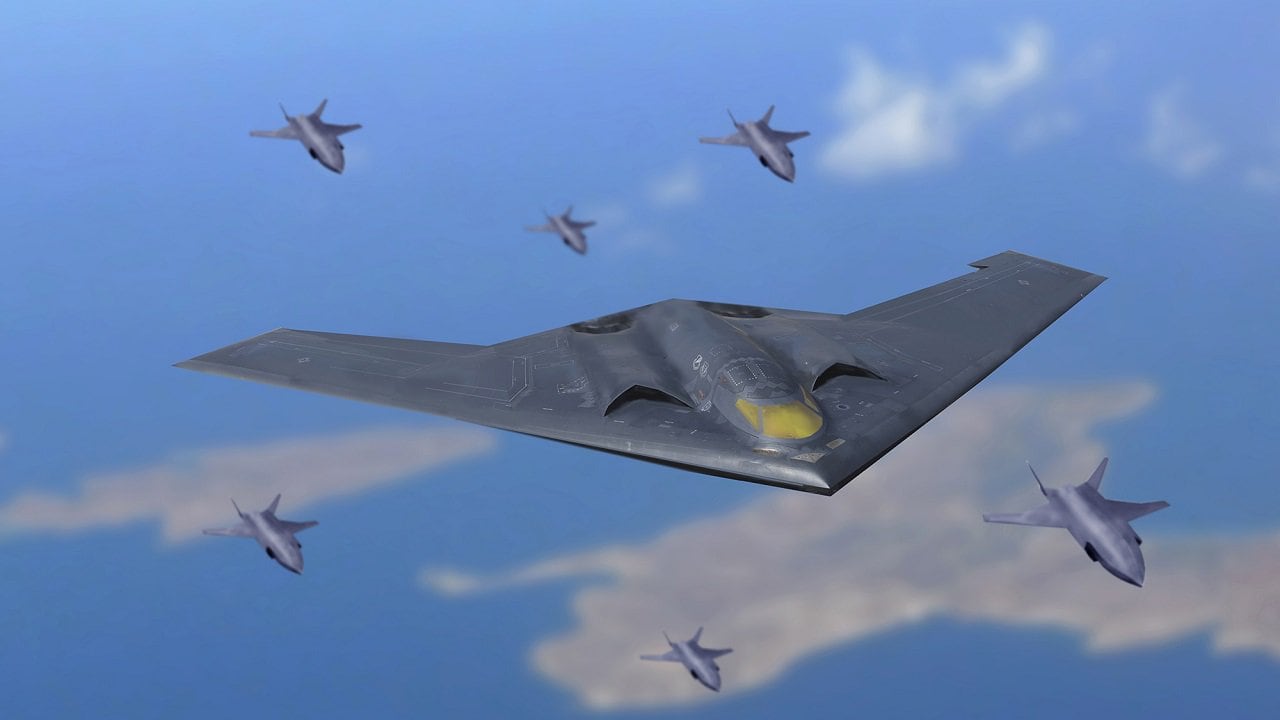
Summary and Key Points: Northrop Grumman is preparing to “flex” production of the B-21 Raider at Plant 42 to meet a rapidly growing U.S. Air Force demand that could reach 200 aircraft.
-Backed by a $4.5 billion legislative package approved in July 2025, the program aims to close a decades-long “bomber deficit.”
-Beyond its next-generation stealth, the B-21 functions as an airborne command-and-control node, using AI-enabled computing and open-architecture gateways to direct drone swarms.
-Built for future adaptability, it integrates the latest B-61 nuclear bomb variants and the Long Range Stand Off (LRSO) cruise missile, ensuring global strike dominance.
Beyond 100 Bombers: Why the Air Force is Pushing for a 200-Ship B-21 Raider Fleet
There appears to be consensus that a collaborative effort between the Air Force and Northrop Grumman could generate highly sought-after “surges” in B-21 production as the program gains momentum toward large-scale operational service. Even though only a small number of B-21s are “airborne” thus far, demand for the emerging stealth bomber seems without limit.
Northrop is ready to “flex” to massively ramp up production, according to CEO Kathy Warden, who said Northrop could indeed increase the size of the program if the U.S. Air Force approves the production “acceleration” now under consideration.
It makes sense that the Air Force would want to “surge” production and “scale” the program in scope to increase both the overall number of bombers and the pace of delivery.
The U.S. Air Force interest in the increase and acceleration is likely due to the fast-changing threat equation and global security environment, both variables which underscore a pressing need for the service to ultimately deploy a “large” fleet of much more than 100 B-21s.
A recent Mitchell Institute study found that the Air Force will need a force of at least 200 B-21 bombers, a number likely to reflect the service’s ambition more closely.
Need for B-21 Raider Bombers
The U.S. Air Force would not only need to “mass” stealth bomber formations in the event of a conflict with China, but other parts of the world are increasing risks to U.S. national security at an alarming rate.
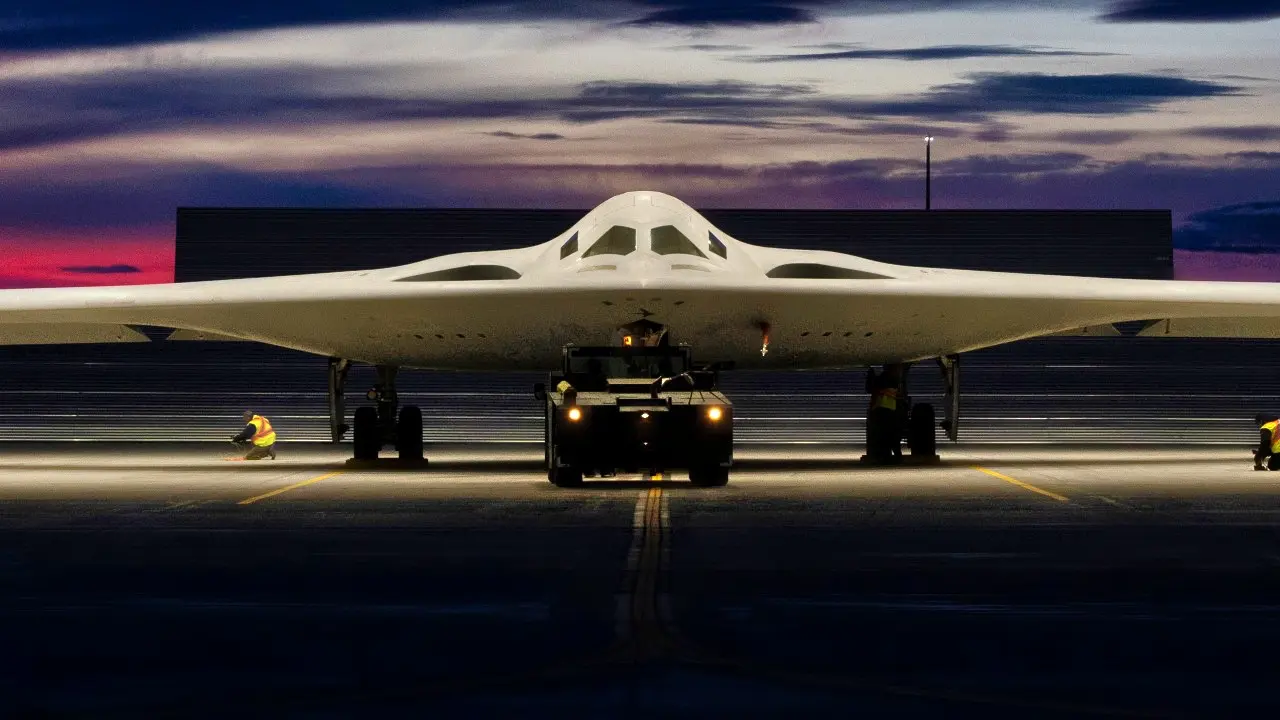
B-21 Raider Stealth Bomber.
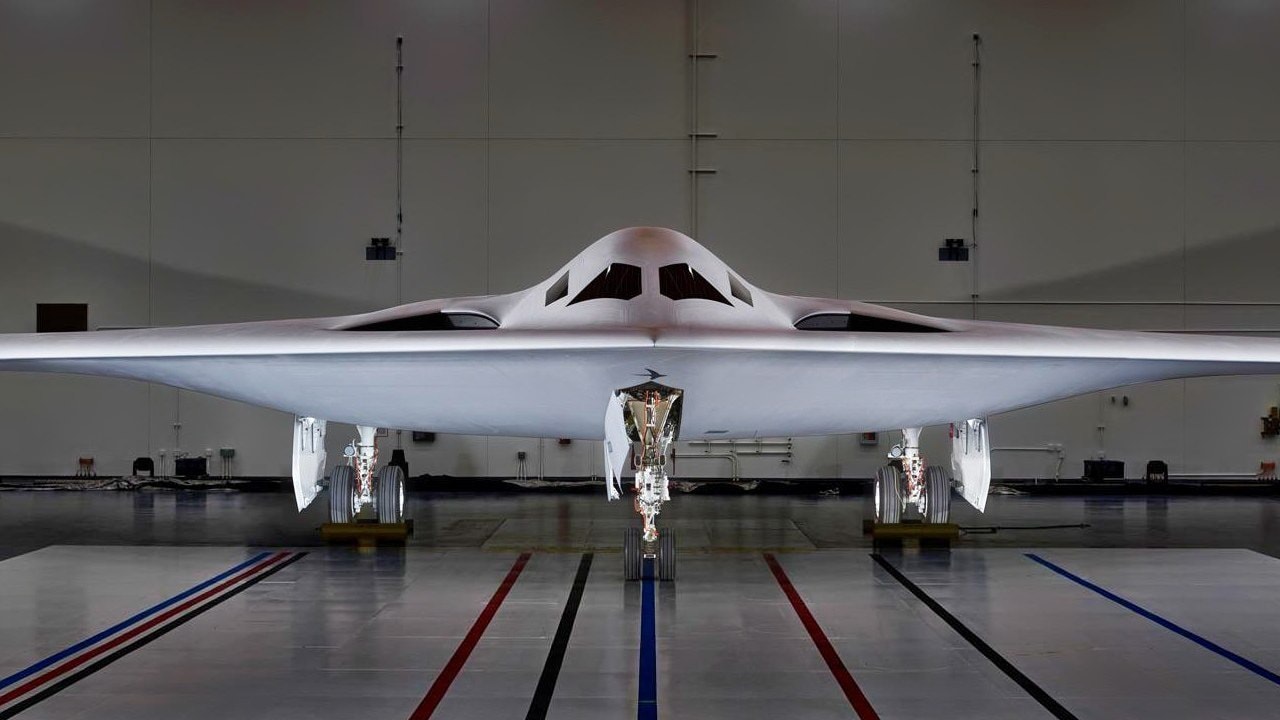
B-21 Raider Bomber U.S. Air Force.
The service’s need for more B-21s is also informed by decades of what the Air Force has described as a bomber “deficit” in the force. This deficit, which has been impacting the force for decades, stems from the persistent reality that combatant commanders’ demand for “bombers” and “bomber task forces” has for years exceeded available supply. Part of the demand also pertains to the Concepts of Operation informing Air Force plans for the B-21, as it will not only function as a breakthrough “stealth” bomber but also operate as an aerial “node” capable of sensing, networking, and controlling groups of drones.
Production “Flex”
The current optimism is driven by the belief that production can surge and “flex” at Northrop’s existing Plant 42 facilities in Palmdale, California. The manufacturing realities in place have been strengthened immeasurably by Northrop Grumman’s effort to use internal funding to overhaul and streamline production capability to meet anticipated Air Force demand.
In July of 2025, a $4.5 billion legislative package was approved specifically for B-21 production. The B-21 is believed to incorporate an entirely new generation of stealth technology, some of which might be visible to the human eye. However, the most impactful elements of the B-21 likely relate to what is less visible, as the bomber is likely built with an entirely new generation of computing and sensing.
Loyal Wingman
Senior Pentagon leaders have been clear that the B-21 will control drones from the cockpit and function as a flying, multi-domain command-and-control “node” in the sky, gathering, analyzing, and transmitting time-sensitive combat intelligence across multiple domains in real time.
The bomber can not only deliver ordnance as needed but also direct drones to conduct surveillance, attack air defenses, or even deliver munitions when directed by a human.
The B-21’s AI-enabled on-board computing will need to perform analytics at the point of collection, streamline information, and quickly identify moments of relevance for nearby aircraft, fighter jets, ground-based command and control, and even surface ships, as needed.
This requires technologies often referred to as gateways, systems able to pool, gather, organize, and essentially “translate” data between otherwise incompatible sensors and transport layers. This is done through the use of IP protocols and interfaces engineered to integrate data from different sources.
B-21 Built for Future Weapons
The B-21 is being built to a set of common standards and protocols designed to streamline production, ensure interoperability, and propel modernization, which might make “surging” production more realistic and effective.

B-21. Image Credit: Northrop Grumman
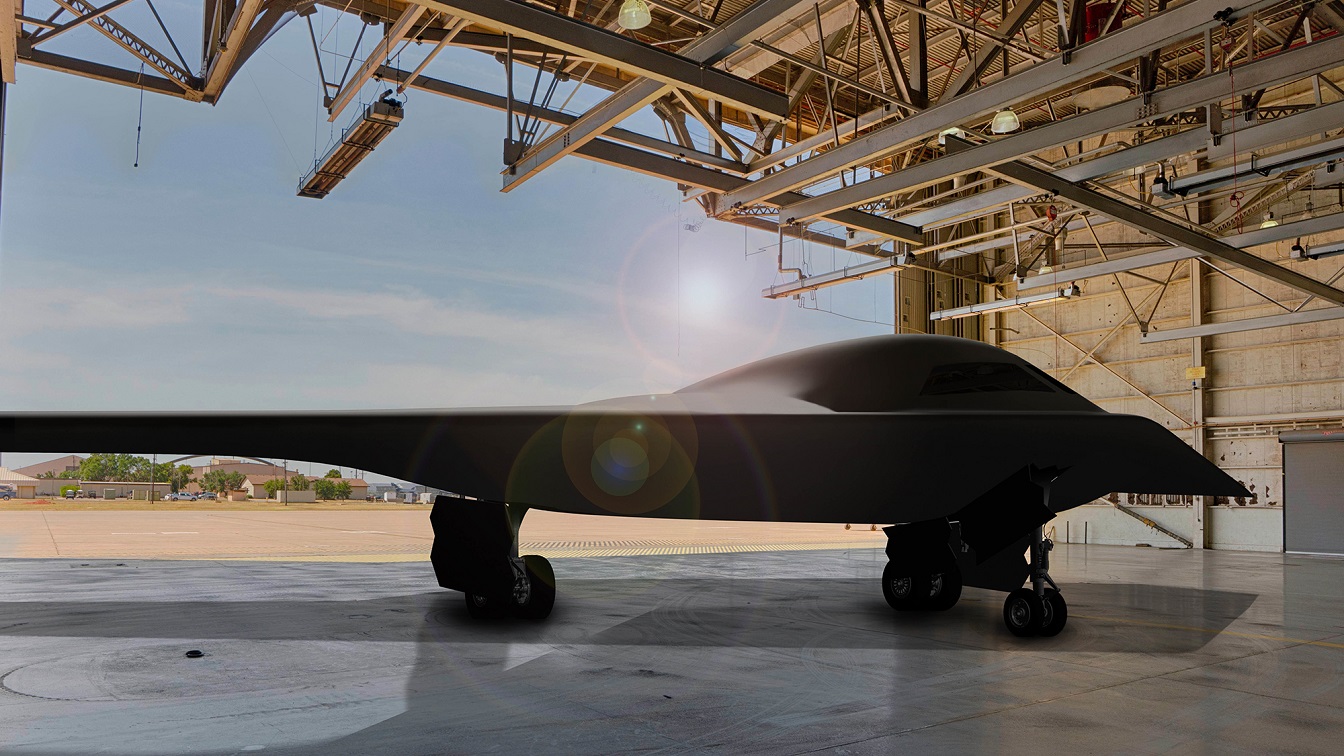
Artist rendering of a B-21 Raider concept in a hangar at Dyess, Air Force Base, Texas, one of the future bases to host the new airframe. (Courtesy photo by Northrop Grumman)
Since the beginning of conceptual work and subcomponent prototyping for the B-21, senior weapons developers have prioritized common IP protocols and open architecture to ensure the bomber is positioned to integrate new weapons and technologies as they become available. The idea is to ensure the platform can be upgraded and modernized as innovations arrive in future years.
For instance, not only will the bomber carry a full arsenal of existing weapons, but its computing and fire control will be adaptable, allowing it to accommodate future weapons as well. What is known so far is that the B-21 will fly with the latest Mod 12 and Mod 13 variants of the classic B-61 nuclear bomb.
This will allow crews and decision-makers to operate with greater flexibility, as a modern Mod 13 variant of the B-61 integrates multiple bomb types into a single form factor. A single bomb can be adjusted for penetrating attack, area detonation, or other blast effects as required by the mission.
The aircraft will also carry the dual-purpose Long Range Stand Off Weapon, or LRSO, a cruise missile capable of targeting and destroying air defenses from stand-off ranges. The LRSO can also be used as a conventional or nuclear weapon.
About the Author: Kris Osborn, President of Warrior Maven
Kris Osborn is the President of Warrior Maven – Center for Military Modernization. Osborn previously served at the Pentagon as a highly qualified expert in the Office of the Assistant Secretary of the Army—Acquisition, Logistics & Technology. Osborn has also worked as an anchor and on-air military specialist at national TV networks. He has appeared as a guest military expert on Fox News, MSNBC, The Military Channel, and The History Channel. He also has a Masters Degree in Comparative Literature from Columbia University.