
Summary and Key Points: Steve Balestrieri, a veteran Special Forces Warrant Officer, evaluates the B-2 Spirit’s role in the 2026 air war against Iran.
-Highlighting the April 2024 Spirit Vigilance exercise, Balestrieri analyzes the bomber’s 40,000-pound payload capacity and its exclusive use of the GBU-57 MOP “bunker buster.”
-This report explores how the B-2’s 172-foot flying wing design and General Electric F118 engines allow it to conduct 10,000-mile unrefueled missions from Missouri.
-Balestrieri concludes that despite its age, the B-2’s continuous modernization ensures it remains the premier strategic deterrent until the B-21 Raider arrives.
Beyond the B-21: Why the 35-Year-Old B-2 Spirit Remains a 2026 Game-Changer in Stealth Warfare
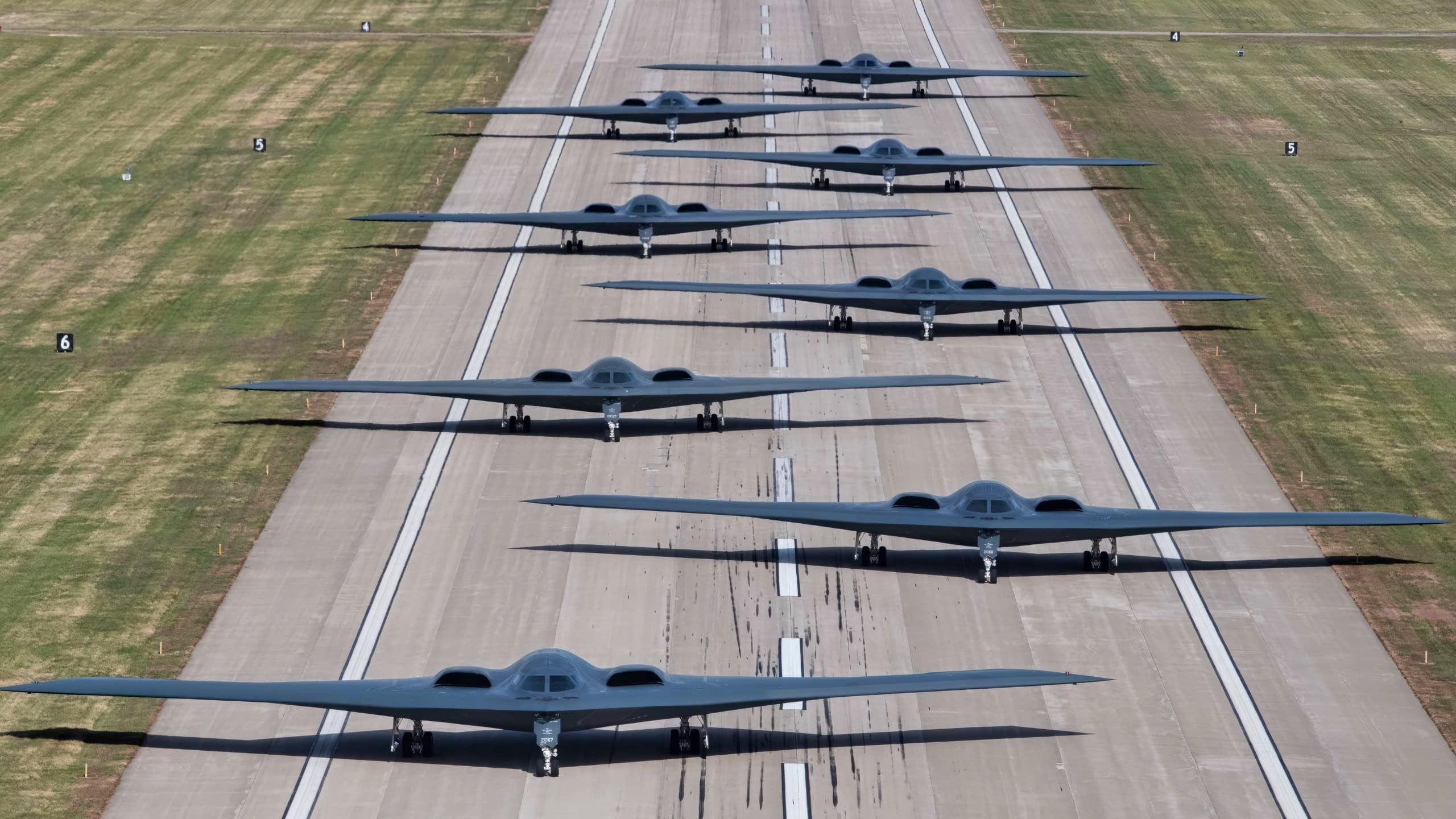
On April 15, 2024, the Air Force conducted its largest “elephant walk” involving B-2 Spirit bombers of the 509th Bomb Wing, at their home of Whiteman Air Force Base, Missouri.
An “elephant walk” in the U.S. Air Force is a close-formation taxiing of a large number of military aircraft, usually just before a minimum-interval takeoff. These exercises demonstrate a unit’s ability to rapidly mobilize and project massive airpower, while serving as a show of force and readiness.
I’ve always been a B-17 bomber fan, and watching the massive “elephant walks” on airbases in England during WWII was where the term originated.
Today, it’s largely used in sending an unmistakable message to our enemies, while testing crews, maintainers, and command-and-control.
In the April 2024 exercise, the 509th used 12 B-2s, more than half the active fleet, as part of the Spirit Vigilance exercise.
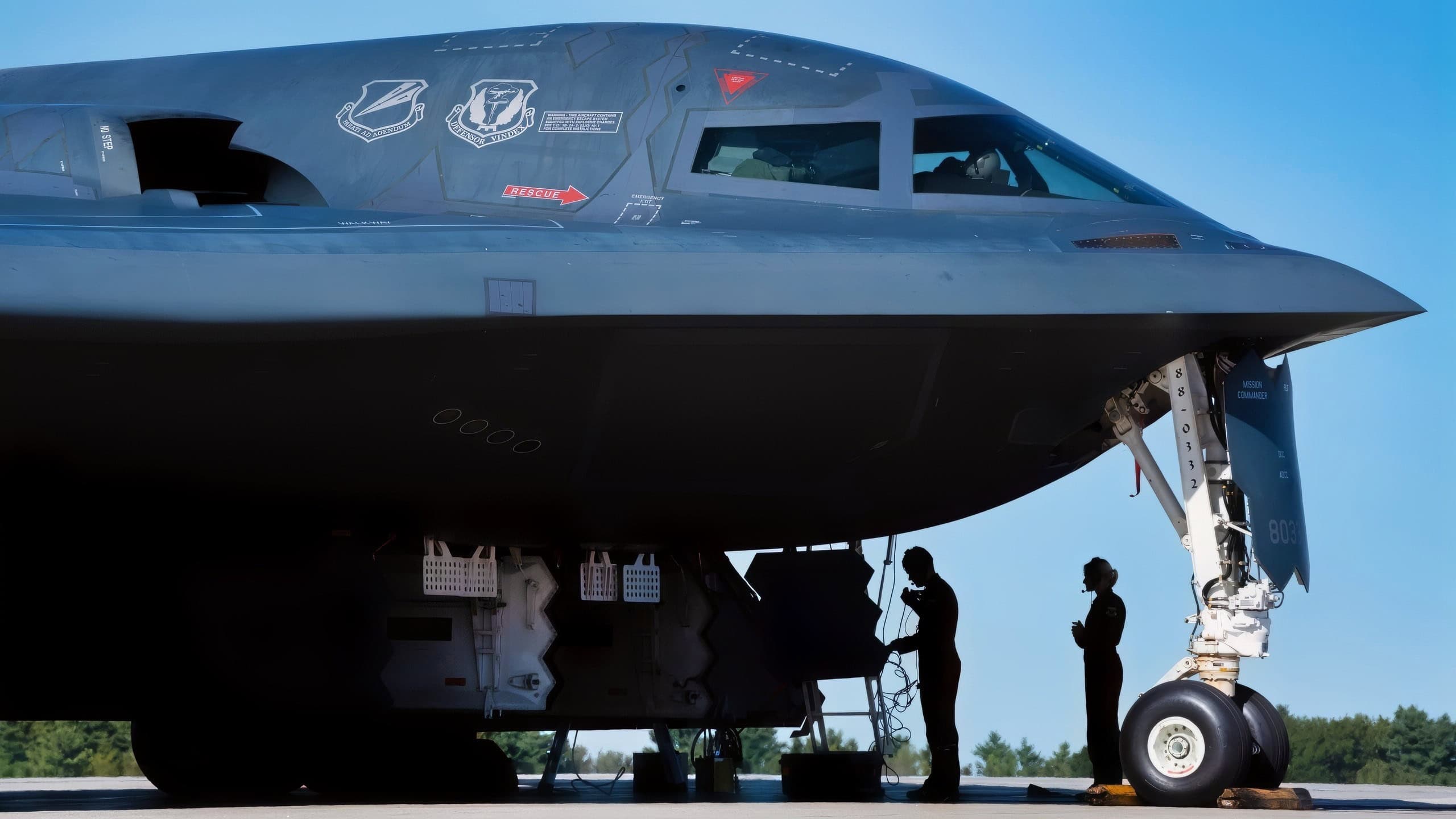
A U.S. Air Force pilots assigned to the 393rd Bomb Squadron prepare a B-2 Spirit aircraft for hot-pit refueling at Pease Air National Guard Base, New Hampshire, Sept. 20, 2025. The aircraft is the first operated by the 509th Bomb Wing to land at Pease ANGB, formerly Pease Air Force Base, since the 509 BW, formerly 509th Bombardment Wing, was stationed at Pease AFB and the active-duty base closed nearly 35 years ago. The lineage of the 509th BW traces back to the World War II Era when the 509th Composite Group dropped the atomic bombs on Japan. (U.S. Air Force photo by Staff Sgt. Joshua Hastings)

B-2 Spirit stealth bombers assigned to Whiteman Air Force Base taxi and take-off during exercise Spirit Vigilance on Whiteman Air Force Base on November 7th, 2022. Routine exercises like Spirit Vigilance assure our allies and partners that Whiteman Air Force Base is ready to execute nuclear operations and global strike anytime, anywhere. (U.S. Air Force photo by Airman 1st Class Bryson Britt)
The B-2 Spirit flies over the Rose Parade at Pasadena Ca., Jan. 1, 2024. The Rose Parade is a parade of flower covered floats, marching band, and equestrian units that is produced by the Tournament of Roses. (U.S. Air Force photo by Airman 1st Class Bryce Moore)
Sending A Message To Our Enemies Via B-2 Spirit Stealth Bomber
B-2s, sent a message to our Russian, Chinese, Iranian, and Yemeni enemies about what the awesome firepower of the US stealth bombers looked like.
This exercise, featuring a dozeThe B-2s in that exercise could collectively carry 480,000 pounds of internal ordnance. Using the B-17 as a comparison, a bombload of that magnitude would have required 96 B-17s.
“Visual displays of power can serve as a reminder to potential adversaries of the overwhelming air power that the B-2 can bring to bear,” a 509th Bomb Wing spokesman told Air & Space Forces Magazine.
Normally, the Air Force likes to keep the B-2 under wraps and hidden from public view, but occasionally these very public displays of combat power highlight the US’ nuclear triad capabilities to our enemies.
“Exercises are both critical to our readiness and a powerful tool to demonstrate to the world that the B-2 is a credible and reliable strategic deterrent,” Col. Keith Butler, 509th Bomb Wing commander, said in a press release.
The elephant walk of B-2s was part of the annual Spirit Vigilance readiness exercise, which ran from April 8 to April 12, 2024. The 509th conducted another elephant walk in 2022, during which eight B-2s took to the runway as part of the exercise.
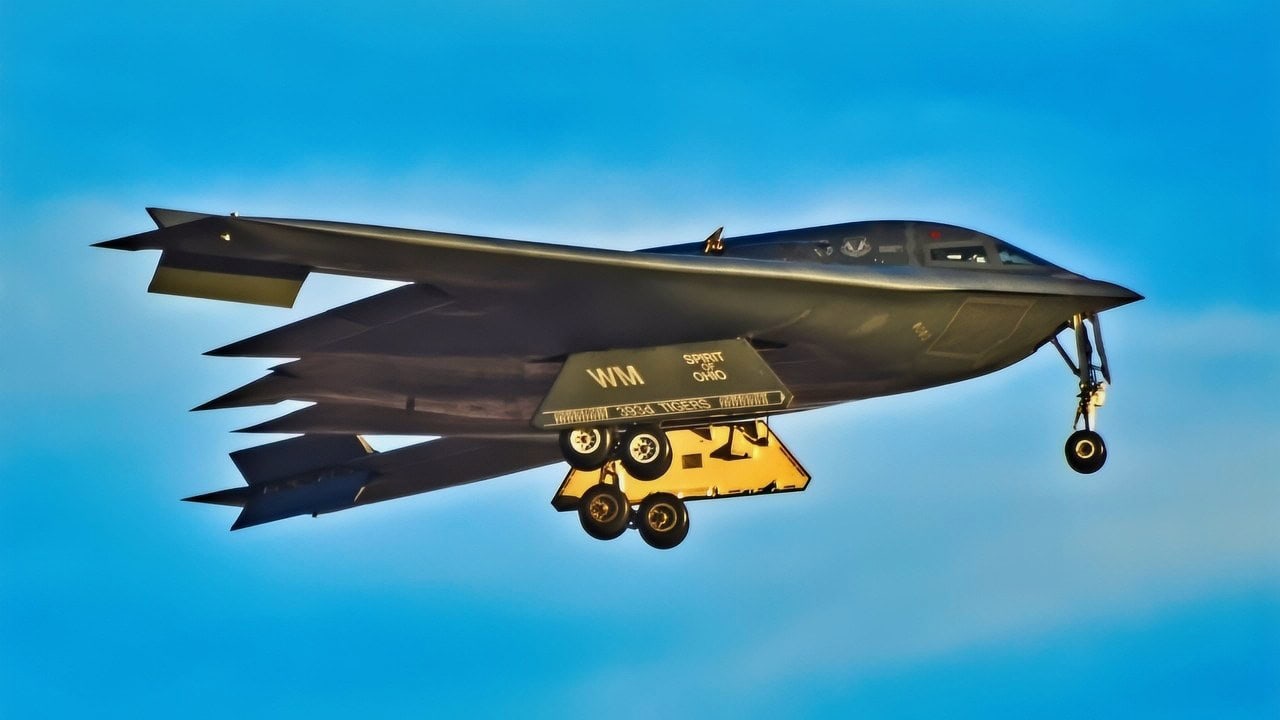
B-2A Spirit Stealth Bomber. Image Credit: Creative Commons.
The B-2 Spirit Stealth Bomber Remains A Game Changer:
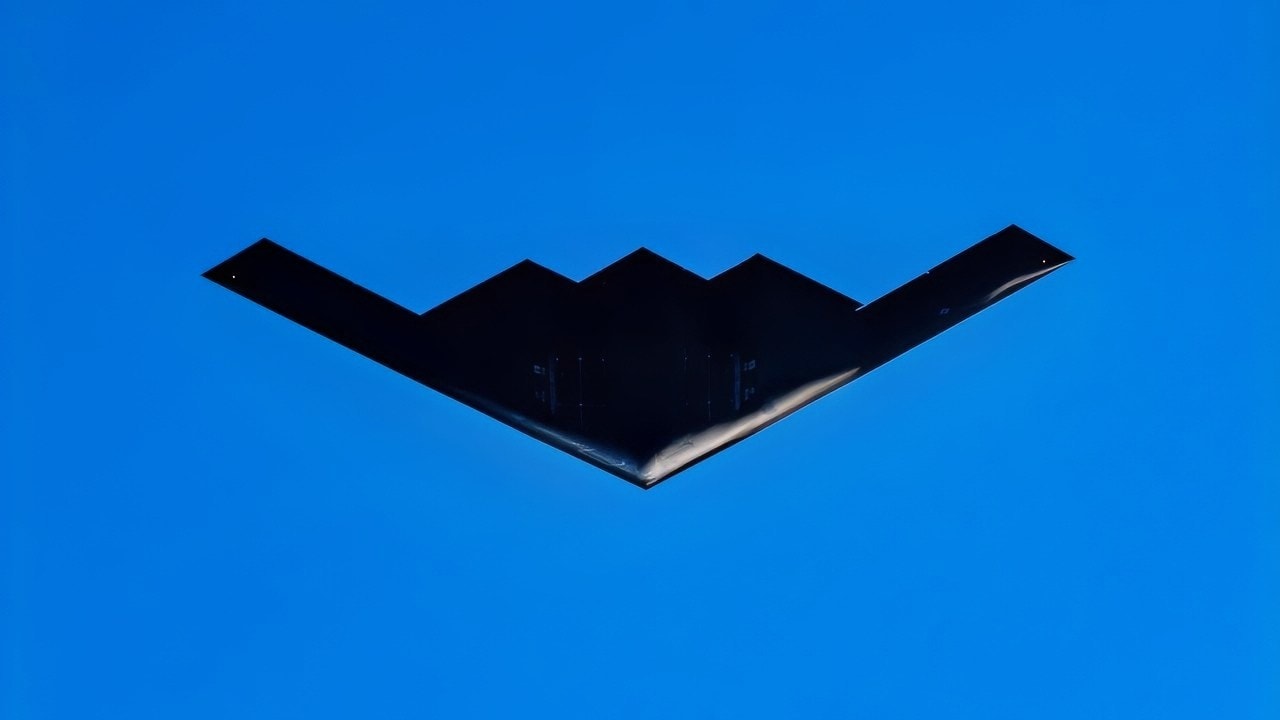
The B-2 Spirit is the US Air Force’s outstanding stealth bomber. It has been in the inventory for more than 35 years, which speaks to its effectiveness. And it is the most recognizable of the Air Force’s aircraft, with its flying wing design that eliminates the tail and fuselage of traditional designs.
The B-2 Spirit remains relevant through continuous modernization,, including upgraded avionics, enhanced stealth coatings, and the “Spirit Realm” software factory, which accelerates mission-critical updates.
It maintains its strategic edge as the only U.S. long-range, penetrating stealth bomber capable of delivering both nuclear and conventional payloads.
With bellicose actions by China, Russia, and last June, with the Israeli bombing of Iran, the demand for the B-2 is going up, especially with Israel lacking the ability to penetrate the deep bunkers where Iran hid its nuclear enrichment facilities. The B-2 was also used in the ongoing air campaign against Iran.
While the B-21 Raider will soon be taking its place in the Air Force’s bomber fleet, the B-2 is still a more than capable stealth bomber, as seen by the recent long-range bombing of Iran’s nuclear facilities.
The aircraft is equipped with advanced avionics, including a multi-mode radar and terrain-following radar.
The stealth-optimized bomber depends on advanced automation to allow its two-man crew to not only complete extended missions but also to fly at all. The 172-foot wingspan bomber remains one of the most exotic aircraft ever built and cannot be flown without computer assistance.
It can deliver both GPS-guided and laser-guided bombs with high precision, allowing for accurate strikes against high-value targets.
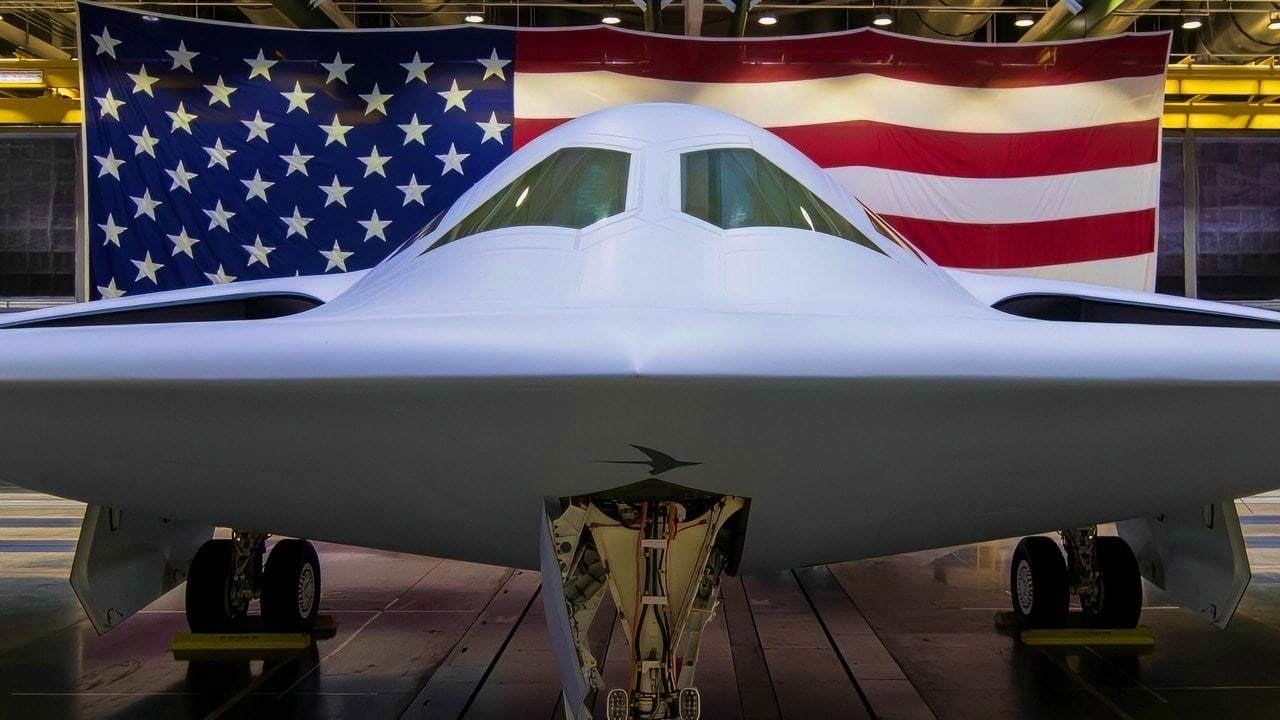
The B-21 Raider was unveiled to the public at a ceremony December 2, 2022 in Palmdale, Calif. Designed to operate in tomorrow’s high-end threat environment, the B-21 will play a critical role in ensuring America’s enduring airpower capability. (U.S. Air Force photo)
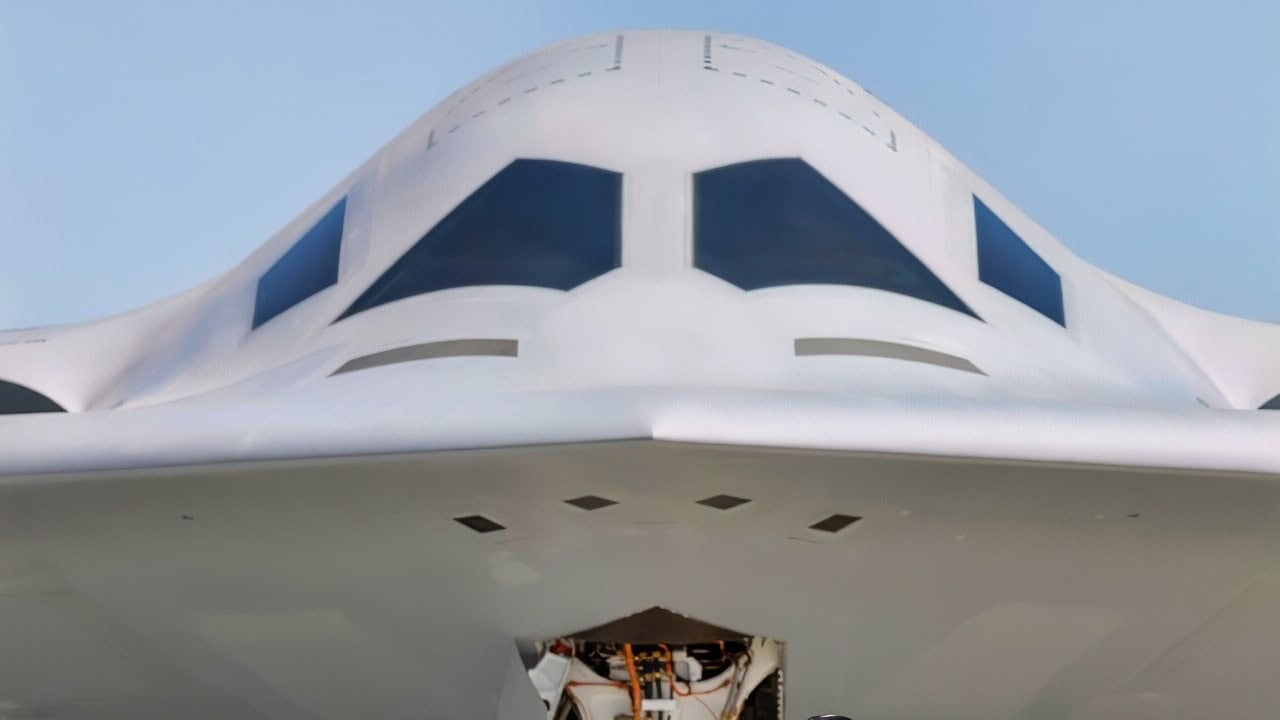
U.S. Air Force Airmen with the 912th Aircraft Maintenance Squadron prepare to recover the second B-21 Raider to arrive for test and evaluation at Edwards AFB, Calif., Sept. 11, 2025. The arrival of a second test aircraft provides maintainers valuable hands-on experience with tools, data and processes that will support future operational squadrons. (U.S Air Force photo by Kyle Brasier)
Stealth Technology Improvements:
The aircraft continues to receive upgrades to its radar-absorbent materials, further reducing its already minimal radar cross-section to counter advanced, modern air defenses.
The B-2 Spirit’s stealth characteristics, or low observable technologies, are all about making the aircraft more challenging to detect.
Coupling the B-2 Spirit’s ability to reduce acoustic, infrared, electromagnetic, visual, and radar signatures with a high aerodynamic flying wing design, special coatings, and composite materials presents a potent and unique capability able to penetrate the most sophisticated enemy defenses and hold at risk high-value, heavily defended targets.
The B-2 features Gen-1 stealth technology, which dates from the 1980s and 90s.
This technology is still effective, as seen during the B-2’s June airstrikes inside Iranian airspace. The B-2 was built with stealth optimization merely from the front, whereas it was much more detectable from the rear.
This stealth profile enables it to penetrate the most sophisticated air defenses without detection.
Strategic Role With The Range To Hit Anywhere In the World:
The B-2 remains a cornerstone of the U.S. nuclear triad and a premier conventional strike weapon, capable of attacking any target in the world.
The B-2 Spirit can fly to Iran from its home base in Missouri, as it has a 7,000-mile range before refueling. With one just in-flight refueling, the B-2 has a range of 10,000 nautical miles.
This intercontinental range enables it to project air power worldwide and respond to crises quickly.
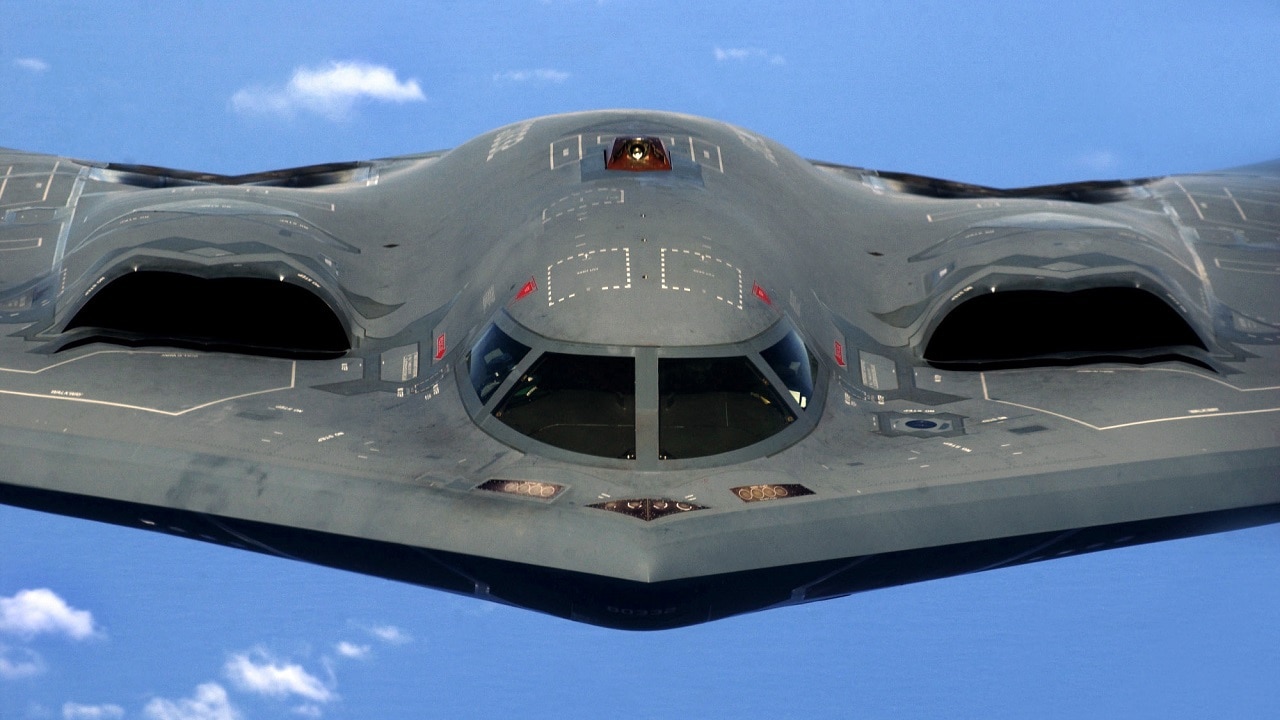
A U.S. Air Force B-2 Spirit “Stealth” bomber, 393rd Expeditionary Bomb Squadron, 509th Bomb Wing, Whiteman Air Force Base, Mo., flies over the Pacific Ocean after a recent aerial refueling mission, May 2, 2005. The Bombers are deployed to Anderson Air Force Base, Guam, as part of a rotation that has provided the U.S. Pacific Command a continous bomber presence in the Asian Pacific region since February 2004, enhancing regional security and the U.S. commitment to the Western Pacific. (U.S. Air Force photo by Tech Sgt. Cecilio Ricardo) (Released)
The B-2 holds the record for the longest air combat mission in history. In 2001, the Spirit of America and five other B-2s were the first to enter Afghan airspace for a record-setting 44-hour mission.
The aircraft’s performance is even more impressive, as the B-2 made a quick “hot pit stop” for a 45-minute crew and service change while the engines were still running. It then flew back to Missouri for another 30-hour flight, bringing the total to more than 70 consecutive hours.
This technique is used to keep the bomber mission-ready, significantly reducing turnaround times.
High Payload Capacity:
The B-2 Spirit can carry a maximum of 40,000 pounds (20 tons) of weapons, including smart bombs, bunker busters, and nuclear weapons.
This significant payload capacity allows it to carry a heavy and diverse mix of ordnance on a single mission, including up to 80 500-pound-class Mk 82 JDAM GPS-guided bombs or 16 2,400-pound B83 nuclear bombs.
The B-2 Spirit can also carry the Air Force’s 30,000-pound GBU-57 Massive Ordnance Penetrator (MOP), a GPS-guided “bunker buster” bomb designed to destroy deeply buried, reinforced concrete targets.
Developed by Boeing for the US Air Force, this 20-foot-long conventional weapon is carried exclusively by the B-2 Spirit stealth bomber and can penetrate up to 200 feet underground.
Mission Versatility:
The B-2 bomber’s versatility stems from its stealth technology, which allows it to penetrate heavily defended airspace, and from its multi-role capability to deliver a wide range of conventional and nuclear weapons.
It has a long-range, high-payload capacity, enabling it to strike targets anywhere in the world. Its versatility is further supported by its ability to carry a mix of precision-guided bombs and larger munitions, as well as its endurance for all-altitude missions.
The B-2 can be armed with both conventional and nuclear weapons, making it a flexible asset for different types of missions.
It can perform deep-strike, precision-strike, and intelligence-gathering missions, or even serve as a deterrent.
The B-2 Spirit is powered by four General Electric F118-GE-100 engines, each with over 17,000 pounds of thrust. Its ceiling is 50,000 feet, and it can carry conventional or nuclear weapons.
The B-2 also serves as a testbed for technology used in the upcoming B-21 Raider, ensuring the technological base remains ahead of adversaries.
However, the B-2 is aging, and where it was designed to beat radar defenses, the B-21 is intended to beat sensor ecosystems. It is also designed to be much easier to update, so that it can better keep ahead of emerging future threats.
About the Author: Steve Balestrieri
Steve Balestrieri is a National Security Columnist. He served as a US Army Special Forces NCO and Warrant Officer. In addition to writing on defense, he covers the NFL for PatsFans.com and is a member of the Pro Football Writers of America (PFWA). His work was regularly featured in many military publications.