
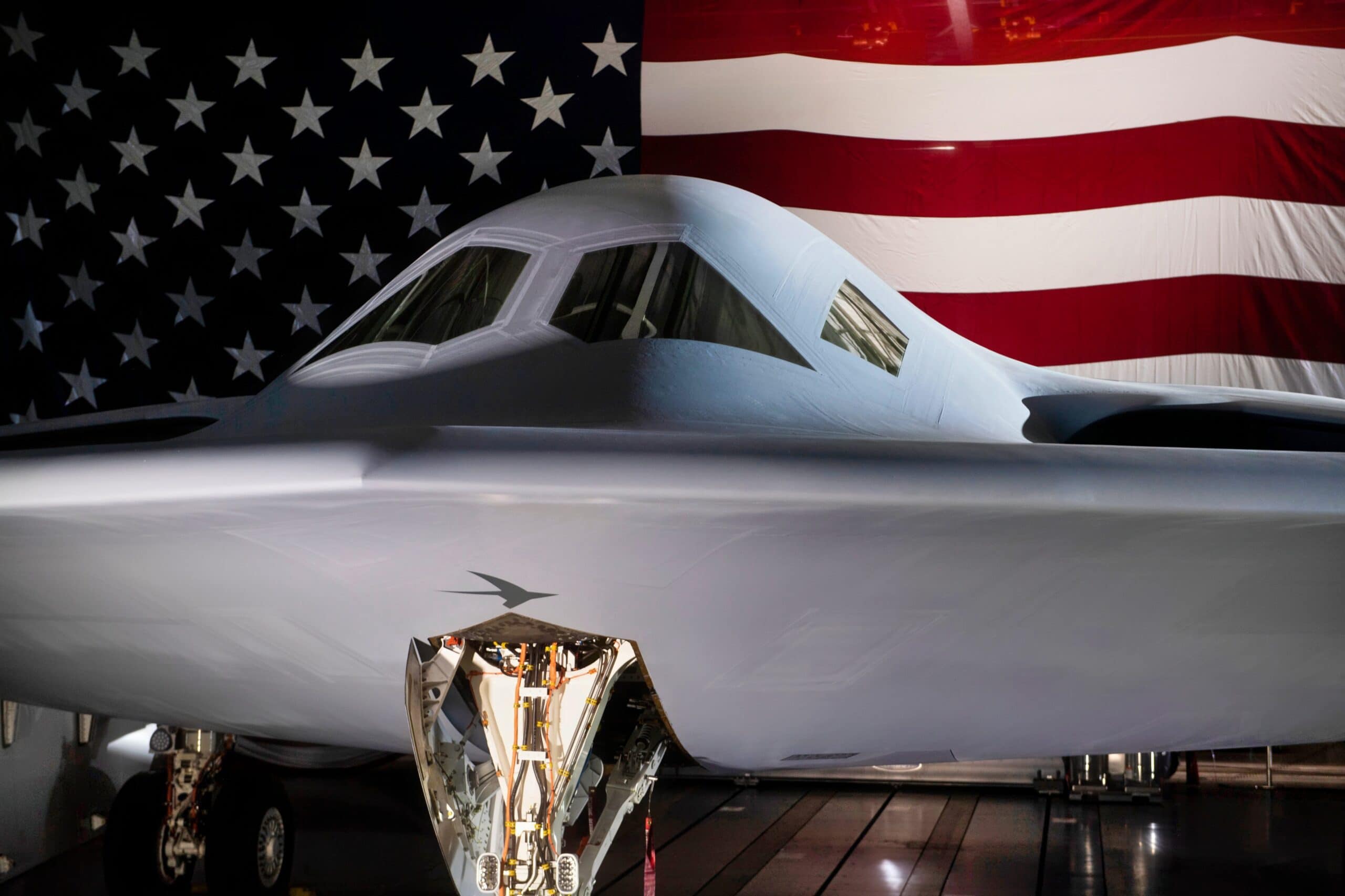
Summary and Key Points: Christian D. Orr, a senior defense editor and former Air Force officer, evaluates the B-21 Raider’s accelerated production timeline following the 2026 AFA Warfare Symposium.
-Supported by $4.5 billion in reconciliation funding, the Northrop Grumman-built stealth bomber is scheduled to arrive at Ellsworth AFB in 2027.
-This 19FortyFive report analyzes the strategic leap from the 19-ship B-2 Spirit fleet to a planned 100-aircraft Raider force, exploring the B-21’s 6,000-mile range and 20,000-lb payload while contrasting its progress with the struggling Xi’an H-20 and Russia’s stagnant PAK DA programs.
The B-21 Acceleration: Why the Air Force is Pouring $4.5 Billion into Faster Raider Production
The U.S. Air Force and Northrop Grumman are working to get the upcoming B-21 Raider strategic bomber into operational status sooner rather than later.
The Basics
The latest developments come to us courtesy of Breaking Defense reporter Michael Marrow. In turn, Marrow gleaned his information from the 2026 Air & Space Forces Association Warfare Symposium, during which the Air Force announced a new agreement with Northrop Grumman to ramp up Raider production. The service will use $4.5 billion in reconciliation funding to help deliver the bomber and have the warbird “on the ramp at Ellsworth Air Force Base” in South Dakota in 2027.
Comparing Bomber Bases
As an aside, it’s interesting to see Ellsworth Air Force named as the initial host base for the B-21, instead of Whiteman AFB, Missouri, which is the home base for the Air Force’s current stealth bomber, the Northrop B-2 Spirit. Ellsworth does also currently host a strategic bomber, the Rockwell B-1B Lancer, which doesn’t have stealth capability, but makes up for it with supersonic speed.
Key Personnel Comments
–Air Force Secretary (SECAF) Troy Meink: “The B-21 is doing well…Accelerating production capacity now ensures we deliver operational capability to combatant commanders faster — strengthening our ability to outpace, deter, and, if necessary, defeat emerging threats. This is disciplined execution at the speed the security environment demands.”
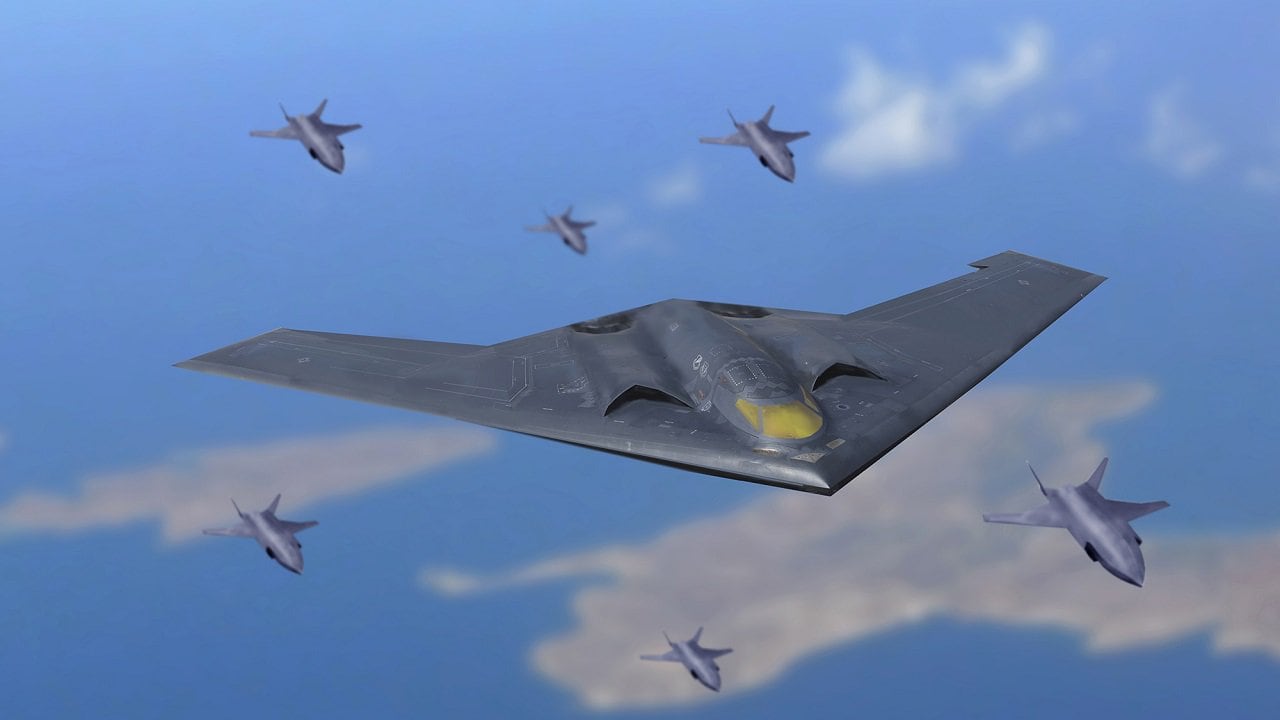
An artist illustration depicts a U.S. Air Force extended-range B-21 Raider escorted on a mission by armed unmanned next generation air dominance platforms. This fictional bomber features longer, wider wings, and a deeper fuselage that accommodates larger fuel tanks and dual weapons bays that enables the bomber to carry a much larger and varied payload. Mike Tsukamoto/staff; Greg Davis/USAF

B-21 Raider Stealth Bomber. Image Credit: Industry Handout.
–Gen. Dale R. White, direct reporting manager for critical weapon systems: “This decision reflects our confidence in the program’s performance and the stability of the industrial base…By increasing production capacity now, we are responsibly accelerating delivery of a critical, combat-effective capability to the warfighter.”
(NOTE: Besides the B-21, additional critical systems that fall under Gen. White’s responsibility include the Sentinel and Minuteman III intercontinental ballistic missile systems, the F-47 Next Generation Air Dominance sixth-generation fighter program, and Air Force One.)
–Thomas H. Jones, corporate vice president and president at Northrop Grumman Aeronautics Systems: “Getting the B-21 Raider into the hands of our Air Force operators and maintainers is the mission of thousands of dedicated Northrop Grumman team members.”
What About Boosting Production Numbers?
According to Marrow, “Some officials have also called for expanding the Raider’s program of record beyond an expected 100 aircraft. Meink did not address whether the bomber’s overall buy would change, with a current price that tag teeters around $700 million per copy. The aircraft began flight testing in November 2023 and subsequently entered low-rate production, where it’s manufactured at Northrop’s Palmdale, Calif., facilities.”
Comparing the Bomber Fleets (Internally and Externally)
As it stands, the Air Force’s planned purchase of 100 B-21 airframes shows an ambitious expansion plan for the U.S. stealth bomber fleet. Currently, according to the World Directory of Modern Military Aircraft, the Air Force only has 19 B-2 Spirit specimens. One-hundred Raiders would more than quintuple the numbers of stealth bombers, which would send a strong message to China.
The B-21 Raider is estimated to have a range of more tha 6,000 miles, which can be extended even further with aerial refueling; payload capacity is estimated at 20,000 lbs. Meanwhile, the B-2 Spirit has a range of 6,900 miles and a standard payload limit of 40,000 lbs. that can be increased to 60,000 lbs and can include the GBU-57A/B Massive Ordnance Penetrator bunker buster bombs that targeted Iranian nuclear sites last year.
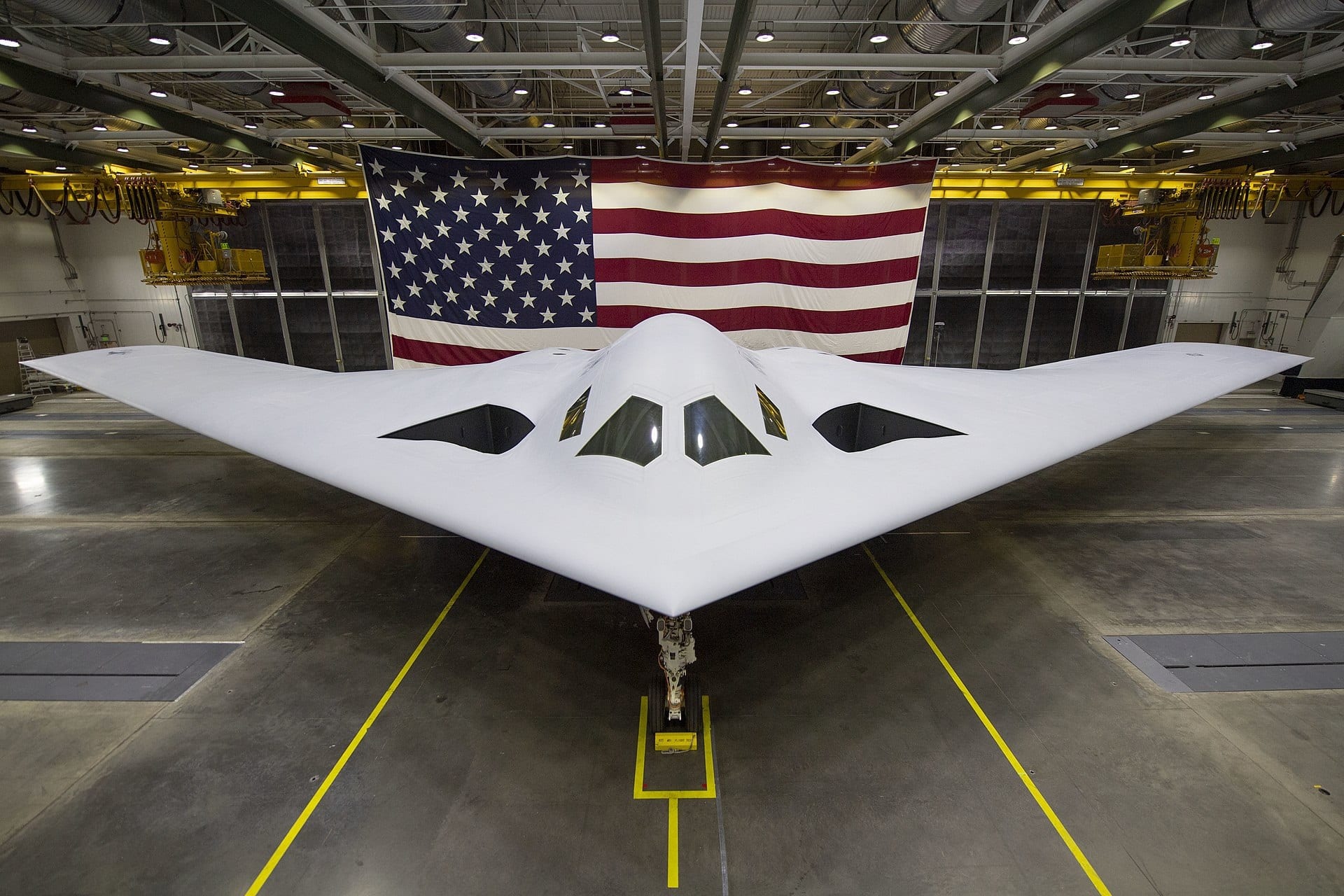
The B-21 Raider was unveiled to the public at a ceremony December 2, 2022 in..Palmdale, Calif. Designed to operate in tomorrow’s high-end threat environment, the B-21 will play a critical role in ensuring America’s enduring airpower capability. (U.S. Air Force photo)
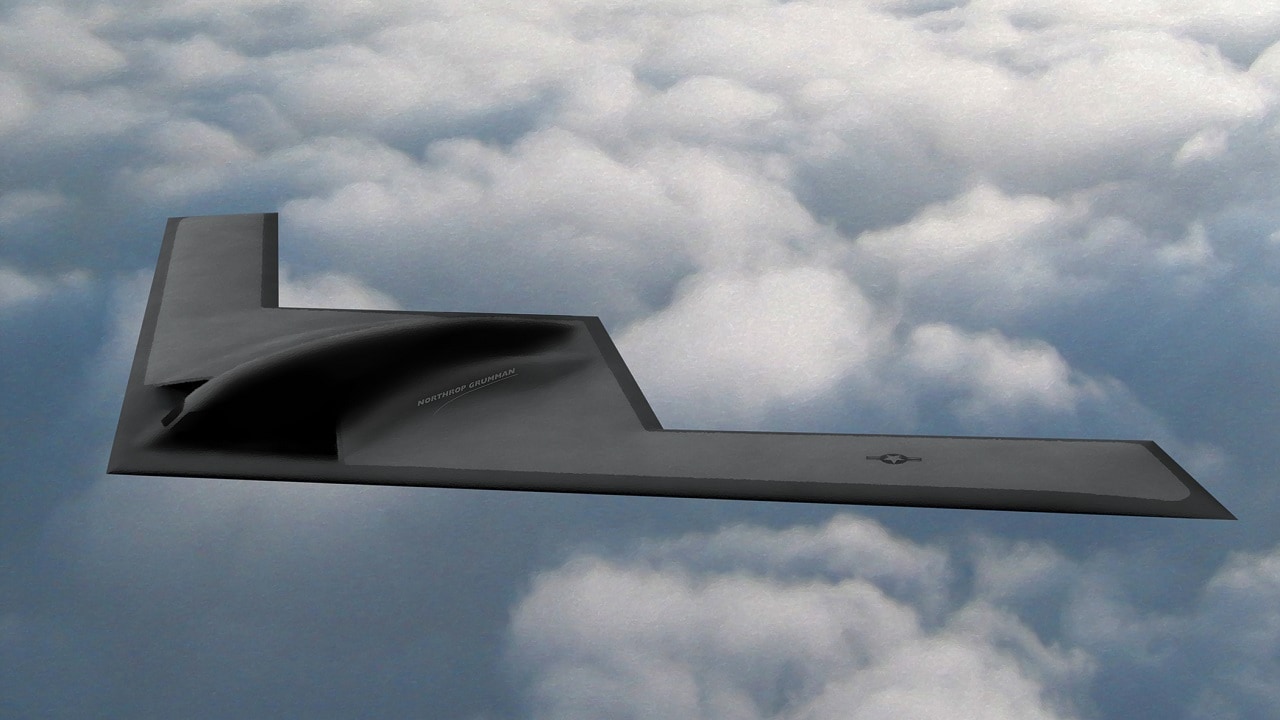
B-21 Raider bomber. Image Credit: Creative Commons.
Getting the Raider up and running by 2027 would serve to further tweak the nose of China’s People’s Liberation Army Air Force (PLAAF), whose own prospective sixth-generation stealth bomber, the Xi’an H-20, is “just not there yet,” according to Gen. Stephen Davis, newly minted head of Air Force Global Strike Command.
Meanwhile, the remainder of the Air Force’s strategic bomber triumvirate comprises 45 B-1Bs and 76 B-52H Stratofortresses.
As for the PLAAF, currently their lone heavy bomber is the Xi’an H-6K Zhanshen, in service since 1968 and based off of the Soviets’ 1952-vintage Tu-16 “Badger” bomber. According to WDMMA, China has 209 H6s in their fleet.
Last but not least, there’s the strategic bomber fleet of the Russian Air Force, which consists of the following:
-15 x Tupolev Tu160M (the aforementioned “Blackjack” bomber)
-47 x Tu-95MS/MSM “Bear”
-58 x Tu-22M/M3/M3M “Backfire”
Russia is also attempting to build a sixth-generation stealth bomber, and true to tradition, it’s also a Tupolev product: the PAK DA Poslannik. However, the PAK DA is going nowhere fast, lagging far behind the B21 and H-20 alike, thus adding to a recent string of embarrassments for the Russian aerospace industry.
About the Author: Christian D. Orr, Defense Expert
Christian D. Orr is a Senior Defense Editor. He is a former Air Force Security Forces officer, Federal law enforcement officer, and private military contractor (with assignments worked in Iraq, the United Arab Emirates, Kosovo, Japan, Germany, and the Pentagon). Chris holds a B.A. in International Relations from the University of Southern California (USC) and an M.A. in Intelligence Studies (concentration in Terrorism Studies) from American Military University (AMU). He is also the author of the newly published book “Five Decades of a Fabulous Firearm: Celebrating the 50th Anniversary of the Beretta 92 Pistol Series.”