
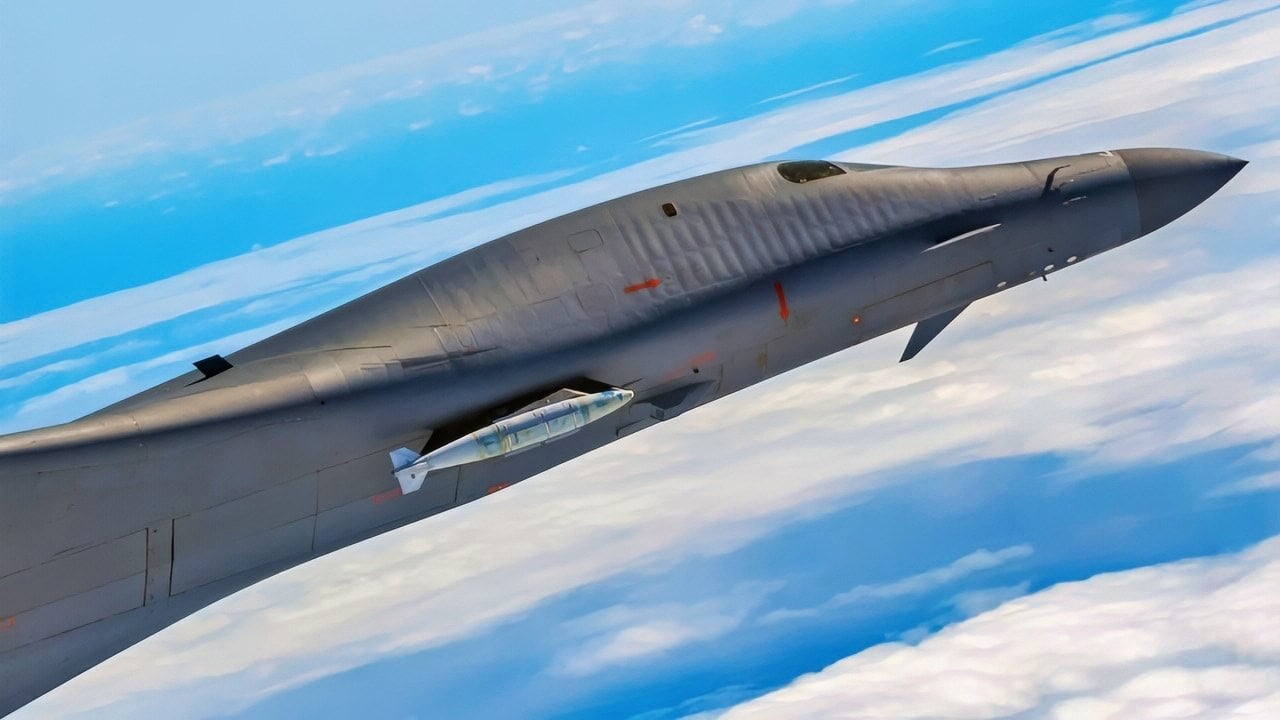
Key Points and Summary – Old bombers don’t always fade away. A Dyess-based B-1B Bomber Task Force just wrapped an Indo-Pacific deployment from Misawa Air Base, flying 14 higher-headquarters missions and 10 local sorties while integrating with Japan, India, the Philippines, and Canada.
-The message to Beijing: U.S. global strike can show up fast, plug into allies, and operate across multiple partnerships in one swing.
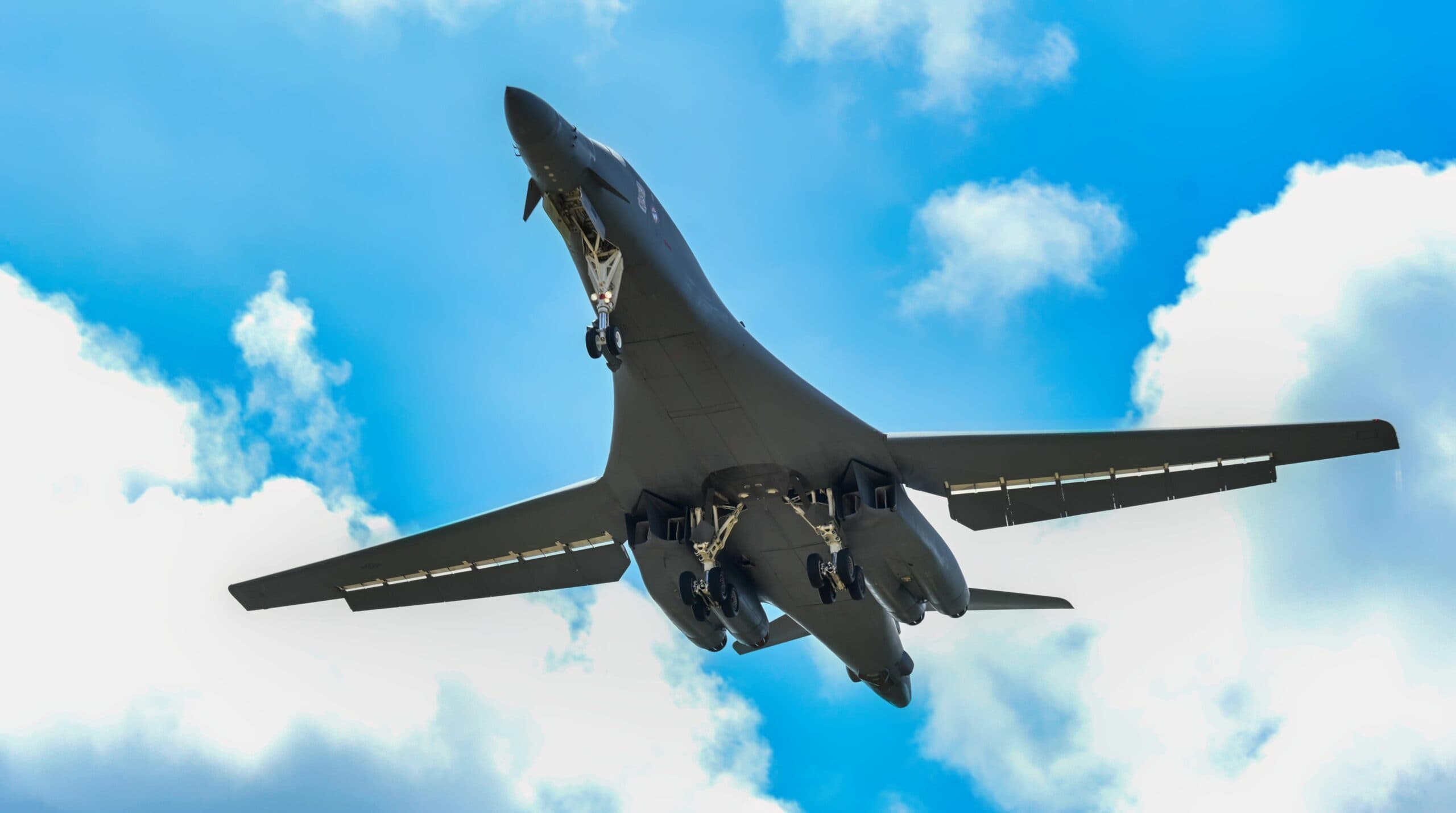
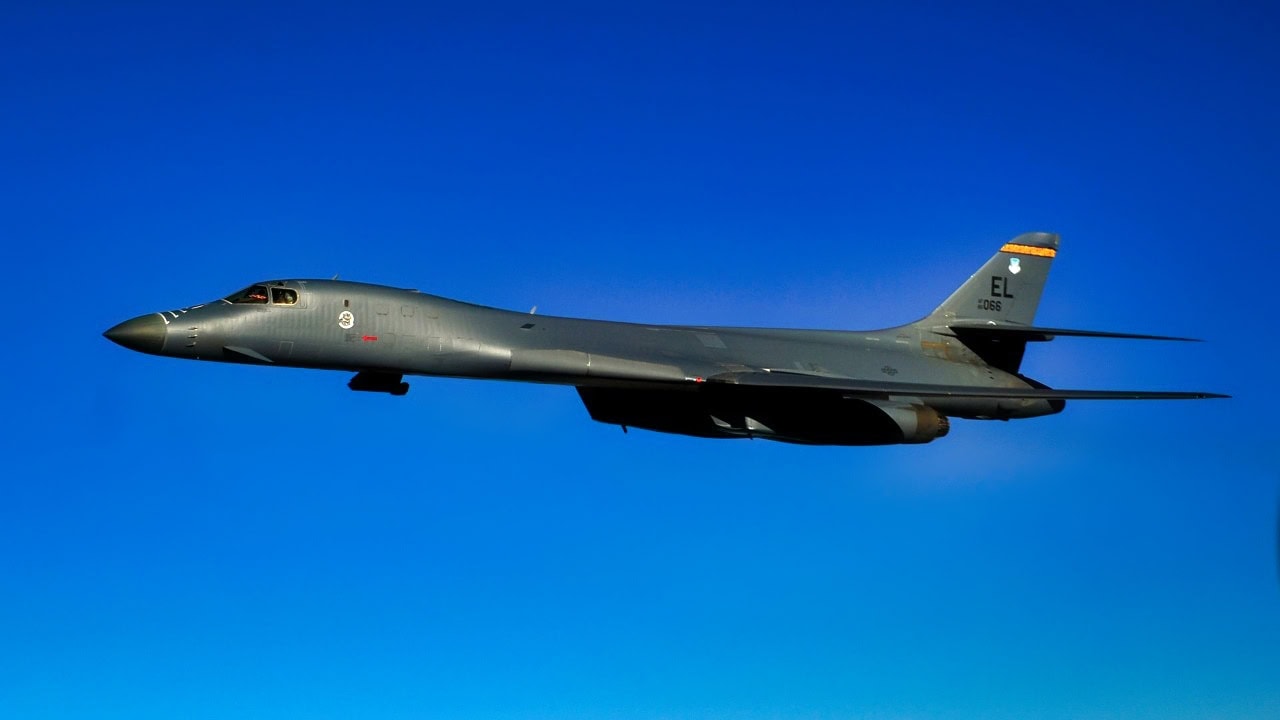
A U.S. B-1B Lancer assigned to the 34th Expeditionary Bomb Squadron, Ellsworth Air Force Base, S.D., ascends into the sky after conducting a “touch and go” maneuver during Bomber Task Force 25-1 at Andersen Air Force Base, Guam, Feb. 24, 2025. Bomber Task Force missions provide opportunities to train and work with our Allies and partners in joint and coalition operations and exercises. (U.S. Air Force photo by Airman 1st Class Alec Carlberg)
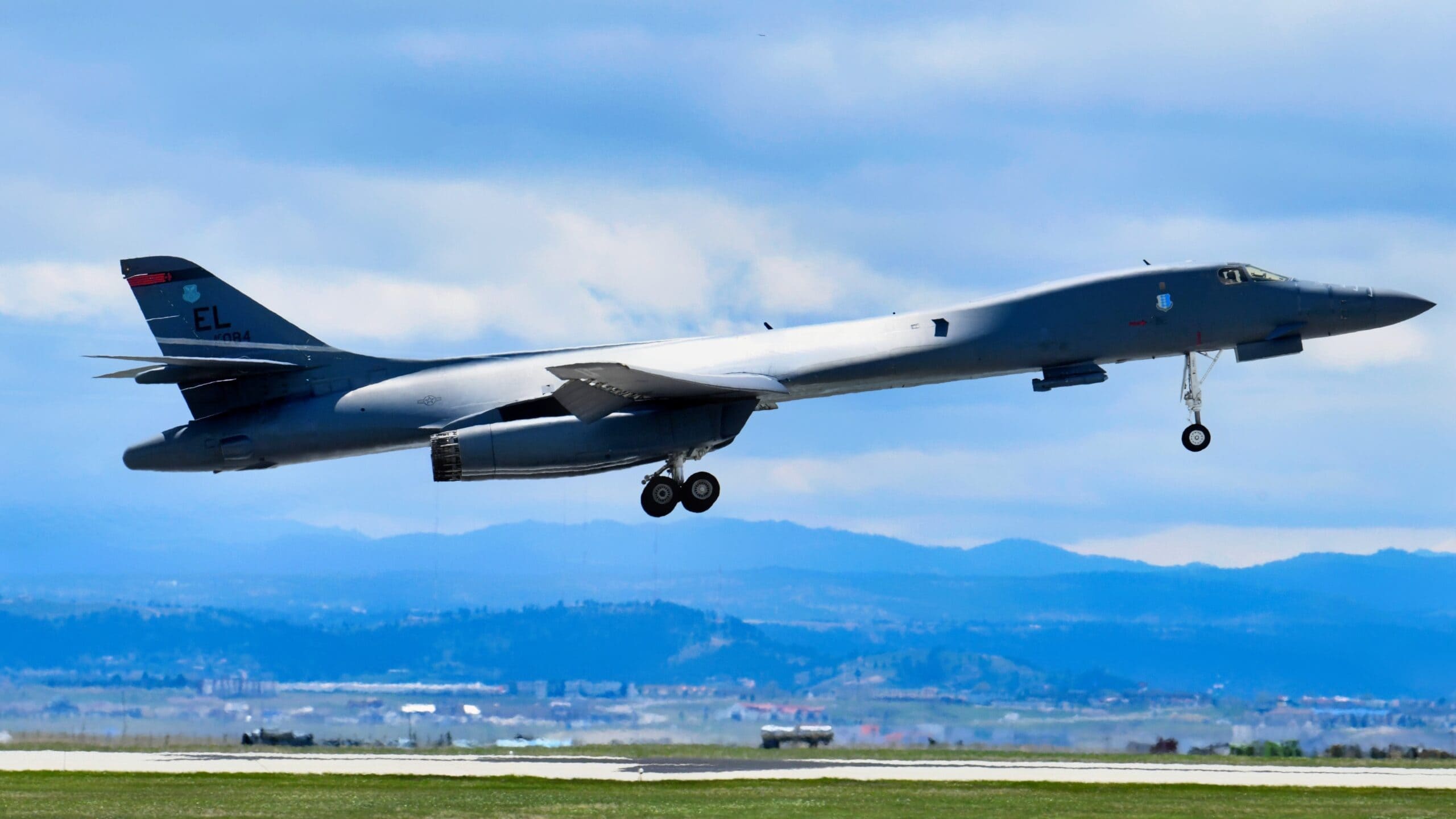
B-1B Lancer Bombers. Image Credit: Creative Commons.
-The B-1B’s weakness is survivability—no stealth and slower than top PLA fighters—so it matters most as a standoff missile truck, especially with the new external weapons pylon that expands long-range strike.
-That keeps the ‘Bone’ relevant until B-21 numbers grow.
Why the B-1B Lancer Still Matters in the Pacific Missile Age
Not unlike the A-10 Warthog ground-attack plane, the Rockwell B-1B Lancer strategic bomber, often known as the “Bone,” continues to doggedly defy efforts by politicians and military brass to retire it. Thus the immortal words of Welsh poet Dylan Thomas are appropriate:
“Do not go gentle into that good night/Old age should burn and rave at close of day/Rage, rage against the dying of the light.”
Indeed, several Bones recently demonstrated their potential to rage against the looming deadly menace of the People’s Republic of China.
The Basics
This latest and intriguingly noteworthy story comes to us courtesy of a December 3 press release by Dyess Air Force Base, Texas.
To wit: “The U.S. strategic bombers were deployed to the INDOPACOM area of responsibility to train and integrate with allies, partners and joint forces. While in theater, the 9th EBS showcased its capability to simultaneously embed with Japan and India, executing fly-over and joint force integration missions.”
As noted, the B-1Bs were assigned to the 9th Expeditionary Bomb Squadron (9th EBS), Dyess Air Force Base, and their successful departure from Misawa Air Base took place on November 17, concluding a Bomber Task Force deployment.
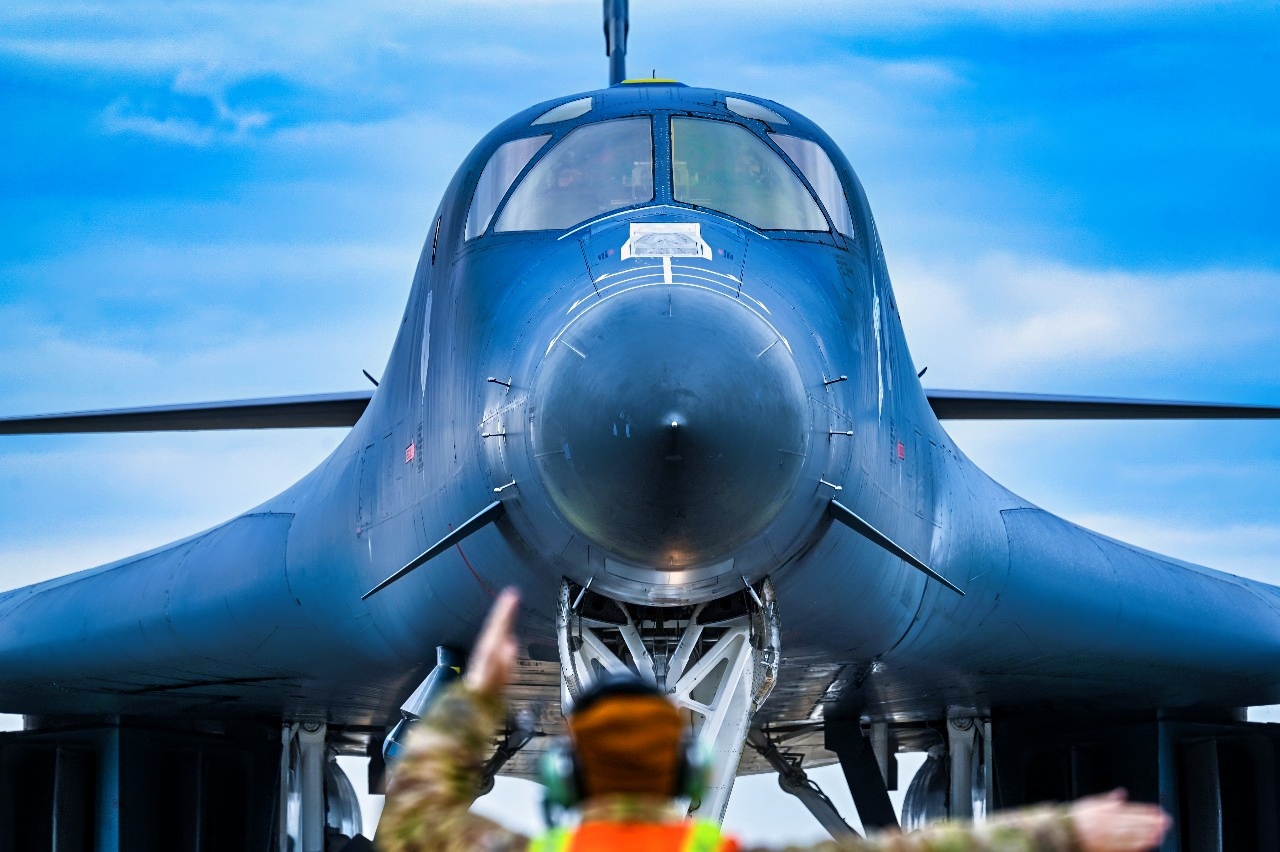
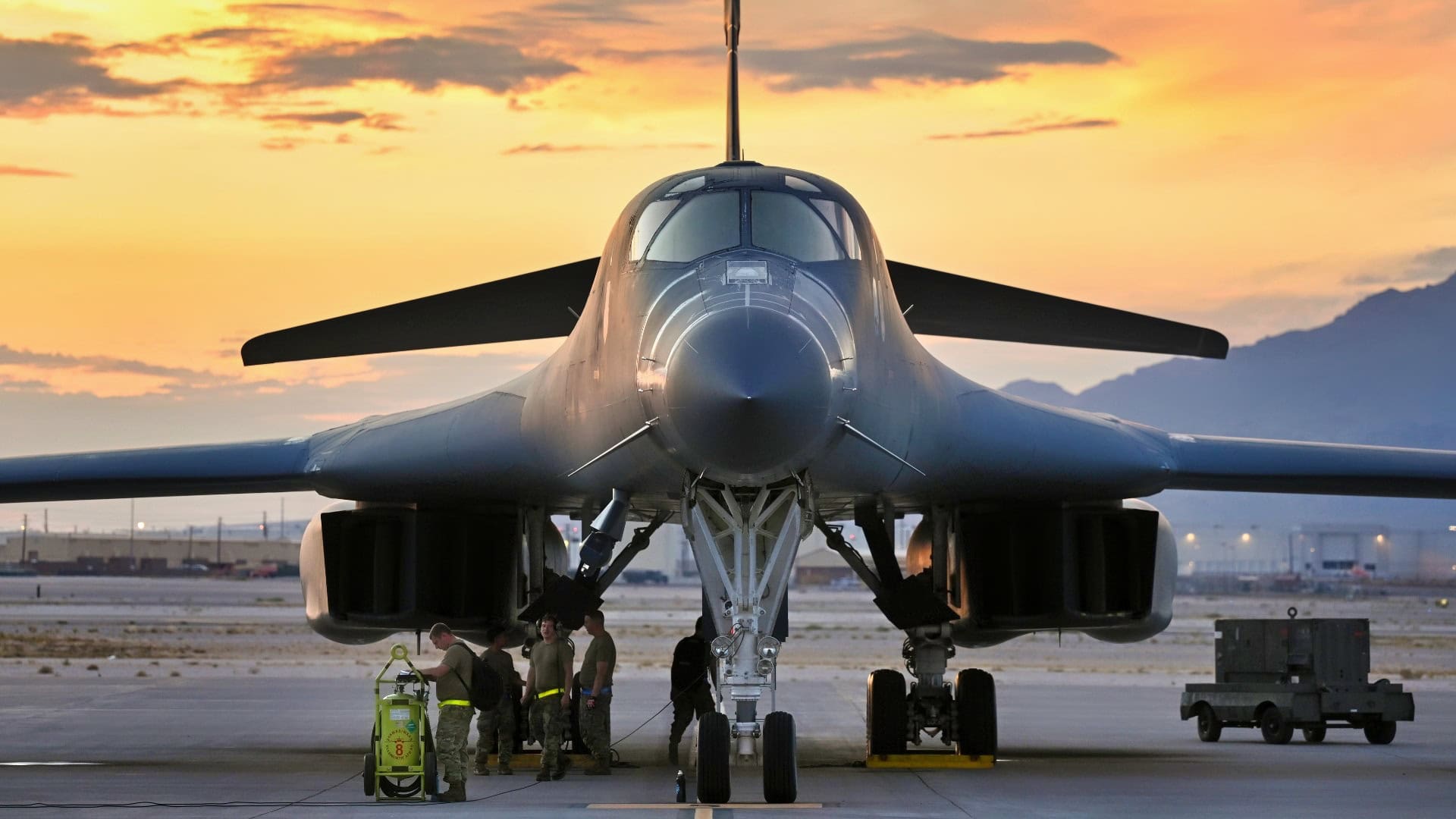
An Airman assigned to the 9th Expeditionary Bomb Squadron marshals a B-1B Lancer, preparing for take off during Bomber Task Force 25-2 at Misawa Air Base, Japan, May 3, 2025. BTF 25-2 is a demonstration of Allied strength, unity, and commitment to global security. By projecting force, reinforcing strong partnerships, and showing our unwavering resolve, it aims to deter aggression and uphold peace and stability in the Indo-Pacific region and beyond. (U.S. Air Force photo by Airman 1st Class Mattison Cole)
B-1B Lancer Bomber. Image Credit: Creative Commons.
Numerical Perspectives
To give our readers an appreciation for just how long-haul a mission this was, Misawa Air Base is in Aomori Prefecture, the northernmost portion of Japan’s main island of Honshu—before you hit the Hokkaido Strait. It is roughly an eight-hour commute to Tokyo via car and two hours via bullet train.
Meanwhile, Dyess AFB is located about 7 miles southwest of downtown Abilene, Texas, and 150 miles west of Fort Worth, Texas. The distance from Dyess to Misawa is 6,054 miles as the crow flies.
Strategic Implications
The 9th EBS aerial warriors integrated with their counterparts from Japan, India, the Philippines, and Canada, executing 14 higher headquarters missions and 10 local sorties within the theater, strengthening interoperability with Japan and reinforcing stability across the Indo-Pacific region and international alliances.
As stated by Lt. Col. Richard Hansen, 9th EBS commander, “BTF deployments and operations, alongside other military activities in the region, enhance readiness and demonstrate our commitment to Allies and partners. Every mission we fly while deployed is designed to deter adversaries, assure allies and partners, strengthen interoperability, maintain readiness and global strike capability.”
Three key alliances were covered in a single mission:
-Japan and India are two of the United States’s three partners in the Quadrilateral Security Dialogue;
-The Philippines has had a mutual defense treaty in place with the U.S. since 1951;
-Canada is one of America’s NATO allies.
That sends a clear message to Beijing that the United States and its allies have the global airpower projection capabilities, and the Lancer is a major element.
BONE vs. Beijing: Pluses and Minuses
In terms of payload capacity and weapons delivery accuracy, the B-1B remains an extremely deadly warbird that could inflict some serious damage if war broke out between the United States and China.
However, the “Bone” would also be burdened by major vulnerabilities in any strike mission against Chinese forces.
First, the Lancer lacks stealth, unlike the Northrop B-2 Spirit (the original stealth bomber). The Bone has a sizable radar cross-section, which means Chinese air defenses could see it coming from many miles away and vector fighter People’s Liberation Army Air Force (PLAAF) jets to intercept it. (This also underscores the U.S. Air Force’s urgency to get the sixth-generation B-21 Raider stealth bomber operational.)
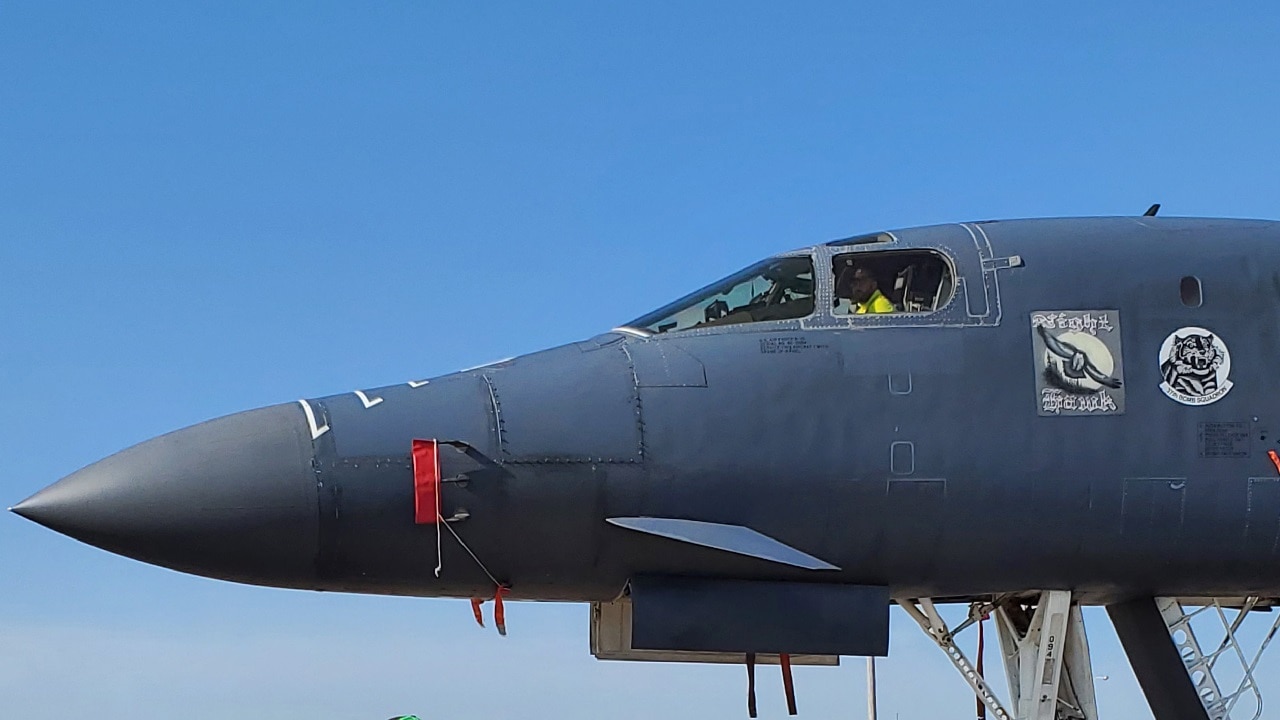
A U.S. Air Force B-1B Lancer assigned to the 34th Bomb Group undergoes maintenance at Nellis Air Force Base, Nev., July 23, 2024. Five B-1Bs flew from Ellsworth AFB, S.D., to participate in Red Flag 24-3, an exercise that provides Airmen and Guardians with the opportunity to work alongside allied air forces in a realistic combat training environment. (U.S. Air Force photo by Airman 1st Class Brittany Kenney)
A B-1B Lancer, tail number 86-0094, is moved across Douglas Blvd. to the Maintenance Repair and Overhaul Technology Center (MROTC) to receive an initial portion of Gate 1 of programmed depot maintenance April 21. 567th AMXS personnel will perform three days of maintenance which include single system checks on 40 individual actuators validating voltage outputs as
well as interrogating each actuator for hydraulic leaks. After single systems are completed, the horizontal stabilizers will be removed from the aircraft. This is the first time that horizontal stabilizers have ever been removed at the MROTC. Once complete, the aircraft and horizontal stabilizers will be brought back across Douglas to the 569th AMXS strip facility for plastic media blasting. Once stripped, the horizontal stabilizers will be routed to the 76th Commodities Maintenance Group for overhaul and repairs. (U.S. Air Force photo/Kelly White)
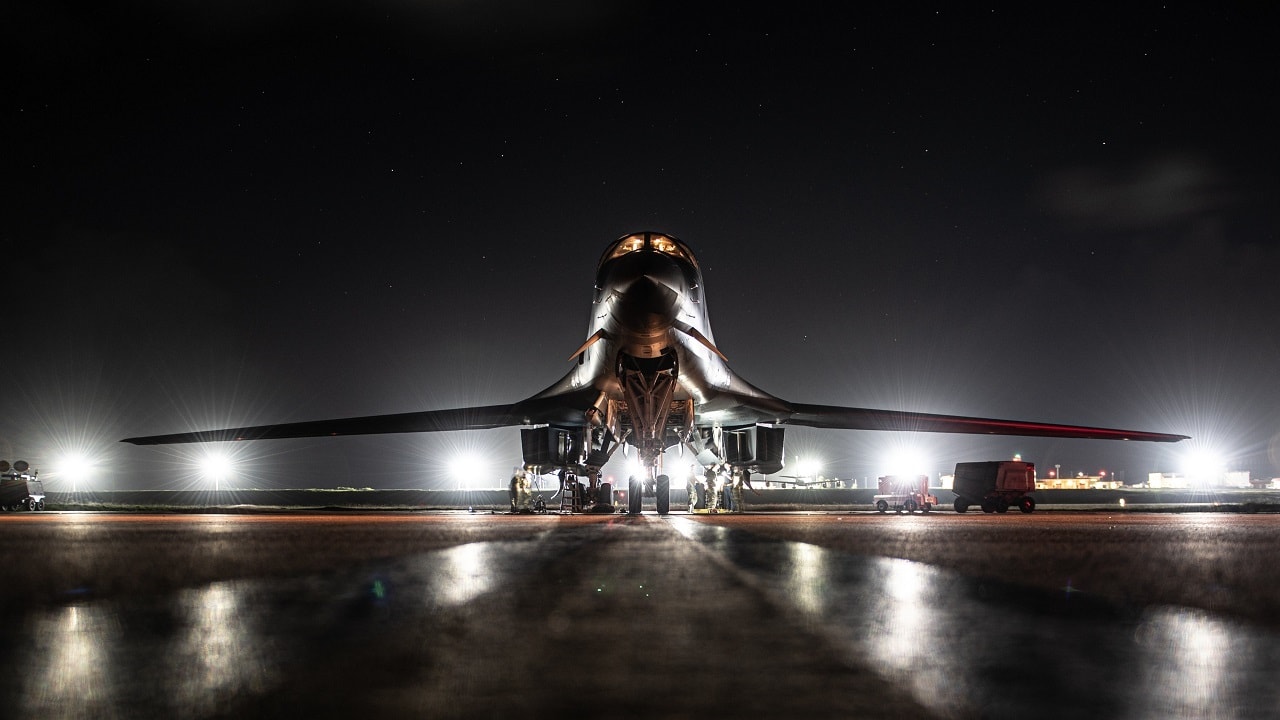
B-1B Lancer Bomber. Image Credit: U.S. Air Force.
Further, while the Lancer is a supersonic plane, with a max airspeed of Mach 1.2 it is still slower than any of the top-of-the-line PLAAF fighters, namely the J-10 “Vigorous Dragon” (Mach 1.8) and the J-20 “Mighty Dragon” stealth plane (Mach 2.0). B-1Bs without fighter escorts and/or standoff attack distance would be easy pickings for the Chinese air-defense network.
The fighter escort need would be covered by the U.S. Air Force’s own stealth fighters, the F-22 Raptor and the F-35 Lightning II.
As for standoff attack capability, that would be covered by the Bone’s new external weapons pylon: The Load Adaptable Modular would enable the Bone to carry up to 12 missiles externally on six pylons. These missiles would add to the 24 already carried in the B1B’s internal weapon bays. According to Boeing, the missiles would be of two types: boost-glide vehicles and air-breathing missiles.
About the Author: Christian D. Orr, Defense Expert
Christian D. Orr is a Senior Defense Editor. He is a former Air Force Security Forces officer, Federal law enforcement officer, and private military contractor (with assignments worked in Iraq, the United Arab Emirates, Kosovo, Japan, Germany, and the Pentagon). Chris holds a B.A. in International Relations from the University of Southern California (USC) and an M.A. in Intelligence Studies (concentration in Terrorism Studies) from American Military University (AMU). He is also the author of the newly published book “Five Decades of a Fabulous Firearm: Celebrating the 50th Anniversary of the Beretta 92 Pistol Series.”