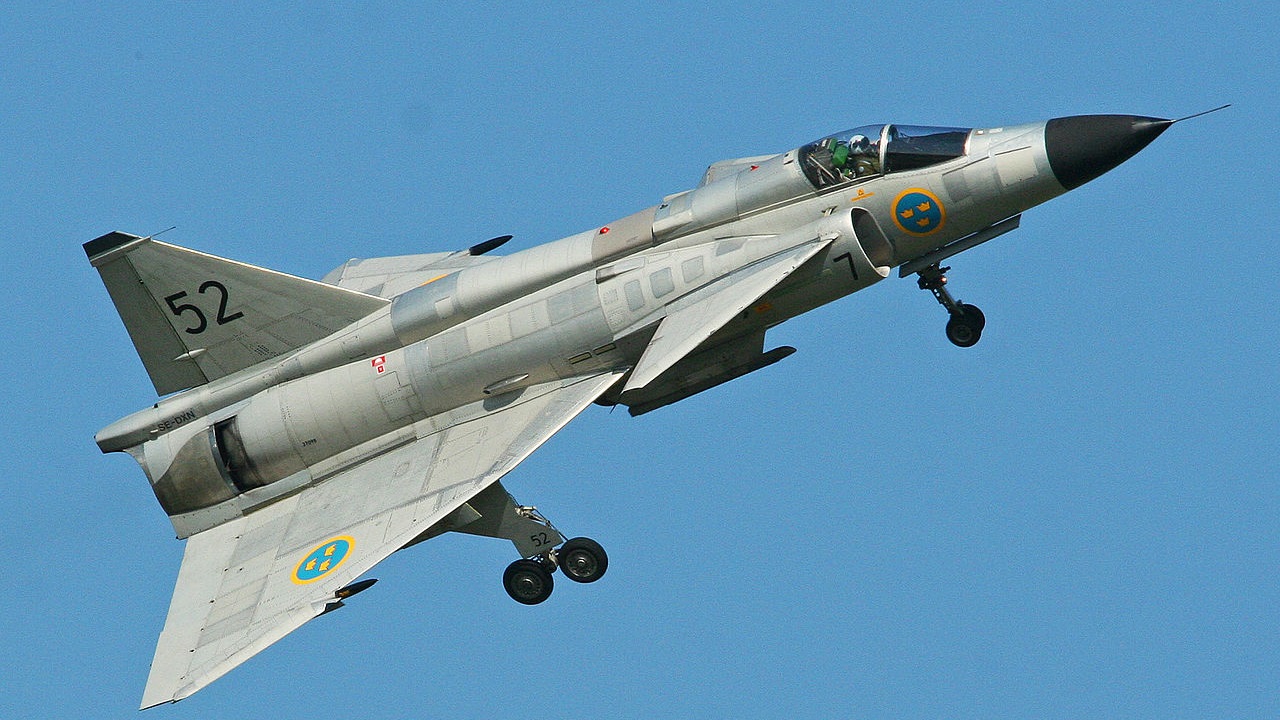
Key Points and Article Summary: Sweden’s Saab 37 Viggen was purpose-built for a particular Cold War concept: disperse fighters onto highway strips under the Bas 60 and later Bas 90 basing systems so the Soviet Union could never wipe out the Swedish Air Force in a first strike.
-Its single afterburning engine, thrust reverser, and STOL performance let conscript ground crews keep jets flying from tiny, camouflaged sites.
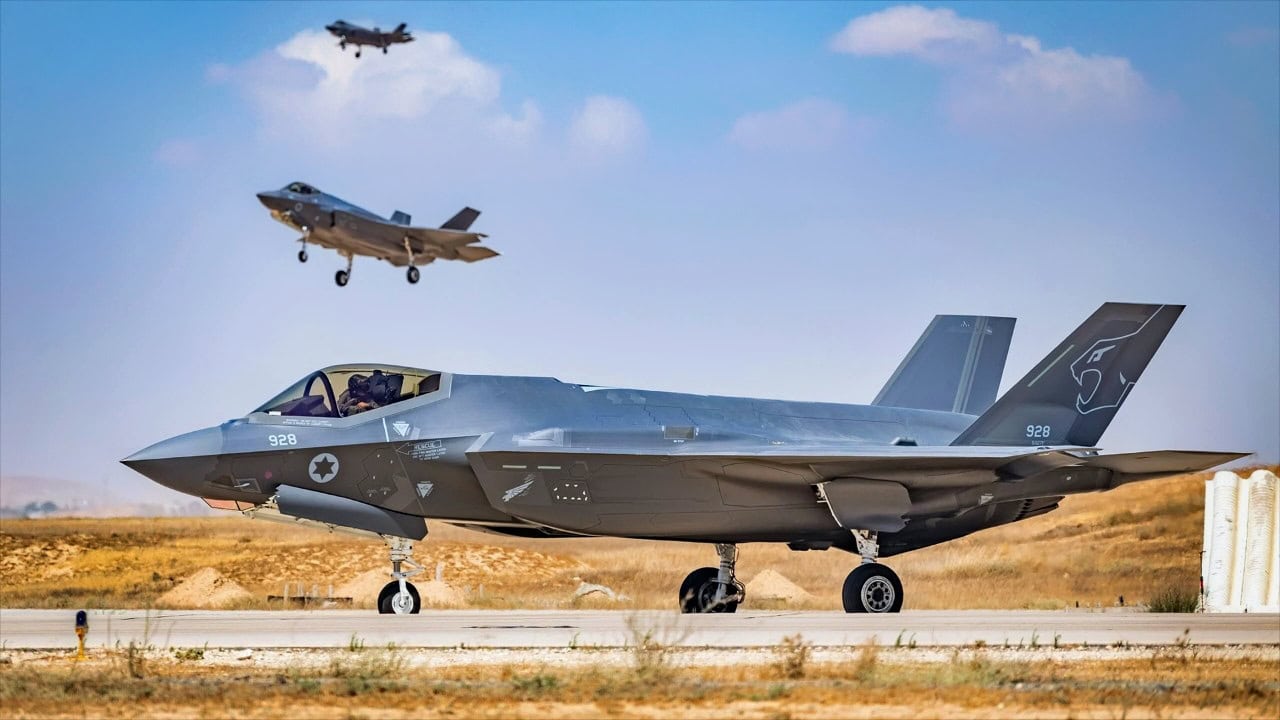
F-35I Adir. Image Credit: Creative Commons.
-That philosophy carried into the JAS 39 Gripen. But today, as Canada’s leaked evaluation shows, the F-35 doesn’t just edge out the Gripen E—it “wins by a mile,” underscoring how far fifth-generation designs have pulled ahead.
Sweden’s Saab 37 Viggen Was Built for War on Highways – But Its Gripen Heir Lost to the F-35
The Saab 37 Viggen, built by Sweden’s Saab, was powered by a single engine, a license-built version of Pratt & Whitney’s JT8D, with an afterburner.
The Saab 37 Viggen airframe also had integrated thrust reversers for short landings. Combined with the Viggen’s large-area wings, the jet had capabilities nearly comparable to Short Take-Off and Landing aircraft and needed only around 500 meters of tarmac to take off.
It proved to be a prescient decision.
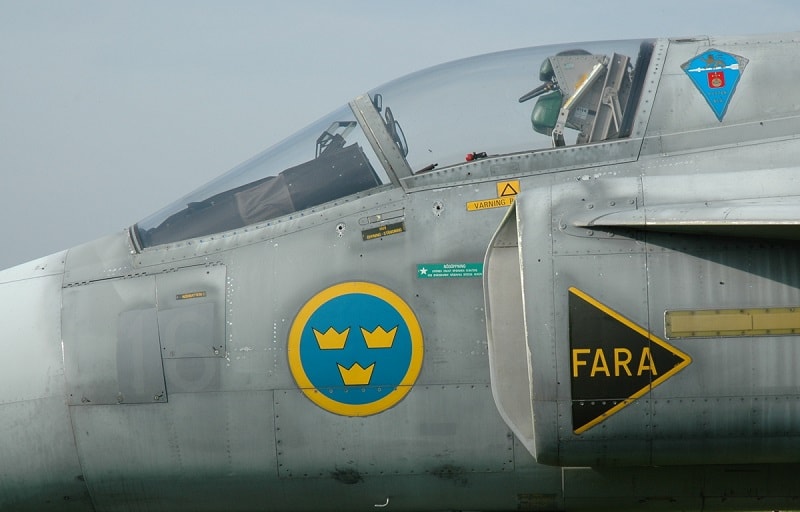
Closeup view of the cockpit and air intake of a JA 37 Viggen.
Cold War Basing: Bas 60 and Bas 90
The overarching Swedish strategy for basing their aircraft during the Cold War adhered closely to one crucial principle: should the Cold War against the Soviet Union turn hot, Stockholm would prevent their plane from being wiped out in the opening stages of a conflict.
Instead of relying on a few densely populated air bases, Sweden opted for a much more dispersed force posture, with its combat aircraft spread out across the country through a network of tiny aircraft support sites that meshed with the country’s highway system.
The first iteration of this basing strategy was Bas 60, which the country adopted in the late 1950s.
Each of the small bases would be independent, with ersatz runway strips integrated into public highways, fuel depots, ammunition dumps, and basic personnel shelters.
Bas 60 did not attempt to build a fully functioning air base, but instead sought to provide sufficient infrastructure support for Sweden’s lightly trained, conscript-centric force to keep aircraft aloft and in combat.
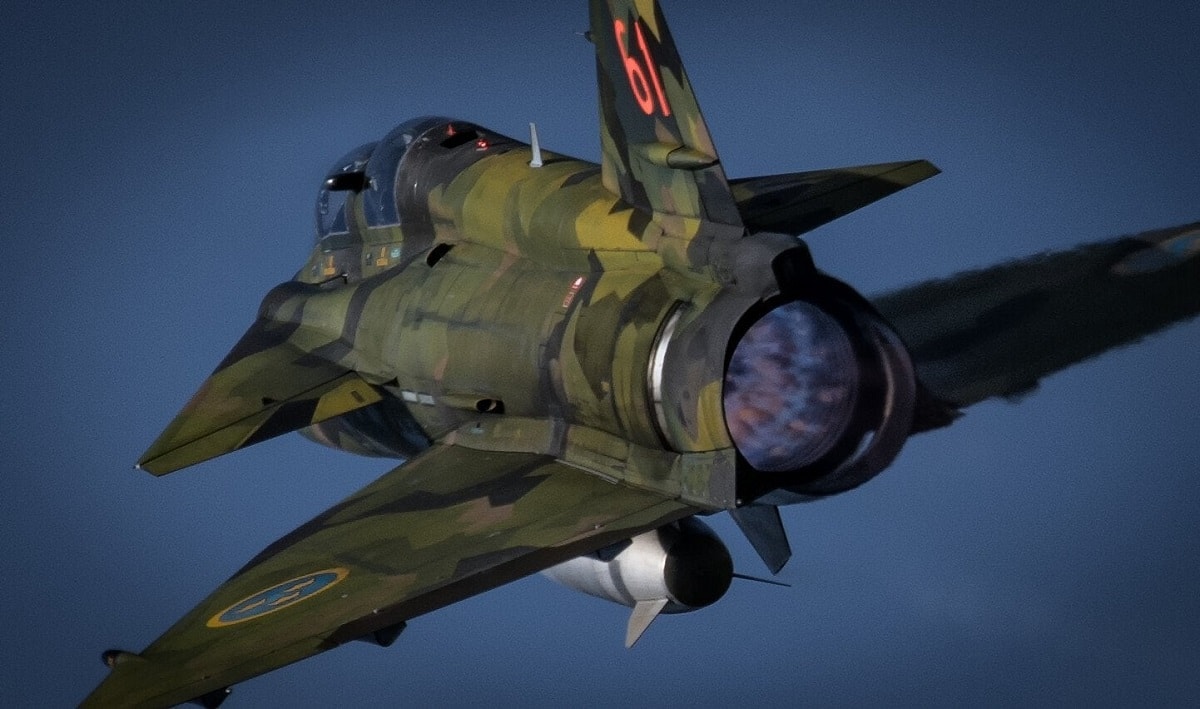
Image of JA-37 Viggen: Creative Commons
The strategy evolved later in the Cold War, as the risk of sudden missile or air attacks from the Soviet Union grew, and the updated Bas 90 air basing strategy was instituted. Instead of just a single runway, a more sophisticated web of widely dispersed support points supporting larger bases.
Rather than a single austere runway, a Bas 90 cluster had several camouflaged runways, supported by dispersed nearby fuel and ammunition caches.
Both Bas 60 and the updated Bas 90 basing strategy directly shaped Saab’s aircraft design. The Saab 37 Viggen, and later the modernized JAS 39 Gripen, were designed to fit within this support architecture.
To that end, they both had very good short-takeoff and landing performance and could be quickly serviced by a small group of relatively inexperienced conscripts. Bas 60, Bas 90, and Saab were all inseparable parts of Swedish air doctrine.
Fight an F-15? No Thank You
Saab’s exotic-looking fighters are often a point of comparison and have garnered significant positive media attention, perhaps due to their uniqueness within the NATO alliance. In one interview, a Viggen pilot was asked his opinion of the Viggen as a point of comparison with other fighters of the era. The Swedish pilot was somewhat equivocal.

SAAB AJS 37 Viggen. Image Credit: Creative Commons.
“Well… Not an easy question to answer. The air-to-air combat arena is very complex and involves factors like; how many are you? Distance? Weapons carried by both the opponent and your own group, etc. It’s not as easy as to say that whoever turns best comes out on top,” Swedish Air Force Captain Mikael Tormalm explained.
“But to give some kind of answer would be that I, having a choice, would not go into a dogfight with the Fighterviggen versus the F-15 or the MiG-29. Tornado Yes. Basically based on rate-of-turn performance. On the other hand I would consider to face both the F-15, MiG-29 and Tornado if I had enough distance at setup, flying with a wingman who knows what he is doing and my sensors gave me good situation awareness.”
Waning Prowess in the Air
While the Saab 37 Viggen is now a part of history, this fighter clearly led to even bigger things for Saab. And that mean a conversation about the JAS 39 Gripen, which built of the foundation of the Saab 37 Viggen, and how the JAS 39 is even compared to the F-35.
Much ink has been spilled recently about the Viggen’s older sibling, Saab’s Gripen E, prompted in part by Saab’s recent business dealings with the Brazilian government, with some online commentators lauding the jet’s electronic warfare capabilities.
Saab seems to claim that its Gripen is superior to typical stealth capabilities in keeping its Gripen hidden from adversary radar.
Saab’s Gripen is again in the news following the leak of an internal Canadian Department of National Defence document that compared the Gripen and F-35. Ottawa is currently looking for a jet to replace its older CF-18 Hornets, with both Sweden’s and America’s offerings in the running.
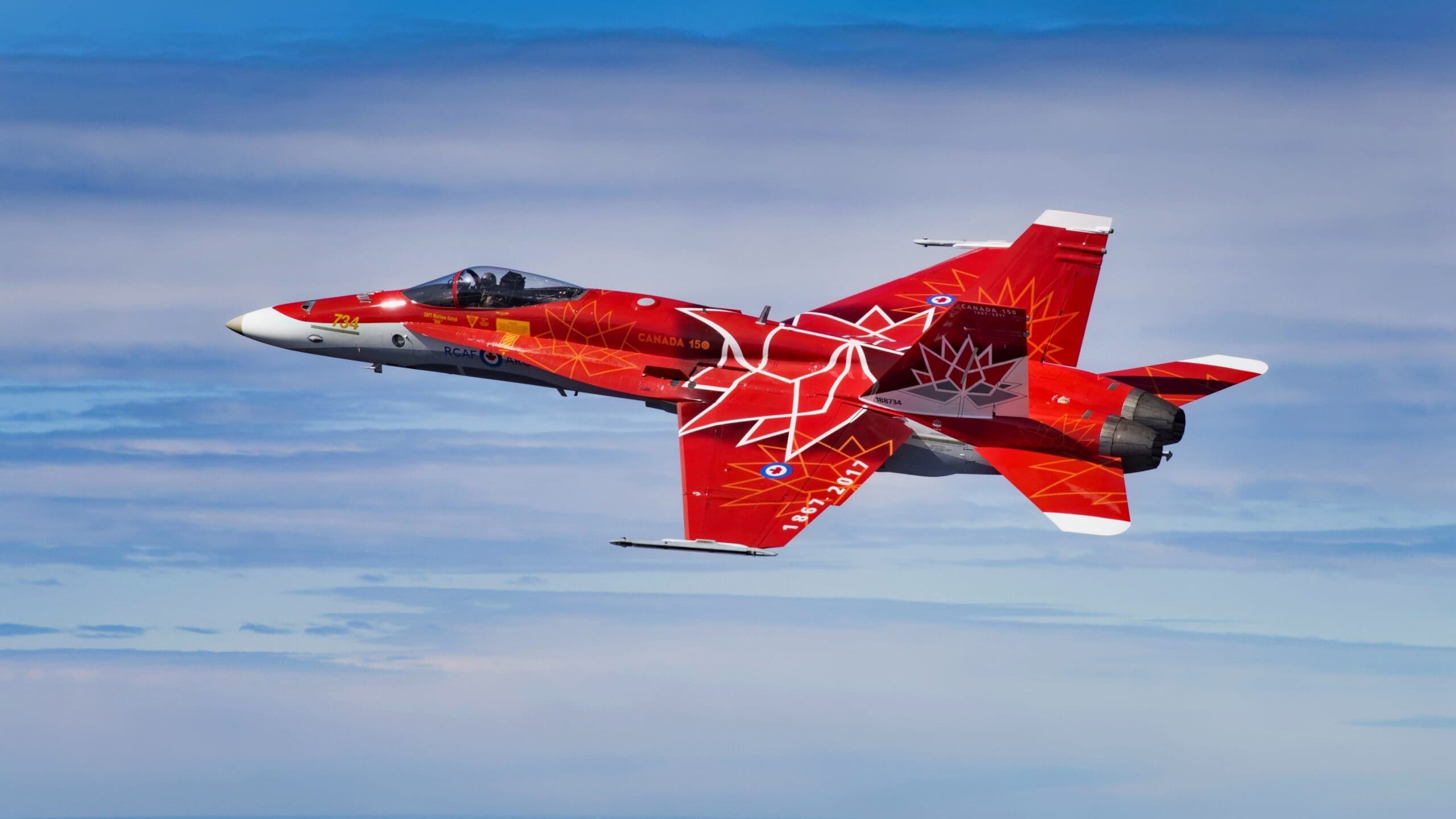
CF-18 Fighter from Canada. Image Credit: Creative Commons.
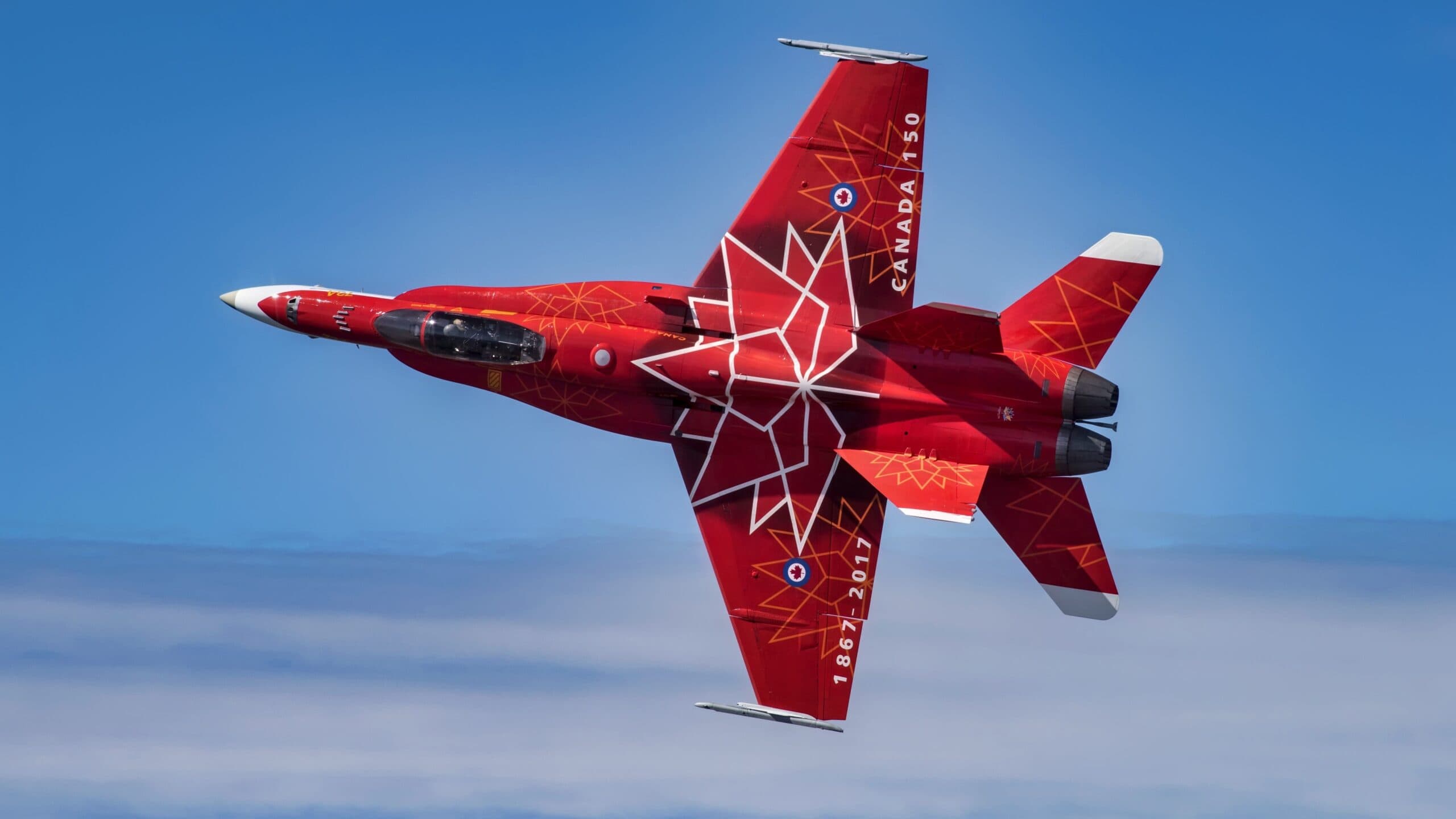
CF-18 Fighter from Canada.
Though Canada had previously committed to an F-35-only buy, the deep uncertainty and insecurity caused by the Trump Administration’s belligerent rhetoric toward Canada, one of Washington’s oldest and closest allies, prompted a reevaluation of the deal. The results of the Canadian jet evaluation were damning.
The F-35 did not perform better than the Gripen E according to the evaluation. It blew it out of the water. In every single category which the two jets were evaluated, the F-35 outperformed the Gripen by overwhelming margins.
“The capability assessment here says that there is a clear-cut winner, no contest, no ambiguity,” said David Perry, president of the Canadian Global Affairs Institute. “I’d expected that [the F-35] was going to be a clear winner, but this is a winner by a mile.”
Though Canada’s fighter jet purchase is still under review, the leaked document might as well be a death knell for Sweden’s Gripen bid, though the firm has tried to cast doubt on the review, pointing out that both the latest Gripen and F-35 variants are different than the aircraft evaluated by Canada in 2021.
In light of this information, the arguments in favor of the Gripen over the F-35 seem to be coming to a definitive conclusion.
About the Author: Caleb Larson
Caleb Larson is an American multiformat journalist based in Berlin, Germany. His work covers the intersection of conflict and society, focusing on American foreign policy and European security. He has reported from Germany, Russia, and the United States. Most recently, he covered the war in Ukraine, reporting extensively on the war’s shifting battle lines from Donbas and writing on the war’s civilian and humanitarian toll. Previously, he worked as a Defense Reporter for POLITICO Europe. You can follow his latest work on X.