
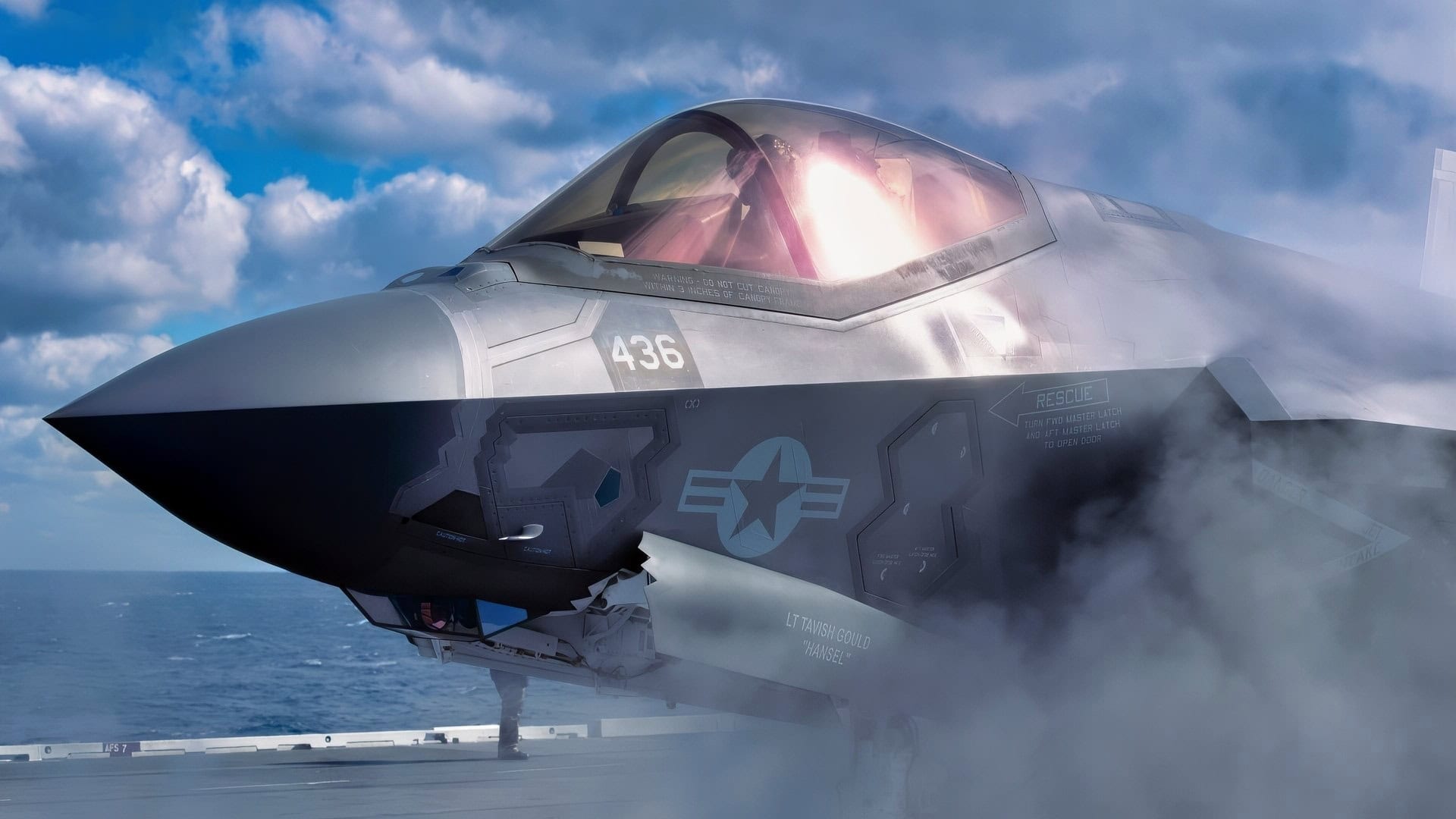
On March 2, 2022, a hired diving-support ship in the South China Sea hauled an F-35C Lightning II off the seafloor. The wreck sat at about 12,400 feet, more than two miles down. A remotely operated vehicle called CURV-21, built for Navy salvage as deep as 20,000 feet, had already clamped specialized rigging onto the airframe. The ship’s crane then lowered a hook, connected it to those lines, and lifted the fighter through the water column onto the deck of DSCV Picasso. The work finished 37 days after the jet left the USS Carl Vinson.
How to Find an F-35C Fighter on the Seafloor
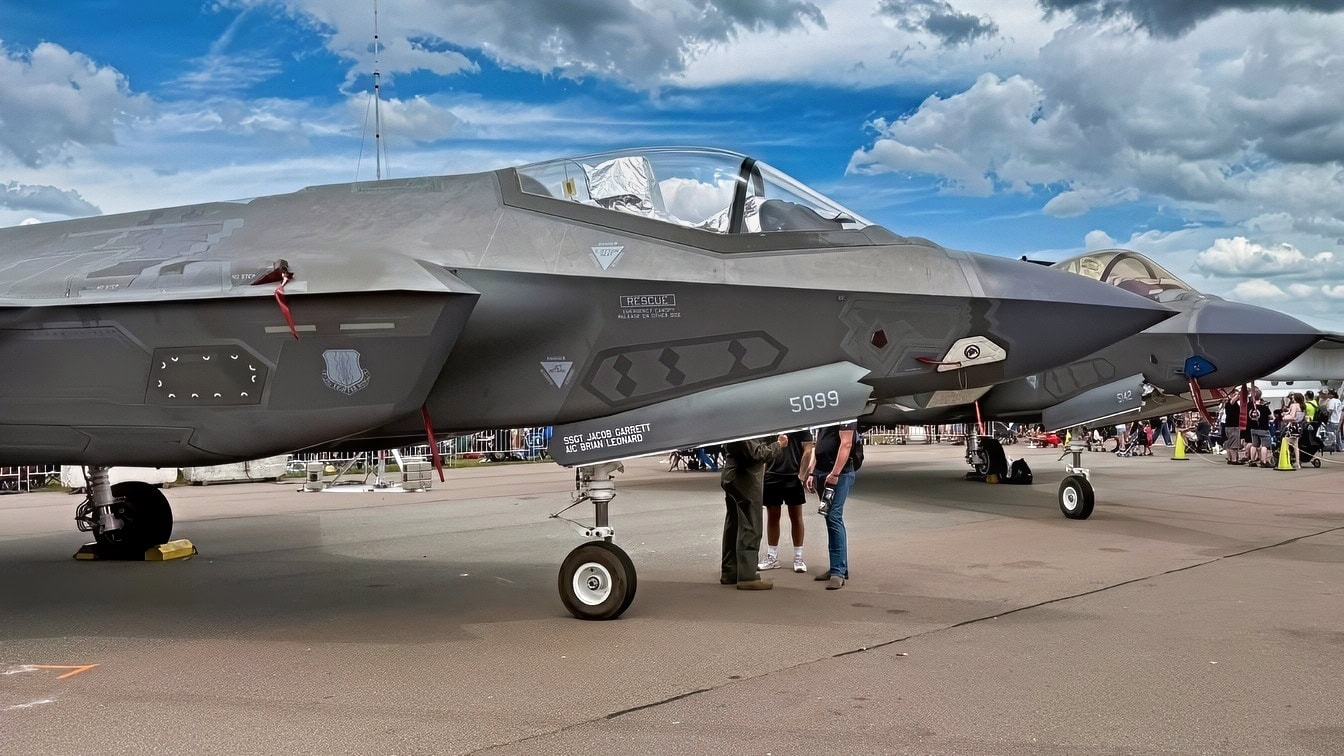
F-35C Lakeland Airshow 19FortyFive.com Image
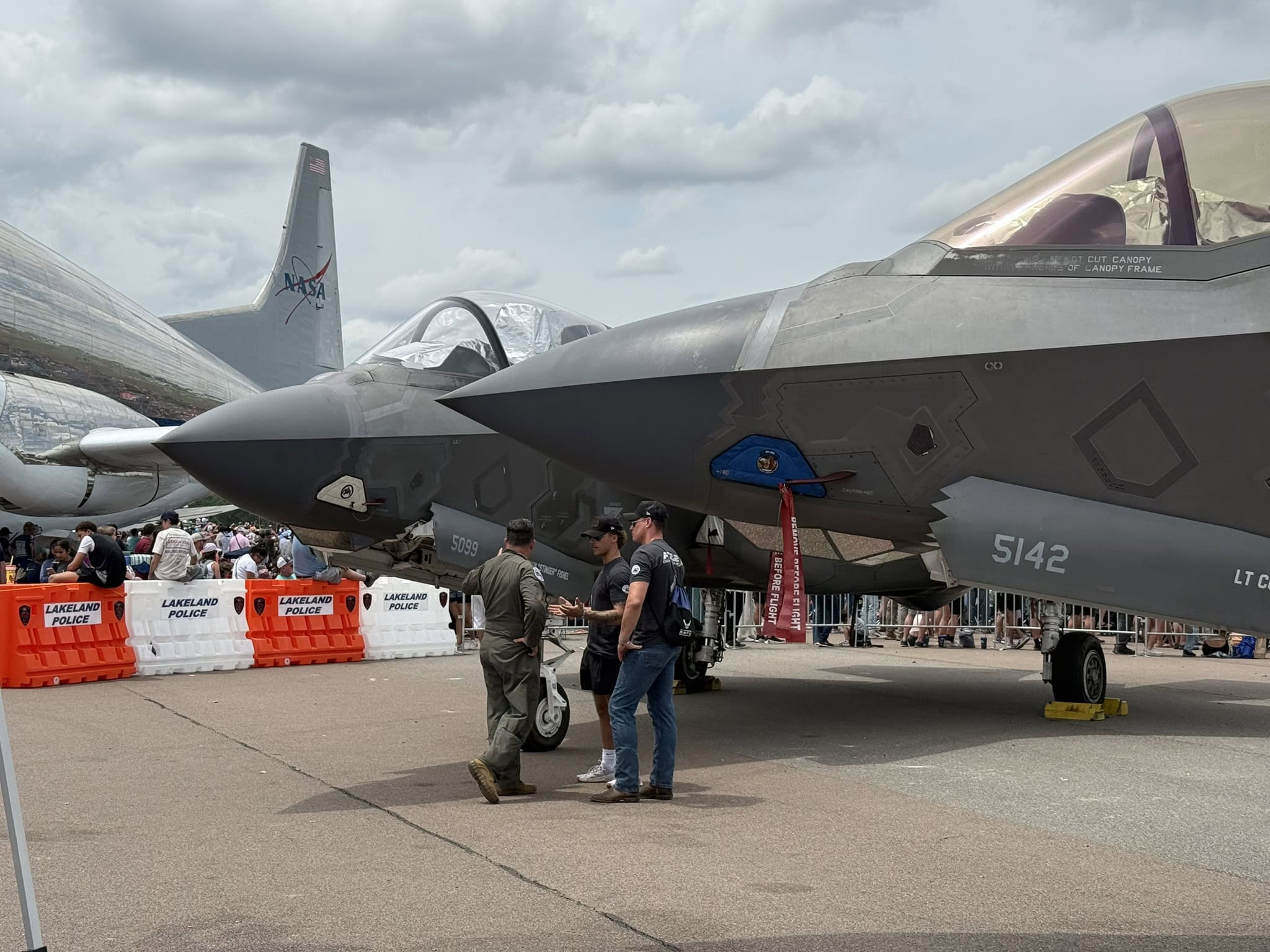
F-35C. Image Credit: 19FortyFive.com taken on 4/19/2026.
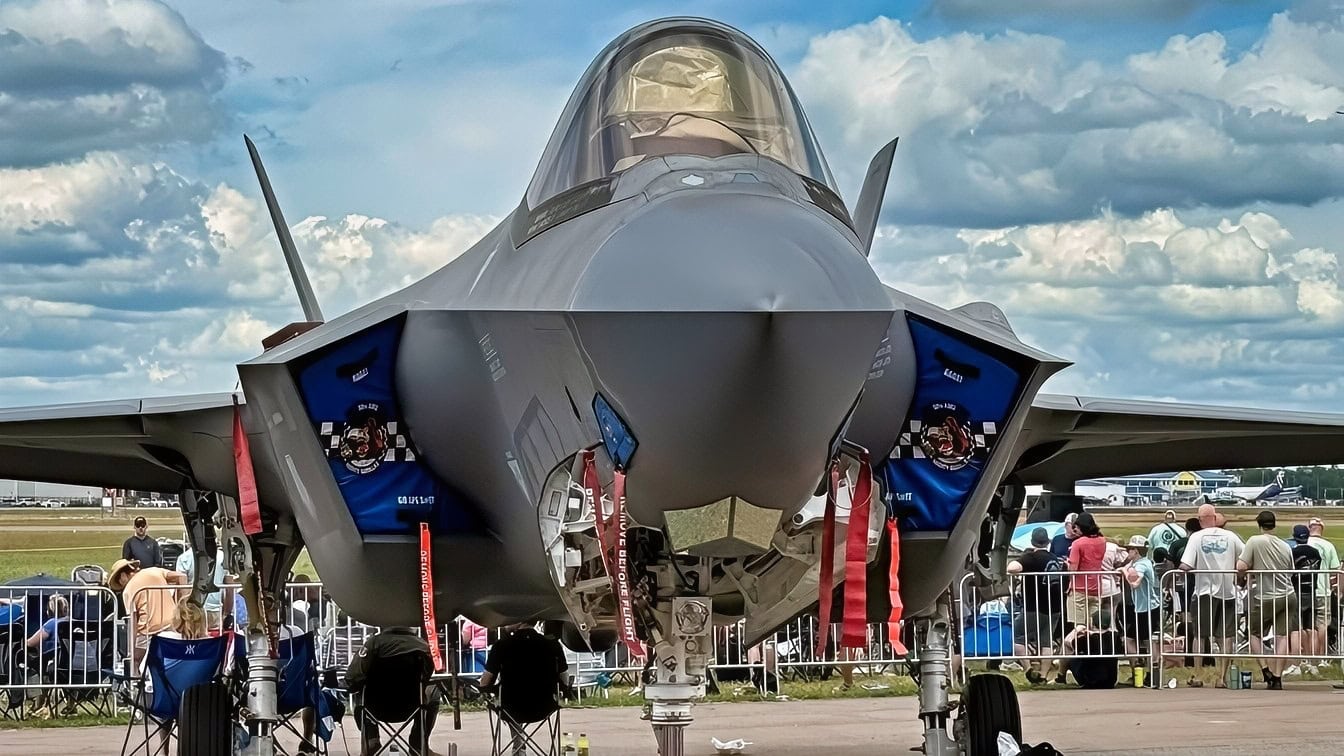
F-35C Lakeland Airshow Photo 19FortyFive Image Taken on 4/19/2026.
Picasso is a commercial diving-support construction vessel. Navy salvage specialists from the Supervisor of Salvage and Diving, Task Force 75, and a contractor, Phoenix International, were embarked. The ship had left Okinawa on February 23. CURV-21 did the work a diver cannot do at that depth. It is a 6,400-pound unmanned vehicle with sonar and cameras. Once the rigging was on the jet, the crane did the rest. The wreck was taken to a nearby military installation so investigators could continue their work and so the Navy could decide whether to send what remained of the airframe back to the United States.
China Worries and a Stealth Fighter Create A Sense of Urgency
The Pentagon did not describe the job as a race with another country. Three days after the crash, the press secretary said the Navy would try to recover the airplane because it was U.S. property, and because officials were mindful of the value of an F-35 in every sense of the word, including national security.
In February, he called talk of a competition to recover it speculative. The practical point was simpler. A carrier-based stealth fighter had gone into the water in China, which considers it its backyard. If the Navy left it there, someone else might have tried to reach it. Raising it closed that possibility. It also gave investigators the crash-survivable memory unit they needed to reconstruct the last seconds of the approach.
An Important Plane for the US Navy
The F-35C is the Navy’s carrier version of the Joint Strike Fighter. It has larger wings, stronger landing gear, and a tailhook built for arrested landings on a moving deck.
This site has walked through why that carrier design exists and how Carl Vinson became the first carrier to take the jet on an operational cruise.
The airplane that sank on January 24, 2022, belonged to Strike Fighter Squadron 147, the Argonauts, part of Carrier Air Wing 2. Bureau number 169304. It was the first F-35C cruise of its kind. The same deployment produced the discolored coating photos that later got mistaken for rust. The crash was a different problem.
How the Jet Went Over the Side
At about 4:30 p.m. local time, the F-35C came aboard Vinson too low and hit the ramp, the round-down at the back of the flight deck. Video later leaked from the landing-area cameras showed the jet strike, slide on its belly, rotate, and go off at an angle.
The pilot ejected. A helicopter picked him up. He was in stable condition. The Navy’s day-of statement said seven people were hurt, including sailors on deck hit by debris.
Three went to a hospital in Manila. The damage to the flight deck was described as superficial. Arresting gear was replaced. The ship was recovering aircraft again the same night. Planes already airborne took fuel from the USS Abraham Lincoln, which was nearby, and came home. Lincoln did not do the salvage.
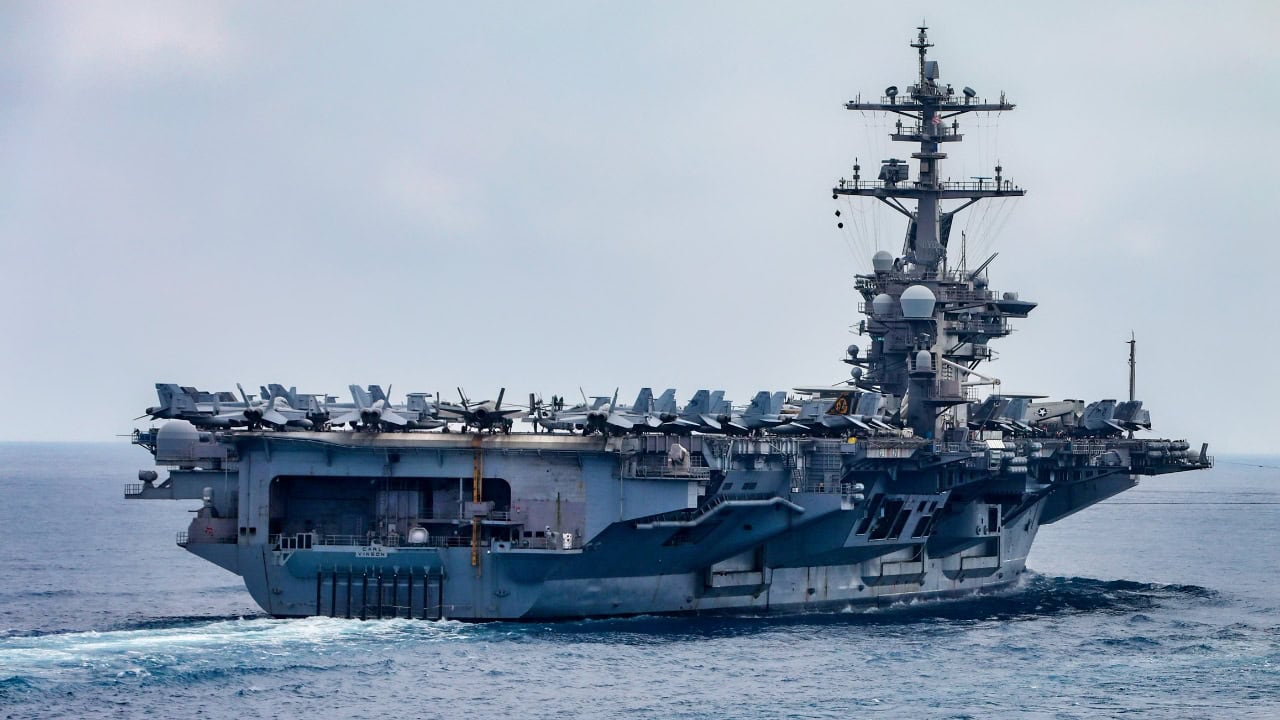
SOUTH CHINA SEA (Feb. 2, 2025) The Nimitz-class aircraft carrier USS Carl Vinson (CVN 70) conducts a replenishment-at-sea with the dry cargo and ammunition ship USNS Carl Brashear (T-AKE 7) Feb. 2, 2025. The Carl Vinson Carrier Strike Group is underway conducting routine operations in the U.S. 7th Fleet area of operations. (U.S. Navy photo by Mass Communication Specialist 1st Class Jacob I. Allison)
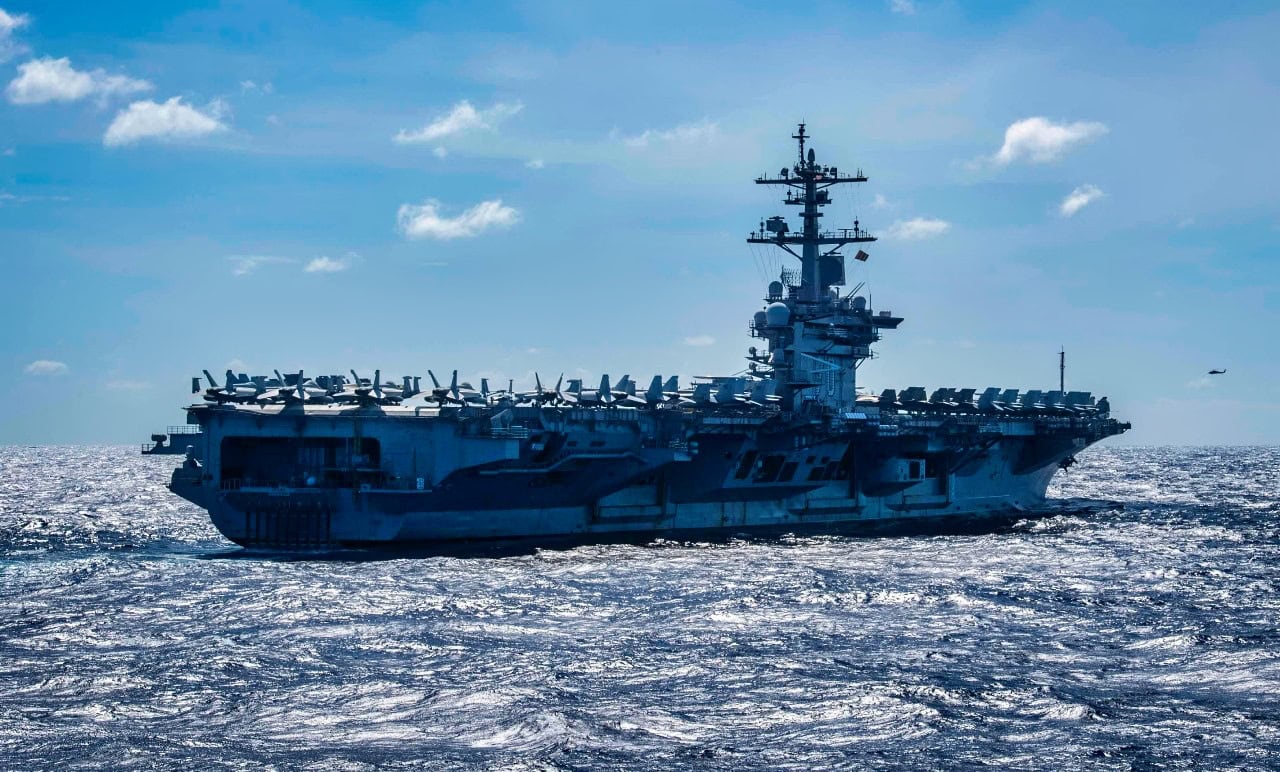
The Nimitz-class aircraft carrier USS Carl Vinson (CVN 70) transits the South China Sea during a Maritime Cooperative Activity with the Philippine Navy, Jan. 17, 2025. The U.S. and Philippines work together as allies, enhancing the interoperability of maritime forces and supporting their shared goal of a free and open Indo-Pacific. Carrier Strike Group ONE, is underway conducting routine operations in the U.S. 7th Fleet area of operations. (U.S. Navy photo by Mass Communication Specialist 3rd Class Brianna Walker)
A command investigation, endorsed in 2022 and described publicly the following February, found no airframe or engine failure. The cause was pilot error on a landing; the junior officer had not flown that way before. He used a Sierra Hotel break, an approved, faster overhead pattern that compresses the time to configure the jet and run the landing checks.
He stayed in manual power instead of selecting the Approach Power Compensator and Delta Flight Path, the automated modes that hold the right thrust and glide path for a carrier landing. He thought those modes were on. They were not.
After the turn, the F135 engine went to flight idle and stayed there until he selected afterburner about two seconds before impact. The jet settled. It hit the ramp. Vice Adm. Karl Thomas, then the 7th Fleet commander, wrote that the error was not reckless and not malicious. The airplane’s purchase cost in the investigation file was about $115 million.
Debris also damaged an EA-18G Growler and gouged the deck.
Investigators recommended that F-35C pilots use those automated landing modes and that the helmet display make it clearer when the aids are engaged. They did not recommend banning the Sierra Hotel break. The pilot was later taken off flight status and remained in the Navy. Weeks of salt water at depth, the report said, would leave little salvage value in the components themselves.
That is why the lift was not about putting the jet back in a squadron. It was about denying the wreck to anyone else, recovering flight data, and finishing the investigation.
What 12,400 Feet Actually Means
At that depth, no swimmer works. Pressure is crushing. The Navy’s own salvage vehicle is rated to 20,000 feet for a reason. CURV-21 had been deployed on other deep-sea missions, including the search for the Argentine submarine San Juan.
On this one, it only had to find a known wreck, attach the hardware, and get out of the crane’s way. Picasso’s job was to be a stable lift platform in the open ocean. Japan’s coast guard had already issued a notice to mariners in late January marking a salvage box west of Luzon. The exact coordinates were never released. That was deliberate.
The F-35C has since become a regular part of the carrier air wing, including field landing practice in Japan and other Nimitz-class decks now fitted to carry it. Vinson is still in that business.
The jet that went over the side on January 24 did not stay on the bottom long enough for another navy to try the same lift. Picasso had it on deck on March 2.
About the Author: Harry J. Kazianis
Harry J. Kazianis (@Grecianformula) was the former Senior Director of National Security Affairs at the Center for the National Interest (CFTNI), a foreign policy think tank founded by Richard Nixon based in Washington, DC. Harry has over a decade of experience in think tanks and national security publishing. His ideas have been published in the NY Times, The Washington Post, The Wall Street Journal, CNN, and many other outlets worldwide. He has held positions at CSIS, the Heritage Foundation, the University of Nottingham, and several other institutions related to national security research and studies. He is the former Executive Editor of the National Interest and the Diplomat. He holds a Master’s degree focusing on international affairs from Harvard University.

