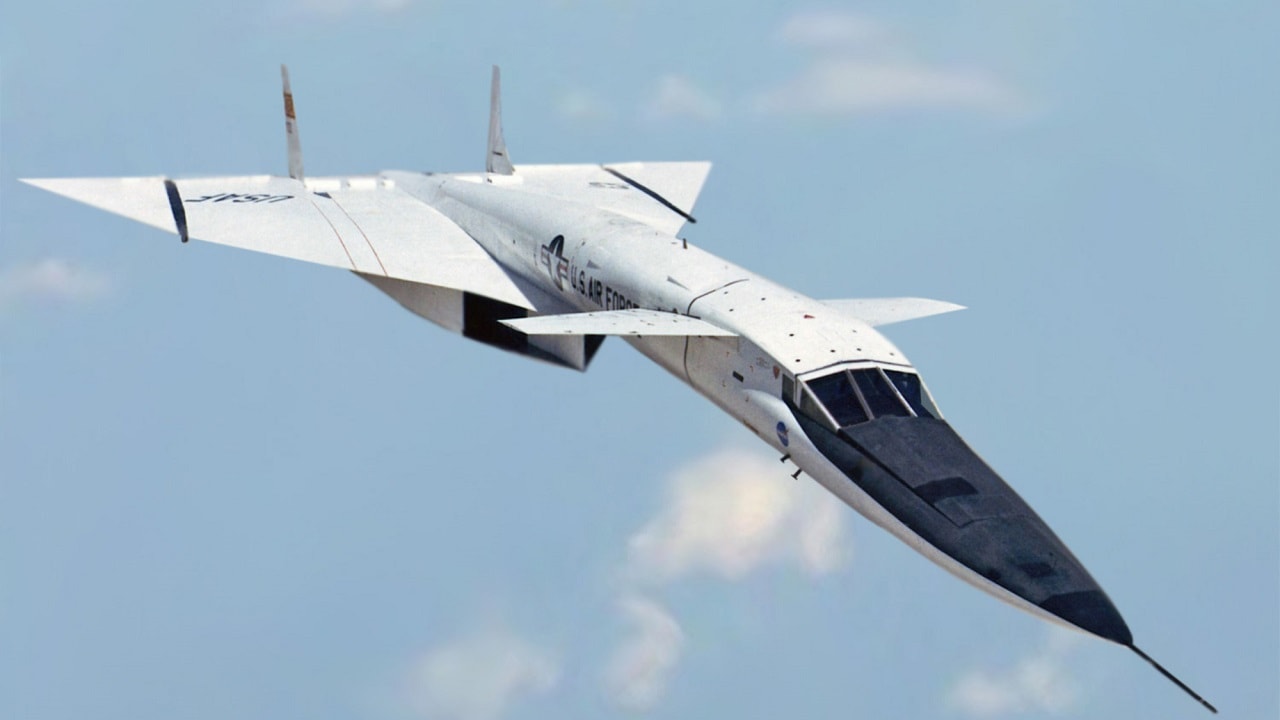
Summary and Key Points: The XB-70 Valkyrie: The “Future” That Crashed in 1966
-The XB-70 Valkyrie was a Mach 3, six-engine marvel designed to cruise at 70,000 feet and outrun Soviet interceptors.
-Born in an age of technological optimism, this “Star Wars”-like bomber was intended to replace the B-52 Stratofortress as America’s primary strategic nuclear deterrent.
-However, its dream ended in tragedy. A 1966 mid-air collision destroyed one prototype, and the rise of Soviet surface-to-air missiles (SAMs) rendered its high-altitude mission obsolete.
-Today, the surviving Valkyrie rests in a museum—a haunting reminder of a road not taken and the day the Air Force’s supersonic future died.
Mach 3 at 70,000 Feet: Why the XB-70 Valkyrie Was Doomed to Fail
The XB-70 Valkyrie was the product of a magnificent and hopeful time in the United States. An age in which the future and technological progress were synonymous—and the designs of even the weapons and platforms of the United States military looked like something from the future. The XB-70 Valkyrie was a very large, six-engine, supersonic aircraft developed in the late 1950s and early 1960s by North American Aviation for the United States Air Force.
Born in an Age That Believed the Future was Ours
But that hopeful program, that gigantic bomber that looked like it was from the original Star Wars trilogy, was, in fact, a tragedy. The Valkyrie, as you’ll read, was a road that ultimately went untraveled, despite the money and time invested in developing this technology.
It was meant to be America’s next-generation strategic nuclear bomber. This plane could cruise at more than Mach Three, fly at high altitudes (as high as 70,000 feet), and its primary purpose was to penetrate deeply into Soviet airspace and outrun any interceptors and air defenses the Soviets had in their territory.
The Bomber That Was Meant to Rewrite Strategic Airpower
Most interestingly, the XB-70 (“X” standing for “experimental”) would have entered Air Force service and become America’s primary long-range strategic bomber under the designation of “B-70.” And, that B-70 would have replaced earlier designs—including those of the B-52 Stratofortress. In other words, the XB-70 would have ensured the B-52, America’s longest serving long-range strategic (nuclear capable) bomber, never even took wing!
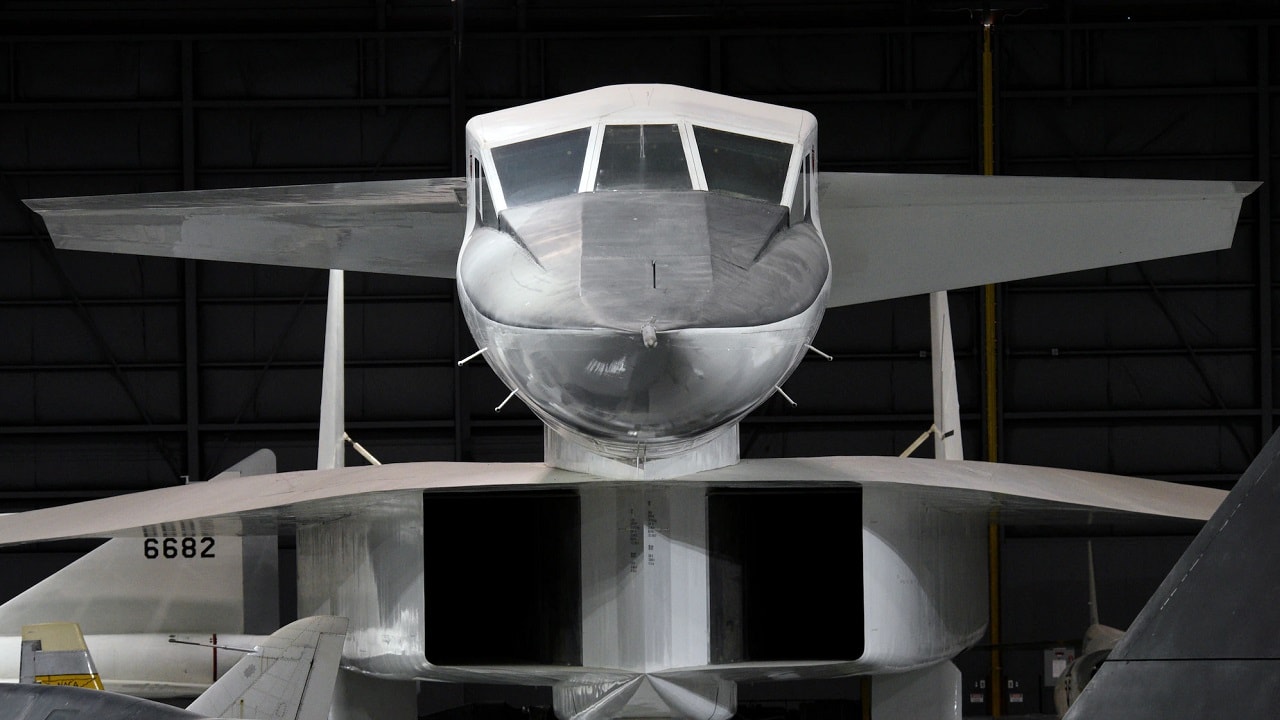
The futuristic XB-70A was originally conceived in the 1950s as a high-altitude, nuclear strike bomber that could fly at Mach 3 (three times the speed of sound) — any potential enemy would have been unable to defend against such a bomber.
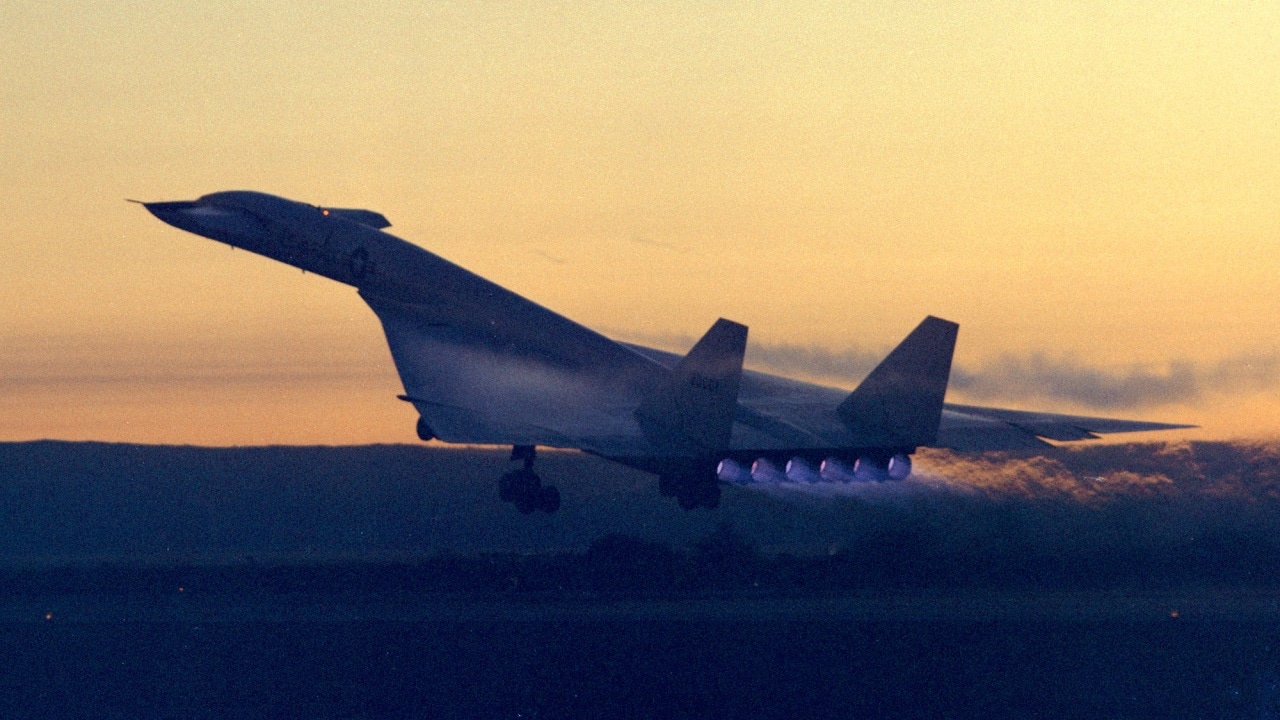
Image is of a an XB-70, another Cold War experimental bomber.
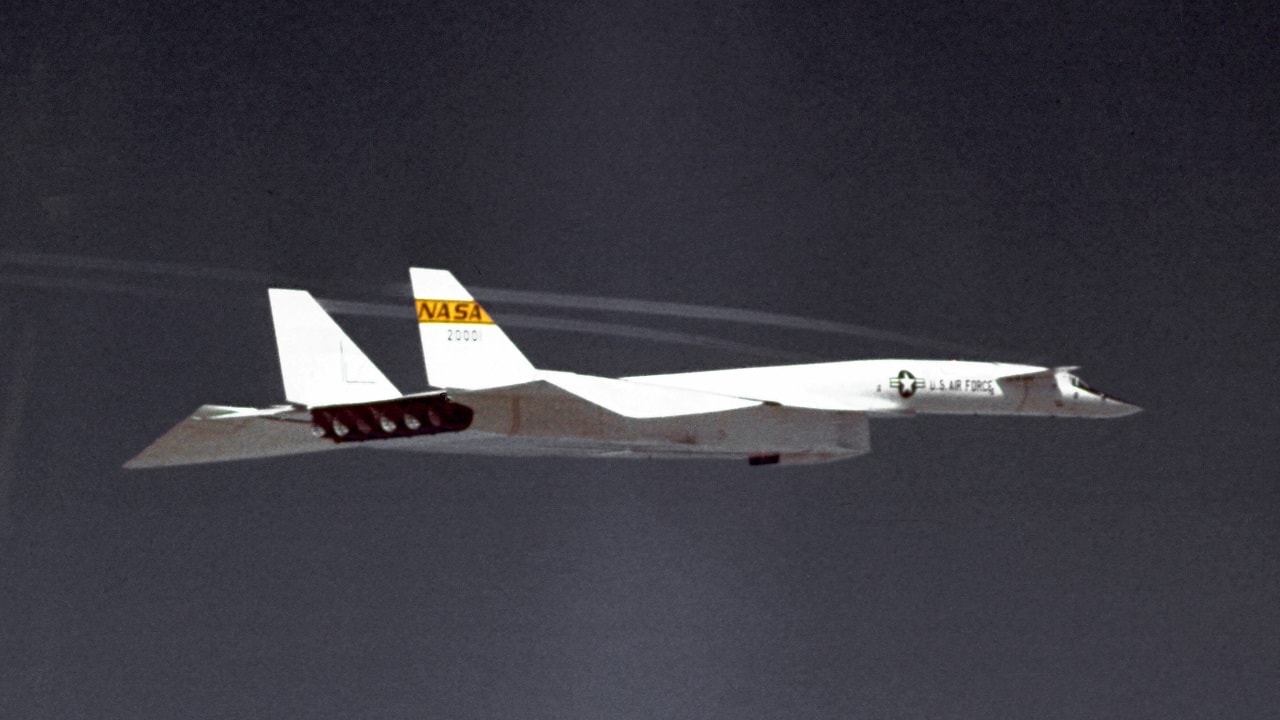
In this view the #1 XB-70A (62-0001) is in a level cruise flight mode at a relative high altitude judging from the darkness of the sky. The XB-70A, capable of flying three times the speed of sound, was the world’s largest experimental aircraft in the 1960s. Two XB-70A aircraft were built. Ship #1 was flown by the NASA Flight Research Center (now NASA Dryden), Edwards, California, in a high speed research program.
For context, iterations of the B-52 have served in our Air Force since the Truman administration. Today, the Air Force is developing the B-52J “Super” Stratofortress to ensure that this bomber can continue to serve for several decades. Just imagine how different history might have been if the B-70 come into fruition and replaced the B-52 before it was even built.
The Road Not Taken
The first XB-70 flew in September 1964 and later demonstrated sustained Mach 3 speeds. As Air & Space Force Magazine describes, the Valkyrie was not just an experimental bomber. It provided crucial research data on the aerodynamics of supersonic flight, the materials required for such flight, and the thermal effects on aircraft operating at such altitudes and speeds. These lessons learned would be incorporated into all other future Air Force designs.
Aviation Geek, an online aerospace publication, recounts the risks associated with the XB-70 Valkyrie program. On June 8, 1966, during a public demonstration formation flight with NASA chase planes, a Lockheed F-104 Starfighter clipped the Valkyrie’s vertical stabilizer.
The XB-70 lost control and crashed. The co-pilot of the Valkyrie and the pilot of the F-104 were both killed in the crash. The Valkyrie’s pilot survived, though he was seriously injured.
That 1966 incident essentially ended any hope of reviving the bomber program and ensure that the program would eventually die. The 1966 incident also resulted in the loss of the two prototypes built.
When the Enemy Got a Vote
What ultimately took the XB-70 Valkyrie down was a combination of bad timing, politics, and the old principle of “the enemy always gets a vote” being at play. When the XB-70 project was initiated, Soviet air defenses were quite different from what they would be by the time the XB-70 Valkyrie was ready to fly.
Soviet air defenses underwent rapid development and deployment at this point. Surface-to-air missiles (SAMs) became ubiquitous throughout Soviet territory and the notion that the Valkyrie’s speed would effectively shield the plane from air defenses below went out the window.
After all, with the Soviet’s new SAMs, a bomber flying high and fast, like the Valkyrie, could still be targeted, meaning the strategic advantages the Valkyrie gave the Air Force declined significantly.
Plus, on the American side (and the USSR side), intercontinental ballistic missiles (ICBMs) were becoming the norm in terms of long-range strike capabilities (especially with nuclear weapons). ICBMs were cheaper, faster to deploy, and much harder to intercept. So, the utility of the Valkyrie was reduced, and the justification for investing in mass-producing these birds went away.
Rather than fly high and fast, the Air Force began shifting their preferences to planes that could engaged in low-penetration tactics.
The Day the Dream Died
Then there’s the added problem that the Valkyrie was expensive to build and operate. Moreover, as the strategic and tactical situation rapidly changed (in response to sudden technological shifts), the Valkyrie could not be readily adapted to newer doctrines (such as low-level penetration mission sets).
By 1961, the Air Force canceled the production of the B-70 bomber. Two XB-70 Valkyrie prototypes were built. The program ended with those two planes (one of which, as you read, was destroyed in 1966).
An Unfinished Legacy in a Museum Hangar
The XB-70 Valkyrie was still a remarkable aircraft for its era. The XB-70 was one of the few crewed aircraft to achieve Mach 3 flight, and its design advanced knowledge of supersonic aerodynamics, compression lift, and thermal stresses for U.S. Air Force designers.
The surviving prototype flew until 1969 as part of a research program, contributing data to NASA and military aeronautical programs.
Today, the last remaining XB-70 is on display at the National Museum of the US Air Force in Dayton, Ohio. But the Valkyrie’s true legacy is one that is marred by great, real tragedy, and is ultimately unfinished.
About the Author: Brandon J. Weichert
Brandon J. Weichert is the Senior National Security Editor at 19FortyFive.com. He was previously the senior national security editor at The National Interest. Weichert is the host of The National Security Hour on iHeartRadio, where he discusses national security policy every Wednesday at 8pm Eastern. He hosts a companion show on Rumble entitled “National Security Talk.” Weichert consults regularly with various government institutions and private organizations on geopolitical issues. His writings have appeared in numerous publications, among them Popular Mechanics, National Review, MSN, and The American Spectator. And his books include Winning Space: How America Remains a Superpower, Biohacked: China’s Race to Control Life, and The Shadow War: Iran’s Quest for Supremacy. Weichert’s newest book, A Disaster of Our Own Making: How the West Lost Ukraine, is available for purchase wherever books are sold. He can be followed via Twitter/X @WeTheBrandon.