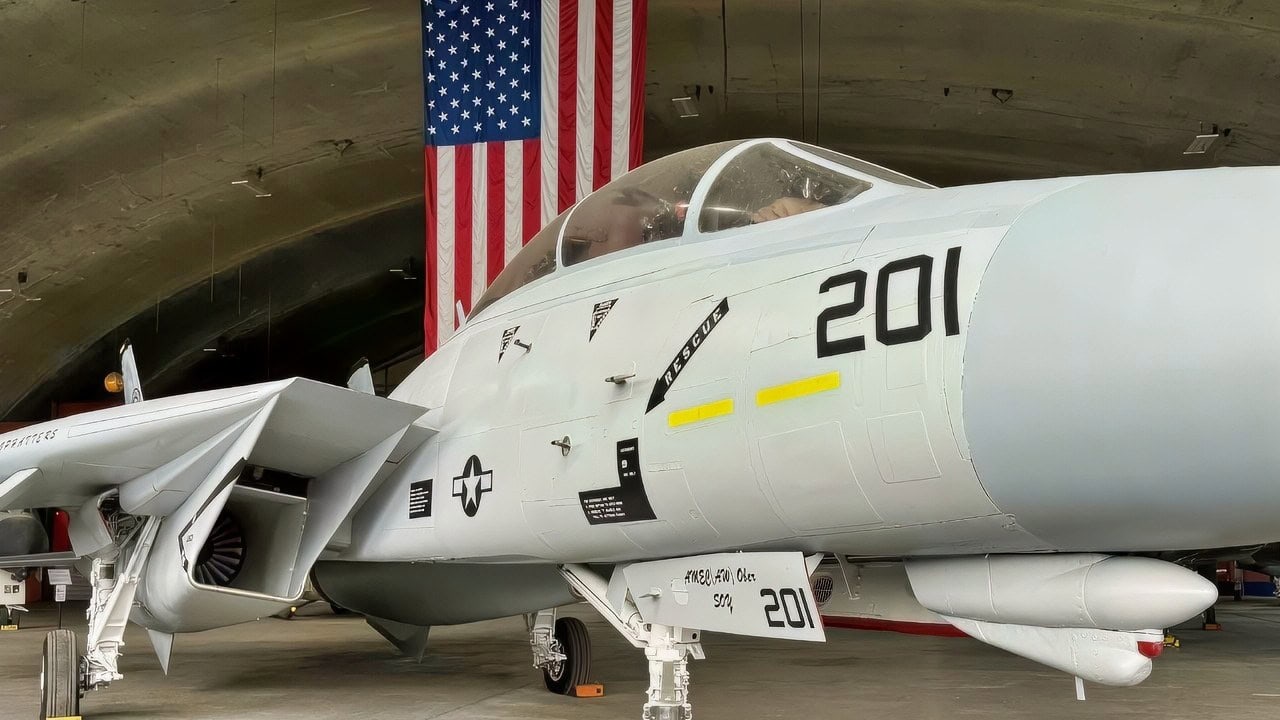
The F-14 Tomcat was retired far too soon—and now its maker may be on the verge of winning the biggest U.S. Navy fighter contract in a generation. Northrop Grumman, the legendary builder of the Mach 2.2 Tomcat that defined American carrier air power for three decades, is now locked in a brutal head-to-head competition with Boeing for the F/A-XX sixth-generation stealth fighter—and the F-14’s DNA may give Northrop the decisive edge.
The F/A-XX Could Be Made by the Same Company Who Made the F-14 Tomcat
By any estimation, the race to build the Navy’s F/A-XX 6th-generation carrier-launched stealth jet is destined to be an intense, carefully analyzed competition, as both Boeing and Northrop Grumman bring strong, unique advantages as potential builders of the new plane.
The long-term success of the F/A-18, enabled by countless impressive and impactful upgrades, indicates that Boeing is adept at sustaining, upgrading, and improving air-attack platforms for decades beyond their anticipated service life.
The performance parameters of the highly sought-after F-15EX, coupled with the speed and combat record of the F-15E, position Boeing as a clear forerunner in fighter-jet design, construction, and maintenance.
Computing, radar, sensing, and weapons upgrades to the F-15E and the 4th-Gen “plus” F-15EX suggest that Boeing has the engineering expertise to design high-speed, maneuverable, and well-armed fighter platforms.
These attributes would doubtless serve Boeing well in meeting the F/A-XX‘s speed, agility, and computing requirements.
The upgraded F-15E and F-15EX both operate with a new generation of computing called the Advanced Display Core Processor II, said to be capable of processing 87 billion functions per second, and the F-15E’s Mach 2.25 speed places it among the fastest to ever exist.
High-Speed F-14 Tomcat
Northrop, however, is well known for pure speed as well, given the performance, longevity, and dog-fighting prowess associated with its F-14 Tomcat.
While both Boeing and Northrop have decades of expertise building and maintaining maritime, carrier-launched fighter jets with the F/A-18 and F-14, the Tomcat has, over the years, come to be known as the faster and more agile of the two.
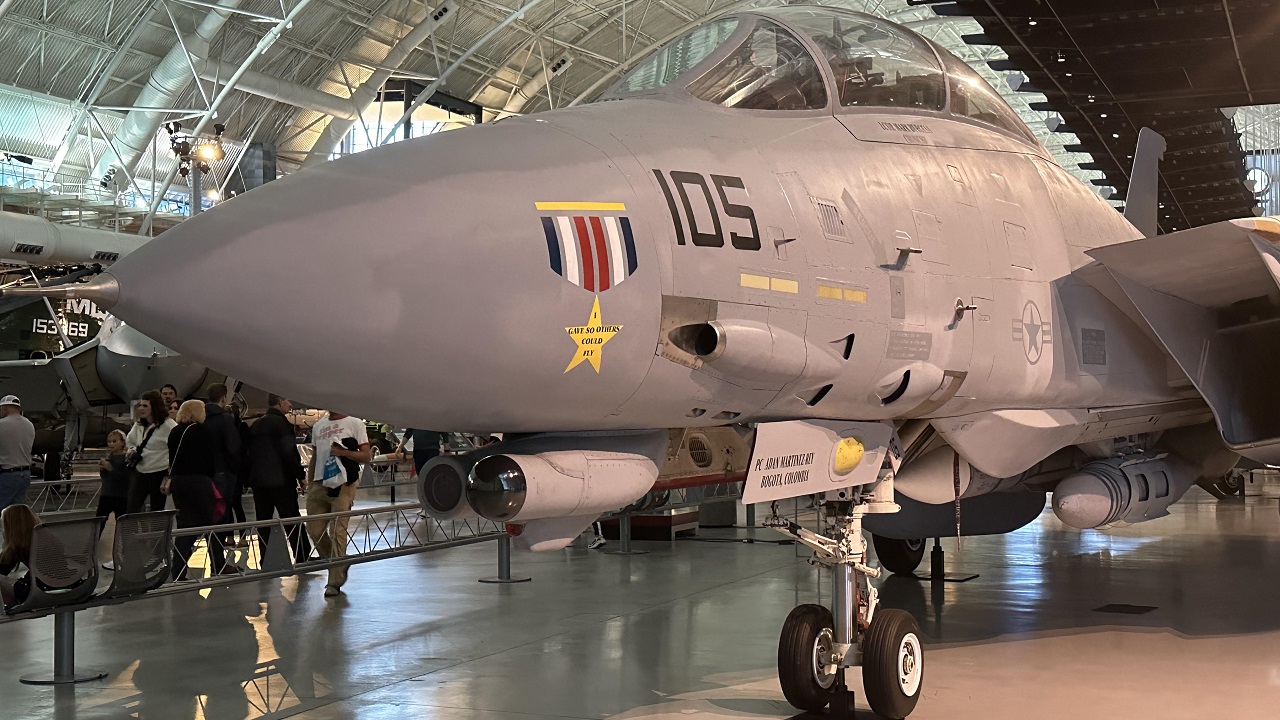
F-14 Tomcat. Image taken at the National Air and Space Museum on October 1, 2022. Image by 19FortyFive.
The F/A-18 has been credited with the ability to use its combat capability and its “sensing” capacity to “detect” threats beyond a ship’s radar horizon; the Super Hornet became known as an aerial quarterback during the years of air attacks against ISIS. One of the critical F/A-18 upgrades has been the integration of InfraRed Search and Track, a “sensing” and “targeting” technology built to function in an EW-threat environment with greater range, accuracy, and security.
Due to its experience with the tandem-seat ultra-dogfighting F-14 Tomcat, Northrop Grumman arguably has the same capabilities as Boeing when it comes to engineering an ultra-high-speed, agile air combat platform.
Northrop’s design approach, however, is bolstered by decades of paradigm-changing expertise in stealth.
Over generations of work on stealth technologies with the B-2 and now the B-21, Northrop has built decades of advanced expertise in thermal management, radar-absorbing composite materials, low-radar-signature designs, and internal weapons bays – all critical to a stealth fighter jet.
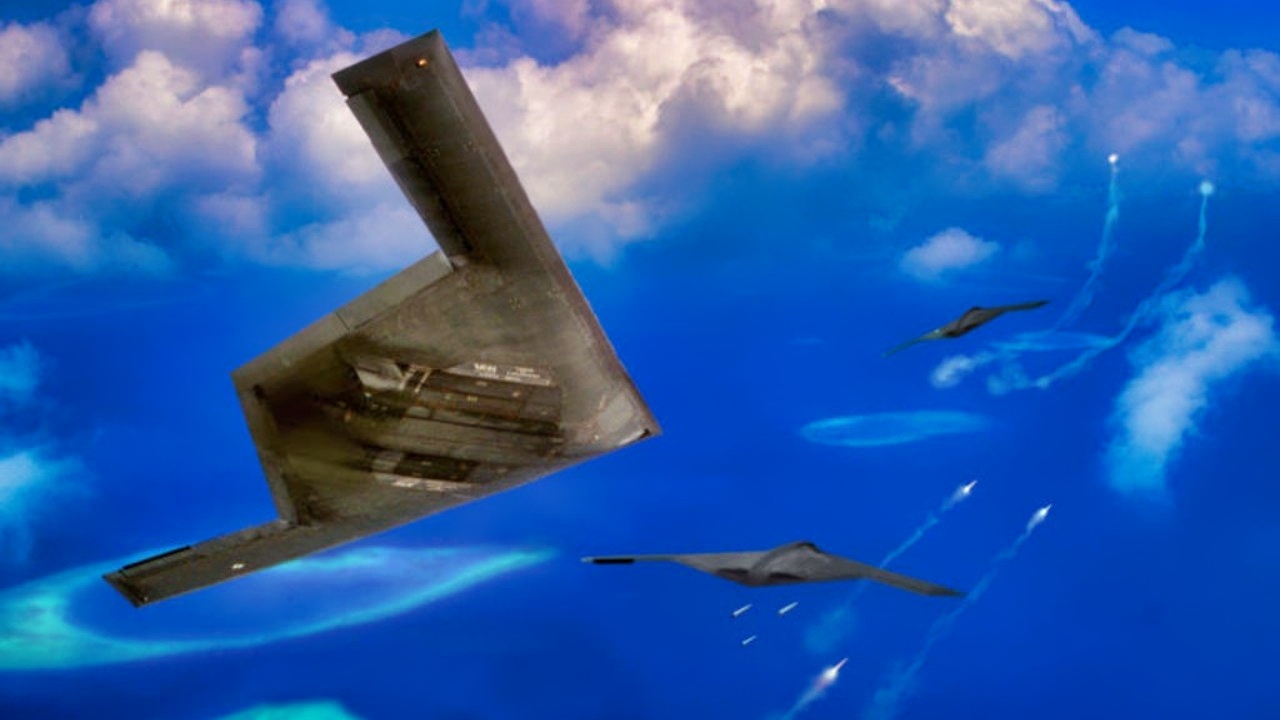
B-21 Raider Bomber. Artist Rendition/Creative Commons.
Stealth & Speed of F/A-XX
Therefore, Northrop is arguably in a position to achieve an optimal blend of attributes combining bomber-like broadband stealth with fighter-jet speed, agility, and dog-fighting skill.
The B-21, for example, is said to be the stealthiest bomber ever, yet most of its technical specifications are not publicly available for obvious reasons.
Sure enough, the brief “glimpses” of Northrop’s F/A-XX offering shown in a short video indicate that their jet does indeed combine a fully horizontal blended wing-body stealth configuration with what appears to be an ultra-high-speed, maneuverable fighter jet.
Added to this equation is the reality that, as maker of the F-14 Tomcat, Northrop is no stranger to speed. A lesser-known reality about the F-14 is its F-22-like Mach 2.2 speed, something which has inspired some observers to suggest that perhaps the Tomcat was retired too soon.
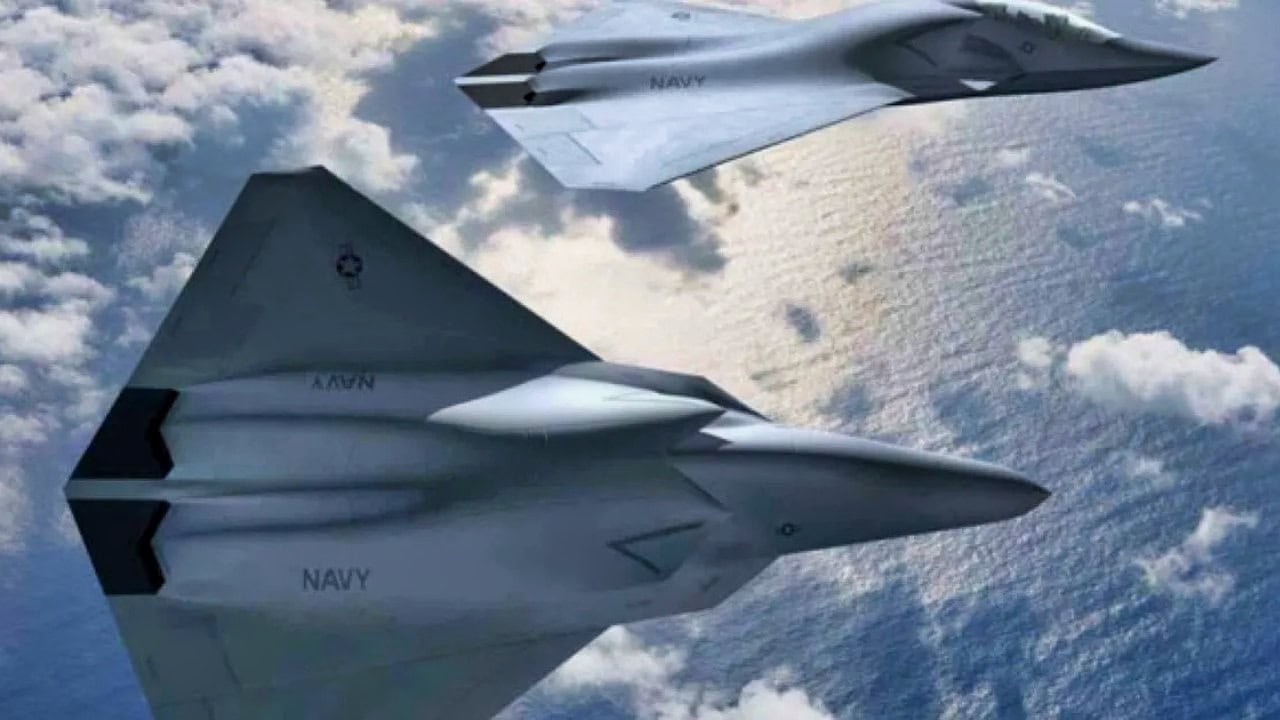
F/A-XX Fighter. Image Credit: Boeing.
The F-14 was also famous for its dog-fighting prowess as well, so it’s conceivable that Northrop could bring fighter-jet air-combat expertise to the equation in support of its world-leading abilities in designing stealth.
About the Author: Kris Osborn
Kris Osborn is the Military Technology Editor of 19FortyFive. Osborn is also President of Warrior Maven – Center for Military Modernization. Osborn previously served at the Pentagon as a highly qualified expert in the Office of the Assistant Secretary of the Army—Acquisition, Logistics & Technology. Osborn has also worked as an anchor and on-air military specialist at national TV networks. He has appeared as a guest military expert on Fox News, MSNBC, The Military Channel, and The History Channel. He also has a Master’s Degree in Comparative Literature from Columbia University