
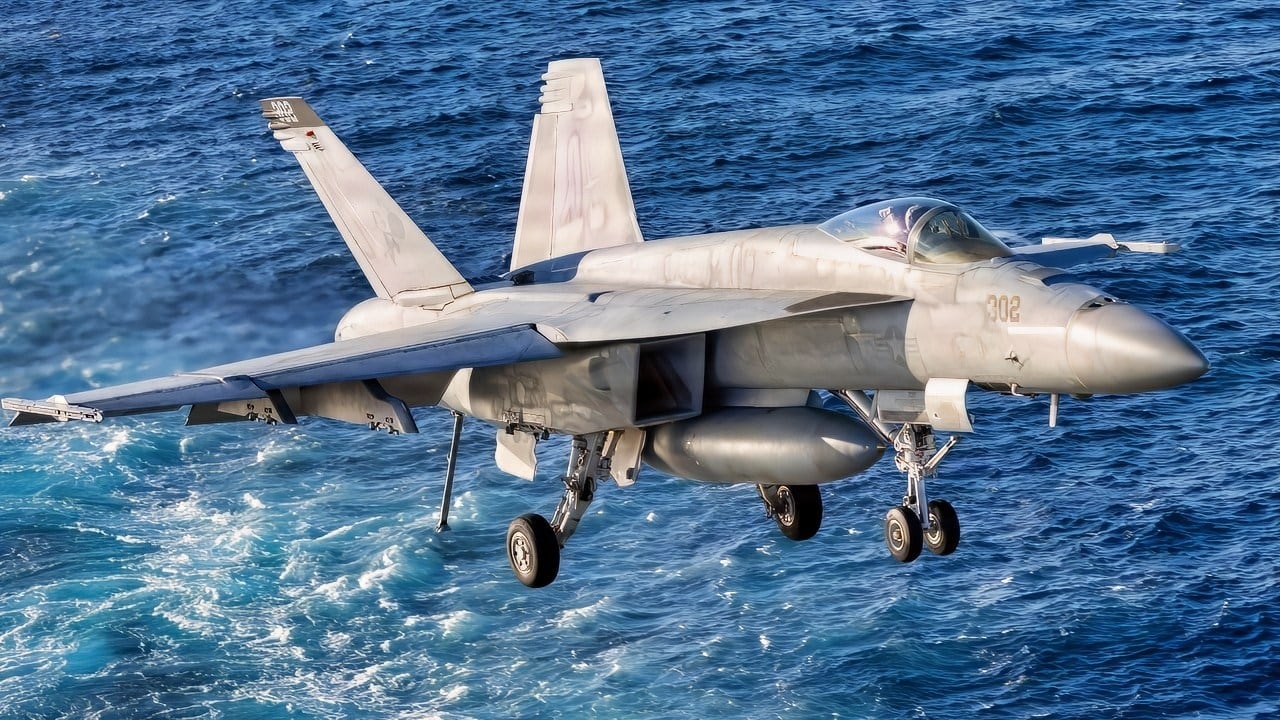
Summary and Key Points on F/A-18 Fighter Evolution: National security analyst Steve Balestrieri evaluates the F/A-18E/F Super Hornet, the centerpiece of the U.S. Navy’s strike packages during Operation Epic Fury.
-As of March 13, 2026, three Carrier Strike Groups are deploying Super Hornets alongside F-35C stealth fighters and EA-18G Growlers to dismantle Iranian nuclear sites and IRGC missile infrastructure.
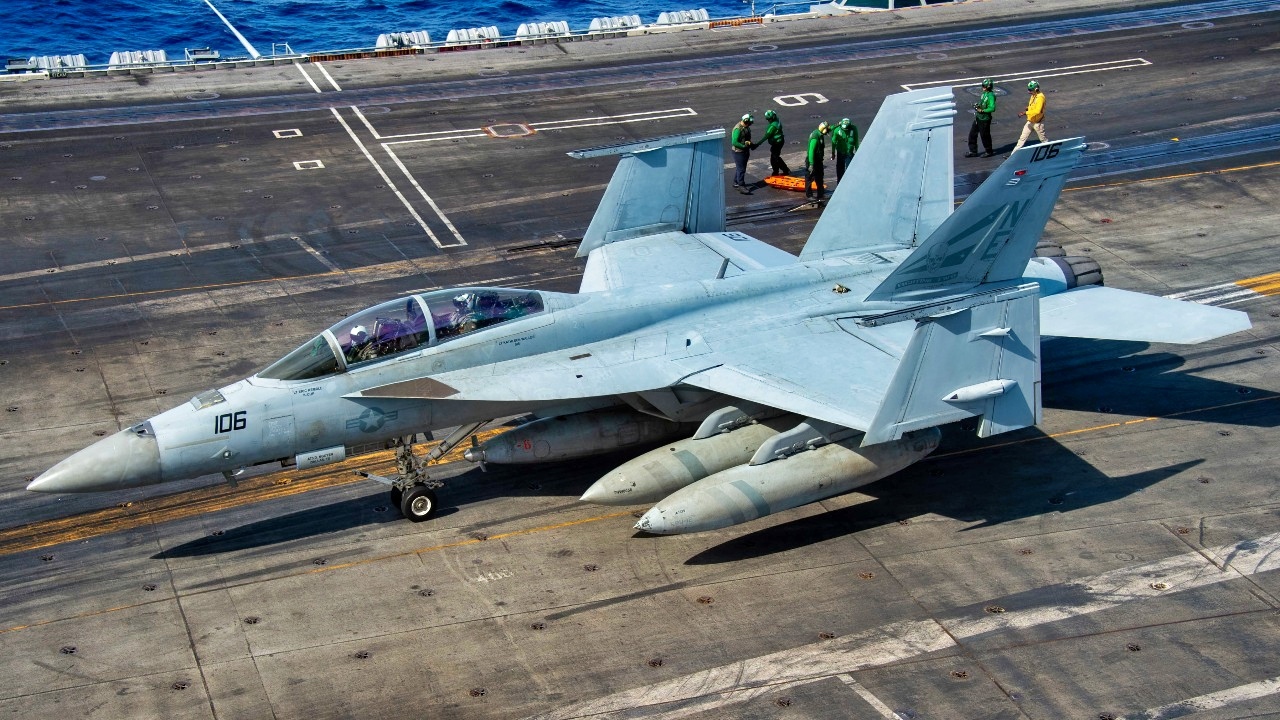
(Dec. 30, 2021) An F/A-18F Super Hornet, assigned to the “Bounty Hunters” of Strike Fighter Squadron (VFA) 2, taxis on the flight deck of Nimitz-class aircraft carrier USS Carl Vinson (CVN 70), Dec. 30, 2021. Carl Vinson Carrier Strike Group is on a scheduled deployment in the U.S. 7th Fleet area of operations to enhance interoperability through alliances and partnerships while serving as a ready-response force in support of a free and open Indo-Pacific region. (U.S. Navy photo by Mass Communication Specialist 3rd Class Jeff D. Kempton)
-This report analyzes the Block III advancements, including Conformal Fuel Tanks (CFTs) and a 10,000-hour service life.
-Balestrieri explores the aircraft’s maintenance efficiency and F414-GE-400 engines, concluding that the Super Hornet remains the Navy’s most cost-effective power projection tool through the 2040s.
Beyond the F-35: Evaluating the Sustained Firepower of the Navy’s Block III Super Hornets
The F/A-18 entered service with the US Navy in 1999. In 2002, the Super Hornet had its baptism of fire in Iraq.
On November 6, 2002, two F/A-18Es conducted a “Response Option” airstrike in support of Operation Southern Watch on two surface-to-air missile launchers at Al Kut, Iraq, and an air defense command and control bunker at Tallil Air Base. One of the pilots dropped 2,000 lb (910 kg) JDAM bombs from the Super Hornet for the first time during combat.
In 2017, an F/A-18E was the first Super Hornet to shoot down an enemy aircraft and the first US aircraft to shoot down an enemy aircraft since 1991, when an F/A-18E shot down a Syrian Su-22 that had bombed an SDF position. The Syrian Democratic Forces were a US partner during the fight against ISIS. They were trained and advised by US Army Green Berets.
The Syrian government claimed that the Su-22 was bombing an ISIS position. But after being warned two times by an American E-3 Sentry AWACS aircraft, a Super Hornet of the Navy smoked the Su-22 out of the sky with AIM-120 AMRAAM.
Air Operations In Yemen Against Houthi Rebels
In late December 2023, Super Hornets from the USS Dwight D. Eisenhower and the destroyer USS Laboon destroyed 12 attack drones, three anti-ship missiles, and two ground attack cruise missiles fired by Houthi terrorists in the southern Red Sea.
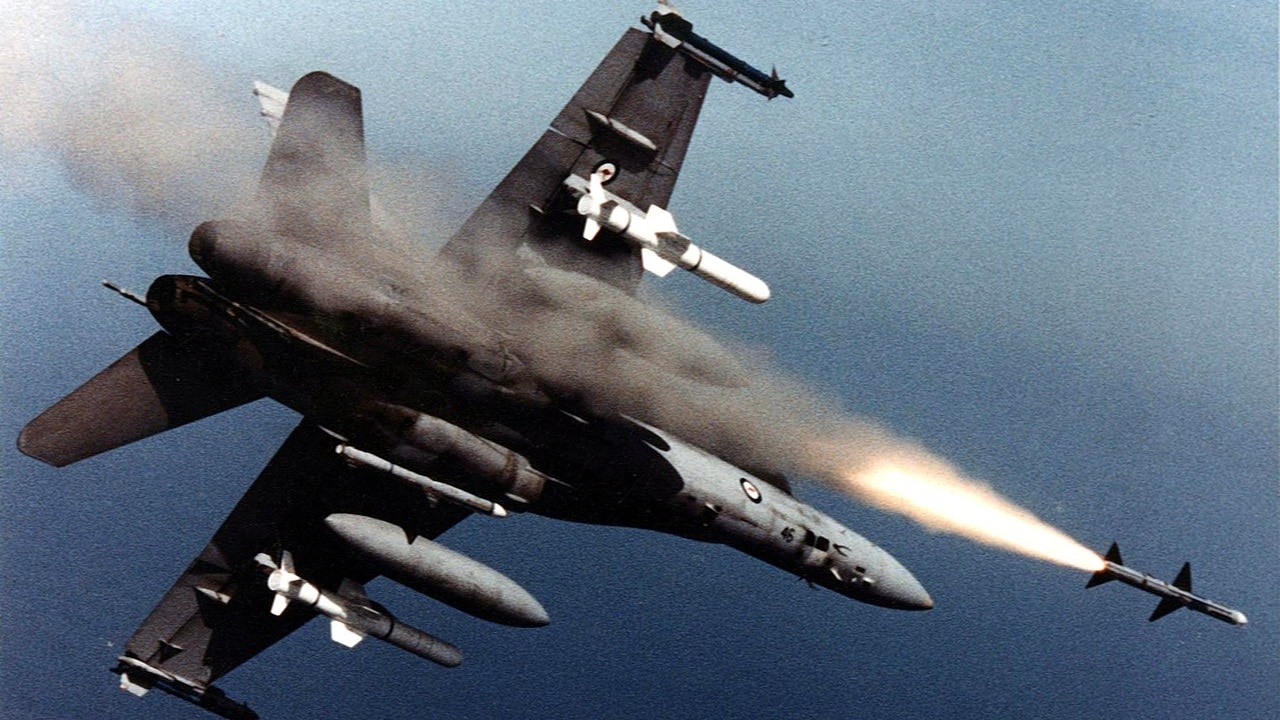
A Royal Australian Air Force McDonnell Douglas F/A-18A Hornet (s/n A21-46) firing an AIM-7M Sparrow missile. The aircraft also carries another AIM-7, two AGM-84 Harpoon missiles and two AIM-9M Sidewinder missiles.
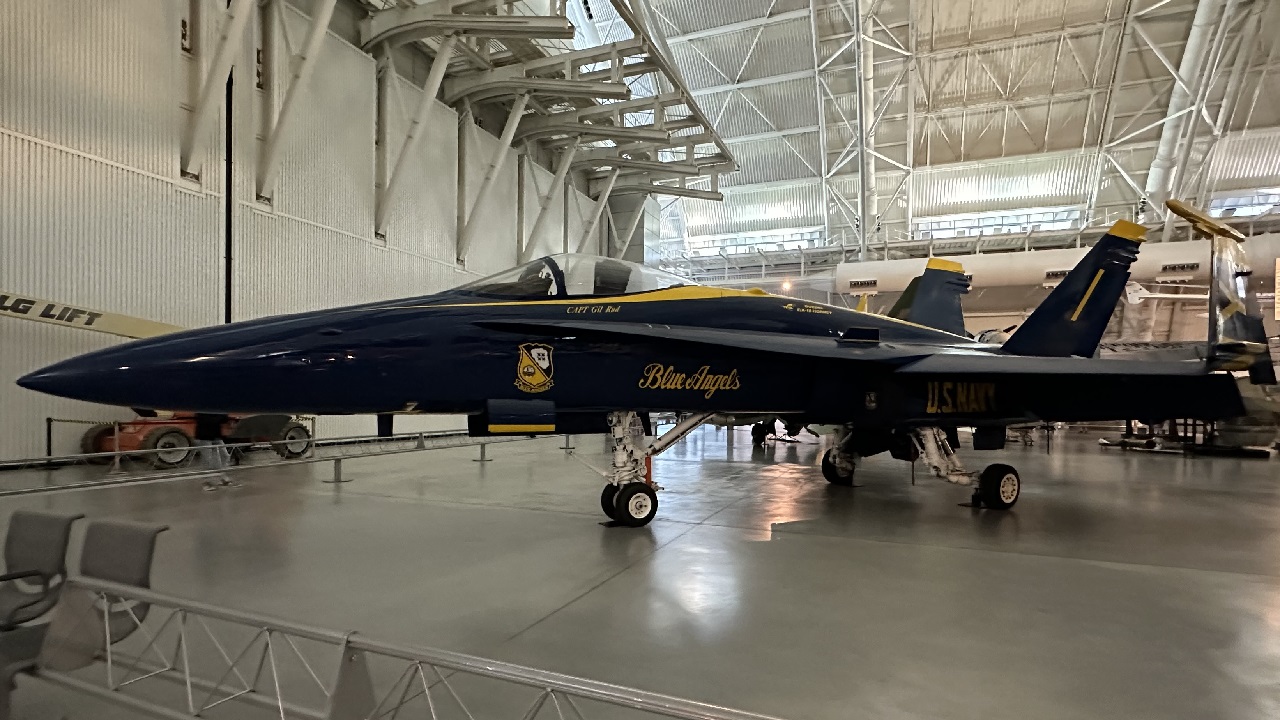
F/A-18 Hornet. Image taken at National Air and Space Museum on October 1, 2022. Image by 19FortyFive.
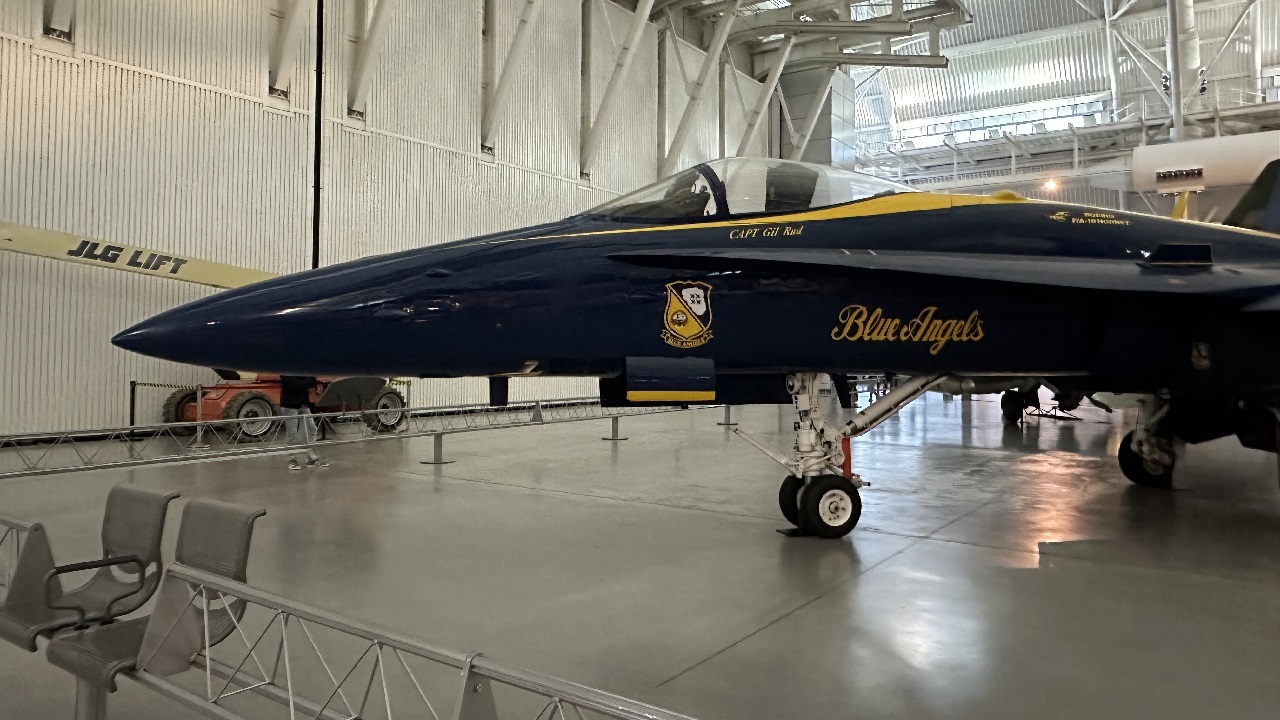
F/A-18 Hornet. Image taken at National Air and Space Museum on October 1, 2022. Image by 19FortyFive.
After the Houthis kept attacking shipping in the Red Sea, the US and our allies decided to act. On January 12, 2024, U.S. Navy Super Hornets, USAF, and RAF forces struck 60 targets at 16 locations using over 100 PGMs of various types.
The Air Campaign of Operation Epic Fury Against Iranian Forces
The air campaign of Operation Epic Fury, which began on February 28, 2026, is the result of decades of target development, force pre-positioning, and suppression-of-enemy-air-defense planning that CENTCOM and its subordinate air component had accumulated against the Iranian regime since the early 1990s.
The campaign was planned, organized, and conducted around three prioritized objectives:
Suppress and eliminate Iran’s air defense systems (E/A-18 Growlers, F-35Cs) to create safe conditions for subsequent airstrike operations.
Destroy Iran’s nuclear enrichment, reprocessing, and weaponization infrastructure.
Degrade the Islamic Revolutionary Guard Corps’ (IRGC) offensive military capability, including its ballistic and cruise missile launch infrastructure, naval forces, and proxy support networks.
“The mission of Operation Epic Fury is laser-focused: Destroy Iranian offensive missiles, destroy Iranian missile production, destroy their navy and other security infrastructure – and they will never have nuclear weapons,” Secretary of War Pete Hegseth.
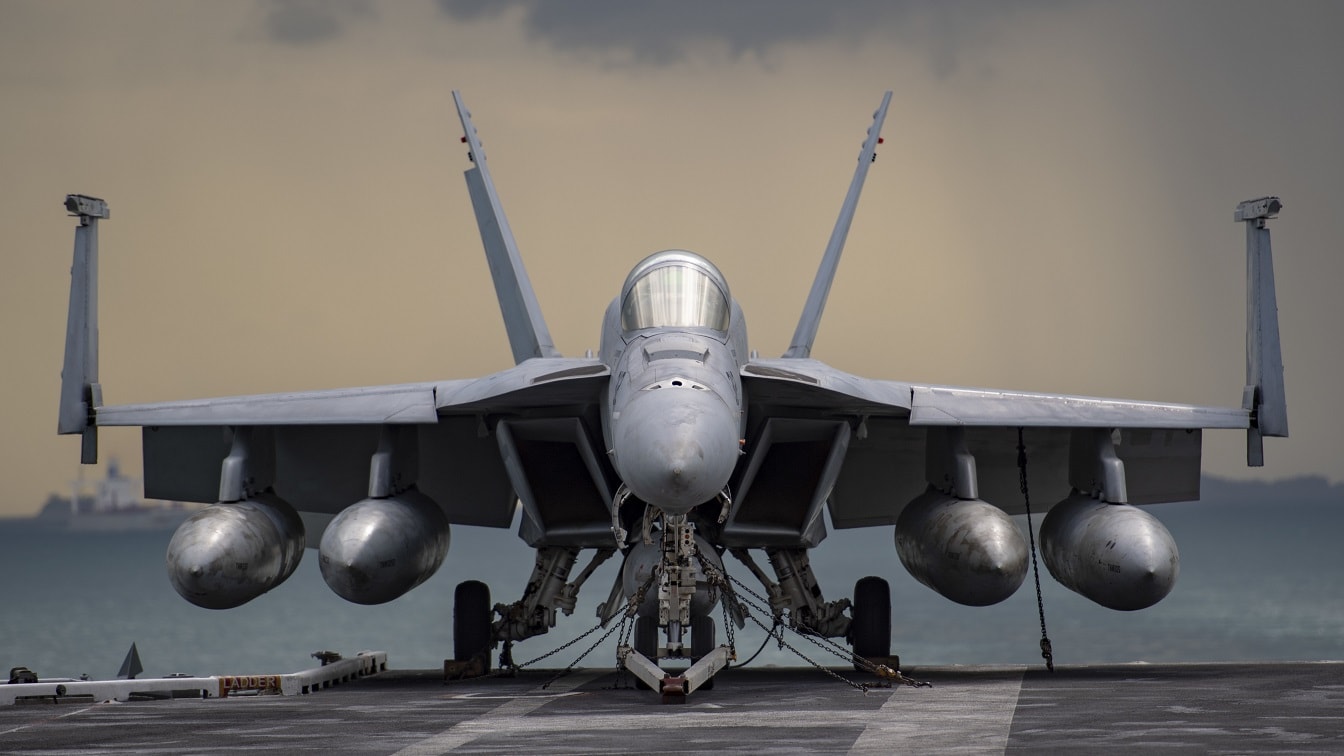
A (Feb. 5, 2021) An F/A-18E Super Hornet, from the “Kestrels” of Strike Fighter Squadron (VFA) 137, rests on the flight deck of the aircraft carrier USS Nimitz (CVN 68) during a strait transit. Nimitz is part of the Nimitz Carrier Strike Group and is deployed conducting maritime security operations and theater security cooperation efforts. (U.S. Navy photo by Mass Communication Specialist 3rd Class Elliot Schaudt/Released)
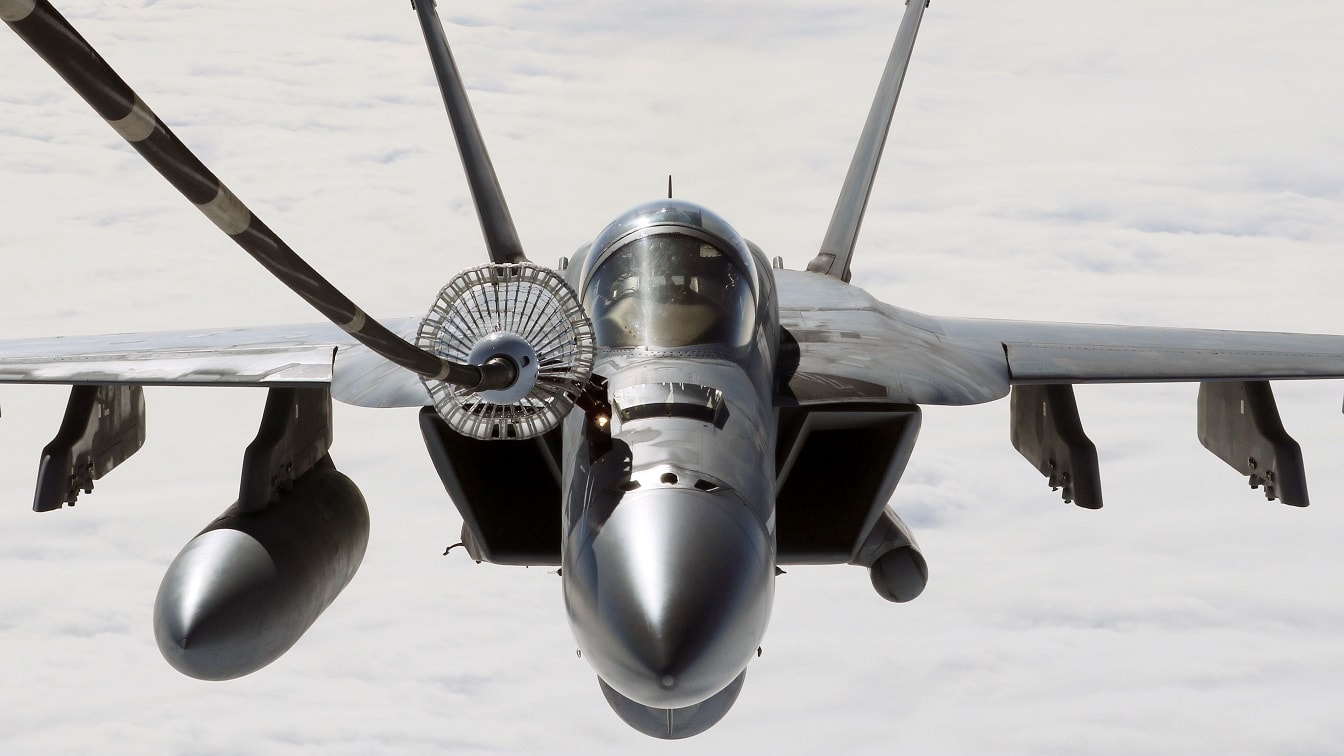
PACIFIC OCEAN (Feb. 26, 2017) An F/A-18E Super Hornet assigned to the “Eagles” of Strike Fighter Squadron (VFA) 115 conducts aerial refueling operations with a U.S. Air Force KC-10A Extender. VFA-115 is traveling from Naval Air Facility Atsugi, Japan, to Naval Air Station Fallon, Nevada, to complete the strike fighter advanced readiness program. (U.S. Navy photo by Lt. Chris Pagenkopf/Released)170226-N-CF980-006
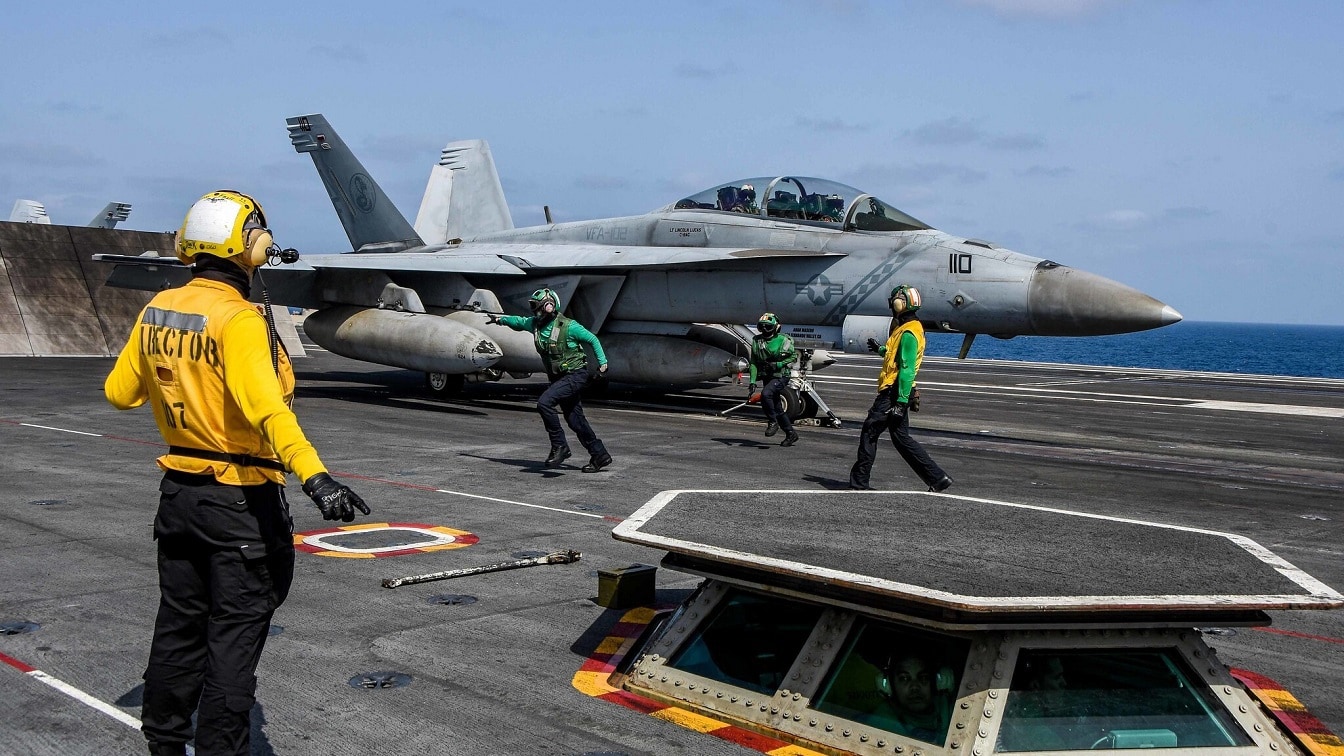
ARABIAN SEA (June 28, 2021) Sailors prepare an F/A-18F Super Hornet attached to the “Diamondbacks” of Strike Fighter Squadron (VFA) 102 for launch on the flight deck of the aircraft carrier USS Ronald Reagan (CVN 76) during flight operations in the Arabian Sea, June 28, 2021. Ronald Reagan is deployed to the U.S. 5th Fleet area of operations in support of naval operations to ensure maritime stability and security in the Central Region, connecting the Mediterranean and Pacific through the western Indian Ocean and three strategic choke points. (U.S. Navy photo by Mass Communication Specialist Seaman Oswald Felix Jr.) 210628-N-BR419-1062
After a deluge of Tomahawk cruise missiles obliterated many targets in the opening days of the air campaign, the limited stockpiles of those required that the strike packages would then be comprised of Air Force and Navy aircraft.
And since the air campaign over Iran with Operation Epic Fury commenced, the F/A-18s have been in constant operation as the Navy’s core strike package aircraft.
The Navy has three carrier strike groups operating in the region.
Each Air Wing is comprised of three squadrons of 12 F/A-18 Super Hornets, a squadron of F-35C stealth aircraft, and a squadron of E/A-18 Growler electronic attack aircraft. They have been eliminating Iranian threats as they are targeted. Thus far, several thousand targets have been struck.
F/A-18E Super Hornet Specs
The Super Hornet was built to be easy to maintain, and it has certainly lived up to that. Maintenance of technology-heavy combat fighters is time-consuming. But maintaining carrier jets is even more work. Super Hornets require half the maintenance time of an F-14 or an A-6.
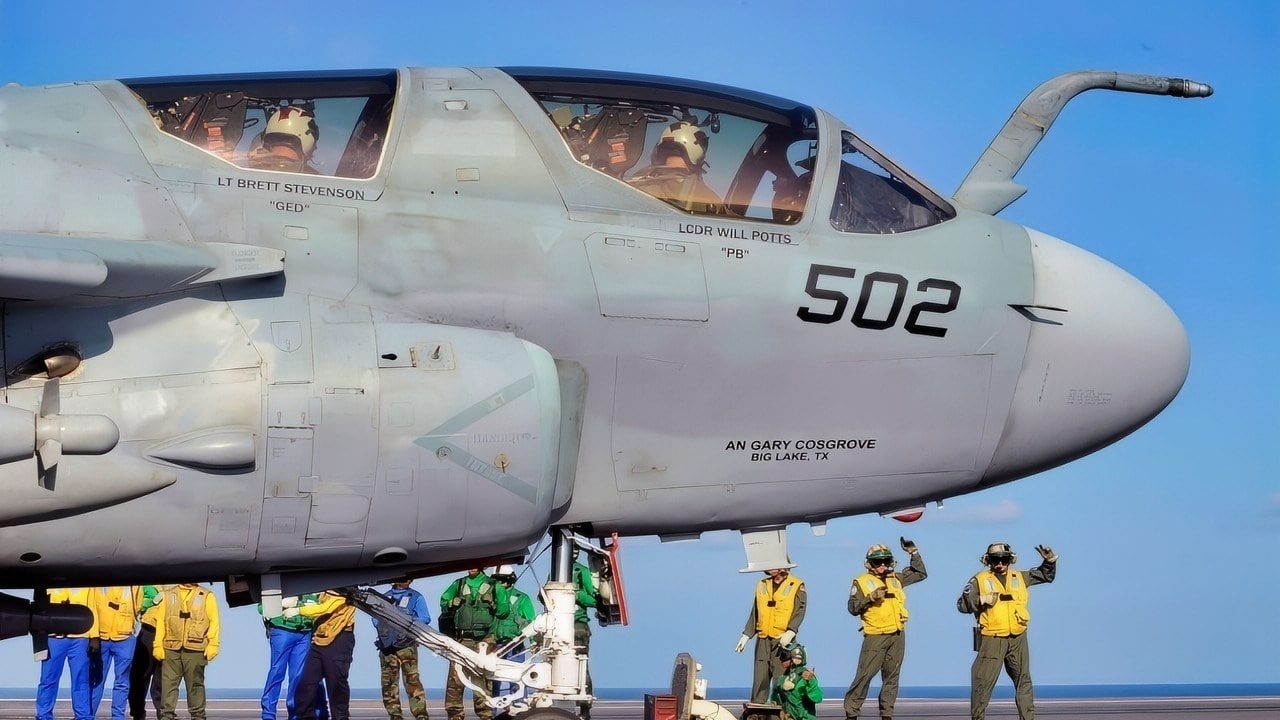
A-6 Intruder U.S. Navy Photo. Image Credit: Creative Commons.
The General Electric F414 engines are also easy to maintain. They are connected to the aircraft at just ten points and can be removed by a four-person team in just 20 minutes. Because of this, the Super Hornet had an excellent readiness record—over 80 percent.
Length: 60.3 ft
Height: 16 ft
Wingspan: 44.9 ft
Maximum take-off weight: 66,000 lbs
Airspeed: Mach 1.8+
Ceiling: 50,000+ ft
Propulsion: Two F414-GE-400 turbofan engines
Guns: 1× 20 mm (0.787 in) M61A2 Vulcan
Missiles: AIM-7 Sparrow, AIM-9 Sidewinder, AIM-120 AMRAAM, AGM-65E/F Maverick, AGM-84H/K SLAM-ER, AGM-88 HARM, AGM-158 JASSM, AGM-154 Joint Standoff Weapon (JSOW)
Bombs: JDAM bombs, Paveway series of laser-guided bombs, Mk 80 series unguided bombs
The F/A-18 Keeps Getting Better
Physical upgrades to the Super Hornet were the beginning. The transition to the Super Hornet (E/F variants) provided a 25 percent larger airframe, 33 percent more internal fuel, increased payload capacity, and better range, allowing it to take over roles from the retired F-14 Tomcat and A-6 Intruder.
Technological Modernization (Block III) advancements. The latest Block III standard includes enhanced network infrastructure, advanced cockpit systems, reduced radar cross-section, and improved computing power.
Key upgrades include a 10,000-hour service life (up from 6,000), conformal fuel tanks (CFTs) for increased range, a 10×19-inch “iPad-like” touchscreen display, improved computing power (TTNT), allowing for faster data sharing, improved sensor fusion, and advanced target tracking.
Reduced radar cross-section improvements to make the jets even harder to find as enemy systems grow in sophistication, and an advanced networking infrastructure that includes a distributed targeting network processor to add computing power to the jet and process data faster to aid the pilot in decision-making.
Versatility is the key to the Super Hornet. The platform excels in multirole missions, including air-to-air combat, precision ground strikes, and aerial refueling.
Compared to newer, more complex stealth aircraft, the F/A-18 is relatively inexpensive to operate, maintain, and upgrade.
Service Life Extension and other ongoing programs ensure the airframes remain structurally sound for extended service, with the Super Hornet expected to operate into the 2040s.
“People from all walks of life and areas of Naval Aviation feel some tangible connection to this aircraft,” Capt. Michael Burks, who has served as the F/A-18 and EA-18G Program Office program manager since 2023, said.
“Whether they’ve worked on the production line, whether they were engineers that did design work, whether they wore the uniform or are wearing it right now. The history of this aircraft—which is still being written—represents and honors the enduring impact of those who started and those who are sustaining what is probably one of the greatest runs in Naval Aviation for any platform out there.”
The Ford-class Aircraft Carriers of the Navy are America’s power projection icons. And with flight decks crammed with F/A-18E Super Hornets and F-35C Lightning II stealth fighters, they are more packed with firepower than many nations have.
The Super Hornet has been the cornerstone of the US Navy’s strike packages during the air campaign against Iran. And it will continue for at least the next decade until the F/A-XX aircraft is ready for operational deployment.
About the Author: Steve Balestrieri
Steve Balestrieri is a National Security Columnist. He served as a US Army Special Forces NCO and Warrant Officer. In addition to writing on defense, he covers the NFL for PatsFans.com and is a member of the Pro Football Writers of America (PFWA). His work was regularly featured in many military publications.