
Summary and Key Points: The B-52 is undergoing its most radical modernization to date, evolving from a legacy bomber into a sophisticated network-centric platform.
-Key 2026 upgrades include the APQ-188 AESA radar, which provides fighter-jet levels of target tracking, and the CONECT digital backbone for real-time intelligence sharing.
-No longer just a “bomb truck,” the modern B-52 is being tested at Edwards AFB as a command-and-control hub capable of launching drone swarms and firing hypersonic missiles.
-These adaptations ensure that the 76-ship fleet remains a cornerstone of U.S. Global Strike Command well into the 2050s.
Fighter Radar for a Giant: Inside the B-52’s Massive New AESA Upgrade
The classic Vietnam-era B-52 may be famous for carpet bombing decades ago. Yet, today’s B-52 continues to evolve into a modern drone-launching, hypersonic missile-firing, precision-bomb-dropping platform likely to fly for a full 100 years.
Upgrades in recent decades have ensured that the modern B-52 is almost an entirely different aircraft from the classic platform, which proved both extremely important yet also vulnerable to enemy fire during its years in Vietnam.
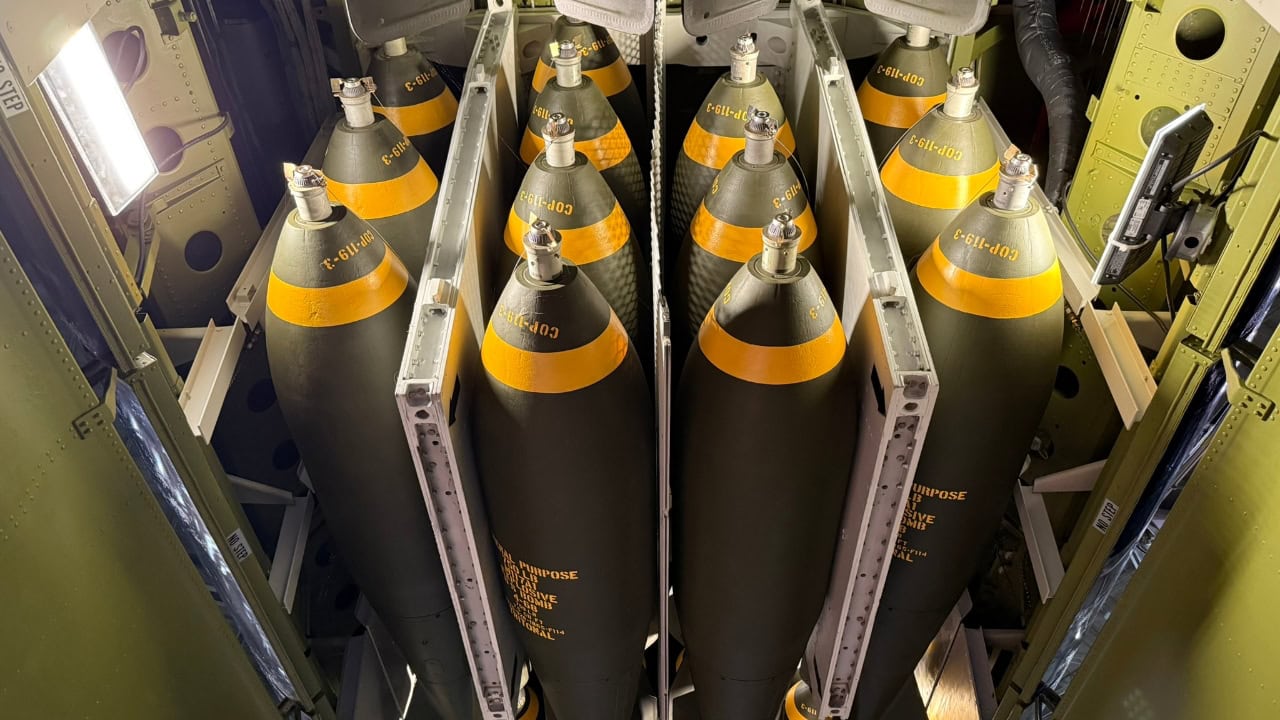
B-52 Bomber. Image Credit: 19FortyFive.com Taken at the National Museum of the Air Force.
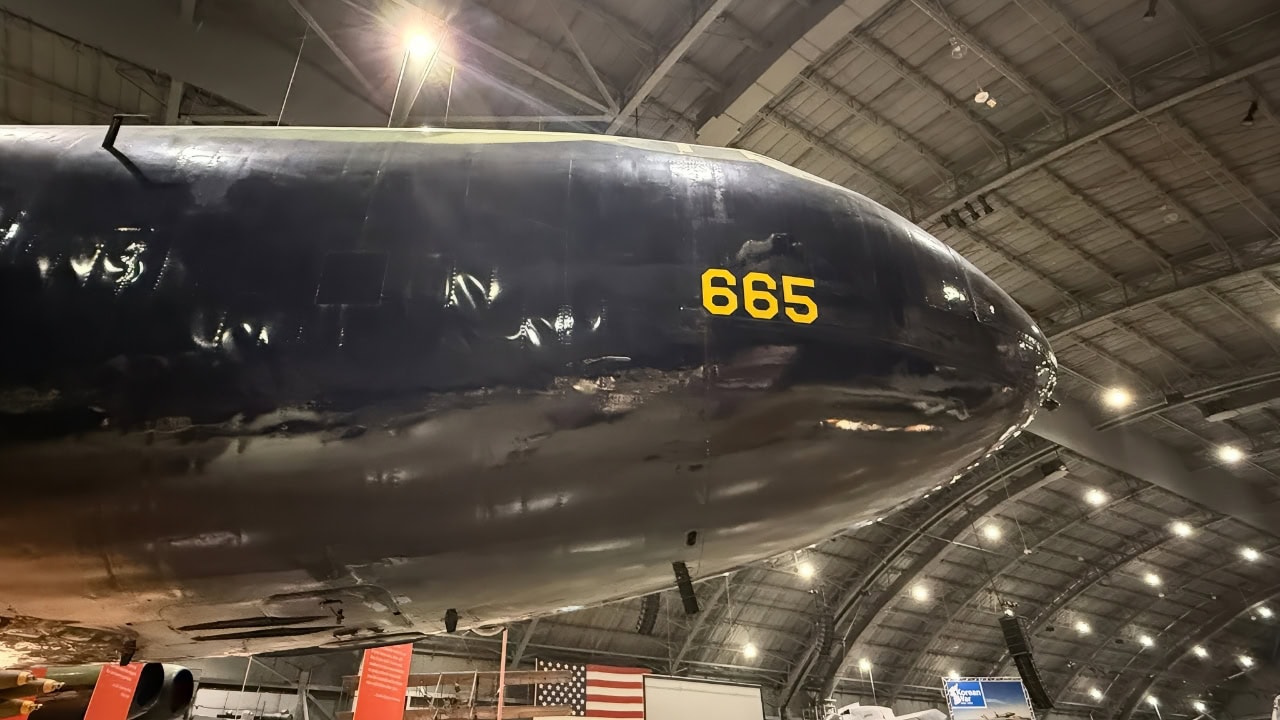
B-52. Image Credit: 19FortyFive.com
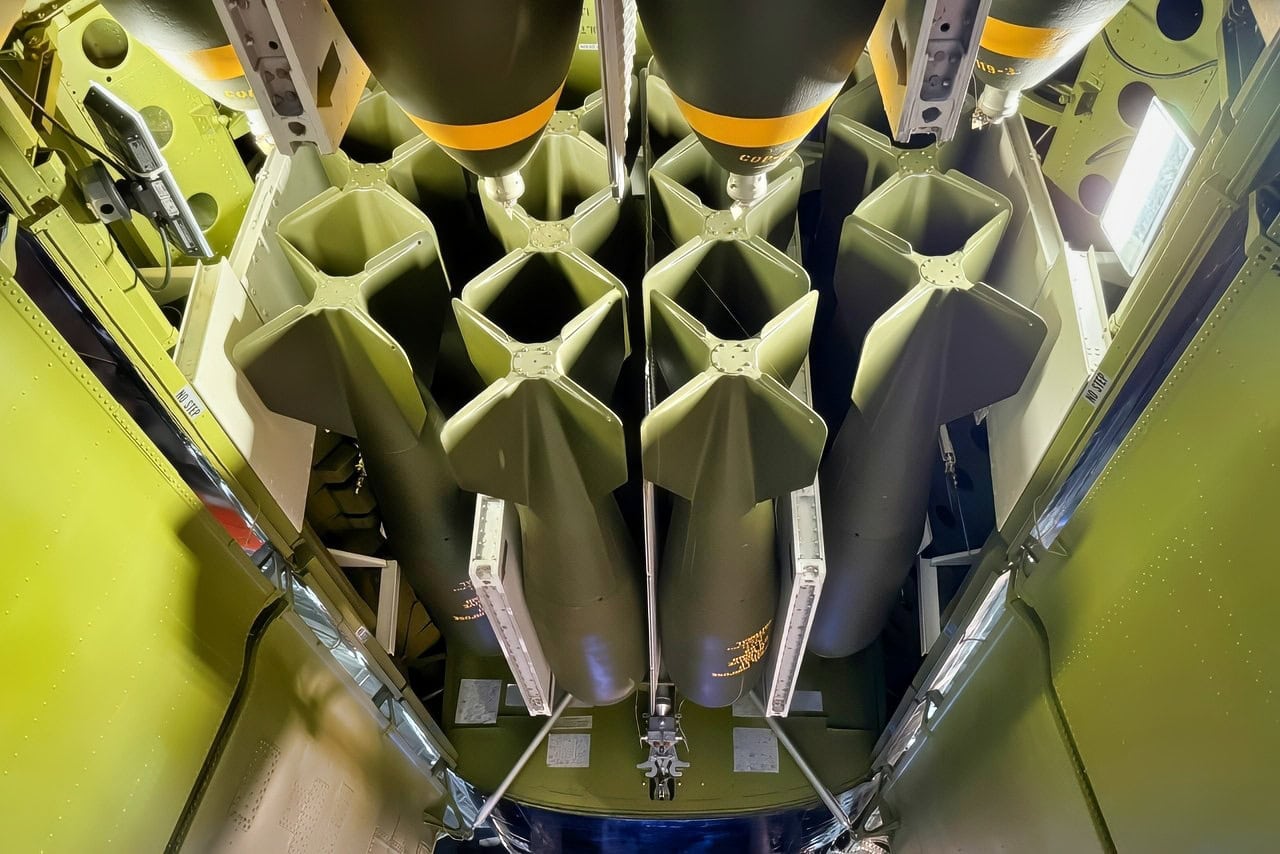
B-52 bombs. Image Credit: 19FortyFive.com Taken at the National Museum of the Air Force.
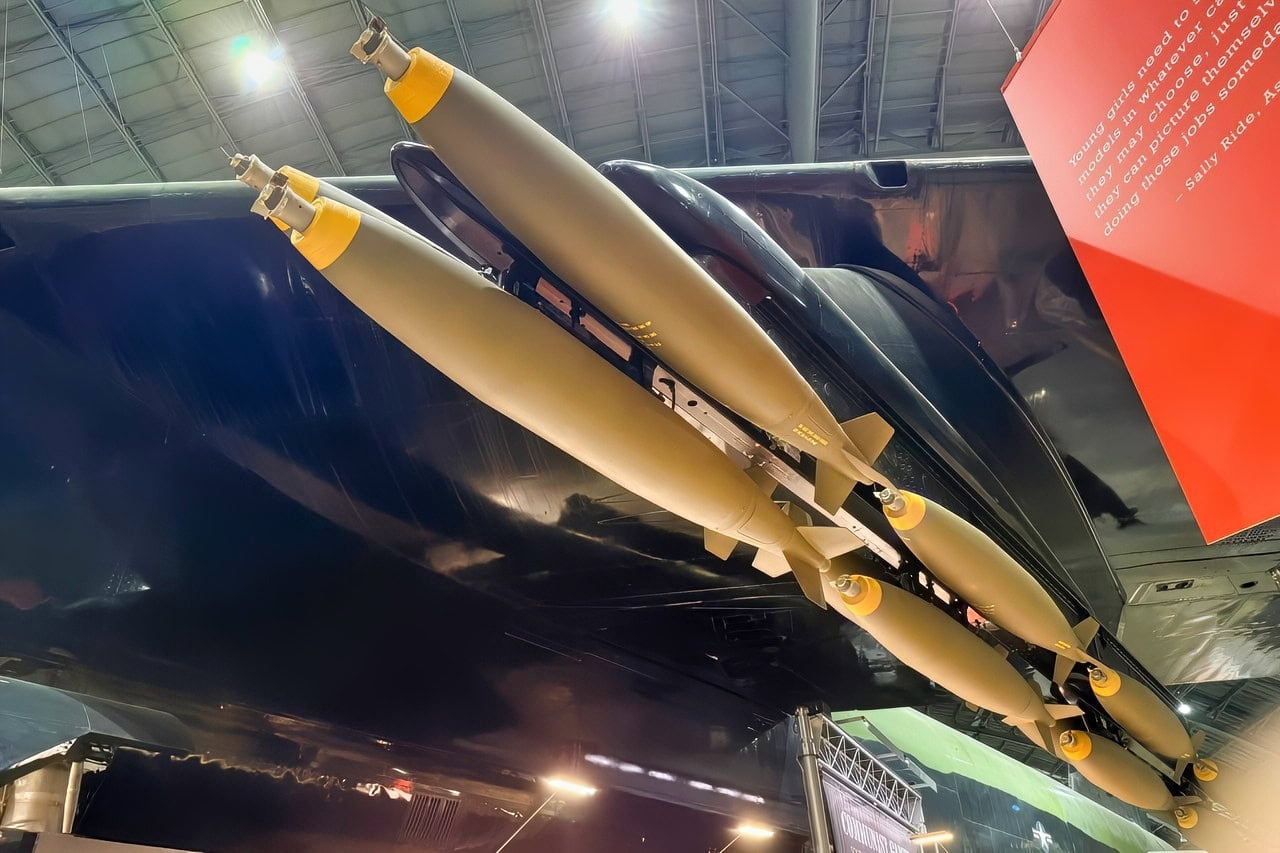
B-52 bombs. Image Credit: 19FortyFive.com Taken at the National Museum of the Air Force.
B-52 Upgrades
The B-52 engine upgrade is well known.
Yet lesser recognized adaptations include the expansion of a new internal weapons bay for increased bomb-carrying capacity, the addition of hypersonic weapons, new digital communications networks, and a growing ability to operate as a flying command-and-control hub, able to launch, operate, and recover drones.
The communications improvements are multifaceted, including the addition of a modernized digital system known as Combat Network Communication Technology (CONECT).
Not only does CONECT accelerate and refine data transmission, management, collection, and storage, but it also helps the service advance tactics and concepts of operation for the modern B-52.
With CONECT, crews conducting operations can now receive in-flight intelligence and target updates in a way that was not previously possible.

A U.S. Air Force B-52 Stratofortress bomber, deployed from Barksdale Air Force Base, La., lands at Andersen Air Force Base, Guam, July 4, 2020. The B-52 flew the 28-hour mission to demonstrate U.S. Indo-Pacific Command’s commitment to the security and stability of the Indo-Pacific region. (U.S. Air Force photo by Master Sgt. Richard P. Ebensberger)
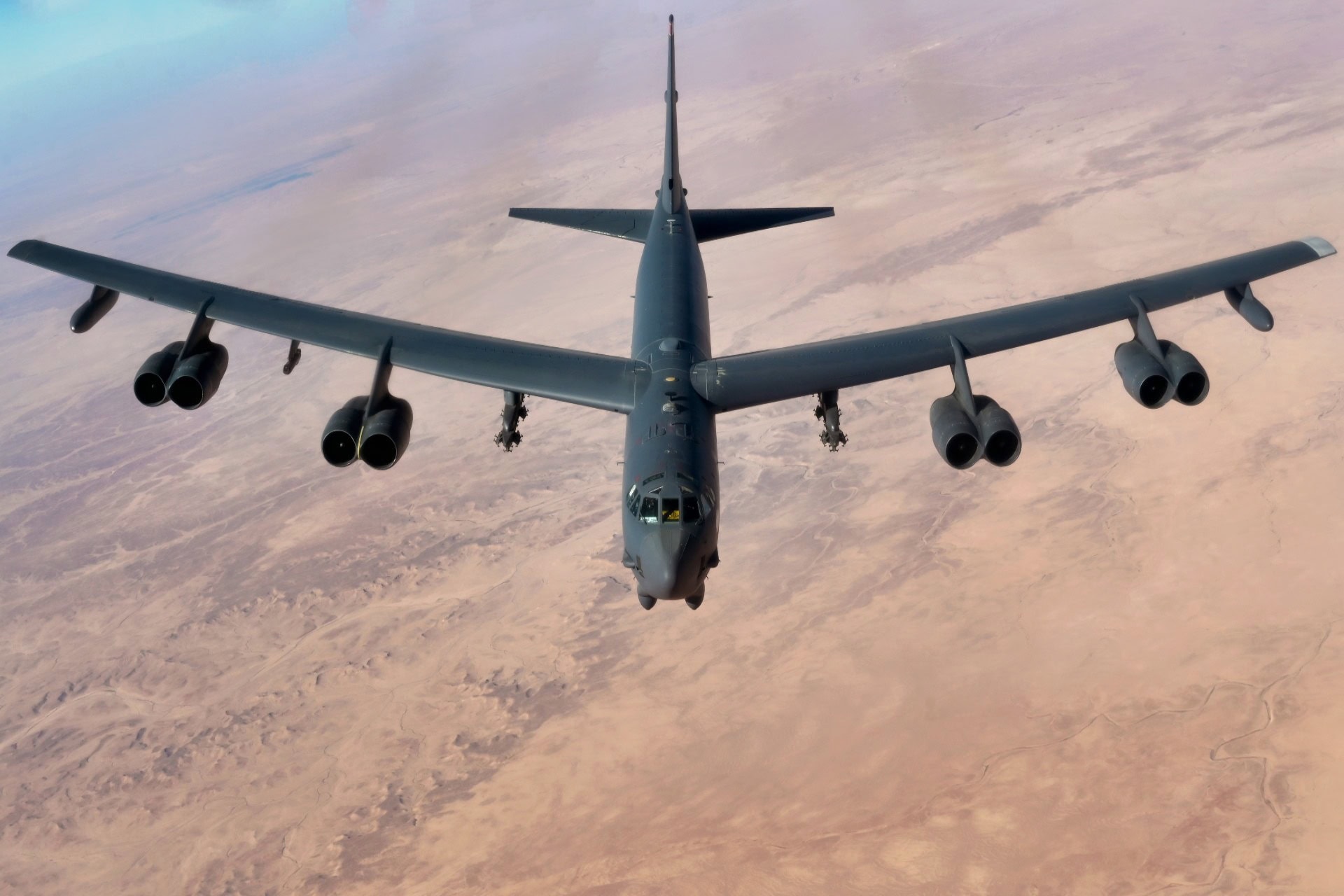
A U.S. Air Force B-52H Stratofortress conducts a combat air patrol in support of Operation Inherent Resolve over the U.S. Central Command area of responsibility, Dec. 15, 2024. The deployment of the long-range heavy bombers into the USCENTCOM theater demonstrates the United States’ dedication to deterring aggression and maintaining stability in the region alongside allies and partners. (U.S. Air Force photo by Staff Sgt. Gerald R. Willis)
An interesting US Air Force essay from 2016 discusses CONECT as the “first major digital upgrade” to the B-52, enhancing communication and situational awareness.
Using what’s called an ARC 210 Warrior software-programmable voice-and-data radio, pilots using CONECT can now send and receive targeting data, mapping information, and intelligence with ground stations, command centers, and other aircraft.
In this respect, the large B-52 could almost operate like an “arsenal plane” able to transport and launch drone swarms from forward locations to blanket areas with ISR, test enemy air defenses, or even conduct strikes when directed by a human.
The B-52 is also nuclear-capable and can drop upgraded variants of the famous B-61 Mod 12 and fire the nuclear-capable Long Range Stand-Off weapon.
New B-52 Radar
The most recent innovation with the B-52 is the Active Electronically Scanned Array radar, a longer-range, more sensitive, and higher-resolution system able to track multiple targets simultaneously from greater stand-off distances.
The radar, called the APQ-188, is now being flight-tested at Edwards Air Force Base in California and has recently completed ground integration and initial systems functional checks, according to a Boeing essay on the radar.
“The new radar will significantly increase B-52 mission effectiveness by improving situational awareness, speeding target prosecution and enhancing aircrew survivability in contested environments,” Troy Dawson, vice president of Boeing Bombers, said in a press release. “This phase of the program is dedicated to getting it right at the start so that we can execute the full radar modernization program.”
A U.S. Air Force B-52 Stratofortress bomber, deployed from Barksdale Air Force Base, La., lands at Andersen Air Force Base, Guam, July 4, 2020. The B-52 flew the 28-hour mission to demonstrate U.S. Indo-Pacific Command’s commitment to the security and stability of the Indo-Pacific region. (U.S. Air Force photo by Master Sgt. Richard P. Ebensberger)
Data gathered during testing will inform subsequent developmental test phases and the planned retrofit of the 76 operational B‑52 aircraft, the Boeing essay explained.
Fighter Jet Radar
The radar upgrade for the B-52, in effect, gives the bomber a “fighter-jet”- style radar, as the F-35, F-15, and F-16 all fly with AESA radars.

The HMS Prince of Wales (R09) aircraft carrier flight deck officer “shoots” an F-35B Lightning II short takeoff vertical landing (STOVL) variant fighter jet for a STO launch from a ski jump aboard the U.K.’s newest carrier Oct. 24, 2023. The 5th generation strike aircraft for Navy, Air Force, Marines, and allies is aboard to conduct developmental test phase 3 (DT-3) flight trials, which continue today. During the ship’s deployment to the U.S. Eastern Seaboard for WESTLANT 2023, a Pax River F-35 Integrated Test Force (Pax ITF) team is working closely with the ship’s company to conduct the sea trials that continue pushing the boundaries of carrier aviation. (Photo by Michael D. Jackson)
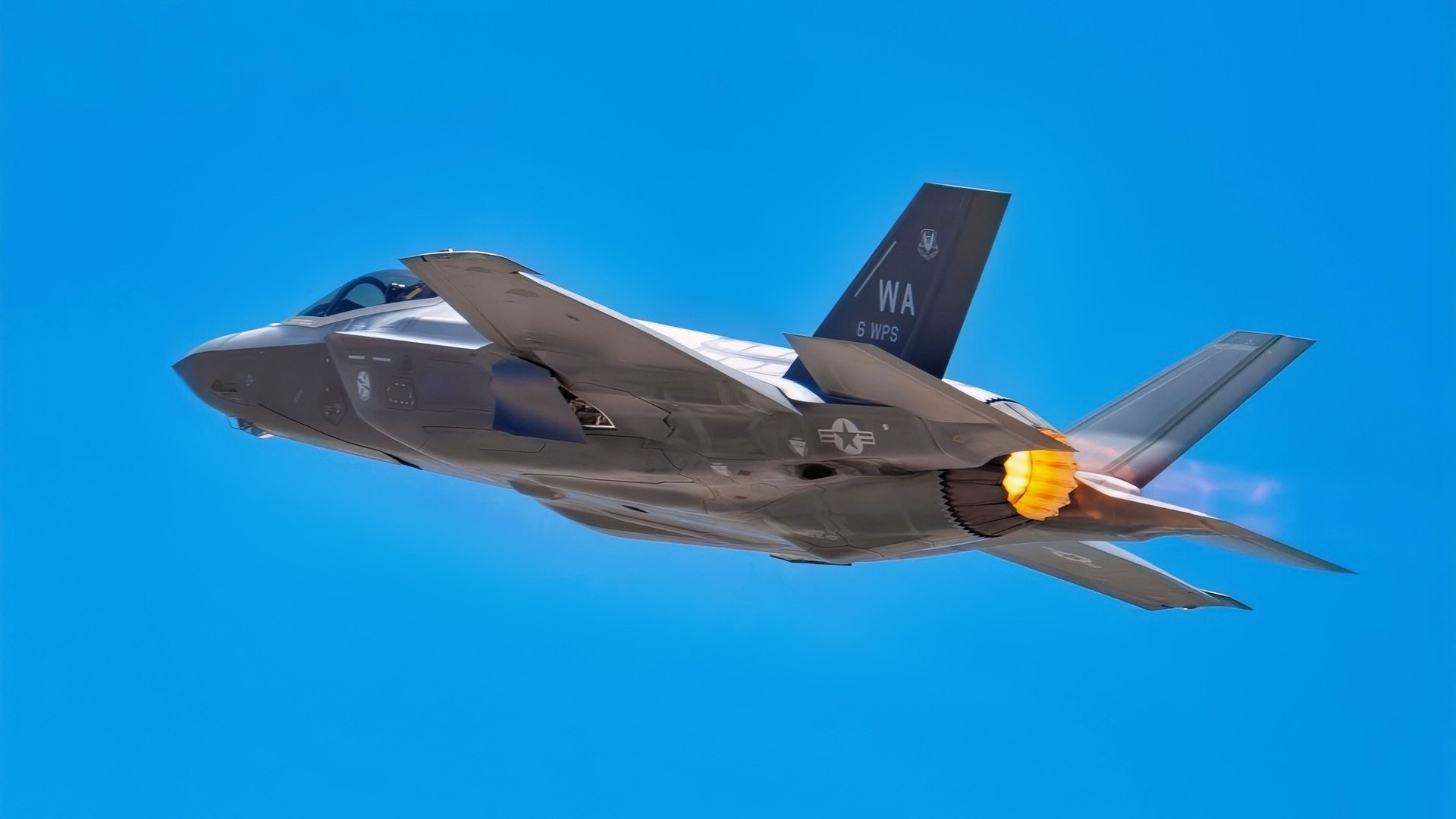
An F-35A Lightning II fighter jet, 6th Weapons Squadron (WPS), takes off from Nellis Air Force Base, Nev., July 18, 2019. The 6th WPS is the only squadron under the U.S. Air Force Weapons School exclusively training on the F-35A. (U.S. Air Force photo by Airman 1st Class Bryan Guthrie)
The advantages are multifaceted as they go beyond speed and range to include high-resolution imagery renderings, detection of much smaller threat objects at greater distances, and the ability to concurrently track multiple moving targets in real time.
It makes sense that the B-52 would get an AESA radar, as it has a large nose radome into which transmit and receive modules can be “packaged” for high-power density and detection sensitivity.
About the Author: Kris Osborn
Kris Osborn is the President of Warrior Maven – Center for Military Modernization. Osborn previously served at the Pentagon as a highly qualified expert in the Office of the Assistant Secretary of the Army—Acquisition, Logistics & Technology. Osborn has also worked as an anchor and on-air military specialist at national TV networks. He has appeared as a guest military expert on Fox News, MSNBC, The Military Channel, and The History Channel. He also has a Masters Degree in Comparative Literature from Columbia University.