
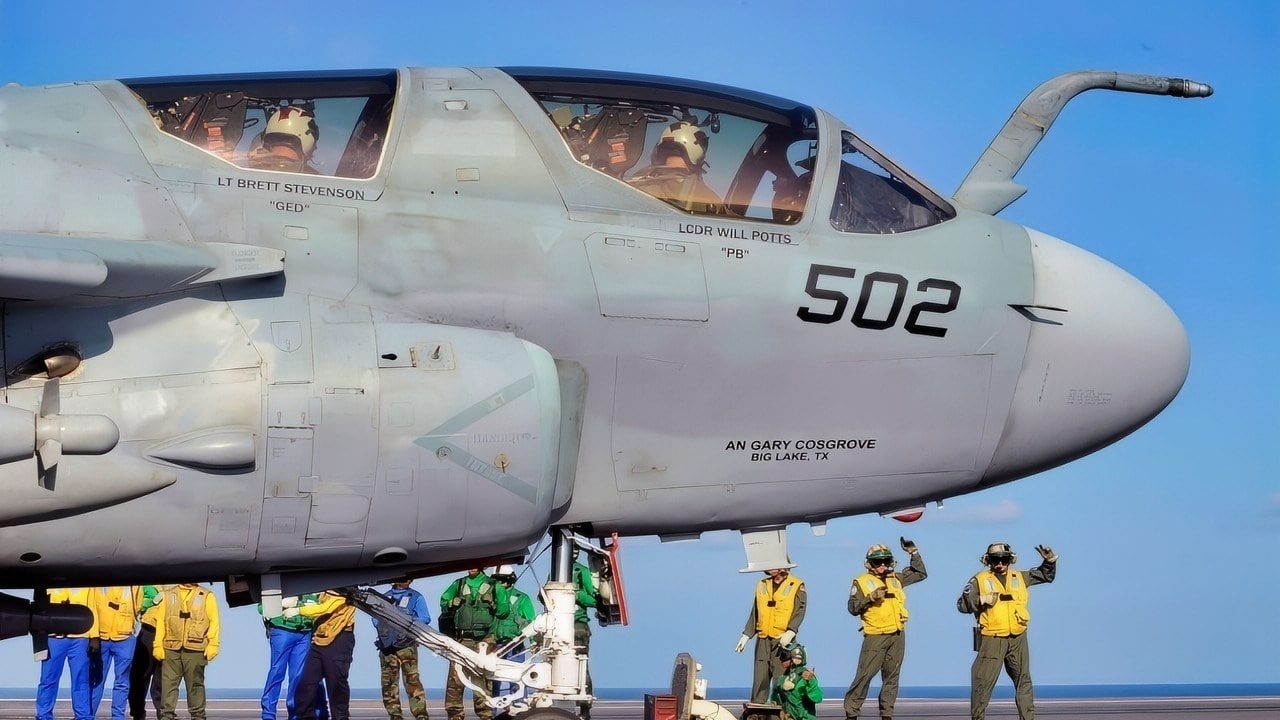
Key Points and Summary – The Grumman A-6 Intruder entered Navy and Marine Corps service in 1963 as America’s first true all-weather carrier attack aircraft.
-Crewed by a pilot and bombardier/navigator in a side-by-side cockpit, it hauled a massive strike load—up to 18,000 pounds—while flying low and fast in miserable weather that grounded other jets.
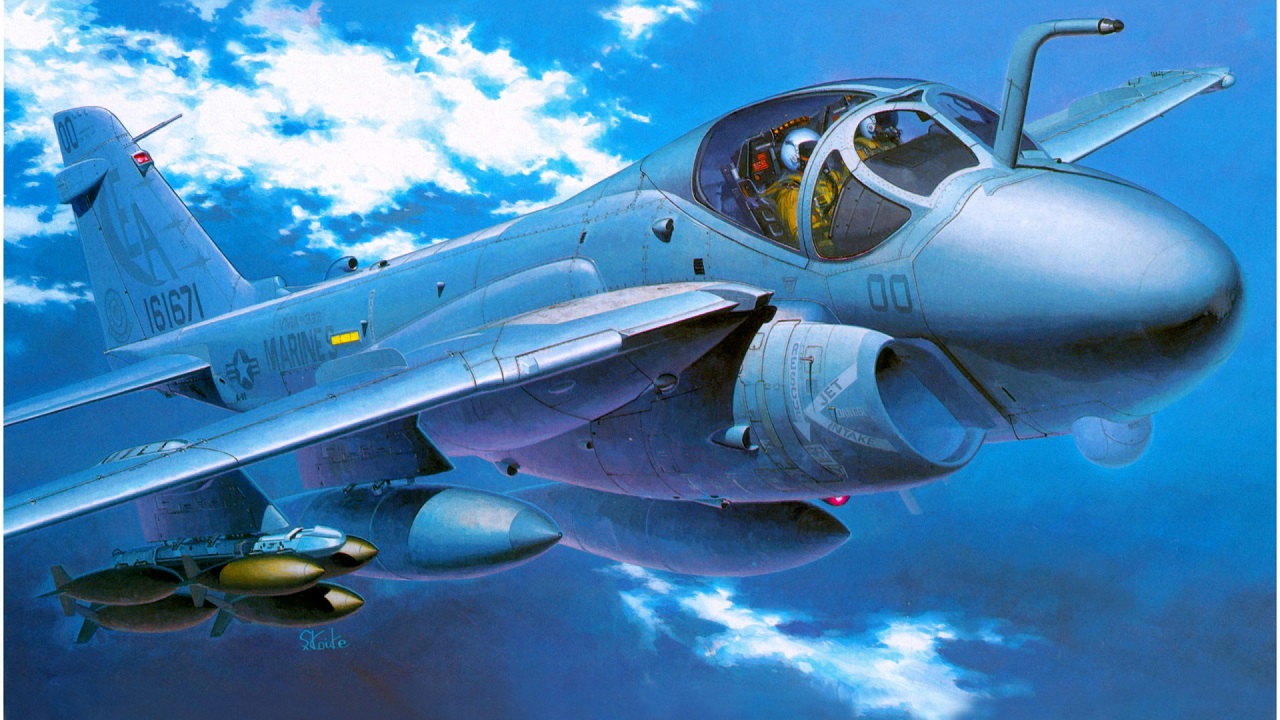
A-6 Intruder. Image Credit: Creative Commons.
-In Vietnam, that mission profile made Intruders lethal but vulnerable, with heavy losses to anti-aircraft fire, SAMs, and mishaps.
-The A-6 later struck targets in Lebanon and Libya and flew thousands of sorties in Desert Storm as a primary Navy precision-strike platform. The Navy retired it in 1997, but its lineage lived on in the EA-6B Prowler.
The A-6 Intruder Was the Navy’s All-Weather Bomb Truck—and It Paid a Price in Vietnam
“Fighter pukes make movies. Bomber pilots make history!”
—Lieutenant Jake “Cool Hand” Grafton “Flight of the Intruder”
The first time this writer heard this saying was in that 1991 movie, which also stars Willem Dafoe, Danny Glover, and Rosanna Arquette.
Although the film contains its fair share of typical Hollywood hokum, it was based on a bestselling novel by Stephen Coonts, who was formerly a real-life pilot of the A-6 Intruder. 19FortyFive now takes a closer look at the life of the intrepid Intruder.
(Initial) Flight(s) of the Intruder: A-6 Early History
The A-6 Intruder was built by the Grumman Aerospace Corporation. Grumman’s long history of building U.S. Navy warbirds ranged from the F6F Hellcat to the F-14 Tomcat, to name just a couple. The A-6 made her maiden flight on April 19, 1960, and was officially introduced into Navy and Marine Corps service in 1963, indeed making history as the first ever all-weather attack aircraft.
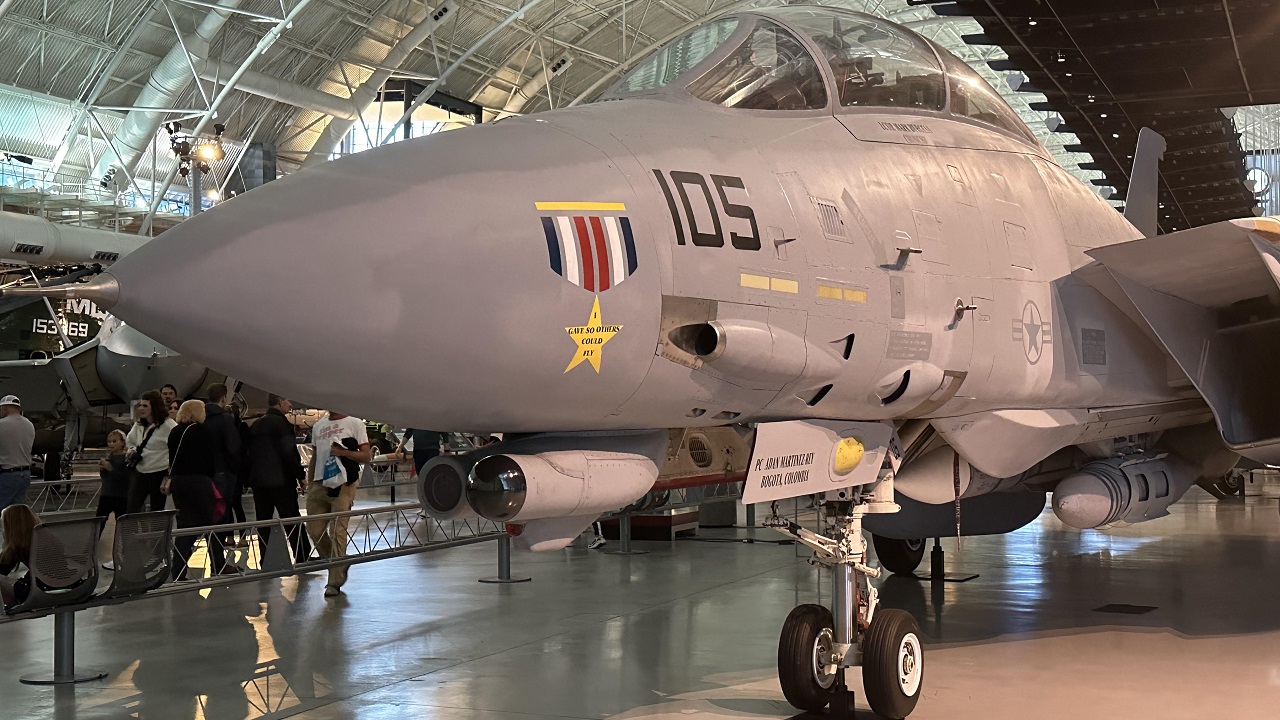
F-14 Tomcat. Image taken at National Air and Space Museum on October 1, 2022. Image by 19FortyFive.
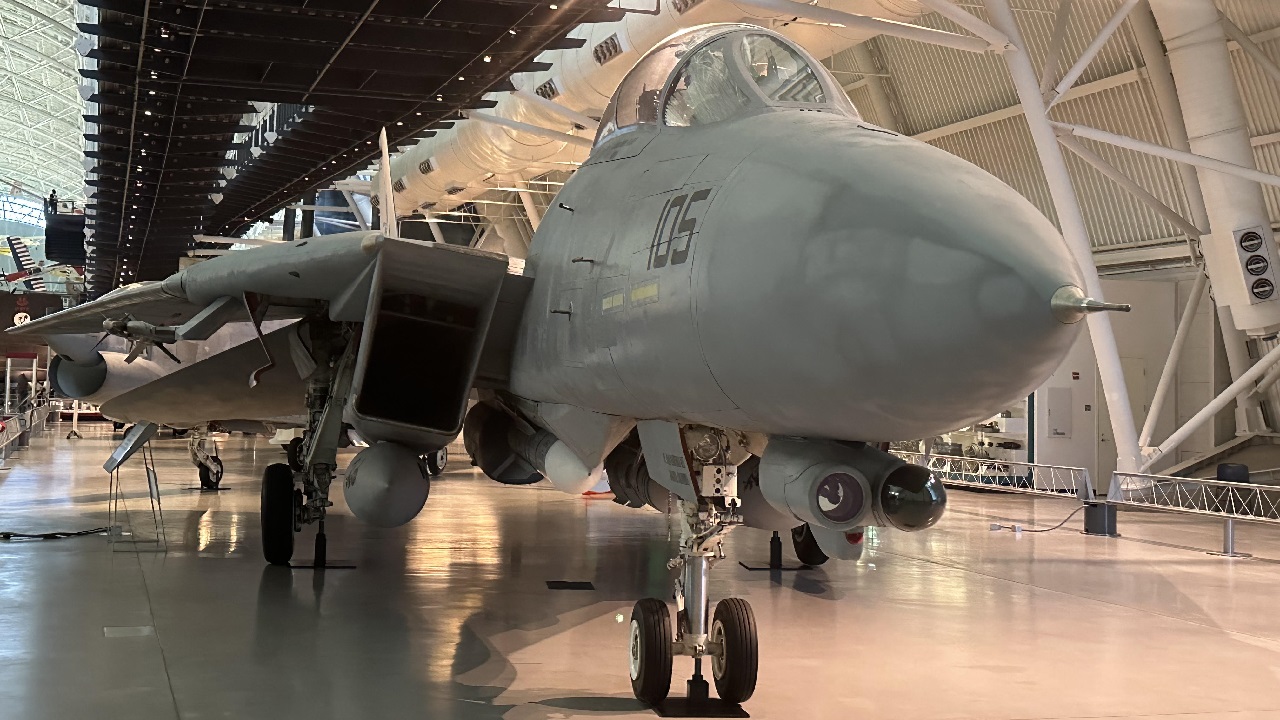
F-14 Tomcat. Image taken at National Air and Space Museum on October 1, 2022. Image by 19FortyFive.
The Bureau of Aeronautics called for an all-weather attack aircraft with Short Takeoff and Landing capabilities. This was useful to the Navy for long-range interdiction missions and to the Marine Corps for close air support. In the immortal words of early 20th-century airpower theorist General Giulio Douhet, “Flexibility is the key to airpower.”
A-6 Intruder Tech Specs and Vital Stats
-Crew: 2 (pilot, bombardier/navigator)
-Fuselage Length: 54 ft 9 in (16.69 m)
-Height: 16 ft 2 in (4.93 m)
-Wingspan: 53 ft 0 in (16.15 m)
-Empty Weight: 26,660 lb. (12,093 kg)
–Max Takeoff Weight (MTOW): 60,400 lb. (27,397 kg)
-Powerplant: 2 × Pratt & Whitney J52-P8B turbojets, each generating 9,300 lbf (41 kN) of thrust
-Max Airspeed: Mach 0.83 (640 mph, 1,029 km/h)
-Service Ceiling: 42,400 ft (12,900 m)
-Ferry Range: 2,818 nmi (3,243 mi, 5,219 km)
-Combat Range: 878 nmi (1,010 mi, 1,626 km)
-Rate of Climb: 7,620 ft/min (38.7 m/s)
-Armament: Up to 18,000 lb. (1,600 kg.) worth of bombs and/or missiles (including, but certainly not limited to, the AGM-45 Shrike anti-radar missile).
The Intruder carried no defensive armaments. The cockpit configuration was unusual in that it used a side-by-side seating arrangement; the pilot sat to the left of the bombardier/navigator. By contrast, in most two-seater jets, such as the F-14 Tomcat or the F-15E Strike Eagle, the navigator sits directly behind the pilot.
Operational History/Combat Performance
The impressive payload of the A-6s prompted the North Vietnamese to dub them “miniature B-52s.” However, the U.S. Navy and Marine Corps pilots who flew the Intruders in the deadly skies over North Vietnam paid a stiff price in exchange for the damage that they inflicted on the Communists.

A U.S. Air Force B-52 Stratofortress bomber, deployed from Barksdale Air Force Base, La., lands at Andersen Air Force Base, Guam, July 4, 2020. The B-52 flew the 28-hour mission to demonstrate U.S. Indo-Pacific Command’s commitment to the security and stability of the Indo-Pacific region. (U.S. Air Force photo by Master Sgt. Richard P. Ebensberger)
Since they generally flew a low-altitude mission profile—often at tree-top level—the planes were fairly easy targets for North Vietnamese Army and Viet Cong antiaircraft artillery gunners and surface-to-air missile (SAM) launchers. They were also targeted by North Vietnamese Air Force MiG-17, MiG-19, and MiG-21 jet fighters.
A total of 84 A-6s were lost to all causes during the war. Ten were shot down by SAMs, two killed by MiGs, 16 were lost to “operational causes” (read: non-combat mishaps), and 56 fell to conventional ground fire and antiaircraft artillery.
The A-6’s first significant post-Vietnam action was in support of the Multinational Force in Lebanon in 1983. One Intruder was shot down by Syrian forces, resulting in the death of pilot Lieutenant Mark Adam Lange and the capture of bombardier/navigator Lieutenant (now retired Commander) Robert O. “Bobby” Goodman, who was held captive for 30 days.
Three years later, A-6 Intruders would participate in the Operation Eldorado Canyon bombing raids against Libya, this time without any losses incurred.
The Intruder was a key participant in the 1991 Persian Gulf War. Serving as the Navy’s primary strike platform for delivering precision-guided munitions, the A-6 flew more than 4,700 combat sorties against Iraqi air defenses, naval units, and strategic targets.
Three A-6s were shot down by dictator Saddam Hussein’s antiaircraft assets. From a personal standpoint, of all the American aviators who became POWs during the Gulf War, the one etched most prominently into my memory (I was 15 years old at the time) was Lieutenant Jeffrey Zahn, an Intruder pilot who was used as a propaganda pawn by his captors, paraded in front of Iraqi TV cameras whilst coerced into reading statements denouncing the war effort.
Where Are They Now?
The A-6’s combat swan song was with the Navy over Bosnia in 1994. The Marine Corps had already retired the A-6E the year prior, and the Navy followed suit on February 28, 1997.
However, the Intruder had spawned an Electronic Warfare variant, the EA-6B Prowler, which doggedly remained in service until 2019 and remarkably incurred nary a single combat loss.
A total of 693 A-6 airframes were built. Surviving static displays can be found at aviation museums throughout the United States.
This writer can personally vouch for the Steven F. Udvar-Hazy Center in Chantilly, Virginia, and the National Naval Aviation Museum at NAS Pensacola, Florida.
About the Author: Christian D. Orr, Defense Expert
Christian D. Orr is a Senior Defense Editor. He is a former Air Force Security Forces officer, Federal law enforcement officer, and private military contractor (with assignments worked in Iraq, the United Arab Emirates, Kosovo, Japan, Germany, and the Pentagon). Chris holds a B.A. in International Relations from the University of Southern California (USC) and an M.A. in Intelligence Studies (concentration in Terrorism Studies) from American Military University (AMU). He is also the author of the newly published book “Five Decades of a Fabulous Firearm: Celebrating the 50th Anniversary of the Beretta 92 Pistol Series.”