
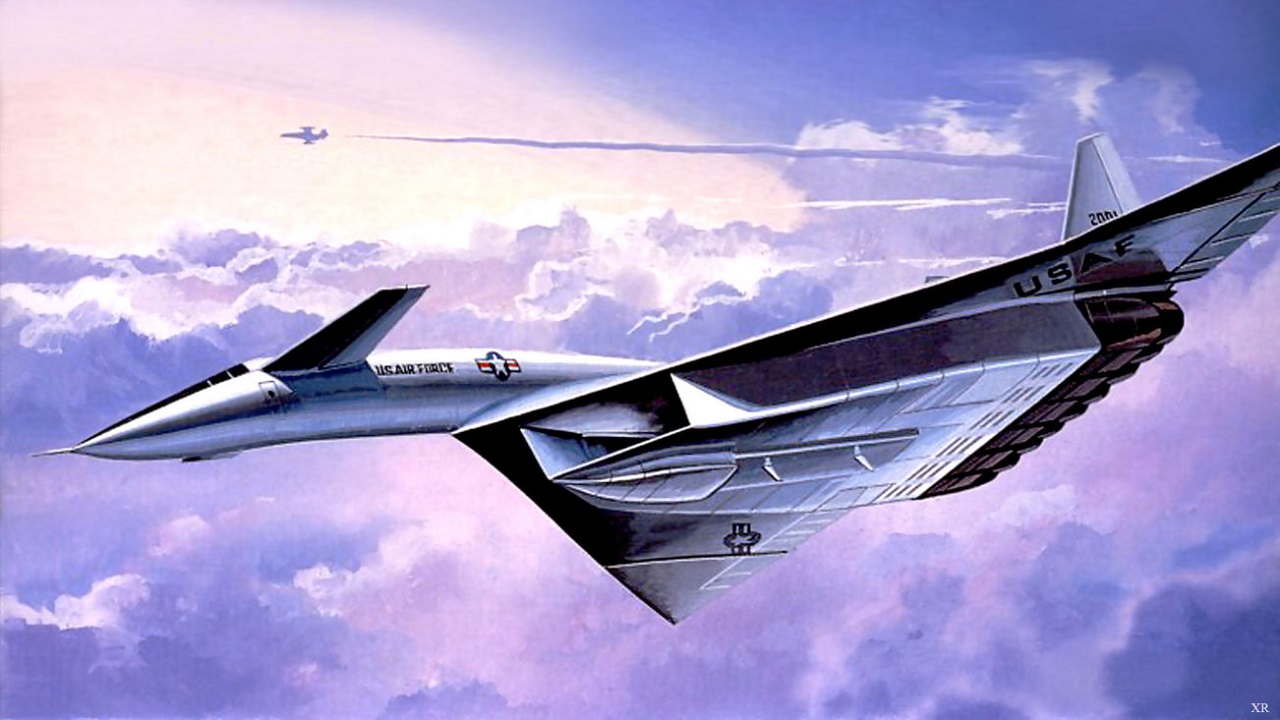
Key Points and Summary – The B-21 Raider is intended to anchor America’s future long-range strike force, but its debut inevitably invites comparison with the XB-70 Valkyrie—another “revolutionary” bomber whose mission evaporated as air defenses advanced.
-The XB-70 was built on a single assumption: speed and altitude equal survivability. Soviet SAMs, radar networks, and ICBMs shattered that logic.
-Today, improving sensors, space-based radar, drones, and long-range missiles threaten to narrow stealth’s advantage as well.
-The key difference is adaptability.
Will the B-21 Raider End Up Like the XB-70 Valkyrie?
The B-21 is a software-driven, modular, multi-domain node that can field new sensors, EW tools, and stand-off weapons—giving it a far better chance to outgrow changing threats.
When the U.S. Air Force unveiled the B-21 Raider in December 2022, it presented the aircraft as the backbone of America’s future long-range strike capability – a stealth bomber designed to penetrate the most heavily defended airspace on Earth.
But despite the pronounced and impressive advancements in stealth technology, automation, and beyond, the question remains: can offensive airpower stay ahead of defensive technology for long enough to justify the investment?
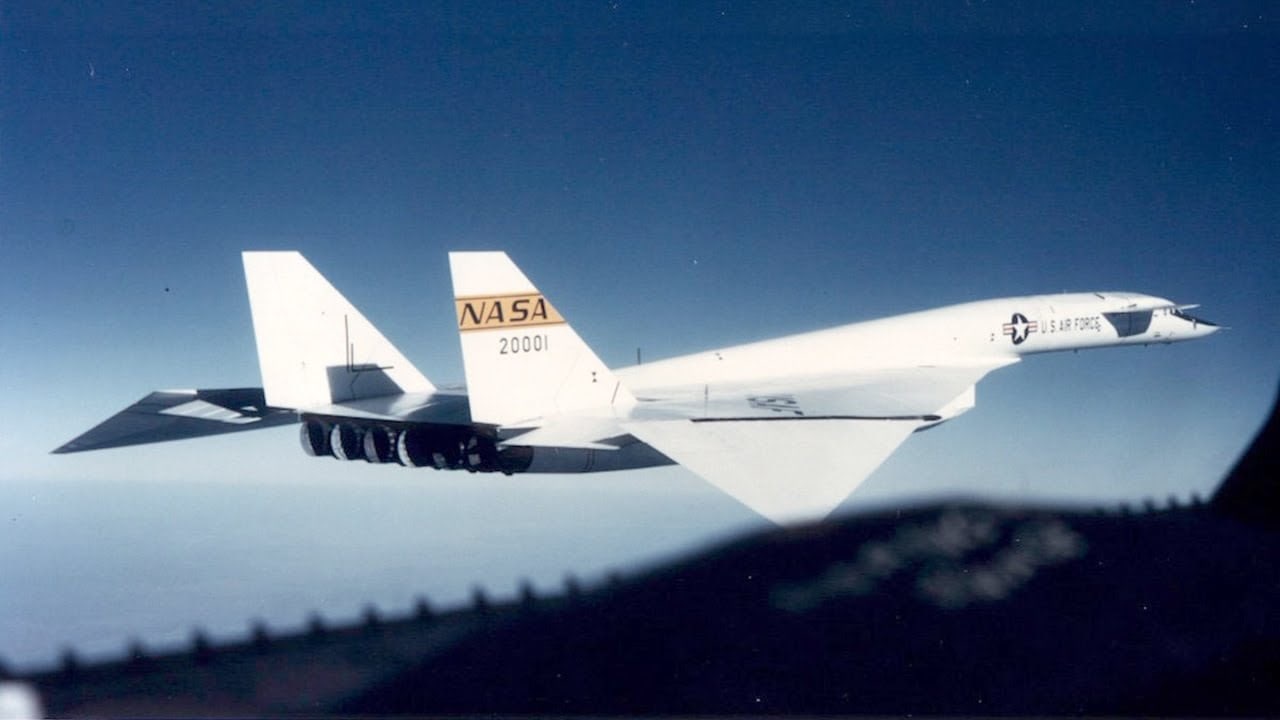
XB-70. Image Credit: Creative Commons.
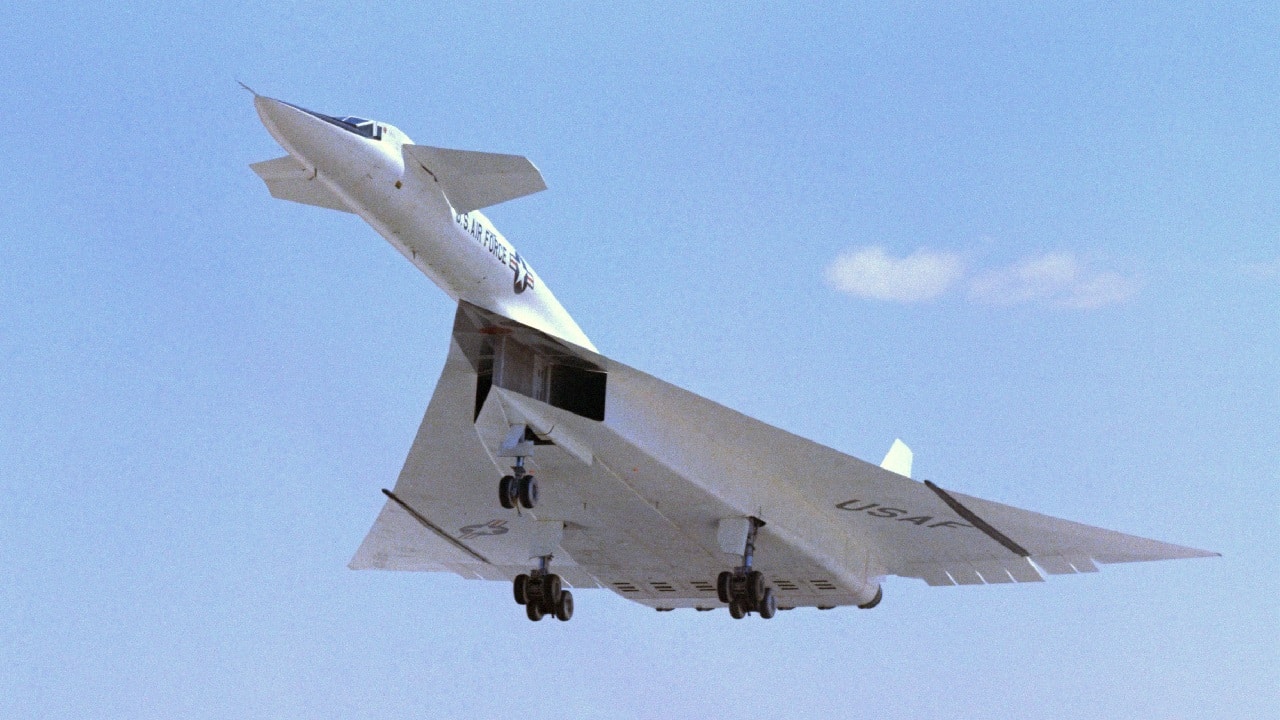
XB-70 Valkyrie. Picture Details: Viewed from the front the #1 XB-70A (62-0001) is shown climbing out during take-off. Most flights were scheduled during the morning hours to take advantage of the cooler ambient air temperatures for improved propulsion efficiencies. The wing tips are extended straight out to provide a maximum lifting wing surface. The XB-70A, capable of flying three times the speed of sound, was the world’s largest experimental aircraft in the 1960s. Two XB-70A aircraft were built. Ship #1 was flown by NASA in a high speed flight research program.
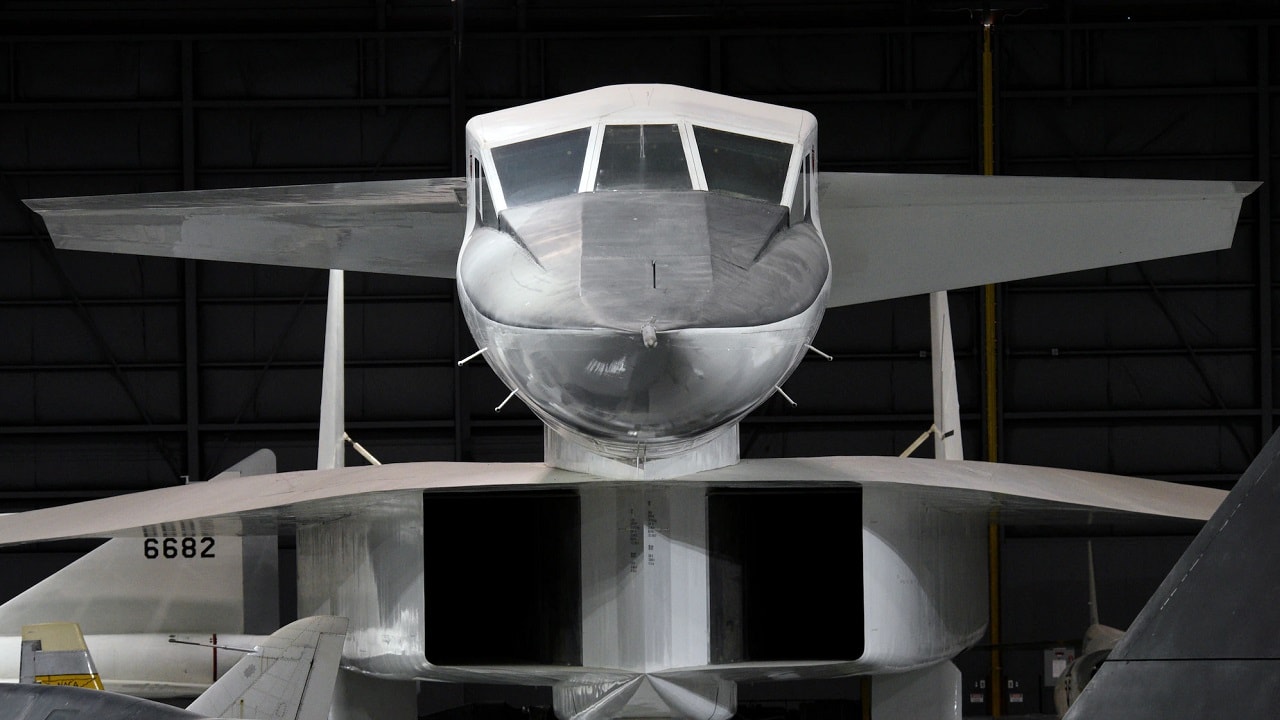
The futuristic XB-70A was originally conceived in the 1950s as a high-altitude, nuclear strike bomber that could fly at Mach 3 (three times the speed of sound) — any potential enemy would have been unable to defend against such a bomber.
It’s a question that has been asked every time an aircraft platform like this has been unveiled, and one that is arguably more important to consider now that adversaries like China and Russia are gradually closing the technological gap with the United States.
In fact, in the early 1960s, the U.S. was grappling with a similar issue with the XB-70 Valkyrie, a bomber so advanced at the time that it appeared to belong to a different era.
The XB-70 never actually entered service – not because it failed technologically, but because the combat environment for which it was designed disappeared.
As air defenses evolved faster than expected, the central premise – and promise – of the aircraft collapsed.
The concern today should consider this historic failure: is the B-21, despite its radically different design philosophy, extended reach, and advanced stealth, destined for irrelevance as adversaries field increasingly advanced hardware, drone swarms, long-range missiles, and bolster their already formidable air defenses?
The Lesson of the XB-70
The XB-70 Valkyrie was conceived in the late 1950s as a Mach 3, high-altitude nuclear bomber capable of outrunning Soviet interceptors and flying above the reach of existing air defenses. At the time, the U.S. Air Force believed speed and altitude could guarantee survivability deep inside enemy territory.
Two prototypes were built, and the aircraft met its performance goals, including sustained Mach 3 flight above 70,000 feet.
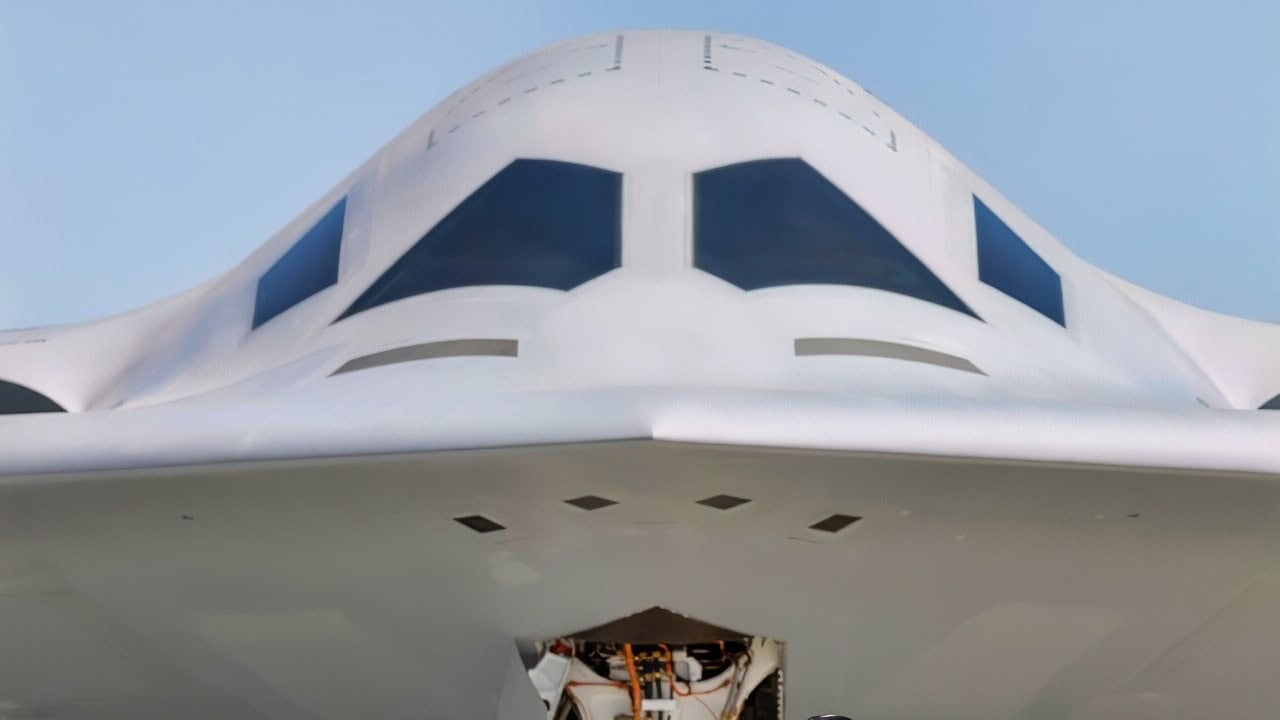
U.S. Air Force Airmen with the 912th Aircraft Maintenance Squadron prepare to recover the second B-21 Raider to arrive for test and evaluation at Edwards AFB, Calif., Sept. 11, 2025. The arrival of a second test aircraft provides maintainers valuable hands-on experience with tools, data and processes that will support future operational squadrons. (U.S Air Force photo by Kyle Brasier)
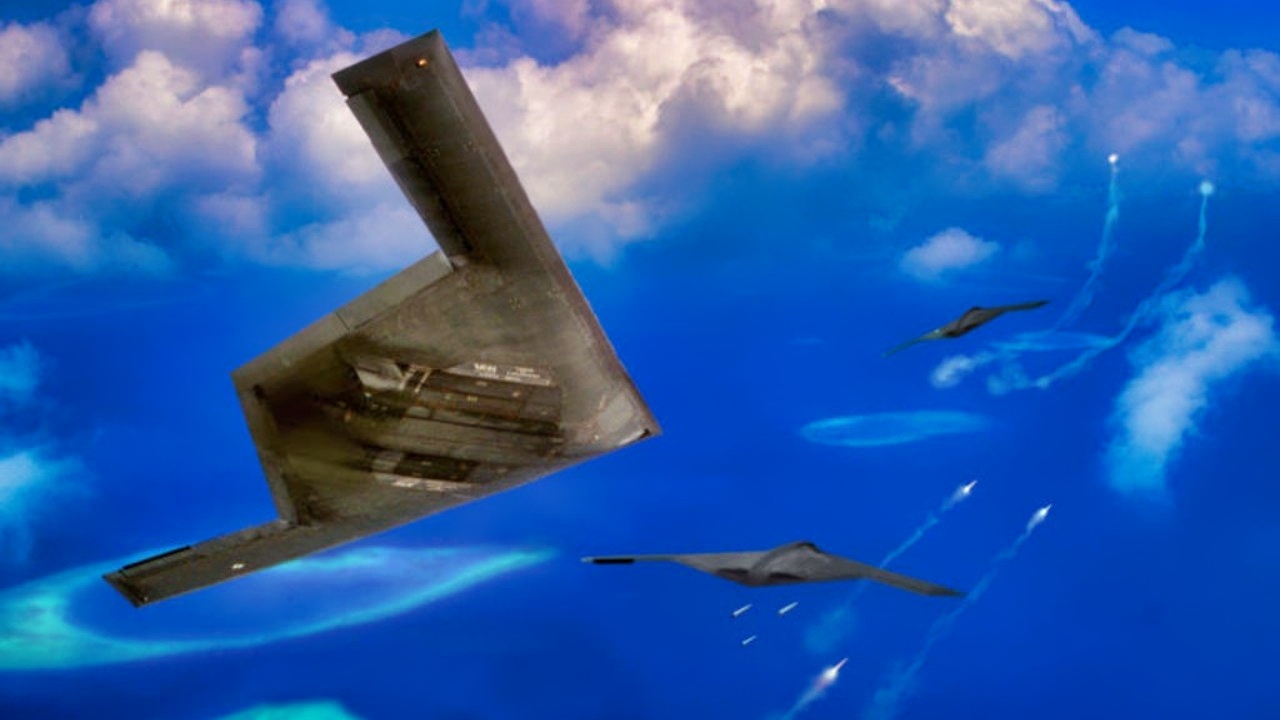
B-21 Raider Bomber. Artist Rendition/Creative Commons.
But what killed the XB-70 wasn’t engineering failure – it was the rapid maturation of Soviet surface-to-air missile systems. The development of the SA-2 Guideline, combined with improved radar networks, demonstrated that even very fast, very high-flying aircraft could be tracked and engaged. Then, when a U-2 reconnaissance aircraft was shot down over the Soviet Union in 1960, it was clear that altitude alone was no longer a solution. The XB-70 project was doomed.
At the same time, intercontinental ballistic missiles were becoming a more compelling option: ICBMs offered a faster, more survivable means of delivering nuclear weapons. Faced with escalating costs and a shrinking mission set, the Air Force canceled the XB-70 as an operational bomber in 1961, retaining it only as a research platform.
Could the B-21 Be Just As Vulnerable?
At first glance, the B-21 Raider appears to avoid the central mistake of the XB-70: rather than relying on speed or altitude, the B-21 is built around low observability, electronic warfare integration, and the ability to operate as part of a networked force.
Those are all hugely advantageous today, and the U.S. Air Force has described it as a “multi-domain” platform designed to penetrate advanced air defenses while remaining adaptable over time through software upgrades.
It’s all good, except for one thing: threat detection is getting better all the time, and new strike systems are gradually eroding the bomber’s margin of advantage. It’s effectively the same dynamic that killed the XB-70: just as speed and altitude began to mean less, stealth may begin to mean less too – especially as China continues development of space-based radar technologies.
Chinese researchers and media outlets have in recent years described a new generation of satellite radar systems under development to detect and track stealth aircraft day and night. These space-borne radar constellations could fundamentally change the value of stealth aircraft once they are fully operational – and there’s no telling the impact it could have on the next generation of stealth aircraft technology.
There remains, however, a big difference between the XB-70 and B-21: adaptability.
The Valkyrie was built around a single operational assumption that could not be meaningfully updated once it was invalidated. The B-21, however, is being designed from the outset as a software-defined platform with open mission systems, modular payload bays, and the ability to integrate new sensors, electronic warfare techniques, and new autonomous capabilities over time.
Its survivability is not entirely dependent on being unseen, but on operating as part of a broader kill chain that includes offboard sensors, escort drones, long-range weapons, and more. When viewed as one element of a broader equation, the chances of the B-21 seeing the same fate as the XB-70 seem far smaller.
The B-21, after all, does not need to penetrate alone – even deeply, at that – to remain relevant. It can serve as a command node, a launcher for stand-off and collaborative munitions, or as a flexible platform for missions that evolve faster than air defenses can adapt.
If the U.S. Air Force treats the B-21 as a continuously evolving system rather than a single aircraft with a rigid mission, it will survive – and that optimistic figure of 200 units still makes sense.
About the Author:
Jack Buckby is a British author, counter-extremism researcher, and journalist based in New York who writes frequently for National Security Journal. Reporting on the U.K., Europe, and the U.S., he works to analyze and understand left-wing and right-wing radicalization, and reports on Western governments’ approaches to the pressing issues of today. His books and research papers explore these themes and propose pragmatic solutions to our increasingly polarized society. His latest book is The Truth Teller: RFK Jr. and the Case for a Post-Partisan Presidency.

