
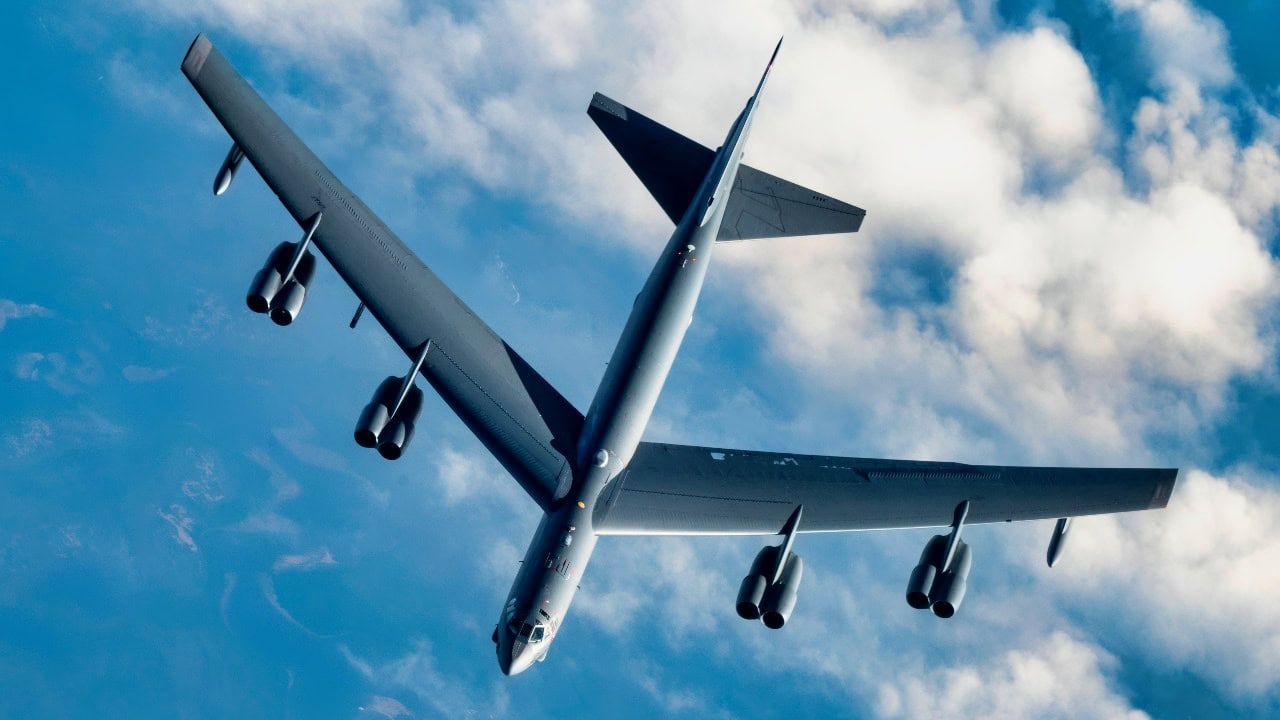
Key Points and Summary – The Air Force plans to keep 76 B-52s flying into the 2050s through the B-52J upgrade, but engine, radar, and weapons integration delays are pushing schedules right and driving costs up.
-A Nunn-McCurdy breach raises the stakes: if modernization slips further, long-range strike capacity could tighten fast.
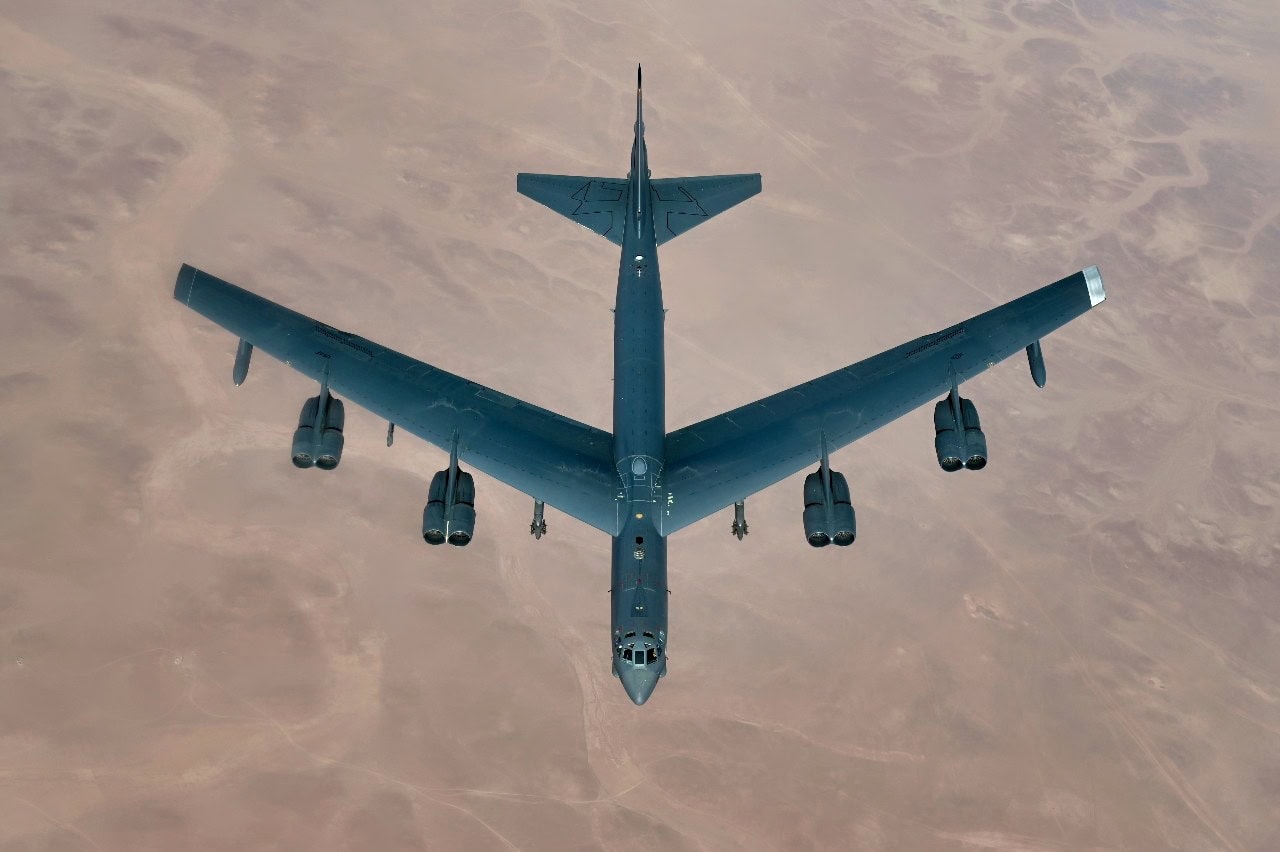
A U.S. Air Force B-52H Stratofortress conducts a combat air patrol in support of Operation Inherent Resolve over the U.S. Central Command area of responsibility Nov. 23, 2024. The deployment of the long-range heavy bombers into the USCENTCOM theater demonstrates the United States’ dedication to deterring aggression and maintaining stability in the region alongside allies and partners. (U.S. Air Force photo)
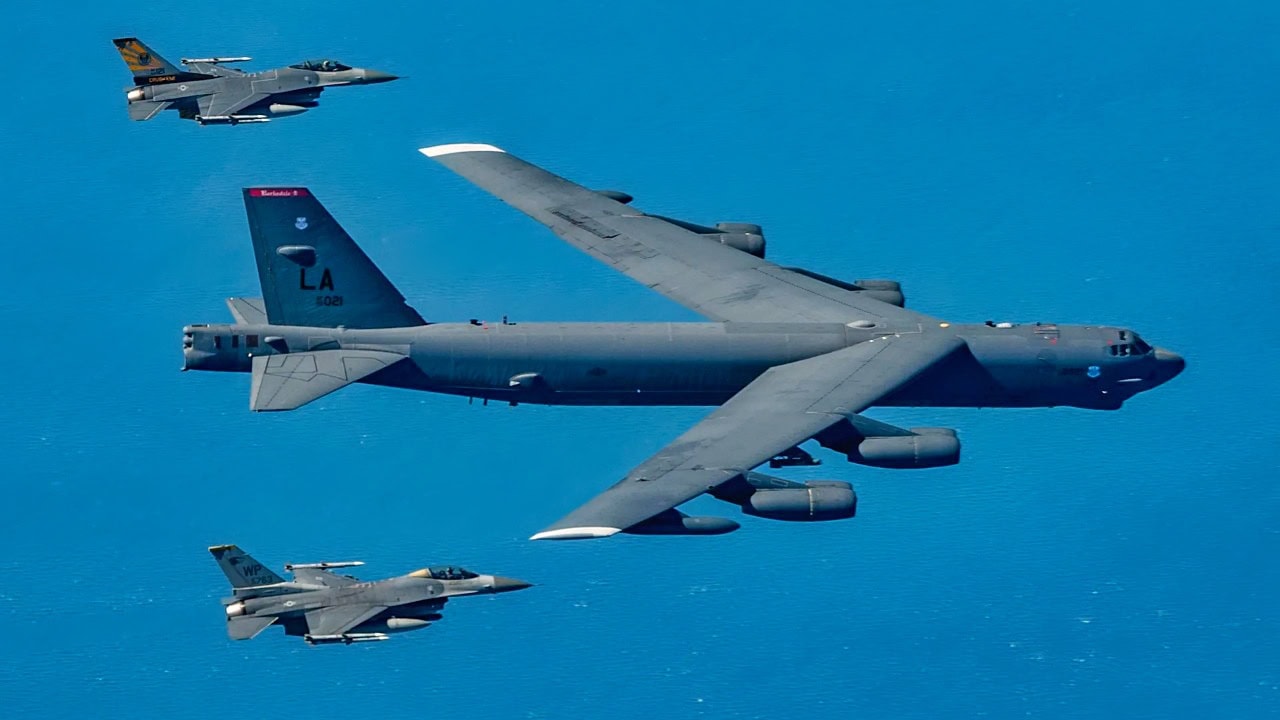
B-52 Bomber. Image Credit: Creative Commons.
-The B-52 is meant for standoff missile salvos while the stealthy B-21 penetrates advanced air defenses.
-If the B-52J falters, the service may need far more Raiders—but ramping B-21 production is complex, slow, and expensive.
-That leaves commanders weighing a hedge: accelerate B-21 buys now, stabilize B-52J programs, and add collaborative unmanned wingmen.
Why 100 B-21 Raiders May Not Be Enough if the B-52J Upgrade Falters
The Air Force is facing an issue with its bomber fleet. The long-term plan is to keep 76 B-52s flying into the 2050s, when the venerable bomber will be approaching its 100th birthday.
The B-52J is a proposed upgrade to the B-52 Stratofortress, aiming to extend its service life well into the 2050s with new engines, advanced radar, and updated avionics. That would put the iconic bomber’s age at the century mark.
However, the upgrades needed to keep the B-52J fleet flying are meeting delays, and cost overruns have raised questions about its future viability. Incorporating new Rolls-Royce F130 engines, AESA radar, and LRSO integration has pushed back the initial operational capability to 2033.
The B-52J bomber is a subject of ongoing debate, with some arguing for its continued service and modernization, while others question its long-term value and strategic relevance. It is costly, and with the modern B-21 Raider set to come online, they argue that the money would be better spent on the Raider.
The Air Force plans to build 100 B-21 Raider stealth bombers to round out its bomber fleet, although many Air Force officials believe the number of B-21s should be doubled.
Choice Of The Present B-52J Or The Future B-21?
The choice between upgrading the B-52J and acquiring more B-21s is complex, as delays in the B-52J modernization program could require the Air Force to request additional B-21s to maintain its long-range strike capacity.
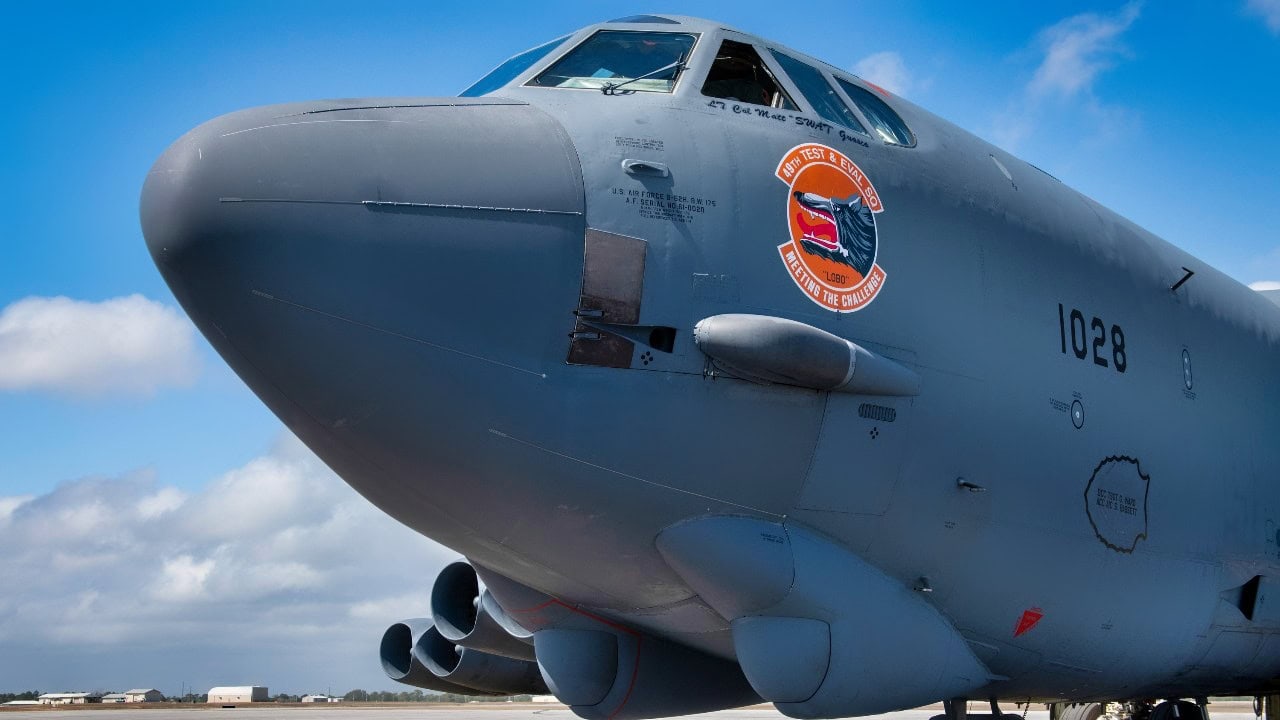
A 53rd Wing B-52 Stratofortress sits on the flightline Feb 22, 2022 at Eglin Air Force Base, Florida. The 49th Test and Evaluation Squadron aircrew brought the bomber from Barksdale AFB, Louisiana, to allow wing personnel an opportunity to see one of their geographically separated aircraft up close. (U.S. Air Force photo/Ilka Cole)
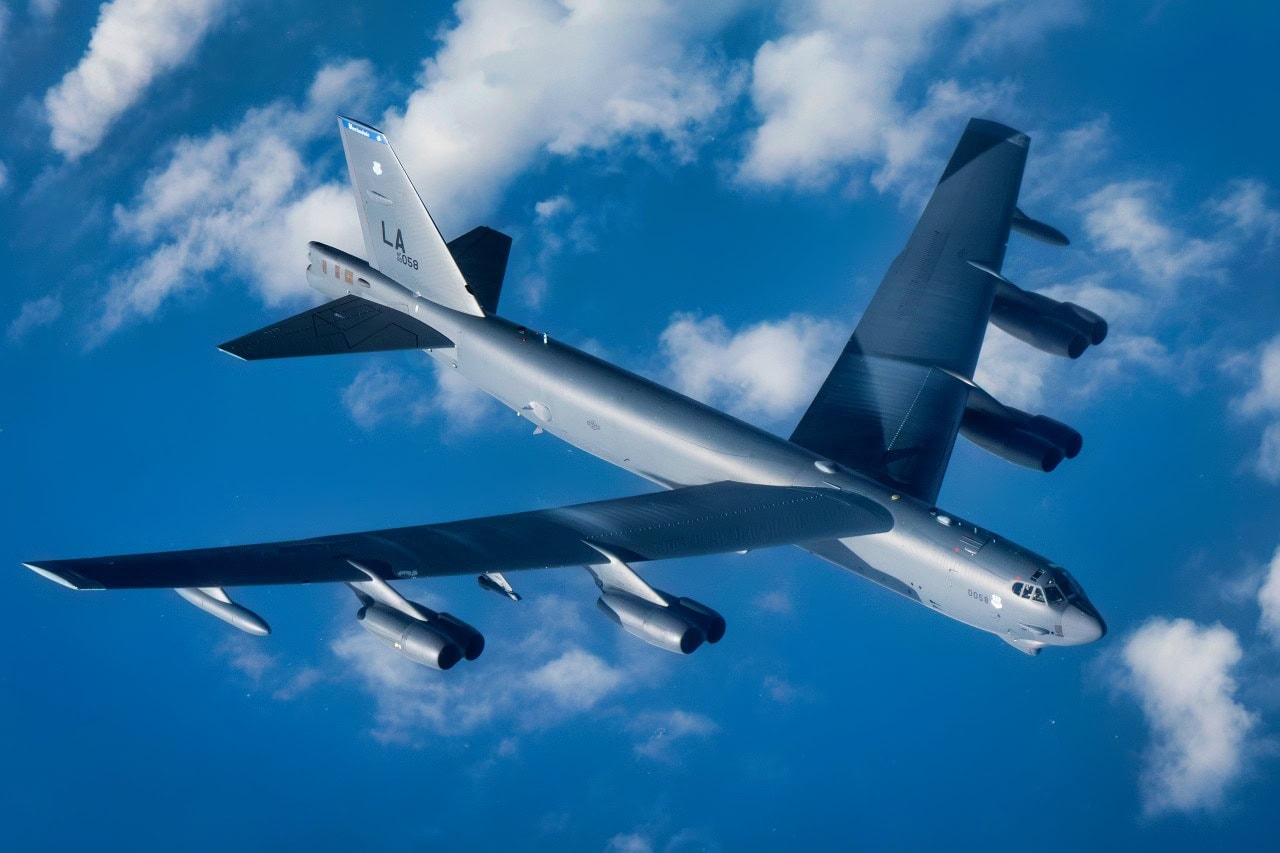
A B-52 Stratofortress assigned to the 2nd Bomb Wing, Barksdale Air Force Base, Louisiana, is refueled by a KC-135 Stratotanker assigned to the 6th Air Refueling Wing, MacDill AFB, Florida, within the U.S. Southern Command (SOUTHCOM) area of responsibility, June 18, 2024. The B-52 Stratofortress is a long-range, heavy bomber that can perform a variety of missions. As part of the Air Force Global Strike Command, the B-52 enables combat-ready forces to conduct strategic nuclear deterrence and global strike operations in support of combatant commanders. (U.S. Air Force photo by Senior Airman Lauren Cobin)

A U.S. Air Force B-52 Stratofortress bomber, deployed from Barksdale Air Force Base, La., lands at Andersen Air Force Base, Guam, July 4, 2020. The B-52 flew the 28-hour mission to demonstrate U.S. Indo-Pacific Command’s commitment to the security and stability of the Indo-Pacific region. (U.S. Air Force photo by Master Sgt. Richard P. Ebensberger)
Like so many US military high-tech programs, the B-52J is over budget and late…three years late.
The B-52J will receive a new radar system straight from the U.S. Navy’s F/A-18 Super Hornet and be upgraded with many new and improved weapons.
The B-52J is expected to be a versatile platform capable of carrying a wide range of weapons, from gravity bombs to cruise and hypersonic missiles. In total, the B-52J will carry 35 tons of bombs, missiles, etc.
Some military leaders have advocated increasing the number of B-21s to accelerate production, arguing that the B-21 will be the backbone of the future bomber fleet, even with the modernized B-52. The B-52J upgrade is intended to keep the B-52 flying until the 2050s, while the B-21 is the new, stealthy next-generation bomber.
What Happens If The B-52J Fails?
The B-52J upgrade consists of the Commercial Engine Replacement program (CERP) and Radar Modernization Program (RMP), both now underway, which seek to replace the engines and pylons of the entire 76-airplane B-52H fleet, along with its radar, some communications upgrades, and other improvements—all to be delivered starting at the end of this decade. However, the upgrade is facing the inevitable delays and cost overruns.
The B-52H RMP will replace the legacy APQ-166 radar with the modified APG-79 Bomber Modernized Radar System. Replacement of the aging legacy radar is intended to increase system reliability and reduce sustainment costs.
However, this upgrade has resulted in a Nunn-McCurdy Act breach, exceeding projected costs, requiring the Air Force to assess and possibly reconfigure the program. The breach is considered “significant,” meaning there’s a deviation of 15 percent or more from the base cost or schedule.
Failure of the B-52J modernization program would create a significant gap in bomber capacity for the U.S. Air Force, which could be remedied by purchasing additional B-21 Raiders. The USAF is in discussions to accelerate B-21 production, but rapidly “ramping up” production is challenging and would take time.
The B-52 is intended to perform “standoff” missions (launching cruise missiles from outside heavily contested airspace), preserving the stealthy B-21s for penetrating advanced enemy air defenses. Without a reliable B-52 fleet, the Air Force would lack the numbers to sustain persistent global pressure, forcing the smaller B-21 fleet to be over-tasked in potentially riskier environments.
More B-21 Raiders Means More Modern Strike Capability
If the B-52 modernization program “goes worse than we hope, then we would need more money for B-21s,” USAF Chief of Staff David Allvin told Sen. Mike Rounds (R-S.D.).
When the senator asked if the Air Force’s plan for B-21s was “anywhere close” to what the service actually needed, Allvin replied that he would “take all I can get with the funding,” though he didn’t give an exact number of Raiders.
Northrop Grumman is in discussions with the Air Force about a deal to accelerate production. Congress has already provided an additional $4.5 billion to speed up production.
STRATCOM chief Air Force Gen. Anthony Cotton said 100 B-21 Raiders is an absolute minimum to buy, and that he’d be more comfortable with an accelerated rate of production.
The current rate is classified, but believed to be only seven or eight per year, and was “set when the geopolitical environment was a little bit different than what we face today,” due to China’s rapid growth and bellicosity.
Air Force commanders of U.S. Strategic Command and Air Force Global Strike Command have called for 145 B-21s as a new target, although some earlier estimates put that number at 220.
The influx of more modern bombers, such as the B-21 Raider, is needed, as the bomber fleet is aging, or a “hollowed-out sword,” dangerously antiquated, and “too small for modern great-power competition.”
Production Limitations
The production rate is “data-driven,” relying on performance data from ongoing flight tests to ensure quality before dramatically scaling up production.
While existing facilities have some growth capacity, a massive increase in production might eventually require opening an entirely new production complex, which would take significant time and investment.
Accelerating production of highly complex, stealthy systems with intricate supply chains is inherently difficult and cannot be done overnight. Current projections are slated to acquire around 10 aircraft per year by the 2030s under the original plan by the Air Force and the manufacturer.
The Raider, Not The B-52J, Is The Answer:
The B-52 is an outstanding aircraft; that it remains a viable bomber more than 70 years into its service life speaks volumes. However, Father Time is undefeated, and the B-52 will not survive much longer in a modern air war.
However, one intriguing possibility for the B-52J is its deployment alongside the Air Force’s newest aircraft, the Collaborative Combat Aircraft (CCA).
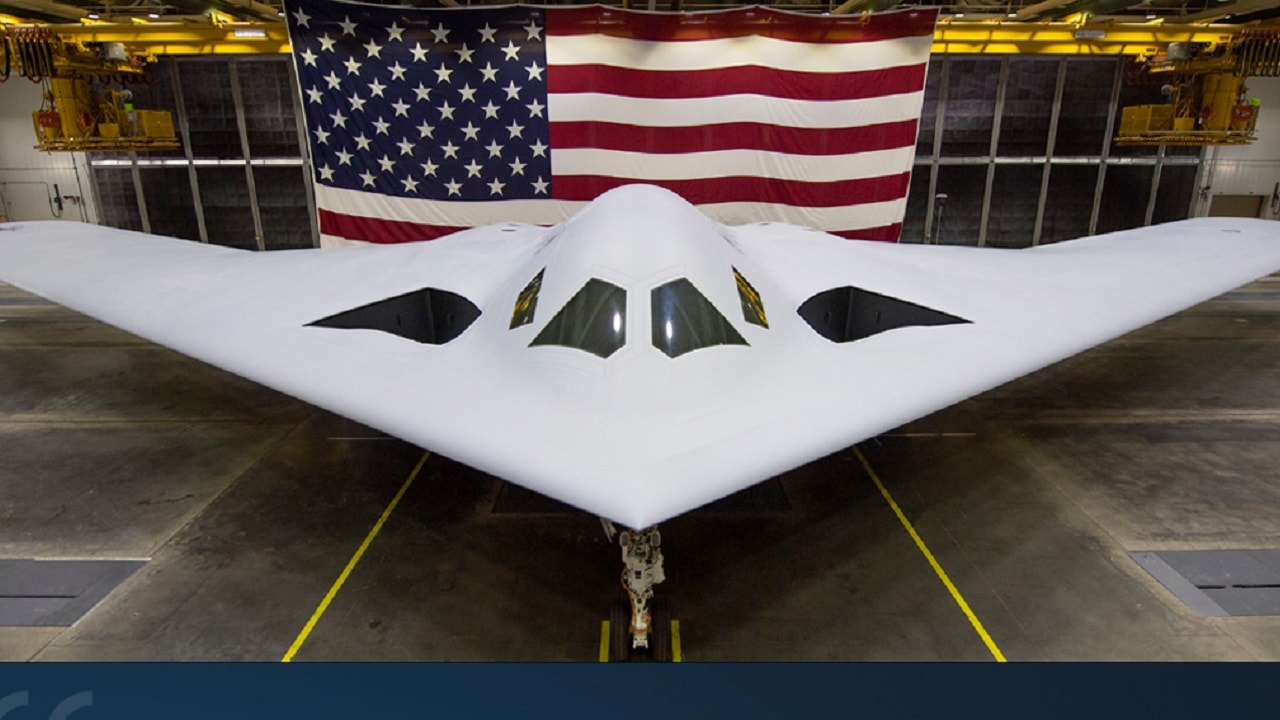
B-21 Raider
“It is the ability of the B-52 to carry such a large payload that can put these unmanned systems into the middle of the fight that makes a difference and will provide more justification for the cost of the upgrade,” said a US air power specialist who spoke to 1945’s Reuben Johnson.
“It will make the ‘ long arm’ of the B-52 even longer.”
Will The B-52J Be Obsolete When It Does Become Operational?
Because of all the technological issues the aircraft has had to deal with and the ongoing delays, one must wonder if it will become operational in 2033 (not a sure thing), it will already be obsolete.
The estimated $2.56 billion investment in the B-52J upgrades diverts resources from developing and procuring next-generation platforms like the B-21 Raider. As adversaries advance their air defense capabilities, the need for stealthier and more survivable bombers becomes increasingly critical. The B-52 would not survive against the dedicated air defenses of a near-peer adversary.
The focus should be on accelerating the deployment of these next-generation systems rather than sinking money into a nearly 80-year-old platform. Wouldn’t the money be better spent on more B-21s?
Our adversaries watched US airpower over the past several decades and have developed their sophisticated anti-access/area denial (A2/AD) networks designed to defeat the United States.
Like everything else, money is and always will be the driving factor of the size of the bomber fleet. But as we’ve learned from our mistakes at the end of the Cold War, deterrence cannot be turned on and off at will.
Our adversaries have grown belligerent because we let our capabilities shrink. The modern B-21 Raider is designed to penetrate enemy A2/AD networks unseen. That’s the deterrence needed, not just for today but in the future.
About the Author: Steve Balestrieri
Steve Balestrieri is a National Security Columnist. He served as a US Army Special Forces NCO and Warrant Officer. In addition to writing on defense, he covers the NFL for PatsFans.com and is a member of the Pro Football Writers of America (PFWA). His work was regularly featured in many military publications.