
For years, ‘war termination’ was an issue primarily for Ukraine to act on. It was outnumbered. It stood no chance against Russia’s size. Pro-Russian pundits routinely insisted that Ukraine was prolonging the war by refusing to give up. This was the theory of US President Donald Trump’s administration too.
When Trump re-entered the presidency last year, he cut off US aid to Ukraine. The expectation was that Ukraine was so dependent on American assistance that a sudden stop would force it to agree to Russian terms. This appears to have been the hope of both Trump and Russian President Vladimir Putin when they met in Alaska last year.
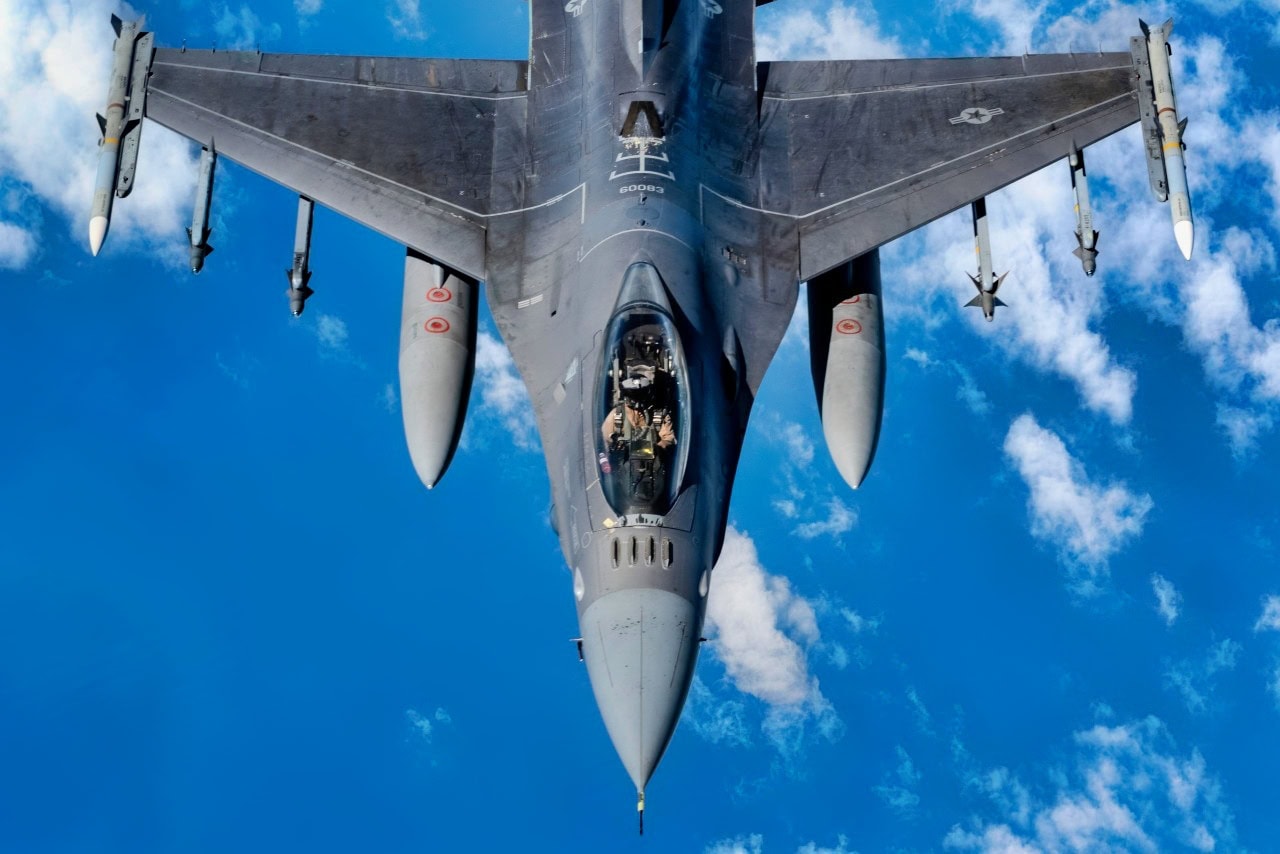
A U.S. Air Force F-16 Fighting Falcon flies a presence patrol over the U.S. Central Command area of responsibility, Feb. 23, 2025. Fighting Falcons fly routine patrols over the AOR to deter aggression and bolster the regional defensive posture. (U.S. Air Force photo by Staff Sgt. Jackson Manske)
Ukraine is Beyond Losing at this Point
The last few months have definitively ended this line of argument. Russia can still take territory at an extraordinary cost. But it cannot take enough to coerce Ukraine into surrender. Or rather, it cannot without measures – like a mass mobilization of ethnic Russians or the use of nuclear weapons – which would create even greater risks than the current battlefield stalemate.
The front is effectively frozen. Russia has not broken through in four years and has no new ideas to do so in the next four. The Ukrainian campaign to strike Russian fuel infrastructure and isolate Crimea is grinding away.
Neither will bring a Russian collapse, but they are incrementally driving up the cost of continuing the war. As Phillips O’Brien has noted, these efforts are months along, and Russia still has no counterstrategy or feasible defense. Fuel shortages and rationing are spreading across Russia, and Putin’s ability to keep Crimea supplied is narrowing.
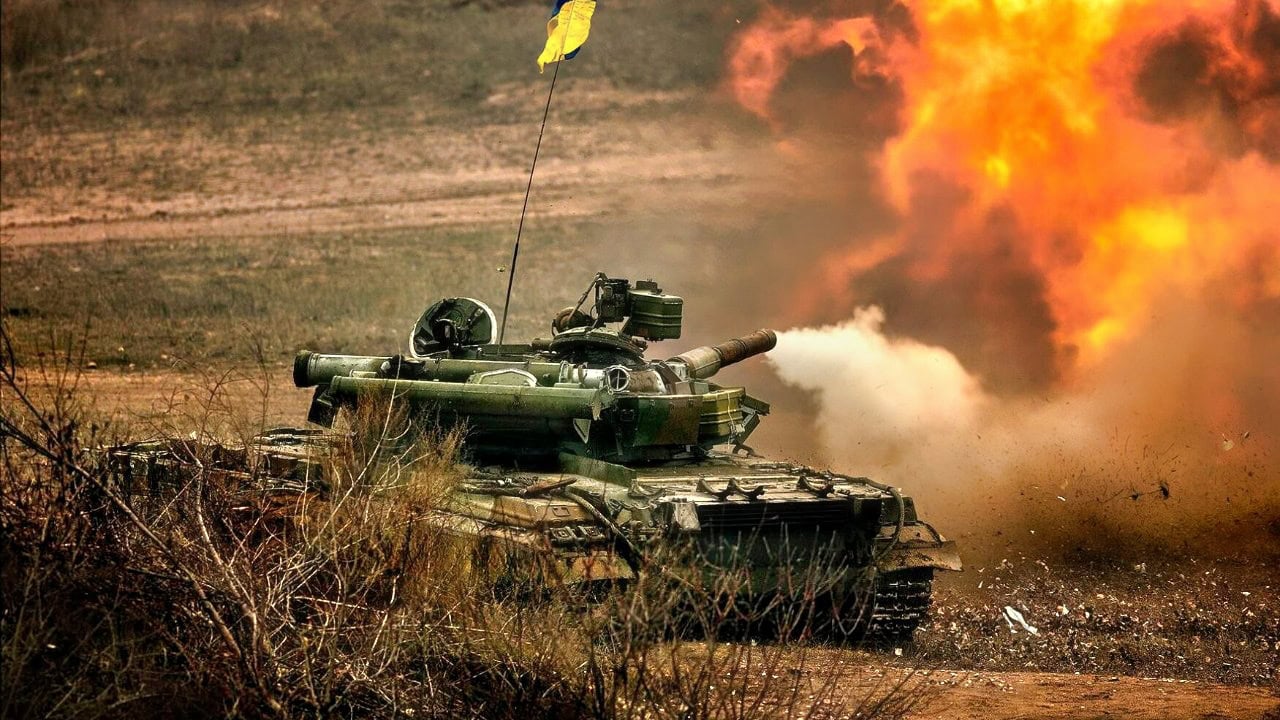
Ukraine tanks fighting. Image Credit: Creative Commons.
This may not win the conflict for Ukraine, but at this point, there is little doubt that Russia cannot win. Ukraine is turning into another of Russia’s frozen conflicts. But where most of those are contained and limited, this conflict is spreading across Russia by air and absorbing a staggering amount of resources which Moscow could use to modernize its economy to compete with the far wealthier countries it sees as its peers – the US, Europe, China – but behind whom it now badly lags.
Russia’s Options
The war has been stalemated for years and is now tilting slowly toward Ukraine. Putin could escalate. But mobilizing Russian society en masse would bring home the war to ethnic Russians in a way not yet felt. Putin has purposefully fought the war with non-Russian nationalities, foreigners, mercenaries, and so on to shield his ethnic Russian domestic political base from the war.
Drafting that largely untouched middle class would generate a huge new army, but the political risk would be enormous, which is why Putin has demurred for years. It is also unclear if a huge new infantry force would really tilt the scales at this late date. The front is now extremely dangerous for infantry. Russian ‘meat attacks’ have not worked for years. It is unclear why or how they would do so after full-scale mobilization.
Similarly, Putin could escalate to nuclear weapons. But this carries enormous risks. China, India, and the US, which have all tilted toward Russia in the war, would pull back. Europe would strongly consider entering the war directly and would almost certainly dramatically increase aid to Ukraine. Unless nukes delivered a quick knock-out blow, the war would continue. The only way to deliver such a knock-out blow would be to strike a Ukrainian city with a high-yield weapon. The global political blowback from that would be extreme.
Low-yield nukes on the battlefield might create gaps in the line of contact, but the lines are so entrenched and deep now that it is unclear if even a localized nuclear blast would be enough.
The time for Putin to use nukes was in 2022, when the lines were still fluid. If he escalated like this now, he would have to go big. And the bigger the warhead used, the greater the global political risk.
Stalemate or Negotiate
The war, which has been fought for the last 3.5 years, is a stalemate.
Russia has no new ideas or techniques to break through, besides the genuinely extreme measures discussed above, which it has rejected for years. Tolerating the war as an indefinite stalemate – yet another unending, frozen conflict on Russia’s border – is a poor option too. This conflict is far bigger and costlier than a typical Russian intervention.
The Ukraine war is, as Mikhail Gorbachev said of the Soviet-Afghan war in the 1980s, a ‘bleeding wound.’ It is a huge drain on Russia and its ability to compete with far more important countries like China and the US.
That leaves negotiation as Putin’s final option. At this point, he might still get concessions from Ukraine regarding Crimea. But the longer he waits, the worse the terms will be.
Author: Dr. Robert Kelly, Pusan National University
Dr. Robert E. Kelly is a professor of international relations in the Department of Political Science and Diplomacy at Pusan National University in South Korea. His research interests focus on Security in Northeast Asia, U.S. foreign policy, and international financial institutions. He has written for outlets including Foreign Affairs, the European Journal of International Relations, and The Economist, and has appeared on television news services such as the BBC and CCTV. His personal website/blog is here; his Twitter page is here.