
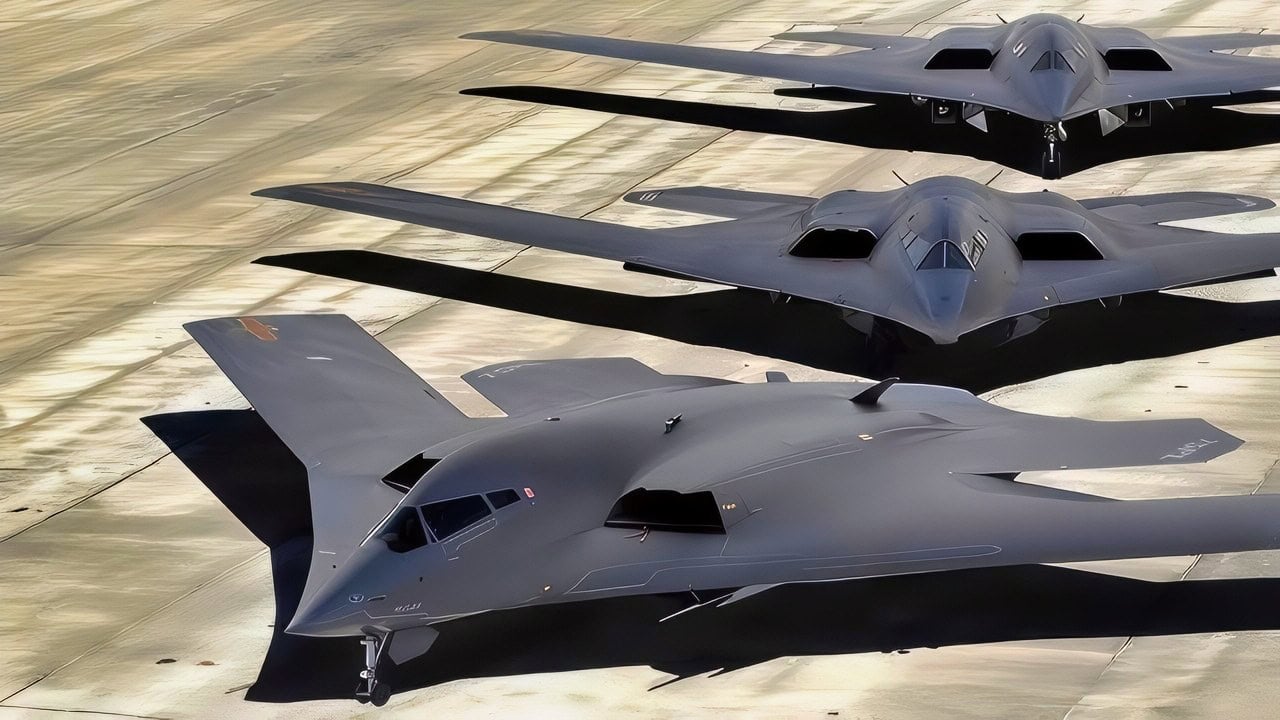
The Xi’an H-20 has been “coming soon” since 2016. Chinese officials teased it for a 2019 parade that came and went without a sighting, hinted at a maiden flight in 2022 that never materialized, and by 2025 had quietly pushed the official timeline into the 2030s. Western coverage has largely settled into a single storyline: China is struggling to build a stealth bomber, and the delays reveal shortcomings in stealth coatings, engines, and industrial capacity.
All of that may be true. But it answers a question that might be the wrong one.
Instead of asking why China cannot seem to finish the H-20, it is worth asking why Beijing would be in a hurry to.
China Already Holds Guam at Risk, Without a Bomber
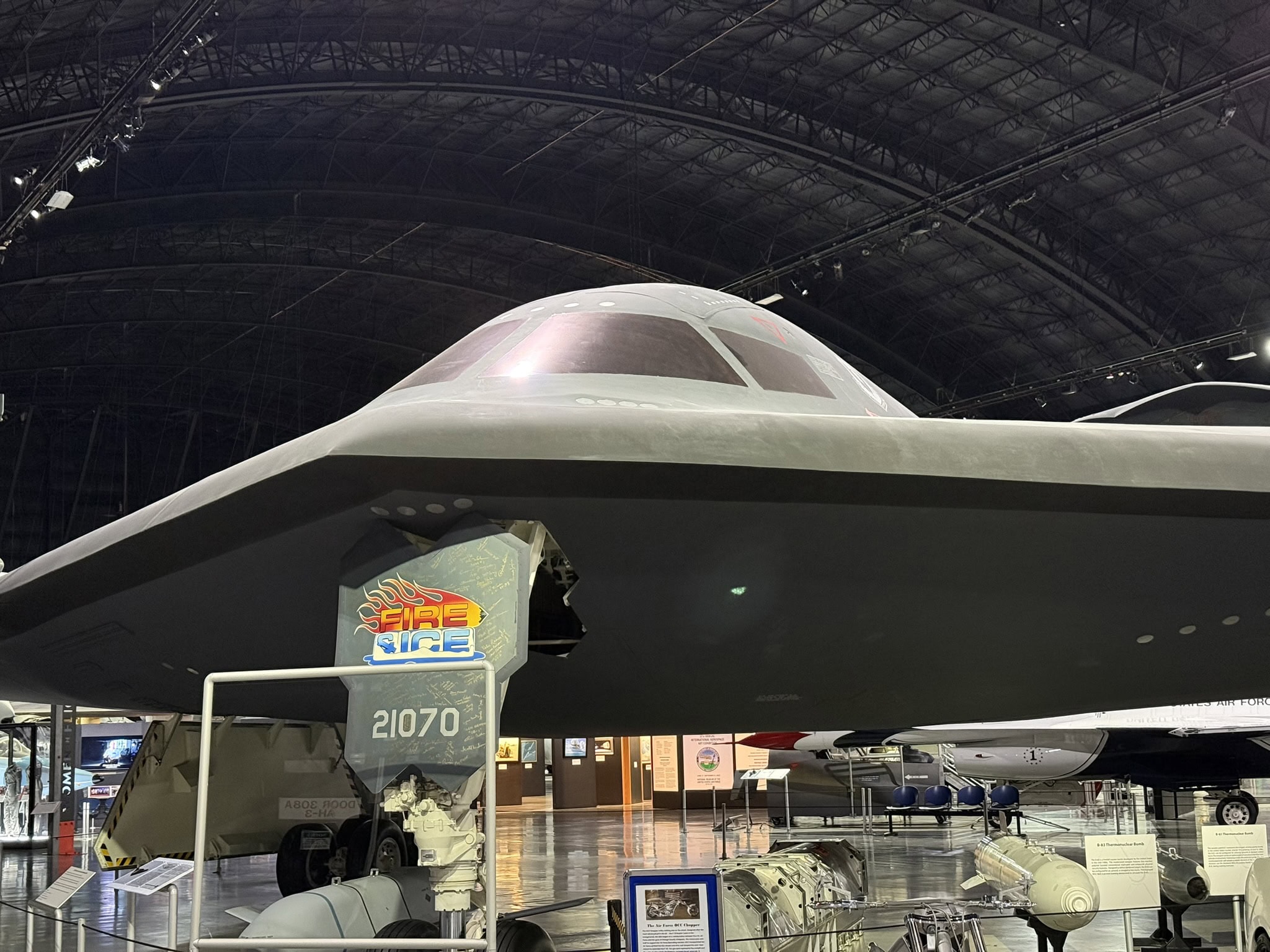
B-2 Spirit Stealth Bomber. 19FortyFive.com Photo from National Museum of the U.S. Air Force Visit in 2025.
The core mission of an American-style penetrating stealth bomber is to fly deep into defended airspace and destroy high-value targets. For the United States, that means reaching adversaries thousands of miles away. For China, the most important targets in a Pacific war are much closer, and Beijing can already hit them without risking a single aircraft over enemy defenses.
China’s military is built around what analysts call an anti-access and area-denial strategy, and its centerpiece is a vast arsenal of land-based missiles. The DF-21D “carrier killer” threatens warships out to the First Island Chain, and the DF-26 “Guam Killer,” a road-mobile intermediate-range missile with a reach of roughly 4,000 to 5,000 kilometers, can strike the American strategic hub at Guam itself. These missiles are cheap relative to a bomber; they can be hidden and moved on trucks, and there is no reliable way to shoot all of them down.
That entire missile architecture was, as regional analysts note, developed precisely to counter American carriers and long-range bombers, holding US forces at arm’s length rather than punching through their defenses.
In other words, the target set a penetrating bomber would exist to service, US bases and ships across the Western Pacific out to the Second Island Chain, is already covered by the missile force. And for standoff strikes that do call for aircraft, China’s existing H-6 bombers already lob long-range cruise missiles from well outside enemy air defenses, no stealth required. A jet that flies into contested airspace to drop bombs solves a problem China has largely engineered around.
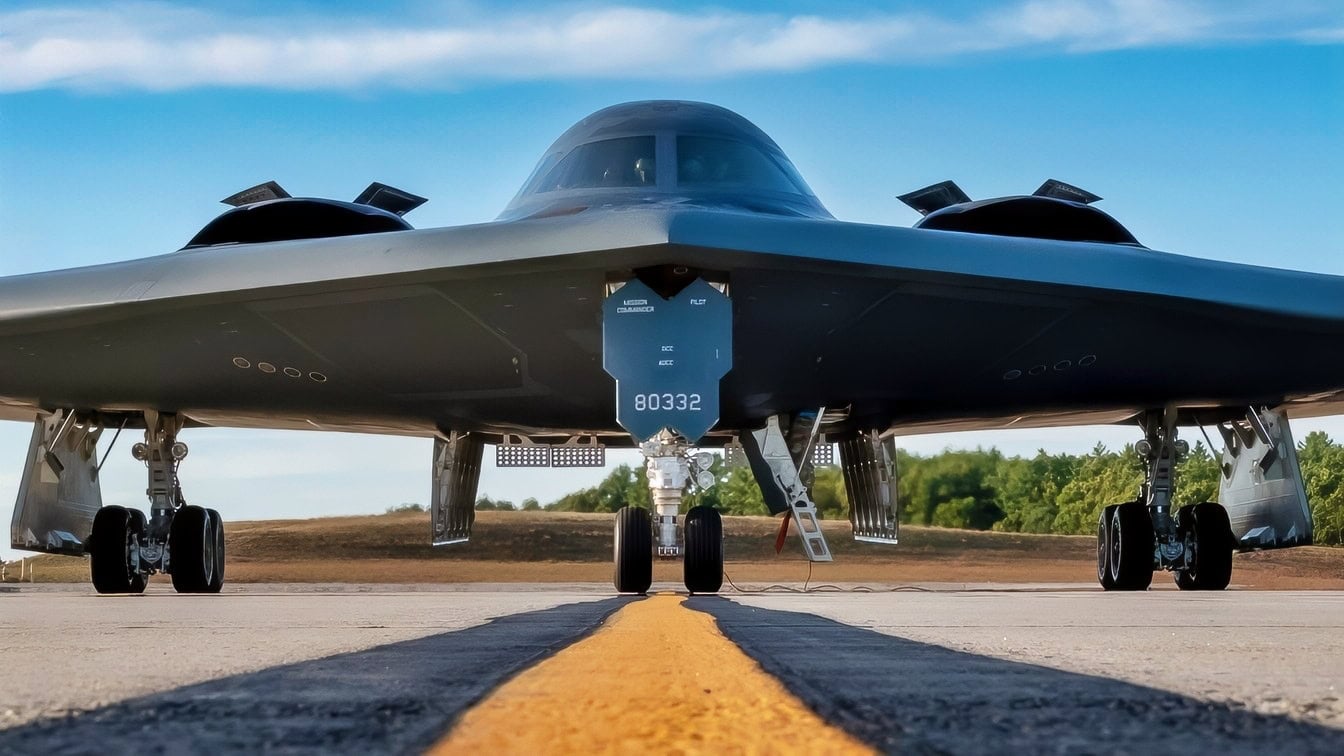
A U.S Air Force B-2 Spirit aircraft is shown on the flight line at Pease Air National Guard Base, New Hampshire, Sept. 20, 2025. The aircraft is the first operated by the 509th Bomb Wing to land at Pease ANGB, formerly Pease Air Force Base, since the 509 BW, formerly 509th Bombardment Wing, was stationed at Pease AFB and the active-duty base closed nearly 35 years ago. The lineage of the 509th BW traces back to the World War II Era when the 509th Composite Group dropped the atomic bombs on Japan. (U.S. Air Force photo by Staff Sgt. Joshua Hastings)
The Continental Power and the Maritime Power
This is where the comparison to the American B-2 and B-21 quietly falls apart. The United States builds penetrating bombers because of its geography and its strategy. It is a maritime power that must project force across oceans, striking enemies on the far side of the planet, and only a long-range, survivable aircraft can do that on short notice. Washington’s problem is reach.
China’s problem is the opposite. It is a continental power fighting in every scenario it actually plans for, close to home, over Taiwan, in the South China Sea, and in the seas within the First Island Chain. Its strategy is not to project power across the Pacific but to deny the United States the ability to operate freely near Chinese shores. For that mission, a fleet of land-based missiles and shorter-legged aircraft operating under China’s own defensive umbrella is not a poor substitute for a stealth bomber. It is arguably a better fit.
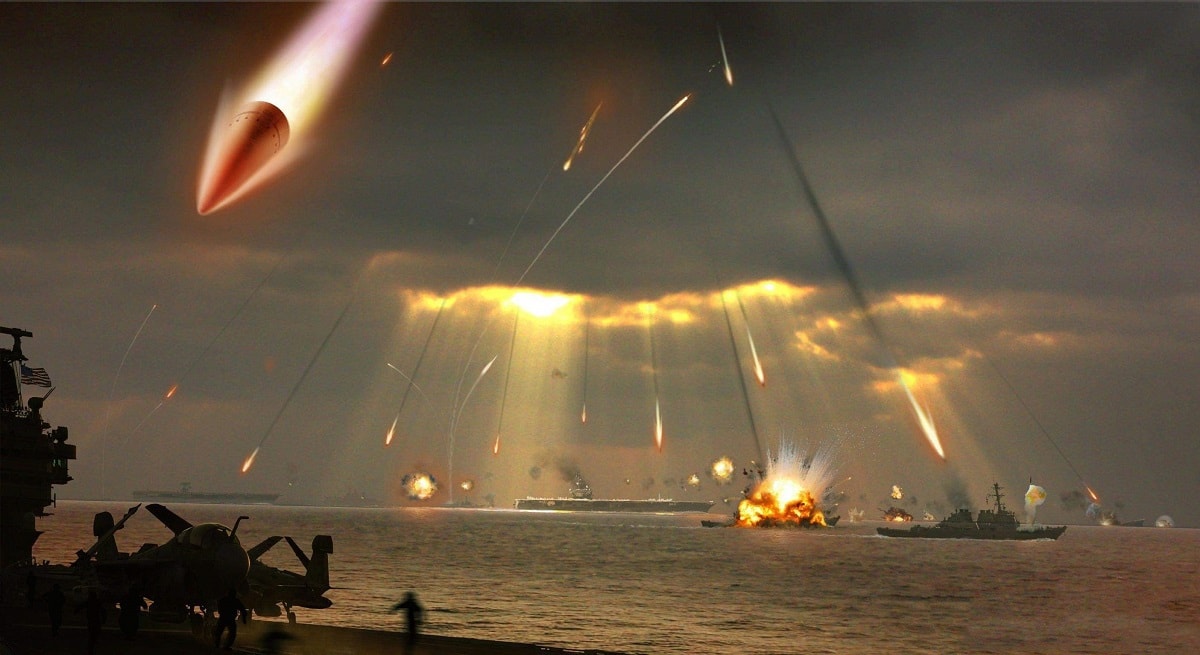
Depiction of Chinese missiles attacking the U.S. Navy. Image: Chinese Internet.
The B-2 was designed to fly one-way strategic missions deep into the Soviet Union; China simply is not planning the kind of war that requires the same tool. The large new J-36, the tailless heavy jet that has been flying test sorties since late 2024, reinforces the point: a big regional strike aircraft that sits between a fighter and a bomber can absorb part of whatever penetrating-strike role China does want, without a dedicated intercontinental bomber.
A Strategic Deterrent That Doesn’t Depend on the Air
The second rationale usually offered for the H-20 is nuclear: the bomber would complete China’s nuclear triad, giving it a survivable air-based leg to sit alongside its land and sea forces. That is real, but it is also the weakest of the three legs and the one China has treated as the lowest priority.
China’s nuclear deterrent rests overwhelmingly on land. The Federation of American Scientists assesses that Beijing continues to see its land-based intercontinental ballistic missiles as its most reliable and survivable nuclear force, and it is those silo fields and road-mobile launchers, not bombers, that anchor the deterrent. The sea leg, a force of six ballistic-missile submarines, is significantly less capable, and the air leg is newer and thinner still. China only fielded a nuclear-capable bomber, a modified version of the 1950s-vintage H-6, around 2020, and analysts describe the resulting triad as “nascent.”
One assessment memorably called China’s triad a one-legged giant, leaning heavily on its missiles because the other two legs remain immature.
Crucially, China’s deterrent works without a stealth bomber. For most of the nuclear age, only the United States and Russia have bothered to sustain a full, robust triad at all; other nuclear powers, including Britain, get by with fewer legs.
China’s growing ICBM force and its emerging submarine fleet already provide the assured retaliation its no-first-use posture requires. When Beijing paraded its strategic forces in September 2025, the systems it chose to show off as the guardians standing watch were its land-based missiles, not a bomber, which it does not yet have.
A stealth aircraft would strengthen the air leg, but nothing in China’s deterrent would collapse without it.
What the H-20 Would Still Buy China
None of this means the H-20 is pointless, and it would be a mistake to jump to that conclusion. There are real reasons China wants the aircraft, which is why it keeps working on it.
A stealth bomber offers things missiles cannot. Unlike a ballistic missile, which is committed the instant it is launched, a bomber can be sent, recalled, and redirected, giving leaders flexibility and control over escalation in a crisis. It adds a survivable second-strike option that complicates any adversary’s planning. Carrying air-launched missiles, an H-20 with aerial refueling could reach targets well beyond the Second Island Chain, out toward Hawaii and further, that China’s land-based missiles cannot easily touch, giving Beijing a measure of the global reach it has never had.
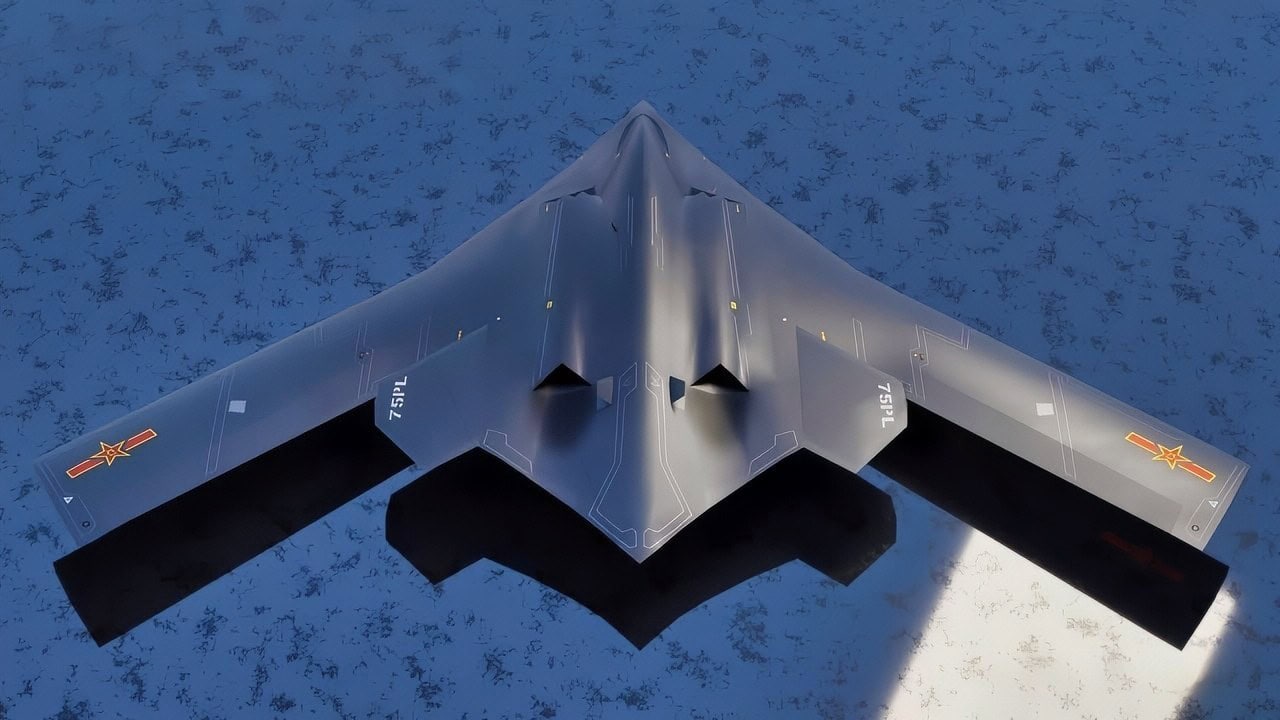
H-20 Bomber YouTube Screenshot Artist Rendering
A modern stealth bomber could also serve as a sensor and command node, helping close the long-range targeting gaps in China’s kill chain. And there is prestige: joining the United States as one of the only nations flying a modern stealth bomber is exactly the kind of great-power marker Beijing covets. “Does not need it urgently” is not the same as “does not want it,” and China clearly wants it.
The Case for Patience
Put those two halves together, and a different picture of the H-20 emerges. This is not necessarily the story of a program that China desperately needs and cannot deliver. It may be the story of a program China would like to have, is willing to fund, and feels no great pressure to rush, because the missions a stealth bomber would perform are either already handled by cheaper systems or are matters of prestige and long-term hedging rather than immediate necessity.
That framing explains the decade of drift at least as well as the engineering-failure narrative does, and probably better, since a country that has built the world’s most formidable missile force and is fielding sixth-generation fighters in record time is plainly not incapable of ambitious aerospace projects when it treats them as urgent.
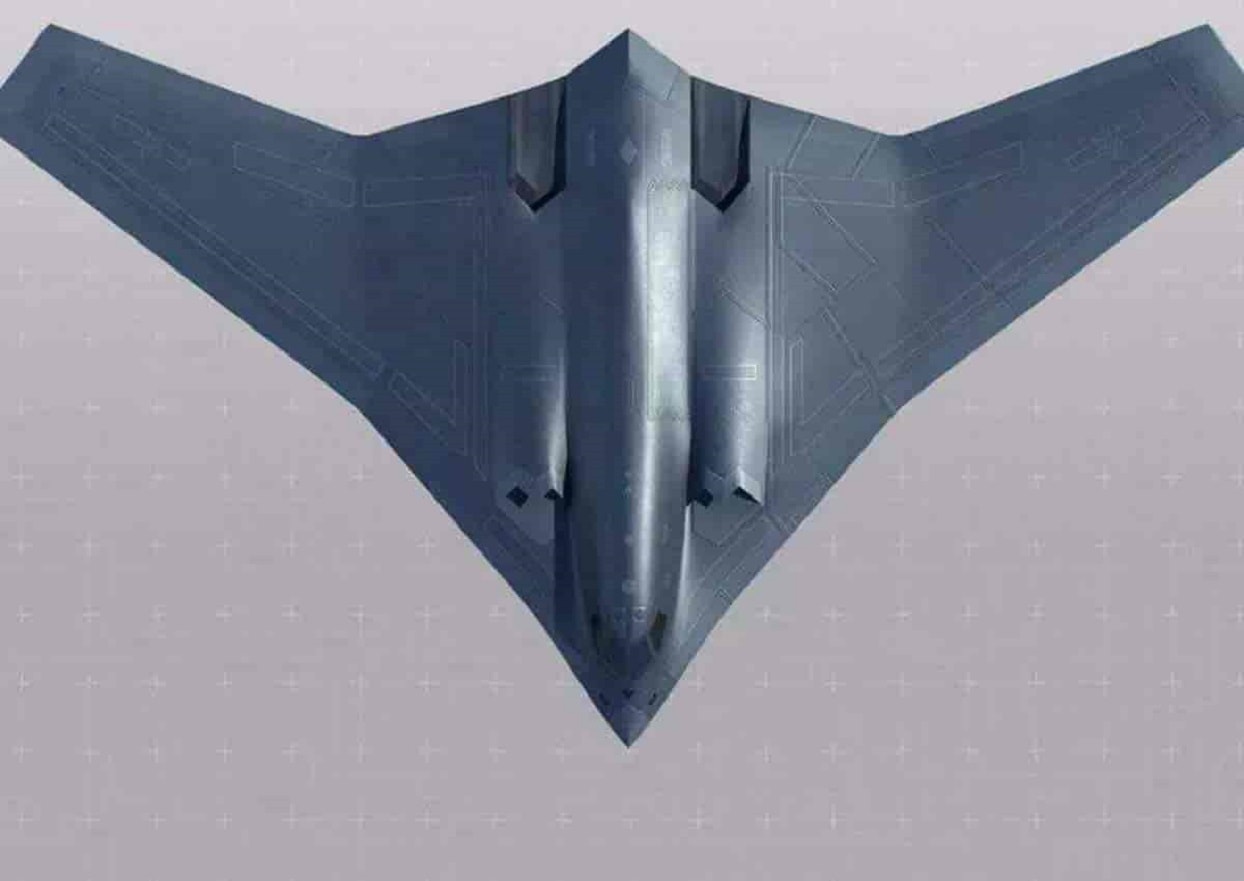
Image: Creative Commons.
The contrast with the United States sharpens the point. America is sprinting to field the B-21 Raider because its global strategy genuinely depends on a survivable penetrating bomber, and it is, for once, ahead of China in a major weapons category. But being ahead in a race only matters if both sides are actually running it.
If Beijing has quietly decided that a stealth bomber is a want rather than a need, then the H-20’s endless delay is not a sign that China is losing, but a sign that it is spending its energy where it thinks the fight will actually be.
The open question, and the one worth watching, is whether China’s slow pace on the H-20 reflects patience by design or genuine trouble it cannot solve. The answer matters because it tells us less about one aircraft than about what China believes it needs to win the war it is really planning to fight.
About the Author: Harry J. Kazianis
Harry J. Kazianis (@Grecianformula) was the former Senior Director of National Security Affairs at the Center for the National Interest (CFTNI), a foreign policy think tank founded by Richard Nixon based in Washington, DC. Harry has over a decade of experience in think tanks and national security publishing. His ideas have been published in the NY Times, The Washington Post, The Wall Street Journal, CNN, and many other outlets worldwide. He has held positions at CSIS, the Heritage Foundation, the University of Nottingham, and several other institutions related to national security research and studies. He is the former Executive Editor of the National Interest and the Diplomat. He holds a Master’s degree focusing on international affairs from Harvard University.