
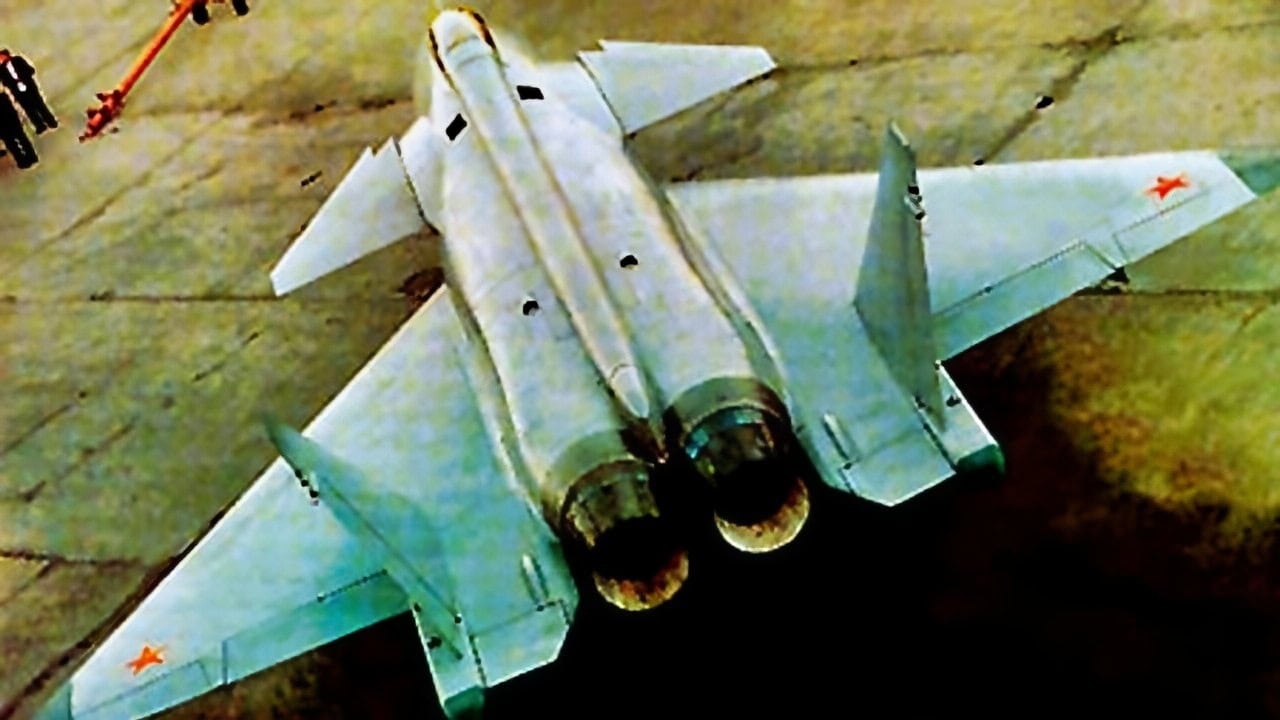
Summary and Key Points: Russia’s MiG 1.44, the jet photographed at air shows as the country’s canceled stealth fighter, was never the fighter at all. The Mikoyan design bureau built it as a technology demonstrator for the MFI program’s production aircraft, the 1.42, a fifth-generation rival to the American F-22 that NATO codenamed Foxglove, but that was never constructed. Russia’s treasury canceled the program in 1997, three years before the demonstrator’s first flight on February 29, 2000, and the design lost the 2002 PAK FA competition to the Sukhoi proposal that became the Su-57. The flying career of the effort totaled two flights and less than an hour aloft, and the demonstrator now stands as a museum piece at MAKS.
Meet the MiG 1.44: An Introduction
MiG 1.44 Fighter from Russia. Image Credit: Creative Commons.
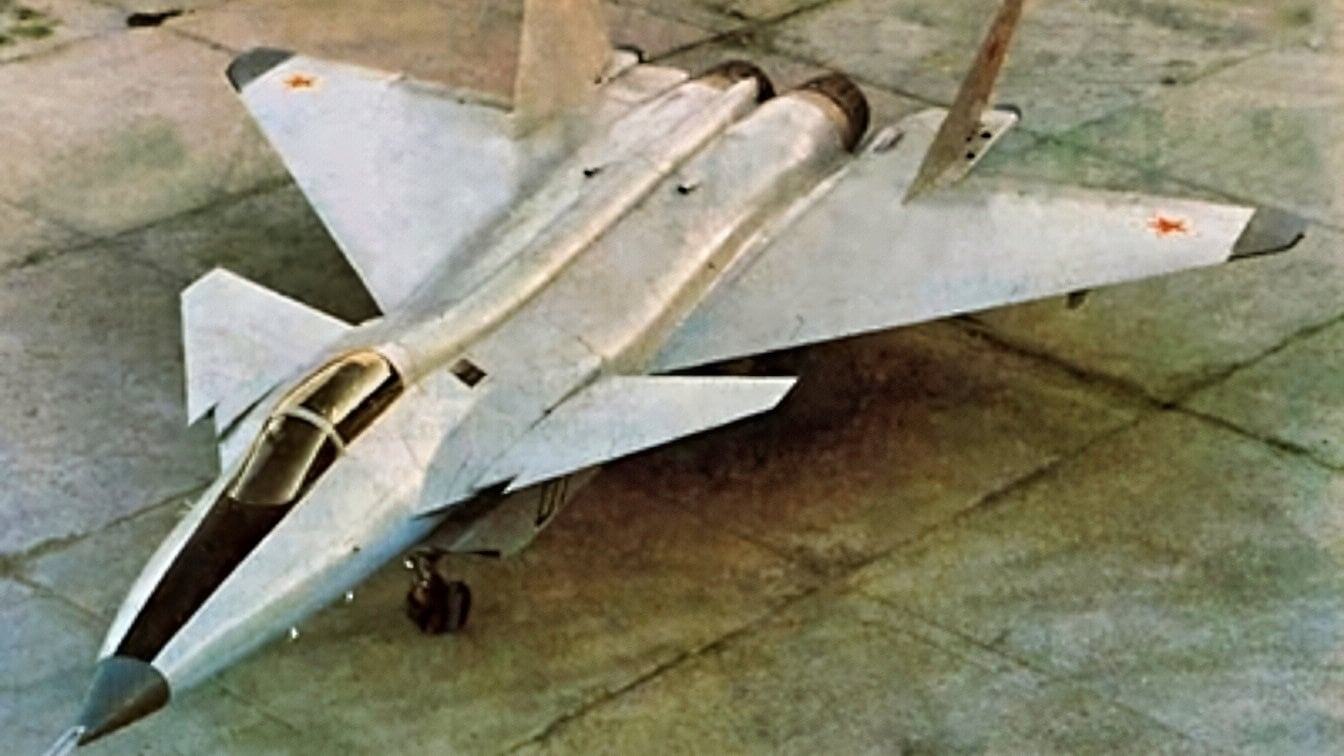
MiG 1.44 Russian Fighter. Image Credit: Creative Commons.
On the morning of February 29, 2000, a date that exists once every four years, test pilot Vladimir Gorbunov lifted a huge canard-delta fighter off the runway at Zhukovsky and kept the landing gear down the entire time.
Flight International’s contemporaneous report recorded an 18-minute hop to 3,300 feet in which the jet “twice circled Zhukovsky with the undercarriage down” at under 400 miles an hour, a flight originally scheduled for March 1999 and arriving, by the program’s first timetable, nine years late.
The engineers watching from the ground were not, strictly speaking, watching Russia’s fifth-generation fighter fly. They were watching its stunt double, and the fighter it was doubling for had been officially dead since 1997.
Almost everything commonly said about the “MiG 1.44” runs through that misunderstanding, which is worth untangling, because the true story is stranger than the legend.
Defense History: Foxglove and Flatpack — One Fighter, Two Airplanes, One Never Built
The program behind the jet was the MFI, the Multifunctional Frontline Fighter, born of the Soviet I-90 requirement in 1983 as the direct answer to the American Advanced Tactical Fighter effort that produced the F-22.
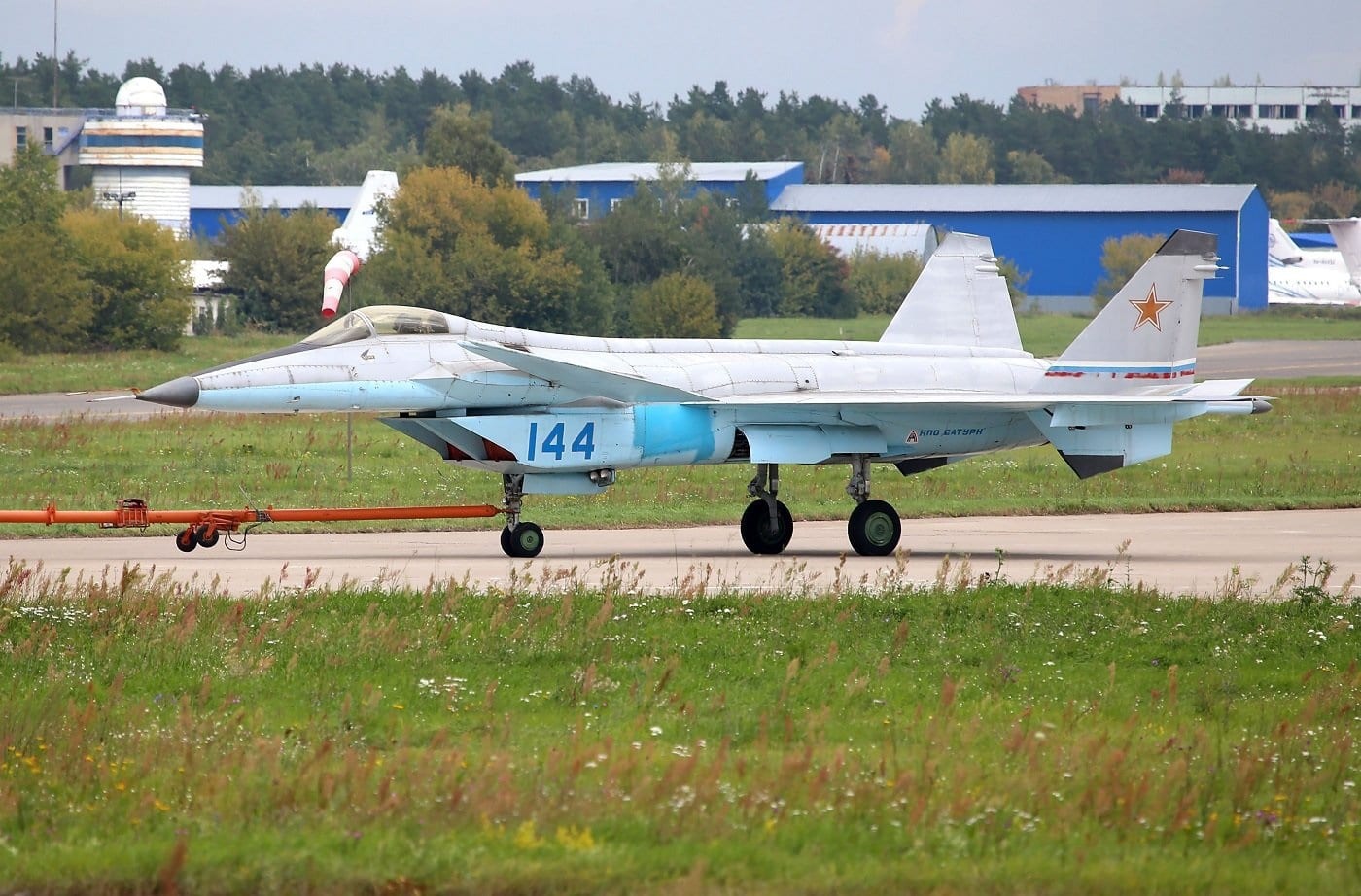
MiG 1.44. Image: Creative Commons.
The production aircraft carried the internal designation 1.42: a big multirole machine, over 70 feet long, roughly nine feet longer than a Raptor, designed around two thrust-vectoring AL-41F turbofans, controllable at angles of attack up to 60 degrees, with design targets that read like a wish list: a radar intended to track 40 targets and engage 20, an anticipated dozen internal hardpoints beneath radar-absorbent skin, and a claimed radar cross-section under 0.3 square meters, with Russian sources asserting a further hundredfold reduction via an experimental plasma screen.
NATO took the design seriously enough to assign the production fighter its own reporting name, “Foxglove” — a formal alliance codename for an airplane that never existed. The thing that actually got built was the 1.44, NATO’s “Flatpack”: an aerodynamic technology demonstrator, stripped of the weapons bay and much else, whose job was to prove the layout so the real fighter could follow.
The real fighter never followed.
Aerospace Development: Half-Tonne Models Over the Steppe, Then Six Years of Silence
The design campaign itself was serious, secret, and inventive. Before any prototype existed, Mikoyan proved the radical canard-delta by dropping half-tonne radio-controlled glider models from helicopters, with one account of the program describing the drops as timed between American reconnaissance-satellite passes, the models retrieved from the steppe before the next overflight.
Construction of the demonstrator began in 1989, with the Soviet Union already two years from its end, and the airframe was rolled out in early 1994, with taxi trials at Zhukovsky that same year.
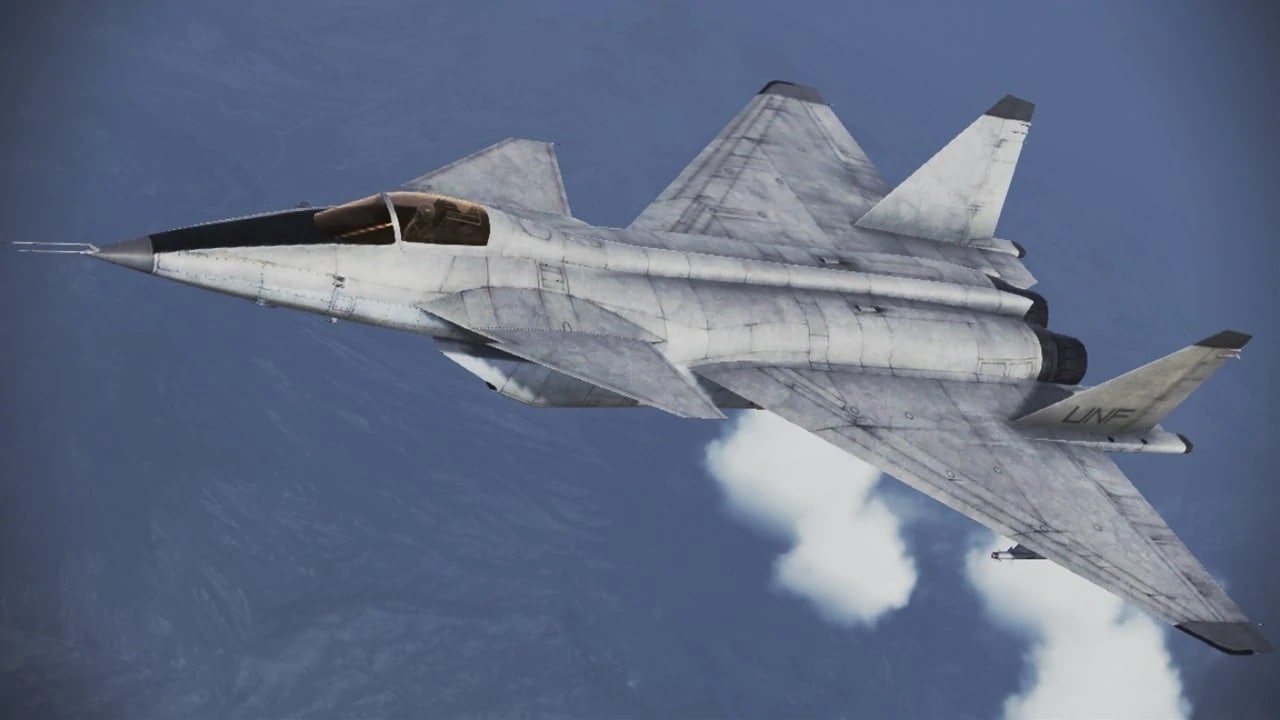
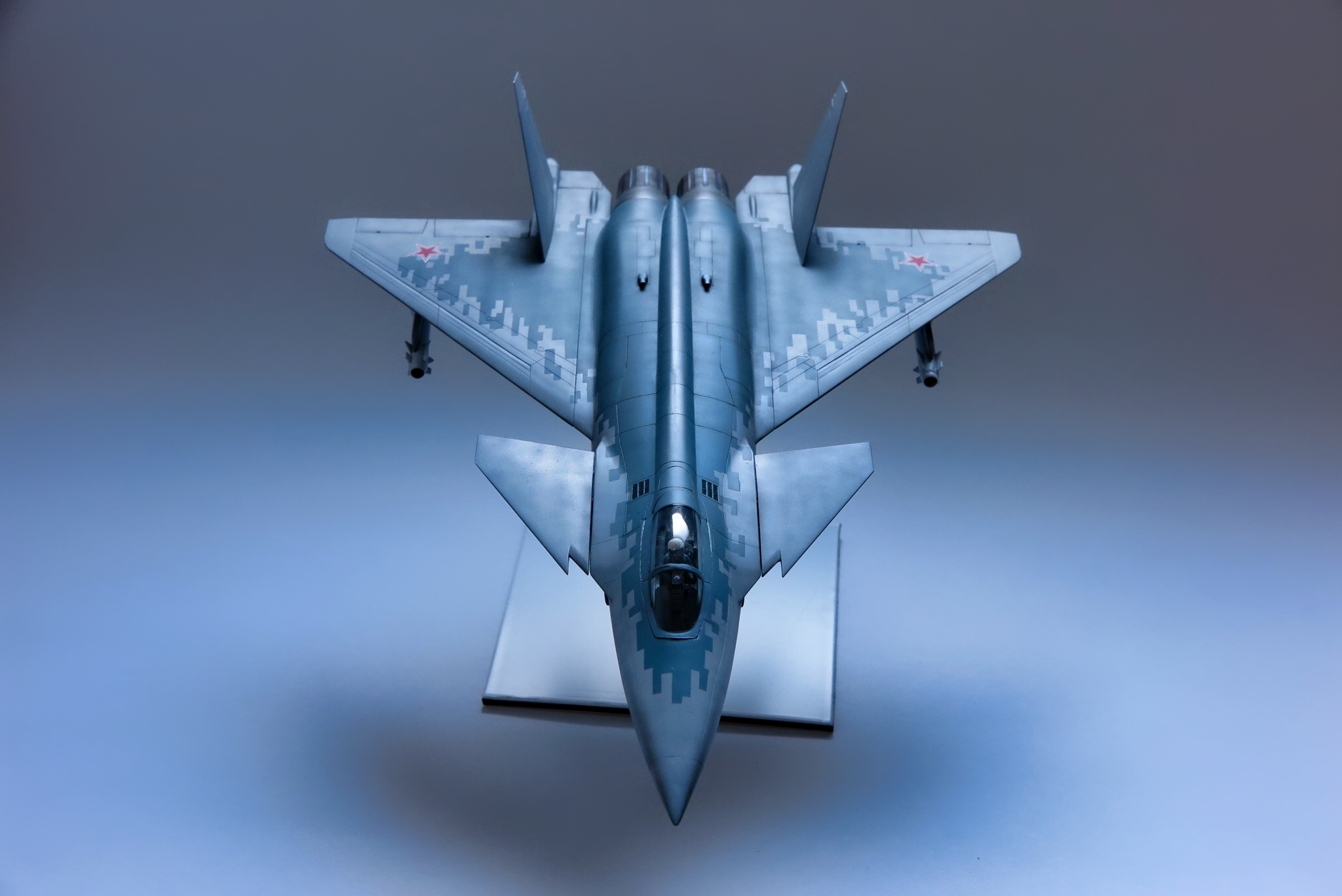
MiG 1.44 computer generated image of possible configuration.
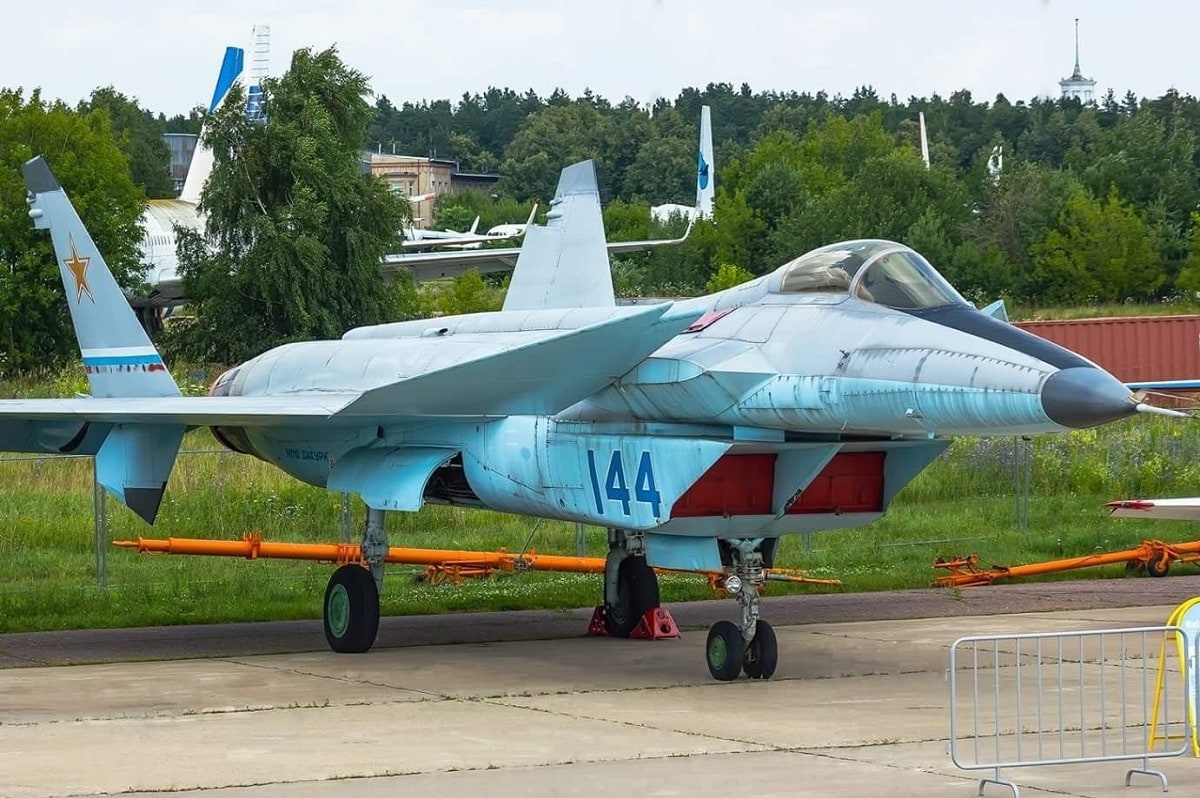
MiG 1.44. Image: Creative Commons.
Then came the silence: no fuel money, no flight clearance, no funding line. The finished prototype sat on the ground for six years. The treasury formally refused the program money in 1995, and two years later the MFI was canceled outright as unaffordable — the production 1.42, the actual fighter, killed on paper while its demonstrator still waited for a first flight that no longer had a purpose.
When Russia finally unveiled the aircraft to the world in January 1999, the program it represented had already been dead for two years, a fact the unveiling did not dwell on.
The Two Flights of a Dead Fighter
Seen against that timeline, the famous first flight becomes more like a wake. The leap-day hop was gentle by design: gear down, subsonic, low altitude, a demonstrator being babied around the pattern. A second flight followed on April 27, 2000, lasting 22 minutes, after which Gorbunov described the big jet as docile — and then the documented record simply stops, with scattered reports of further hops in 2001 that never firmed up.
The entire flying career of Russia’s F-22 rival amounts to two flights and well under an hour aloft, none of it supersonic, none of it with the gear retracted in anger.
The design then died a second time, on merit rather than money. When the Defense Ministry launched the PAK FA program in 2002 to produce the fifth-generation fighter Russia still lacked, Mikoyan came back to the table with an updated derivative of the MFI and lost the competition to Sukhoi, whose winning design became the Su-57. The 1.42 is likely the only fighter concept to be canceled by its country once for being unaffordable and then again, five years later, for being second-best: buried in 1997 by the treasury and in 2002 by the jury.
Fleet That Never Was: Four Skeletons in Nizhny Novgorod
What remained was scattered across two cities. The flying demonstrator sat outdoors at the Gromov Flight Research Institute for years, weathering in the open, until MiG announced in December 2013 that it would be mothballed into a hangar; it was at that moment that Russian industry reporting noted four airframes of the program, never completed, still at the Sokol plant in Nizhny Novgorod, with RSK MiG declining to comment on their fate. The skeletons of the fighter that never existed, in other words, outlasted the program by a decade in a factory on the Volga, while elements of the design work were believed to be folded into Mikoyan’s later light-fighter studies.
The demonstrator itself received the gentlest possible ending: restoration and rollout for public display at the MAKS 2015 air show, where it has served ever since as a museum piece for an aircraft that history books persistently misidentify.
The Copy That May Not Be: What the J-20 Owes the Flatpack
No account of the 1.44 escapes the China question, and honesty requires holding it at arm’s length.
When China’s J-20 broke cover in 2010 with canards ahead of a delta wing and canted twin tails, Russian state-media commentators declared the resemblance to the 1.44 no coincidence, and Western analysts noticed too — the IISS’s Douglas Barrie observed of the two jets’ shared layout, “If it’s a coincidence, it’s a striking one.” Mikoyan denied transferring anything to Chengdu, and the sober reading cuts both ways: canard-delta stealth solves a real aerodynamic problem in ways any competent bureau might converge on, while the documentation-sale rumors from Mikoyan’s most financially desperate decade have never been substantiated.
What is certain is only the irony: the layout Russia proved with helicopter-dropped models over the Kazakh steppe and then abandoned now flies operationally in the hundreds, wearing another country’s roundel, on a fighter whose paternity remains politely disputed.
Which leaves the display aircraft, photographed by air-show crowds as “the MiG 1.44, Russia’s canceled stealth fighter.” Nearly every word of the caption is off. It is not the fighter; it is the fighter’s stand-in. The fighter itself was never built, though NATO named it and its unfinished bones reportedly sat for years in Nizhny Novgorod.
And it was not so much canceled as pre-deceased — killed three years before its own first flight, flown twice anyway, beaten once more in 2002 by the rival that became the Su-57.
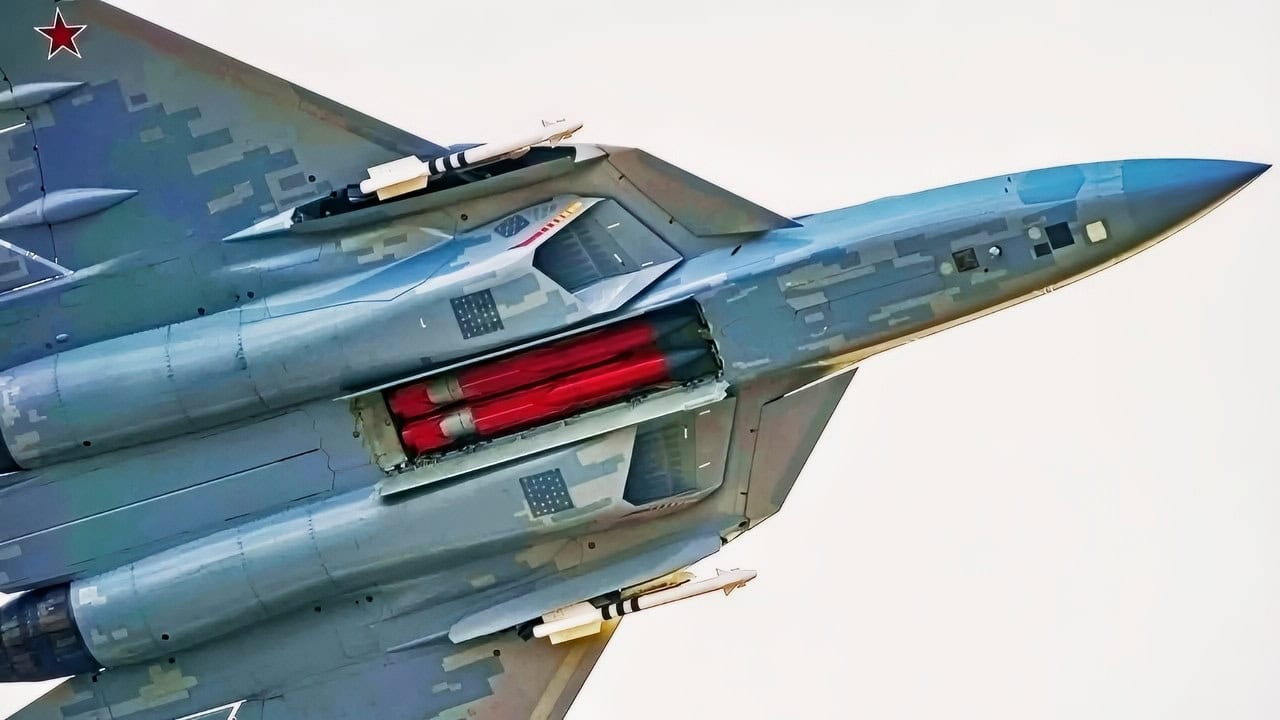
Su-57 Felon Fighter UAC Stock Photo.
The most famous Russian stealth fighter of its generation is a museum exhibit standing in for an airplane that never existed. As epitaphs for the post-Soviet 1990s go, aviation never wrote a better one.
About the Author: Harry J. Kazianis
Harry J. Kazianis (@Grecianformula) was the former Senior Director of National Security Affairs at the Center for the National Interest (CFTNI), a foreign policy think tank founded by Richard Nixon based in Washington, DC. Harry has over a decade of experience in think tanks and national security publishing. His ideas have been published in the NY Times, The Washington Post, The Wall Street Journal, CNN, and many other outlets worldwide. He has held positions at CSIS, the Heritage Foundation, the University of Nottingham, and several other institutions related to national security research and studies. He is the former Executive Editor of the National Interest and the Diplomat. He holds a Master’s degree focusing on international affairs from Harvard University.

