
On 18 March 1965, the Soviet Union sent Alexei Leonov outside Voskhod 2, giving humanity its first spacewalk. For a few minutes, the mission looked like a clean Space Race victory. Leonov floated outside the spacecraft, tethered, while the Earth moved below him.
Then the engineering problem began.
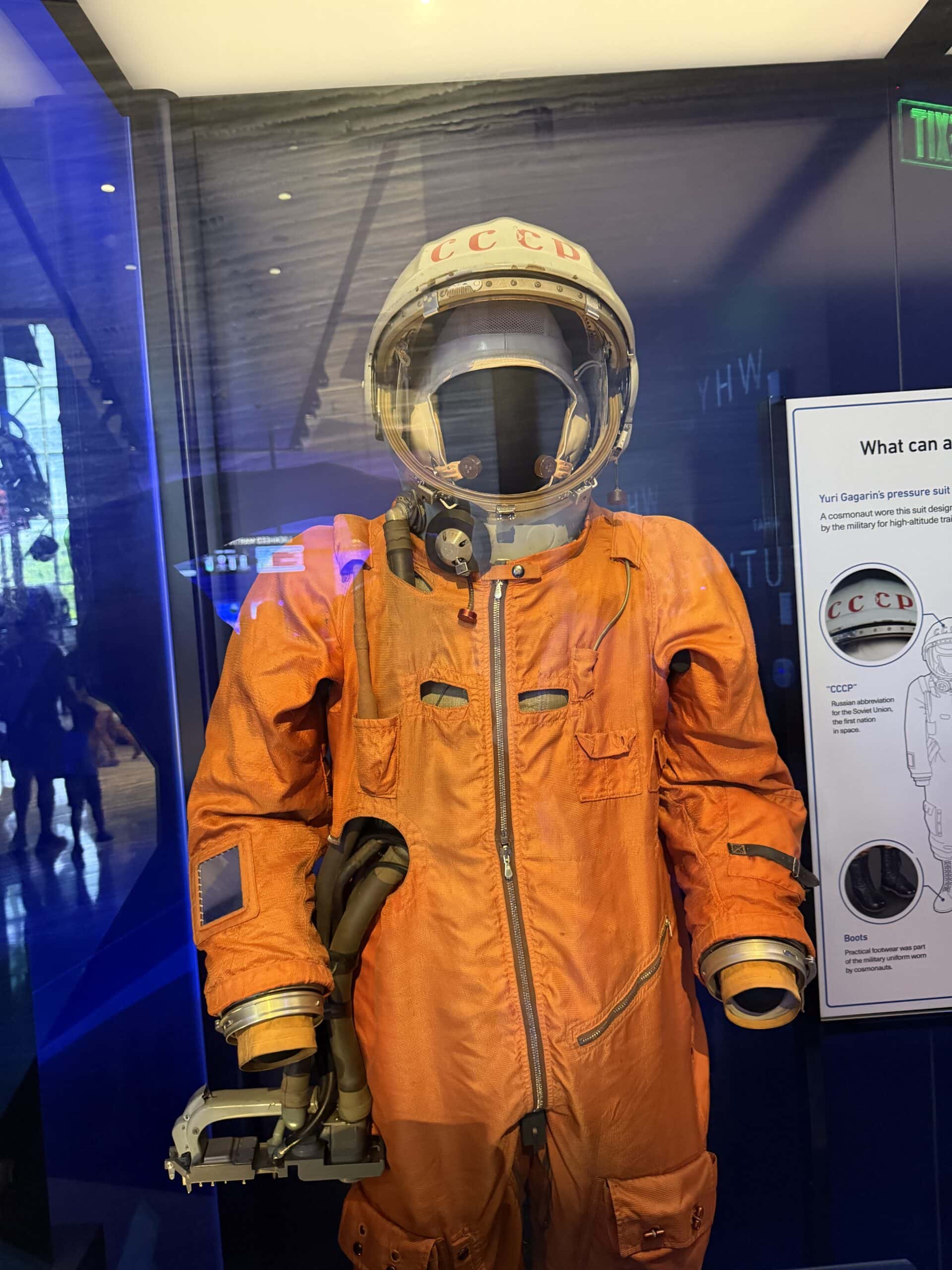
Soviet Space Equipment. Smithsonian Exhibit in Washington, DC. 19FortyFive Image.
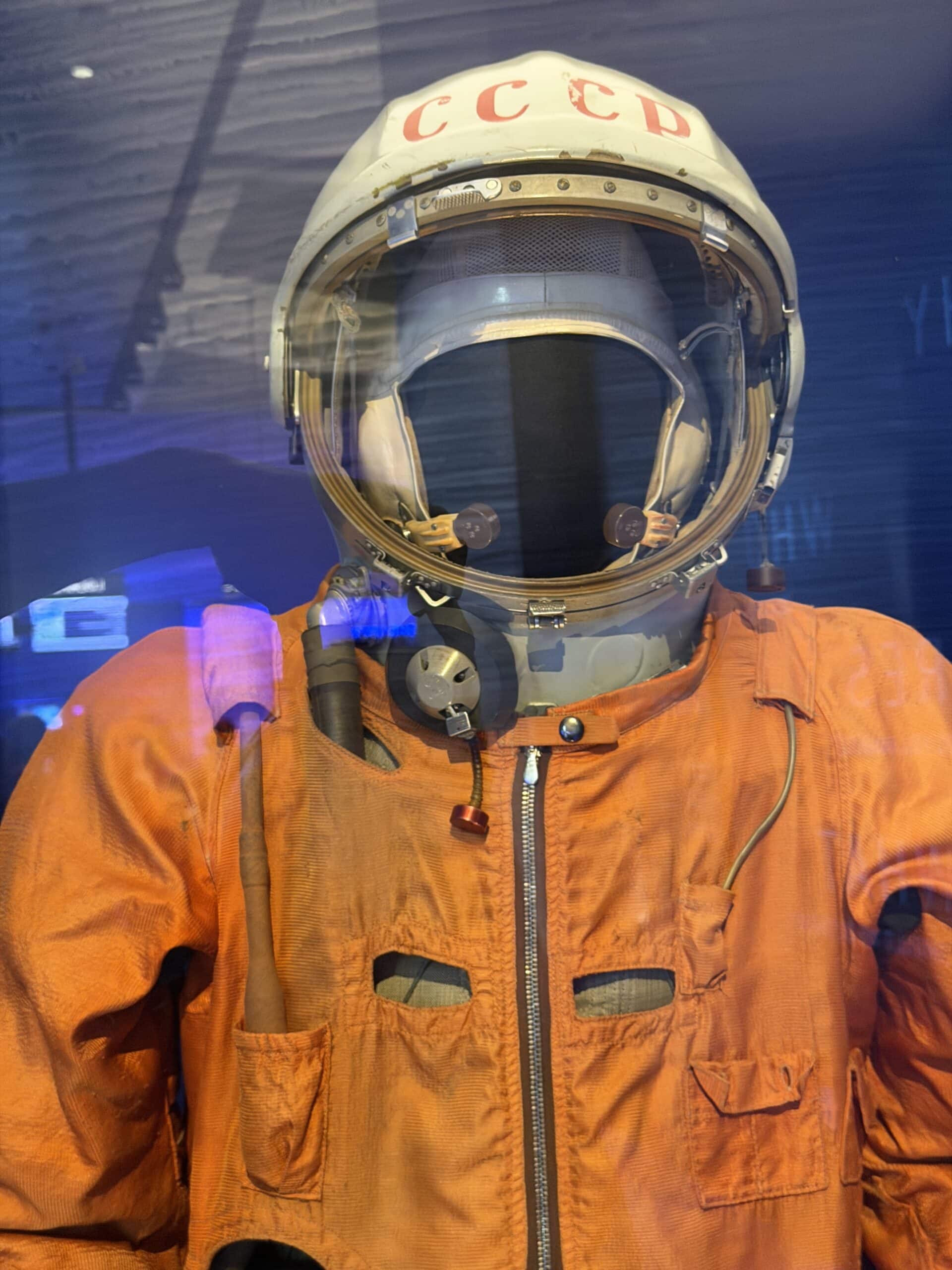
Soviet Space Equipment. Smithsonian Exhibit in Washington, DC. 19FortyFive Image.
Leonov’s spacesuit stiffened in a vacuum. The pressure inside the suit made it hard to bend, move, and return through the narrow inflatable airlock attached to Voskhod 2. To get back inside, Leonov had to lower the pressure in his suit. The first spacewalk became a triumph, but only after the first human to step into open space solved a problem no human had ever faced before.
The Soviet Union Wanted The First Spacewalk Before NASA
Voskhod 2 was part of the Soviet Union’s effort to keep its lead in the early Space Race. Yuri Gagarin became the first human in space in 1961. Valentina Tereshkova became the first woman in space in 1963. The next milestone was sending a human outside a spacecraft.
The crew was small: mission commander Pavel Belyayev and pilot Alexei Leonov. Leonov was a Soviet Air Force pilot, an artist, and one of the original figures of the Soviet human spaceflight program. The Smithsonian’s National Air and Space Museum notes that he became the first person to walk in space on March 18, 1965, and that he remained outside Voskhod 2 for just over 12 minutes, as shown in footage credited to NASA.
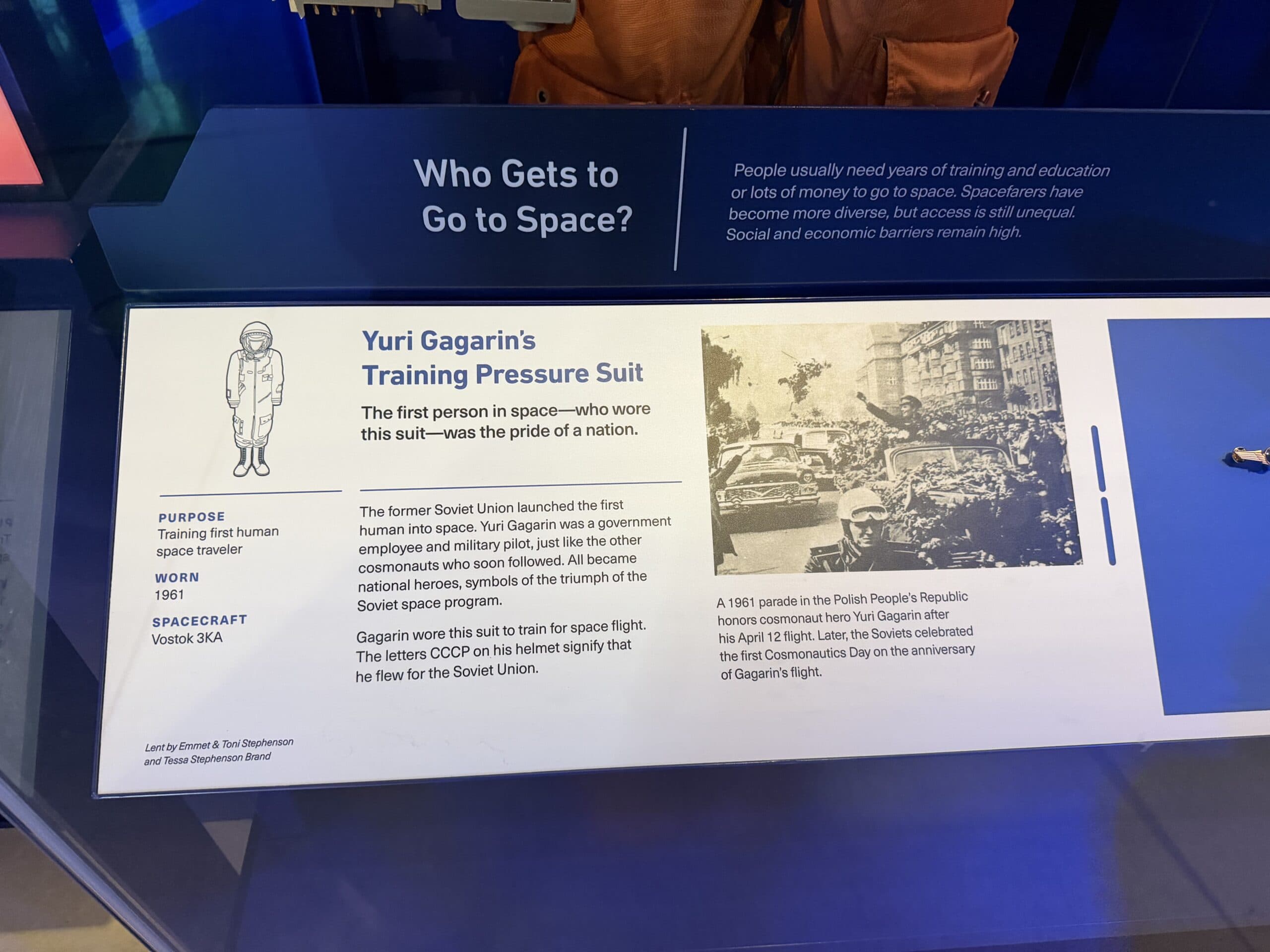
Soviet Space Equipment. Smithsonian Exhibit in Washington, DC. 19FortyFive Image.
The spacecraft needed a special solution. Voskhod 2 used an inflatable airlock called Volga. Soviet engineers did not want to depressurize the whole spacecraft for the spacewalk, so Leonov had to leave and return through the external airlock. RussianSpaceWeb’s mission history says the inflatable Volga airlock was the main difference between Voskhod 2 and the earlier Voskhod design, and that earlier attempts to fit a rigid airlock into the launch shroud had failed.
That airlock made the mission possible. It also made Leonov’s return more difficult.
Alexei Leonov Stepped Into Open Space
During the second orbit of Voskhod 2, Leonov entered the airlock, opened the outer hatch, and stepped outside. No human being had ever done that before.
The spacewalk was short by modern standards. The Fédération Aéronautique Internationale says Leonov spent 23 minutes and 41 seconds outside the spacecraft, with 12 minutes and 9 seconds of free-floating time, which is ratified as the record for extravehicular duration in space. The FAI’s account of the first spacewalk also notes that the official record did not describe the later difficulty of getting back inside.
That gap between public record and private danger became part of the mission’s history. To the outside world, the Soviet Union had achieved a new first. Inside the mission, Leonov had discovered how hard spacewalking would be.
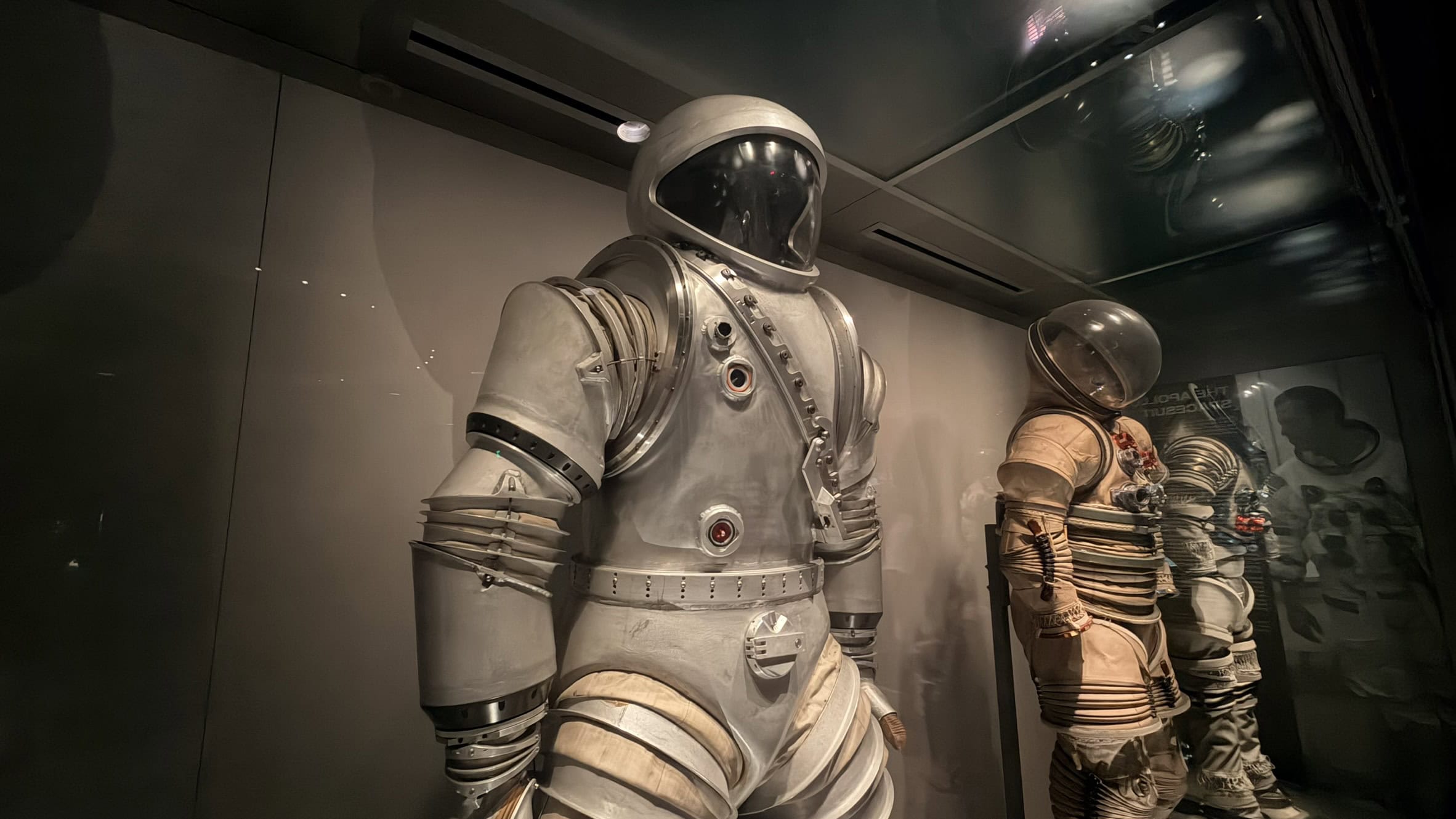
A person in a spacesuit is not simply floating freely. The suit has to hold pressure, provide oxygen, manage temperature, and allow enough movement to work. Early spacesuits lacked the mobility and cooling systems that later astronauts and cosmonauts would depend on. Leonov found that out in real time.
The Berkut Spacesuit Became Too Stiff To Move Easily
Leonov wore the Soviet Berkut spacesuit. In a vacuum, the suit retained pressure around his body, making it rigid. The problem was not that the suit failed in a simple sense. The problem was that it worked as a pressure vessel and then became hard to move.
The National Air and Space Museum explains that Leonov’s suit had physical restraints to keep it from expanding, but the pressure still made it stiff and difficult to use. To regain flexibility, Leonov had to vent air from the suit and lower its pressure. The museum’s account says his suit started at 5.8 psi and dropped to a preset 3.9 psi when he released pressure to return to the airlock.
That pressure change mattered. At the higher pressure, bending was difficult. At the lower pressure, Leonov had more mobility. He had to make that choice while alone outside the spacecraft, working through a procedure no one had ever tested in the real environment of space.
Later retellings often describe the moment as a wild near-disaster, with Leonov trapped outside and forced to improvise everything. Smithsonian published a 2020 correction noting that newly available records made the episode less dramatic in some details than later accounts suggested. Leonov had planned to lower pressure if reentry did not work, and contemporary evidence indicates that he returned feet-first rather than head-first.
That correction does not make the spacewalk routine. It makes it more interesting. Soviet engineers knew the suit-pressure problem might happen, so they gave Leonov a gauge and a release valve. Leonov still had to carry out the solution while exhausted and overheated, working in the most unforgiving environment humans had ever entered.
Voskhod 2 Showed Why Spacewalking Was Harder Than It Looked
The first spacewalk looked graceful because the film showed a human body floating above Earth. The engineering reality was less graceful. Leonov was inside a pressure suit that trapped heat and resisted movement. He was attached to Voskhod 2 by a tether. He had to move through a narrow airlock. He had to manage pressure, oxygen, body position, and time.
The National Air and Space Museum makes the larger point: the first Soviet and American spacewalks showed that both sides had a cooling problem. Spacesuits are airtight by design, which means they hold air and oxygen but also trap body heat. In a near vacuum, heat did not leave the suit in the familiar way it does on Earth.
That is why early spacewalks were exhausting. The issue was not courage alone. It was suit design, cooling, pressure, mobility, and training. Leonov’s experience helped show engineers that future spacewalks would require better equipment, better procedures, and improved methods to prevent astronauts and cosmonauts from overheating.
NASA faced similar lessons a few months later when Ed White made the first American spacewalk during Gemini 4. White had a different spacecraft and suit, but he also worked within the limits of early EVA technology. Both programs had learned the same basic truth: leaving a spacecraft was possible, but working outside one would require new systems.
Voskhod 2 Still Had To Return To Earth
Leonov got back inside, but Voskhod 2’s problems were not over. RussianSpaceWeb notes that after the first spacewalk, the mission continued into a difficult return that included manual reentry and a landing in the frozen taiga.
That part of the story deserves its own article. For a simple explainer, the key point is that Voskhod 2 was an early spaceflight mission with very little margin. The first spacewalk, the airlock, the suit, the return, and the landing all pushed Soviet technology into territory where flight controllers and cosmonauts had limited experience.
The public milestone was simple: the Soviet Union had beaten NASA to the first spacewalk. The operational reality was more complicated. Leonov and Belyayev had carried out a mission that combined national prestige with genuine engineering risk.
Why Alexei Leonov’s First Spacewalk Still Matters
Leonov’s spacewalk lasted only minutes, but it changed human spaceflight. Every later repair outside a space station, every satellite servicing mission, every moonwalk, and every modern spacewalk traces part of its history back to Voskhod 2.
The lesson was not only that a human could survive outside a spacecraft. The lesson was that survival depended on details: suit pressure, airlock design, cooling, body position, communication, oxygen, tether management, and the ability to get back inside.
That is why the first spacewalk remains so compelling. The Soviet Union won the Space Race first, but Leonov’s experience showed that stepping outside a spacecraft was not a stunt. It was a new kind of engineering problem wrapped around a human body.
Alexei Leonov floated outside Voskhod 2 for just over 12 minutes. Those minutes proved that humans could work beyond the spacecraft, and they revealed how much engineers still had to learn before spacewalking became routine.
About the Author: Harry J. Kazianis
Harry J. Kazianis (@Grecianformula) was the former Senior Director of National Security Affairs at the Center for the National Interest (CFTNI), a foreign policy think tank founded by Richard Nixon based in Washington, DC. Harry has over a decade of experience in think tanks and national security publishing. His ideas have been published in the NY Times, The Washington Post, The Wall Street Journal, CNN, and many other outlets worldwide. He has held positions at CSIS, the Heritage Foundation, the University of Nottingham, and several other institutions related to national security research and studies. He is the former Executive Editor of the National Interest and the Diplomat. He holds a Master’s degree focusing on international affairs from Harvard University.