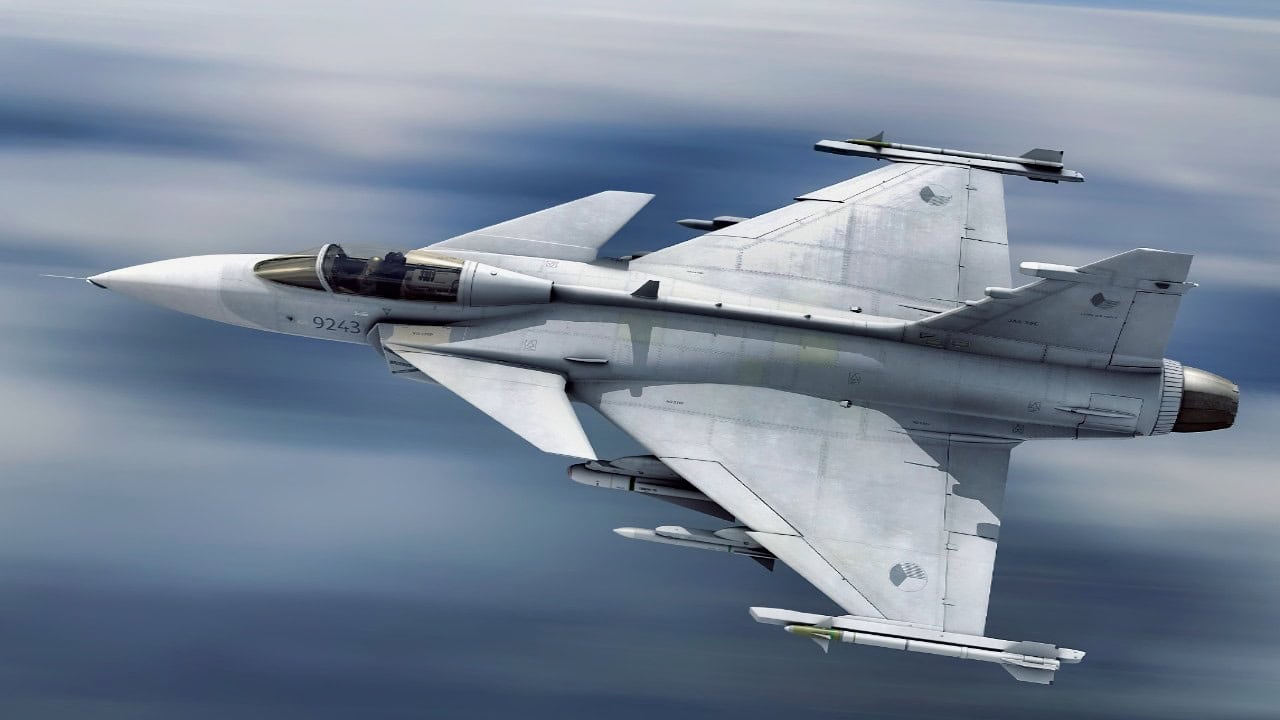
The JAS 39 Gripen is a lightweight multi-role fighter designed and manufactured by Sweden. The aircraft has garnered international attention for its advanced capabilities and comparatively low operating costs.
It was initially designed in the late Cold War period to be simple to operate and highly cost-effective despite its advanced capabilities.
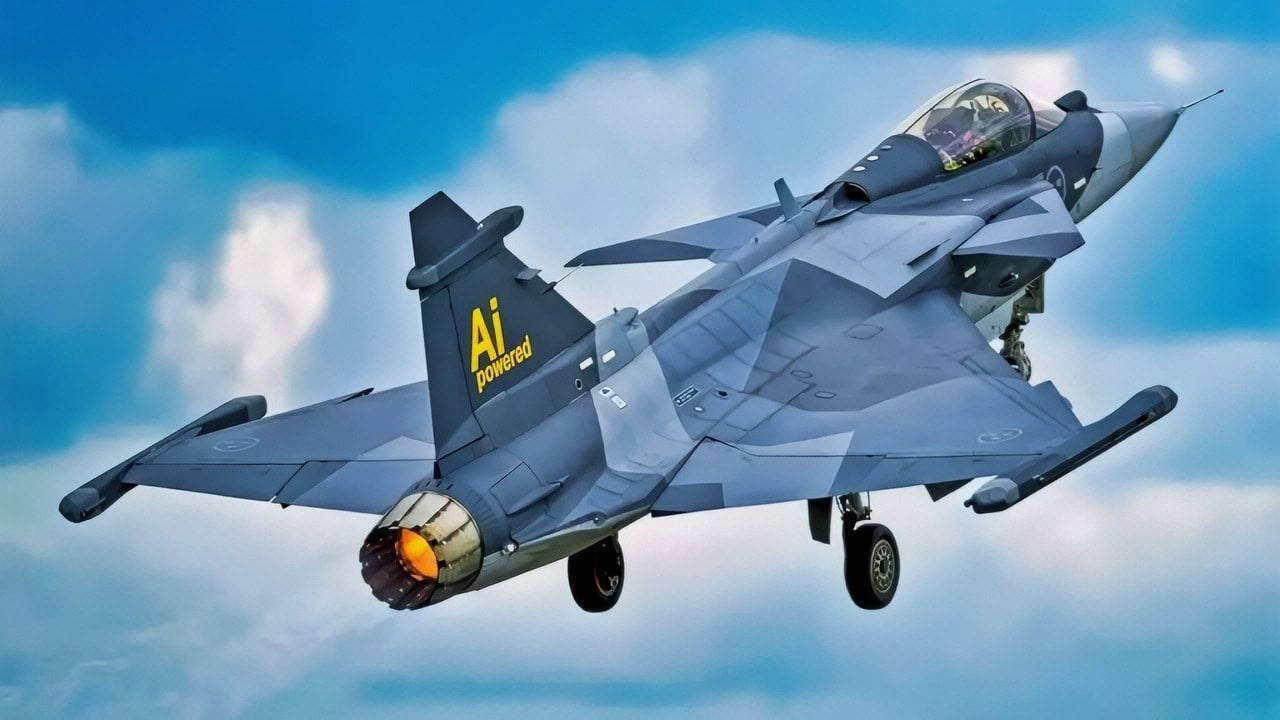
JAS 39 Gripen E Fighter. Image Credit: Creative Commons.
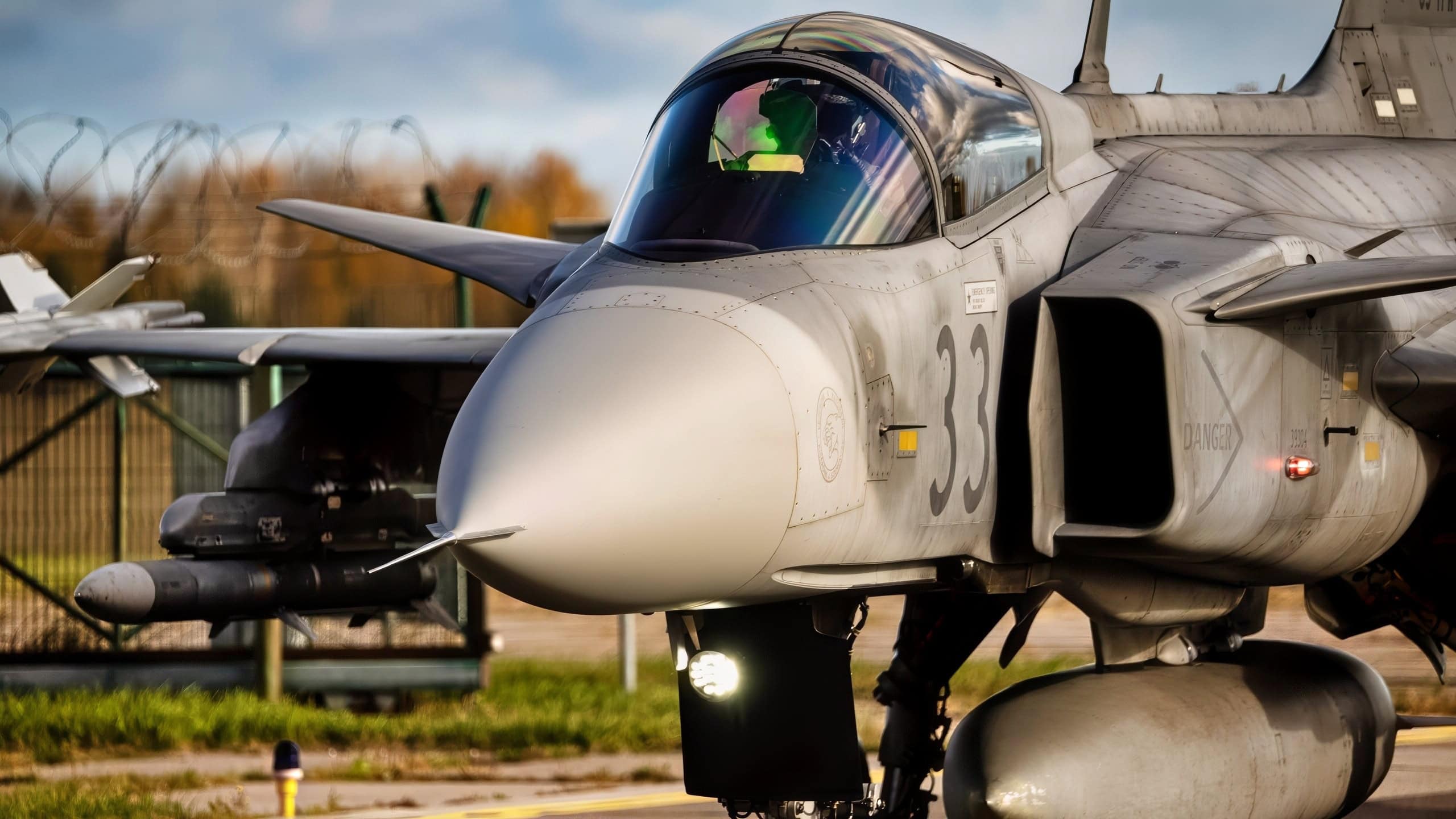
A Hungarian Air Force JAS-39 Gripen is seen taxiing across the runway after completing a successful training scramble. NATO Flickr Image.
Its modular design allows for seamless avionics upgrades, which have enabled the JAS 39 to keep pace with evolving contemporary threats.
The aircraft has been a focal point in Canada’s F-35 debate while the country struggles to replace its old CF-18 fighters.
Development History for JAS 39 Gripen
In the late 1970s, Sweden began efforts to replace its long-serving Saab 37 Viggen and Saab 35 Draken fighter jets.
While these aircraft had served admirably, they were reaching the end of their upgrade potential and were quickly falling behind newer Soviet fighter jets of the era.
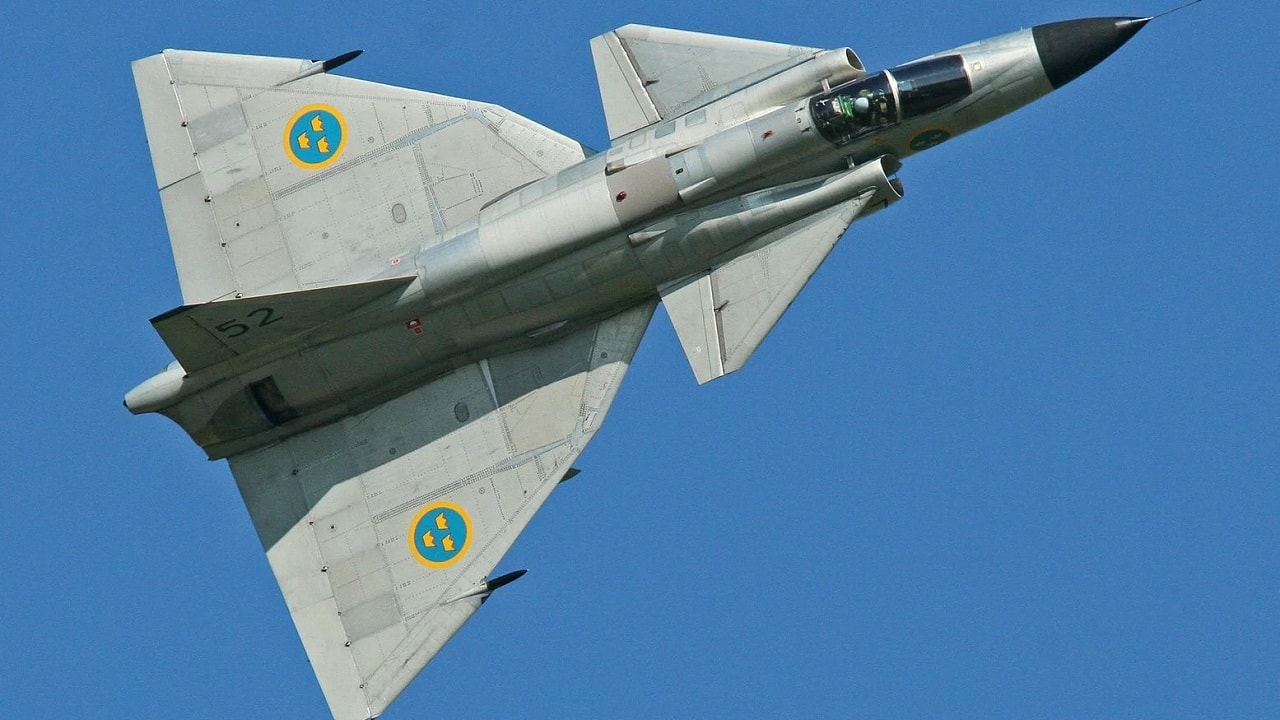
Image is of a Saab 37 Viggen. Image Credit: Creative Commons.
The Swedish Air Force issued requirements for a fighter jet that was affordable, could reach Mach 2, and could operate from short runways as part of Sweden’s Bas 90 system.
Some early proposals included a heavily upgraded version of the Viggen, which transformed the aircraft into a multi-role fighter jet and a sea reconnaissance aircraft.
Foreign designs, such as the Dassault Mirage 2000 and the F-16, were also considered, but in the end, the Swedes opted for a domestic clean-sheet design.
By the 1980s, Sweden had launched a program for a Jakt Attack Spaning (JAS) aircraft that could fulfill roles.
Saab proposed multiple designs to the air force, but it was Project 2105 (later confusingly renamed Project 2108 and then Project 2110) that showed the most potential.
To produce the aircraft, the consortium IG JAS was formed, comprising Saab, Volvo Aero Corporation, Ericsson/GEC-Marconi, and FFV Aerotech, all of which were Sweden’s foremost aerospace manufacturers.
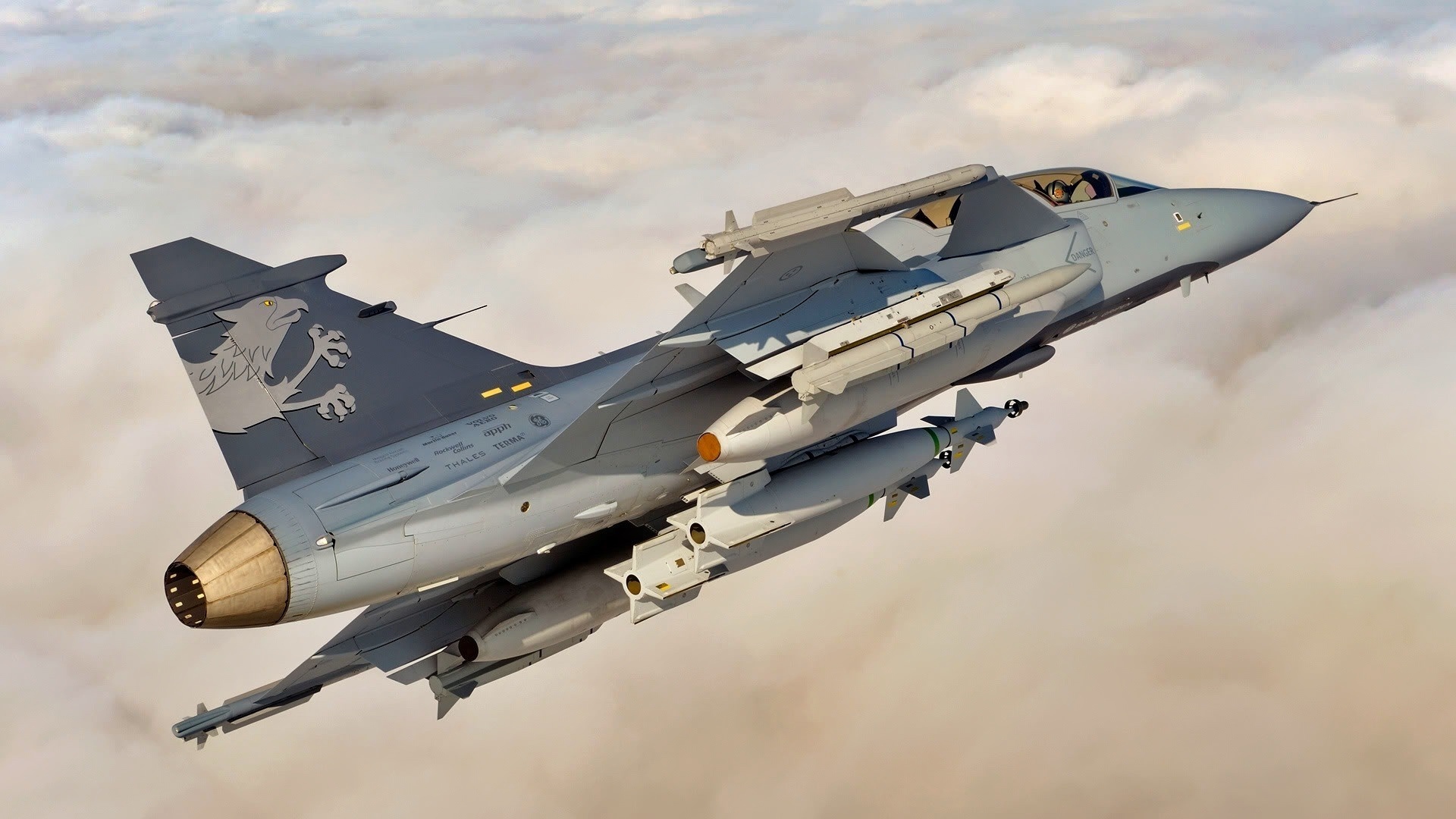
JAS 39. Image Credit: Creative Commons.
It was decided that the aircraft would be a single-engine aircraft powered by the RM12 engine, a locally licensed version of the General Electric F404-400 turbofan engine, and would use the PS-05 Doppler radar system.
Specs and Capabilities
The result was JAS 39 Gripen, an aircraft with a sleek canard delta-wing configuration typical of European fighter jets.
The aircraft was officially unveiled in 1987, with its first flights taking place a year later. Initially, the JAS 39 experienced technical difficulties with its flight control software, which led to a crash in 1989.
After updates to the aircraft’s fly-by-wire software, these issues were promptly resolved. The aircraft was officially accepted into service in 1996, with production ramping up significantly.
At the time of its inception, the Saab Gripen was arguably one of the most advanced and most cost-effective fourth-generation fighter jets in service.
The JAS 39 is a lightweight fighter that relies on digital fly-by-wire systems for enhanced maneuverability.
The aircraft is designed to have lower maintenance and operating costs than other fighters on the market (later Gripen E/F variants cost significantly more than the initial JAS 39 models).
Originally reliant on the PS-05 Doppler radar, later iterations of the aircraft adopted the Raven ES-05 AESA radar, which significantly expands detection and tracking ranges and enables integration of more advanced air-to-air missiles such as the Meteor BVR missile.
Information from the aircraft’s many sensors is fused seamlessly by the onboard computer systems, which give the pilot a clear picture of the battlefield.
This information can also be transferred to other battlefield units and assets, making the JAS 39 well-suited for networked battle spaces.
International Sales
The Gripen has developed a positive reputation for its cost-effectiveness and capabilities. This is in part due to Saab’s aggressive marketing, but there is also much to say in favor of the JAS 39.
Because of these qualities, the aircraft has secured multiple international buyers abroad. The aircraft is currently operated by six operators, excluding Sweden, with several other countries expressing intent to purchase the aircraft.
Most notably, Ukraine recently reached an agreement with the Swedish government to receive 16 C/D variants and purchase an additional 20 more capable E/F variants.
Brazil is currently the most prominent operator, with a license agreement to allow domestic production of the aircraft.
The Curious Case of Canada
Canada is another potential buyer that has considered acquiring the JAS 39 on multiple occasions. For several years, Canada sought to acquire the F-35 from the U.S. to replace its aged fleet of CF-18s.
This decision proved to be shockingly unpopular with Canadians and turned into a full-on political scandal. Saab, smelling blood in the water, offered the Gripen as a potential alternative.
In competitions, however, the F-35 outperformed the JAS 39 in almost every respect and was the Royal Canadian Air Force’s (RCAF) favored option.
In 2025, with the start of Trump’s second term as President, relations between Canada and the United States deteriorated, leading the new administration under Mark Carney to reevaluate the F-35.
Despite strained relations with the Americans, the RCAF found that the F-35 remained the best option for Canada in terms of capabilities and overall economic benefits.
Canada and the U.S. later signed an agreement to procure 16 aircraft, with an option to purchase 14 more. Saab remains in talks with the Canadians about the possibility of procuring and even producing JAS 39s domestically.
However, as of writing this, no agreement between the two has been formalized.
About the Author: Isaac Seitz
Isaac Seitz, a Defense Columnist, graduated from Patrick Henry College’s Strategic Intelligence and National Security program. He has also studied Russian at Middlebury Language Schools and has worked as an intelligence Analyst in the private sector.