
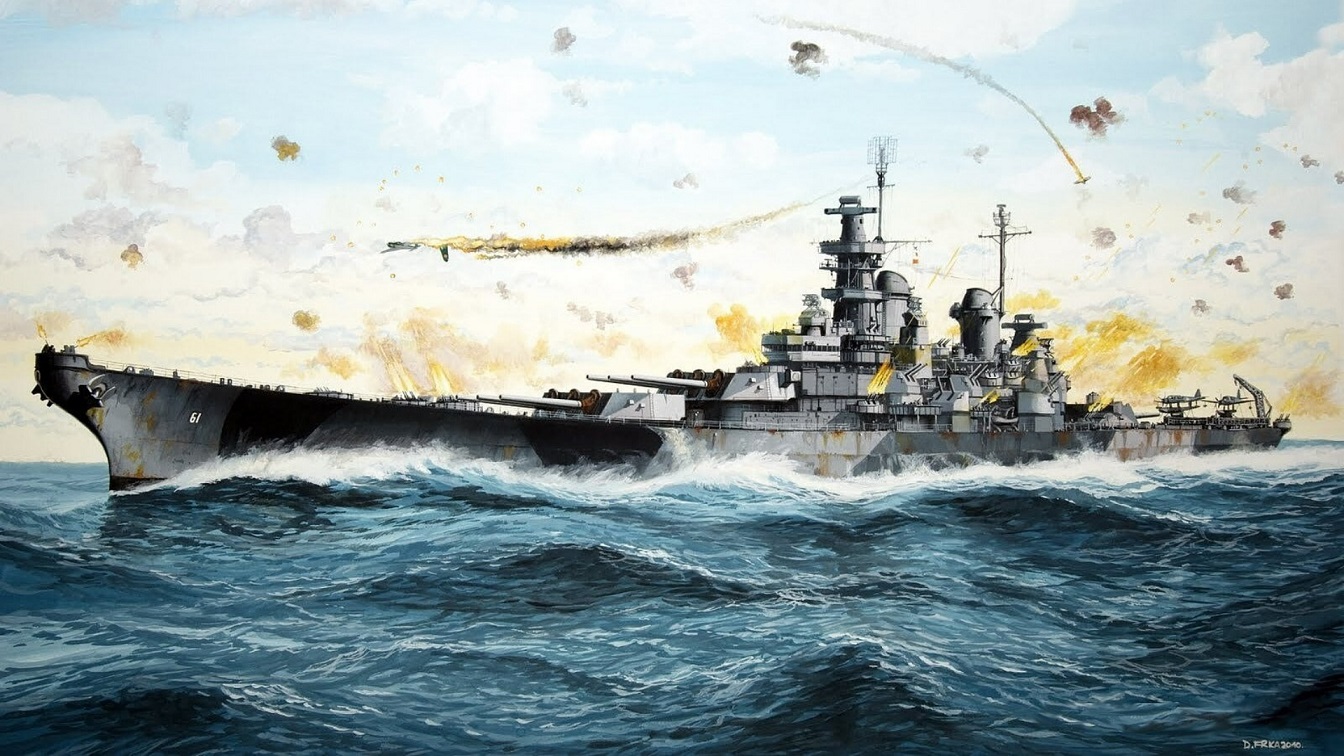
Summary and Key Points: The Montana-class was designed as the final and most powerful expression of U.S. battleship thinking: heavier armor, greater survivability, and twelve 16-inch guns meant to outfight any rival in a surface duel.
-Conceived as treaty limits collapsed, Montana prioritized dominance over speed—accepting that it could not keep pace with fast carrier forces.
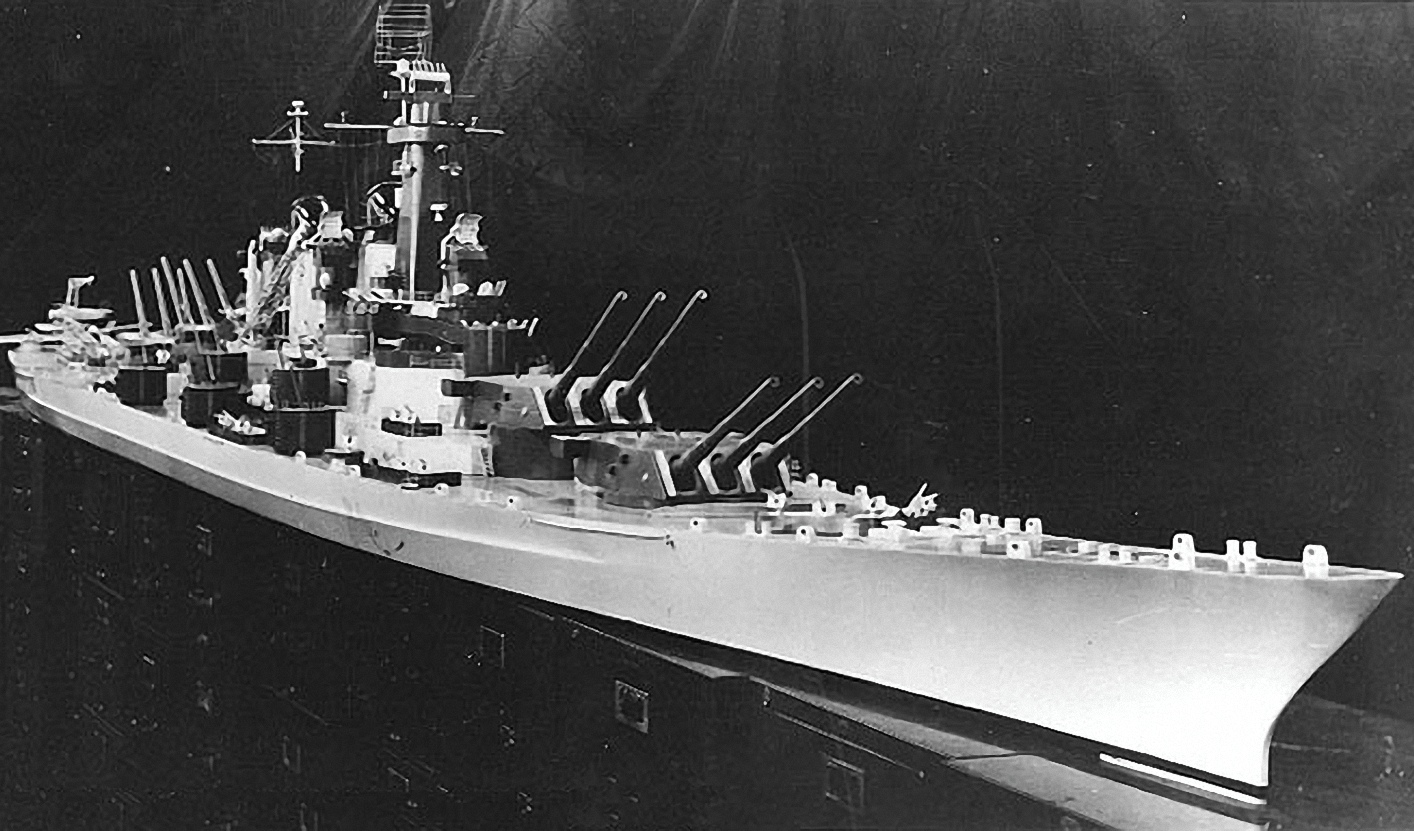
Montana-class artist rendering.

Montana-class drawing.
-World War II quickly rewired naval warfare, proving that aircraft carriers could strike farther and sink capital ships without a gun duel.
-Despite immense U.S. industrial output, shipyard capacity favored carriers, destroyers, and submarines. Cancelled in 1943, Montana became the ultimate “what if” battleship.
The Montana-Class Was the Biggest U.S. Battleship Ever Planned—and It Never Launched
The Montana-class represents the peak—and the endpoint—of US battleship design.
Bigger, more heavily armored, and more heavily armed than any US battleship that actually sailed, the Montana was never laid down, remaining a figment of industrial imagination, one of the most impressive concepts ever not built.
Battleships Still King
In the late 1930s, battleships were still regarded as decisive capital ships, and the world’s navies planned accordingly: preparations were made for fleet-on-fleet surface engagements, on the belief that gun duels would determine sea control.
The US Navy, in particular, believed it would fight Japan head-on on the surface for control of the Pacific.
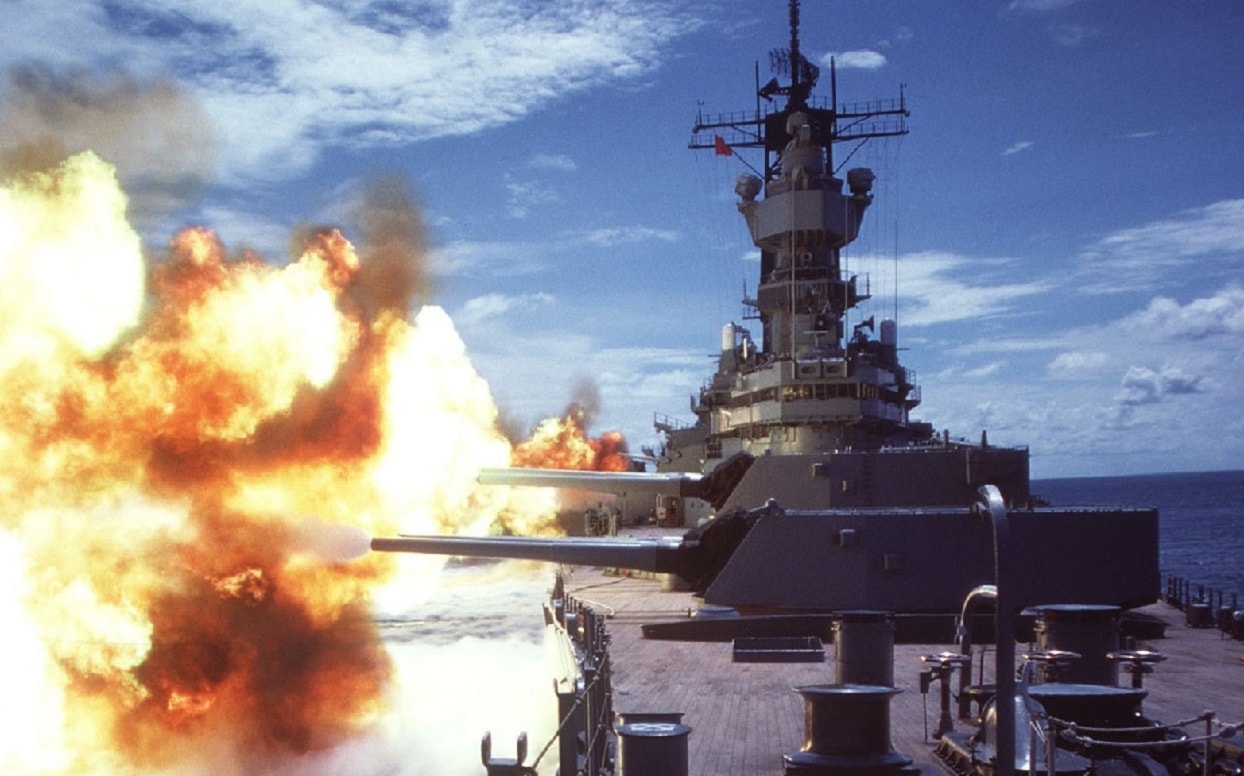
Iowa-Class Battleship during World War II.
Image: Creative Commons.
The Montana-Class was designed on this premise, at a time when the Navy sought a decisive surface vessel to tip the scales in a great-power struggle.
The ship was conceived as a behemoth, freed from the constraints of naval arms-control treaties that had limited the dimensions and firepower of earlier U.S. battleships.
As treaty limits collapsed in the late 1930s, designers were encouraged to become more ambitious, free to prioritize armor and firepower.
The Montana-Class on Paper
Intended to be the most powerful battleship afloat, the Montana was designed to outgun and outlast any Japanese counterpart.
Montana’s key design philosophy is to win surface engagements through survivability and overwhelming firepower.
The vessel wasn’t built for speed but for confrontational dominance.
Significantly heavier than the Iowa-class battleship, a hulking vessel in its own right, the Montana-Class offered more armor protection, with thicker belt armor and heavier deck armor, and a larger main battery—twelve 16-inch guns instead of nine.

USS Iowa. 19FortyFive.com Image.
Battleship USS Iowa Logo 19FortyFive Image.

Inside USS Iowa. Image Credit: Harry J. Kazianis for 19FortyFive.com

Inside USS Iowa. Image Credit: Harry J. Kazianis for 19FortyFive.com
The Montana was designed to absorb punishment and keep fighting, all the way to Tokyo.
The Montana’s lack of speed would have been a tradeoff, of course; the vessel could not have kept up with fast carrier task forces.
Instead, the Montana would have engaged in independent surface action and line-of-battle engagements—risky premises that, by mid-war, would prove entirely outdated.
Shifting Strategies
World War II fundamentally transformed naval warfare.
The emergence of the aircraft carrier demonstrated the type’s longer striking range, greater operational flexibility, and ability to destroy capital ships without ever making direct contact.
Battles like Pearl Harbor and Midway demonstrated the dominance of the carrier concept and forced a reshaping of naval priorities.
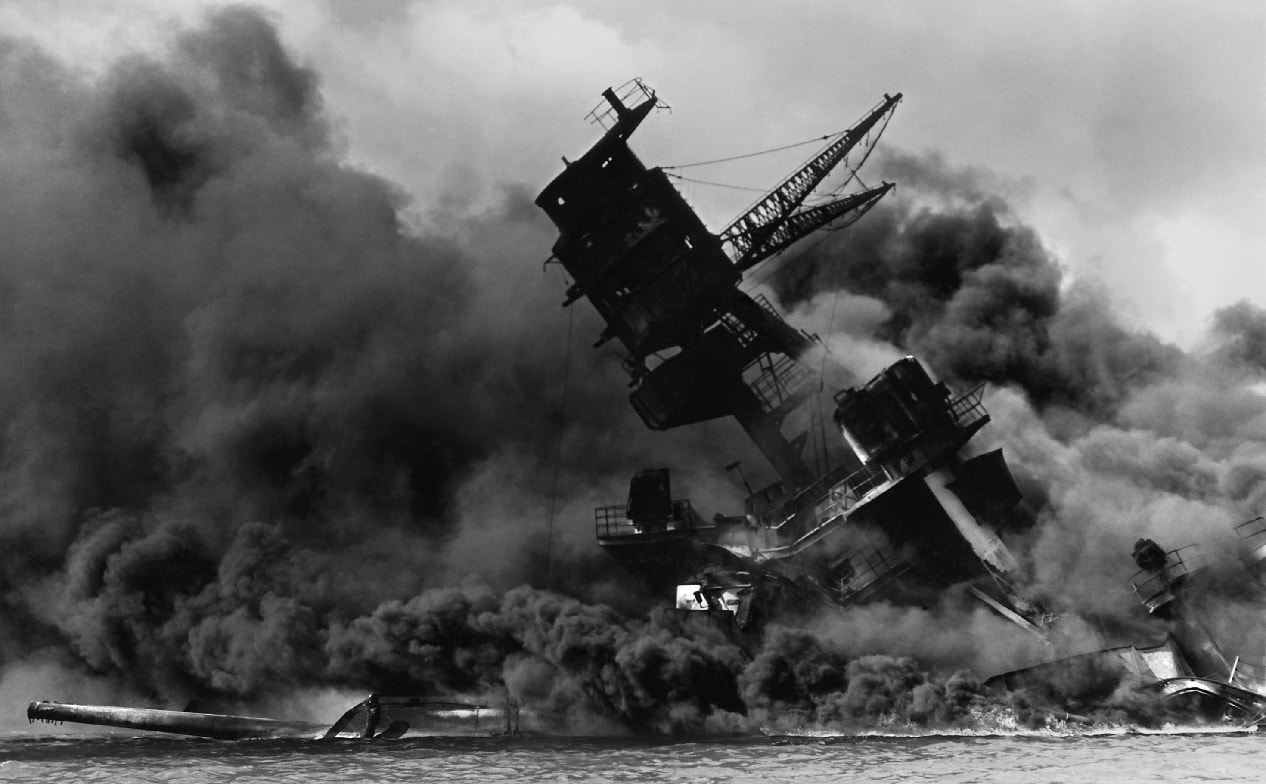
USS Arizona in the aftermath of Pearl Harbor. Image Credit: Creative Commons.
Midway was especially decisive, showing that air power, now gunfire, decided naval battles.
The once mighty battleship was relegated to escort status rather than centerpiece; speed and air cover were prioritized over armor thickness and gun caliber.
Wartime Constraints
During World War II, the United States’ industrial capacity hummed at a world-leading rate. But shipyard capacity was still finite.
The US Navy faced urgent needs for aircraft carriers, destroyers, and submarines.
The massive Montana-class battleship was a resource-intensive and time-consuming project that would have clogged US industrial capacity when volume was paramount. Carriers, meanwhile, delivered more combat power per dollar and per month of industrial commitment, thus taking shipyard priority.
Cancelling the Montana
The Montana-class was cancelled in 1943, before construction ever began.
The decision reflected changing doctrine, the result of combat lessons and industrial priorities.
The cancellation was not an outright repudiation of battleships—the Iowa-class survived—but a recognition that battleships were no longer central to naval warfare.
Why did the Iowa-class survive? The Iowa was more aligned with mid-war doctrinal shifts, offering high speed, adequate firepower, and compatibility with carrier task forces. The Montana, meanwhile, was too slow for the evolving doctrine and too specialized for a shrinking role. The Navy chose the Iowa’s flexibility over the Montana’s brute force.
Legacy of the Montana-Class
The Montana’s cancellation marked the end of battleship primacy; the US wouldn’t propose another battleship blueprint until the Trump-class in the 2020s—and likely will never build another battleship.
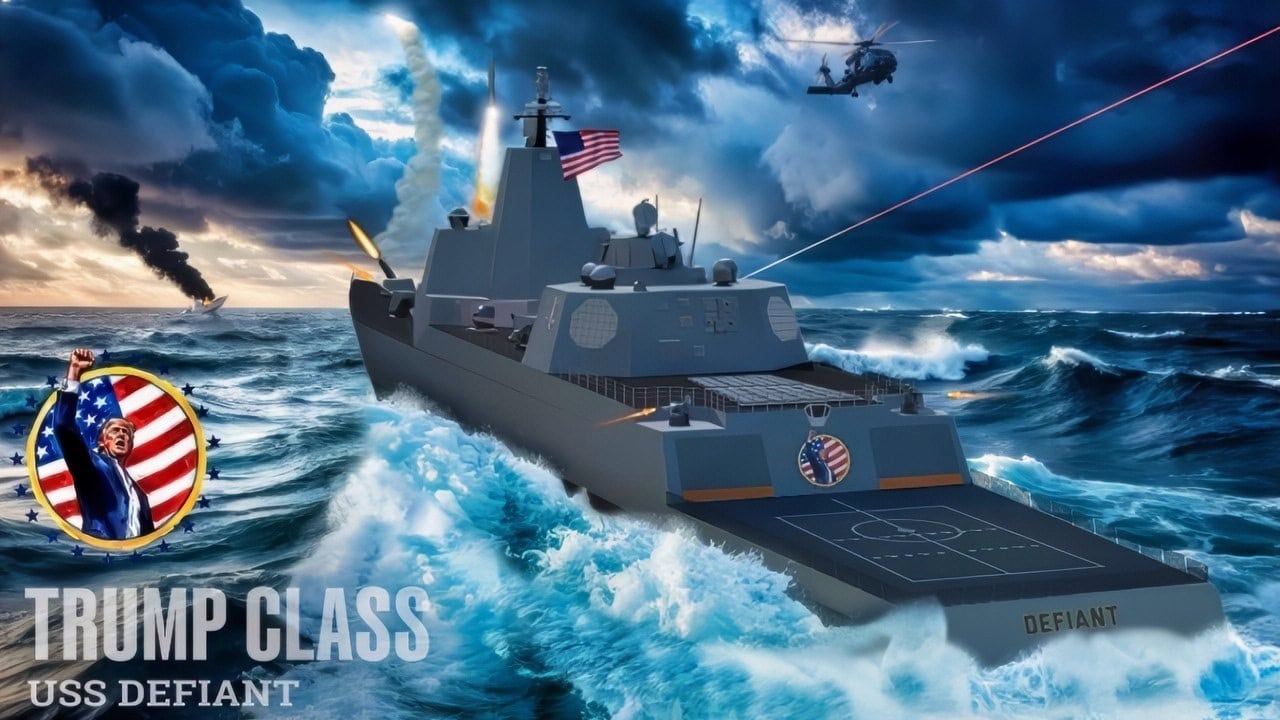
Trump-Class Battleship. Image Credit: Creative Commons/White House Photo.
The Montana-class demonstrated how fast military technological needs can change, especially under wartime conditions.
Still, the Montana retains a “what if” aura; the ship represents the maximum battleship theory, the final expression of gun-based sea control.
However, history suggests that if the US had proceeded with construction, the Montana would have been outdated upon entry into service.
The US was wise to cancel the Montana, and would be wise to heed Montana-related lessons in future procurement efforts.
Namely, building a superior platform for a shrinking mission is typically a sunk cost.
Platforms must be designed for future conflicts, not past ones.
About the Author: Harrison Kass
Harrison Kass is an attorney and journalist covering national security, technology, and politics. Previously, he was a political staffer and candidate, and a US Air Force pilot selectee. He holds a JD from the University of Oregon and a master’s in global journalism and international relations from NYU.